When Women Were Dragons, by Kelly Barnhill*****

I read Kelly Barnhill’s The Ogress and the Orphans, and I loved everything about it, so I was pumped when I saw she’d published another book last fall. I was disappointed not to get the galley, but I pulled my socks up and got in line at Seattle Bibliocommons. I was able to get the audio version, and narrators Kimberly Farr and Mark Bramhall do an outstanding job, so perhaps it was for the best. This book is for sale now, and it is a true delight.

The story is set in the American Midwest during the 1950s, a time known for its stifling repression of women. Some women can take it; others turn into dragons. It’s not always by conscious choice; when you’ve had enough, you’ve had enough.

The tale centers on one family, with a mother, father, daughter Alex, and the devoted Aunt Marla, who visits frequently with her adorable baby, Beatrice. Marla is a physically strong and imposing woman, and she raises eyebrows by sometimes showing up in overalls instead of a dress or skirt. The most important person in her life is her sister, a gifted mathematician whose talents are withering away while she focuses on making the perfect pot roast, getting tough stains out of the laundry, and creating endless patterns in her knitting.

Alex is the narrator for most of the story, with the occasional change to the points of view of various bewildered men that live locally. It is the characters here that make this an outstanding story rather than a manifesto. Alex has so many questions as a child, and as she grows up, she struggles to absorb the predominant values of the time, which seem unfair to her. She wants to be a good daughter and play by the rules, but so many of them baffle her, and we feel that struggle with her. For reasons that I won’t share, little Bea comes to live with Alex’s family, and we see Alex try to help raise Bea to be responsible and obey all of the requirements of the time, whether written or unwritten, but Bea struggles with them even more than Alex has, and because of this, Alex is forced to think critically about the things she’s been sweeping under the rug in order to get along. And ultimately, Alex learns the lesson that all parents and older siblings face to some degree, that to help a child grow, we must let go.

Teachers and librarians must especially love this book.

I have read a few unfriendly reviews that insist that this message has already been conveyed by The Stepford Wives. I loved the Stepford Wives, too, but seriously, are we saying that once a novelist drives home a point, that’s it, and nobody else can have a go at it? If it comes down to it, I’d take this novel over the other anyway, for nuance and character development. My favorite grumpy review asks why a dragon needs a purse! I ask you, would you be the one to take that dragon’s purse from her?

I love this book with all my fiery heart, and I highly recommend it to feminists, and to those that love us.

Mastering the Art of French Cooking, by Colleen Cambridge****

This charming cozy mystery, set in Paris during the postwar years, had me at hello. Tabitha is an American expat, and her best friend, Julia Child, is teaching her how to cook. But one evening, during one of the Childs’s many soirees, a woman is murdered…and the knife in question came from Julia’s kitchen!  To make matters even worse, the victim was carrying a card with Tabitha’s name and address on it when she was found. For some young women, this would be a wakeup call, and the morning would see them on the next available plane to Detroit; but Tabitha is made of sterner and more curious stuff, and so she begins snooping.  

My thanks go to Net Galley and Kensington Books for the review copy; this book is for sale now.

To cope with the horror of the previous night’s events, Julia is roasting a ham.  “I just had to take my mind off everything. Can you even believe it, Tabs? Someone murdered a woman in this building—with my knife! That means they had to have been in my kitchen! This kitchen!”

Like many an amateur sleuth in other mysteries, Tabitha begins poking around. Sometimes she has smart ideas, and at other times she is breathtakingly dense, but there is never a time that I am thinking about the author rather than the protagonist, and that means that I believe the character. There are some familiar tropes and the occasional cliche: “She knew too much!” But it never becomes a problem, possibly because this is a novel that doesn’t take itself too seriously. Now and then the author breaks down the fifth wall, or nearly so. For example, Tabitha tells us that she knows what to do because she has read plenty of Nancy Drew mysteries.

The solution to this whodunit is fairly transparent, and I am able to predict the solution, along with the conclusion of the additional thread of incipient romance early in the book, but the whole thing is so adorable that I never become annoyed. “Just like an Agatha Christie novel—all the questions answered at the end, and the villain is caught, and everyone else is happy.”

Because I had fallen behind, I supplemented my review copy with the audio version, obtained from Seattle Bibliocommons, and narrator Polly Lee does a brilliant imitation of Julia Child! In fact, all of the passages involving Julia are brilliant, and that is my favorite aspect of this story.

Sometimes an author manages to step on multiple pet peeves of mine, and yet I emerge pleasantly entertained anyway, and that’s what has happened here. This is light reading, but it isn’t insipid. I look forward to reading the next in this lovely new series. Recommended to cozy readers.

Bad, Bad Seymour Brown, by Susan Isaacs*****

Susan Isaacs has been writing bestsellers since the late 1970s, and she’s hilarious! I’ve been a fan since then. During that earlier time, a period of third wave feminism, her tales often featured rotten husbands and ex-husbands reaping what they’d sown. Her creativity and trademark snark have always kept me running back for more. Her new novel, Bad, Bad Seymour Brown is the second in the Corie Geller detective series, and it’s deeply satisfying. My thanks go to Net Galley and Grove Atlantic for the review copy. This book is for sale now.

Seymour Brown was an accountant for the Russian mob. “I’ve never heard of a violent accountant before,” my mom observed. “At worst, they’re a little pissy.” But by all accounts, Seymour was a rotten guy. “He made regular bad look good.” Bad to everyone, that is, except his five year old daughter April, his only child, for whom the sun rose and fell. But Seymour’s family was tucked away for the night when an unknown assailant came and burned the house to the ground with the Browns inside it. Happily, April made it out the window alive. The case was never solved.

Now April is an adult, a professor in film studies. She’s put her past behind her, and now, all of a sudden—someone is trying to kill her! She contacts the detective that was assigned to the murder investigation; he’s retired now, and he is Corie Geller’s father.

All of the things that I love about Isaacs’s work are here in abundance. The story is full of feminist moxie—Geller isn’t an assistant to her father, but rather retired from the FBI in order to raise her stepdaughter—she is his partner in this new investigation, and as it happens, in the new detective agency they’ve begun. But another thing I’ve always loved about Isaacs’s prose is her trademark snark, and I snickered and chortled all the way through this engaging novel. The pages flew by, and I found myself looking for extra reading time when I could sneak off to plunge in once more. Susan Isaacs writes the most creative figurative language I’ve seen anywhere. She’s funny as hell.

You can read this book as a stand-alone, but I’ll tell you right now, once you read the second, you’ll want to read the first one, Takes One to Know One also.

Highly recommended, particularly to feminist boomers.

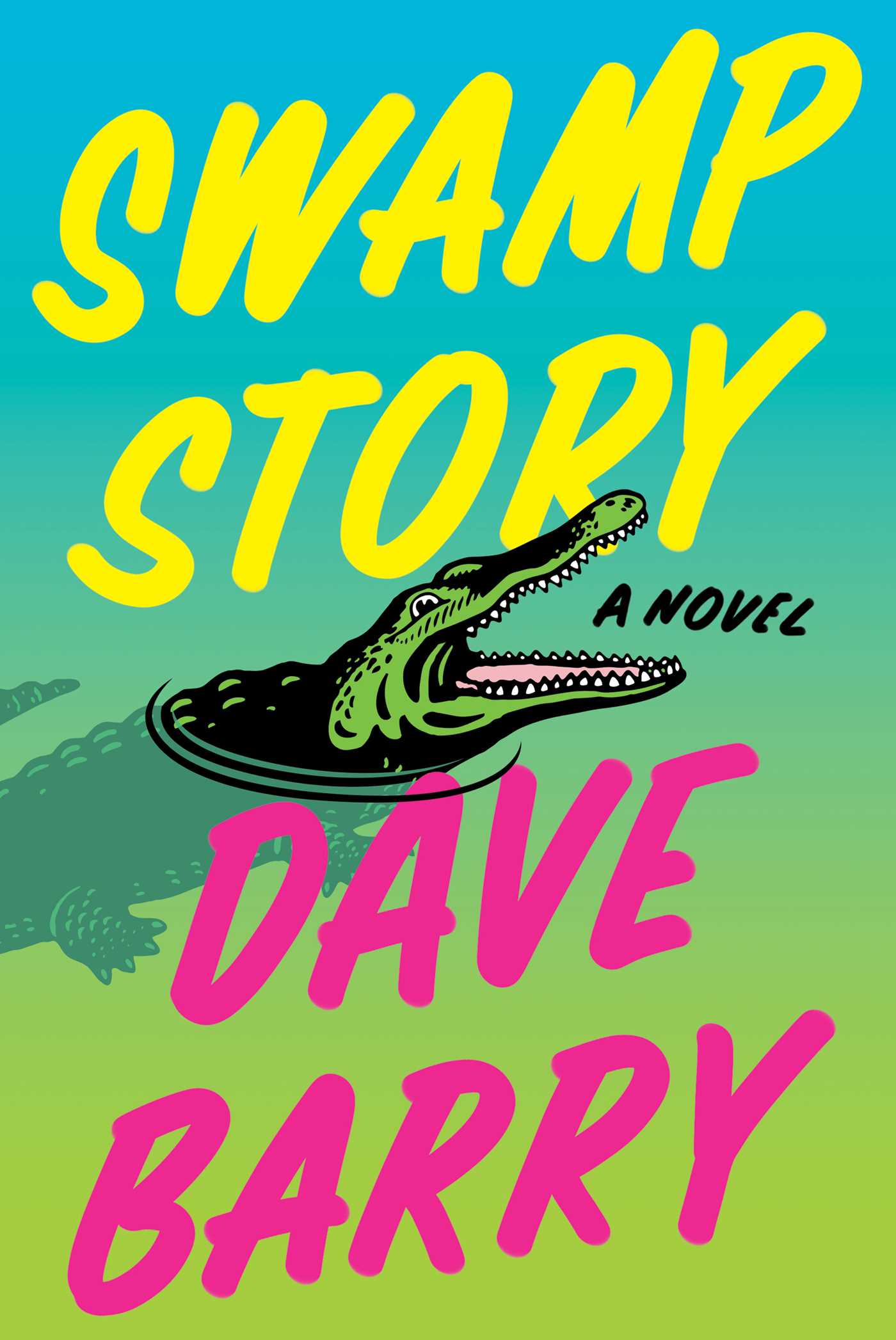
Swamp Story, by Dave Barry*****

Dave Barry’s new novel, Swamp Story, should come with a warning label: Danger. Do not read in area where explosive laughter is not permitted. Fans of Barry’s will be pleased to hear that this is possibly the best thing he’s ever written. Readers new to Barry will want to read more. This book will be available to the public May 2, 2023.

My thanks go to Net Galley and Simon and Schuster for the invitation to read and review.

Our protagonist is Jesse, a lovely person that has made a huge mistake. She feel hard for Slater, a young man with a smokin’ hot body, a limited brain, and a solipsistic world view. Now she’s stuck in a cabin in the Everglades with him and his camera wielding buddy Kark, and oh yes—their baby, Willa; not to mention all of the flora and fauna that live here:

“Kark! You need to get this!”

“What?” said a voice, as hoarse as Slater’s, maybe hoarser.

“Big fucking snake,” said Slater. “I mean big.”

The snake slid forward another two feet, directly toward Jesse and Willa. Jesse saw that she now no longer had the option of even trying to run past it.

“Slater!” she said, trying to keep the panic out of her voice, not wanting Willa to pick up on it.

Slater held up his hands in a Calm down gesture.

“It’s cool,” he said. “This’ll be good. Good footage.”

“Good footage?” said Jesse. “Are you—”

“Goddammit, Kark,” yelled Slater, “get the camera out here!”

“OKOKOK,” said Kark, emerging from the cabin, holding the video camera. ” Fuck. The battery’s dead.”

Things appear to improve for Jesse when she stumbles across a cache of gold bars hidden in the glades, but this proves to be a mixed blessing, as some truly bad men learn of her good fortune and seek to take it from her, using any means necessary. However, the first such men, Billy and Duck, are not only evil, but also hilariously bumbling at times. And then, of course, there are the others.

Meanwhile, the owner of Bartle Brothers Bait and Beer decides to give his languishing business a shot in the arm by manufacturing an internet hoax. The Everglades Melon Monster is a sketchy, low budget creation whose star is an inebriated fellow wearing a Dora the Explorer head, and yet, somehow it works. Now it seems that everyone is descending on the Everglades, and almost every person that arrives is “batshit crazy.”

I’m not telling you how this thing ends; you’ll need the book for that. Don’t wait for the movie. You can thank me later!  As for me, I’m off to order a Bartle Brothers Bait and Beer tee shirt.

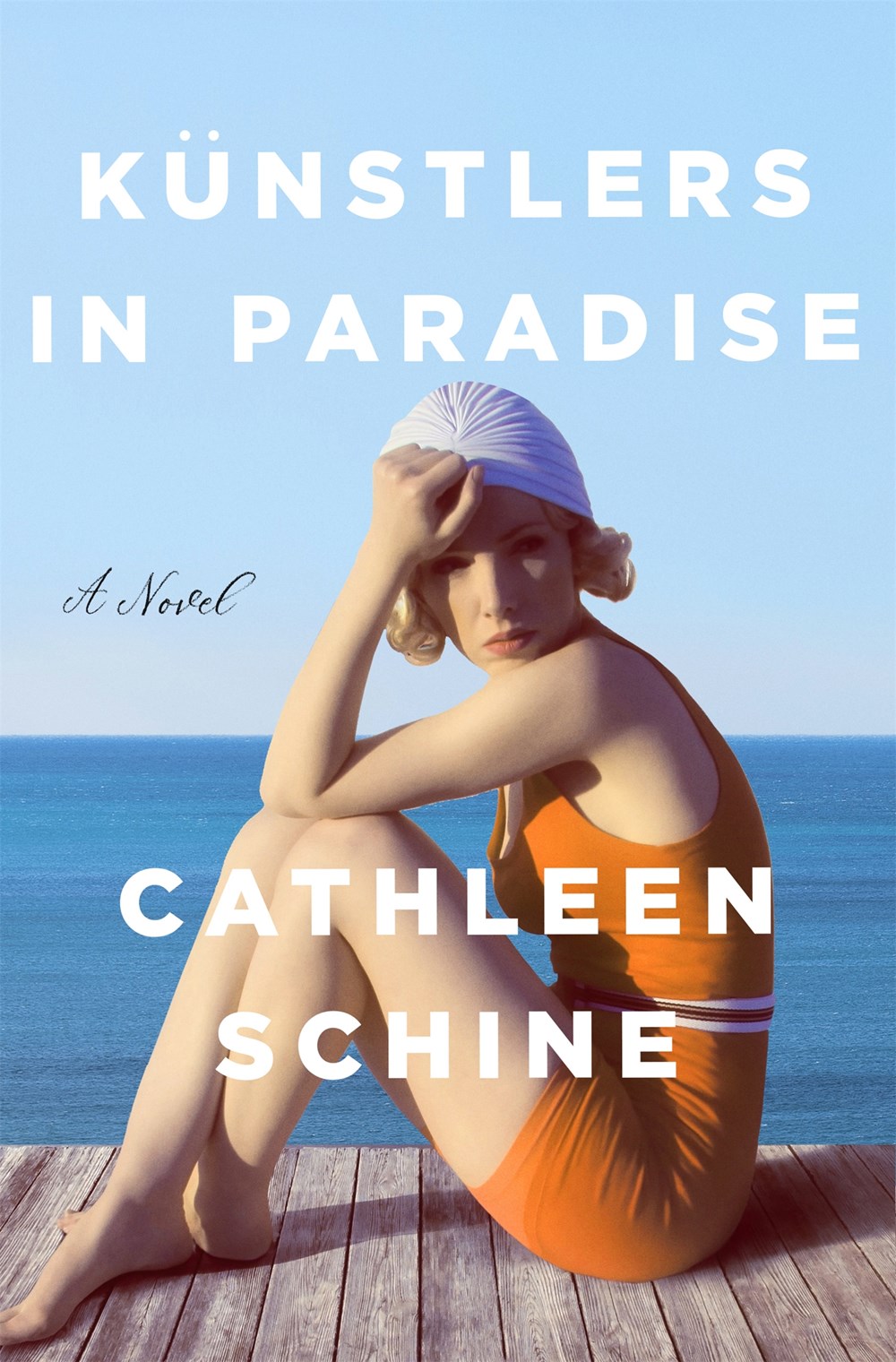
Kunstlers in Paradise*****

4.5 stars, rounded upward. My thanks go to Net Galley, Henry Holt Publishers, and Macmillan Audio for the review copies. This magnificently quirky novel is for sale now.

Julian Kunstler is kind of a mess. He’s a twenty-something New Yorker whose girlfriend has just dumped him. He has no job, and he doesn’t want one; at least, not the low-paying, entry-level variety of jobs for which he is qualified. He takes himself home to his parents who have been paying his way, confident that they will understand his plight and increase his allowance. Instead, he hits a wall. What are your plans for the future, Julian? (None.) What do you plan to do for money? (Get it from you.) Just as a dramatic situation has begun to unfold, they hear from his 93 year old grandmother, Mamie, who lives in Los Angeles. She wants him to come to stay with her awhile; she needs assistance. He’s not so sure that he wants to go, but when his parents insist, he gets on that plane. Once there, the pandemic strikes, and he is trapped in lockdown with his grandmother and her elderly companion, Agatha.

Mamie has always been fond of Julian, and although she does need a driver for doctor appointments and the like, what she wants, more than anything, is to tell her life story. Most of it, anyway. It begins in Austria, as Jewish artists like her father, a successful composer, are being pushed out of public life by the Nazis. (Here, I emit a small moan; I am heartily sick of Holocaust stories. Happily, we don’t stay there long, and this story is worth it.) She goes on to describe the shock she experiences in suddenly being transplanted into a completely different climate, language, and culture, and much of Mamie’s story is droll. And Julian, who never would have sat still for these tales had they come from his parents, listens. At first, he listens impatiently, assisted by Mamie’s generous liquor collection. As time goes on, he begins to listen with greater patience and understanding. And by the end of a year’s time, he listens with genuine interest. His own exile from New York is pale, after all, in comparison to the exile his predecessors endured.

The most dynamic character is, of course, Julian, but through Mamie’s stories, we see how life has already changed her. Agatha is enigmatic until the book is nearly over, and I love what Cline does with her, too.

If I were to change one thing, I would edit down the material about the genius composer friend that emigrates from Austria and is close to the family. This reviewer was a music major once upon a time, and if this part of the narrative is a bit much for me, then probably many others will feel the same. Of course, if the reader comes to the book with a deep interest in Schoenberg, then it may prove quite satisfying.

I am fortunate to have access to both the digital print galley and the audio version, and reader Jesse Vilinsky is hands down the funniest, most skillful voice actor I have ever had the pleasure to hear. Cline’s book is very good, but in the hands of Vilinsky, it is infinitely better. Her interpretations of Mamie and Julian are spot on, hilarious at times, moving at others. The way she voices Agatha is absolute comic genius!

For those that love quirky humor and historical fiction, this book is highly recommended.

The Sweet Spot, by Amy Poeppel*****

“Brood parasites, like certain birds, intentionally lay their eggs in the nests of other birds.”

Amy Poeppel is fast becoming one of my favorite authors; she wrote Small Admissions, Limelight, and Musical Chairs, and I read and loved them all. Her new novel is The Sweet Spot, and it is destined to become one of the best books of 2023. My thanks go to Net Galley, Atria Books, and the author for the review copies.

One of the aspects of Poeppel’s writing that sets her apart is her ability to create female characters that are so dynamic, so well developed that I feel as if I know them. Here we have four that span a wide range of ages and income levels, yet somehow wind up forming an unlikely sorority. The first, Lauren Aston-Shaw is an artist, and she’s in the midst of moving into a brownstone in New York City’s famed Greenwich Village, along with her husband, children, and large dog, Bumper. The boxes are only partially unpacked when she receives a mostly-delightful surprise: a prominent businesswoman and influencer has decided to place a massive order of Lauren’s handmade porcelain for her boutiques. The house is already in a state of happy chaos, and it’s about to be more so.

During a conversation with Felicity—the retailer in question, who is pregnant—Lauren makes an offhand remark, which Felicity interprets as an engraved invitation to break up the decades-long marriage of the baby’s father, Russell. Miranda, the spurned wife, learns of Lauren’s role and decides, in a fit of grief and rage, to burn Lauren’s life to the ground. Miranda, then, is our second of the four women.

Olivia, our third main character is one of Felicity’s employees. She is in her twenties, low on the management chain, but she is ambitious, hardworking, and determined to climb; that is, until she becomes a casualty of Miranda’s rampage. Olivia is also the beloved daughter of Dan, who runs The Sweet Spot, a neighborhood bar located in the lower level of the brownstone currently occupied by the Shaw family. Dan is a lovable, level-headed sort, and through his eyes, we see the drama unfolding between Lauren, Miranda, and Felicity through a more objective lens.

The novel’s promotional blurb tells us that these are the women that the story is about, but I would add one more. Evelyn is Lauren’s mother; they have a complicated relationship. But under the strain of the sudden and unexpected increase in work, Lauren reaches out and begs her mother to come assist her with the children until she has things in hand. Evelyn can only stay for a weekend; she has so many social obligations back home. And yet, a weekend grows to a long weekend, and then to a week. Evelyn is far too interesting to be considered a side character; she is our fourth main character.

Despite her despair and fury, Miranda finds herself caring for Russell and Felicity’s baby; it is supposed to be for a couple of hours, but in the solipsistic way of the wealthy and entitled, both parents depart for the West Coast without making childcare arrangements, and Lauren and Olivia find themselves also assisting as hours turn to days, and then to weeks.

This story has everything I want in a novel, and when I got a go-to-bed-and-die flu virus, I curled up in bed and spent my waking time there reading it. I’ll tell you from experience that it’s good for what ails you. The plot is deftly managed, and that is no small feat given its complexity. The pacing never flags and no balls are dropped (except possibly Russell’s.) The dialogue sizzles. But the thing that turns a good novel to a great one is Poeppel’s insight into the human condition. Her level of perception is what makes the characters shine, and it’s also what makes the entire book drop-dead funny. Lastly, Amy Poeppel is one of a very few authors that can write a feel-good story that never insults the reader’s intelligence.

Admit it. You need this book! Happily, it will be available to the public January 31, 2023, and you can pre-order it now. Highly recommended.

Everyone in My Family has Killed Someone, by Benjamin Stephenson****

When life gets you down, it’s time to kick back and relax with a nice little book about multiple murders. Benjamin Stevenson’s nifty little mystery is just the ticket. This book is for sale now.

My thanks go to Net Galley and Random House for the review copy.

Once in a while, a novelist will disarm his audience by speaking to them directly; this is known as breaking the fourth wall. Stevenson doesn’t just chip a corner of plaster; he comes in with a wrecking ball, because that’s just the kind of writer he is. The product is as funny as the title. Each chapter is devoted to a family member, and some of them get more than one.

The premise is this: narrator Ernest Cunningham is invited to a family reunion at an out of the way mountain lodge, a ski resort in the dead of winter. The event is timed to coincide with Ernest’s brother, Michael’s, release from prison, where he was sent for…well. You know. And as is true with all families, there’s all kinds of baggage, both literal and figurative; there are grudges, guilt, and oh yes, secrets. So many secrets!

The first body turns up in less than twenty-four hours. Is there a mass murderer at large, perhaps the one in the news dubbed “The Black Tongue?” If so, is s/he a Cunningham?

The whole story is told in a jocular, familiar tone, explaining to the reader what the rules are when writing a murder mystery. He assures us that he is a thoroughly reliable narrator, which immediately makes us wonder, because if so, why bring it up? Most narrators are reliable. So…?

I enjoy reading this thing, and am impressed at how well the author juggles a sizeable collection of characters. It doesn’t take me long to straighten out who everyone is, and this may be because we are apprised of who is annoyed with whom over what, fairly quickly. When he brings in reasons why certain people avoid each other, it helps me recall who they are.

There are two things I would change if I could. The book would be even funnier if he cut back on the side remarks to the reader long enough to let us forget he’s doing it; then, when it surfaced again, it would get more laughs. I note that toward the end, he tells us—in another side reference—that his editor has suggested he pare back some of the chatty parts, and that he isn’t going to do it. That makes me laugh too, because I have been harboring the same notion.

The other thing that I’d change is a detail that distracts me. The author refers early on, and then another time later, to a plot hole big enough to drive a truck through, but he never tells us what it is; possibly the detail that distracts me is the thing he refers to. Early on in the story—so probably not a spoiler—Ernest is badly injured, to the point where one of his hands isn’t usable. Yet throughout the story, when he could go to a hospital, he doesn’t do so, and he doesn’t even address the possibility. People come; people go. Yet there’s Ernest, with an oven mitt stuck over one hand to protect it, and nobody suggests he hop into town and have it looked at. Toward the end of the story there’s a general reference to the Cunningham stubbornness preventing family members from leaving the reunion, but it doesn’t hold water with me.

Nevertheless, this is a fun book. While I was reading it, I was reading several others, but this one became the go-to at lunchtime and whenever I had a spare minute, and so I recommend this book to those looking for a light, amusing read.

Operation Mindfuck: QAnon and the Cult of Donald Trump, by Robert Guffey*****

It was my daughter, a woman in her early twenties, that explained QAnon to me. When she was done, I watched her face for signs that I was being played. Nope. I repeated it back to her, because surely nobody would be dumb enough to believe anything so far-fetched. Instead, she told me that this is it, and that a number of U.S. senators and other highly placed politicos swear it is all true.

My thanks go to the author for the review copy.

If you are still dazed from this business, then Robert Guffey has written a book just for you. In readable yet well researched fashion, he lays it all out: where it began, who, why, how. He can’t make it go away for you—or me, for that matter—but he can make the whole bizarre business a bit less confusing.

As with most nonfiction, this book has its limitations. It won’t persuade anyone that believes in this myth, and Guffey doesn’t try. And he doesn’t have a plan or a recommended way forward out of this morass. But sometimes it helps to pull a thing out of the attic, dust it off and see what it actually is, and he does a fine job of that. The tone is congenial, and at times, darkly funny.

One thing I appreciate is his view on censorship:

These days, the inability to deal with reality as it exists—and not as one wishes it to exist—is the   biggest challenge facing the right and the left. The reaction to QANON, pre-insurrection, is the perfect example of this trend toward puritanical solipsism. The attitude seems to be: If we block out (or “deplatform”) people with whom we disagree, then the Evil Nasty Ones will magically—poof!—disappear simply because we can’t see or hear them anymore. Like tossing a bucket of water on the Wicked Witch of the West or running a lightsaber through some cloaked asshole at the end of a Star Wars film. I hate to break it to you, kids, but that’s not the way the real world works.”

Sometimes it helps to have basic information, and if that’s what you’re looking for, this book is what you need. Get your fire lit, your cup of coffee (or something far stronger,) curl up (in fetal position, if necessary,) and prepare to learn.

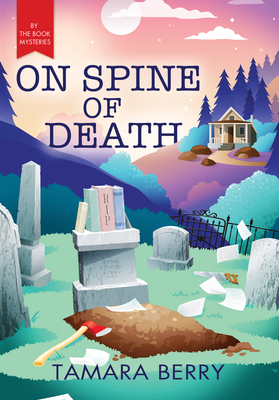
On Spine of Death, by Tamara Berry****

The By the Book mystery series began earlier this year with Buried in a Good Book, and I knew right away the series was going to be a winner Author Tamara Berry is on a roll, with On Spine of Death, the second in the series, already on the shelves. Tess Harrow is our protagonist, and her teenaged daughter, Gertrude, helps more than she hinders, while also keeping us entertained.

The premise here is that while renovating and remodeling her late grandfather’s hardware store, multiple sets of human remains are unearthed. It’s hard enough to be accepted into a small town, but now half of its denizens are convinced that her granddad was a serial killer! Now Tess is on a mission to find out whose bones those are, and how they got there.

There are tropes here that usually make me cranky. We’ve got the hot-for-sheriff trope, and the must-clear-my-name (or that of a loved one) trope, but it’s testament to Berry’s authorial chops that I don’t think about either of them much until the book is over. Her droll humor and nicely turned out characters keep the pages turning. This is a series that doesn’t take itself too seriously, and that’s just what I need sometimes.

I recommend this clever little cozy mystery to anyone needing a break from the world around us, along with a good chuckle, and I look forward to the next in the series.

The Fortunes of Jaded Women*****

The Fortunes of Jaded Women by Carolyn Huynh, is hilarious and oddly touching. It’s the best debut novel of 2022, and it isn’t as if there was no competition. My thanks go to Atria Books and Net Galley for the review copy; this book is for sale now.

Mrs. Mai Nguyen was born in Vietnam, but has lived most of her life as a Californian. When we meet her, however, she has flown to Kauai, the home of a renowned Vietnamese psychic. The psychic tells her that the year ahead will be a pivotal one, the one in which she must repair her relationships with her sisters and her daughters. There will be one wedding; one funeral; and one pregnancy.

Well, now.

Nobody likes to be estranged from a family member, and yet it happens. But all of them? Both sisters, and her daughters, too? (No brothers, and no sons, either.) But surely, it isn’t her fault; after all, there’s the curse.

Chapter four is when everything kicks up a gear, and I have seldom laughed so hard. Mrs. Minh Pham is the first to arrive, and she has my attention from the get-go when she slips the waitstaff some money and explains there could potentially be a “small, tiny, little shouting match, with a propensity for small, tiny, little objects to be thrown through the air.” Mrs. Pham is the middle daughter, and is accustomed to being the mediator in any dispute. She takes all the precautions she feels are wise; she parks near the door for a fast getaway if necessary. She removes the sharp utensils as well as the chopsticks from the table, and requests paper plates and plastic cutlery. “Mai had a reputation for throwing things.”

As the women arrive at the dim sum restaurant, they flash their fake Louis Vuitton handbags and immediately set about trying to one-up one another with regard to social status and affluence, and especially—oh yes, especially—that of their respective daughters. Within three minutes, a donnybrook ensues, and the other diners, who are also Vietnamese and well acquainted with the curse of the Duong sisters, begin placing wagers on the winner. The sixty-something sisters commence throwing things at each other and are gently escorted out of the restaurant. They head for a bakery, and they get kicked out of there, too. Finally, the three of them end up on a park bench, their hair and clothing in dishabille, and yet none of them makes any move to leap up and go home.

These are not spoilers; this all takes place within the first 17 percent.

The chapters change points of view, moving between the sisters, their elderly mother, and their daughters, all in the third person omniscient. The fascinating thing is, these crazy behaviors, and the ways that they mold and shape their daughters and their relationships, all fit perfectly.

Although the setting changes, from Orange County, California to Hawaii to Vietnam to Seattle and beyond, this story is character based, and that’s my favorite type of novel. The skeezy men they date—mostly white boyfriends with Asian fetishes—make it even funnier.

The ending is perfect.

This is one of those rare galleys that I may actually read a second time for pleasure. One thing I know for sure is that Huynh is on my radar now. I can’t wait to see what her next book looks like!