Mission: Jimmy Stewart and the Fight for Europe, by Robert Matzen****

missionjimmystewartIn Mission: Jimmy Stewart and the Fight for Europe, Robert Matzen provides an engaging, compelling memoir that focuses primarily on Stewart’s time as an aviator during World War II. Thanks go to Net Galley and to Goodknight Books for the DRC, which I read free in exchange for this honest review.

The book begins with Stewart’s childhood in a small Pennsylvania town. His is a close knit family with a strong military tradition. An outstanding student, he is educated at Princeton and falls in love with theater one summer. He hits the road for Hollywood to fulfill his dream.

Because of the title, I am taken aback at the amount of celebrity gossip that is included in the first portion of the biography. Matzen wants us to know that Stewart used his skinny-awkward-young-man routine as a sort of foreplay to work his way between the sheets with one well known actress after another; he lists many of them. I could have lived without this part, but maybe you’ll enjoy it. If like me you are really only interested in the military aspect of it, skip the Hollywood part at the start and pick it back up when he enlists. Eventually this is what I did.

Once there, the story is fascinating. Stewart resolutely straight-armed studio efforts to keep him in the USA or use him to entertain troops, as some actors that are drafted chose to do. He angers a studio head who actually tells him, “You’ll never work in this town again”. He decides he is going to do his part like any other man, apart from the fact that he had always wanted to fly and now has the money for a private plane and flying lessons. Once he is actually in uniform, he is able to become the aviator he has dreamed of being as a youngster.

As Martzen unspools Stewart’s story, which had to be difficult to research given Stewart’s resolute refusal to discuss that period, I am instantly engaged. I had known at one time that the planes were not heated back then, but hadn’t fully appreciated the dangers and challenges posed by the cold alone once in the air. A man could suffocate if he didn’t regularly break the ice off of his mask. Men could and did lose body parts to frostbite.

The stories of the men that would eventually serve under him as he rises in rank, not due to strings pulled by authorities but as he has wished, by merit and leadership capability, are also both interesting and poignant. Reading the way the pilots name and decorate their planes, how individual aircraft with idiosyncrasies that make them handle differently so that the pilots strongly prefer to fly their own ships, is interesting, and  reading the personal details and in some cases, the deaths of these men is wrenching in some places, poignant in others.

When Stewart has completed his military service, he looks at least ten years older than he is. He’s seen a lot. If he returns to Hollywood, there’s no chance he will play the same roles he used to do. He stalwartly refuses to exploit his time in the service by making World War II films, which are enormously popular, and for a long time, his phone doesn’t ring. He’s sleeping at his parents’ house in his old childhood bedroom, wondering what will happen. But in time he hears from Frank Capra, who has an idea for a picture “based on a story titled ‘The Greatest Gift,’ about a man from a small town who wishes he had never been born. Jim was the only actor in Hollywood whom Capra considered for the role.”

Despite the sense of alienation he experiences with his return to the other-worldly, glitzy city after his gritty, intense experience in the war, Stewart is glad to be back, and he plays what will become an iconic role, that of George Bailey in “It’s a Wonderful Life”. He credits Capra with saving his career, and is overjoyed to be back:

“He was engaged in something magical again, something to interest people in the art of living, rather than the art of dying.”

The book also discusses Stewart’s lifelong friendship with Henry Fonda, and his marriage. We get a brief overview of the peacetime lives of the surviving members of Stewart’s first crew.

If it were up to me, I would remove all of the somewhat jarring photos at the end of the book that show Stewart alongside one actress after another, and I’d replace them with photos and maybe diagrams of the planes we hear so much about. A map here and there wouldn’t hurt, since we follow his flight paths and it’s sometimes hard to visualize where these places are. I used Google, but would like to see these included as part of the published memoir, perhaps in the center, where they’re most relevant.

I recommend this biography to fans of Stewart’s, and I recommend most of this book to those with an interest in military history.  The book is available to the public today, October 24, 2016.

Titles You’ll See Here Soon

The last time I put up a preview page, it was in the midst of household chaos, and I made the post by way of apology for not having a review to put up. I was surprised by the positive feedback I got, and so today, even though I have recently posted a review and will have more soon, I thought I’d show you what’s next. There are some repeats from my last preview that I haven’t done yet, but I’m happy to say most of those are done. Here’s what you can look for between now and Thanksgiving, barring catastrophe:


The Big Change: America Transitions Itself 1900-1950, by Frederick Lewis Allen***

thebigchangeamericatr2.5 rounded up. The Big Change was a National Book Award finalist back in the day as well as a New York Times bestseller. I was invited to read and review it now that it’s being released in digital form; thanks go to Net Galley and Open Road Integrated Media. I’ve read and reviewed more than 50 titles for this publisher, and they’ve been wonderfully tolerant when I have written less than glowing praise for a book such as this, whose shelf life is well and truly over. This title is available for purchase now.

Allen’s book is written as a popular history. For a lot of people that makes it more accessible than a more scholarly approach would. As for me, I appreciate a citation, and I read those notes to see where the author gets his information. If he’s citing other secondary sources, the obvious thing to do is go read the secondary sources instead. If he’s done some real work, puttering from one obscure regional library to another in order to peruse their rare books, original diaries of heroes long gone, and so forth then I know I have found a researcher who can do me some good.

But for those delving into this period for the first time, this is in most regards a sound overview of the period in question, kind of like a contemporary history 101 for white men. Allen covers the turn of the century, when capitalism was unchecked and unashamed; The Progressive Era and World Wars I and II; the Depression, and the postwar boom. He devotes some of his space to the huge labor struggles and mentions the IWW (International Workers of the World, or ‘Wobblies’). The uses a friendly, readable tone and if there had been any women or people of color anywhere, anywhere, anywhere (other than a quick nod to suffrage) I might have found another star. Or half a star.

Having said that, I should also point out that Allen was not especially conservative or reactionary in comparison to other historical writers during the 1950’s, which is when he wrote and published this. In fact, anyone that did include women in a more than passing manner, or that included people of color, was considered a radical by many. Most academics would have laughed at them. So it’s all about context; some best sellers of the past, such as the Pulitzer winning Bearing the Cross, David J Garrow’s biography of Dr. Martin Luther King, just get better with time; others, like this title, have a more limited shelf life.

I’d recommend this title to those with a special interest in the time period, but only as supplementary material.

George Washington’s Secret Spy War: the Making of America’s First Spy Master, by John A. Nagy***-****

georgewashingtonssecretspyNagy does a more than serviceable job in documenting Washington’s intelligence methods. Thank you for the DRC, which I received free in exchange for an honest review from Net Galley and St. Martin’s Press. This title is for sale today.

Washington first learned spy craft when he was fighting for the British Crown during the French and Indian war, a nasty conflict that puts the American Revolution in the shade in terms of lives lost and financial expense.  Later he would take the education he had gained as a member of His Majesty’s forces and use it to lead the American colonists to victory as citizens of an independent nation.

Nagy conscientiously documents his case that it was this knowledge of spy craft that won the Revolution. He cites everything, and he uses primary documents that you and I would never ferret out in order to do so. Students of the American Revolution, the French and Indian War, or the history of American intelligence-gathering should consider this book an indispensible addition to your research material.

In the tradition that continues to this day, Washington found there were only two possible outcomes once a spy was apprehended. The first and most usual thing to do was hang them. Once in awhile one could turn them. And he had absolutely no scruples about torturing them first and hanging them later.

As a popular read, I rate this title three stars, and it’s really not due to any shortcoming of the author’s. He quotes extensively from primary documents such as Washington’s diary, and he didn’t use the same expressions and syntax that are used now, nearly two and a half centuries later. The accepted speech mannerisms for that time are unwieldy to us, and make for some difficult, hyper-literate reading that is not always enjoyable.

But for those that need the information, there are not a lot of places to go, and I think you need this one. As research material this is easily a four star book, and depending upon one’s area of study, it might even be more.

Recommended to researchers and students in this realm.

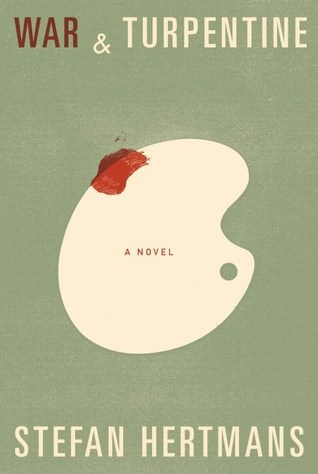
War and Turpentine, by Stefan Hertmans***

warandturpentineI received a DRC of this memoir from Random House through its First to Read program. I read the book free in exchange for an honest review. Though it wasn’t a good fit for me, I think there are niche readers out there that might enjoy it.

This memoir chronicles the life of the author’s grandfather, Urbain Martien, a Dutch worker that fought in World War I. The son of a brilliant artist, Martien worked whatever jobs were available until the war broke out. He had hoped to become an artist like his father before him, but instead wound up painting buildings just to earn a living.

Apart from its historic aspect, this title is one that I knew would be outside my comfort zone. Since retirement I’ve pushed myself outside my usual well-worn paths and taken a few risks, and though it doesn’t always work out for me, a few unlikely choices have affected me so favorably and so deeply that I have continued to push my own walls outward. I don’t know a thing about art, but I thought it might not matter. I pushed myself to read The Goldfinch, which was about a stolen museum painting but also much more, and once I did I couldn’t believe I had let the DRC pass me by. So I had this in my mind; War and Turpentine might be one more opportunity that I shouldn’t miss.

The basis for the memoir is a series of notebooks that the author’s grandfather gave him, a journal of sorts, and the memoir itself is done not in the usual linear fashion, but as a series of snapshots. I confess I prefer my memoirs to start at the beginning and end at the end, if not the end of life, then at the end of the period being discussed. But an artist would perhaps not have thought that way; I can see the reason for selecting a different format, but because there was no discernible story arc, I found myself floundering and eventually avoiding the book altogether.

The prospective reader should know that along with some really strong imagery and other word smithery, the memoir contains some very graphic violence.

I suspect the ideal reader for War and Turpentine would be one that loves art, art history, and European history.  It is for this niche audience that I recommend this book.

Notorious RBG, by Irin Carmon****

notoriousrbgIf I were to review the subject of this memoir rather than the book itself, it would be a slam-dunk five star rating. As it is, I can still recommend Carmon’s brief but potent biography as the best that has been published about this fascinating, passionate justice of the Supreme Court of the United States. I have no doubt many more will follow, and it’s possible I will read every one of them. As it stands, this is a rare instance in which I turned my back on my pile of free galleys long enough to ferret this gem out at the Seattle Public Library, because I just had to read it. You should too.

I’m an old school feminist from the seventies, but Ginsberg is one from the fifties. How is that even possible? Imagine the courage it would take to step forward at a time when no women’s movement even existed! She sued Rutgers University for equal pay and won. Later, she was the first female law professor at Columbia University, and she sued them for equal pay too. She volunteered as an attorney for the New Jersey American Civil Liberties Union, represented custodians in a class action suit, and later, when the Free Speech Movement on campuses in the 1960s began to warm up, she was already red hot and ready to go.

The best parts of Carmon’s memoir are the primary documents, because we get to see RBG’s own words. Ginsburg was made a federal appeals judge by President Jimmy Carter and moved to fill a vacancy on the U.S. Supreme Court by President Bill Clinton. She’s issued a number of tremendously eloquent decisions, and has chosen to read her dissent aloud, a thing not usually done, a record-breaking five times at the time this book was written. The lacy-looking necklace that fans out on all sides of her neck is her dissent collar, and so those that hear the Court deliver its decision can see exactly where Justice Ginsberg stands as soon as they see what she is wearing.

At times such as these, in which a woman in Indiana was recently sentenced to 20 years in prison for having an abortion [reference mine], it gives women hope to know that there is a fighter on the Supreme Court who’s looking out for our interests. It doesn’t mean that women can step away from this political battle, but it’s a thing that encourages us and lends us fortitude.

In January, it is rumored that Ginsberg will release her own memoir, one that relies heavily on her court decisions. Likely this will be an even better memoir than this one. For now though, this uplifting, funny, well-documented memoir is as good as it gets. Go get it.

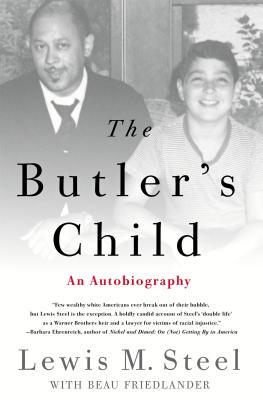
The Butler’s Child: An Autobiography, by Lewis M. Steel****

thebutlerschildLewis M. Steel has a long, noteworthy career as a civil rights attorney.  He was an observer during the Attica Prison riots; worked for the NAACP during the Civil Rights movement, and later defended boxer Hurricane Carter against a frame-up charge of murder. And I was permitted to read this story free and in advance, thanks to Net Galley and St. Martin’s Press in exchange for this honest review. I rate it 3.5 stars and round upwards; it is now available to the public.

When I first approached this title I expected to see what the life of a butler’s son was like. In fact, Steel’s social class is at the other end of the spectrum. An heir to the Warner Brothers fortune, he spent much of his time in the company of the family butler, and he was deeply affected by the emotional distance that this family servant, whom he had innocently regarded as a father figure, began to demonstrate as Steel grew older. Later, as an adult, he realized that this faithful retainer, an African-American man, surely had a family and life of his own that he went to visit on his two half-days off work, and he began to wonder what he might do to tear down the wall between the worlds of Caucasian families and Black folk. Ultimately he decided to become a civil rights attorney, and he credits the man that helped raise him as a key reason.

The NAACP of the Civil Rights era—the National Association for the Advancement of Colored People– was deeply immersed in litigation as a means to end segregation. Again and again, racist judges sat in court, north and south alike, and they told the NAACP to go to hell even when their evidence and research was baldly, plainly in the plaintiff’s favor. The NAACP continued to push litigation over mass action because of a strong conviction that if they could get a case heard by the Supreme Court, relatively liberal in many regards and headed by Chief Justice Warren, then surely justice would be done.

It didn’t shake out that way. Outraged over the way the nation’s highest court failed to provide equal protection to its Black citizens, Steel wrote an article for Time Magazine titled “Nine Men in Black Who Think White”, and was summarily fired from the NAACP, who still wanted to curry favor with that court. Many of his colleagues walked out of the NAACP offices in protest.

A common question among Caucasians that want to fight for the rights of people of color in the USA is what can we do?  How can one use this white privilege that exists whether it should or not, to change US laws and society for the better? And this question is raised exponentially when one is an heir, a ruling class scion that can do a tremendous amount for the cause in which he believes.

This reviewer has a friend that found himself in this situation. The distant but only heir of a corset magnate’s fortune, he decided that the best way to seek justice was to walk his talk. Reserving a small percentage of the fortune for himself—which is still a tasty enough chunk to own a middle class home in Seattle, take a vacation abroad annually, and eat in restaurants instead of his own kitchen—he donated the vast majority of his personal wealth to the organization he thought best. He doesn’t live in an all white neighborhood; doesn’t have a household staff; and he does blue collar work on the railroad so that he can talk politics with other working people. Because to help people the most, one needs to be among them and facing similar circumstances to those they face. So he gets up at crazy o’clock in the morning, goes out and gets greasy and banged up with everybody else, and then he goes home and cleans his own house and mows his own grass. He gets that more people listen when you put your life where your mouth is, and he believes the future of the world lies with the working class.

So when Steel commences his hand wringing over how wealthy, how privileged he is and how bad he feels about it, I want to say, Cry me a river. Steel freely admits that he enjoys his lovely home that looks down on Central Park and allows him a lovely view of the Macy’s Parade every Thanksgiving. He enjoys the servants, and his neighborhood is all white. He sent his children to all white private schools even as he fought to integrate the public schools that he wouldn’t let his own children attend in any case.

At one point, Steel mentions that his therapist told him to stop whining, and I wanted that doctor here in the room so I could offer him a high five.

Now that I have addressed the elephant in the room, I have to say that Steel’s memoir, despite the wealthy liberal whining, is worth a read for those interested in Civil Rights history and in particular the part of it that has played out in the courtrooms. You don’t have to like the author to benefit from the treasure trove of information in the pages of this memoir. Steel has been involved in some landmark cases, and he is at his best when he talks about the cases he has taken and how they shook out.

Black lives DO matter, and those of  us that think so need all the information available to fight that fight, and there are many worthwhile lessons that still apply right here, this book is worth your time and money regardless of whose memoir it is.

This book was released earlier this month, and is available for sale now.

Fragments of Isabella: A Memoir of Auschwitz, by Isabella Leitner****

fragmentsofisabellaIsabella Leitner was a Holocaust survivor, and she scribed her memoir using brief entries similar to a diary in format. The length is just 120 pages, about the size of a novella. I was asked to read and review this memoir free of charge before it was released digitally. Thanks go to Net Galley and Open Road Integrated Media for the invitation. This title was just released, so it is available now for purchase.

I confess I struggle with Holocaust memoirs these days. Part of me has decided not to read any more of them. I am out of the classroom, so my ability to educate young people of today about the horrors of the past is nearly at a standstill, apart from the knowledge I pass on to my grandchildren. Reading another Holocaust memoir isn’t going to make the ending any better; it’s always going to be horrifying, and heaven help me if I should become so accustomed to reading about the Holocaust that it doesn’t affect me that way anymore.

So though I swear off Holocaust memoirs from time to time (and am doing so right now, again), when a particular memoir is offered, frequently there is some aspect of this one that sets it apart from the crowd, and so it is with Isabella’s memories. Not many survivors managed to get out with family members at their side; Isabella and her sisters were unusually clever and imaginative in finding ways to survive. This along with the invitation induced me to roll up my sleeves and revisit this calamitous part of history once more.

When the notorious Mengele motioned with his deadly white glove to send Isabella and one of her sisters to the extermination side, they found a way to creep back around and intermingle with the side selected to be kept alive as workers. At one point they escaped and found an outstanding hiding place…but before they were identified as missing, the Germans began cooking potatoes, a luxury Isabella and her sisters could not resist, and they slunk out of their haystack and into the food line. There are a number of these instances, and I found the short chapters merciful, because I could only read this in small bits and pieces.

Most powerful of all, as far as I am concerned, is the clear, unmistakable truth that Germans knew, absolutely had to know, exactly what was going on around them. As their own lives improved materially, they chose to look the other way as skeletal work crews of Jewish and other prisoners were marched directly down the main streets of towns and villages on a daily basis:

“Germany was one giant concentration camp, with Jews marching the length and breadth of the country, but these refined, sensitive Germans never saw us. Find me a German who ever saw me. Find me one who ever harmed us.”

The memoir is of necessity harsh in its remembrance. The teaser for this story bills it as having been written for young adults, but the background material required to understand some of what is said requires a good deal of pre-teaching.  In other words, if a teacher or home-school supervisor has run out of social studies time and is looking for a shortcut to make up for teaching about the Holocaust, this isn’t it. Frankly, this reviewer and teacher wonders how a full unit regarding the Holocaust could be lower on the chain of important social studies curriculum than anything else, apart from possibly the Bill of Rights (for US students). But if one is determined to substitute one memoir for a longer unit that gives more information, use Elie Wiesel’s Night, which stands on its own.

Finally, any teacher or prospective reader needs to consider exactly how searing this material is, and all the more so to the young mind; to Jewish readers; to anyone with triggers.

I should also mention that a bisexual guard at Auschwitz, a woman that was interested sexually in one of the prisoners, is referred to as “aberrant”, not for being a guard at such a place, but for her sexual orientation.

Do I recommend this memoir to you? Those that are studying the Holocaust should read it; the fact that it’s written by a survivor makes it a primary document. But those that are looking for an engaging, enjoyable slice of history should look elsewhere. There are no light moments, no surprisingly kindly individuals that go out of their way to help. It’s a cold, hard story, and the only joy is provided up front when we learn that she gets out alive and not alone, as so many Holocaust survivors found themselves.

It’s a hard, hard lesson, but given that revisionists are diligently trying to deny that the Holocaust actually occurred, attempting to rake over the evidence as if it were not nearly as serious as we may believe, it also has a great deal of value.

Because Isabella was there.

The Center, by Stewart Alsop**

thecenterAlsop’s book is a collection of essays describing Washington, DC as it was in the 1960’s. Everything here was written then, so it’s a chance to jump back in time and see what the media—and this reporter in particular– thought was appropriate for mainstream Americans reading the news of the day.  I was invited to read and review this book thanks to Open Road Integrated Media and Net Galley in exchange for this honest review. I always hate to pan a book when I’ve been invited; it sounds as if I am insulting the host after eating at his table. However, the truth is the truth, and I see this title as fitting a narrow niche audience, but not so much the general public.

Alsop takes us back to the time that the USSR was a country and looked as if it was going to stay that way. He refers to Latvia and Estonia as former countries. Journalists that are female are referred to as “lady reporters”, and sodomy was still a crime on which the journalist frowned and assumed we would, also. He refers to justices of the Supreme Court and elsewhere as men, and with the assumption that this also is according to nature and will never change.

Perhaps the most chilling aspect of this collection is the chummy way he refers to the Miranda case, in which it was determined that those about to be charged with a crime had to be told that they had the right not to speak against themselves and to have an attorney. He explains that most of the court’s decision making was done in restaurants and over the phone long before they ever met, and so this case was “almost certainly” decided before the justices ever met in chambers.

This reviewer’s father-in-law is a retired judge that served many ethical decades for the State of Oregon, ending his career on the State Court of Appeals. Talk like Alsop’s would make his blood run cold—or maybe extra hot, actually. His ethics were so firm and fair that he would not tell his own family, when we dined in the privacy of our home or his, who he planned to vote for in the upcoming election…because judges are supposed to be above partisan politics. He did not discuss his cases with family, and I would stake the deed to my house on his not having entered into any chummy agreements over the phone when serving at any level on the bench.

So for those interested in the journalism of the 1960s, here’s a trip down the rabbit hole that will take you there, or at least to one version of it. Those interested in the sociology of that time period might also find this useful.

Those interested in building a better world may be encouraged to see how far society has come since this dark time. If you think things are bad now, check out what they were like 50 years ago. But don’t pay full jacket price unless it’s important to you.

You can have this book now if you want it.

Florence “Flo” Kennedy: the Life of a Black Feminist Radical, by Sherie M. Randolph***

Florynce Flo KennedyFlo Kennedy was a force to be reckoned with, dismissed by a portion of mainstream Caucasian America as a kook, yet far too clever, too cagey, and too damn smart to be wished away by those that wanted to defend the racist, sexist status quo. When I saw that a memoir of her life was up for grabs at Net Galley I requested a copy immediately, and then took a long time to finish reading it. Part of my tardiness is a stubborn dislike for the PDF format, and so I apologize to University of North Carolina Press and my readers for being so slow; yet a small part of it was the surprisingly dry quality of the memoir. Given the subject, I had expected this biography to set my hair on fire.

Though she was new to Randolph, according to the introduction, Kennedy was no stranger to those of us in the Boomer generation. Her audacity, her wit, and her raw courage that at times bordered on recklessness made for great theater and fascinating press coverage. Raised by parents that taught her not “to take any shit” long before the Black Power movement or even the end of Jim Crow, Kennedy pushed the margins. She studied, worked, and fought her way into Columbia Law; she defended famous individuals like Billie Holliday and Stokely Carmichael, and she did it with style.

By far the most significant part of her legacy was the leadership she demonstrated in bringing together the women’s movement of the late 1960’s and 1970’s with the Black Power movement. As a young woman sending out my own tendrils into the larger world apart from high school and my parents’ home, some of the most influential feminist speeches given were by Kennedy and Gloria Steinem, and sometimes they appeared together. I never got to see them in person, but it didn’t matter that much, because I knew what they had written and what they had said, and soon I was attending meetings of NOW, the National Organization for Women, which was the leading women’s rights organization in the US before their split over women in the military later in the 20th century. Because of women like Kennedy and Steinem, I fundraised my fare to national marches on the Capitol for women’s right to choose whether to reproduce, and to fight for the Equal Rights Amendment.

So I owe Kennedy a great deal.

Kennedy’s confidence and controlled rage positively crackled; she made headlines and was often seen on the evening news. Once when I told a classmate that I wanted to support a female candidate for president of the US, he told me that if I was going to vote for a protest candidate, I should shoot for the moon and vote for Flo Kennedy.

He had a point.

I don’t agree with everything Kennedy said or did, particularly her suggestion that rather than expending great effort to end the US war against the Vietnamese people, Americans should focus their energy toward supporting Black owned businesses. Say what? But nearly everything else she did was so vastly ahead of her time that it made me gasp in awe.

I understand that a memoir produced by a university press is generally going to be scholarly in nature, and that’s one reason I request works like this that are associated with such reputable sources. But a scholarly treatment doesn’t have to drone. By arranging a few of Kennedy’s livelier quotes up front and at chapter beginnings and endings, she might receive the treatment she deserves, instead of being consigned to the dustbin of history a mere decade, give or take a year, after she wore a tee shirt reading “I had an abortion” during her most senior years.

So although I know Randolph is new to Kennedy and probably also has some academic parameters within which she has to work, I still feel that Flo’s memoir should reflect her verve and character to a greater degree.

Nevertheless reader, if you care about women’s rights and the rights of African-Americans, if women’s history and African-American history hold meaning and importance for you, I think you should read this memoir anyway, because as of this writing, it’s really the only memoir of Kennedy that’s available. You can find some of her speeches in feminist collections, but no one else has tackled this woman’s life, and so until and unless something better comes along, you should get this and read it. Because a dry, somewhat conservative treatment of Kennedy is better than nothing.