
Salvation Lake, by G.M. Ford*****

salvationlakeFord is the rightful heir to the late great Donald Westlake, a writer of monstrously amusing mysteries full of quirky sidekicks and kick-ass, zesty dialogue. There’s nobody like him in Seattle or anywhere else. I gobbled up the DRC when it became available via Net Galley and publishers Thomas and Mercer,  so I read this free in exchange for an honest review. But I’ll tell you a secret: if I’d had to, I’d have paid for this one had it been necessary. And so should you. It’s for sale today, and you can get it digitally at a bargain rate.
But back to our story.  We open at a bar called the Eastlake Zoo. The band of misfits to which detective Leo Waterman is tied through bonds of family history and quixotic affection are rocking the house in “well-lubricated amiability”. In fact, there’s a story being told right as we begin, and if it doesn’t hook you, check your pulse, because you’re probably dead. Here:

“Red Lopez was a spitter. When Red told a story, it was best to get yourself alee of

something waterproof, lest you end up looking like you’d been run through the

Elephant Car Wash.

‘So we was comin’ down Yesler,’ Red gushed. “Me and George and Ralphie.’

Everyone had found cover, except the guy they called Frenchie, who was so tanked

he  probably  thought it was raining inside the Eastlake Zoo…”


Right?

As it happens, Waterman, who’s inherited his old man’s ill-gotten wealth, has been lying low and enjoying the good life, but now his late father’s hideously distinctive overcoat has been found on a corpse, and  Timothy Eagen of the Seattle Police Department want to talk to Leo. Now.  There’s bad blood between them:

“…he hated my big ass the way Ahab hated that whale…Eagen was a skinny little turd with a salt-and-pepper comb-over pasted across his pate like a sleeping hamster.”

Since SPD has been under the eye of the Feds lately, Eagen can’t give full rein to his attack-Chihuahua impulses. SPD needs to provide “the kind [of law enforcement] that doesn’t look like Ferguson, Missouri or Staten Island, New York.” So Waterman doesn’t get shaken down or tossed into a cell, but his curiosity is piqued, and since he has no paying job and time on his hands, he finds himself checking into a few things. One thing leads to another.

What relationship does the victim, known as the Preacher, have to Mount Zion Industries, whose pamphlet is found among his effects? Before we know it, Leo is off and running, checking out Salvation Lake, located at the end of Redemption Road. Events tumble one upon the next, and I found that instead of reading in my bed that evening, as is my usual bedtime custom, I was reading on it, bolt upright and clicking the kindle to go a little faster please.

Waterman may have come into money midway through life, but his perspective is a working class perspective. His take on the city’s thousands of homeless denizens and the relationship that cops have to those in need strike a sure clear note that must surely resonate with anyone that’s been paying any attention at all.

Meanwhile, Salvation Lake is written with warp speed pacing, sharp insight, authority, and the kind of wit that can only come from a writer that has tremendous heart.

Don’t miss it. Get it now.

Good Night, Mr. James: and Other Stories by Clifford D. Simak*****

goodnightmrjamesSimak was a prodigious writer of science fiction during the middle of the twentieth century; he was the third Grand Master of the Science Fiction and Fantasy Writers of America, and won numerous other awards, among them the Nebula and multiple Hugo Awards. His short stories are being republished digitally, and as fast as Open Road Integrated Media can publish them, I snap them up, having already read two volumes; this is volume eight. Thanks go to ORIM and to Net Galley, from whom I received a DRC in exchange for this honest review.

There’s a special sort of satisfaction that comes from reading science fiction written during the era that followed World War II, and in seeing what technology science fiction writers imagined might be around the corner. Many times we read stories of passenger flights to other planets and galaxies, stories of mind control, and yet nobody ever imagined that one day we would each have a small telephone in our pocket that would double as a camera, wristwatch and telegram service. But the musings and imaginings of old school science fiction are just plain fun, and they don’t require the technical proficiency that some of today’s writers often require in order to read, understand, and enjoy the stories they produce.  Sometimes a bit of philosophy and world view sneaks into these stories, and we may find kindred spirits in the most unlikely places.

The title story used to open this collection is a fun one, and the tension that accompanies Mr. James as he approaches the enclosure where he believes he’ll find the ‘puudly’, a creature from another world unwisely snuck into the present one, is almost unbearable.  What follows on his journey home is absorbing as well. But this wasn’t my favorite story. There are two others I found even better, but first, let’s get this other news out of the way.

The bad news is that there is just a trace of the racist stereotyping common to white folk of this time period, but it’s limited to one story, and it’s scarce. If you read my reviews often, you know that if I see it, I call it out, and my tolerance level is much lower than that of most reviewers. It’s in one story which isn’t all that good anyway, and it pertains to Asians that are featured briefly. The story is “The Gunsmoke Drummer Sells a War”, and it’s a cowboy tale of the sort that was popular in the USA during the 1950’s. A man of Chinese origin is referred to as ‘The Chinaman’, and during his short tenure in the story, he is untrustworthy.  He speaks in a “sing song” cadence. This story cost the book half a star, but it’s my view that you could buy this collection, skip this story, which is overlong and contains some less than stellar dialogue, and you’d still get your money’s worth. That’s all the bad news there is here.

“Reunion on Ganymede” made me tremble with mirth, nearly causing me to wake Mr. Computer, who slumbered peacefully beside me. In this story Gramps is dying to go to the reunion of veterans of a war that took place between the “Marshies” (Martians) and the “Earthies” .  His family is trying to dissuade him from taking his flame gun with him. They tell him the weapon is too old to be trusted, but clearly it isn’t the gun, but rather the owner that they’re worried about. As developments take an unexpected turn, it becomes obvious that there are some things for which one just can’t plan. Eventually we see that Gramps and other characters unforeseen by his kinfolk are on a collision course, and what follows is pure poetry.

However, my very favorite story is “Kindergarten”. A man has bought a cabin and retreated to it; he’s been told he has a short time to live, and so he’s determined to do it in pastoral solitude. Imagine his surprise when he goes for a stroll one day and finds the mysterious machine on his property! It’s certainly not a saucer, yet it’s also not from Earth. It couldn’t be. And the whole thing unspools in a way I interpret as being subversive and delicious. Please note that the entire collection is edited and introduced by a close friend of the author’s, the latter having died in 1988. The editor’s spin on this story is completely different from my own, and yet knowing this didn’t make me enjoy it any less.

If you’ve had the pleasure of reading the We Install story collection, or Grotto of the Dancing Deer collection, you know what kind of prose Simak spins, and if you like old school science fiction, you almost have to like most or all of his. If you haven’t dipped a toe in the water yet, hop on in. Between this collection and at least nine others, there’s plenty to keep you reading happily for quite some time.

As a last note to teachers looking for suitable classroom stories, there’s no sex or foul language here, but be prepared to discuss or explain some of the slang of the period in question.

Highly recommended and available to the public now.

Cryptoscatology: Conspiracy Theory as Art Form, by Robert Guffey***

cryptoscatologyThis particular book is not in my wheelhouse, but I was offered a free copy in exchange for a fair and honest review, and the person doing the offering is a friend of the author’s and of mine. Thus, I found myself spiraling down the rabbit hole, reading about everything from Watergate  to the connection between the Freemasons and the Mormons. This book is available to the public right now.
Guffey’s purpose as stated at the outset is to offer an encyclopedic view of every conspiracy theory prevalent today. He organizes his book into sections dealing with pop culture and ‘mind control’; secret societies; conspiracies and the dominant Western religions; conspiracies in ‘high places’, which refers to heads of state, with the most attention being focused on Bush, Cheney, and Hitler; and conspiracies and the paranormal.  He tells us he wants to tease apart the conspiracies that have been proven to be true, such as the Watergate cover-up, from those that are from among the lunatic fringe, such as those that claim, despite all evidence to the contrary, that President Obama is secretly a Muslim and not really an American citizen. But most of what he discusses is material that he considers to be fuzzy and ambiguous, a matter of perspective.  Most of these things I regarded before and after reading Guffey’s book as more material for the lunatic fringe.

To be sure, there are some vital nuggets to be found here. Many people aren’t aware, for example, of programs of involuntary sterilization. Guffey points out that that Ronald Reagan, when he was governor of California, had been convinced that there was no moral wrong in sterilizing African-American men that landed in Californian psychiatric wards and in prisons, because after all, these had been proven to be the most violent members of the population…right? Furthermore, Black kids, categorized as “pre-delinquents”,  that hadn’t actually done anything wrong might receive brain implants without their knowledge or consent so that they might be tracked and studied. However, Guffey also points out that this program was killed by more sensible people in state government and it was never implemented. This and much of the other meaty, credible material in his book was made available through the Freedom of Information Act, and because it was relatively easily found, I was frustrated that Guffey didn’t offer more widely known sources to back up his statements.  And I was also frustrated that he didn’t discuss the involuntary sterilizations of poor Black women in New York that sought abortions in the 1970s. It was ripe fruit hanging from a vine, but he left it where it was, and without providing it any mention, went on to talk about Jonestown and mind control.

Reading Guffey’s findings in a wide variety of places, one might readily accept his leaps as he adds his facts to sometimes astonishing conclusions, because he’s a good writer. He’s very fluent, but as a researcher I found him wanting. This reviewer’s spouse, who more or less skimmed, said it looked like solid work, but he didn’t read the sources cited at the ends of the chapters. Anytime something seems peculiar or surprising—no, anytime one is reading nonfiction material based on research—it’s absolutely essential to read the sources. Such audacious claims as are bandied about here should have multiple citations from as wide a variety of well known sources as is possible. In some cases it would have been fairly easy to come up with a lot of great sources in a relatively short time span, yet it isn’t done.

My conclusion: Guffey is a good writer but a less than conscientious researcher. Because of this, it’s impossible to tell which of the widely touted conspiracies examined here are actually verifiable when he hasn’t shown much proof, and which are scantly cited because there’s nothing out there beyond a few tin-foil-hatted survivalists that think it’s true.

There are those that will love this book because it offers at least the benefit of a doubt to the conspiracies to which they already ascribe. I can see these folks right now, sitting in a basement rec room somewhere telling each other, “See? And look here! He says…”

What I didn’t find was any basis for the art form mentioned in the title, beyond a few literary phrases tossed in here and there.

For those interested in today’s most popular conspiracies, this will provide hours of juicy reading. But for academics that need credible sources, this book won’t provide what you need. And that’s kind of a shame.


They Left Us Everything, by Plum Johnson***

theyleftus Plum Johnson is gathered, together with her siblings and other family members, at the family manse following the death of her mother. This memoir focuses on the things she’s learned and the insights she gains over the course of the year it takes to empty and sell the property. Thank you to Net Galley and Putnam Penguin for the DRC, which I received free in exchange for this honest review.
I knew when I requested this story that I was stretching my comfort zone. It paid off big time a couple of times recently–one of them was The Goldfinch—and since there seemed to be a lot of buzz generated around this title, I thought I’d go for it. And I have to admit, this time it was not a good fit. But I am confident that there are readers out there that will enjoy it. Different strokes and all that.

The first thing that jarred me was right up front, and it was a small thing, yet a big thing. The pet the author remembers so fondly—the one that’s buried on the property—was named Sambo. I felt like I’d been slapped, to be honest. If that was the pet’s name, I’d think an author today would have had the sensitivity to change it for purposes of publication.

Sambo???

Enough; let’s get on with the meat of the story. The author has spent years under the domineering gaze of her dying mother. The woman didn’t go fast, and she didn’t go out a pleasant person. In some ways it makes it harder to grieve when someone goes out ugly, because it sends all sorts of conflicting emotions rocketing through one’s senses, which are already jumbled sufficiently at the loss of a family member. And it is in taking time to go through her mother’s things, the more personal ones apart from the things that have resale value, the letters, the journals, the things she saved for so many years, that the author feels as if she really knows who her mother used to be.

I think there are a lot of us out here, Boomer-era adults that have said goodbye to parents or are still doing so, that can relate to this. Often it takes a fair amount of experience to appreciate our parents’ better moments, to realize that some of the things they did for us that we took for granted were not  the same things everyone’s parents did. Plum’s musings made me think of my own mother, a woman that died disappointed with life and darned cranky about it, but who told me about the internment of Japanese Americans and made me use standard English by the time I was five. Like Plum, I find myself wishing my mom could return for a visit to give me one more chance to thank her for the things she did right.

We get a glimpse of the author’s life, the choices she made and what her mother had to say about them. But it was difficult for me to relate to them, not only because of the level of affluence that is demonstrated here, but also because it’s depicted as being part of the everyday landscape. Plum doesn’t feel more fortunate than others, but rather this is what her normal looks like, and while I understand that for some people that is reality, I found it alienating. Art versus tennis? That’s the controversy? In addition, for most of the book we also assume that people are white, because that’s what normal looks like to Plum. There are a few places that break this up a little bit, and it is for that reason, together with the fluency with which the memoir is written, that I rated this 3 stars rather than 2.5.

Figure out who you are, and that will tell you whether this book is your book. It’s for sale to the public July 19, 2016.

The Hatching, by Ezekiel Boone****

thehatching I was never afraid of spiders until I read this book. Thanks to Boone’s monstrous, boisterous, hair-raising new novel, I now eye the ceiling for wolf spiders that hunt at night just before I fall asleep…and I usually find one. I received this DRC in advance thanks to Net Galley and Atria Books, in exchange for this honest review. This book goes up for sale July 5, 2016 and frankly, I don’t know how you’re going to wait that long!
Right at the start, something has gone very wrong.  In Peru, a shadow falls upon a group of helpless tourists and devours them with breathtaking speed. Soon thereafter, China tells the world that it has inadvertently nuked one of its own villages. Just an accident; terribly sorry. Please don’t push that button, because we aren’t gunning for you, oh mighty imperialist powers.

When a bizarre package arrives at the laboratory of Melanie Guyer, she immediately tucks its contents into an glass tank where it can be watched in a secure environment. There. See now, that’s sensible. And yet…

Clear on the other side of the continent, the greater Los Angeles area finds itself under quarantine. With a finger to the wind, one soldier in charge of the containment eyes the razor wire and holding pens springing up and decides to make a break for it while he can. He powers the hell through the closed gate, because there’s a time to sacrifice for one’s country, but there’s also a time to save yourself first:

    He took the last few steps to the truck and had his hand on the door handle  when  he  heard the sound.  It was a sort of scraping…and he noticed there was something wrong …with the shadows. Over there, maybe twenty paces away, one of the shadows seemed to be moving a little, pulsing. He watched it, fascinated, and it wasn’t until a thread of black seemed to fall out of the shadow and unspool toward him that he broke from his reverie.

Uh oh.

However, survivalists in Desperation, California aren’t panicked; they’re gloating. All that preparation for doomsday, and now it’s here. Let’s have a party! The doors are sealed against radiation, against spiders, against whatever. The dog has even been trained to go potty on a little piece of Astroturf. They are so ready.

I wasn’t sure I liked this book at first. The moment when the first spider popped out of the first human host, I made a note in my e-reader saying this is just another version of the 1970’s movie Alien, but with spiders. Still, I continued to read.

When the president of the United States asks quite seriously whether zombies are involved, right around the halfway mark, I wanted to throw my kindle across the bedroom. If it had been a library book, I would have slammed it shut and put it in my tote bag to return first thing in the morning. But it wasn’t a library book, it was a DRC, and so I had an obligation, and I gritted my teeth (president. Zombies! My ass,) and continued reading. And I am really glad I did, friends, because it got so much better.

Let’s go back to the movie Alien. For those unacquainted with this cult classic, the story devolves around aliens that seek human hosts. The setting of Alien is a space ship, so they’re a very long way from home and help; yet they are also contained.  And as I read on, I realized that in Boone’s setting—the entire planet—there are so many more possibilities. I hit about the sixty percent mark and had to munch my way through the rest, if you’ll pardon the expression, until the very last page was done.

I found myself pondering the possibility of a sequel.

I nearly tacked on the fifth star, because this was tremendously entertaining, and Boone breaks up the horror with odd places, few and unexpected, that are laugh-out-loud funny. But then I reflected on the fact that I rated every single thing Michael Crichton ever wrote as four stars, and I see this quirky, horrifying, delicious novel as on a par with Crichton. Rather than hustle back and re-rate everything Crichton ever wrote, which would be a bit impulsive, I stuck to the four star standard.

There’s no explicit sex here, but there’s plenty of gore. Those that love good horror and science fiction should snap this book up right away. And if one is looking for a summer read to keep your nerdy teen out of trouble for a hot minute over the summer, this is a good choice for that set also.

But you’ll never see a spider web in quite the same way once you’ve read it!

Huge fun for anyone not already genuinely afraid of spiders.


City of Darkness, City of Light, by Marge Piercy*****

cityofdarknesscityoflightPiercy is a legend among feminists, and her writing was pivotal in my own development during the late 1970s and early 1980s as a newly-hatched adult. When this title, a novel based on the French Revolution, came out in 1996, I put it on my Christmas list and read it hungrily once I received it. When I noticed that it was released digitally this spring, I scored a digital copy from Open Road Integrated Media and Net Galley in exchange for this honest review. It’s a novel that is definitely worth reading twice.

Piercy is brilliant not only in bringing characters to life—and she did a prodigious amount of work before doing so, reading piles of biographies, memoirs, letters and other documents—but also in conveying the reader to the time and place In question. I think it’s because of this that her novel helped me to understand how such an amazing, incredible thing, the revolution, the democratic impulse that overthrew a monarchy, could end so badly. Dry history texts chronicle the “excesses” of the Jacobins. Say what? How meaningless is that? And it is by being able to see the roles played by key figures in the revolution, including the women that are usually left out, that I can see why the leadership degenerated as it did. An inexperienced working class with no background in how to organize a struggle ultimately paid the price, but in the end, the nation was still better off than it had been beforehand.

Using the grammar and conversational conventions of today for easier access to a popular audience, Piercy transports us back to a time when a life expectancy was less than fifty years for most people; open sewers flowed through the streets of Paris, causing horrible illnesses and a high infant mortality rate; and a starving seven year old child could be publicly hanged for stealing bread.

In fact, the bread riots led by the women of Paris were where it all began.

One thing readers should know if they read this novel digitally is that there is a glossary of sorts, a long list of characters and a few basic facts to identify them, but it’s at the back of the book, so you will want to go over it before you start and then refer back to it when you find yourself confused. The topic is huge, and you may need this cheat sheet, so it’s good to know it’s there. There are so many historical characters here, and if you aren’t fluent in this area, you may lose track of Robespierre, Danton, Madame Roland, and oh of course, Marat. And back then, Camille was a man’s name!

Piercy tells the story using the points of view of a wide range of figures important to this struggle. She gives a fair hearing to the perspectives of those that stood left, right, and center in this conflict, denying a sympathetic ear only to royalty—and even Marie Antoinette is treated with surprising sympathy. I came away feeling as if I knew so much more about the French Revolution and its terrible conclusion when I had read it, and rereading it was even more helpful, because it’s a lot to digest all at once, even if one is already aware of the broad contours of this pivotal time in French history.

When I love a book hard, I push it at everyone that comes within my reach, and I have pushed this particular novel at a lot of people over the years. Given how many times I loaned out my own (purchased) hard cover copy, it’s surprising that it isn’t falling apart, and maybe even more surprising that it’s always been returned to me.

Whether you prefer to read digitally or to purchase a paper copy, City of Darkness, City of Light is the most readable, accessible treatment of the French Revolution that I have seen. The fact that Piercy includes the key role played by women, both among the toiling masses and the elite salons of the intelligentsia makes it even better.

Recommended wholeheartedly to anyone that wants to understand the French Revolution!

The Last Road Home, by Danny Johnson****

thelastroadhomeThe Last Road Home, bold and impressive new fiction by Pushcart Prize nominee Danny Johnson, came to me free thanks to Net Galley and Kensington Books in exchange for an honest review. It tells the story of Raeford “Junebug” Hurley and his friendship with neighboring twins, Fancy and Lightning Stroud. Junebug is Caucasian; the twins are African-American, politely referred to during that time as ‘colored’ or ‘Negro’. The story is set during the Civil Rights movement of the early 1960’s, but in rural North Carolina, the Klan stands tall and strong and absolutely nothing has changed in terms of race relations. Junebug finds himself riding on the fence rail from hell. This fascinating tale will be available to the public in late July. Those that love good historical fiction should read it.
The book begins with one horrible loss after another. At age 8, Junebug’s parents are both killed in a car wreck, and he goes to live with his grandparents.  His life is pleasant and stable, helping his grandpa run the farm, but then his grandpa dies too. And by the time his grandmother dies, I have decided that the theme of this story must be grief and loss, or given the number of religious references, perhaps there is some sort of Christian redemption theme here. And on both counts, I find I am mistaken. Johnson is a masterful storyteller, and there is nothing simplistic in how this novel unfurls.

For while Junebug has plenty of questions about the religious fervor that pervades small towns of the South during this era, by the time he buries his grandma, he has had it with religion. “The preacher said a prayer, asking the Lord to be with me in this time of grief. I’d had all of God’s shit I could take and didn’t need His sympathy. If he said it was ‘God’s Will’, I might choke him.”

I wanted to stand up and cheer.

At age 15, orphaned and the sole remaining member of his family, he is on his own. “Fifteen was considered adult in farm years.” Lightning leaves home suddenly, unhappy with the limitations placed on Black men in his part of the world. Fancy is left behind, and she is the only friend Junebug has within walking distance of home. As friendship turns to passion, both find themselves occupying a dangerous place in their community. Given that they are cold shouldered simply for appearing in town together to run an errand, the thought of letting their feelings for one another be known is terrifying.  He recalls his grandma’s admonition:

“’Junebug, you need to understand that cruelty and memory have been married together a long time in the South.’”

Johnson does an outstanding job of depicting white neighbors’ responses to the notion that our protagonist is linked romantically with Fancy. At first they are able to maintain the age-old fiction that she is his housekeeper, but she goes home at night, then sneaks back in darkest night to lay beside him. The muted references, little hints given by Caucasian elders nearby to guide the young white farmer away from a liaison that doesn’t fit local expectations, are rendered skillfully. There are a number of really vicious racial epithets tossed casually around by the local landowners, not always even in anger, sometimes in ugly jokes, as this writer knows from childhood experience is the way racists behave when a white supremacist perspective is not something being fought for as an outlier, but rather the dominant, even comfortable, norm. As the book continues, not only anti-Black pejoratives, but also nasty terms regarding Jews and Asians are tossed into the vernacular. None are gratuitous; they are an undeniable part of the setting, which would be revisionist without them.

Fancy and Junebug seem doomed. He tells her, “It feels like my life’s sprung a lot of leaks, and I’m running out of fingers.” She points out that she only has ten fingers too.

I was watching for the pat ending, the comfortable happy fiction that novelists are often drawn toward. Every time I thought I knew where the story was headed, it went somewhere else. Johnson is brilliant at breaking apart stereotypes, making setting real and immediate, and his character development is strong apart from some minor inconsistencies toward the end. And his framework is materialist by and large, showing that our surroundings and role in life shape us in ways we sometimes don’t expect.

Those interested in this period of history or that love excellent fiction should order this book. It will be available to the public July 26, 2016; strongly recommended.

All the Missing Girls, by Megan Miranda*****

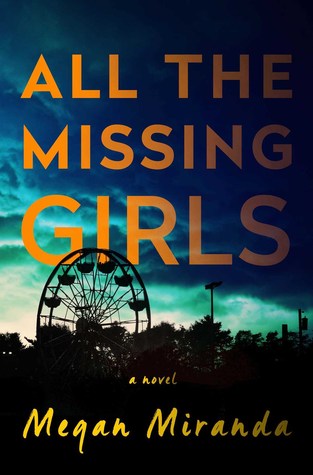
allthemissinggirlsI was invited to read by Net Galley and Simon and Schuster in exchange for an honest review, and I am so glad I did. It’s a juicy read that kept me transfixed through most of my Memorial Day weekend. You can order your copy now and have it when it comes out June 28.
The format is unique and very effective. We start in the present and step back to the day before, and before that, and so on, because just as is usually true when a person is missing, the most important information is what took place right at the beginning; that’s the part that has the key, and so we receive it last. It creates an electric sense of suspense I haven’t seen elsewhere in a long, long time.

We start with Nicolette Farrell driving away from her job, fiancé, and life in Philadelphia back to her hometown of Cooley Ridge, North Carolina. She couldn’t wait to get away from there when high school was over, and she isn’t eager to go back. And here, I felt her pain, urban snob that I am. Why would anyone want to return to a podunk place like that once they’d tasted life in a cosmopolitan city? But she has little choice; her father is in assisted living, his faculties fading, and Nic’s brother Daniel says they will have to sell the house in order to continue paying for Dad’s care. But Dad won’t agree to sell, and it’s up to Nic to reel him in.

But Nicolette, it turns out, had plenty of very personal reasons for needing to leave Cooley Ridge. Dark, mysterious questions about the disappearance of her best friend, Corinne, have never been answered, and once she is back, another girl disappears, this one the girlfriend of Nic’s old high school flame.  It doesn’t look good.

But Nic knows more than she’s telling; lots of people do.

“We were a town full of fear, searching for answers. But we were also a town full of liars.”

It’s been ten years since Corinne vanished, and now it’s happened again. Daniel is worried about Nic staying alone in that house, because the woods where the girls have last been seen is right behind it, and she’s there alone. He urges her to stay with him and his wife, but she doesn’t like to intrude; her relationship with Daniel hasn’t been strong since that last terrible night following graduation, and so she stays put.

This riveting psychological thriller grabbed me by the front of my shirt and didn’t let go till it was over.  Tantalizing bit by bit, Miranda takes us back to Nicolette’s earlier days, and one clue after another unspools until we sit stunned and amazed at the end. Miranda is a writer of formidable talent, and frankly, I can’t wait to see what else she has in store for us.

You can order your copy now so you can have it as soon as possible; go online, by car, by train, bus, foot, or skateboard, but reserve this book. It comes out Tuesday, and you won’t want to miss it!

The Butler’s Child: An Autobiography, by Lewis M. Steel****

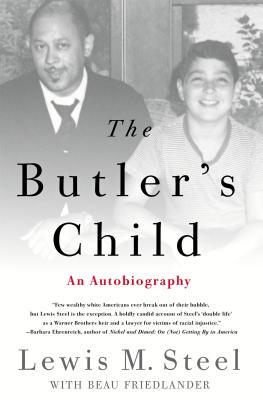
thebutlerschildLewis M. Steel has a long, noteworthy career as a civil rights attorney.  He was an observer during the Attica Prison riots; worked for the NAACP during the Civil Rights movement, and later defended boxer Hurricane Carter against a frame-up charge of murder. And I was permitted to read this story free and in advance, thanks to Net Galley and St. Martin’s Press in exchange for this honest review. I rate it 3.5 stars and round upwards; it is now available to the public.

When I first approached this title I expected to see what the life of a butler’s son was like. In fact, Steel’s social class is at the other end of the spectrum. An heir to the Warner Brothers fortune, he spent much of his time in the company of the family butler, and he was deeply affected by the emotional distance that this family servant, whom he had innocently regarded as a father figure, began to demonstrate as Steel grew older. Later, as an adult, he realized that this faithful retainer, an African-American man, surely had a family and life of his own that he went to visit on his two half-days off work, and he began to wonder what he might do to tear down the wall between the worlds of Caucasian families and Black folk. Ultimately he decided to become a civil rights attorney, and he credits the man that helped raise him as a key reason.

The NAACP of the Civil Rights era—the National Association for the Advancement of Colored People– was deeply immersed in litigation as a means to end segregation. Again and again, racist judges sat in court, north and south alike, and they told the NAACP to go to hell even when their evidence and research was baldly, plainly in the plaintiff’s favor. The NAACP continued to push litigation over mass action because of a strong conviction that if they could get a case heard by the Supreme Court, relatively liberal in many regards and headed by Chief Justice Warren, then surely justice would be done.

It didn’t shake out that way. Outraged over the way the nation’s highest court failed to provide equal protection to its Black citizens, Steel wrote an article for Time Magazine titled “Nine Men in Black Who Think White”, and was summarily fired from the NAACP, who still wanted to curry favor with that court. Many of his colleagues walked out of the NAACP offices in protest.

A common question among Caucasians that want to fight for the rights of people of color in the USA is what can we do?  How can one use this white privilege that exists whether it should or not, to change US laws and society for the better? And this question is raised exponentially when one is an heir, a ruling class scion that can do a tremendous amount for the cause in which he believes.

This reviewer has a friend that found himself in this situation. The distant but only heir of a corset magnate’s fortune, he decided that the best way to seek justice was to walk his talk. Reserving a small percentage of the fortune for himself—which is still a tasty enough chunk to own a middle class home in Seattle, take a vacation abroad annually, and eat in restaurants instead of his own kitchen—he donated the vast majority of his personal wealth to the organization he thought best. He doesn’t live in an all white neighborhood; doesn’t have a household staff; and he does blue collar work on the railroad so that he can talk politics with other working people. Because to help people the most, one needs to be among them and facing similar circumstances to those they face. So he gets up at crazy o’clock in the morning, goes out and gets greasy and banged up with everybody else, and then he goes home and cleans his own house and mows his own grass. He gets that more people listen when you put your life where your mouth is, and he believes the future of the world lies with the working class.

So when Steel commences his hand wringing over how wealthy, how privileged he is and how bad he feels about it, I want to say, Cry me a river. Steel freely admits that he enjoys his lovely home that looks down on Central Park and allows him a lovely view of the Macy’s Parade every Thanksgiving. He enjoys the servants, and his neighborhood is all white. He sent his children to all white private schools even as he fought to integrate the public schools that he wouldn’t let his own children attend in any case.

At one point, Steel mentions that his therapist told him to stop whining, and I wanted that doctor here in the room so I could offer him a high five.

Now that I have addressed the elephant in the room, I have to say that Steel’s memoir, despite the wealthy liberal whining, is worth a read for those interested in Civil Rights history and in particular the part of it that has played out in the courtrooms. You don’t have to like the author to benefit from the treasure trove of information in the pages of this memoir. Steel has been involved in some landmark cases, and he is at his best when he talks about the cases he has taken and how they shook out.

Black lives DO matter, and those of  us that think so need all the information available to fight that fight, and there are many worthwhile lessons that still apply right here, this book is worth your time and money regardless of whose memoir it is.

This book was released earlier this month, and is available for sale now.

Fragments of Isabella: A Memoir of Auschwitz, by Isabella Leitner****

fragmentsofisabellaIsabella Leitner was a Holocaust survivor, and she scribed her memoir using brief entries similar to a diary in format. The length is just 120 pages, about the size of a novella. I was asked to read and review this memoir free of charge before it was released digitally. Thanks go to Net Galley and Open Road Integrated Media for the invitation. This title was just released, so it is available now for purchase.

I confess I struggle with Holocaust memoirs these days. Part of me has decided not to read any more of them. I am out of the classroom, so my ability to educate young people of today about the horrors of the past is nearly at a standstill, apart from the knowledge I pass on to my grandchildren. Reading another Holocaust memoir isn’t going to make the ending any better; it’s always going to be horrifying, and heaven help me if I should become so accustomed to reading about the Holocaust that it doesn’t affect me that way anymore.

So though I swear off Holocaust memoirs from time to time (and am doing so right now, again), when a particular memoir is offered, frequently there is some aspect of this one that sets it apart from the crowd, and so it is with Isabella’s memories. Not many survivors managed to get out with family members at their side; Isabella and her sisters were unusually clever and imaginative in finding ways to survive. This along with the invitation induced me to roll up my sleeves and revisit this calamitous part of history once more.

When the notorious Mengele motioned with his deadly white glove to send Isabella and one of her sisters to the extermination side, they found a way to creep back around and intermingle with the side selected to be kept alive as workers. At one point they escaped and found an outstanding hiding place…but before they were identified as missing, the Germans began cooking potatoes, a luxury Isabella and her sisters could not resist, and they slunk out of their haystack and into the food line. There are a number of these instances, and I found the short chapters merciful, because I could only read this in small bits and pieces.

Most powerful of all, as far as I am concerned, is the clear, unmistakable truth that Germans knew, absolutely had to know, exactly what was going on around them. As their own lives improved materially, they chose to look the other way as skeletal work crews of Jewish and other prisoners were marched directly down the main streets of towns and villages on a daily basis:

“Germany was one giant concentration camp, with Jews marching the length and breadth of the country, but these refined, sensitive Germans never saw us. Find me a German who ever saw me. Find me one who ever harmed us.”

The memoir is of necessity harsh in its remembrance. The teaser for this story bills it as having been written for young adults, but the background material required to understand some of what is said requires a good deal of pre-teaching.  In other words, if a teacher or home-school supervisor has run out of social studies time and is looking for a shortcut to make up for teaching about the Holocaust, this isn’t it. Frankly, this reviewer and teacher wonders how a full unit regarding the Holocaust could be lower on the chain of important social studies curriculum than anything else, apart from possibly the Bill of Rights (for US students). But if one is determined to substitute one memoir for a longer unit that gives more information, use Elie Wiesel’s Night, which stands on its own.

Finally, any teacher or prospective reader needs to consider exactly how searing this material is, and all the more so to the young mind; to Jewish readers; to anyone with triggers.

I should also mention that a bisexual guard at Auschwitz, a woman that was interested sexually in one of the prisoners, is referred to as “aberrant”, not for being a guard at such a place, but for her sexual orientation.

Do I recommend this memoir to you? Those that are studying the Holocaust should read it; the fact that it’s written by a survivor makes it a primary document. But those that are looking for an engaging, enjoyable slice of history should look elsewhere. There are no light moments, no surprisingly kindly individuals that go out of their way to help. It’s a cold, hard story, and the only joy is provided up front when we learn that she gets out alive and not alone, as so many Holocaust survivors found themselves.

It’s a hard, hard lesson, but given that revisionists are diligently trying to deny that the Holocaust actually occurred, attempting to rake over the evidence as if it were not nearly as serious as we may believe, it also has a great deal of value.

Because Isabella was there.