
“Does keeping the memory fresh prevent history from repeating itself? Surely not. Memories are meant to be forgotten. History is meant to be repeated. That of Jews, of women, of Arabs, of people who suffer, of Little Red Riding Hood. And the grandmother always, always has sharp teeth.”
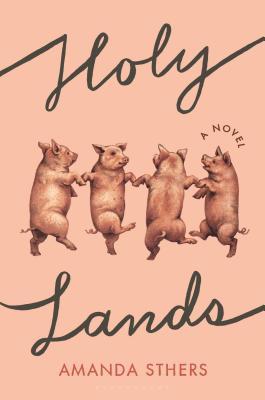
Seldom do I make a decision to read a galley based almost entirely on the book’s cover, but really. A dancing pig in the Holy Land? How can that story not be interesting? Big thanks go to Net Galley and Bloomsbury. This book will be available to the public January 22, 2019.
The whole book is a series of letters and emails sent between five characters. We have four family members: Harry and Monique are divorced, yet it’s one of those complicated divorces where there’s no clean break; David and Annabelle are their adult children.
Harry is an American expatriate who has moved to Israel, but instead of embracing his culture and homeland in a more conventional way, he has opted to become a pig farmer in Nazareth, one of the few places in this Jewish nation where the animals are not straight up illegal. And so the fifth character is the rabbi, who entreats Harry to give up the pork business. He’s upsetting people, and he should respect his roots a little more. Jews have been through enough, nu? And before we know it, there’s mention of the Holocaust.
Harry wants to keep his pigs, and he thinks it is time for Jews to lighten up about the Holocaust, maybe tell a joke about it now and then. The rabbi is floored. Joke? About the Holocaust? And so it’s on.
You would think that with such edgy subject matter the story would veer over the boundary of good taste, but Sthers—who has many bestsellers to her credit, though this is her American debut—is deft, insightful and very, very funny. The prose is angry, hilarious, and aching all in turns, not unlike our feelings for our kin.
Families are such fertile territory, and this one is among the best fictional families in literature. David, Harry and Monique’s son, is a gay playwright whose father has not come to grips with David’s sexuality. David writes him endless letters; Harry won’t respond. We see how Harry thinks and feels about David through his correspondence with the rabbi, and with the things Annabelle learns when she comes for a visit. Meanwhile, David’s new play is about to open, and it’s titled “Kosher Pig.” It’s about his father. Oh, how he wants Harry to be there for the opening! But Harry remains incommunicado.
This is a slender little book, just 176 pages, and so I expected a casual romp, but it’s more than that. It’s a quick read, not because it’s lightweight literature but because it’s impossible to put down. I recommend you should get it and read it, and then…maybe you should call your parents. Better yet, go visit them.
 Honorable Mentions:


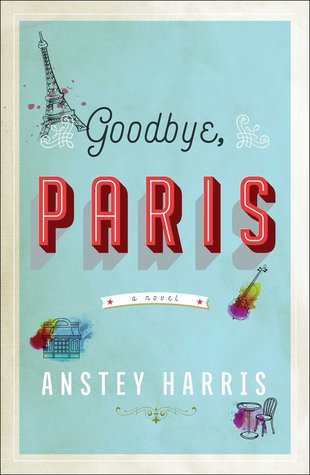 This novel took me by surprise. The first time I saw it, I passed it by, because the cover suggested a light romance, and that’s not a genre that appeals to me. It’s been compared to Jojo Moyes and Eleanor Oliphant; I read neither. Later I saw an online recommendation for this book and changed my mind, and I am so glad I did. Big thanks go to Net Galley and Touchstone for the review copy. This book is for sale now.
