The Talented Mr. Varg, by Alexander McCall Smith*****

There are hundreds, perhaps thousands of mystery writers whose work falls within the cozy subgenre, but none of them hits exactly the right note the way Alexander McCall Smith does. His feel-good vibe is engaging, but it’s never smarmy or cloying; the reader feels respected. Add to that a spot here and there that is straight-up hilarious; I can think of no better time to read his work. This is the second in the Detective Ulf Varg series, and it is every bit as delightful as the first. Can you read this book alone even if you missed the first? Yes and yes.

My thanks go to Edelweiss and Pantheon Books for the review copy. This book is for sale now.

Detective Ulf Varg leads a quiet sort of life; after all, he’s a cop, and this is Malmo, Sweden, hardly a hotbed of crime. He is the lead detective for a special bureau, one that was introduced to us in the first in the series, The Department of Sensitive Crimes. Often the matters under investigation involve misunderstandings, deceptions carried out to avoid embarrassment, and cultural miscues. Ulf spends his down time teaching his deaf dog, Martin, to read lips and taking him to therapy for his depression.

There’s a lot of that in Sweden, you know. Northern latitudes.

And so, it is from his dog’s psychiatrist that Ulf receives a tip of a possible counterfeit dog breeder. Someone out there is breeding husky/wolf mixed dogs, which are then sold to handlers that furnish trained wolves to appear in movies and television shows. Fraud! This could be Varg’s biggest case yet. But then, that wouldn’t be saying much.

Meanwhile, Varg longs for intimacy with his partner, Anna, but he mustn’t act on his feelings. There are departmental policies to be observed, and she is married. Oh, how he pines for her, quietly and in private. He dreams of a woman that will hold his hand as he falls asleep at night, a woman that will touch her toes to his under the covers and wiggle them. There are other women of course, but none like Anna. So when Anna needs a matter of her own investigated on the down-low, Ulf is ready and willing.

The most amusing thread here, as far as I’m concerned, involves Varg’s struggle with bureaucracy. You’ll have to find out the particulars for yourself.

Smith’s novels are my favorite bedtime material, subtle humor that unknots my twisted muscles and helps me gain perspective on whatever worries of the day have climbed in with me. I daresay he could do the same for you, too.

Highly recommended.

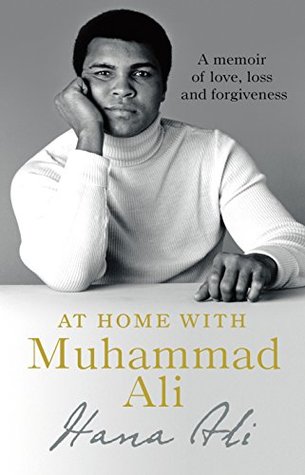
At Home With Muhammad Ali, by Hana Ali*****

Muhammad Ali is the sort of larger-than-life historical figure that nobody forgets. I was offered an opportunity to read and review this biography written by his daughter, Hana, and I jumped at the chance. Her recollections are bolstered by the vast archives that her father intentionally left, cassette tapes of every phone conversation that took place from his home, along with letters, photographs, and journal entries. Ali knew he was making history, and so he consciously left copious documentation behind. This wonderful book strikes the perfect balance, deeply affectionate and intimate, emotionally honest, yet never prurient or mawkish. My thanks go to the author for the beautiful hardcover copy, and for this opportunity.

A note before I continue: usually when I review a book, I refer to the author by his or her last name. In this case, however, the last name is shared by author and subject, and so when I use the name ‘Ali,’ I refer to the boxer, whereas I refer to his daughter and biographer by her first name.

I grew up in the 1960s and 1970s. I didn’t watch boxing, which my mother considered a nasty, violent sport; I was inclined to agree with her, and so when Dad turned on a boxing match on television, she and I beat a hasty retreat. However, it was impossible to miss my father’s agitated shouts at the TV whenever Ali was on it. Ali’s brash confidence, his refusal to humbly look at the floor while talking to white interviewers, his fervent proselytizing on behalf of the Muslim faith frightened a lot of Caucasians, particularly those who, like my family, lived a life that never intersected with people of races different from our own. But my father wasn’t just afraid of Ali; he was angry. How dare he! On television! He called him a clown; he called him an idiot. There was a lot of that going around at the time, as the Civil Rights Movement strove to change the racial contours of American society, not only in the Jim Crow South, but across the nation.

Many years later, when I began studying education in preparation for teaching public school, in particular language arts, American history and civics, one of the most critical parts of my own graduate school curriculum had to do with serving children from underserved racial and ethnic groups, and part of that was in holding up positive role models to foster self-esteem in every child. My classmates raised the name of Muhammad Ali, and I could see that they were right; say that name around any Black child, especially a little boy, and watch his chin raise perceptibly, his spine straighten, and a gleam come to his eyes. This is what interested me about Ali, not his athletic record, but his principled stand in regard to Civil Rights issues, and his assertion that Black men in America should walk tall.

As I began reading Hana’s glowing tribute to her daddy, I began to wonder more about his boxing career. Ali began boxing at age twelve! There’s a practice you won’t see today; but Louisville, Kentucky during the post-war boom was a much different place than anywhere in America today. By the time he was old enough to shave, he was already accomplished at his sport. And the more I read, the more convinced I was that I should not review this biography without watching some boxing. I went to YouTube over and over, and I watched Ali with Sonny Liston, with Joe Frazier, with George Foreman. I learned a lot about the sport, including the fact that it’s not really all that violent, and it involves just as much skill as other team sports. And also: that man was talented, and he was so damn smart.

And this is the side of Ali that the public never really saw. Who knew that he preferred brainy women with independent ideas? In the 1960s, this was a rare thing among men. Who knew that he wouldn’t let anyone, whether family or staff, raise a hand to his children? Nonviolent parenting all the way. There wasn’t much of that around back then, either. Part of his indulgent nature was due to his faith, but part of it was a deep fear that some hateful person would try to hurt him by kidnapping his daughters. Given the way Hana describes her childhood self, it might have become a Ransom of Red Chief situation. Among the mountains of documentation Ali saved is a hefty collection of letters sent home by preschools and schools decrying Hana’s scrappy behavior. Here’s one of my favorite excerpts from the recordings she shares:

“’Hana, say ‘I’m a good girl.’

“’I’m a good girrrrl.’

“’Say ‘I’m a pretty girrrrl.’

“’I’m a pretty girrrrl.’

“Say ‘I won’t bite the boys no more.’

“’I won’t bite the boys no more.’

“’Say ‘I won’t scratch the boys no more.’

“’I won’t scratch the boys no more.’”

Hana recalls him as a gentle father who remained available to his children despite his busy career; each day began with her careening down the stairs to find him in his den, where he might be having a phone conversation with one of many American celebrities as well as world leaders. He spoke with Brezhnev, Ghaddafi (who wanted to contribute to the war chest of a Black American presidential candidate), and Deng Xiao Peng, who wanted Ali to train Chinese boxers. He offered his services to President Jimmy Carter in the 1980s, hoping he might use his religion as a connection to the Iranians holding American citizens hostage.

In another section she recounts the time he happened by a police cordon. A man was out on a ledge of a skyscraper, threatening to jump; Ali persuaded the cops to let him get past the cordon and speak to the man. There are photographs of him holding the would-be jumper in his arms after he was rescued.

Whereas other public figures often bemoan their lack of privacy, Ali loved being famous, and he loved his fans. Sometimes he left home just to go out and find some of them and talk to them. It’s refreshing.

Yet Ali wouldn’t have been an easy man to be married to. Part of this dovetails with his generosity; he often tooled around in his Rolls Royce when he wasn’t training or working, and when he saw homeless people he’d load them into his car, bring them home, and put them in a guest room until he could arrange a lovely hotel suite for each of them. It’s a sweet gesture, but although Hana doesn’t mention how her mother reacted to it, I can tell you right now that for me, that would get old fast, coming home and not knowing how many strangers had taken up residence. And whereas Ali had more respect for the women in his life than most men did back then, his marriages were clearly never intended to be equal relationships.

But his relationship with Hana was an idyllic one, and this shows in the many engaging photographs that punctuate the text, one after another in which she and her father pose using identical body language, some of which are pretty funny. She also speaks with the pain she feels, even today, of her parents’ divorce, which she is convinced was primarily due to a misunderstanding.

There’s a great deal here about Ali’s religion; there’s really no way to tell his story without it, since it motivated nearly everything he did. There are places where I am ready to be done with it; but just when it threatens to slacken the pace of the narrative, Hana wisely segues on to other topics.

To remember Ali is to remember the virulence of the overt racism of twentieth century America. The way that the media played up every violent thing any Black man or boy did; the stereotypes involving the jungle, and the unpredictability of Ali’s personality, all served to underscore the false notion of hidden menace deep within the man. Ali is the first Black man I ever saw on television that didn’t keep his eyes down when talking to reporters, and who didn’t downplay his own strength. He scared a lot of Caucasian people half to death, merely by being successful, strong, and confident.

But Hana doesn’t dwell on any of the negative publicity; instead, she shows us who he really was. Ali loved to write poetry, for example, and he loved to read. He had never gained strong skills in spelling or grammar, so some of what he produced came out looking a little rough, and yet its merit is undeniable. What a voice! Who knew that a fun day out with his daughters often meant a trip to Barnes Noble to load up on good books?

The book’s ending is perhaps the most poignant of all. Hana recalls her father, an old man in his seventies, weakened by Parkinson’s, viewing footage of himself after the Foreman fight:

 “I wrestled with an alligator, and tussled with a whale. I handcuffed lightning and threw thunder in jail. Just last week I murdered a rock, injured a stone, and hospitalized a brick! I’m so mean I make medicine sick!”

Watching himself he muses, “Man, I was something!”

I defy you to finish this book without a lump in your throat or misty vision, as Hana tells us, “Sometimes I still feel like that five-year-old girl roaming the halls of a mansion, waiting for her daddy to come home.”

Highly recommended.

The Familiar Dark, by Amy Engel*****

When it comes down to it, some people just have it coming to them.

Amy Engel is the author of The Roanoke Girls, a shocking thriller that proves she is a force to be reckoned with. The Familiar Dark is even better. My thanks go to Net Galley and Random House Dutton for the review copy. It’s for sale now, and you should get a copy to help chase away your cabin fever.

Eve Taggart was raised poorer than poor in a ripped up trailer in Barren Springs, Missouri; it’s “a slippery part of the world. People dart in and out like minnows in a shadowy pool…Folks here are hard to pin down, even harder to catch…It’s a place for people who don’t want to be found.”  Her mother is an addict with a mercurial temper, and so when Eve gives birth to Junie, she resolves to parent differently from her mama, and to never take Junie to visit her. The more space there is between her present and her past, the better off Junie will be.

But when Junie and her best friend, Izzy are found in a public park with their 12-year-old throats slit, everything changes. Without Junie to provide for, all of the social conventions that Eve has so carefully nurtured, all of the tentative connections she has made with mainstream members of the community are gone in an instant. Eve’s older brother Cal, a cop, tries to provide a buffer between Eve and the town, between Eve and their mother, and between Eve and the disastrous errors she makes as a result of her grief; none of it does any good. And Cal is sitting on a secret of his own.

I am generally a reader that has between six and twelve books going at any given time, but once I was about a third of the way into this one, I read nothing else. Instead of asking myself which book I’d like to read right now, I knew exactly. The suspense is built numerous ways, by foreshadowing, by the little hints given by others in her tiny town, but there’s more to it than that. Part of it is Engel’s unusually vivid word smithery and the frank, unsentimental dialogue that moves it forward. But the meatiest part of this story is in the pathological family triangle that—resist it though she has—forms most of Eve’s world. The further we get into the story, the more layers are peeled away and the more we learn about Eve and mama, mama and Cal, and Eve and Cal. We learn some secrets about Junie that poor Eve didn’t know, but these are almost secondary as they reveal more about the three adults. It is mesmerizing.

Eve thinks she has nothing left to live for now that Junie is gone, but Mama, who’s been drawn to the killing like a vulture to roadkill, assures her she is mistaken. What’s left is vengeance. This resonates with Eve. Pulled into a press conference in which she doesn’t want to participate, standing alongside the other bereaved parents, people that are well groomed and whose social skills make them vastly more sympathetic figures to the public than she will ever be, Eve decides to cut to the chase. After the other two plead for possible witnesses to call in tips to the local cops,

“I pointed out at the cameras, stabbing my finger into the air…’I’m going to find you, you sick fuck. And I’m going to tear you apart.’

“I thought about all the press conferences I’d seen over the years, parents trotted out for missing kids, killed kids, abused kids. Everyone feels sorry for those parents, those mothers, until they don’t. Until the mothers don’t cry enough or cry too much. Until the mothers are too put-together or not put-together enough. Until the mother are angry. Because that’s the one thing women are never, ever allowed to be. We can be sad, distraught, confused, pleading, forgiving. But not furious. Fury is reserved for other people. The worst thing you can be is an angry woman, an angry mother.”

Does this ring as true to you as it does to me? Sooner or later, the mother always gets the blame. And so now I am still riveted and I am nodding. Uh huh. That’s right, Eve. Tell it!

When a novel is as outstanding as this one is, I almost hate to read the last fifteen or twenty percent, because often as not, that’s where it comes undone. Either the solution doesn’t hold water, or a hard cold tale of murder and revenge takes on a sudden sentimentality that doesn’t match the rest of the book; in these I sometimes picture editors and publicists urging the author to provide a feel-good ending, and the author ultimately bending. As I progress, I have figured out what the poignantly sweet ending to this one will likely be, if Engel goes in that direction.

But she doesn’t.

Instead, this story is one of badass female bonding gone dark, dark, and darker. Oh hey. The title.

Highly recommended.

Dead Land, by Sara Paretsky*****

Detective Vic Warshawski was born in 1982, a time when a woman advocating for herself, or another woman, or women on the whole were few and far between. Such a woman often spoke softly, hesitantly, and to reassure the listener that she wasn’t stark raving mad, she might begin by saying, “I’m not a feminist or anything, but…” And so for the lonely few of us that were uncloseted, audacious feminists, this bold, brazen, unapologetic character was inspirational. Vic is fictional, but Paretsky is not. It was leading lights such as hers that made me feel less alone. I have loved her from then, to now.

Paretsky is no longer a young woman. I know this because I am a grandmother myself, and she is older than I am. For her readers that wonder if she’s still got it, I have great news. She’s better than ever.

By now I should have thanked William Morrow, Net Galley, and Edelweiss Books for the review copies. You can get this book April 21, 2020.

Victoria’s young goddaughter, Bernie Fouchard appears in an earlier story, and now she returns. Bernie’s youthful passion and impetuous disposition counter Vic’s experience and more measured responses. I liked Bernie when she was introduced, and am glad she is back. Chicago’s shady politicians are about to quietly sell a prime chunk of the city’s park lands to developers; the corrupt nature of the deal makes it essential that the whole thing be done fast and with as little publicity or public input as possible. Bernie and a handful of others learn of it, and they protest at a meeting at which the city fathers had hoped to slide this oily project through. There are arrests, and soon afterward, Bernie’s boyfriend is murdered.  

At the same time, Bernie tries to help a homeless singer named Lydia Zamir. Zamir is brilliant and was once very famous, but everything crumbled around the time that her lover was shot and killed; she’s been living under a bridge, filthy, disoriented, playing her music on a child’s toy piano. Now Lydia is missing. Lydia’s champion has been a man named Coop, and Coop is missing too. Before pulling a bunker, Coop deposits his dog outside Vic’s apartment, earning her the enmity of neighbors that are already up in arms over the barking of Vic’s own dogs when she is gone. Now Vic has every reason to help find Coop, Lydia, and the murderer. At the same time the reader must wonder how the sleazy deal, the murder, and the disappearances are connected. The pacing is urgent and my interest never flags; the haunting mental image of Lydia and her small, battered piano tug at my social conscience, all the more so as the world is hurtled into quarantine.

Long-running characters Lottie and Max, who are like parents to Vic, and newspaperman Murray, a close friend of Vic’s, return here, and I love them all. No doubt this colors my response as well. I have known these characters longer than my husband of thirty years; at one point I realized that somewhere along the line, I had separated the other books I was reading (some of them quite good) from this one. I had my books-to-read category, but I had mentally shifted this story into the same category as my family business. I should check on my sister, who’s been ill; I wanted to set a lunch date with one of my kids; and I should check and see whether Vic is having any luck finding…oh hey. Wait a minute.

Can you read this story as a stand-alone? You sure can. However, this bad-ass, hardboiled Chicago detective is an addictive character; once you’ve read it, you’re going to want to go back and get the other 21 in the series. I swear it. You probably won’t experience the nostalgia that I do, but a damn good read is a damn good read, any way you slice it.

Highly recommended.

The Porpoise, by Mark Haddon***-****

My thanks go to Net Galley and Doubleday for this much-buzzed-about novel, and I am sorry it took me so long to plow through it. Haddon is a gifted writer and it shows, yet for me, this one was more pain than gain; I read part of my galley and then, after publication, received an audio version via Seattle Bibliocommons. It’s for sale now.

Our protagonist is Angelica, the only child of the extremely wealthy Phillipe.  Her mother, Maya, dies in a plane crash and her father, wild with grief, withdraws from the world. He substitutes Angelica for Maya, sexually molesting her from a very young age; he is magnanimous enough not to “penetrate” her until she is fourteen. What a champ. When she is an adolescent, a handsome young visitor tries to liberate her, but Phillipe makes short work of him.

The story is modeled upon a Greek myth, and a second story is told alternately with Angelica’s, rendering a complex story more so. The prose is beautifully rendered, and I think if I were a student tasked with writing an essay involving allegory in a novel written in the twenty-first century, I might have enjoyed using this one. However, as a popular read it is both largely unpleasant and a great deal of work. The one passage that I found deeply satisfying was around the halfway mark, and it involved the revenge of rape victims.

Those looking for skillfully written literary fiction will likely appreciate the artistry Haddon unspools, but I didn’t find a lot of pleasure in reading it.

Pride of Eden, by Taylor Brown*****

Taylor Brown is quickly becoming one of my favorite novelists. His 2018 book, Gods of Howl Mountain is one of my ten best loved books among the 1,300 I have reviewed since 2012, so I have been waiting for this book, and it does not disappoint. My undying thanks go to Net Galley and St. Martin’s Press for the invitation to read and review. This book is for sale today.

Pride of Eden is a wildlife sanctuary in Georgia, owned and run by a Vietnam vet named Anse. Anse has PTSD related to his service, and his most searing memory is of the loss of a service dog that sacrificed its life to prevent a soldier from being killed by an explosive device. Anse is a complicated character with a possible death wish, but this aspect of his character is never overplayed, and after a haunting, visceral passage at the beginning, it becomes a subtle quality that runs beneath the surface, as it likely would in real life.

Anse accepts animals of all sorts; some come from illegal private zoos, or from private owners that are surprised that their adorable lion cub has grown up to be a wild animal. But secretly, he is also a vigilante. When he sees an animal in need of rescue whose owner plans to keep it—or sell its dead body for parts—he creeps in at night and liberates it.

Tyler is the preserve’s veterinarian, a buff no-nonsense woman who is also Anse’s girlfriend. My favorite passage involving Tyler is when a man comes to see Anse, and Anse is in a mood and wants Tyler to get rid of the guy. Tyler pushes back; it might be important, and the man has traveled a long way to see him. Anse grudgingly tells her to “Send him in,” and Tyler fires back that she is “not your fucking secretary, Anse.” At the outset of the story, Tyler does not know that Anse does not acquire all of his animals legally.

The third main character is Malaya, who comes to the sanctuary looking for work:

  “What do you want to do?” he asked.

   “Anything.”

    “What are your qualifications?”

“Third infantry, two tours in Iraq. Honorable discharge. Then I contracted in South Africa, tracking ivory and rhino poachers.”

“You catch any of them?”

She uncrossed her arms, buried her hands in the pockets of her shorts. Anse could see her knuckles ridged hard against the denim. “Yes,” she said.

Malaya is complex as well. But I love Malaya not only for her meaty internal monologue, but for the things she isn’t. Most male authors (and some female ones too) wouldn’t be able to resist these tired elements, and once again I admire Brown’s respect for women, which shows vibrantly in the way he frames his characters. Malaya is not romantically interested in Anse, nor does she try to mother him. Malaya and Tyler are not jealous of one another, and they do not compete. Both characters are buff and intelligent, and at no time do they have to be rescued by men. As a result, I could appreciate this story as it unfolded without the distraction of stereotypes or overused, sexist plot devices. Neither female character is motivated by sexual assaults in her past.  

The other two characters are Horn, another damaged vigilante that collects wild animals, and Lope, Anse’s driver, who helps him move large animals.

This is not an easy read. It will attract Brown’s fans, of course, and also animal lovers; yet those same animal lovers have to wade through an awful lot of sorrow, as the story is rife with tales of animal abuse. Brown’s purpose, apart from writing outstanding fiction, is likely to raise awareness of poachers that kill endangered animals for profit, and of private game reserves that send semi-tame animals to an enclosure so that wealthy ass hats can bag some big game, take that animal’s head home to hang in the den.

 Yet there’s nothing at all here that is included to be prurient or sensationalistic; every word has a purpose, either to develop a character or drive the plot forward, or both.

My emotions run the full gamut as I am reading, and this is a sign of excellent literature. I laugh out loud a couple of times; at others, the prose is so painful that I have to walk away for awhile and then come back. But I am never sorry to be reading it. The ending is so deeply satisfying that I want to high-five someone, but alas, I am reading it alone.

Once again, Brown’s novel is destined to be one of the year’s best reads. I highly recommend it.

Hidden Valley Road, by Robert Kolker****

Happy anniversary, Doubleday. This is my thirtieth review for you.

Big thanks go to Net Galley and Doubleday for the review copy.

I wanted to read Kolker’s book because so little is written about schizophrenia for the general readership. My best friend’s older brother was schizophrenic, and sometimes she would phone me crying and whispering from the floor of her bedroom closet. The bro—let’s call him Marco–was a large person, over six feet tall with a towering red afro that made him appear even larger. He and my friend were both adopted, and their parents weren’t nearly that big. Marco hated taking his medication, and once he reached his teens, he self-medicated with every street drug he could get his hands on. As a result, he often became violent, breaking out all of the windows of the family home and assaulting his poor sweet mother with a crowbar before the cops arrived to haul him off to the hospital again.

And so I wondered, when I saw this book, whether this was a common experience (yes,) and what inroads had been made in the decades between then and now (very few.)

The Galvin family is an anomaly, a very large family of twelve children, half of whom were stricken and the other half traumatized from growing up with them. The family participated in The Human Genome Project, a compilation of genetic samples and other information aimed at unlocking Mother Nature’s terrible secrets. Of course, researchers were also absorbed in the question of nature versus nurture.

Kolker does an outstanding job of chronicling the Galvin family’s history alternately with passages about what was known about this disease at the time when the eldest sibling began to show symptoms, and what has been learned since. It’s a lot of information to organize and share, and who knows what information he weeded out as unnecessary, because one has to stop somewhere.

When the Galvin children were diagnosed in the mid-twentieth century, professionals in the field leaned heavily toward the idea that there was no hereditary cause for the condition, but instead embraced a “mother-as-monster” theory. Because of this, Mimi Galvin, the mother of all of those children, was inclined to stonewall rather than seek help. But who could blame her? Our society was only slightly removed from the days when the ‘crazy’ family member was locked in the attic. (“That thumping sound? Oh dear heaven, perhaps that old raccoon has snuck back in. Enjoy your pie; we’ll chase him out of there after you’re on your way.”) To make matters more complicated, Don, father of the brood, had a high profile position in the U.S. military, and rumors of family drama could have impacted his career.

Like my friend’s family, the Galvins dealt with the noise, the horror, the disruption by moving to the far edges of town, seeking geographical isolation so that neighborly complaints need not be an added worry.

Here’s the difficult part of writing about schizophrenia: readers want to find a grand discovery at the end; if not a cure, then a new and impressive treatment, or an historic advance in eliminating the problem. But solutions are elusive, and because of the stubborn nature of this disease, what may seem ground breaking to a researcher looks like a big, fat so-what to the average reader.

All told, Kolker has done a fine job describing what has taken place within the family and within the field; I thought he was a little hard on Mimi, who made a lot of errors but was facing a terrible dilemma during a period when our culture was very different from today. That aside, I do recommend this book to you. It will be available April 7, 2020.

Fight of the Century, by Michael Chabon et al*****

In celebration of the 100th anniversary of the American Civil Liberties Union, a large cross section of the finest writers alive have written essays, each about one landmark case. Chabon and his co-editor, Ayelet Waldman, contributed their advance to the organization, and all of the contributing authors did so free of charge. As for this reviewer, I’d have been interested in an ACLU publication, even if I hadn’t heard of the writers involved; and I’d have been interested in anything written by Chabon, even if the story or topic wasn’t in my lane. As it is, I count myself beyond lucky to have scored a review copy courtesy of Net Galley and Simon and Schuster. It’s for sale now.

This is the sort of book that invites skipping around, either according to subject, or according to the authors you love best. Because of this, I recommend buying it in paper rather than digitally, because flipping around out of order in digital format is a pain in the butt. Also, this is the sort of classical reference material that you’d want on your shelf. In fact, I want a physical copy for myself.

I haven’t read all of the entries, but I’ve read enough of them to recommend it to you. The cases discussed are meaty and interesting, and they aren’t the standard fodder that shows up in every undergraduate course on Constitutional law. Each entry is succinct, and the writers refrain from self-promotion. The entries I appreciate most so far are by Jesmyn Ward, who discusses the use of anti-loitering laws to transform free Black boys and men into slave laborers; Timothy Egan, who details a 1962 decision regarding the right to receive Communist literature in the U.S. mail; and Louse Erdrich, who discusses digital snooping and surveillance used against the Dakota Pipeline protesters in 2016. I know there are many more I want to read, but I am posting this now so that you can get a copy while it’s in the stores.

Here’s your chance. You can get an outstanding addition to your home library while contributing to a worthwhile organization whose work is more crucial now than ever. Highly recommended.

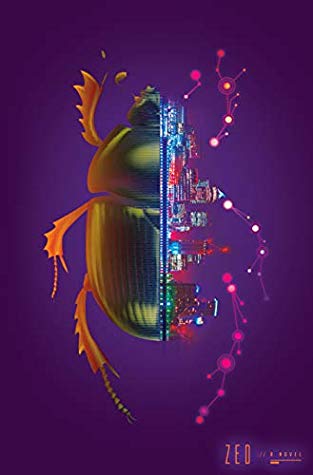
Zed, by Joanna Kavenna***

Kavenna is an established writer, but she is new to me. I saw the description and—okay, yes, the cover—and I knew I had to read this book. Thanks go to Doubleday and Net Galley for the review copy. This book is for sale now.

At the outset this story is electrifying. It’s set in future Earth in what was once London. Beetle is an all-powerful company that governs both business and government; it resembles Future Amazon more than a little. Its employees have Real Life selves, and they have virtual selves that make it possible for them to attend meetings without physically being there. They have BeetleBands that measure their respiration, pulse, perspiration and other physical functions, and those bands are supposed to stay on:

The Custodians Program tracked people from the moment they woke (having registered the quality of their sleep, the duration), through their breakfast (registering what they ate, the quality of their food), through the moment they dressed, and if they showered and cleaned their teeth properly, if they took their DNA toothbrush test, what time they left the house, whether they were cordial to their door, whether they told it to fucking open up and stop talking to them, whether they arrived at work on time, how many cups of coffee they drank during the course of an average day, how many times they became agitated, how many times they did their breathing relaxation exercises, if they went to the pub after work and what they hell they did if they didn’t go to the pub, how late they went home, if they became agitated, angry, ill, drunk, idle at any point during any day, ever.

Of course, it is possible to avoid the entire Beetle system, but there’s almost nothing that someone that is off the grid can do for a living; these people scuttle about in abandoned buildings, living miserably impoverished, private lives.

Those in high positions of responsibility have Veeps, which are virtual assistants that run on artificial intelligence. There are few human cops out there because those jobs are done by ANTS—Anti-Terrorism Droids—and these in turn follow the protocol, which says they should shoot at their own discretion. And all of these things lead up to the murder of Lionel Bigman, who bears an unfortunate resemblance in both body and name to George Mann, who has just cut the throats of everyone in his family. The ANTS find Bigman and kill him.

The aftermath features the sort of government whitewash and cover-up that every reader must recognize. The error was caused, say the higher-ups, by two factors: one was Mary Bigman, wife of Lionel, the uncooperative widow of Lionel who demands answers and is therefore conveniently scapegoated; and Zed, the term for chaos and error within the system. And Zed, unfortunately, is growing and creating more errors which must also be swept under the virtual carpet.

Those dealing with this situation are Guy Matthias, the big boss at Beetle; Eloise Jayne, the security chief who’s being investigated for saving the life of a future criminal that the ANTS had been preparing to shoot; Douglas Varley, a Beetle board member; and David Strachey, a journalist torn between his paramount duty to inform the public, and his self-interest that suggests he shouldn’t rock the boat.

Once the parameters of this book are defined, I am excited. The book could be the bastard antecedent of some combination of Huxley, Rand, Vonnegut and Orwell. The possibilities! But alas, though the premise is outstanding, the execution is lacking. I have gone over it multiple times trying to figure out what went wrong and what could fix it, and I am baffled. All I can say is that by the thirty percent mark, though a major character is running for her very life, the inner monologue drones until I am ready to hurl myself into the path of the ANTS just to end it. All of the fun stuff has been offered up already, leaving us to slog our way out of it. How could a story so darkly hilarious and so well-conceived turn so abstruse and deadly dull?

Nevertheless, I would read Kavenna again in a heartbeat. Someone this smart will surely write more books that work better than this one. But as for you, read this one free or cheap if you read it at all.

Something That May Shock and Discredit You, by Daniel Mallory Ortberg***

Ortberg wrote The Merry Spinster, a work of dark humor that convinced me that he is a genius. This book is a lot different, although at times the same voice peeks through. My thanks go to Atria Books and Net Galley for the review copy. This book is for sale now.

Many of the essays in this book are recycled from Ortberg’s blog, but since I never saw the blog, all of it is new to me. The essays describe his experience as a trans man, and though it is funny in places, most of the pieces ooze pain and bitterness. And to be fair, a trans man brought up female in an evangelical Christian home, taught to consider the Rapture in every choice made, every road followed, is bound to have these things in spades. However, there is a good deal of redundancy here. After awhile I found my attention wandering, and by thirty percent of the way in, I was watching the page numbers crawl by. How much longer…?

Some of the chapter titles are full of promise, but then the chapter itself disappoints. What, this again? I did enjoy the passage on parallel parking, and the chapter on Columbo (the only man Ortberg has ever loved) cracked me up.

I have rated this title three stars for general audiences, but I suspect that for those transitioning to manhood, or for those close to someone doing so, the rating will be higher.

Recommended to those transitioning, considering transitioning, and their loved ones.