The Whole Town’s Talking, by Fannie Flagg*****

 “Up on the hill, Lucille Beemer said, ‘Good morning, everybody.’

“Two hundred and three people just waking up answered, ‘Morning’.”

thewholetownstalking Fannie Flagg is legendary, and rightly so. In fact, at one point in my reading of this DRC, I reflected that someone with her power to move people has power indeed; how fortunate that she uses her gift to benefit the rest of us. I don’t know about you, but I am ready to read something that provides a level of reassurance that all has not gone sour in this world, and that everything passes, sooner or later.  I was  fortunate to read this free and in advance thanks to Random House and Net Galley, but it’s one of the very few books for which I’d have paid full freight if it came down to it. It hits the shelves November 29 and is available for pre-order right now.

Our story begins with the first residents of what will become Elmwood Springs. Lordor Nordstrom arrives from Sweden, and after months of searching, finds the perfect place for his dairy farm in a pleasant spot in Missouri. The year is 1889. He puts up a house, buys some cows, and then, as a founding father, he decides he will donate a piece of land, because every town needs one thing for sure…a cemetery.

“Lordor guessed that preparing a place to spend eternity and trying to figure out how many places to set aside for himself was what made him think about his future.”

I went back and reread that sentence a couple of times; it begins our second chapter. Oh my but Flagg is droll. If one were to read this gem with half a mind on other things, nuggets like this might be missed.

The years go on, and with brief, colorful chapters, Flagg develops the town, introducing new residents that move in or are born here, and at first it seems as if the story is cotton candy, all fluff and sugar. But just as the impression is formed, it is vanquished, because our author is just warming up. Moments that are poignant, bittersweet, and darkly funny are sprinkled in lightly as we start, because after all, we are new to Elmwood Springs.

But the longer we stay there, the more intimately we become acquainted with its denizens and their peccadilloes, and then the more emotional aspects of the story unfold, almost as they might within your own large family or tightly knit community. Flagg convinces me that these people are my people, and her characters are so brilliantly developed, so utterly convincing that even when one of them does something surprising, I understand how that has come to pass.  And every time I think I see where she is headed with one thread or another, she surprises me.

About a fourth of the way in, someone dies and we find them interred, of course, at Still Meadows. But there’s an engaging twist to this aspect of Flagg’s story: the first person to pass wakes up when someone new arrives and greets them. They may be six feet under, but they can see what’s happening at the cemetery, along with everything that can be seen from the cemetery, just fine. And so the discussions that took place in life continue after death, and the dead look on avidly and wait for word of the loved ones they left behind.

As the story develops and characters’ lives are more deeply explored—always remaining more light than dark, and without a single word anywhere that isn’t needed—it occurrs to me that she just may have done it again.

Some people like to take gadgets apart to see what makes them work; I enjoy doing that with literature. And so I find myself looking back at my highlights and notes, looking for what, apart from a dry, accurate wit, makes this writer’s work so special. Some of it is an alchemy whose elements can never be described perfectly, taking ordinary Americans and spinning them into gold. But part of it is undoubtedly her deep respect for working people, and her readiness to see redeemable qualities in characters that upon first glance seem abrasive and unlovable:

“Ida had always been different. At school, when all the kids used to play church and one would be the preacher, another the preacher’s wife, a deacon…Ida said she wanted to be God, because she was the only one who knew how to do it.”

But later, once she was grown, “Someone else remarked, ‘By God, if Ida had been a man, she would have made general by now.”

She also acknowledges that once in awhile, someone comes along that no matter what heroic effort is made on their behalf, will never do anything good for anyone. Hey, it happens.

The comments that are made by various characters reflect both the character’s outlook and usually, the prevailing attitude of the time period as she rolls the town steadily forward to 2016.

And this leads to one cautionary note: as with all of Flagg’s work, it is essential to read the chapter and section headings, which provide context. This reviewer once taught a group of teenage honors students that were unable to make heads nor tails of Fried Green Tomatoes, and I discovered it was because they weren’t reading the chapter headings, and so they didn’t know what the time period was or whose point of view they were reading. Don’t let that happen to you!

Finally, I want to thank the author for the kindly manner in which she draws teachers.  Fannie Flagg, every teacher I know that talks about books, loves your work. We need the encouragement sometimes, and your friendly regard means a great deal.

Highly recommended to everyone.

Mission: Jimmy Stewart and the Fight for Europe, by Robert Matzen****

missionjimmystewartIn Mission: Jimmy Stewart and the Fight for Europe, Robert Matzen provides an engaging, compelling memoir that focuses primarily on Stewart’s time as an aviator during World War II. Thanks go to Net Galley and to Goodknight Books for the DRC, which I read free in exchange for this honest review.

The book begins with Stewart’s childhood in a small Pennsylvania town. His is a close knit family with a strong military tradition. An outstanding student, he is educated at Princeton and falls in love with theater one summer. He hits the road for Hollywood to fulfill his dream.

Because of the title, I am taken aback at the amount of celebrity gossip that is included in the first portion of the biography. Matzen wants us to know that Stewart used his skinny-awkward-young-man routine as a sort of foreplay to work his way between the sheets with one well known actress after another; he lists many of them. I could have lived without this part, but maybe you’ll enjoy it. If like me you are really only interested in the military aspect of it, skip the Hollywood part at the start and pick it back up when he enlists. Eventually this is what I did.

Once there, the story is fascinating. Stewart resolutely straight-armed studio efforts to keep him in the USA or use him to entertain troops, as some actors that are drafted chose to do. He angers a studio head who actually tells him, “You’ll never work in this town again”. He decides he is going to do his part like any other man, apart from the fact that he had always wanted to fly and now has the money for a private plane and flying lessons. Once he is actually in uniform, he is able to become the aviator he has dreamed of being as a youngster.

As Martzen unspools Stewart’s story, which had to be difficult to research given Stewart’s resolute refusal to discuss that period, I am instantly engaged. I had known at one time that the planes were not heated back then, but hadn’t fully appreciated the dangers and challenges posed by the cold alone once in the air. A man could suffocate if he didn’t regularly break the ice off of his mask. Men could and did lose body parts to frostbite.

The stories of the men that would eventually serve under him as he rises in rank, not due to strings pulled by authorities but as he has wished, by merit and leadership capability, are also both interesting and poignant. Reading the way the pilots name and decorate their planes, how individual aircraft with idiosyncrasies that make them handle differently so that the pilots strongly prefer to fly their own ships, is interesting, and  reading the personal details and in some cases, the deaths of these men is wrenching in some places, poignant in others.

When Stewart has completed his military service, he looks at least ten years older than he is. He’s seen a lot. If he returns to Hollywood, there’s no chance he will play the same roles he used to do. He stalwartly refuses to exploit his time in the service by making World War II films, which are enormously popular, and for a long time, his phone doesn’t ring. He’s sleeping at his parents’ house in his old childhood bedroom, wondering what will happen. But in time he hears from Frank Capra, who has an idea for a picture “based on a story titled ‘The Greatest Gift,’ about a man from a small town who wishes he had never been born. Jim was the only actor in Hollywood whom Capra considered for the role.”

Despite the sense of alienation he experiences with his return to the other-worldly, glitzy city after his gritty, intense experience in the war, Stewart is glad to be back, and he plays what will become an iconic role, that of George Bailey in “It’s a Wonderful Life”. He credits Capra with saving his career, and is overjoyed to be back:

“He was engaged in something magical again, something to interest people in the art of living, rather than the art of dying.”

The book also discusses Stewart’s lifelong friendship with Henry Fonda, and his marriage. We get a brief overview of the peacetime lives of the surviving members of Stewart’s first crew.

If it were up to me, I would remove all of the somewhat jarring photos at the end of the book that show Stewart alongside one actress after another, and I’d replace them with photos and maybe diagrams of the planes we hear so much about. A map here and there wouldn’t hurt, since we follow his flight paths and it’s sometimes hard to visualize where these places are. I used Google, but would like to see these included as part of the published memoir, perhaps in the center, where they’re most relevant.

I recommend this biography to fans of Stewart’s, and I recommend most of this book to those with an interest in military history.  The book is available to the public today, October 24, 2016.

Titles You’ll See Here Soon

The last time I put up a preview page, it was in the midst of household chaos, and I made the post by way of apology for not having a review to put up. I was surprised by the positive feedback I got, and so today, even though I have recently posted a review and will have more soon, I thought I’d show you what’s next. There are some repeats from my last preview that I haven’t done yet, but I’m happy to say most of those are done. Here’s what you can look for between now and Thanksgiving, barring catastrophe:


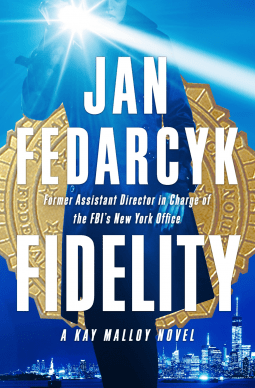
Fidelity, by Jan Fedarcyk***-****

fidelityRetired FBI agent Jan Fedarcyk makes her debut with this intense spy novel, and it is bound to keep the reader guessing and turning pages deep into the night. Thanks go to Simon and Schuster and Net Galley for the DRC, which I received for review purposes. I rate this story with 3.5 stars and round it upward.

The selling point for the new reader of what is destined to become the Kay Malloy series, is that the author has spent 25 years in the FBI and knows what she’s talking about. Though she reminds the reader that a lot of the FBI agent’s job is done at a desk sifting through endless forms to fill out and reports to write and not much of what we see on TV, we also know that she can spot an implausible situation a mile away and not go there or do that.

So the initial question that came to me was whether someone that’s worked for the Feds for a quarter century still has enough imagination left to write interesting fiction, and now I can tell you straight up that Fedarcyk does, and she can, and she did. I like the level of complexity, which is literate without being impossible to follow. The reader will want to give her story full attention; nobody can watch television and read this book during the ads. It’s well paced and the suspense is built in a masterful manner.

Characterization comes up a little short, and I can imagine that this will be her key focus in writing future books in the series. Kay is so darn perfect, and I never feel I know her deeply, despite the discussion of her past and how she is motivated by it. We see her tempted to use her position for a very small, somewhat justifiable personal reason briefly, but she is nonetheless something of a cardboard hero all the way through. Likewise, the Russian spies are big, blocky bad guys, thugs that drink Vodka. The spy novel tradition has been honored, but I would like to see more layers to these characters as we move forward. The ending, while it surprises me to some extent, is not one that the reader had a reasonable chance of guessing, but to some extent that’s true of a lot of espionage thrillers.  What might be really cool would be to see an espionage version of Kay’s own Moriarty come into play.

As is always the case for me when I read espionage thrillers, police procedurals, and other novels that involve heroic cops, I have to construct a mental barricade between what I see in real life and what I am willing to believe when I read fiction. One of Fedarcyk’s characters snorts in derision about the time when people were willing to die for Marxism, and I have news: some of us still would. But for a fun ride, I am delighted to suspend reality and buy the premise until the book is done.

One area where I struggled—and to be honest, I don’t know whether anyone else will or not—was with two characters, first Luis, whose last name isn’t used very much, and then Torres, whose first name doesn’t get used much either. This reviewer has taught more than one student named Luis Torres, so this may factor into my confusion about 75% of the way through the story when I realize that these have to be two separate people, but for awhile I am convinced that Uncle Luis Torres has mentored her into the field, and so when the story arc is near its peak, I have to go back and reread some of the novel to be certain I knew who is who. Luis is the uncle; Torres is the agent and mentor; they’re two separate guys.

All told, this is a promising start to what is sure to be an engaging series. The world needs to see more strong women in fiction, and so I welcome Kay Malloy and look forward to seeing future installments. A fine debut, and it’s for sale now.

The Girl from Venice, by Martin Cruz Smith*****

thegirlfromvMartin Cruz Smith is the best-selling author of Gorky Park and the Arkady Renko series. His new stand alone novel, The Girl from Venice, shows he hasn’t lost his magic, and it quickly became my favorite DRC once I began reading it. Thanks go to Simon and Schuster and Net Galley, from whom I received an advance copy in exchange for an honest review. You can get this book today.

Cenzo Vianello is a fisherman from the tiny village of Pellestrina, an ancient place steeped in tradition. He once had two brothers, but now has only one; Hugo died in Mussolini’s Africa campaign, and his remaining brother Giorgio is a movie star as well as an influential member of the Fascist government. Cenzo detests him for his politics, but even more for having stolen his wife Gina, who died when a bomb fell on the movie set to which Giorgio had escorted her.

All of this is background, complex and deliciously ambiguous in many aspects. It is within this context that Cenzo finds the girl, Giulia, floating like a corpse in the lagoon. To his surprise, he finds she is alive. She is Jewish, from a wealthy family and on the run. She figures that if the poet Byron could cross that lagoon, then so can she. Cenzo hates to spoil her dream, but he tells her this is a dangerous plan, and for many reasons. He develops a plan for her rescue, but later finds he is ambivalent about having turned her over to someone else. Is she safe? Does she remember him? Who can he trust, and who not?

One must, after all, be careful who one embraces.

“The trouble was the war. It should be over. Instead, the Americans were taking forever while Mussolini ruled a puppet state and the Germans, like decapitated ants, went on fighting.”

 When one fears defeat, one may become desperate; in some ways, the Fascists now have little to lose, and so their behavior becomes more extreme. There are partisans that oppose the Fascists, but it’s difficult to be sure who is sincere, and who is a double agent.

Part of the suspense inherent in successful spy novels is the feeling of looking over your shoulder, wary of everyone all the time. The relationship between Cenzo and Giorgio is particularly well developed and is intertwined with this aspect of the story; we never know whether one of them is going to kill the other, and when Giorgio says he will help Cenzo, we wonder whether he is helping lead him into a trap.

Although Giulia provides us with a premise and a scaffold for the story, not to mention a really beautiful book jacket, hers is not the character we see developed. The characters that are meaty and interesting are the brothers.

That being said, Smith should get credit for including an interesting female side character in Maria, the wife of the consul of Argentina, a woman with shadowy business and motive. Maria isn’t there to seduce anyone, not really; she’s also not a victim. In a field riddled with endemic sexism, I was happy to see this progressive element, and was fascinated by the brief, spectral appearance of her husband from his sickbed.

This story is a page-turner, an unmissable tale that will keep your light burning late and distract you from your daily pursuits until it’s over.  Don’t miss this one.

American Gothic:The Story of America’s Legendary Theatrical Family—Junius, Edwin, and John Wilkes Booth, by Gene Smith***

americangothicI was invited to read and review this title by Open Road Media and Net Galley. Thanks to them for the DRC, which I received in exchange for an honest review. This title was released to the public October 4 and can be purchased any time you want it.

Although I love a good night at the theater as much as anyone else, I came to this bearing a love of history and a strong affinity for the American Civil War. I didn’t realize to what extent this would be purely a biography of this family of actors, and it was because of this that I became somewhat disillusioned.

Smith has carefully documented the lives of Junius, Edwin, and John Wilkes Booth. He talks about their predecessors, their early development, and their careers, and he documents everything he talks about. Those studying nineteenth century American actors will want this book, because these men were the most famous of their time period, tickets to see them perform much sought after.

My problem is with the elephant in the room.

It’s hard not to approach John Wilkes Booth without thinking about military history, and about his role in what was essentially an incipient CIA within the Confederacy. Other sources neatly document the fact that it was not a case of simple mental illness on the part of an assailant that made President Lincoln, the greatest president in the history of the USA, die. There was a great deal of planning involved, of research about where he would be and when he would be there. Contacts were made, and a plot was launched that was initially much more far reaching in scope, but with the surrender of Lee’s army, others within the cadre left town fast and didn’t look back. Booth was the one that decided he was going to follow through, one way or the other. How much of it was due to a longing for an historical spotlight, how much was due to emotional instability, and how much was a calculated effort to revive the Confederacy by assassinating Lincoln, we do not know, but what we do know, and what Smith doesn’t say, is that this was not a matter of simply yielding to impulse, of losing one’s sanity and suddenly deciding to kill a great leader. It was done in a calculated way, and I can’t respect this biography when this information is omitted. All we hear about are references to early signs of “madness”, as if this horrible deed can be swept to the side by the use of one well-placed word.

That being said, The New York Times loved this book. If the history of acting is your wheelhouse, you may want to read it. There’s nothing of method or technique that will help a developing actor, but it doesn’t pretend to be. It’s about the actors’ lives and careers, and that’s pretty much it.

Those that treasure history as a bigger picture, or that are looking for some tiny morsel to help them understand what made John Wilkes Booth carry out this monstrous, well-planned killing will remain as much in the dark when the book ends, as they are now.

The Legacy, by Gary Gusick***

thelegacy Gusick’s hero, Detective Darla Cavanaugh, became an instant favorite of mine when I read the screamingly funny Officer Elvis, and so when I saw that Random House Alibi was about to publish this third book in the series, I scrambled quickly over to Net Galley to snatch up a DRC. Though Gusick is a tremendously courageous writer, one that seeks to stand uncompromisingly on the side of the angels, this time he’s stepped over a line in the sand that was better left uncrossed. I look forward to the next book in the series, but am not sure I can recommend this one.

The book will be available to the public December 6, 2016.

Darla has been planning a leave of absence. She and her husband, a doctor that runs the only remaining abortion clinic in Mississippi, have been unable to have a child of their own, and there’s a baby waiting for them in China. But she has to go quickly, or the adoption won’t go through. It is then that she receives a special request to investigate a murder. She says no; this is one time her family comes first. But the summons is from the governor. His daughter is dead, and he wants Darla to find out who did it.

This reviewer actually has an elderly relative that was tapped to investigate the murder of a governor’s aide in the 1980’s, and he didn’t want to do it either. There was a question of organized crime being involved, and it was dangerous. But as he pointed out at the time, there are some things you can’t say no to. It’s like being invited to tea with the queen; you have to go. And so it is with Darla.

By far the most endearing character here is Darla’s partner, Rita Gibbons:

“Rednecked Rita was…half a licorice stick short in the manners department, a deplorable character flaw in the state of Mississippi.”

When a witness that’s being interviewed coolly inquires as to whether Rita is a “Natchez Gibbons”, Rita tells her that she is actually a “Red Hills Trailer Park Gibbons”, from outside of Louisville.  And oh, how I wanted to engage, because this character is enormously entertaining, but there’s a problem, and it is at the core of the story’s premise.

You see, at the beginning of the story, we learn that Caitlin Barnett, the governor’s adopted daughter, who is African-American, was found hanging from a tree on the campus of Ole Miss. And once we have a lynching—whether it’s racially motivated and a real lynching, or whether there’s an ulterior motive and perhaps the body was posed there to deceive us—we can’t have any fun.

Here’s my litmus test to see if I am overreacting: I imagine giving this novel to one of my African-American family members to read, and I imagine what their reaction to it would be. Would they give Gusick props for pointing out that racism is still alive and flourishing in American society? Would they be glad that he has raised the issue of the Confederate flag? Or would they be slightly queasy, as I was? And immediately I knew that I would never, ever ask any of them to read this book, and if I did, they would probably take my husband aside sometime soon and inquire as to whether I was on any strange new medications.

In other words…no. Once there’s a lynching, or the appearance of one in a story, there can be no giggles, and we can’t rock and roll. It’s a hot stove top kind of issue; it’s not something we can touch, whatever our fine ultimate intentions might be, if we’re going to be partying anytime soon.

I still admire Gusick. Who else would have the rare courage to open oh, so many cans, and release oh, so many worms? But if one has the heart of a lion, one also needs some judgment, and this is where his story comes undone.

Although I cannot recommend this book to you, I look forward to reading this author’s work in the future. He’s done great work before, and he’ll do it again.

Fire Lover, by Joseph Wambaugh*****

fireloveratruestory John Orr was a fire fighter that wanted to become a cop. The psychological test weeded him out; his personality wasn’t stable enough for a guy that carries a gun for a living, and they turned him down. Over the years, however, he became not only a fire chief, but a highly respected arson investigator, and took tremendous pride in the fact that he was part of the law enforcement community. However, occasional snubs from that group made him livid, and he dealt with his rage in the most horrific manner imaginable: he became the most prolific arsonist in California history. Joseph Wambaugh captures this true crime story in electrifying detail. I received my copy from Open Road Media and Net Galley in exchange for an honest review, but you can get your copy Tuesday, October 18, 2016 when it is digitally released.
It starts with the Ole Hardware Store fire. Ole is a family owned business, but it is large in scale, the size of a big box store, and four people die there. Wambaugh provides personal, poignant details of those that perish, and I appreciate this. The white Volkswagen is particularly moving.

Orr doesn’t see it as poignant or tragic, however; he is enraged at the cops and insurance investigators for calling it an accident, and in order to achieve recognition for his twisted projects, he sets more fires. More. And still more. And as the fires increase, the budget, which had been going to be cut, isn’t cut after all, and Orr has all the work he can handle and more, because he is investigating his own crimes. Time and time again, he is seen at the sites of fires doing uncharacteristic things, or before an alarm has yet been sounded, but no one is ready to suggest that he is the party responsible until it is screamingly obvious.

The author is tremendously skilled at shifting the mood from the somber, to the ironic, to the occasional moment that is genuinely comical, without ever missing a beat, setting an inappropriate tone, or dropping his documentation, which is meticulous and must have taken a lot of years to compile. I usually am not fond of true crime stories because I know I may not like the ending; the author can’t choose how it comes out if his story is true. But this one drew me like a moth, and I had to get a closer look.

Wambaugh chronicles Orr’s life as well as the arsons, investigations, and then the trials that follow, and he does it brilliantly. He received an Edgar Award for Best Fact Crime, and it was an honor he earned.

Highly recommended.

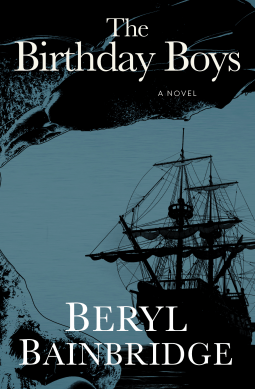
The Birthday Boys, by Beryl Bainbridge**

thebirthdayboysThe Birthday Boys is a fictionalized account of the Scott expedition’s travel to Antarctica in 1910. It’s told sequentially through the perspectives of five men that participate, each picking up where the last has left off and of course, also including some personal reflections and memories to make them more real to us. I was invited to read and review this novel based on my enjoyment of the book Ice Brothers, which was also a maritime tale (and is reviewed here: https://seattlebookmamablog.org/2015/01/03/ice-brothers-by-sloan-wilson/ ). Thank you to Net Galley and Open Road Media, but this isn’t my book. I pushed myself all the way through it hoping for some redeeming aspect of it to pop up at the end, but it only gets worse as it goes, at least from my perspective.
Our story begins in Cardiff, and the men and The Owner (always capitalized) are eager to get started before the Antarctic winter sets in, so they pass their whaler off as a yacht in order to prevent safety regulations from slowing them down. They understand they are sailing across the world in a leaky tub, but one of them is too unprincipled to care, and the others are so darn young. In fact, wouldn’t reaching the destination on one’s twenty-first birthday be the best gift ever? Hence the title.

At the outset, I struggled a bit with some of the technical terms, looking up “plimsol line” and a couple of others, but by the 15% mark I had my legs under me, so to speak, and felt more confident. Soon thereafter, however, the nasty references to gender and race came into it. I looked back at the copyright; since this author, highly respected in the UK and winner of awards, was born in 1932, might this be a digital release of a very old book? But not so much: the original copyright date was 1991. Perhaps Dame Bainbridge felt that ugly racist terms might provide some flavor here. Likewise, the women included here, generally wives of the men involved that were tucked safely away at the base camp, were carping or hysterical, squabbled with one another, and Mrs. Scott, the only woman with any character at all according to the narrative, kept insisting that she hated women.

Whoa.

The plot is rugged and gruesome. If not for the issues just mentioned, I might compare the writing to that of Jack London, fascinating for those that love the adrenaline rush of life-or-death adventures, but too grisly for me. There’s some good work with figurative language and at times the scenes are tremendously visceral. Yet at times the pace actually plods along rather slowly for a book of its kind, and so I find myself wondering how this writer managed to be recognized by the queen; that is true, at least, until I find the following passage:

“It’s difficult for a man to know where he fits in any more. All the things we were taught to believe in, love of country, of Empire, of devotion to duty, are being held up to ridicule. The validity of the class system, the motives of respectable, educated men are now as much under the scrutiny of the magnifying glass…”

Well, perish the thought!

If not for the racism and sexism I’d call this a three star read. If an Antarctic expedition thrills you and you have the stomach for the…never mind. I can’t finish that sentence without scrunching up my face and squinting, so let’s go with the bare truth: I don’t recommend this book to anybody.

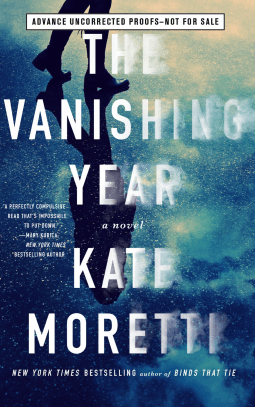
The Vanishing Year, by Kate Moretti****

thevanishingyear 3.5 stars, rounded up for this one. I received my copy from Atria Books and Net Galley in exchange for an honest review.  I am impressed most by the first half of the book, and particularly with regard to character, Kate Moretti is a rock star.

Our protagonist is Zoe Whitaker, and we learn that Zoe grew up as Hilary—with one “L”, and no political baggage—and then chose to adopt “Zoe”, the name on her birth certificate prior to her adoption. There’s a lot more mess here than there needs to be, the adopted-child angst, the guilt over having not given her mother Evelyn the funeral she deserved, and fear, fear, fear.

Moretti does a wonderful job of building suspense, and part of this is the vague but real tension, the constant shoulder-checking, wondering if someone has found her. It makes us wonder who, and it makes us wonder why. Bit by bit, she unspools tidbits of the past in the way you might expect someone that needs a friend and is learning to trust a new confidant might do.

Moretti’s main character is beautifully sculpted. Some novelists that withhold information to build tension hang onto so much that we don’t get to know our protagonist, but I was perched right on Zoe’s shoulder, or hanging out with her newly discarded friend Lydia, asking her why the heck Zoe is so passive. Is fear the only language Zoe knows? I felt close to Zoe, and I wanted her to tell me more.

Meanwhile, there’s the marriage. Henry Whitaker, an immensely wealthy man, sees Zoe across a crowd and homes in on her. Those familiar with the patterns common to abusive relationships know that this is a red flag; the guy whose gaze lights on a partner and from then on wants full possession of every move, every thought, and every minute. He makes a snap decision like lightning and then never lets up. And Henry has plenty of other red flags too, but he’s not a stereotypic abuser; Moretti is too cunning to permit any caricatures into her novel.

For the first half of this story, I relished the meaty ambiguity, not only in Zoe’s life but in what it represents. Yes, Henry is too possessive, too bossy, but on the other hand, this young woman that has never been known for her remarkable beauty or extraordinary talent has the Cinderella marriage without the stepsisters.

“I might be under someone’s thumb, but I have money now.”

Zoe has no living relatives to her knowledge, apart from the birth mom she hasn’t located and that may not want her when she does. She doesn’t have a degree, and is working at a florist’s shop in Manhattan when Henry finds her and whisks her away. He is devoted to her, provides her with every small thing her heart desires. She has a car and a driver, she has servants, she has clothes, jewels, and the whole nine yards. Everyone defers to her. There’s no restaurant that won’t make room for her at the front of the queue. Tickets to a sold out event? No problem.

It is easy for us to moralize from afar, we feminists with our principles, but economic want can shorten a woman’s life significantly. As this reviewer heads into retirement, I look at the lives of the women I knew when we were school girls, and no matter how clever or talented, their material well being seems tied, more than anything, to who they married and whether they remained married. Ask any woman over age 50 who’s looking for a job and watching those past-due notices land in her mailboxes, both electronic and physical, and many of those same women would be more than happy to let someone else tell them what to wear in exchange for such a well-padded safety net.

And so as Henry’s behavior escalates, I grow more entranced with the story’s Virginia Woolfish aspect, and I expect Moretti to take us up that mountain. How much is too much? At what point does one relinquish the guarantee, if there is one, of not only the basic requirements but luxuries one may quickly grow accustomed to, in exchange for breathing room, the dignity that comes with independence, self-respect, and with apologies to Woolf, possibly a room of one’s own?

But Moretti doesn’t go in that direction; at the last minute she tosses in a tremendous amount of new information that is original yet seriously far-fetched. Those that want a white-knuckle thriller with a female protagonist may be very happy here, but I was sad, left feeling as if the waiter had decided not to serve me and abandoned me after the hors d’oeuvres.

This title was released on October 4, and so if you are eager to see what all the buzz is about, get a copy, and then let me know what you think.

One way or another, Moretti will be a novelist to watch. The subtlety and nuance that escaped her as this novel progressed are still hers to be had, if she chooses to use them. I know I can’t wait to see what she publishes next.