
Good Behavior, by Blake Crouch****

goodbehaviorcrouchLast spring I advance- read and reviewed the riveting sci fi thriller Dark Matter, which was my introduction to author Blake Crouch, who has already met with success as a screenwriter. When I saw that something else he had written was up for grabs at Net Galley, I landed on it eagerly. Thanks go to them as well as Thomas and Mercer at Amazon for the DRC, which I received in exchange for this honest review.

Good Behavior consists of a trilogy of Letty Dobesh stories, along with a brief narrative that follows each one explaining how it was tweaked (pardon the pun) as it was adapted to television. Our protagonist herself is, in fact, a recovering meth addict, and there is only one activity that comes close to the rush she experiences when she uses it, and that’s crime. Not just the seamy survival type of theft; not just cleaning valuables out hotel rooms while the guests are off in tourist-land. A big theft with huge risk and a potentially tremendous payday provides the adrenaline rush Letty needs to stay clean, not forever, but for one more day.

Letty is a kick-ass character, a woman who’s been knocked down a million times and gotten back up a million and one. I love the way Crouch works her motivation. Actor-director Jodie Foster once commented that when men in the film industry want to reach the core of a character’s motivation, they reach every damn time for rape, and I’ve noticed that male authors do this with female protagonists a lot also. It’s a fascination they can’t seem to let go of. I am cheered to see that Crouch does something much different, with Letty’s main motivation being the need either to stay clean, or on bad days, the need to score. Behind the need to stay clean is the possibility of seeing her six year old son, Jacob, again. He is living in Oregon with his paternal grandparents; he’s in a stable, loving environment, and though Letty yearns to see him, she won’t let herself go there until she is convinced she can stay clean. But there are triggers out there in the everyday world that some of us could never have imagined:

“She could almost taste the smoke. Gasoline and plastic and household cleaners and Sharpies and sometimes apples. Oh yes, and nail polish.”

Around every corner, temptation calls to her. She can’t even get a pedicure without the fumes invoking a primal craving.

My hunch is that Letty will be with us a long time, and I am curious to see whether this child will remain six years old forever; grow up, but more slowly than real-time chronology; or be aged as if in real time. I can think of some hit mystery series that have been frozen in time to good effect. Crouch could keep Jacob small throughout the life of the series, and this might make more sense than having him grow up and be independent; on the other hand, this series is so full of surprises already that there’s no telling what will happen.

To see the first television episode, in which the protagonist’s name is different from the book:

https://www.goodbehavior.tntdrama.com/?sr=good%20behavior%20video

The first story involves a murder for hire. The second is a complicated rip-off of a billionaire who’s about to go to prison. The last and by far the best is a scheme to knock over a casino. The casino plot is proof positive that a relatively old concept (theft of a casino’s funds) can be made brand new in the right hands.

I believed Letty nearly all of the time; the only weak spot I see is when she considers dialing 911, a thing that former prisoners just never, ever do. No matter how big and ugly a situation gets, for someone who’s been in jail, and especially for those that have gone to a penitentiary, calling cops will only make it worse. Even if the caller is Caucasian, and even if she believes she can do so anonymously, cops are never desirable. They’re just not on the menu of choices anymore.

This is a super fast read, one that might make for a fantastic holiday weekend. There’s lots of dialogue, crisp and snappy. Best of all, it has just been released, and so you can get a copy now. If the turkey is dry and the marshmallows on your yams catch fire, Letty Dobesh can knock everything back into perspective for you.

Recommended to those that love dark humor and big surprises.
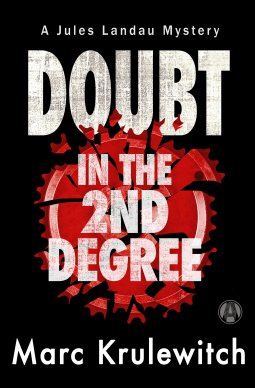
Doubt in the 2nd Degree, by Marc Krulewitch*****

doubtinthesecondThis is the fourth and best installment to date in the Jules Landau series. Thank you Net Galley and Alibi for the DRC, which I scooped on the date of publication in exchange for an honest review. This title is for sale now, and if you like a good whodunit, you should get it too.
The shores of Lake Michigan are inhabited by rich white people, and Jackie Whitney is one of them. Once she is found dead and stuffed on the shelf in her own walk in closet, however, the good times are over.  Kate, Jackie’s girl Friday who hails from Appalachia, is arrested and the public defender asks Jules to look into the case. She doesn’t trust the state’s own people to find reasonable doubt without some outside assistance, but she cautions him that she isn’t going to pay him to find out who did it; all she needs is for him to muddy the waters enough to prevent conviction.

She might as well spit into the wind.

Landau is fired up, and he knows that Kate will be convicted if he can’t find another suspect. Partly this is because cops like to wrap up a case, and once they think they have someone they can convict, they stop looking anywhere else; but there’s another reason, too:

“Corruption and Chicago followed each other like conjoined twins.”

The more rocks Landau turns over, the more suspects he finds. It’s getting to the point where he hardly has time to get home and feed the cat. There are many wry remarks that give this story its kick; it’s a novel that’s part noir, part cozy locked-room-mystery, and whereas the author’s disinclination to settle himself neatly into one area of the genre may cost him in sales, I have to admit that I really like it this way. His clear eye on class divisions and his snarky sense of humor lit me up like Christmas, and I can’t wait to see what he does next.

Although this is the fourth book in the series, I think it works just fine as a stand-alone novel.  Highly recommended!

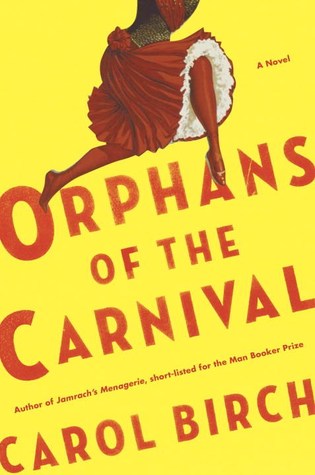
Orphans of the Carnival, by Carol Birch****

“Julia hated thinking about money. There’d always been enough. Other people provided, but she had to work. She could sweep and wash and light fires, or she could sing and dance and let them look. Singing and dancing won all, hands down.”  orphansofthecarnival

Thank you to Net Galley and Doubleday for the DRC, which I received in exchange for this honest review. The book comes out Tuesday, November 8.

Orphans of the Carnival is a fictionalized account of the life of Julia Pastrana, a Paiute woman born in Latin America in the nineteenth century, a time in history when people born with serious birth defects have no surgical alternatives, and are viewed by many as having been cursed by God; often they find themselves, as Julia does at one point, as traveling circus acts, with their physical difference providing them with a means of making a living, however degrading, during a time when there is no medical alternative and no government safety net.

Her early life is spent as a servant and nurse to an elderly relative after her mother abandons her. Given the chance to perform—and be stared at—for a wage with room, board, and transportation thrown in, she chucks her broom, chamber pot, and scrub brush and hits the road with a circus.

Part of the allure in Julia’s performance is that she begins it completely covered, with a dress, long sleeves, and a veil covering her face; she sings and dances, saving the  big moment when her veil is lifted for the end of the act. In order to make a living largely based on the need of the public to see what she looks like, she cannot go out in public or be seen outside of the show, which makes for a lonely existence. But over the course of time, her circumstances change once she places her career in the hands of a manager named Theo Lent.

There are few remaining records existing of Pastrana, and so when Birch tells this story, most of it is invented. On the one hand, she has little information to work with, but on the other hand, she is also not constricted in her storytelling by a long list of historical details to be attended to. I love the wry way in which she wraps the whole thing up, particularly with regard to Theo, who even the scant available data demonstrates was a real piece of work. I won’t give you any more than that, because there are twists and turns that I didn’t see coming, and I don’t want to ruin it for you.

There’s also an alternate narrative that takes place in the present, involving a woman named Rose, a hoarder with a mysterious background. I think the story would work just as well and perhaps better without Rose, but this is a minor aspect of the overall story, and it also doesn’t detract much if at all from the main plot.

About halfway through the book I run a Google search for an image of Pastrana, and of course, Wikipedia doesn’t let me down. I am shocked, not by how horrible she looks, but by how normal she appears. She does have more body hair than most women, but there’s skin showing through; the appellate of “bear woman” is a tremendous exaggeration. She is born with an overly extended jaw line and a second row of teeth, two separate disorders; in addition, there’s another disorder that causes the excess body hair. But the response of the crowds seems overwrought, though it is undoubtedly what happened at the time; if the public, or a part of it, didn’t see Pastrana as truly unusual, she wouldn’t have made this her livelihood, because the crowds would not have come.

Why read this book? I was initially drawn by the cover, and then again by the unusual topic. In this troubled election period, I am more than ready to escape to a completely different time and place, and to be sure, Julia’s problems make others seem miniscule.

What keeps me interested once I commence is Birch’s writing. She knows how to drive a plot forward, and when to step back from the midway craziness and insert something wry and understated to make us smile slyly. I find myself wondering where she plans to take this or that aspect of the tale, and she never disappoints.

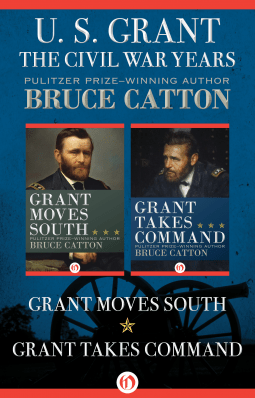
US Grant: the Civil War Years: Grant Moves South and Grant Takes Command*****

usgrantthecivilwaryI was fortunate to receive a DRC of this two volume biography of America’s greatest general, US Grant. Thanks go to Open Road Media and Net Galley for providing it in exchange for this honest review. This is the sixth Grant biography I’ve read, and aside possibly from Grant’s own memoirs, which are valuable in a different way than this set, I have to say this is hands-down the best I have seen. Catton won the Pulitzer for one of his civil war trilogies, and this outstanding biography is in the same league. Those with a serious interest in the American Civil War or military history in general should get it. It’s available for purchase now.
When I had read a couple of US Grant biographies, I told myself that enough was enough, and that I should push away from this one subject in favor of others. I am glad I ignored my own advice, because I have come away from this prodigious, in-depth study with a deeper understanding than anything else has provided.  It’s over 1100 pages long, and over 800 pages once one discounts the end notes and index, but it is as great a pleasure to read at the end as at the start, if not more so.

Is this a good choice for someone new to the American Civil War? Generally speaking (if you’ll pardon the pun) I’d say no, but for someone otherwise well versed in military history or with a tremendous interest level, time, and stamina, it could be. Because Catton is known as an expert in this field, I especially enjoy not having to review his citations. I know his sources will be strong, and one brief overview convinces me this is true.

The first volume starts with his less than glorious entry into the war. As many know, he had been a member of the regular US army during the conflict with Mexico, and had fallen apart and had to go home. Now he is back, but only after a string or two has been pulled by a family friend, and even then, his task is a daunting one. Volunteer soldiers don’t take orders or submit to discipline as a West Point soldiers do, and when he arrives, it seems the lunatics are running the asylum. One of the things that I am impressed with anew every time I read about Grant is his unerring judgment, the social radar that is an indisputable part of his talent. By knowing where to go easy on his men and how to bring them into conformity where it’s most important, he creates a solid force to move South with.

The battles of Belmont, Fort Henry, Fort Donelson, and the tragic but technically successful battle of Shiloh open up the Mississippi River for the Union and divide the South. Catton uses a number of anecdotes that are new to me, and his congenial tone, occasionally caustic wit, and spot-on analysis leave me both energized and contented at the same time.

The second volume, however, is where I learn the most. Until I read this biography, I haven’t understood exactly how great a risk Lincoln takes when he orders that the US military forces should be given the ballot, an unprecedented move, as he himself runs once more for the highest office. His opponent, McClellan, is a former Union general that at the war’s outset, was at the top of the chain of command.  He didn’t go home a happy man, and now he is running as a Copperhead, the moniker given those in the North that want to end the war and let the South leave the Union, slaves and all. And though I know it is often the case that soldiers and sailors choose to support their Commander in Chief at the ballot box, I haven’t fully recognized how badly this may go for Lincoln. Doesn’t every soldier want to go home? This is the Democratic ticket’s promise; end it now and send them home.

On top of all that, Lincoln and Grant, who think a lot alike, clamp their teeth together and endure the white knuckled ride that they know they’ll be facing when they decide against further prisoner exchanges with the South. There are two strong reasons for this decision: first, the South refuses to recognize Black men in uniform as soldiers, and won’t exchange them, assuming that all of them must be escaped slaves, including those with Northern accents. Grant declares that no prisoners will be swapped until the South is willing to parole every Northern soldier, and he means it.

In addition, both Lincoln and Grant realize that the South is running low on manpower. There are thousands of their soldiers sitting in military prisons; to trade them out and risk seeing them back in uniform is to turn a military contest into a war of annihilation. With prisoner exchanges, the war will last longer, and there will be more death. In a peculiar way, refusing to exchange prisoners is the more humane policy.

In an election year, this is a tough sell. There are families up North that have been notified that their son, brother, father, is a prisoner of the enemy, and word has by now been spread as to what kind of conditions those poor men face. How much harder is it to vote for Lincoln and the fight for the reunification of the republic when to do so is to prolong the time their loved one sits behind bars, slowly starving? Lincoln and Grant could temporarily resume prisoner exchanges until after the election, but they stand on principle, and it pays off.

Another thing that I don’t really grasp until I read the second volume is Grant’s relationship with the Army of the Potomac, a collection of men that to some extent have been poisoned with McClellanism. It’s a real tightrope walk, and he is deft in his dealing with it. I can’t tell you everything he does here; that’s the point of the book, after all. But I came away with a renewed respect for General Sheridan, and an interest in reading biographies of that general also.

How much of Sherman’s march through Georgia and then to the sea is Grant’s idea, and how much of it is Sherman’s? I come away understanding this better than before as well, although I have read both Grant’s and Sherman’s memoirs. Catton has a way of crystallizing events without oversimplifying them.

And I nod with solemn satisfaction at the cold fury Grant experiences when he learns of the assassination of President Lincoln and the attempts on the lives of others, including himself.

I still shiver with pleasure when I reread the denouement, in which Grant sends General Weitzel and his troops, some of whom are Black, into Richmond when the Confederate capitol falls. I want to cheer as the throngs form for the military review in Washington DC after the war has been won; all those thousands of soldiers, all those citizens and international visitors in the stands and on the sidewalks, singing “John Brown’s Body”. Think of it!

I promised myself to be brief, and I haven’t really done that, but this is the least I can bring myself to say about this excellent biography. If my review is too long to hold your attention, then this two book series—even while allowing for the fact that Catton is a far better writer than I—will also be more of a meal than you are prepared for.

But for those with a sufficiently great interest level and stamina, I cannot imagine a better memoir of Grant for you to buy and enjoy. Enthusiastically recommended!

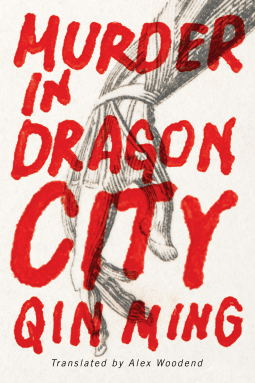
Murder in Dragon City, by Qin Ming**

murderindragonIs there a killer on the loose in Dragon City, one that’s trailing body parts everywhere he goes?  I received my DRC in exchange for this honest review, thanks to Net Galley and Amazon Crossing.  This collection of stories l is written by a Chinese medical examiner, translated to English by Alex Woodend. I’m always up for something new, and so I took my galley and curled up. Unfortunately, this one just never gelled for me. I tried setting it aside, reading other things and coming back to it, hoping that with fresh eyes I would like it more than I had before; finally I had to face the fact that I couldn’t write a happy review and also be honest.
It happens.

Undoubtedly the strongest aspect of this story in my view is, as one might expect, the forensic detail and physical knowledge the author commands. But that can cut two ways, if you’ll pardon the expression. Some of us just love gore, and the more fleshy fingers or toes that land in sizzling oil, the more we eat it up.

On the other hand, some of us are completely grossed out by frequent, grisly findings, and this author put his thumb on my “ick” button and never took it off.

One other thing I like and that’s consistent is that Chinese cops that find corpses or find themselves in strange, scary situations don’t feel compelled to feign indifference. There’s no noir to be found here, just honest cops that yelp when they are scared and that dive when they hear a loud noise near a crime scene. The candor is refreshing and sometimes funny.

Obviously, each story has a different spin to it, but the tone overall is much the same.

I confess that the last time I studied Chinese government and culture was in the post-Mao period, before the largest Stalinist types of government fell apart; I don’t know what life is like for women these days in China. But the author never seems comfortable portraying women as people that are female. Women are featured and discussed as political bigwigs, servants, and technicians, but we never see them acting in concert with men or each other. There’s a clump of men, and then…there’s this woman. Sometimes. The woman is always featured as “other”. The male cops gather and discuss whether any woman would be ruthless enough to commit the crime in question, but by this point I was so green around the gills that I didn’t want to find out whodunit or why. I just wanted to be done, which I am.

To Kill and Kill Again, by John Coston****

The Terrifying True Story of Montana’s Baby-Faced Serial Sex Murderer

tokillandkillagain

They say you should do what you’re good at, and unfortunately, Wayne Nance was good at killing people. He enjoyed his work. This is the true story of the man dubbed “The Missoula Mauler”, who killed primarily based on opportunity, high in the rugged Rocky Mountains between 1974 and 1986. Thank you to Net Galley and Open Road Media, from whom I received a DRC in exchange for this honest review. The digital version of this true crime story was released October 18, and so you can buy yourself a horrifying Halloween present today. But turn all the lights on before you dive in. Lock your doors, and check your windows. If you have a basement, secure that as well. This isn’t a thing you want to read while you’re home alone at night.

I don’t read much true crime, because it’s dark stuff. To be honest, I wouldn’t have read this one, but an Open Road rep contacted me by email regarding another title I had read, and she was having a Monday moment; consequently, she asked me to review this title rather than the one I had read, and I figured I’d been invited to read it. I don’t turn down an invitation unless I know for sure I won’t like the book, so really, I read this one mostly due to a misunderstanding. By the time it was cleared up, I had downloaded it and was 20% of the way in, and I wanted to see how it came out.

The interesting thing about Nance is that he doesn’t seem to fit the serial killer stereotype. He was a quirky guy, true. But nobody said he kept to himself, or that he was quiet. He was sociable, and he was considerate, an apparently thoughtful young man that would run an errand, drop something off at your house while you were working, bring you your lunch…of course, there was always a chance he’d either forget to return your house keys or make a copy to keep, but that couldn’t hurt you if you didn’t know about it, right?

Well, actually it could. Sometimes it did.

I recently reviewed Open Road’s Fire Lover, a true crime story in which the killer seems drop-dead obvious. That isn’t the case here. At one point Nance came up as a suspect, but he had an alibi. I think when a person lives in a small Montana town and terrible things happen, it’s comforting to assume that the horrific, violent things that have been in the local news are done by an outsider, someone passing through. Maybe it’s a trucker that drives through from time to time, or some other outlier. Nobody wants to think it’s someone they work with, that they see every day.

I have to tell you, this story is not just scary, but it’s also tragic. There are children involved. The book’s blurb says there are photos, but these are not grisly photos of dead people; nevertheless, I found my stomach turning over a time or two. It’s dark, dark business, and you alone know whether you want to read something like this. The satisfying thing is that he is caught, and so other people didn’t die that undoubtedly would have. But as for me, I don’t want to read any more true-serial-killer tales for a good long while, if at all.

That said, Coston has to wade through a lot of data to tell this story, and he does so without getting bogged down in minutiae while setting an appropriate tone and pacing the story expertly. He tells us about the victims so that their own stories will not get lost while we learn the ugly deeds of Wayne Nance.

For fans of true crime that have strong stomachs, this may be the story for you. One thing’s for sure: all your own troubles will look smaller when you are done here.

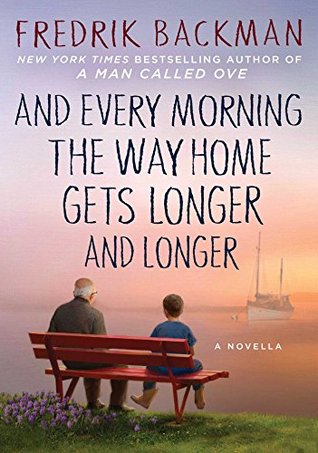
And Every Morning the Way Home Gets Longer and Longer, by Fredrik Backman****

 “When a star fades, it takes a long time for us to realize, as long as it takes for the last of its light to reach Earth…When a brain fades it takes a long time for the body to realize.”

andeverymorningthewayhome

Frederik Backman’s new novella provides us with a philosophical yet poignant glimpse of an elderly man trying to hang onto his memories, and the love of those that must say goodbye to him inch by inch. I received my DRC from Net Galley and Random House Alibi in exchange for this honest review.  This novella will be published November 1, 2016.

They say that each generation corrects for the one before it, rendering us more like our grandparents sometimes than our parents themselves. So it is with Noah and Grandpa. Grandpa calls his grandson “Noahnoah”, because he likes his grandson’s name twice as much as anyone else’s. Sometimes Noah’s father Ted comes to see Grandpa, and when he mentions Noah, Grandpa doesn’t know who that is. Sometimes Grandpa knows everyone; sometimes he doesn’t. Sometimes he mistakes one of them for the other.

But Grandpa—who has no other name in this book, having taken on the generic persona that Western society tends to give us as we grow very old—shares a special bond with his grandson, and it is his grandson that comes to him, still, with questions about life and the universe.

Grandma is no longer living, but theirs was a happy marriage despite their dispute about God and the afterlife.  Noah says to his grandfather, “’Grandma believed in God, but you don’t. Do you still get to go to Heaven if you die?’”

Grandpa tells him, “’Only if I’m wrong.’”

The years pass. As usual, Grandpa wants to know about school, but he has forgotten that Noahnoah isn’t a student anymore; he’s become the teacher. On the other hand, school is better than ever now. And so it goes.

This story is brief, and I read it in just a couple of sittings. Despite the cover art, it isn’t necessarily a book for children.  It’s a wonderful story in that it shows us a gentle way of dealing with aging—which can be so hard to do, particularly if Alzheimer’s makes the elderly sufferer angry with no reason—and it also helps us learn to let go. For some, this might be a good grief story. For others that had to let go without being able to be with the beloved family member much in their final years, it might be painful, because the grandson and father both spend time with this man as he declines.

I can see ways in which this story might help a YA reader with not only a strong literacy level, but the ability to think abstractly, cope with Alzheimer’s or another form of dementia in an elderly relative that means a lot to them, but I would advise the parent or guardian to read it first, and then decide. There’s no sex, no profanity; just pleasure, love, joy, and aching sorrow.

The Education of Dixie Dupree, by Donna Everhart*****

theeducationofdixieduI rate this 4.5 stars and round it upward. Thanks go to Kensington Publishing and Net Galley for the DRC, which I received in exchange for this honest review. This courageous novel, one that takes place in the past but couldn’t be more timely, is going to create a lot of buzz. Get your marshmallows ready, because I think I smell hot tar and burning wood…or is it paper?

A note: there’s no way to review this without providing at least the basic elements of the story. If you want to avoid spoilers entirely, read the book, then come back and check my viewpoint against your own.

Although it’s billed as being a story about mothers and daughters, and about secrets that pass from one generation to the next, that wasn’t my take away from this one, I have to say. From where I sit, the story is about domestic abuse, and about domestic abuse, and about domestic abuse. I haven’t seen a solid YA novel take this on in such a straight forward manner, and I think there are a lot of children, girls in particular, that will benefit from reading it. Would I read it out loud to a class? No, I would not. Rather, it’s a story better saved for reflection and possibly for discussion in a small group or with a reading partner. It takes a lot of trust just to talk about this book. In some school districts, teachers may face the battery of parental approval and permission slips. Oh, good luck with that.

Dixie tells us her own story. She’s born in a tiny, impoverished hamlet in Alabama in the 1960’s. Her parents are having money problems, and their relationship isn’t going well. Evie, Dixie’s mother, is on the verge of a breakdown of some sort, and she takes out her frustration and rage on the child that looks just like her, and that of course is Dixie. In an effort to apologize, she sits down with her daughter later on and tells her that there are times she can’t control herself:

“’I can’t explain why I react like I do sometimes, you know? It’s done and I can’t take it back, although God knows, I wish I could.’

“I whispered, my voice hoarse, ‘God don’t hear us.’”

At one point a social worker shows up at the house and Dixie has to decide whether to spill it or sweep it under the rug. It’s interesting to see how it plays out.

Ultimately, Evie summons her family for help, and Uncle Ray comes all the way from New Hampshire to lend assistance. Unfortunately, Uncle Ray has a whole lot of demons of his own.  Dixie doesn’t like the way Ray stares at her as if she were his next meal; she doesn’t like the way he brushes up against her. But when she tries to tell her brother how she feels, he laughs at her and points out that she isn’t all that attractive, and her body hasn’t exactly grown boobs; why would a grown up man be interested in dumb old Dixie? And so Ray, who is the sole source of grocery and clothing money for this miserable clan, is left to do what he wants to do unchecked.

“Uncle Ray smelled different, not of Old Spice, but something else, something sharper.”

When Dixie threatens to expose him, Uncle Ray points out that it’s basically his word against hers, and would she prefer he close his checkbook and drive back to New Hampshire? By now Dixie knows what it’s like to be genuinely hungry for days on end. President Lyndon Johnson’s Great Society plan has not yet taken root; there isn’t any assistance available from the state. Sometimes a kid had to stay quiet or starve.

“I felt something break, something turned off like a light switch in the very center of me.”

It’s a hard, hard story to read, and yet I can’t help think of all the girls and women that will read this book and know that they aren’t so strange or terrible, and that this does happen to other girls in other families.

I’ve tried not to give away more than the broadest contours of the story so that you can find out the details for yourself. One thing that I would change if I had the power is the whole adoption thread, which is superfluous and In its own way, more harmful than helpful. It’s almost as if the author is afraid to acknowledge that blood relatives will do this thing to their very own children; yet they will. Hell yes, they will. Any teacher that’s been in the classroom for a few years can tell you that much.

As for me, I have my own story.  [Skip paragraph if you prefer to stick to the book itself.] There were some awkward guitar lessons I had when I was about twelve years old. My guitar instructor had recently decided to teach out of his home; he lived alone. One day after my private lesson, my father asked me, in the car, how that lesson had gone. I was a little afraid of being made fun of, but I told him anyway that my instructor made me feel uncomfortable. I felt as if I spent as much time walking my folding chair away from his as I did working out the chords on the neck of my instrument. I’d move over; he’d move over. His hand would land on my thigh while we were talking. I’d flinch, pull away, and move my chair. He’d move his chair. All of this within the framework of a perfectly normal guitar lesson, if you ignored all the strange furniture and hand-moving. My father, who died in 1978, heard what I said and told me we could get another guitar teacher. I asked if I would have to be the one to tell the man that I wasn’t returning, and he said no. Just consider that chapter over and done.

If only it could be so easy for everyone.

The book isn’t easy, but girls deserve the chance to read it if they want to, and likely there are some boys that could stand to read it, too. This book is for sale now; highly recommended.

The Whole Town’s Talking, by Fannie Flagg*****

 “Up on the hill, Lucille Beemer said, ‘Good morning, everybody.’

“Two hundred and three people just waking up answered, ‘Morning’.”

thewholetownstalking Fannie Flagg is legendary, and rightly so. In fact, at one point in my reading of this DRC, I reflected that someone with her power to move people has power indeed; how fortunate that she uses her gift to benefit the rest of us. I don’t know about you, but I am ready to read something that provides a level of reassurance that all has not gone sour in this world, and that everything passes, sooner or later.  I was  fortunate to read this free and in advance thanks to Random House and Net Galley, but it’s one of the very few books for which I’d have paid full freight if it came down to it. It hits the shelves November 29 and is available for pre-order right now.

Our story begins with the first residents of what will become Elmwood Springs. Lordor Nordstrom arrives from Sweden, and after months of searching, finds the perfect place for his dairy farm in a pleasant spot in Missouri. The year is 1889. He puts up a house, buys some cows, and then, as a founding father, he decides he will donate a piece of land, because every town needs one thing for sure…a cemetery.

“Lordor guessed that preparing a place to spend eternity and trying to figure out how many places to set aside for himself was what made him think about his future.”

I went back and reread that sentence a couple of times; it begins our second chapter. Oh my but Flagg is droll. If one were to read this gem with half a mind on other things, nuggets like this might be missed.

The years go on, and with brief, colorful chapters, Flagg develops the town, introducing new residents that move in or are born here, and at first it seems as if the story is cotton candy, all fluff and sugar. But just as the impression is formed, it is vanquished, because our author is just warming up. Moments that are poignant, bittersweet, and darkly funny are sprinkled in lightly as we start, because after all, we are new to Elmwood Springs.

But the longer we stay there, the more intimately we become acquainted with its denizens and their peccadilloes, and then the more emotional aspects of the story unfold, almost as they might within your own large family or tightly knit community. Flagg convinces me that these people are my people, and her characters are so brilliantly developed, so utterly convincing that even when one of them does something surprising, I understand how that has come to pass.  And every time I think I see where she is headed with one thread or another, she surprises me.

About a fourth of the way in, someone dies and we find them interred, of course, at Still Meadows. But there’s an engaging twist to this aspect of Flagg’s story: the first person to pass wakes up when someone new arrives and greets them. They may be six feet under, but they can see what’s happening at the cemetery, along with everything that can be seen from the cemetery, just fine. And so the discussions that took place in life continue after death, and the dead look on avidly and wait for word of the loved ones they left behind.

As the story develops and characters’ lives are more deeply explored—always remaining more light than dark, and without a single word anywhere that isn’t needed—it occurrs to me that she just may have done it again.

Some people like to take gadgets apart to see what makes them work; I enjoy doing that with literature. And so I find myself looking back at my highlights and notes, looking for what, apart from a dry, accurate wit, makes this writer’s work so special. Some of it is an alchemy whose elements can never be described perfectly, taking ordinary Americans and spinning them into gold. But part of it is undoubtedly her deep respect for working people, and her readiness to see redeemable qualities in characters that upon first glance seem abrasive and unlovable:

“Ida had always been different. At school, when all the kids used to play church and one would be the preacher, another the preacher’s wife, a deacon…Ida said she wanted to be God, because she was the only one who knew how to do it.”

But later, once she was grown, “Someone else remarked, ‘By God, if Ida had been a man, she would have made general by now.”

She also acknowledges that once in awhile, someone comes along that no matter what heroic effort is made on their behalf, will never do anything good for anyone. Hey, it happens.

The comments that are made by various characters reflect both the character’s outlook and usually, the prevailing attitude of the time period as she rolls the town steadily forward to 2016.

And this leads to one cautionary note: as with all of Flagg’s work, it is essential to read the chapter and section headings, which provide context. This reviewer once taught a group of teenage honors students that were unable to make heads nor tails of Fried Green Tomatoes, and I discovered it was because they weren’t reading the chapter headings, and so they didn’t know what the time period was or whose point of view they were reading. Don’t let that happen to you!

Finally, I want to thank the author for the kindly manner in which she draws teachers.  Fannie Flagg, every teacher I know that talks about books, loves your work. We need the encouragement sometimes, and your friendly regard means a great deal.

Highly recommended to everyone.

Mission: Jimmy Stewart and the Fight for Europe, by Robert Matzen****

missionjimmystewartIn Mission: Jimmy Stewart and the Fight for Europe, Robert Matzen provides an engaging, compelling memoir that focuses primarily on Stewart’s time as an aviator during World War II. Thanks go to Net Galley and to Goodknight Books for the DRC, which I read free in exchange for this honest review.

The book begins with Stewart’s childhood in a small Pennsylvania town. His is a close knit family with a strong military tradition. An outstanding student, he is educated at Princeton and falls in love with theater one summer. He hits the road for Hollywood to fulfill his dream.

Because of the title, I am taken aback at the amount of celebrity gossip that is included in the first portion of the biography. Matzen wants us to know that Stewart used his skinny-awkward-young-man routine as a sort of foreplay to work his way between the sheets with one well known actress after another; he lists many of them. I could have lived without this part, but maybe you’ll enjoy it. If like me you are really only interested in the military aspect of it, skip the Hollywood part at the start and pick it back up when he enlists. Eventually this is what I did.

Once there, the story is fascinating. Stewart resolutely straight-armed studio efforts to keep him in the USA or use him to entertain troops, as some actors that are drafted chose to do. He angers a studio head who actually tells him, “You’ll never work in this town again”. He decides he is going to do his part like any other man, apart from the fact that he had always wanted to fly and now has the money for a private plane and flying lessons. Once he is actually in uniform, he is able to become the aviator he has dreamed of being as a youngster.

As Martzen unspools Stewart’s story, which had to be difficult to research given Stewart’s resolute refusal to discuss that period, I am instantly engaged. I had known at one time that the planes were not heated back then, but hadn’t fully appreciated the dangers and challenges posed by the cold alone once in the air. A man could suffocate if he didn’t regularly break the ice off of his mask. Men could and did lose body parts to frostbite.

The stories of the men that would eventually serve under him as he rises in rank, not due to strings pulled by authorities but as he has wished, by merit and leadership capability, are also both interesting and poignant. Reading the way the pilots name and decorate their planes, how individual aircraft with idiosyncrasies that make them handle differently so that the pilots strongly prefer to fly their own ships, is interesting, and  reading the personal details and in some cases, the deaths of these men is wrenching in some places, poignant in others.

When Stewart has completed his military service, he looks at least ten years older than he is. He’s seen a lot. If he returns to Hollywood, there’s no chance he will play the same roles he used to do. He stalwartly refuses to exploit his time in the service by making World War II films, which are enormously popular, and for a long time, his phone doesn’t ring. He’s sleeping at his parents’ house in his old childhood bedroom, wondering what will happen. But in time he hears from Frank Capra, who has an idea for a picture “based on a story titled ‘The Greatest Gift,’ about a man from a small town who wishes he had never been born. Jim was the only actor in Hollywood whom Capra considered for the role.”

Despite the sense of alienation he experiences with his return to the other-worldly, glitzy city after his gritty, intense experience in the war, Stewart is glad to be back, and he plays what will become an iconic role, that of George Bailey in “It’s a Wonderful Life”. He credits Capra with saving his career, and is overjoyed to be back:

“He was engaged in something magical again, something to interest people in the art of living, rather than the art of dying.”

The book also discusses Stewart’s lifelong friendship with Henry Fonda, and his marriage. We get a brief overview of the peacetime lives of the surviving members of Stewart’s first crew.

If it were up to me, I would remove all of the somewhat jarring photos at the end of the book that show Stewart alongside one actress after another, and I’d replace them with photos and maybe diagrams of the planes we hear so much about. A map here and there wouldn’t hurt, since we follow his flight paths and it’s sometimes hard to visualize where these places are. I used Google, but would like to see these included as part of the published memoir, perhaps in the center, where they’re most relevant.

I recommend this biography to fans of Stewart’s, and I recommend most of this book to those with an interest in military history.  The book is available to the public today, October 24, 2016.