
 Dorothy Day is an interesting historical figure, the woman that founded The Catholic Worker, which was initially a combined newspaper, homeless shelter, and soup kitchen. I once subscribed to The Catholic Worker, and since it cost one penny per issue, you couldn’t beat the price. I saw this biography available and snapped it up from Net Galley; thanks go to them and Scribner, who provided me with a DRC in exchange for an honest review. This title was published in late January and is now available for purchase.
I always had a difficult time getting a handle on what The Catholic Worker stood for. The name suggests radicalism, and indeed, Day was red-baited during the McCarthy era. Day was a Catholic convert and a strong believer in sharing everything that she had with those that had nothing. She worked tirelessly and selflessly, and despite often living an impoverished existence somehow made it into her eighties before she died, an iconic crusader who became prominent when almost no women did so independently—though she was no feminist, and believed that wives should submit to husbands. Since her demise, speculation has arisen as to whether she might be canonized.
What was that huge crash? Was it a marble statue being knocked the hell off its pedestal? Hennessy takes on the life and deeds of her famous grandmother with both frankness and affection. In the end, I came away liking Day a good deal less than I had when I knew little about her. Her tireless effort on behalf of the poor included anything and everything her very young daughter had in this world, and at one point she remarked that she felt unable to ask others to embrace a life of poverty if her child wasn’t also a part of that. It was a different time, one with no Children’s Protective Service to come swooping down and note that the child was sleeping in an unheated building in the midst of frigid winter; that there was no running water, since the building was a squat; that the only food that day was a single bowl of thin soup and perhaps a little hard bread donated from the day-old stores of local bakeries; that even small, personal treasures and clothing given the child by other relatives and friends would either be stolen by homeless denizens or even given away by her mother, a woman with the maternal instincts of an alley cat. Day did a lot of good for a lot of people, and no one can say she did it for her own material well being, but she more or less ruined her daughter’s life, and even when grown, Tamar’s painful social anxiety and panic attacks derailed her efforts to build a normal life for herself.
Nevertheless, the immense contribution that Day made at a time when the only homeless shelters were ones with a lot of rules and sometimes religious requirements cannot be overlooked. She is said to have had a commanding presence, endless energy (and the mood swings that accompany such energy in some people), and a mesmerizing speaking voice. Day’s physician also treated the great Cesar Chavez, and reflected that their personalities were a lot alike.
I confess I was frustrated in reading this memoir, because I really just wanted the ideas behind the Catholic Worker laid out for me along with the organizational structure. Was the whole thing just whatever Day said it was at the moment, or was there democratic decision making? I never really found out, although I gained a sense that the chaotic events shown in the memoir reflected an unarticulated organizational chaos as well. This is a thing that sometimes happens with religious organizations; the material underpinnings are tossed up in the air for supernatural intervention, and the next thing they know, there’s an ugly letter from the IRS.
Only about half of this memoir was actually about Day; my sense was that the author did a lot of genealogical research and then decided to publish the result. The first twenty percent of the book is not only about Day’s various romantic entanglements; a significant portion of the text is mini-biographies of those men, and frankly, I wasn’t interested in them. I wanted to know about Day. Later I would be frustrated when long passages would be devoted to other relatives and their lives. Inclusion of daughter Tamar was essential, because Dorothy and Tamar were very close all their lives and shared a lot, and so in some ways to write about one was to tell about the other. But I didn’t need to know about Day’s in-laws, her many and several grandchildren, and so on. I just wanted to cut to the chase, but given the nature of the topic, also didn’t want to read Day’s own writing, which has a religious bias that doesn’t interest me.
Those with a keen interest in Dorothy Day and the Catholic Worker may want to read this, because not many books are available that discuss her life and work. On the other hand, I don’t advise paying full cover price. Get it free or at a deep discount, unless you are possessed of insatiable curiosity and deep pockets.
 This is #32 in the Alex Delaware series, and Kellerman’s writing just seems to get better with every entry. Thanks go to Net Galley and Random House Ballantine for the DRC, which I received free in exchange for this honest review.
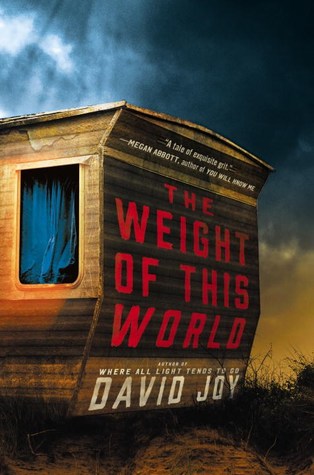 David Joy is a writer that keeps it real, and that’s what made me lurch forward in my desk chair and grab my mouse when I saw his second novel was done. Big thanks go to Net Galley and Putnam Penguin for the DRC, which I received in exchange for this honest review. This title will be available to the public March 7, 2017. Those that cherish strong fiction should buy it and read it.
 Little Heaven is pure hellfire and horror, the sort of novel that makes a person check the closet at bedtime and leave a light burning in the hallway. I received my copy in advance from Net Galley and Gallery Books in exchange for an honest review. The title is available for purchase now.
 There are good writers, excellent writers, and of course, indifferent writers, but once in a rare while there’s a writer that makes me sit up straight and take notice, someone with that special spark of genius that no money can buy nor school can teach. Krivak’s work is exquisite, the product of both power and restraint. If you love historical fiction, you have to read this book, which comes out January 24, 2107.
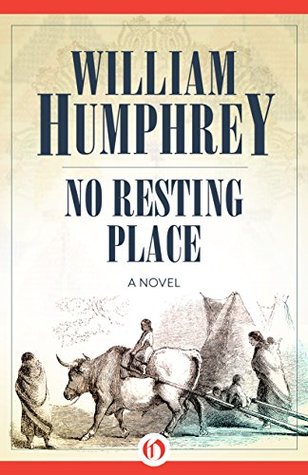 I was drawn to this story because I had read William Humphrey’s Home from the Hill, brilliant Southern fiction that was a contender for the National Book Award, and I couldn’t imagine letting anything written by this author pass me by. Thanks go to Net Galley and Open Road Media for the DRC, which I received free in exchange for this honest review. The book will be re-released digitally February 17, 2017.
 The American Civil War is part of the curriculum I used to teach, and in retirement I still enjoy reading about it. When I saw that Open Road Media had listed this title on Net Galley to be republished digitally this summer, I swooped in and grabbed a copy for myself. I was so eager to read it that I bumped it ahead of some other DRCs I already had, and I really wanted to like it. Unfortunately, this is a shallow effort and it shows. Don’t buy it for yourself, and for heaven’s sake don’t advise your students to read it.
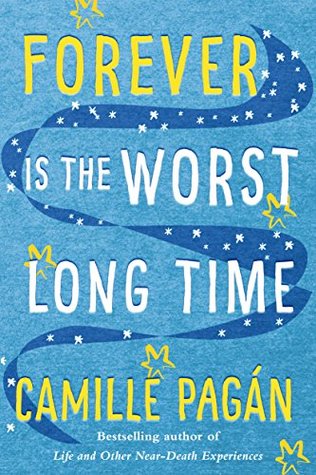 Camille Pagan is the author Life and Other Near Death Experiences. Thank you Net Galley and Lake Union Publishing for the DRC, which I received in exchange for an honest review. This title is for sale February 7, 2017.
 Berenson has written a whole series of espionage thrillers featuring John Wells, a CIA operative fighting al Qaeda. I was unaware of this when I requested a DRC from Net Galley and Putnam Penguin, but I find it stands up quite nicely as a stand-alone novel. Would I have enjoyed it even more if I’d read the others first? We will never know. However, if you’d like to read this tightly woven thriller either in sequence or singly, it will be available January 31, 2017.
 Seattle Book Mama