
Sing, Unburied, Sing by Jesmyn Ward*****

SingUnburiedI had never read Ward’s work before, and now that I have I will follow her anywhere. Sing Unburied, Sing is a literary masterpiece, and one that fits the time in which we live. It opens up all sorts of thorny questions for examination, but like most thorns, it stings. I received my copy free and early courtesy of Scribner and Net Galley. This title is available to the public now.

Jojo and Kayla have been raised by their grandparents in rural Mississippi; Mam and Pop are their source of love and stability. Leonie, the mother they call by her first name as if she were a sister, drifts in and out, using copious amounts of meth and other drugs. Michael, the children’s Caucasian father, is being released from Parchman, the notorious prison where he has been sent after having killed Leonie’s brother, Given. Given comes to her when she’s high. She doesn’t know it, but Jojo and Kayla can see him, too.

The contours of this story have to look familiar to a lot of people, and we are faced with unanswerable questions. Is it better, for example, for children to be raised by grandparents, though they are infirm and exhausted and have earned some time to themselves in peace and without dependents, or is it better for their parent or parents to take them, although they have no money, job, or parenting skills?

Whether it’s the right thing to do or not—and I’ll tell you right now that for Jojo and Kayla, it isn’t—Leonie swoops in and after overcoming her mother’s resistance, takes the children and heads for Parchman to pick up her man. There is no plan at all in place for once he’s been retrieved. Leonie is not the swiftest deer in the forest, and then of course she’s high a lot of the time, and seems to have been solipsistic from the get-go; at one point in the story Mam tells Jojo that his mama just doesn’t have the mothering instinct.

It’s the understatement of the century.

On their odyssey they encounter racist cops, a Caucasian drug-dealing attorney, and a host of other beings, living and not. The narrative is told in the first person by Leonie and Jojo alternately, with a voice from Pop’s past peeking in once the adventure is underway. Although the characters are traveling physically through most of the story, it’s not about setting; it’s about character. We learn these characters so intimately that it’s almost as if we ride beneath their skins, and we also learn Pop’s terrible secret.

None of this description can convey Ward’s alchemy, her capacity to take the language and shape it into something much more than its parts, nor does it adequately relay her skill, authority, and overwhelming power. Ward is a lion.

That said, if you need a feel-good novel, this book is not for you. It’s a dark, tragic, terrible story, and the characters are largely unlovable ones, but none of this should keep you from it. This novel will be talked about for a long, long time.

Highly recommended to those that love excellent fiction.

The German Girl, by Armando Lucas Correa***-****

thegermangirlThe German Girl arrived in my mailbox, a nice surprise from Atria Books. This novel is historical fiction, an international bestseller translated into many languages; it tells the story of Hannah, a survivor of the Holocaust who was sent to Cuba, and her namesake, Anna, who lives in present day Manhattan. This title is available for purchase now.
Hannah is born into a Jewish family just before Hitler’s rise to power. As white supremacy becomes the new order, her picture is taken by a photographer, and it’s titled “The German Girl”. With her blonde hair and blue eyes, she is exemplified as the perfect Aryan child. No one associated with the magazine or the government knows that she is Jewish. And of course, her father, who has been working furiously and quietly to get passports out of Germany for all of them, is absolutely livid. Who dared do this without his permission, and more to the point, what repercussions will there be once someone in a position of authority realizes the error that’s been made?

As the World War II generation dies out, it is essential that works like this one continue to be published. Though it’s fictional, there are primary documents in the back—photographs and the guest book signatures for a cruise ship that bears a lucky cargo away from Nazi shores. There’s also a bibliography, something few writers of historical fiction provide.

The reader should know that this is not a page-turner. It’s a story for those with a particular interest in historical fiction and the history of World War II. It’s written in a relatively formal style, words that one sinks into rather than tears through. Those looking for a steady, steep story arc aren’t going to find it.

Recommended to those interested in the refugees that fled the Nazis; it’s a worthwhile reminder that white supremacy never leads to good results.


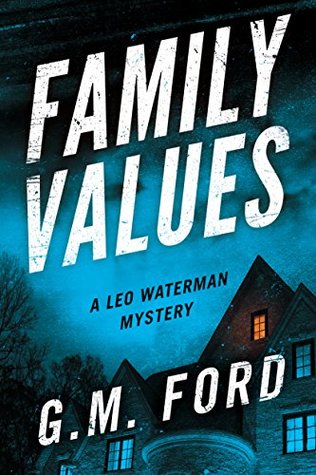
Family Values, by GM Ford*****

“They were standing inside the door when I came out of the bathroom. Two of them. Matching gray suits, milling around like the owned the joint. Something about carrying a gun in one pocket and the power of the state in the other changes the way a person relates to the universe. For as long as I could remember, that particular sense of privilege has always pissed me off.”

FamilyValues

Leo Waterman is a solid citizen now, no longer the scruffy Seattle PI that he was when our series began. But now that he has a lovely home and a good woman—well, sometimes anyway—he also has more to defend, and is less fettered by economic constraints. Those that have loved this series from the get-go should go go go to their nearest book seller or favorite website and get get get this book. New readers can jump right in, but likely as not, you’ll want to go back and get the rest of the series once you’ve seen this one. Lucky me, I read it free thanks to Net Galley and Thomas and Mercer, but it’s worth the full jacket price. It is for sale now.


Leo returns from vacation to find Rebecca Duvall, the love of his life, on the bathroom floor with a needle in her arm. Her reputation has been damaged by a suggestion of corruption, but Leo knows this is no suicide attempt. Her job as medical examiner is on the line now, and so Leo enlists the help of his boisterous investigative squad to untangle the mystery of who wants Rebecca not only fired, but dead. Ford tells the story with the gut-busting edgy humor for which he is known. He takes a playful jab or two at gender fluidity; at times this part feels a little excessive, but that’s not where the story lingers. There are a million twists and turns as our impulsive PI goes where everyone tells him he should not:

“’ I went out to see Patricia Harrington today.’

“’Don’t fuck with those people, Leo.’”

There are some arrhythmia-worthy attack scenes, and the plot wholly original and free of formulaic gimmicks. The streets and alleys of Seattle and the hinterlands beyond are all rendered immediate and palpable. 

Ultimately the heart of the tale is revealed by Leo’s regard for Seattle’s homeless men and women, some of whom were once friends of his late father. It is them he turns to for extra eyes in a difficult situation:


They were great for stakeouts, as long as it was somewhere downtown. They could hang around all day and nobody paid them any mind because society has trained itself not to see the poor and the destitute. That way, we don’t have to think about how the richest society on earth allows so many of its citizens to live in the streets like stray dogs.


The snappy banter between Waterman and Seattle cops is always delightful.  It’s even better once we add a pair of fake UPS guys, some thugs known as the Delaney brothers, local ruling scions, and poor Rebecca as the straight character representing all that is sane and normal: “Oh Jesus…what now? Locusts?”  The narrative is fresh, funny, and entirely original, avoiding all of the formulaic foolishness that makes old lady schoolteachers like this reviewer peevish.

The ending will make you want to sing.

Altogether, this novel is an unmissable treat.

If the Creek Don’t Rise, by Leah Weiss*****

IftheCreekDon'tRiseLeah Weiss hits the literary scene with electrifying Southern fiction August 22, 2017. If the Creek Don’t Rise is a story told with tremendous heart, and it’s one you won’t want to miss.  Weiss writes with swagger and grace, and her prose crackles with conviction. Thanks go to Net Galley and Sourcebooks Landmark for the DRC, which I received free in exchange for this honest review.

Our tale unfolds in the hills and hollers of Appalachian North Carolina in the mid-twentieth century. Moonshine stills are as jealously guarded as ever, but now a person can get killed over a Ginseng patch as well.  Formal education isn’t valued by everyone, and it’s hard to come by.  Baines Creek is home to only one educated man, and that’s the minister, Eli Perkins, whose haunting early memories include the exorcism of Pharrell Moody; imagine a phalanx of grim, weapon-bearing deacons converging on a dark woods.

But now, Eli looks forward to having an educated person to talk to. The new teacher, Kate Shaw is a great big woman, middle-aged. She wears trousers “like a man”, and gossip is thick in the air before she’s even met the community. She tells everyone that she was fired from her last job, a smart move since it takes some of the wind out of the venomous rumor mill that greets her.

But Eli is smitten.

Another person that likes Kate immediately is Sadie Blue. Sadie is seventeen and newly married; the nuptials were a combination wager and shotgun affair. Now she’s isolated, lonely, and illiterate, but in Kate, a kindly soul that listens to her without judging, Sadie sees hope. Eli asks what Sadie thinks of the new teacher, and she says, “Got her a globe that spins…Gonna teach me to read.”

Sadie’s mother left her when she was tiny, and so Gladys has raised her. Gladys is Sadie’s grandmother, and she raised her alone after the death of her husband. She doesn’t want Sadie to marry Roy, but she also knows she can’t raise Sadie’s baby herself.  Now Sadie is part wife, part captive, in the home of Roy Tupkin, a rattlesnake-mean abuser. Gladys isn’t the only one that doesn’t like Roy.  Marris, who is close to Gladys, observes that “Roy needs killing”, and the sentiment is shared by Kate, who tells the reader that she would like to dismember him limb from limb. “I’d use a rusty saw.”

To be sure, it’s a violent tale full of hardscrabble characters living in horrifying rural poverty. Running water? Maybe, but probably not. Food stamps? Don’t even think it. Worthwhile job skills in Baines Creek involve knowing how to drive in the pitch dark around narrow mountain switchbacks without falling off, and knowing how to package a body for burial when no coffin is ready to hand. There’s a hint of Deliverance here, along with a voice that bears a similarity at times to that of Sharyn McCrumb as well as Fannie Flagg, winking in and out in places, yet it is never derivative. The grimness is broken up with stark, surprising humor that dodges out from behind a tree and catches us unaware.

I highlighted multiple brilliant character sketches, but I can’t quote all of them here;  Birdie, Jerome Biddle, Marris, and Tattler Swann are all unforgettable.  I would want to see this movie if I were assured no one would change any part of Weiss’s narrative.

This story has created a great deal of buzz, and rightly so. Don’t let yourself be left out. This story is recommended to all that love great fiction and that have a strong literacy level.

Doc Doc Zeus, by Thomas Keech***

DocDocZeusThank you to Net Galley, the author, and Real Nice Books for the DRC, which I read free and early in exchange for this honest review. This novel was published earlier this month and is for sale now.

Doc Doc Zeus is a tough one to review. There are strengths that drew me at the outset and I thought I was going to love it; unfortunately, the literary aspects and a blind spot or two regarding women and rape have kept me from cheering and promoting the way I expected.

Conceptually, it’s innovative and gutsy. We have Diane, who at 14 has been manipulated by a conservative Christian group and agrees to carry a baby rather than have an abortion.

Diane’s physician is Dr. Zeus, and he is being paid by the church that is housing Diane. Diane is thrilled because she is made to feel heroic, special, for deciding not to end the pregnancy. At age 14, she is right in the throes of the all-about-me stage of adolescence, and this is the strongest part of Diane’s development as a character. Of course, once the baby is born and sent off to live with adoptive parents, Diane is no longer being spoiled and petted, and so she is in a vulnerable place. Her parents are not as available as they might be, so she is isolated, and makes an excellent target for a guy like Zeus.

Zeus is pond scum, a serial rapist, a liar and a thief. He conspires to direct his hospital’s lab business through an intermediary company he owns for no purpose other than to drive up costs and line his own wallet. The guy is so toxic and free of any redeeming qualities that I couldn’t read this story for very long at a time; there are other reasons, too. I’ll get to them in a minute.

Our third main character is Dave, who works for the state’s medical board. Dave is frustrated by the lack of interest on the part of the state in pursuing Zeus legally. Why is this guy allowed to practice? There’s plenty of documentation to show that he should not only be stripped of his license, but be behind bars. Why can’t this happen?

The best part of the book is the opening, not to mention the quirky, engaging title. When we begin, the narratives by Diane and by Zeus make me alternately laugh out loud and groan. It’s dry humor, savagely funny. I want it to stay that way.

Sadly, by the thirty percent mark, I am starting to wonder whether a high profile editor might be needed to assist with the literary aspects of this thing. The last time I saw this sort of problem was also with an author that had a lot of technical expertise and a lengthy, successful career in an area that dovetailed with his novel; Keech is retired from a state attorney general’s office. He has plenty of knowledge regarding state bureaucracy as it applies to physicians, but the elements a novel requires—character development and above all a story arc, with the action and urgency rising around the 75 or 80 percent mark and then falling back toward a conclusion, are simply not present. Our hero, Dave, is trying valiantly to shut Zeus down, but readers won’t engage with the amount of bureaucratic detail here. This area needs to be condensed, and Dave needs development as a character. The setting is nearly absent.

The other problem here is a certain tone-deafness regarding the book’s audience. Potentially, this story could be a rallying cry for women that have experienced rape and for anyone that has been molested as a child or when they were vulnerable. There are so many out there.

But for these readers, this is a hot-stove issue. Less is more. This reviewer has not even been there, and yet the level of detailed sexual predation in this book is painful to me, and unnecessarily so. Chapter after chapter; page after page. Most people that would otherwise champion a novel like this one, won’t finish it because it’s too hard to read. The crime itself should wink in briefly, decisively and memorably, and then the story should be built around it.

I would also change the ending.

To be sure, I am convinced that Keech is on the side of the angels, and I would bet my last dollar that he has seen or heard of a situation similar to the one in this story. I suspect that he’s a good man who is transitioning from his career in state government to a career as a novelist, and trying to use fiction to make a difference. For this reason also, I wanted to be able to promote this book and send out a Twitter storm telling people to read it. I avoided writing this review, because it isn’t the one I had hoped to write.

With a great deal of TLC, this story could be rewritten in a way that would work. The idea is strong, but the execution is lacking. A high profile editor might be very useful here, and if that happens and a rewrite significantly improves this work, I would be willing to reread and review again. But as it stands, I cannot recommend it.

The Unquiet Grave, by Sharyn McCrumb*****

theunquietgraveVoice, voice, voice; nobody writes like Sharyn McCrumb. Here her dry, dark humor combines with her expertise in Appalachian culture and above all, her deep respect for the working poor, and the result is a masterpiece of an historical mystery. Thanks to Net galley for the DRC, and to Atria for sending a hard copy galley and a finished copy of this excellent novel. However, had I paid full freight, I’d have come away happy. This book will be available to the public September 12, 2017.

Based upon the legend of the Greenbrier Ghost, our story is set in West Virginia in 1897. Zola Heaster is swept away by the handsome young blacksmith that comes to her tiny Appalachian farming community. Her story is told to us primarily in a first person narrative by her mother, Mary Jane. Magnetic physical attraction overwhelms any common sense Zona may possess—which isn’t much—so when the handsome stranger comes along, Zona tumbles:

“Zona was well nigh smirking at him—cat-in-the-cream-jug smug, she was. Well, Mr. Shue—the name fits the trade, I see—I am Miss Zona Heaster, a visitor to my cousin’s house, here. How do…Well before Edward ‘Call me Trout’ Shue came ambling along, with his possum grin and his storybook profile, we’d had trouble with Zona.”

Before we can draw breath, Zona is pregnant. It isn’t the first time, either, though the first was kept quiet, settled out of the area. As her mother wonders whether Trout will want to marry her, Zona brags,

“’He’d be lucky to have me.’ 
“’Well, Zona, it seems that he already has.’”

Mary Jane doesn’t like her daughter’s suitor, and a number of small but troubling things make her reluctant to see this wedding take place, even given the shotgun-wedding circumstances. We are disquieted, not by huge monstrous overt acts by Shue, but by the small hints that provide a deeper suspicion, a sense of foreboding. Part of McCrumb’s genius is in knowing when less is more.

Ultimately, Zona marries and moves away, and is little heard from. Too little. And here is the mother’s dilemma that most of us will recognize: how much should a mother pry? Will it make things better to follow our nose to the source of trouble; can we help? Or will our efforts only antagonize one or both of the newlyweds? And I love Zona’s father, the laconic Jacob who tells his wife that Zona has made the choice to marry, and she’s made the choice to stay there, so “Let her go, Mary Jane.”

But it’s a terrible mistake.

A secondary thread alternates with this one. The year is 1930; attorney James P.D. Gardner is consigned to a segregated insane asylum following a suicide attempt. His doctor is the young James Boozer, who has decided to try the new technique that involves talking to one’s patients. This device works wonderfully here because it provides Gardner the opportunity to discuss a particularly interesting case he tried many years prior, one that involved defending a white man accused of murdering his wife. The conversation flows organically, rather than as a monologue shoehorned into the prose. I am surprised at first to see McCrumb write dialogue for African-American men; I don’t think she has done this before, although I can’t swear to this.( I have been reading her work since the 90s and may have forgotten a few things along the way.) The dialogue between Gardner and Boozer is dignified and natural, and this is a relief; those that have read my reviews know that there have been others that failed in this regard. And just as the discussion starts to drone—intentional, since one of the two men yawns just at the moment I do—everything wakes up, and we learn about the trial of Trout Shue from a different vantage point.

Every aspect of this novel is done with the authority and mastery of Appalachian fiction for which McCrumb is legendary. The dialect is so resonant that I find myself using it in writing, speech, and even thought—just tiny snippets here and there—and then laughing at myself. And I cannot help wondering how much of it stewed its way into McCrumb’s own conversations while she was writing. You may find it in yours.

The result here is spellbinding, and the use of Appalachian legend, herbal medicine, and folklore makes it all the more mesmerizing. Again, skill and experience tell here. How many novels have I read in which an author’s research is shoehorned in to such a degree that it hijacks the plot? Not so here. The cultural tidbits are an integral part of Mary Jane’s personality, and there’s no teasing them apart. Instead of distracting as it might in less capable hands, the folklore develops character and setting, and ultimately contributes to the plot, when Zona’s ghost returns to let Mary Jane know that she has been murdered.

This is no-can-miss fiction, strongly recommended to those with a solid command of the English language and a love of great literature.

Hum If You Don’t Know the Words, by Bianca Marais***

HumifyoudontknowI received an advance copy in return for this honest review, thanks to Net Galley and G.P. Putnam. I expected to absolutely love it; I came of age when the South African revolution against the Apartheid state was in full flower and before anything about it showed on mainstream media, which was all we really had then apart from underground films shown in the basements of coffee houses near campus. I loved Mandela’s Long Walk to Freedom, and had attended dozens of talks given by members of the African National Congress that were forced into exile. So when I saw that this novel was set in revolutionary South Africa, I was pumped. Popular fiction about one of the greatest political events to occur in my lifetime?  Oh yes indeed. Count me in!

As it turns out, not so much.

The novel has its strengths, to be sure, and those that have read nothing about the South African revolution may find this story more approachable than plunging into Mandela’s work, which requires hefty amounts of time and stamina as well as strong literary skills. Marais’s book showcases the inequalities that existed, a Jim Crow that was every bit as brazen as that in the southern USA during the early and mid-twentieth century.  It highlights the institutionalized racism that forbade people of color from even entering white enclaves where the best of everything existed, unless the bearer was carrying a pass issued by a Caucasian employer. There are a lot of people out there, especially young ones, for whom this will be a worthy introduction. And it starts out strong, with convicts on the Parchman work farm in a setting so stark and immediate that it made me thirsty.

That said, it also has its limitations.

Our two protagonists are Robin Conrad and Beauty Mbali, in that order. Robin is a Caucasian child whose parents are killed in the struggle against Apartheid. Beauty is a Xhosa woman that is hired to care for Robin. Beauty’s own daughter took part in the Soweto Uprising and is missing.

My disappointment with this book springs from the fact that Robin is given greater development, and in terms of physical space, nearly double the number of pages as Beauty (known to Robin as “Mabel”).  A puzzling component is Robin’s invisible friend, whom she refers to as her sister. The invisible friend gets as much attention here as Beauty does, and for the life of me I cannot understand why. I don’t see the imaginary sister adding anything to the story. Given the setting, it’s also hard to understand why we need so much information about Afrikaaner culture.

It feels a lot as if the author is saying that “All Lives Matter”.

I know this book has a lot of happy readers, but I can only promote it in a limited sense. With the above caveats, this book—which is for sale now—is recommended for younger readers that have at least eighth grade literacy skills.

Hunting Hour, by Margaret Mizushima***

HuntingHourThis book is the third in the Timber Creek mystery series. Thanks go to Crooked Lane Books and Net Galley for the DRC, which I received in advance of publication in exchange for an honest review. The book is for sale now.
Detective Mattie Cobb is investigating the murder of a junior high student with her K-9 partner Robo.  The stakes are raised when a second girl goes missing—the daughter of her boyfriend, Cole Walker.

The story is set in the Rocky Mountains of the USA. The story also features mental health issues, and for me, the extensive amount of therapy dialogue drags down the plot and also diminishes setting, which should have been stark and immediate but wasn’t, and other aspects of character development.

Those that read my reviews know I don’t shrink from posting a two star review when I think it’s warranted, and you may wonder why the third star is there if I didn’t like the book, which I didn’t. In fact, I bailed from it much earlier than usual.

The third star is present because I do think there’s an audience for this story, even though I am not part of it. Many cozy mystery fans prefer a more sedate pace. In addition, those that are going through a mental health ordeal of their own, perhaps one that is distracting enough that they can’t focus on fiction very well, may find a kindred spirit in these characters.

For so long, nobody was supposed to talk about mental health, and even today, when it’s not unusual to see a professional for issues with ADHD, anxiety, or depression, the harder-to-treat illnesses like schizophrenia and bipolar disorder remain fodder for stand-up comics, a few steps forward from the days when the “crazy” relative was locked in the attic or packed off somewhere while said to be visiting a relative in a distant location. So I think this book has a niche audience, and if that’s you, then this may be your book. You won’t need to have read the first two in the series to dive in here.

Robo, the German Shepherd that sniffs out crime and its victims, is the best part of the story.

For cozy mystery fans with an interest in mental health issues, this book is recommended.

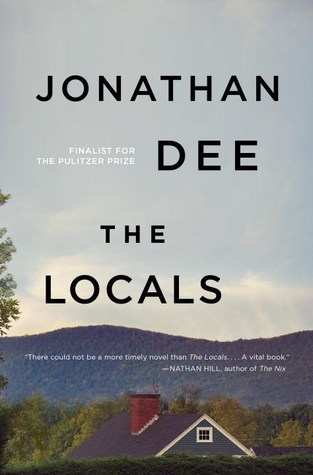
The Locals, by Jonathan Dee*****

theLocalsDee’s new novel has created a lot of buzz. Despite impressive list of publications and accomplishments, he had slid under my radar until now; thanks to Net Galley and Random House, I read this free and early in exchange for this honest review. It is available to the public Tuesday, August 8, and those that love strong, purposeful fiction should get it and read it.

The Locals is entertaining, and it also conveys a sharply driven message, one that is timely, as we see the middle classes wasting away in Western nations that were once strong and relatively democratic, the most affluent becoming richer, and tens of thousands of homeless living in cardboard shacks and tents beneath the freeways of otherwise-successful American cities.

The story starts with 9/11. Mark Firth is in Manhattan on business and is taken advantage of by a con artist. By contrast, Howland, the small (and fictional) town where he lives and in which our story is set, seems safer, and more benign. He breathes easier when he is home.

He isn’t the only one that feels that way.

Philip Hadi decides to leave the big city, and he hires Mark to fortify his summer home into a secure summer residence. From there things unfold, and Hadi takes on increasing amounts of responsibility and power in Howland.

The story is largely character driven, and I dare you to find a novel in which a large number of townspeople are better developed than these. At the outset, I think I know which are the better citizens of Howland and which are its pond scum, but as the story progresses—told in third person omniscient, with one noteworthy exception—the most lovable characters darken, while those that seem irredeemable at the outset show some vulnerability and decency. Even without the novel’s purpose, which is brainy and clever as hell, it would be a good read. I particularly credit male authors that can develop female characters with this kind of depth. You don’t see it often.

Ultimately, however, we are forced to examine, through the eyes of the people of Howland, the role of the super-rich. How much authority are we willing to cede in exchange for easy material benefit? Teachers that have questioned the authority given philanthropists that have a lot of dollars to throw around, but no background whatsoever in education, will particularly appreciate this story. Beyond all of this, it’s absorbing, entertaining, and in places it’s funny as hell.

Highly recommended to those that love strong fiction.

Crime Scene, by Jonathan Kellerman and Jesse Kellerman***-****

crimesceneCrime Scene is the first in the Clay Edison series, written by a father and son team. Big thanks to Random House Ballantine for the DRC, which I received in exchange for this honest review. I rate this mystery 3.5 stars.

Edison is a coroner’s investigator, and he finds himself drawn into an ugly, complicated murder, seduced by the lovely Tatiana, who I found myself disliking much earlier than the protagonist does. There’s the psychological component here that’s similar to the movies, where the audience yells, “Don’t go through that door” as the main character strolls obliviously forward; however, where the Kellermans take the story once Edison has wised up is interesting, original, and well played.

I enjoy the snappy banter that I associate with the elder Kellerman’s other novels, and there’s a hugely entertaining side character named Afton that I’d love to see again. The setting of the down-and-out neighborhood is resonant enough that I am convinced at least one of these men has actually spent time in such a place.

That said, the first half of the story is better paced than the second, and there’s a racial component that appears well-intentioned but awkward.

This promising series is now available to the public, and is recommended to Kellerman’s fans.