
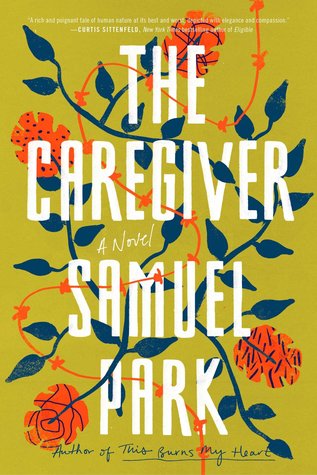
The Caregiver, by Samuel Park*****

TheCaregiverThe Caregiver is one of the year’s best surprises. I read this book free and early, thanks to Net Galley and Simon and Schuster. Our protagonist is Mara Alencar, and our setting is split between present day Los Angeles, and Rio de Janeiro, Brazil in the 1980s. I am drawn to the story initially because of the setting, which I don’t see often; but it is Mara that keeps me turning the pages. Those that treasure excellent, character-based literary fiction should get this book and read it.

Mara is just a kid, and all she really wants is food, shelter, and the comfort and companionship of her mother, Ana. Ana is a young single mother that works as a voice-over actress, repeating the lines of English-language programs in Portuguese. The pay is low, and Ana’s self-discipline is negligible. Life is a constant struggle.

One evening Ana is visited by a group of students that claim they plan to rob a bank in order to fund a revolution. Ana’s job is to distract Chief Lima so that a comrade can be liberated from prison. The comrade will play an important part in the revolution; as for Ana, she will be paid handsomely, and then she will be free to go if she likes. Mara doesn’t like these rough people and their threatening demeanor, but Ana hears the amount they will pay, and once she receives an advance, she’s in.

Everything is seen through Mara’s eyes, both in childhood as these events unfold, and later, looking back during her years working as a caregiver to a manipulative older woman that shares some of Ana’s characteristics. As a child, Mara is often afraid or confused, or both. Her mother reminds her often that she is all that matters, and that the two of them will always be together; in the next moment, she will do something so blindingly selfish, so completely inappropriate that I want to yank the woman into the kitchen and remind her that she has a child and responsibilities. She will tell Mara, not for the first time, that she could never stand to lie to her because they are so close, and she loves her so much; but we turn the page and sure enough, she lies to her child, or she is gone for days on end with no warning or explanation. There are occasions when she seems to lie unnecessarily, and I want to throw my tablet at the wall, I am so frustrated.

The ending is a complete surprise, and it makes perfect sense within the chaotic context of the time and place.

The most admirable aspect of this story is the consistency of the narrator. A writer that can tell a story from a child’s point of view without mixing up the developmental level that affects a child’s perceptions, vocabulary level, and capacity to analyze what she sees is hard to find. A male writer that can do this, and that can also consistently write a woman’s story in the first person without giving himself away is a unicorn. Samuel Park convinces me that I am listening to a woman tell her story, and repeatedly I am pulled under, only to be reminded when I go to make notes at the end of my writing session that this is a male novelist. This doesn’t happen. I am gob-smacked at his level of perception and originality.

I never met Park, but I grieve for him anyway as a reader. Please come back, Mr. Park. One book is not enough; forty-one is too young.

Highly recommended.
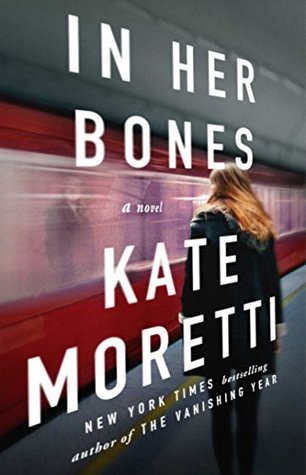
In Her Bones, by Kate Moretti****

InHerBonesMoretti’s mysteries are addictive, and when I found this galley in my email, I jumped it to the front of the queue. Big thanks go to Net Galley and Atria for letting me read it free and early. You can buy it now.
Edie is an outcast, spurned by her friends when her mother Lilith is arrested as a serial killer. Since it is so rare for a serial murderer to be female, the press is everywhere; meanwhile, all Edie has left is her brother Dylan and later, his young family. Otherwise, the people to whom she feels most closely bonded don’t know Edie, don’t realize that she is watching them, obsessing over them in person and in cyberspace; they are the bereaved family members of Lilith’s victims. It gives me chills.

One day Edie takes her voyeuristic tendencies to the next level; when the man she’s been stalking is found dead, police immediately suspect Edie of being his killer. And as we read Edie’s narrative, which tells us some things but not everything, we wonder too: is Edie a lonely, isolated young woman searching for connection to another human being; or is she a chip off the old block, a stone cold killer just like her mama?

The first person narrative alternates with a third person study of Lilith, and so the voice switches from Edie’s very personal story to a clinical, dry report regarding her aberrant mother. (Let me tell you, whatever issues you may have with your own mother—she’s going to seem like the mother of the year once you’ve read this.)

I’ve read a few unhappy reviews by online friends. but I like this book. It helps if you approach it as a mystery rather than a thriller; those in search of a grab-you-by-the-hair page-turner may not get what you’re looking for, but I wanted an interesting story with an original premise and a credible ending, and this is that. In addition, the third person case notes written by social workers and their ilk ring true to me. In fact, I made a wry note to myself, wondering whether Edie or Dylan might have been in one of my classes; I have never taught the children of a serial killer to my knowledge, yet the wanton neglect and lack of nurturance, even a simple effort to provide the basics eludes Lilith in a way that seems familiar. You think I am exaggerating? Not so much. There are terrific parents; there are indifferent parents; and there are, I am sad to say, more than a few Lilith Wades out there in the parent pool.

This is my third galley by this writer. Whereas I liked The Blackbird Season a little more than this one, mostly because of its amazing word smithery, I find this story more original and memorable than The Vanishing Year, which has the sort of denouement that makes me roll my eyes. Here Moretti pulls the ending together in a way that keeps me thinking about the characters rather than the author, and I sigh with appreciation when it’s done.

All told, it’s a solid mystery with a satisfying conclusion. Recommended to all that enjoy the genre.

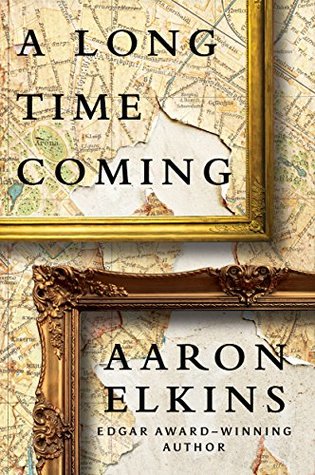
A Long Time Coming, by Aaron Elkin**

ALongTimeComingAaron Elkin has been writing mysteries for a long time, but he is new to me.  When I saw this title listed on Net Galley, I went to Goodreads and found that his work is well regarded by some of my friends; add to this his residence in my own Pacific Northwest, and I am ready to give his work a try. Thanks go to Net Galley and Thomas and Mercer for the DRC, which I received free of charge in exchange for this honest review.
The story starts well. Val Caruso is an art curator, and his personal life is a mess. He’s stone cold broke, and so when he is approached to do a job involving a stolen-but-found Renoir, his interest is piqued. An ancient Holocaust survivor claims ownership of a painting that has been sold to someone else, and Caruso is hired to help. I particularly enjoy the character of Esther, the domineering but charming friend that connects the two men; alas, we will soon leave her behind when we go to Milan.

At the outset the amount of art related information feels just about right to me. The book is sold as a popular read rather than a niche item for art aficionados, and I am cheered by this, since I have little to no interest in art. As we travel to Milan, however, the art lectures become oppressive. By the forty percent mark I find myself watching the page numbers roll by, oh so slowly, and cursing myself for having taken the galley. Brush strokes? Historical nature of paint color? Who the hell cares? The travelogue aspect of the book also starts well, but eventually the level of detail slooows this story to a crawl. I find myself cynically wondering whether this series is simply a ruse for the author to claim his globe-trotting expenses on his tax returns.

Elkin has a solid reputation built on an earlier series, and at some point I may give that one a whirl, but Val Caruso and I are done.

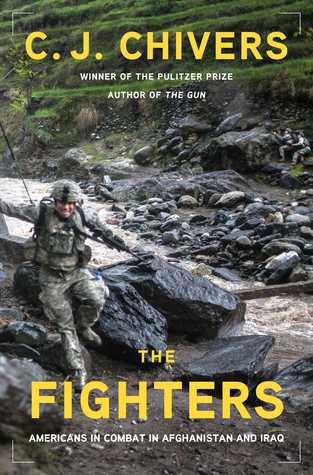
The Fighters, by C.J. Chivers*****

TheFightersChivers is a senior editor at The New York Times, and has won the Pulitzer for journalism. This meaty but readable book is the culmination of his years covering the U.S. wars in Iraq and Afghanistan. It is not the creation of a man parked in a library behind his laptop; he has personally gone to Iraq, Afghanistan, Syria, Ukraine, and Libya, and has either accompanied the people he writes about or retraced their footsteps. He covers the lives of six servicemen in the lower and middle ranks of the armed forces, and so he primarily uses eye witness reporting and interviews, in addition to American military data. I read it free courtesy of Net Galley and Simon and Schuster in exchange for my honest review. The Fighters will most likely be regarded in future years as the go-to book for those that want to know more about this war and the people whose lives were changed by it—including many of those whose homeland is or has been part of the war zone.

Chivers sees a tremendous amount of waste and foolhardy disregard for human lives on the part of the Pentagon, and he makes an undeniable case for it. After reading it I came away convinced that he did not begin his project with an axe to grind and seek out the particular facts that would support the reality he wanted to present, but rather that over the many years since the towers fell in 2001, the things that he has seen and heard all point remorselessly toward the same conclusion. In point of fact, there are two places in my reading notes where I marked, without hyperbole, the similarity between the true information provided here and what I might expect to read in The Onion.

Take, for example, the Afghan allies that are integrated into U.S. forces. The U.S. provides them with guns, but as far as anyone can see, it is strictly for the purpose of the Pentagon’s public relations campaign. Afghan soldiers in U.S. units don’t fire those guns. They hold them. They don’t aim; they don’t look at whoever is giving instructions nor at the translator. (They sure as fuck don’t salute.) In a protracted firefight, an American will eventually run out of ammunition and trade their empty weapon for one of those they hold, if the Afghan has not disappeared and taken the gun with him. And at night, the night watch exists in large part to ensure that if the Afghan soldiers choose to make themselves scarce overnight, they won’t take a bunch of munitions and hand them off to the Taliban.

But since the American public is increasingly impatient with the duration and loss incurred by this war, those guys have to be kept around like untrustworthy mascots in order to maintain the illusion that Afghan forces will be taking the place of U.S. troops soon. Timelines get pushed back, but nothing significantly changes. The drums beat on.

Thoughtless and ham-handed decisions by the top brass increase the resentment of civilians that live near the bases, people living in miserable poverty in sometimes directly across the street, with expensive machinery and plenitude of supplies the locals will probably never have. Meanwhile, troops are sent into circumstances that are bound to be fatal and also fail in their military objectives.

It makes you want to sit down and cry.

However, most of the narrative is not carnage and defeat. Who would read it if it were? Chivers instead does a fine job of painting the individual lives of the Americans he follows, and so most of the story reads almost like good fiction, and rather than being swathed in constant despair or endless statistics, I was instead deeply absorbed. Who knew it would be so interesting?

Those that are curious about the war in the Middle East, the first U.S. war in generations to see reporters banned from providing live footage or photographing flag-covered caskets sent home, could hardly find better material to read. This is on-the-ground coverage at its finest. If you want to read just one book about the U.S. conflicts in Iraq and Afghanistan, this should be it.

PBS published an interview with Chivers, and you can see some of the people whose experiences form the narrative, too:


Frederick Douglass: Prophet of Freedom, by David W. Blight**-***

frederickdouglassprophetThanks go to Net Galley and Simon and Schuster for the DRC, which I received free in exchange for this honest review.

Douglass is a key figure in American history, and Blight has made his career largely through his expertise on Douglass’s life. I expected to be impressed here, and indeed, the endnotes are meticulous and I would be amazed if there was a single error anywhere in this work. But aspects of the biography rub me the wrong way, and ultimately, I realized that the best way around this is to go back and read Douglass’s own autobiographies again.

Whether we read what Douglass tells us, or what Blight (or any credible biographer) has to say, there are two impediments that stop me short, and because I have never been required to start at the beginning and end at the end to complete a scholastic or professional assignment, I tend to read the beginning; recoil; abandon; and then return in an undisciplined, skipping-around manner that is uncharacteristic of my usual methods.

First we have the Christian aspect. Douglass was tremendously devout, and during his time it was much more common to discuss religion publicly and even in daily conversations, sometimes at length. It repels me. So that’s my first problem. It’s not Blight’s problem, but it’s one I have to deal with.

The second problem—again, not Blight’s, and it’s inherent in reading about Douglass—is that slavery was horrible. Douglass actually had a slightly better life than most of his peers, gaining an education and living in the master’s house, but it was nevertheless traumatic. It is unavoidable to see what he endured and not reflect on exactly how hellish life was for the four million that endured life in this dehumanizing, degrading system. After I read a certain amount of it, I feel as if I need to take a long shower to wash away the stain.

As for Blight’s book, there are some good moments here, and I learned some things. Who helped Douglass on his road to freedom? Free Black people did. Who knew that there were vastly more free Black folks in Maryland than there were slaves? The textbooks and other materials used to teach adolescents about slavery and the American Civil War overemphasize, to a degree amounting to deception, the participation of kindly white people, largely Quakers, and provide only a fleeting glimpse of the occasional African-American.

But I find that the eloquent passages that I highlight as I read this are not Blight’s words, but quotations from Douglass himself.

Meanwhile, the obstacles to appreciating this book are consistent and irritating. Blight makes much of inconsistencies in Douglass’s three autobiographies, and when he refers to the differences there is a superior, smirking quality to his prose that doesn’t sit well. I wouldn’t like it coming from any writer, but when the writer is a Caucasian, it adds an extra layer of insult. No matter how long Blight publishes, no matter his standing in the Ivy League, he will never be fit to polish Douglass’s boots. If he once knew it, I suspect he has forgotten it. So that’s a problem, and it’s hard to read around it.

The other issue, a more common one, is the tendency to guess at what is not known. This makes me crazy. The narrative will flow along in a readable, linear fashion, and then I start seeing the speculation, which is barely visible. Might have. Must have. Likely. It makes me want to scream. If you don’t know, Professor Blight, either don’t put it in, or address the unknown in a separate paragraph explicitly addressing the possibilities. Weed out the unimportant guesses and deal with the more critical ones head on. When these inferences are salted randomly into the text, we come away with tangled notions. Apart from the key events in his life, which of the finer details were fact, and which were surmise?

Excuse me. I need to find a nice brick wall so I can slam my forehead against it.

So there it is. For all I know, Blight may gain half a dozen prestigious awards from this work; it wouldn’t be the first time a book I’ve complained about went on to garner fame and glory. But I call them like I see them, and what I see is that it’s a better plan to read what Douglass says about himself, even though Blight appears to consider himself a more reliable resource than his subject.

If you want this thing, you can have it October 2, 2018.

Across the Great Lake, by Lee Zacharias***

AcrosstheGreatLakeI received this book free from Net Galley and University of Wisconsin Press in exchange for this honest review. It will be available for purchase on September 18, 2018.

Conceptually this story has great promise.  The Great Lakes are where important American naval battles have taken place, and yet very little fiction is set there. This reviewer lived near Lake Erie for most of the 1980s, and I thought this novel would be a sure fire winner.

An elderly woman is looking back at her life, and the story starts with her earliest memories, when her parents separate and her father, a sea captain, takes her from her unstable mother and the girl goes to sea with him. Sailors mutter dark things. There’s a ghost ship that the crew speaks of ominously.

Zacharias nails Fern’s developmental stages, which is critical for anyone writing about a child, particularly if that child is going to voice some of the narrative. Failing to do so breaks the spell entirely, and I am cheered when I see it done correctly. There’s also a great deal of painstaking historical and nautical detail here. As a history teacher I appreciate it, and I learned some things.

Sadly, the character feels weighted down by the setting instead of developed by it. I never feel as if I know the protagonist, but rather as though the author has a great deal of research done and is going to use as much of it as is humanly possible. I pushed my way through it until just before the halfway mark, and then I abandoned ship.

Where the Crawdads Sing, by Delia Owens*****

wherethecrawdadsKya Clark lives with her family in a shack deep in a North Carolina marsh.  The year is 1969. They are miserably poor, but Kya’s mother tells her it will be alright, as long as the women of the family stick together. But then one day, she leaves. Older brother Jodie tells Kya that Ma will be back, because it isn’t in a mother to leave her children, but Kya isn’t so sure. Ma is wearing her alligator heels, and she doesn’t turn midway and wave like she always has. And one by one, everyone in her family leaves, and they don’t return. Kya is not even old enough to enter first grade, and she is alone.

This haunting novel is the best surprise of the summer, and it’s for sale today. Thanks go to Net Galley and Putnam Penguin for the review copy.

Owens is a wildlife scientist of some renown; here she changes lanes with her debut novel. She uses her knowledge base to create an evocative setting that is real and immediate, but she never adds scientific information at the expense of pacing. Instead, the setting is used to reinforce Kya’s character; this is unusual in a researcher turning toward fiction writing. Professors and other specialists tend to shoehorn in every fact that they think the reader ought to know regardless of what it does to the flow of the narrative. Instead, Owens blends setting and character seamlessly, spooling Kya’s life before us with the patience and discipline of the finest master storyteller.

Kya barely survives, digging mussels to eat and selling them at a waterside convenience store owned by an African-American entrepreneur known as Jumpin’.  Little by little, Jumpin’ comes to realize exactly how dire this child’s situation is, and he and his “good sized” wife, Mabel, contrive to provide her with a few of life’s necessities without frightening her or hurting her pride. I would have preferred to see these resonant characters voiced without the written dialect, but there are no stereotypes in this book.

Tate is an older boy that has been a family friend since she was tiny, but she doesn’t remember him, and thinks she is meeting him for the first time after he begins leaving her beautiful bird feathers on a stump in the swamp. It is he that teaches Kya to read, and he becomes her first love.

The narrative shifts between Kya’s life and an investigation of a murder. Chase Andrews, a local football hero and the son of a local bigwig, is found dead at the base of a nearby water tower. Kya, who is poorly groomed, impoverished, and has no family to protect her becomes the focus of the investigation. Townspeople have long considered her to be “swamp trash,” and this discrimination is age old; Kya can remember her mother telling her that she must never run when she goes into town, because if she does someone will say that she stole something.

One of the most appealing aspects of this novel is that the mystery of Chase’s death never eclipses the main story. The book isn’t about Chase or his demise; it’s about Kya in the marsh, and as she becomes an official suspect, we only want what is best for her.

I read several stories at a time, now that I am retired, but this is the one that occupied my thoughts when I was doing other things. I kept thinking about that poor little girl out there. I can almost always put a book down; it’s what I do, after all. This one is exceptional.

Those that love excellent literary fiction; Southern fiction; or romance need to get this book and read it, even If you have to pay full jacket price.


Southern Storm: Sherman’s March to the Sea, by Noah Andre Trudeau*****

“On earth, as in heaven, man must submit to an arbiter…He must not throw off his allegiance to his government or his God without just reason or cause. The South had no cause…Satan and the rebellious saints of Heaven were allowed a continuous existence in hell merely to swell their just punishment. To such as would rebel against a Government so mild and just as ours was in peace, a punishment equally would not be unjust.”   –William Tecumseh Sherman (quoted on page 19)

southernstormI received this excellent Civil War tome from one of my sons as a Christmas gift. I don’t request a lot of books anymore because it’s so easy to get others free, but I asked for this one and I am glad I have it. I’ll be reading more by this guy.  Despite one fact that I dispute—for which the citation also is sketchy—and some crummy maps, there’s no way to deny five stars here.  The topic is among my favorites, and of course Sherman is my all time favorite general, hailing from a time when the United States government still attracted and produced heroes.

Each time I pick up another book on Sherman’s march to the sea, I question whether there is any new information to be had. Here Trudeau deals with this neatly by referencing participants other than Sherman, most often Major Henry Hitchcock, who was Sherman’s aide-de-camp. There are lots of meaty quotes from Sherman and those alongside him, and occasionally those opposite him. There’s one royal stinker of a reference made by an Atlanta doctor, who said a couple dozen very sick and badly injured men were dumped on him by Sherman personally, who said if they survived the rebels could consider them prisoners. I call bullshit on this, not only because of the source but also because it runs contrary to everything I know about Sherman, whose troops were singularly loyal to him largely because he took great care of them and he led them to victory.

Sherman’s memoir, which I heartily recommend to you, deals with the left column with which he traveled.  The right column goes largely unmentioned there, and Trudeau fills us in. This was the column that took the most punishment, and was responsible for heading off enemy cavalry most of the time.

A mark of a terrific history book is that no matter how long it is, the reader emerges wanting to read something more, either by the author or on the subject. I have a couple of gift certificates going unused, and it’s entirely possible I will spend one of them on another book by this writer. The index and other references at the back of the book are useful also.

Highly recommended to American Civil War buffs.

Dagger John, by John Louhery ***-****

DaggerJohn I received a review copy of this book from Net Galley and Three Hills Publishing, which is affiliated with Cornell University, free of charge. This book is now for sale.

Since retirement, I have often taken my reading outside of my comfort zone, and at times I’ve been rewarded. I took a chance in requesting this biography because I have a peripheral interest in church history, and American history and Irish history are more direct interests. However, in this case there is too much assumed knowledge to be readily accessible to an acolyte of the region. My only trip to New York was a weekend tourist jaunt, and I have never been to the church in question.  However, I am drawn to the resistance he put forth during the “Know Nothing” period of anti-immigrant sentiment, and now is certainly the time to receive such a cautionary tale.

The claim that this man “made” Irish America seems overstated to me.

That’s not to say that it won’t interest you. The documentation is as unimpeachable as one would expect from a highly regarded university, and scholars with a specialized area of interest will likely find this a treasure because it is so specific. A niche audience may rate this title as four stars; I find it too dry a read to imagine five. But it isn’t intended to be a popular read but a scholarly one.

A solid niche read for those with interests that are aligned with the author’s.

The Black and the Blue, by Matthew Horace*****

theblackandtheblue“Even as a federal agent, I have been on surveillance or supporting an operation and have had an officer approach me and say that the neighbors called about a “suspicious” vehicle, which meant it was a black guy driving a car. I’ve been the man in that suspicious vehicle.”

Matthew Horace worked as a cop at the federal, state, and local level for 28 years, and he is plenty sick of the “toxic brotherhood.” The quote above refers to an incident that occurred in Mill Creek, a (very white) suburb outside Seattle, Washington where I live, but it’s not just here; it’s everywhere in the US. Specifically, he tells us about cities where some of the most notorious cop violence has created resistance such as New Orleans, Chicago, Baltimore, and Ferguson.

There are essays provided by police chiefs from some of these places as well as from Kathleen O’Toole, who was chief here in Seattle; O’Toole’s prose reek of electioneering, the sort of style that speaks for itself. Many of these contributors contradict Horace’s own assertion that the problem is endemic, and is absolutely not a case of a few bad apples. More than one of these essays hold the fascination I’d feel if forced to watch a rattlesnake before it strikes; the sanctimony, the grandiose claims of justice supposedly served. The most interesting of them all is from an African-American police chief in Chicago, whose personal stories of her family members having been abused—including her sons—stand diametrically opposed to what she does for a living, and yet she maintains her tightrope walk, determined to make a difference where only the smallest, if any, seems likely.

By now I should have thanked Net Galley and Hachette Books for the review copy, which I received free and early. This excellent book is available to the public Tuesday, August 7, 2018.

There has been a flurry of books published about this subject since it became national news. More than anything, the internet and cellular phones have stripped the gatekeeping capacity of the major news outlets; cops that were able to beat and even kill people and lie about it later are being outed left and right. Even I, who am an old lefty and have never really believed cops were there to protect ordinary people, am shocked by much of what’s been revealed. I wondered, as I began reading, whether Horace could add to what’s already been said and shown. What could he add to the body of information provided by Ta-Nehisi Coates, Angela Davis, and Matt Taibbi? (Many years ago, Norm Stamper, former Seattle police chief, also wrote an expose that included a chapter on why cops beat Black men.)

As it happens, Horace has a lot of information that I hadn’t read, and it isn’t just a matter of fine detail. For example, who knew that in New Orleans, cops were not merely accepting graft, but actively robbing Black-owned businesses, guns drawn, and making off with their cash and other valuables? It’s the sort of thing that lives in your head for a long time after you read it; but then again, it should be.

The sourcing is impeccable.

Those with an interest in Black Lives Matter, in civil rights in general, or with an interest in race issues within the so-called criminal justice system in America should get this book, for full price if necessary, and read it. Read the whole thing. So much of our future depends on how we respond.