If It Sounds Like a Quack, by Matthew Hongoltz-Hetling*****

Pulitzer Prize finalist Matthew Hongoltz-Hetling takes on the weird world of alternative medicine and the medical freedom movement in his new book, If It Sounds Like a Quack. My thanks go to Net Galley and PublicAffairs for the review copy. This book is available to the public right now.

The fact is, I have—or I had—no particular interest in alternative medicine, but I had read Hongoltz-Hetling’s last book, A Libertarian Walks Into a Bear, which was well researched, well written, and most importantly, completely hilarious. I have reviewed over 800 books, but the number of those that I later purchased is smaller than 10; yet I bought that book to give as a Christmas gift. So when I saw that he had another book available, I didn’t hesitate. And I wasn’t disappointed.

The book describes the bizarre programs and treatments espoused by six individuals: Larry Lytle, Toby McAdam, Robert O. Young, Alicja Kolyszko, Dale and Leilani Neumann, and The Alien. The seventh player in each section is America, and that’s where we see what U.S. laws say, and what enforcement, if any, comes down on these snake oil salesmen.

The opening section, the first of four, introduces each of these players and explains what led to them going into the businesses they have chosen. Among the various One True Cures are a laser salesman, a leech peddler, faith healers, a supplement seller, and a Mormon missionary that resurrects a long-dead theory about germs. There’s also a pair that develops a health drink; one of them is human, and one is not.

The author suggests that the success of these characters—and some of them have become wealthy beyond belief—has a good deal to do with the state of standard medical care in America. Nobody trusts Big Pharma. The disparity of what treatments we can expect is so great that in one New York hospital, there’s a wait time in the ER of nearly 6 hours for most people, whereas the wealthy can get a private room with high thread count sheets and a butler. One can see why many people conclude that anything must be better than this; yet, they are mistaken.

Apart from his sterling research and documentation, and his clear, conversational tone that at times caused me to forget, momentarily, that I was reading nonfiction, the thing that sets Hongoltz-Hetling apart from others is his ability to shift seamlessly from prose that is falling-down-funny, to that which is not only serious, but tragic, without ever breaking the boundaries of good taste. Because he did it so brilliantly in his last book, I watched for it this time—and I still couldn’t catch the segue way from one to the other.

Because I had fallen behind in my nonfiction reviews, I checked out the audio version from Seattle Bibliocommons and listened to it while I watered my plants. It is very well done, and I had no problem following the thread. The only downside is that the printed version has some humorous puns by way of spelling that the listener misses.

One way or the other, get this book and read it, even if the topic isn’t inside your usual field of interest. Highly recommended to everyone.

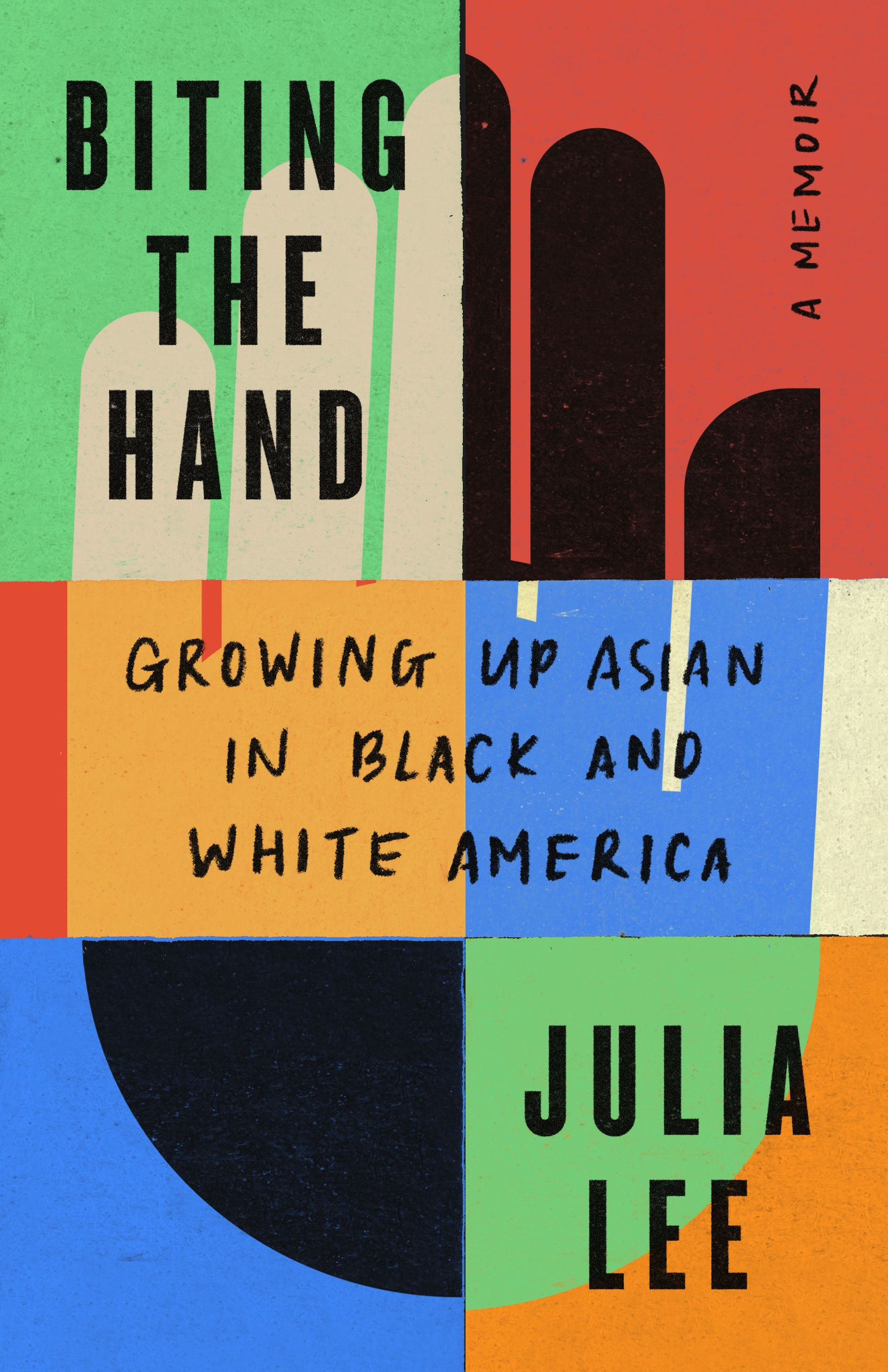
Biting the Hand, by Julia Lee****

Julia Lee is not amused, and she’s decided to say the things nobody else is saying. In this deeply analytical, provocative memoir, she tells us about her own experiences growing up, and the issues faced by Asian immigrants and Asian Americans in the United States, where “we are critical to the pyramid scheme of the American Dream.”

My thanks go to Net Galley, Henry Holt Publishers, and Macmillan Audio for the review copies. This book is for sale now.

In some ways, I feel as though I am reading someone else’s mail as I read this, because it is clearly intended for an audience of people of color. However, I did read it, and I’m going to review it.

When the discussion of race in the U.S. comes about, it is, as Lee states, almost always a conversation about Black people and Caucasians. Those that don’t fit into either group are sidelined. Perhaps more harmful is the way that people of Asian descent are presumed to be sympathetic to the status quo. Ever since a major news periodical dubbed Asians as “the model minority” back in the early 1960s, expectations and assumptions have leaned in that direction. And the roots of this division—Black versus Asian—make this a particularly thorny assumption to untangle. After all, a large percentage of African-Americans can trace their lineage to slavery; their ancestors weren’t born in the States, nor did they choose to come here, but were kidnapped and brought by force. Angry? You bet! But Asian immigrants came of their own accord, oftentimes fleeing untenable circumstances in their countries of origin. And so, their children, and those that have come after, have largely been indoctrinated to be appreciative. If things don’t go well, they tell them, then we must work harder!

This Caucasian reviewer comes to you without the Asian background, appearance, or experience that Lee speaks of; yet I live in a city that has one of the largest Asian populations in the U.S., and am married to an Asian immigrant, and parent to a child that is half-Japanese. So many of the stories—strangers that ask where you’re from, and won’t accept the truth of “California,” where Lee was born, or “Seattle,” my daughter’s hometown, are familiar ones.

Lee is fed up with the mainstream news stories that endeavor to pit Asian and Black people against each other. Her parents were small business owners in a mostly Black part of Los Angeles during the riots of 1992, and her experiences inform her conclusion, that there must be solidarity between all people of color in order to successfully fight for significant change.

The one bone I have to pick is the casual manner in which she dismisses the question of social class as a key factor. Her very brief note about this is that it’s a tomato and to-mah-to issue, not worth much discussion, because most people of color are working class. This is simply untrue, and it enforces a stereotype of Black people as being mostly poor and dispossessed, when in actuality, eighty percent of Black people in the US live above the poverty line. There are African-Americans that have far more money than I will ever see; some of the many Asian groups have a higher median income than Caucasians. So yes, social class is a huge factor here, one that Lee should examine more critically. There are working class Whites that can be allies; there are wealthy families of color that would shut down the struggle, given half a chance. The missing star in my rating reflects her failure to recognize this, and to offer concrete solutions to this problem.

The book’s title comes from Lee’s mentor at the otherwise very white-supremacist dominated Harvard—Jamaica Kinkaid. I actually gasped when I saw this. What a luminary she found to guide her!

Both the audio and print version of this book are equally readable, so go with whatever you usually prefer.

This is a fine resource for those seeking to examine Asian and Asian-American racial dynamics. Read it critically, but do read it. There’s a lot here that has needed to be said for a long, long time.

Lone Women, by Victor LaValle*****

“Queer folk, the Henrys.”

Adelaide Henry is “profoundly lonely,” growing up without siblings, with older parents that spurned the world around them. They had their reasons. And yet, in the opening chapter, as I see Adelaide pour kerosene over both of their lifeless forms and burn them, along with their house, I wonder…were they bad enough to deserve this?

But nothing is as it seems, and this is part of the magical spell that Victor LaValle weaves into this kickass novel, Lone Women. By the time I understand the why and the who and the what, I feel an intimate connection to Adelaide, as if I may be the only one trusted with her secrets.

My thanks go to Net Galley and Random House for the review copy. This is one of the finest novels to be published in 2023, and you should get it and read it.

Adelaide flees the California farm where she’s lived all of her life, and buys a homestead in Montana. Almost everything about her life changes; from the warmth of California to the frigid winters of the Northern Rockies, from life with her parents to one lived alone, and from an all-Black community to one that is almost entirely Caucasian. She brings very little with her, only what she can carry, but she is curiously possessive of her extremely heavy trunk, and though I initially assume that she keeps something of great monetary value inside it, I soon realize that isn’t it. My early notes ask the same thing over and again: “What is in that trunk?”

From there, our story unfolds and I can’t stop turning the pages. I’ve never read a novel of any genre that’s like this one, and I’m guessing that you haven’t, either.

Do yourself a favor. Don’t read the synopsis. Go into it blind. It’s a lot more fun if you learn of the characters and events at the times the author intends.

There’s a powerful message in play, but the story is so adroitly delivered that it never feels like a polemic.

I won’t say more, because I don’t want to ruin it for you, but believe me, the next time LaValle publishes a novel, I will be first in line to read it. Highly recommended, especially to feminists.

When the Moon Turns Blue, by Pamela Terry*****

Once in a while the odd thing happens,

Once in a while the dream comes true,

And the whole pattern of life is altered,

Once in a while the moon turns blue.

The tiny Georgia hamlet of Wesleyan is preparing to bury one of its own, and Mother Nature is preparing to cover the entire town in ice. But nobody—well, almost nobody—knows that a source of local tension is about to go nuclear, as someone is planning to topple and destroy the statue of a Confederate general in the park inside the boundaries of Old Man Griffin’s land. “The fight was just getting going good, and now somebody’s declawed the cat.”

This riveting, curiously charming and sometimes hilarious novel is the second by Pamela Terry, whose outstanding debut novel was The Sweet Taste of Muscadines. This one may be even better. My thanks go to Net Galley and Random House Ballantine for the invitation to read and review. This book is for sale now.

With the death of Harry Cline, we find ourselves at his funeral, a massively attended affair. But his wife, Marietta, develops a disabling, blinding migraine, and although they have been on the outs for years, Butter, her (former) best friend, comes to the rescue. By the time they’ve snuck out the side door of the church, we already know at least a little about both women, and now we want to know everything.

With just two novels published, Terry has already proven herself to be among the best authors when it comes to character development. Soon we’ll meet others—Marietta’s obnoxious brother, Macon and his beleaguered wife Glinda, who will have a large part in this story and is one of my favorite characters, as well as a host of others, who have smaller roles but are each so unmistakably established that it’s no work at all to keep track of them. But perhaps her finest achievement here is in creating a masterpiece that is ultimately a feel good book, despite the use of a red hot real world controversy within its pages.

I generally read several books at a time, and this one is the one that I saved for bedtime, because I wanted to be able to read it uninterrupted, and it is the one I wanted in my head when dreams came. It didn’t let me down.

This inspirational work of Southern fiction stands shoulder to shoulder with the finest classics, To Kill a Mockingbird and Fried Green Tomatoes. I wholeheartedly recommend it to you.

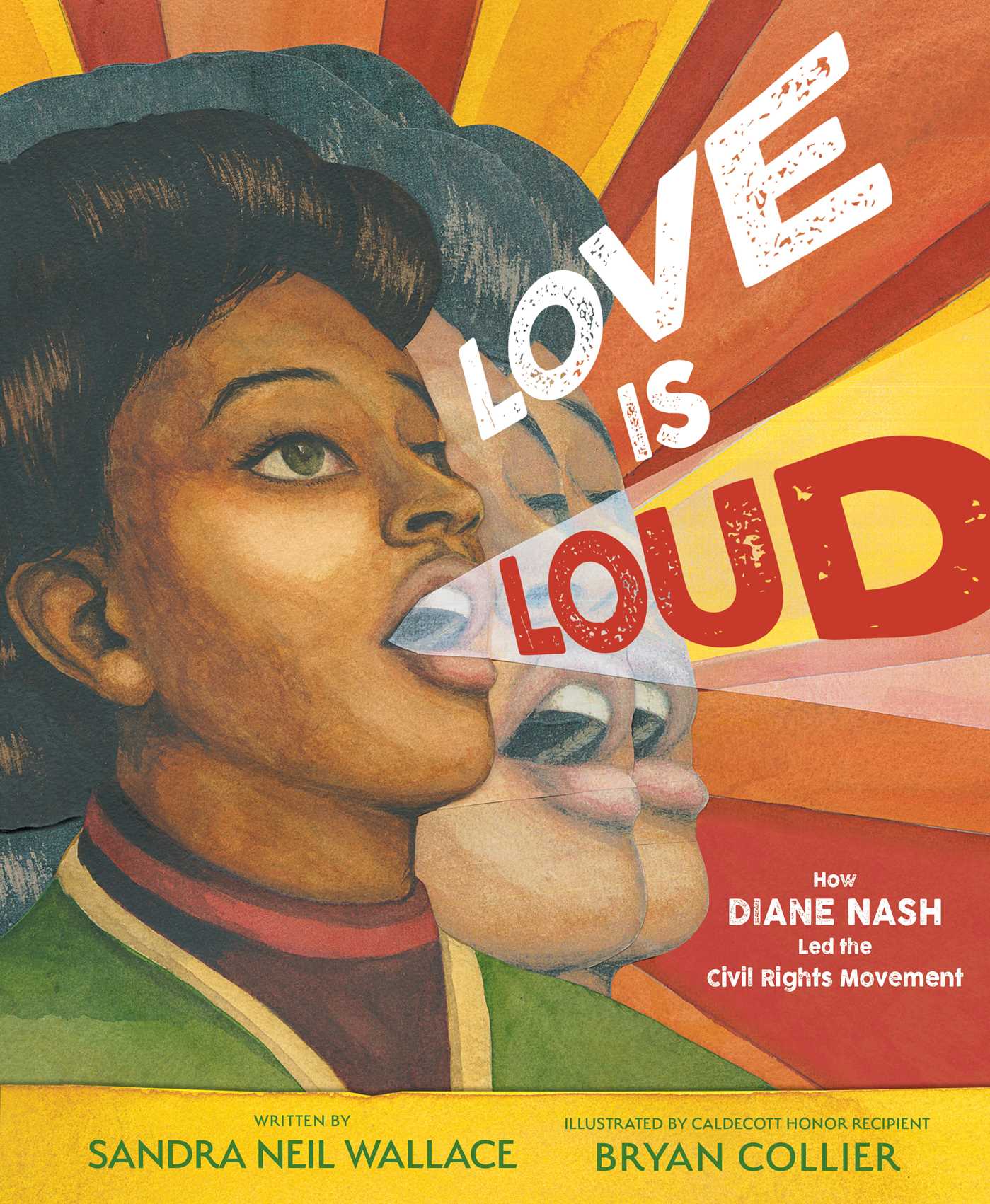
Love Is Loud: How Diane Nash Led the Civil Rights Movement****

Just in time for Dr. King’s birthday! This lovely biography by Sandra Neil Wallace introduces a little-known leader of the Civil Rights Movement, Diane Nash. Nash fought for equal rights for people of color, and had a significant part in the changes that were won.

My thanks go to Simon and Schuster for the copy I received for review purposes. This book is for sale right now.

Most of us have never heard of Nash, who was active during a time when Black people and women were sometimes overlooked, and at other times, excluded in historical narratives. She grew up in the South side of Chicago, where there were many skin colors and cultures, but not many Caucasian people. It was when she went to college in Nashville that she gained firsthand experience of Jim Crow laws, which required separate (and generally inferior) facilities for African-Americans. And Diane was having none of it.

This sumptuously illustrated picture book details the key stages of her development and achievements. My one concern is with the references to “love” in the title and text which are never explained. Is the love in reference to her religion, a philosophy, or something else? The word is thrown in there several times with no context at all. If her mission was to bring change about using nonviolent methods, as Dr. King chose to do and encouraged others to do as well, it is not mentioned. Did she see Gandhi as a role model? We aren’t told. Instead, it appears that the word is injected to sanitize, to offset the word “fight,” perhaps because this story is written for young people. But children aren’t stupid, and without any cohesive portrayal of Nash’s character and underlying motivation, I fear they may forget her. Literature has power, and so although I am glad to see Nash introduced to young people, the effect is diluted when proper character development—which is necessary, even in a children’s picture book—is not provided.

That said, the literacy level is perfect for upper elementary students, and would also make a fine read-aloud for a teacher to frame a single lesson around. It would also be first rate for a sub plan, and teachers know that’s something we always need on hand.

Bryan Collier is the illustrator, and his artwork fills every inch of every page, with the text superimposed on top of it. This is lush, gorgeous work that elevates the story with its presence.

Recommended for classrooms, libraries, and to parents and other guardians of children in grades 4, 5, and 6.

Earl, Honey, by D.S. Getson*****

“Ever since Pa hit him in the head with the two-by-four, Earl had lived with blinders.”

If you can read that opening line and not be curious about what comes after it, check your pulse, because there’s a good chance you are already dead. As for me, I was drawn to it immediately, and I thank Net Galley and Matador Publishing for the review copy. This book is for sale now.

When we meet Earl, the year is 1921 (although occasionally, we skip forward to 1970.) Earl is in the courthouse watching his father’s trial:

‘I di’nt fornicate with no donkey. Es ist eine dirty lie!’ From the back of the darkly paneled room, he feels his pa’s rage like a ground tremor rippling its way through the crowd the crowd to the spot where he sits, surrounded by family. Well, except for Rose. She’s up front in a special seat…

‘And what about the other charge, Mr. Hahn? Is it true your daughter, Rose, is carrying your child?’

Boom. So right in the first chapter, you can plainly see that if you are someone that needs to know about triggers before reading a novel, this may not be your book. And that’s a shame, because the quality of the writing is phenomenal, from the riveting opening line, all the way to the last.

Earl’s pa does, in fact, go to jail; even if he wasn’t guilty as sin (and of it,) which he clearly is, everyone in town hates him with an abiding passion, most of all his wife and ten children.

“There wasn’t a man within a hundred miles of Sampson County who would stand up for Reinhardt Hahn.”

It is unusual for me to include so many quotes in a review, but as you can see, the writing is so clear, strong, and resonant that I cannot do it justice any other way.

As the title and first line suggest, the story is Earl’s, and we follow him through the remainder of his childhood and adolescence. At its end, I am thunderstruck when I read the author’s note explaining that the whole story is based on the truth. Earl was her grandmother’s brother; Reinhardt Hahn, or “Pa,” was her great-grandfather.

Friends, this is easily one of the best novels to come out of 2022, and I am convinced that the only reason it isn’t parked on the New York Times bestseller list is because it was self-published, and therefore it didn’t receive the kind of publicity that a major publisher could have provided.

I won’t say more; to do that, I’d have to fish out some more quotes, and they are even better when read in context. Highly recommended; D.S. Getson is an author to watch.

Marked for Life, by Isaac Wright, Jr. *****

Marked for Life is the legal memoir of Isaac Wright, Junior, and it is a compelling story. At age 28, Wright was framed as a “drug kingpin,” though he had never used or sold drugs, and when he rejected the plea deal offered him, he was convicted and sentenced to life plus seventy years. Through his own efforts, he was able to prove his own innocence and regain his freedom. This book is for sale now, and you should get it and read it.

My thanks go to Net Galley and Macmillan Audio for the review copy. Listening to the recorded version is all the more powerful, because the author reads it himself. Readers should know that this book starts out painfully harsh, with the blow-by-blow events of the day he is arrested, and his subsequent treatment. There’s not a tremendous amount of physical violence, but the emotional toll could just about bring me to my knees; imagine how it must have been for Wright, who lived through it! I begin to fear that I will dread listening to it, and so I promise myself that this will be my car book; I will listen to it while I am driving around, and when I get home, I will turn it off. However, only the beginning is harsh, and once I am twenty percent of the way into it, it becomes so interesting that I quickly change my mind, and it joins me in the kitchen. So reader, don’t be afraid of this book. The rough part is all in the first few chapters.

Wright is targeted by corrupt local officials, who are under the misapprehension that he has a small fortune socked away in the safe in his bedroom. In fact, Wright is a successful businessman; he starts as a music producer, then moves into management, touring with Run DMC, and indeed, he and his family live well. Although he doesn’t say as much, part of me wonders if that is his crime, in the eyes of the local cops and courts: he’s a Black man with money. As soon as he is arrested, the shakedown begins. Give us the money, Wright, and we’ll make it all go away.

He doesn’t, and they don’t.

The most fascinating part of this is learning how a prisoner is able to study the law and represent himself. Obviously, not everyone is as literate and intelligent as Wright is; he makes himself indispensable to other prisoners by assisting them with their own cases also. His ability to juggle a lot of moving parts—his own appeal, his fellow inmates’ cases, and the rigors and restrictions of the prison system, along with the endless pressure on him from those that framed him—is impressive. A lot of his success lies in his perception of what other people want. What does the warden want? What do his fellow prisoners want and need? If this had been me, I don’t think it would have gone well. I’d have been good with the research and the paperwork, but I doubt I could have read the wishes and intentions of those around me as successfully as Wright has done. Ultimately, it is an inspirational story, and I highly recommend it to you.

The Black Cabinet, by Jill Watts***-****

3.5 stars, rounded upward.

The premise sounds exciting: a cabinet consisting of African-American luminaries that advised Franklin D. Roosevelt, widely regarded as the best president the U.S. has ever had; well, as far as white folks went, anyway. Wouldn’t it be cool if he had Black advisors, even if it was kept away from the public eye?

It would have been cool, except mostly, he didn’t. Not really.

My thanks go to Net Galley and Grove Atlantic for the review copy. This book is for sale now; in fact, it’s been for sale for a long time. I’m very late with this review, because I was very late finishing the book, because it depressed me so deeply that I couldn’t face it.

Watts is a fine writer and has done the research. The issue for me is that this cabinet, which consisted of outstanding academics and other highly respected Black professionals, had incredibly little clout. They were kept secret. They were unofficial. And it sounds as though FDR tolerated them more than he appreciated them. Despite all of their labor and their eloquence, the New Deal left people of color standing in the rain without an umbrella.

The 1930s were a dreadful time for African-Americans, to be sure. The Jim Crow stranglehold on the South, along with less formal, mostly uncodified discrimination in the North, made it more or less impossible for most bright young Black men to make any headway in their chosen professions, apart from within the Black community (and for Black women? Fuhgeddaboudit.) So, it made my heart sing to learn that there was this exceptional group that advised FDR; but actually, they got crumbs off the president’s table. It makes me a little bit ill to see that this huge study turned up so very little.

For those still interested: there it is.

The Winners, by Fredrik Backman*****

“Do you want to understand people? Really understand them? Then you need to know all the best that we are capable of.”

The Winners is the third book in the Beartown trilogy by the iconic philosopher-novelist, Fredrik Backman. In the afterward, he tells us, “To you who have read this whole of the saga, I’d just like to say that I hope it gave you something, because I gave it absolutely everything I had.” I am one of them, and I believe him, and yes, it did. My thanks go to Net Galley and Atria Books for the invitation to read and review. It’s been an honor.

I began reading with a certain amount of trepidation, because everything I’d heard and read, some of it by the author himself, suggested that this wasn’t going to be gentle reading. Here’s how he opens it:

“August ends with sultry, ominous heat before autumn kicks the door in at the end of the month and the temperature tumbles in free fall. The natural world around us becomes erratic and aggressive, the dogs and hunters feel it first, but soon everyone else does too. We notice the warnings, yet still the storm arrives with such force that it knocks the breath out of us. It devastates the forest and blocks out the sky, it attacks our homes and our towns like a grown man beating a child.”

Woof.

The characters we’ve met in the first two books, Beartown and Us Against You, are all present and accounted for, and now that his faithful readers already know most of the central characters, Backman gives us a few more. The new hockey coach is Elizabeth Zackell, a quirky individual if ever there was one, and smart as hell. We are introduced to a family from Hed, the nearby town whose club is Beartown’s archrival; we become attached to these people, too. But ultimately, we see the way that great love and passionate loyalty can go hand in glove with violence and even evil.

It’s a story that can take your breath away.

I won’t try to address the whole story or individual characters; that’s Backman’s job, and he does it quite nicely. I had a quibble with the way the first book ended; I said in my review that it was over-the-top, bordering on glib. I see now that this was deliberate, and he wants us to see that not every family responds to a crisis as well as the Andersons have, and not every victim of a violent crime is able to see justice done; not everyone has the heroic instincts of Amet, the player that runs toward the fire rather than away from it.

The hallmarks that make Backman’s work so special are all here. I can count on one hand the number of male authors that genuinely respect women and are willing to go to the mat for women’s rights, and he is one of them. He is a vocal champion of the rights of gays and lesbians, and his prose shows keen understanding of the struggle they face, even now that their legal rights are protected in much of the world. His capacity to juggle a large cast of dynamic characters, developing nearly every one of them in a way that is consistent, along with their relationships with each other, makes me feel as if I could recognize them on the street; I don’t mean one character, or two. I mean at least a dozen of them. There are a number of characters that do bad things or make bad choices, but only a couple are genuinely bad people, and though we see little of them, they cast long shadows on these two communities.

He got the ending exactly right.

Can you read this book without reading the other two first? Don’t be a dick. Of course not. Without familiarizing yourself with the characters in the first book before the second, and the second before the third, you won’t be able to keep everyone straight; also, this third volume is about the same length as the first and second combined. Start with the first one.

Highly recommended.

Mecca, by Susan Straight*****

Susan Straight is a force to be reckoned with. I knew this after I finished reading I Been in Sorrow’s Kitchen and Licked Out All the Pots after it came out in 1992, and after I sought out, bought, and read everything else she’d written that was available. When I discovered that her new novel, Mecca, was available on Net Galley, I leapt on it. My thanks go to Net Galley and to Farrar, Strauss, and Giroux for the review copy. This book is for sale now.

Mecca, an ironic title if ever there was one, is a story of race, class, and gender, and the way that they play into the “Justice” system in California. Add a generous seasoning of climate change and its horrific effects in dry, dry Southern California, and a fistful of opioid addiction, and you have a heady mix indeed. But these are all well worn ground at this point, and this book is exceptional, not because it examines complex current events, but because of Straight’s facility in building visceral characters we care about, and launching them into this maelstrom in a way that makes it impossible to forget.

We begin with Johnny Frias, an American citizen of Latino heritage. As a rookie and while off duty, he kills a man that is raping and about to murder a woman named Bunny. He panics and gets rid of the body without reporting what’s happened. Frias is on the highway patrol, and he takes all sorts of racist crap all day every day. But his family relies on him, and when push comes to shove, he loves his home and takes pride in keeping it safe.

Ximena works as a maid at a hotel for women that have had plastic surgery. One day she is cleaning a room and finds a baby! What to do? She can’t call the authorities; she’d be blamed, jailed, deported, or who knows what. She does the best thing she can think of, and of course, there’s blowback anyway.

And when a young Black man, a good student with loads of promise that has never been in any trouble at school, or with the law, is killed because the cops see his phone fall out of the car and decide it’s a gun…?

I find this story interesting from the beginning, but it really kicks into gear in a big way at roughly the forty percent mark. From that point forward, it owns me.

As should be evident from what I’ve said so far, this story is loaded with triggers. You know what you can read, and what you can’t. For those of us that can: Straight’s gift is in her ability to tell these stories naturally, and to develop these characters so completely that they almost feel like family. It is through caring about her characters that we are drawn into the events that take place around them, and the things that happen to them.

This is a complex novel with many moving parts and connections. I read part of this using the audio version, which I checked out from Seattle Bibliocommons. But whereas the narrators do a fine job, I find it easier to keep track of the characters and threads when I can see it in print. If you are someone that can’t understand a story well until you’ve heard it, go for the audio, or best of all, get both.

Highly recommended.