Earl, Honey, by D.S. Getson*****

“Ever since Pa hit him in the head with the two-by-four, Earl had lived with blinders.”

If you can read that opening line and not be curious about what comes after it, check your pulse, because there’s a good chance you are already dead. As for me, I was drawn to it immediately, and I thank Net Galley and Matador Publishing for the review copy. This book is for sale now.

When we meet Earl, the year is 1921 (although occasionally, we skip forward to 1970.) Earl is in the courthouse watching his father’s trial:

‘I di’nt fornicate with no donkey. Es ist eine dirty lie!’ From the back of the darkly paneled room, he feels his pa’s rage like a ground tremor rippling its way through the crowd the crowd to the spot where he sits, surrounded by family. Well, except for Rose. She’s up front in a special seat…

‘And what about the other charge, Mr. Hahn? Is it true your daughter, Rose, is carrying your child?’

Boom. So right in the first chapter, you can plainly see that if you are someone that needs to know about triggers before reading a novel, this may not be your book. And that’s a shame, because the quality of the writing is phenomenal, from the riveting opening line, all the way to the last.

Earl’s pa does, in fact, go to jail; even if he wasn’t guilty as sin (and of it,) which he clearly is, everyone in town hates him with an abiding passion, most of all his wife and ten children.

“There wasn’t a man within a hundred miles of Sampson County who would stand up for Reinhardt Hahn.”

It is unusual for me to include so many quotes in a review, but as you can see, the writing is so clear, strong, and resonant that I cannot do it justice any other way.

As the title and first line suggest, the story is Earl’s, and we follow him through the remainder of his childhood and adolescence. At its end, I am thunderstruck when I read the author’s note explaining that the whole story is based on the truth. Earl was her grandmother’s brother; Reinhardt Hahn, or “Pa,” was her great-grandfather.

Friends, this is easily one of the best novels to come out of 2022, and I am convinced that the only reason it isn’t parked on the New York Times bestseller list is because it was self-published, and therefore it didn’t receive the kind of publicity that a major publisher could have provided.

I won’t say more; to do that, I’d have to fish out some more quotes, and they are even better when read in context. Highly recommended; D.S. Getson is an author to watch.

Marked for Life, by Isaac Wright, Jr. *****

Marked for Life is the legal memoir of Isaac Wright, Junior, and it is a compelling story. At age 28, Wright was framed as a “drug kingpin,” though he had never used or sold drugs, and when he rejected the plea deal offered him, he was convicted and sentenced to life plus seventy years. Through his own efforts, he was able to prove his own innocence and regain his freedom. This book is for sale now, and you should get it and read it.

My thanks go to Net Galley and Macmillan Audio for the review copy. Listening to the recorded version is all the more powerful, because the author reads it himself. Readers should know that this book starts out painfully harsh, with the blow-by-blow events of the day he is arrested, and his subsequent treatment. There’s not a tremendous amount of physical violence, but the emotional toll could just about bring me to my knees; imagine how it must have been for Wright, who lived through it! I begin to fear that I will dread listening to it, and so I promise myself that this will be my car book; I will listen to it while I am driving around, and when I get home, I will turn it off. However, only the beginning is harsh, and once I am twenty percent of the way into it, it becomes so interesting that I quickly change my mind, and it joins me in the kitchen. So reader, don’t be afraid of this book. The rough part is all in the first few chapters.

Wright is targeted by corrupt local officials, who are under the misapprehension that he has a small fortune socked away in the safe in his bedroom. In fact, Wright is a successful businessman; he starts as a music producer, then moves into management, touring with Run DMC, and indeed, he and his family live well. Although he doesn’t say as much, part of me wonders if that is his crime, in the eyes of the local cops and courts: he’s a Black man with money. As soon as he is arrested, the shakedown begins. Give us the money, Wright, and we’ll make it all go away.

He doesn’t, and they don’t.

The most fascinating part of this is learning how a prisoner is able to study the law and represent himself. Obviously, not everyone is as literate and intelligent as Wright is; he makes himself indispensable to other prisoners by assisting them with their own cases also. His ability to juggle a lot of moving parts—his own appeal, his fellow inmates’ cases, and the rigors and restrictions of the prison system, along with the endless pressure on him from those that framed him—is impressive. A lot of his success lies in his perception of what other people want. What does the warden want? What do his fellow prisoners want and need? If this had been me, I don’t think it would have gone well. I’d have been good with the research and the paperwork, but I doubt I could have read the wishes and intentions of those around me as successfully as Wright has done. Ultimately, it is an inspirational story, and I highly recommend it to you.

The Black Cabinet, by Jill Watts***-****

3.5 stars, rounded upward.

The premise sounds exciting: a cabinet consisting of African-American luminaries that advised Franklin D. Roosevelt, widely regarded as the best president the U.S. has ever had; well, as far as white folks went, anyway. Wouldn’t it be cool if he had Black advisors, even if it was kept away from the public eye?

It would have been cool, except mostly, he didn’t. Not really.

My thanks go to Net Galley and Grove Atlantic for the review copy. This book is for sale now; in fact, it’s been for sale for a long time. I’m very late with this review, because I was very late finishing the book, because it depressed me so deeply that I couldn’t face it.

Watts is a fine writer and has done the research. The issue for me is that this cabinet, which consisted of outstanding academics and other highly respected Black professionals, had incredibly little clout. They were kept secret. They were unofficial. And it sounds as though FDR tolerated them more than he appreciated them. Despite all of their labor and their eloquence, the New Deal left people of color standing in the rain without an umbrella.

The 1930s were a dreadful time for African-Americans, to be sure. The Jim Crow stranglehold on the South, along with less formal, mostly uncodified discrimination in the North, made it more or less impossible for most bright young Black men to make any headway in their chosen professions, apart from within the Black community (and for Black women? Fuhgeddaboudit.) So, it made my heart sing to learn that there was this exceptional group that advised FDR; but actually, they got crumbs off the president’s table. It makes me a little bit ill to see that this huge study turned up so very little.

For those still interested: there it is.

The Winners, by Fredrik Backman*****

“Do you want to understand people? Really understand them? Then you need to know all the best that we are capable of.”

The Winners is the third book in the Beartown trilogy by the iconic philosopher-novelist, Fredrik Backman. In the afterward, he tells us, “To you who have read this whole of the saga, I’d just like to say that I hope it gave you something, because I gave it absolutely everything I had.” I am one of them, and I believe him, and yes, it did. My thanks go to Net Galley and Atria Books for the invitation to read and review. It’s been an honor.

I began reading with a certain amount of trepidation, because everything I’d heard and read, some of it by the author himself, suggested that this wasn’t going to be gentle reading. Here’s how he opens it:

“August ends with sultry, ominous heat before autumn kicks the door in at the end of the month and the temperature tumbles in free fall. The natural world around us becomes erratic and aggressive, the dogs and hunters feel it first, but soon everyone else does too. We notice the warnings, yet still the storm arrives with such force that it knocks the breath out of us. It devastates the forest and blocks out the sky, it attacks our homes and our towns like a grown man beating a child.”

Woof.

The characters we’ve met in the first two books, Beartown and Us Against You, are all present and accounted for, and now that his faithful readers already know most of the central characters, Backman gives us a few more. The new hockey coach is Elizabeth Zackell, a quirky individual if ever there was one, and smart as hell. We are introduced to a family from Hed, the nearby town whose club is Beartown’s archrival; we become attached to these people, too. But ultimately, we see the way that great love and passionate loyalty can go hand in glove with violence and even evil.

It’s a story that can take your breath away.

I won’t try to address the whole story or individual characters; that’s Backman’s job, and he does it quite nicely. I had a quibble with the way the first book ended; I said in my review that it was over-the-top, bordering on glib. I see now that this was deliberate, and he wants us to see that not every family responds to a crisis as well as the Andersons have, and not every victim of a violent crime is able to see justice done; not everyone has the heroic instincts of Amet, the player that runs toward the fire rather than away from it.

The hallmarks that make Backman’s work so special are all here. I can count on one hand the number of male authors that genuinely respect women and are willing to go to the mat for women’s rights, and he is one of them. He is a vocal champion of the rights of gays and lesbians, and his prose shows keen understanding of the struggle they face, even now that their legal rights are protected in much of the world. His capacity to juggle a large cast of dynamic characters, developing nearly every one of them in a way that is consistent, along with their relationships with each other, makes me feel as if I could recognize them on the street; I don’t mean one character, or two. I mean at least a dozen of them. There are a number of characters that do bad things or make bad choices, but only a couple are genuinely bad people, and though we see little of them, they cast long shadows on these two communities.

He got the ending exactly right.

Can you read this book without reading the other two first? Don’t be a dick. Of course not. Without familiarizing yourself with the characters in the first book before the second, and the second before the third, you won’t be able to keep everyone straight; also, this third volume is about the same length as the first and second combined. Start with the first one.

Highly recommended.

Mecca, by Susan Straight*****

Susan Straight is a force to be reckoned with. I knew this after I finished reading I Been in Sorrow’s Kitchen and Licked Out All the Pots after it came out in 1992, and after I sought out, bought, and read everything else she’d written that was available. When I discovered that her new novel, Mecca, was available on Net Galley, I leapt on it. My thanks go to Net Galley and to Farrar, Strauss, and Giroux for the review copy. This book is for sale now.

Mecca, an ironic title if ever there was one, is a story of race, class, and gender, and the way that they play into the “Justice” system in California. Add a generous seasoning of climate change and its horrific effects in dry, dry Southern California, and a fistful of opioid addiction, and you have a heady mix indeed. But these are all well worn ground at this point, and this book is exceptional, not because it examines complex current events, but because of Straight’s facility in building visceral characters we care about, and launching them into this maelstrom in a way that makes it impossible to forget.

We begin with Johnny Frias, an American citizen of Latino heritage. As a rookie and while off duty, he kills a man that is raping and about to murder a woman named Bunny. He panics and gets rid of the body without reporting what’s happened. Frias is on the highway patrol, and he takes all sorts of racist crap all day every day. But his family relies on him, and when push comes to shove, he loves his home and takes pride in keeping it safe.

Ximena works as a maid at a hotel for women that have had plastic surgery. One day she is cleaning a room and finds a baby! What to do? She can’t call the authorities; she’d be blamed, jailed, deported, or who knows what. She does the best thing she can think of, and of course, there’s blowback anyway.

And when a young Black man, a good student with loads of promise that has never been in any trouble at school, or with the law, is killed because the cops see his phone fall out of the car and decide it’s a gun…?

I find this story interesting from the beginning, but it really kicks into gear in a big way at roughly the forty percent mark. From that point forward, it owns me.

As should be evident from what I’ve said so far, this story is loaded with triggers. You know what you can read, and what you can’t. For those of us that can: Straight’s gift is in her ability to tell these stories naturally, and to develop these characters so completely that they almost feel like family. It is through caring about her characters that we are drawn into the events that take place around them, and the things that happen to them.

This is a complex novel with many moving parts and connections. I read part of this using the audio version, which I checked out from Seattle Bibliocommons. But whereas the narrators do a fine job, I find it easier to keep track of the characters and threads when I can see it in print. If you are someone that can’t understand a story well until you’ve heard it, go for the audio, or best of all, get both.

Highly recommended.

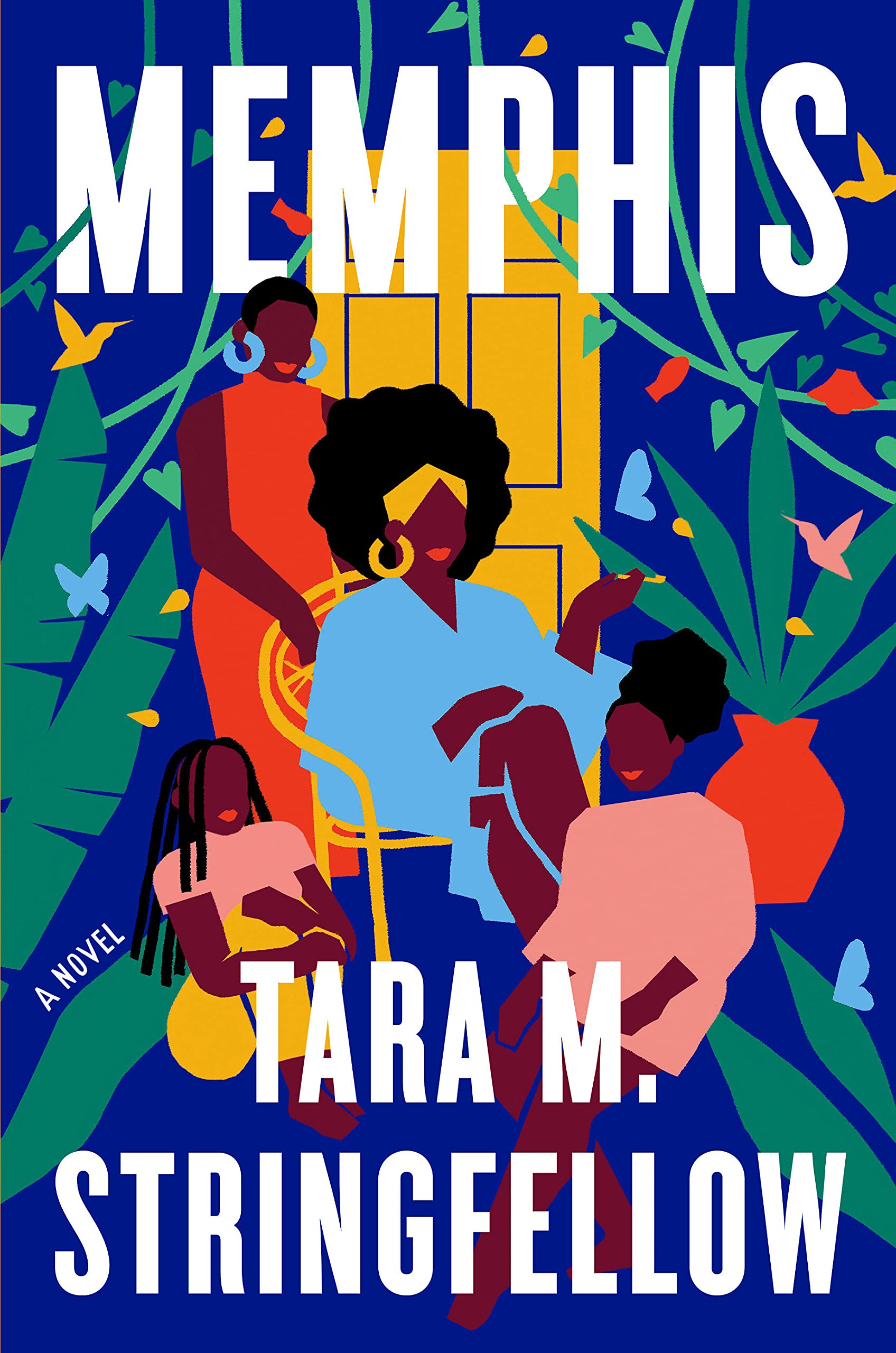
Memphis, by Tara M. Stringfellow****

Stringfellow’s debut novel, Memphis, has drawn accolades far and near. This is a family saga that features three generations of women, a story told with warmth and subtlety. My thanks go to Net Galley and Random House for the review copy. This book is for sale now.

The story commences with Miriam planning to leave her abusive husband. She gets a few things and herds her daughters, Joan and Mya, out of the house. They’re headed to live with Miriam’s sister, August, in Memphis.

The family’s story follows them across time and points of view, but always from the point of view of one of the women. About a third of the way through we find an additional point of view from a character we haven’t met yet, and since we’ve heard from Miriam and August as well as Miriam’s girls, I’m expecting Hazel to be the daughter of either Joan or Mya, granddaughter to Miriam, but that’s not the case. Hazel is Miriam and August’s mother, and the time is the 1930s, a dark time indeed for African-Americans. I like this little surprise. I also love that the narrative embraces only women, across three generations.

As with all good historical fiction, there’s a hidden history lesson here as we follow the Norths across time. On the one hand, I didn’t learn anything new, but I am a history teacher. What I appreciate is the lack of reliance on cheap pop cultural references, and also the lack of revisionism. Stringfellow writes about the past as it was, rather than as she wishes it was. The characters are resonant and believable; my favorite is August. I love the ending.

The story arc is a mighty shallow one, and I’d be hard-pressed to identify the climax. This is my only real criticism.

Because I was a bit behind, I checked out the audio version from Seattle Bibliocommons, and the narrators, Karen Murray and Adenrele Ojo, do a superb job.

Recommended to those that love historical fiction—especially surrounding Civil Rights—and to those that enjoy stories about multiple generations of families.

The Book Woman’s Daughter, by Kim Michele Richardson****

Kim Michele Richardson broke new ground in 2019 with her blockbuster novel, The Book Woman of Troublesome Creek, which features an oppressed minority in Appalachia. In the early years of the 1900s, and possibly before, tucked into the hills and hollers of rural Kentucky were a small number of people that had blue skin. This first novel featured Cussy Mary Carter, a Blue woman that worked as a pack horse librarian as part of the WPA, a new government agency created by the FDR administration. In this sequel, it is her daughter, Honey Mary Angeline Lovett that joins this organization and in doing so, struggles toward emancipation when her parents are jailed for violating the miscegenation laws existing at the time.

My thanks go to Net Galley and Sourcebooks for the review copy.

When her parents are jailed for having intermarried—with “Blues” considered colored—Honey Lovett is sent to live with Retta, an elderly woman that has been like a grandmother to Honey. Returning to the area where she was born, Honey—who is also Blue, but only on her feet and hands, particularly when she is distressed—collides with many of the same biases and legal obstacles that her mother faced.

This sequel features more women that occupy nontraditional occupations; in her notes, Richardson says that she wanted to “explore themes of sisterhood.” The sentiment is a welcome one to this feminist Boomer; at the same time, it’s important to recognize that until the outbreak of the second world war, women seldom occupied positions with the government (our protagonist, plus her friend Pearl, who works for the Forestry Department as a fire lookout,) and as miners (another woman friend, who is harassed relentlessly.)  For there to be three such women inside such a sparsely populated area would have been unusual. That said, I like the character of Pearl a lot, and providing Honey with a friend and peer gives the author more opportunities to flesh out her protagonist.  

The novel’s greatest strengths are in the research behind it, the concept—informing readers about the existence and victimization of the Blues—and in the general setting of the time and place. Richardson knows her field.

Once again, I enjoy the return of Junia, the mule that I confess was my favorite character in the last book, as well as Tommy the Rooster, who is new. Another strength is that Honey is depicted in a more even and credible fashion than Cussy Mary, who was too saintly to be entirely believable.

However, I would still like to see some nuance in characters. There is a wide cast of characters here, but every single one is either a good guy—one that never does anything wrong—or a bad guy that never does anything good. This is a failing that would take the novel down, in my eyes, if not for the fact that Richardson has pioneered this particular time, setting, and topic. Even when a novel is primarily driven by setting, as this one is, the main characters need to be rounded out.

This book is for sale now.

Every Cloak Rolled in Blood, by James Lee Burke***-****

James Lee Burke is an icon, a Grand Master who’s written mystery novels, along with the occasional work of historical fiction, since the 1960s. Now he is 85 years old, and he recently lost his beloved daughter, Pamala. This novel is a tribute to her.

My thanks to go Net Galley and Simon and Schuster for the invitation to read and review. This book is for sale now.

Every Cloak Rolled in Blood is the fourth in the Holland Family saga. Our protagonist is Aaron Broussard. He is an 85 year old novelist who has recently lost his daughter, Fannie Mae. He feels a “loneliness that is almost unbearable.” He tells us,

“I will not accept my daughter’s death. I will find a way to pull her back through the veil or untether myself and lie down in the bottom of a boat that has no oars and float down the Columbia and into the Pacific, where she will be waiting for me somewhere behind the sun.”

There’s a horrifying passage in which he places the barrel of his gun in his mouth; but he doesn’t go through with it, and later tells us that he believes he will not be permitted to join her if he leaves this world by his own hand.

The story commences with a young man vandalizing Aaron’s barn. Aaron recalls some local cops being unnecessarily nasty to Fannie Mae, so instead of turning the boy over to the cops, he makes a deal with him to have the kid work off the damage. There are other remarks laced in here and there that give a nod to our current national state of affairs regarding police brutality, and I appreciate these.

In fact, the story is laced with a number of social justice issues, and Burke is, as usual, on the side of the angels each time; foremost is the horrific manner in which indigenous people of the Northern Rockies have been treated by the U.S. government, and continue to be.

Over his last few novels, Burke has increased the amount of supernatural content in his work. For decades this aspect of his work was muted, smoldering as a part of the general ambience of the story. He’s always used the occasional Biblical reference, occasionally also borrowing from Greek mythology. In A Private Cathedral, a recent Robicheaux novel—the series that has met with the greatest public acclaim and for good reason—he included a scene that could not be perceived as anything other than supernatural. In fact, it is one in which both the protagonist and his lovable sidekick, Clete Purcel, witness the same event, so there can be no supposing it’s all in the protagonist’s head. It was brilliantly conceived and executed. Unfortunately, this book is not of the same caliber.

I wrestled a great deal with my rating and review; a large part of me thought that when a beloved novelist is in his eighties and has recently lost a child, I should just give him the five stars. Yet another part of me, the part that won the internal debate, feels that to do so is unworthy of the respect this author has earned. It would be patronizing to say this is a great book when I am so ambivalent about it. So I’m playing it straight here. The supernatural aspect, as it is used here, overwhelms this story and damages it organizationally. It also causes the pacing to lag a bit. It’s not a terrible book, but it’s not up to Burke’s usual standard.

But the aspect that bothers me most is the way the younger women in the story—not just one, mind you, but two—cannot wait, apparently, to get Aaron in the sack. Sister Ginny isn’t a good person, but she tries to seduce him anyway. Ruby Spotted Horse is a good, honorable woman, that rarest of all things: an ethical cop. She’s in her thirties, but when Aaron comes onto her, she doesn’t even hesitate. We learn that she was raising her niece, who died, and there’s a clumsy passage in which Aaron wonders aloud if Ruby is really up for a relationship with him given his age, but she assures him that they are bound together by their mutual losses.

Right. Whatever.

There are many lovely moments in this novel, all of them owned by Fannie Mae. There is such clear, obvious affection in the descriptions that I am a little surprised the pages don’t glow.

The denouement, a mighty struggle involving the living and the dead, leaves me shaking my head, though. And when one of the latter, an evil spirit representing a horrible cavalry officer that once lived and killed in the vicinity, tells Aaron, “Pardon me for saying this, but you’re not the good father you think you are,” I want to sit right down and cry.

This book is recommended to diehard Burke fans, and to anyone that needs a grief book.

Overboard, by Sara Paretsky*****

Sara Paretsky is one of my all-time favorite writers; I’ve been reading her Victoria Warshawski detective novels for most of my adult life. Paretsky is one of four living authors to have received both the Grand Masters Award from the Mystery Writers of America and Cartier Diamond Dagger Award from the Crime Writers’ Association of Great Britain. She, together with the late Sue Grafton and Marcia Muller, have pioneered the image of women detectives in fiction, departing from the femme fatale of yesteryear who could only reveal the truth by using her sexuality to coax disclosures from men, instead creating capable women professionals that can ferret out the truth using their brains and bulldog persistence. A sympathetic cop friend tells Vic, “You’re a pit bull, Warshawski. You’ll go into the ring with anyone, as long as they’re at least three times your size.”

My thanks go to Net Galley and William Morrow for the review copy. This book is for sale now.

If I knew nothing of this author and her scrappy detective, the first line in the book would have reeled me in: “It was Mitch who found the girl.” As it is, I already know that Mitch is one of the two dogs she shares with her elderly neighbor friend, Mr. Contreras, and I feel as if I am greeting an old comrade.

The girl in question is in bad shape, and she doesn’t speak. For a while her identity is a mystery. Vic would be happy to offload her to medical professionals and get back to her own life; she’s got a lot of clients, and Lotty, her doctor friend that serves as a mother-figure in Vic’s life, is urging her to investigate the rash of attacks on the local synagogue. She doesn’t need more work.

But the cops—generally not friends of Vic’s at the best of times—are ready to haul Vic in. In fact, given their track record, Vic is amazed at the attention the girl is getting. All manner of monied movers and shakers show intense interest in the girl, and it makes Vic suspicious.

She’s right.

A sixteen year old boy comes to her office, asking her to look into a dicey situation involving his father. He believes his dad is in danger, and his parents won’t tell him anything. And so, there’s this kiddo, and there’s the girl: “Two teens, two life-threatening secrets—I have to assume they’re connected somewhere, somehow.”

She’s right again.

Before we know it, her apartment and office have been searched and bugs are left; her phone is being tracked; and Vic has to resolve the case in order to get her life back. She’s jumping in the cold river to elude capture, hiding in the least likely places, and keeping the kids safe from the forces that would harm them. Her attorney chuckles that “You get in over your head faster than Houdini in a water tank.”

He’s right, too.

When I opened this galley, I was already reading a handful of others that I liked, and figured I’d put this one into the rotation, but as often happens when I read Paretsky, everything else sat untouched until I’d torn through this book feverishly, as if the lives of Vic, her clients, and Chicago’s working class depended upon it.

Highly recommended to those that love strong detective fiction; feminists; and champions of the working class.

The Sentence, by Louise Erdrich*****

I wasn’t able to get a galley this time, and so I checked out the audio version from Seattle Bibliocommons. This turned out to be the best possible way to read it, because Erdrich narrates it herself.

The Sentence is set in Minneapolis during the pandemic, from November 2019 to November 2020. It starts with the world’s most hilarious crime, one which sends our protagonist, Tookie, to prison; however, most of the meat of the story takes place once she’s out again. Tookie develops a love of writing (“with murderous intent,”) while she’s incarcerated, and so, once she is released, what more natural place is there for her to look for work, than a bookstore? But this bookstore is special. It’s haunted.

Tookie’s story is wrapped around a number of social issues and current events; most prominently, of course, is that of American Indians’ rights; this is the time and place of the murder of George Floyd by Minneapolis cop Derek Chauvin, and so the demonstrations of outraged citizens are folded into the novel as well. And of course, this is not one bit funny.

I came to read Erdrich late in the game, when The Night Watchman, which won the Pulitzer, came out in 2020. That one novel persuaded me that from now on, I would read every blessed thing Erdrich writes. The Sentence strengthens this resolution.

Highly recommended.