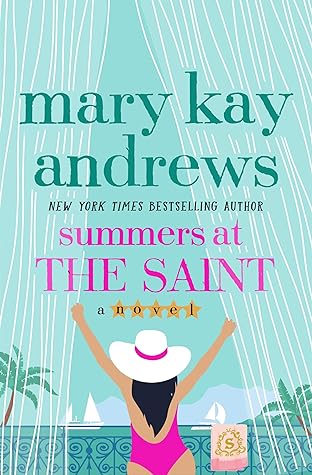
Summers at the Saint, by Mary Kay Andrews****

Summers at the Saint is the latest novel by veteran author Mary Kay Andrews. I am not usually a fan of what I think of as light and fluffy books, but over the last couple of years, I’ve developed an appreciation for this author’s work. This story centers on a fashionable beach resort hotel and those that run it, with the focus primarily on the women. It’s a good summer read—not a bad choice to take to the beach, actually. My thanks go to NetGalley, Macmillan Audio, and St. Martin’s Press for the invitation to read and review. This book will be available to the public May 7, 2024.

Our protagonist is Traci Eddings, the young widow of Hoke Eddings, heir to the Saint Cecilia resort. Traci has inherited part of the business from her late husband, but there is a power struggle in play as the book opens. The old man is dying, and the surviving heirs are scheming. The business seems to be on the rocks, or near to it, and Traci can’t figure out why. She makes several smart changes, hires good people, and yet…

We have interesting side characters. Parrish is Traci’s niece, whom she persuades to postpone her studies for one more summer as Traci implements the changes that are needed. We have the new cook, Felice, as well as Livvy, a capable young woman that Traci hires away from the diner where she is waiting tables; and we have Livvy’s mother Shannon, who used to be Traci’s best friend. Shannon completely dumped Traci many years ago, leaving Traci bewildered and hurt; she still feels that way. Lastly we have Whelan, who is working at the Saint as a pretext while he tries to unravel the circumstances that led to the death of his younger brother at the resort’s pool many years ago.

The book’s strongest aspect is the side characters, particularly Felice, Shannon and Livvy. Other characters are one dimensional, either entirely good or entirely awful. Rather, this is a plot based book. There are a great many moving parts, with a blend of genres that include romance, mystery, beach reads, women’s fiction, and contemporary family drama. It is in weaving the many pieces of this story that Andrews’s experience shines through. If there is a plot element that conflicts with another, or that is simply illogical, I didn’t spot it. At the end, everything and everyone is accounted for; in fact, I might have preferred not to have every single aspect resolved, and every positive character quite so perfectly happy. I seldom argue in favor of ambiguity, but in this case, it wouldn’t hurt.

I was fortunate enough to receive both the Kindle and audio versions, and once more, Kathleen McInerney does a fine job of narration with all of the women characters and the internal monologue. Her voice isn’t deep enough to voice the men’s characters well, and I suggest adding a second, male narrator next time around.

The story held my attention quite nicely as I did my morning bike ride, and I recommend it to Andrews’s loyal readers, and to those that enjoy a good beach read.

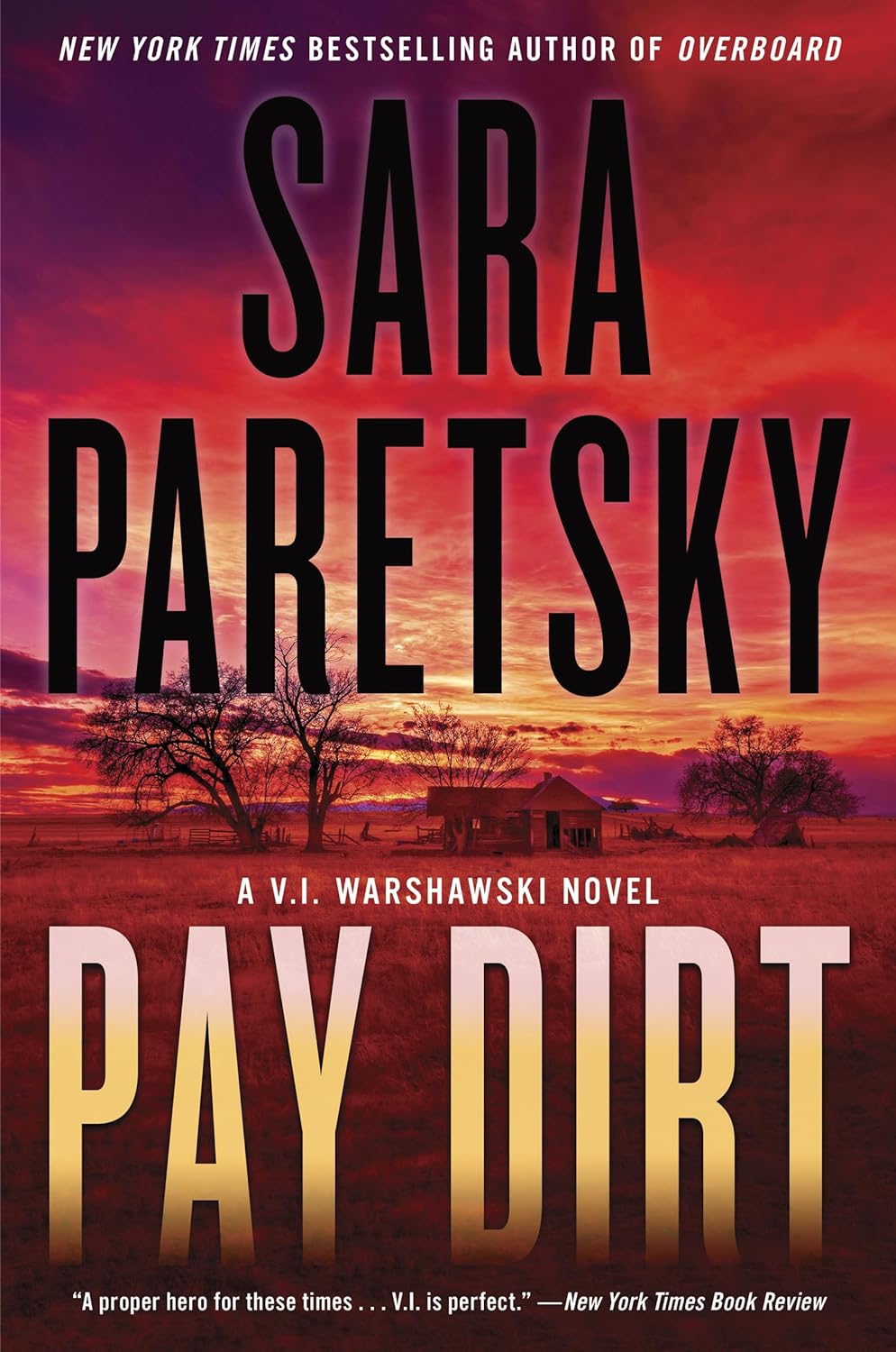
Pay Dirt, by Sara Paretsky*****

Sara Paretsky is a badass author with a badass protagonist. Her hero, Vic Warshawski, is a rough and ready private eye, and though based in Chicago, she sometimes—as now—finds herself elsewhere when duty beckons. Author Paretsky is one of the three that pioneered the hardboiled female private eye subgenre; the first in this series, Indemnity Only, came out in 1982, over 40 years ago, and that is how long I have been reading them. And though I was lucky to receive a review copy, thanks to NetGalley and William Morrow, this is one of those rare books that I would have paid full price to read if that was the only way I could get it.

This book is for sale now.

This story finds Vic in bad shape, both mentally and physically. She has attempted to help a student of her boyfriend Peter’s, a trans youth whose father blew out the kid’s brains rather than accept their new identity. The brains stuck to Vic, and the experience sent her reeling emotionally. She’s been forgetting self-care, not eating or exercising. What she needs is rest and quiet.

But that’s not how it goes.

Her godchild Bernie persuades Vic to attend a basketball championship game in Kansas. A group of them will be going down there; it’s just what Vic needs, she says. Reluctantly, Vic agrees, but once they are there and the game is over, one of the parties disappears, and Vic is enlisted to find her. When Vic finds the missing basketball player, she inadvertently finds a dead body. The cops in Lawrence, Kansas as well as the FBI like her for the killing. It’s so convenient to have a mouthy, street smart outsider blunder in; hopefully, they can pin it all on her, and then life will go on as it has been. And so Vic must stay behind because she’s been told not to leave town, but also in order to clear her name.

Now, this is one of the elements that generally irritates me in most mysteries; the whole clearing-my-name trope is desperately overdone. There’s another trope that shows up later in the story, but I won’t share it here because it’s a spoiler. But for every rule, there is an exception, and in the case of both tropes, Paretsky breezes through, and I barely bat an eye; this is because the characters are so real to me, and the situation they’re in is so immediate, that I blow it off so I can find out what happens next.

And as is so often the case, Vic Warshawski finds herself up against the town’s wealthy power brokers, who have a vested interest in not having the real killer caught. As for Vic, she makes friends with a few people that have no wealth and no power, but the small ways they assist her make all the difference.

Once she solves the crime, persuades the local police and others that she is innocent and that the blame lies with the men in the suits, are they hauled off in shackles? Don’t hold your breath. As one of her new pals reflects, “That is justice in America, plain and simple, before you wrap it up in a pretty package of Constitutional rights that only the rich get to have.”

The thing that sets this particular book apart from the other very good mysteries I’ve read recently is the development of the protagonist. She’s vulnerable because of her earlier trauma; her boyfriend left the country on business, and he hasn’t been responding to her texts. She is miserable, and she’s isolated. But as the pressure builds, Warshawski delivers. The last quarter of this novel is impossible to put down, and even before that, I set aside my usual rotation of books, because I wanted to read this, and only this.

This novel is written in such a way that a first time reader can jump into the series, but chances are good that once you do, you’ll reach back for some or all of the others. Highly recommended to those that love gritty, rough and tumble detectives; feminists; and those that lean to the left.

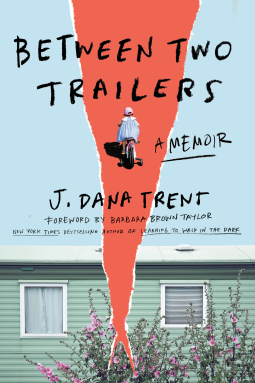
Between Two Trailers, by J. Dana Trent*****

And you thought your childhood was difficult.

Dana Trent is the child of two drug addicted schizophrenics who met and fell in love on the psych ward. The fact that she lived to adulthood is astonishing. Her story is captivating; my thanks go to NetGalley and Random House for the invitation to read and review. This memoir will be available to the public April 16, 2024.

“’Kids make the best hustlers,’ King told me the week after I was expelled from preschool. He lifted me onto the counter and coated his arms with palmfuls of petroleum jelly from the biggest Vaseline tubs Walmart sold. Then he greased up mine. ‘No one expects a runt in a Looney Tunes T-shirt to shank you,’ he explained. ‘Budgie!’ he said and pointed to my chest, then sealed my street name with a Vaseline cross to my forehead. ‘Budgie,’ I parroted, finger to my own chest…‘Guns are for idiots,’ he added. ‘Here.’ He handed me my first pocketknife, a foldout two-inch blade with a horse and buggy painted on the handle. Knives teach you to accept the inevitable. ‘You’ll get stabbed,’ he said, ‘but you’ll survive. No big deal.’”

The nickname “Budgie” was chosen because she was his lookout on drug deals. She would ride along with him, his trunk stuffed full of drugs, and when he got out, she was stationed on the highest available vantage point. If she saw someone—an ambush, the cops, anyone—she was supposed to sing like a bird. (Even other drug dealers and manufacturers questioned the wisdom of hauling a three year old on such expeditions, but King, as her father was known, was not easily influenced.)

At such moments, one might wonder where her mother was. Usually her mother was either unconscious in bed, or on the way into or out of that state. Because her father was awake and slightly more predictable, Dana considered him the more reliable parent. Before she was old enough for kindergarten, she understood that it was up to her to take care of The Lady.

My initial response to this scenario was to be bitterly angry at whoever decided to expel this child from preschool. Boom, there went that tiny girl’s one tie to the safer, saner world. How could anyone look at her behavior, her clothing, her hair and not call Children’s Services? I’m still fuming.

Miraculously enough, Trent made it to adulthood, and after years and years of therapy, she is able to lead a normal life. She’s achieved a remarkable amount, with a Ph.D. to her credit along with a solid career in academia.

And she can write! There is never a slow moment in this memoir, a hair raising read that I brought out at lunchtime, but never at bedtime. There is very little by way of dialogue, and that makes the swift, steady pacing even more remarkable.

Between Two Trailers is one of the year’s best reads. Highly recommended.

What the Taliban Told Me, by Ian Fritz****

Ian Fritz was an Airborne Cryptologic Linguist who served with the U.S. Air Force in Afghanistan for five years. Trained in both Dari and Pashto, he became one of only two people that could understand what was being said by all of the people on the ground before and during battle. Following his service, he became a physician and writer. This is his memoir.

My thanks go to Simon and Schuster Publishing and NetGalley for the invitation to read and review. This book is for sale now.

Fritz was in many ways the perfect recruit; his family didn’t have any money, and he was brilliant, which meant that if he was going to have any opportunities, they would most likely come from the U.S. armed forces. He blew through his public school years, as gifted students that aren’t challenged often do.

This is where I long to stand on a big box and yell through a bullhorn: gifted students are at risk children! We must provide them with challenging, interesting curriculum, or they will stop bothering with school. I’ve been saying so for decades, and I’m saying it again right now. So many times educators and school districts assume these kids will automatically be fine. If the student is bored, they use them as unpaid tutors for their peers, which distorts relationships among the students and does nothing to provide the highly capable student with new, interesting material. These kids need different educations from those in the mainstream. Ian’s story is a powerful example of why this is so.

Ian was sent to an elite language training program, and then he was deployed. Initially, the successful flights in which targets were found, identified, and killed—often partly or solely because of his contribution—were exhilarating, but as time went on, he began to feel conflicted. On the one hand, the Taliban were responsible for the horrific, cowardly attacks on American civilians on 9/11, and were therefore a legitimate target. On the other hand, being able to understand what enemy soldiers were saying to one another made him aware that these were normal people, attempting to live their lives and repel the U.S. invaders. It’s hard to hate someone, or to be indifferent to them, when you overhear them discussing their plans for after the day’s fighting is done, or declaring that it’s just plain “too hot for Jihad today.” Sometimes a threat on the ground would be identified, and the Americans wouldn’t realize that this was an error until after the person they’d targeted was dead. And he knew the names of the dead, sometimes hear the survivors below desperately trying to get their comrade to a medic, but then…oh. Too late.

Then there was this culture among others he served with, those not trained in the language and who were therefore able to demonize the targets, howling with laughter at the way a body on the ground could be made to bounce if you shot it at just the right angle. He realized that “no one else had heard, and no one else ever would hear, the simultaneous screams of the JTAC [U.S. officer on the ground] and the Talibs. Or the sudden quiet when the Talibs died.”

Ultimately, he learned that Afghanistan was actually a lot safer without U.S. forces than with them.

As Fritz began to internalize his despair, he grew suicidal, and he knew he had to get out. It’s at this point that he was charged with malingering and cowardice; he would later learn that it was a trend among the linguists serving in this theater.

Fritz is one hell of a fine writer, and the narrative flows smoothly. I was surprised to find that this was a quick read, despite the intensity of the material. Surely there must be other military memoirs relating to Afghanistan, but as he points out, nobody else is writing about this experience, because almost nobody else has done what he has.

For those with the interest and the courage, this memoir is recommended.

Charlie Chaplin vs. America, by Scott Eyman*****

Charlie Chaplin rose to fame over 100 years ago, but his fame hasn’t faded over the years. One of the most visionary movie makers in modern history, he rose from desperate poverty and homelessness during his childhood to become one of the wealthiest and most respected men in his chosen profession. And yet, for some odd reason, the U.S. government relentlessly pursued him as if he were an enemy agent, eventually forcing him to retire abroad. It’s a bizarre episode in U.S. history, and a fascinating one.

When I saw that Scott Eyman, an author whose biographies of actors I have previously enjoyed—John Wayne, Jimmy Stewart, Henry Fonda—had written about this case, I had to read it. My thanks go to NetGalley and Simon and Schuster for the invitation to read and review. This book is for sale now.

Charlie was born in 1889 in London. His mother Hannah was an actress, a loving mother whose health was dreadful. In addition to more conventional illnesses, she was sent repeatedly, and for longer stretches each time, to mental hospitals; it has been speculated that she suffered from syphilis, which eventually had devastating effects on her brain. Charlie’s father was a businessman who left the family and refused to pay a single shilling of child support because one of Charlie’s brothers was conceived with another man. And as an aside, if there is an afterlife, I sincerely hope that Charles Chaplin, Senior is roasting eternally in the flames of hell.

For a while, Hannah’s relatives cared for Charlie and his older brother, Syd, but eventually the boys found themselves in a workhouse, beaten, abused, sickened, and barely fed. It was his brother Syd who first discovered that acting could keep him out of the workhouse and put food on the table, and once he was so employed, Syd took his pale, sickly little brother to the theater and persuaded his boss to use Charlie, too. Thus was a star born.

His tremendous suffering during his childhood gave Charlie a lifelong sympathy with the working class, the impoverished, and the down and out. Early in his career, a director gave Charlie a costume and told him to come up with a character, and this was when he invented The Little Tramp.

I’ve known for most of my life about Charlie’s expulsion from the U.S., but I’ve never been sure whether he was a Communist. I’ve known people brought up in Communist households in America, and for many years, they existed strictly underground, so I wondered, did Chaplin deny his affiliation because he wasn’t a Communist, or because he was? Eyman’s meticulous research demonstrates once and for all that Charlie was not political. He told the truth about himself: “I am not a Communist. I am a peace monger.”

Nevertheless, once he gained prominence in the American movie industry, he had a target on his back. It’s difficult to understand why politicians and bureaucrats in California and in Washington, D.C. hated him so fiercely.

“A month after the revocation of [Chaplin’s] reentry permit, the FBI issued a massive internal report documenting more than thirty years of investigations focused on Chaplin, a copy of which was dispatched to the attorney general. The report revealed that, besides the FBI, Army and Navy Intelligence, the Internal Revenue Service, the Central Intelligence Agency, the Department of State, and the U.S. Postal Service had all been surveilling Chaplin at one time or another. In short, the entire security apparatus of the United States had descended upon a motion picture comedian.”

Eyman has done a wonderful job here. Because I had fallen behind, I checked out the audio version of this book from Seattle Bibliocommons, and I alternately listened to it and read the digital review copy. Of course, anyone reading this book for the purpose of academic research should get a physical copy, but those reading for pleasure may enjoy the audio, which is well done; this is a through, and a lengthy biography, and the audio makes it go by more quickly.

I confess I haven’t read any other Chaplin biographies, so I cannot say for certain whether this one is the best, but it’s hard to imagine a better one. For those sufficiently interested to take on a full length biography, this book is highly recommended.

Piglet, by Lottie Hazell****

“Such a special day.”

Piglet is an offbeat novel that marks the debut of author Lottie Hazell. The protagonist is a young woman named Pippa, but everyone calls her Piglet. This author has me before I open the book, because with a nickname like this, I have to see what’s behind it, and where it’s going. My thanks go to NetGalley and Henry Holt for the review copy; this book is available to the public now.

Piglet lives in London, far from the working class area where she was raised, and where the rest of her family still resides. She’s a cookbook editor for a publishing company, is engaged to marry Kit, who is handsome and comes from a well to do family, and they have recently purchased a gorgeous home. Her star is clearly rising.

It’s a tightrope walk, to be certain. People with money have expectations, and so it’s not easy for Piglet to advocate for herself in the presence of his family. But she genuinely likes them, and so she works with them—which generally means that they get their way. Her own family mildly embarrass her when the two families meet, but her folks won’t often cross paths with these people once she and Kit are wed.

Then, two weeks before the wedding, Kit confesses a terrible, terrible betrayal, and Piglet has to decide whether she is in or out. As she unravels, I watch in horror. Piglet, you see, is an emotional eater.

In many ways, Piglet is the protagonist I have been wanting to read all my life. So often female main characters respond to stress by not eating. The lesser characters around them cluck over how pale, how thin they’ve become, and I sit back on my ample behind and say, “Yeah, right.”

But Piglet’s stress eating is epic in scope, and I also worry that the resolution will involve therapy, a new diet and a wedding gown in a size smaller than anything she’s ever owned. And since this much comes from my own imaginings rather than the book, I’ll go ahead and tell you, no. That doesn’t happen, and I am so grateful.

For most of this novel, I feel an intimacy with the protagonist that is rare. I can’t wait to find out what happens next, but I also can’t tolerate interruptions, and so I choose my reading sessions carefully. I am fortunate enough to receive both the digital review copy and the audio galley, and at the outset, I do what is my usual routine in such circumstances, listening to it while I am doing something else, but with the DRC nearby so that I can make notes or highlight likely passages for quotes. But by the time I am about thirty percent in, that’s over, and instead I am listening while reading also, because how can I think of anything else?

There are two things that I am dying to know. First, does she stay with Kit? And more importantly, what terrible thing did he do? Piglet keeps this information close to her vest, but the few people she tells are uniformly horrified, and so I know it’s bad. But what is it? Just what the hell did he do?

The ending feels incomplete to me. There are so many things that Hazell could have done and didn’t that I am disappointed by what feels like a slightly bland resolution. This is a good book, but it could have been a great one.

Hazell’s word smithery skills are stellar, and when I was done, I found I’d highlighted over 150 passages. Obviously, I won’t use them all here. Most of the novel’s tone is quite serious, but there are a few moments of dark humor that leave me shaking my head in admiration. In particular, there’s a wedding photographer that makes me howl!

The narrator is outstanding.

One way or another, Lottie Hazell is an author to watch. I look forward to seeing what she produces next.

The Great Divide, by Cristina Henriquez*****

I found The Great Divide, by Cristina Henriquez, on a short list of most anticipated novels of 2024. I don’t like to get shut out when a book gets this much buzz; then there’s the added draw of an unusual setting. The U.S. doesn’t see a lot of fiction published that’s set primarily in Panama during the early 1900s, and so that sealed it. My thanks go to NetGalley and Harper Collins for the review copies, both audio and digital. This story lives up to the hype, and I recommend it to you.

I am not so sure about it at the outset. There is a robust quantity of characters that are important to the story, and each of them is given a brief chapter all to themselves. I wonder whether they will ever intersect, or if this will turn out to be a collection of short stories, but before much longer, characters are meeting other characters. They don’t all end up together in the end, but we can see the ties that have formed. There are a lot of people to keep track of, and for me, having both the print version and the audio is tremendously helpful. Robin Miles narrates in a way that is natural and fluid, and I don’t notice much of what is around me when I listen to her. But once in awhile a character is mentioned and I draw a blank; here is where the Kindle version is essential, because I highlight the names of each of the characters, and this enables me to instantly flip back to where they were introduced to us without having to stop listening. Eventually, of course, I no longer need to do so, but knowing that I can makes for stress-free reading.

I am engaged with these characters, each of whom feels real to me, and I groan when I see them get into trouble, and sigh with relief once they are in the clear again. The ones that I care about most are a father and son that are estranged from each other, neither wanting to stay that way, yet both of them incorrectly interpreting the silence of the other. As we reach the climax, I can tell there are three ways for this situation to resolve: they can reconcile; one of them can die; or the son can decide to follow another character back to the U.S.A. without reconnecting with his dad.  It only now occurs to me that there was a fourth possibility, which was to leave them still estranged at the end; but by this time, Henriquez had shown herself to be a better writer than that, and while I won’t tell you how they wound up, I will say that she didn’t leave her readers dangling.

Because this is an intricately woven tale with a lot of equally important characters, I’m not including any quotes, but I will say that Henriquez is a talented writer, and anyone that loves good historical fiction should get this book and read it. This applies even more so to those interested in Latin American history and the building of the canal. I hadn’t read her work before, but she’s on my radar now, and I look forward to seeing what she writes next.

The Hunter, by Tana French*****

In 2020, Tana French gave us The Searcher, the first in the Cal Hooper detective series. By that time I was already an established fan, but I loved that book particularly well, for reasons I’ll revisit in a moment. Now we have the second in the series, The Hunter, and if anything can reduce this crusty old English teacher to a blushing fan girl, this is it. Two books in, this is already on my short list of favorite series. My thanks go to NetGalley and the Penguin Group for the review copy. This book will be available to the public Tuesday, March 5, 2024.

The series debut introduced the characters, with the protagonist being a retired Chicago cop that found this tiny Irish village on vacation and, needing a new home far from his ex-wife, yet affordable, discovered a bargain fixer of a home and decided to stay. The story’s main problem revolved around a nearly feral tween that kept popping up at Cal’s place. The scrappy little stinker that was relieving Cal of food, occasionally, and doing other unsettling things turned out to be a girl; her name is Teresa, but she’s known as Trey. Her family was in dire straights following the departure of Trey’s father; her brother had left, intending to return, but never had. The mystery was where Trey’s brother had gone, what had become of him, and why. In the interim, she became greatly attached to Cal, who enjoyed her company and taught her some woodworking skills, but also kept a careful distance, lest rumors start and grow.

Now Trey is a bit older, and she is more civilized. She is close to both Cal and Lena, the local woman that Cal has been seeing. But as life settles into a civilized hum, one that would be comfortable had climate change not created a drought that has local farmers at the near end of their wits and their bank accounts, the unexpected happens once again: Johnny Reddy, Trey’s no-account father, has returned. Cal is prepared to step back, if need be, in case Trey wishes to bond with her actual dad rather than himself. Meanwhile, Johnny vows to visit Cal with some local moonshine, and “make a night of it.”

“Trey says nothing. If he does that, she’ll get Cal’s rifle and blow his fucking foot off, and see can he make his way down the mountain to Cal’s after that.”

Johnny never succeeds in bonding with Cal, who doesn’t like the look of him. “Johnny gives him the urge to pat him down and ask him where he’s headed. There are guys like that, who flunk the sniff test just going to the store; it’s a good cop’s job to work out whether they’re actually doing something hinky, or whether it’s just that they will be sooner or later, probably sooner.”

The village is a tiny one, and outsiders are few. Everyone in the vicinity knows that Johnny’s back; everyone wonders what he’s up to. They haven’t long to wait; he’s brought a man with him, one whose family once lived here, or so he says; and the man is interested in seeing if there’s gold on some of the local properties. “He has a rich man’s smile, easy and understated, the smile of a man who isn’t required to put in effort.”  Now the question is whether this “plastic Paddy” is a shyster trying to rip off the locals, or if he is someone that Johnny is seeking to fleece. Meanwhile, Trey has a different agenda, a private one.

The thing that makes this story so much better than your standard mystery is the characterization. If you are in search of a thriller that is all page-turning action, this isn’t your book. However, if you love a layered story with complex, convincing characters, this is for you. I said in my previous review of the first in the series that Trey is what makes an otherwise solid story a golden one, and that’s even truer here. One could even argue that it’s really her series, with Cal existing as scaffolding. Time will tell.

In particular, though, anyone that works with, or has worked with at risk youth cannot, must not miss this story. French has taken hold of my heartstrings hard, and I don’t want her to let go. Highly recommended.

Finlay Donovan Rolls the Dice, by Elle Cosimano*****

“I’m telling you, Finlay, this book is good. This whole SERIES is good. The plots may be a little far-fetched, but these characters are so real! It’s like they just jump off the page!

Finlay Donovan Rolls the Dice is the fourth in the raucously entertaining series by Elle Cosimano. My thanks go to the Minotaur and St. Martin’s Press Influencer Program and NetGalley for the review copy. It will be available to the public Tuesday, March 5, 2024.

At the end of the previous book, Javi, Finn’s nanny Vero’s boyfriend, was abducted by mobsters that wanted to collect a gambling debt incurred by Vero. In this one, the two women plan to travel to Atlantic City to rescue him, with the cover story of needing time to unwind. However, things snowball, and before you know it, almost all the people they hold dear—and a few people that they don’t—are headed there, too. What follows is a riotous adventure with a lot of moving pieces. I love it.

More than any other, this installment has been controversial among reviewers. In the series debut, Finlay is an innocent, entirely law abiding single mother strapped with bills, work, and child care issues. She’s in the midst of a contentious divorce and her soon-to-be ex is an attorney, which makes Finlay’s efforts an uphill battle. She’s easy to relate to, and when, through no fault of her own, she finds herself with a corpse in her car, it seems entirely believable.

With the second and third books in the series, Finn, accompanied by the more street smart Vero, find themselves in deeper trouble. Just as they mop up one mess, another arises, until there’s a sort of house-that-Jack-built tower of problems that see both women in increasingly tenuous circumstances. They break the law once as a life or death matter, but then cannot safely come clean, so they do their best to put it behind them, but someone or something comes along to threaten the modest safety and security they’ve begun to enjoy. Bodies and crimes pile up, and now, with the fourth installment, the author can’t reasonably convince the reader that whatever happens next is purely an oopsie. Instead, she has to draw on other possibilities. Personally, I like it.

Finn and Vero are chasing down the underworld figures that they believe have abducted Javi, and there’s considerable risk involved. A couple of times I literally draw in my breath at the risks they take. Add to this the need to fabricate excuses to tell the myriad members of the retinue that have descended on Atlantic City with them, and it’s an ambitious undertaking.

In this circumstance, I no longer require realism. The whole thing takes on the flavor of a comic caper, what with the clown car full of women, including Finn’s mother; Finn’s ex-husband, who is in charge of the children; and various others (I am being deliberately vague here) that descend on them once they arrive. To put it another way, if Stephanie Plum and John Dortmunder—or if you prefer, Bernie Rhodenbarr—had a baby, she might be Finlay Donovan.  

If you need a good laugh, this book is for you; however, with this series, you really should begin with the first in the series, Finlay Donovan is Killing It. With just four in the series (and the audio is outstanding, too,) this will be a quick and hilarious adventure. What are you waiting for? Jump on in.

Starter Villain, by John Scalzi****

I’m not going to write a full review for this one; my spouse got it for me for Christmas, so I don’t owe anyone anything. I will tell you, though, that it’s just what I needed, funny, warm, and of course, not even close to realistic. After all, it’s fantasy. The level of unreality is well crafted and consistent within the narrative, and it’s hugely inventive. This is my first John Scalzi novel, and I will read him again in a heartbeat.