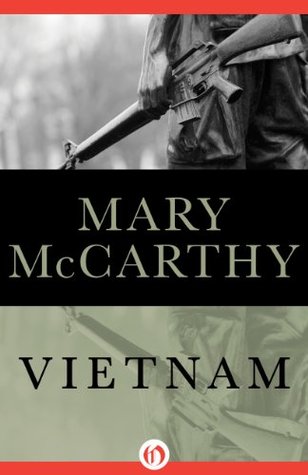
 Vietnam , an impassioned journalistic effort by Mary McCarthy originally published during the US war against Vietnamese freedom fighters, is a once-stirring piece of research that, while worthwhile as a period piece or for specific types of historical research, is in general terms too dated to be of great interest to most readers. Instead, it speaks to the innocence and disbelief Americans with no axe to grind in Southeast Asia felt when they came to grip with the actual facts regarding the war, and how many responded after becoming enlightened.
Thank you once and twice, first to Open Road Integrated Media, and next to Net Galley, for allowing me to read the DRC in exchange for this honest review. The book is now available for purchase.
In many ways, the American mindset can be divided into two contemporary periods: one before the Vietnam War, and one after it. Before the war against working people in Vietnam commenced, Americans by and large trusted their government and believed what its political leaders said was true. As layer upon layer of lies was peeled away from the startling nugget of truth at the core of this conflict, many people—in particular, the youth of the USA and around the world—were outraged at the many ways in which they had been deceived. Most of those smooth-faced but indignant youth are now grandparents now, and most have learned never to believe something is true just because a politician—even the president of the USA—says so.
McCarthy wrote this book during the metamorphosis of the American public from the former condition to the latter.
McCarthy went to Vietnam as a member of the press, and was astonished by both what she saw, and by the things that were told her. In 1967, when this book was written, the military leaders she interviewed told her that roughly ten percent of the population, or 1.5 million people, had become refugees, “casualties of war”, because the bombing had destroyed their homes and defoliated large swaths of jungle. It was unclear to me whether they were speaking about all of Vietnam or only South Vietnam; her time there seems to have been spent entirely, or mostly, inside the city of Saigon, which had become so Americanized that there were more English-speaking Caucasians there than Vietnamese.
At times, her outrage is sufficiently scathing to take this reviewer back to that time. I was just a kid, but the white-hot rage in the streets is hard to forget, even so.
In describing her visit to Saigon, she speaks about the ways in which officers and GIs alike regarded a hospitalized child, a victim of the bombing: because they showered her with candy, dollar bills, had photographs of themselves taken with her, and brought her toys, they considered her to be a very lucky tyke indeed. They made reference to her owning more dolls than Macy’s, and one soldier said fondly, “That girl is so spoiled.”
This type of rationalization, the notion that after wounding and possibly orphaning a child with bombs that destroyed her village and left her full of shrapnel, she had become “so spoiled”, is characterized by McCarthy as “Pharisee virtue”, a phrase I found startlingly eloquent.
There are other moments when she appears a bit confused, and appears to be unconsciously using the terminology of the very military and government forces that she opposes. My own youngest child is half Asian, and when I read an expository sentence in which McCarthy referred to the local children as “slant-eyed”, I almost dropped my reader. What the hell? She refers to the Vietnamese policeman that works for the US army as a “small Vietnamese policeman”, and from context, I got the distinct impression that he was not noticeably smaller than other Vietnamese men, and that in fact his size had nothing to do with anything. If she were still alive today, I would advise the author to check her terminology, and then check her own assumptions about what “normal” looks like. It appears she was carrying around some ingrained racism that came out despite her finest intentions.
One more strange factor here was her reference to the uniforms worn by the National Liberation Front, (otherwise referred to pejoratively as the “Viet Cong”, a term she uses freely), as “black pajamas”. Did McCarthy not understand that this was an expression used by the US military which was intended to demean Vietnamese fighters by suggesting they did not know how to design a uniform? Vietnam is a very warm place, and it’s humid as hell, which is why they used lightweight cloth to make uniforms. The jungles were dark and virtually impenetrable, and this is why black was a really good choice of uniform color. Pajamas are something one sleeps in. The Vietnamese soldier didn’t get a lot of sleep, and he did not fight wearing sleeping apparel.
McCarthy is not always blind regarding the power of terminology however: she points up the fact that napalm, which had been made even more horrific in that it now adhered to things (and flesh) while burning, had been name-changed to “Incinderjell”, making it sound like a children’s dessert. Officials could publicly state that napalm was no longer in use, because now it was called something different. Likewise, defoliants were referred to as “weed killer”.
The only photographs are of the author.
For those that want to travel back to the time when Johnson was president and America’s youth were waking up to the fact that the US government did not always behave in accordance with its stated democratic ideals, this is a good work to drop into your reader. It’s very brief, and you can finish it in a weekend.
I also recommend this work to students and other researchers looking at this volatile and transformational period in American history. Since she personally went to Saigon while the war was being fought, her own experiences constitute a primary document, and in such a case, I would not rate this book a 3 star work, but rather 4 stars.

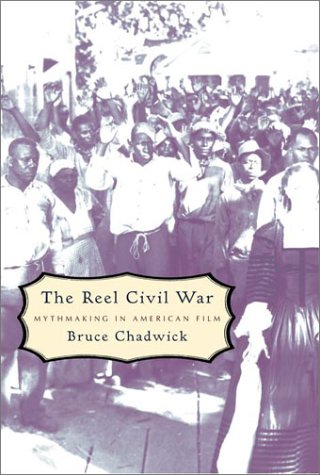 I found this gem at my favorite used bookstore in Seattle, Magus Books, which is just a block from the University of Washington. Its strength, as the title suggests, is in tracing the story of the American Civil War as told by the cinema. Those interested in the way in which movie impacts both culture and education in the USA would do well to find this book and read it.
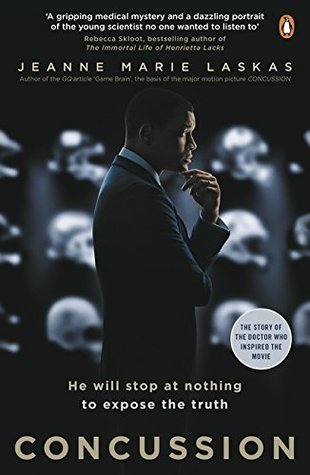 You don’t have to enjoy football to appreciate Concussion, the riveting new biography of Bennet Omalu, the Nigerian neurological pathologist that discovered CTE, a type of permanent brain damage caused by repetitive concussions, such as that experienced by football players. Not only the content, but the engaging voice with which it is told, make it worth everyone’s while. I was fortunate enough to read it free, courtesy of Net Galley and Random House, but when it comes out Tuesday, November 24, I recommend you get a copy for yourself. It’s information everyone really ought to have, especially those that play American football, or have family members that do.