
 I was invited to read and review this title by Net Galley and Open Road Media. At first I thought it looked like a real winner, and in many respects it is. For me, one glaring problem made it impossible to finish; more on that in a minute. For those interested in the Resistance during World War II, this may prove a successful read and an interesting one if you can get past the hurdle that stopped me.
And now, the rant: Why is it—I ask for perhaps the tenth time—that publishers that would never, ever dream of letting literature that gratuitously uses the “N” word, and rightfully so, nevertheless let anti-Asian slurs drift in and out of historical prose as if they are nothing more than period details? Yes, it’s true that in World War II, Japanese were called some ugly things, and inexplicably, so were Chinese, though they were friendly toward the US. And it’s also true that there are Black men in the US military that were referred to by ugly, racist epithets by Caucasians at all levels of command. We don’t reprint the nasty words used with regard to African-American troops, because those words are hurtful, and the use of them is wrong. In fact, it may be considered a hate crime.
So then…why is it any less urgent that anti-Asian insults be expunged from literature?
If I had seen just one or two instances in this work, I would have included a comment to that effect here and move forward with a description of the book itself. And it’s true that there is solid information provided by specialists here, along with meaty anecdotes. It’s not easy to find accessible books that describe the Resistance in a knowledgeable way, and this book does that. In fact, without the vile language incorporated here without recognition or comment on the part of the authors or the publisher, I would probably rate this at five stars. But it’s hard to be certain because when I hit the page where 5 slurs appeared on one page of my Kindle—at about the 40% mark—I gave up.
Yo, Open Road. I love that you folks were among the first to auto-approve me when I was a brand new blogger, and I have been looking for a chance to pay you back with a five star review. And we almost had that here. But you need to do whatever it is that publishers do when they find offensive terms sprinkled throughout the text of an otherwise worthy book for no good reason. If you can’t do that, I can’t praise your historical works.
For Asians—some 6 million in the USA, according to the most recent Census—for those that love Asians and hate racism, this book is not recommended.


 I was browsing the pages of Net Galley and ran across this gem of a memoir. Often when someone that isn’t famous gets an autobiography published by a major publisher, it’s a hint to the reader that the story will be riveting. Such is the case here; my many thanks go to Net Galley and Atria for the DRC, which I read free in exchange for this honest review. You can order it now’ it comes out Tuesday, May 9.
 History buffs rejoice; the definitive Nixon biography is here. John A. Farrell is the renowned biographer of Clarence Darrow. Now he gives us a comprehensive, compelling look at the only US president ever to resign from office under the cloud of imminent impeachment. This is the only Nixon biography that answers the many questions that left Americans—and those around the world that were watching—scratching our heads. Why, why, and why would he do these things? Farrell tells us. I read this book free and in advance, thanks to Net Galley and Doubleday, but it would have been worth paying the full retail price if I’d had to. It’s available to the public now.
 “I wanted to write novels for the girls like me, the ones who never got to see themselves on TV or in the movies, the ones who learned to flip through the fashion spreads of Elle and Vogue because nothing in those pictures would ever fit, the ones who learned to turn away from mirrors and hurry past their reflections and unfocus their eyes when confronted with their own image. I wanted to say to those girls, I see you. You matter. I wanted to give them stories like life rafts…I wanted to tell them what I wished someone had told me…to hang on, and believe in yourself, and fight for your own happy ending.”
 John Dean was counsel to the president during the Nixon administration, and was the first to testify against all of the Watergate conspirators, including Nixon and including himself, a bold but necessary decision that led to Nixon’s resignation—done to avoid imminent impeachment—and Dean’s imprisonment. Dean’s story is a real page turner, and Nixon-Watergate buffs as well as those that are curious about this time period should read this book. I read the hard copy version, for which I paid full jacket price, shortly after its release, and when I saw that my friends at Open Road Media and Net Galley were re-releasing it digitally, I climbed on board right away. This title is available for sale today, December 20, 2016.
 I was originally turned down for a DRC of this novel when I requested it last spring, and I took the unusual step of following up with Atria, more or less begging for it. I’ve been reviewing titles for Net Galley for two years and have received nearly 300 DRCs, so it is a sign of my interest level that I went to this extreme to read this one in advance in exchange for an honest review, and it’s a sign of decency and responsiveness that a representative from Atria Books invited me to review it after all. Although I am grateful , this five star review is not about gratitude, but a measure of the importance I attach to the issues it addresses and the skill with which the story is told.
 Many people don’t know much about Cuba, the tiny island nation a mere 90 miles from the coast of Florida. The American media has distorted the Cuban Revolution for as long as I can remember. Before the revolution, which took place in 1959, Havana was like Bangkok, a place where little girls prostitute themselves so they won’t starve to death, where wealthy visitors can experience every pleasure, innocent or corrupt, known to humanity but where most citizens have little chance of even having their basic human needs met. Cuba’s alliance with the Soviet Union (USSR) helped the Cuban people defend themselves from US efforts to overthrow the revolutionary government, but the alliance also led to a period of Stalinist repression that darkened artists’ worlds for a period of time. Randall discusses all of this in her introduction. Following the period Cubans call the Rectification Period (reference mine), Stalinist practices were peeled away, and more freedom of expression created a more hospitable environment for artists, in addition to strengthening the revolution itself. In Cuba art is not privately sold as a general rule, and artists receive a salary for what they do, paid by the Cuban people.
 This particular book is not in my wheelhouse, but I was offered a free copy in exchange for a fair and honest review, and the person doing the offering is a friend of the author’s and of mine. Thus, I found myself spiraling down the rabbit hole, reading about everything from Watergate to the connection between the Freemasons and the Mormons. This book is available to the public right now.
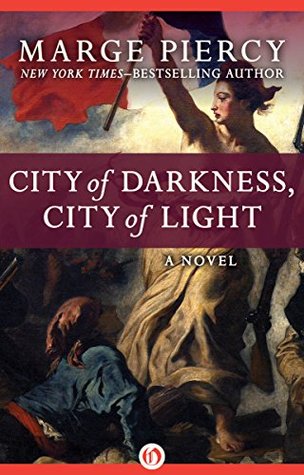 Piercy is a legend among feminists, and her writing was pivotal in my own development during the late 1970s and early 1980s as a newly-hatched adult. When this title, a novel based on the French Revolution, came out in 1996, I put it on my Christmas list and read it hungrily once I received it. When I noticed that it was released digitally this spring, I scored a digital copy from Open Road Integrated Media and Net Galley in exchange for this honest review. It’s a novel that is definitely worth reading twice.
 Seattle Book Mama