Tonight in Jungleland, by Peter Ames Carlin*****

“And then the door flew open, and the wolf of doubt came slinking in.”

Springsteen fans, get your plastic out. Peter Ames Carlin has crafted a riveting Springsteen biography about the making of the iconic album, “Born to Run.” Having read it, I have gained even greater appreciation for the Boss’s rock and roll genius. My thanks go to NetGalley and Doubleday for the review copy. This book is for sale now.

“Born to Run” is Springsteen’s third album; the first and second albums received rave reviews from industry publications, but they sold poorly, and Columbia Records had Bruce on their kill list. He was contracted for three albums, but since they had already decided he wasn’t going anywhere, it was difficult to get them to finance the third album’s production or even listen to it once it was done. Take a brilliant, charismatic singer/songwriter, a talented, loyal band, and a couple of industry influencers that would all but starve themselves in order to see this album succeed, and it was nevertheless a nail-biter.

Mike Appel was Bruce’s manager, and he believed in his client so passionately that he was ready to bend a few rules and take a blow torch to a few others. When expenses exceeded the support from Columbia, when everyone’s charge cards were maxed and there was still a record to finish, he dumped his children’s college funds into the general kitty so that the album could see daylight. Columbia Records had told him they’d review his client’s work if he could make a hit single, so “Born to Run” became the song on which the album’s success was hinged. Then Jon Landau, a much-revered industry journalist, heard Bruce’s music and wrote, “I saw rock and roll future and its name is Bruce Springsteen.” Landau became his producer, and it is due to this holy musical trinity that Springsteen and the E Street Band became world renowned. In fact, they went so far as to send bootleg copies to friendly deejays, since the record company was doing absolutely no promotion, and it worked!

I have never been a sufficiently rabid fan to go into the weeds on this band or any other. I didn’t know who else was in his band, apart from his wife. I also had no idea what was required of anyone attempting to get an album financed and promoted by a major house—particularly during the pre-digital days of the late 1900s. Two things have always drawn me to Springsteen’s music: tunes so impossibly resonant that I am unable to sit still when I listen to them, and the lyrics that speak to the industrial working class. These are not the songs of a pretender. Bruce grew up lean and hungry, and because of that, and his rare talent for communication, the songs ring true.

Springsteen was, and I suspect still is, a perfectionist. The following quote is lengthy, but that seems appropriate, given the amount of time, toil and sweat they put into this album:

Ensconced in 914 in the wee hours, Appel and Bruce seemed to try every idea that occurred to them. A string section. An ascending guitar riff repeating through the verse. A chorus of women chiming in on the chorus. An even bigger chorus of women oooh-ing behind the third verse. Still more strings on the bridge and on the last verse, doing those disco-style swoops, like sciroccos whipping up from the dance floor. They’d work out a part, hire whatever musicians or singers were needed to get it on tape, then mix it all together to see what they had. Sometimes it would stick, sometimes they’d just laugh, shake their heads, and slice it out… Work on the instrumental track went on and on, but it still didn’t rival Bruce’s laboring over the lyrics. He had always put energy into his narratives but the pressure he felt to get “Born to Run” just exactly right pushed him to a whole other level of perfectionism, determined to get every word, every nuance, every syllable, something like flawless. No, exactly flawless. Sometimes he’d be in the midst of a take, sing a few lines of a verse, shake it off, then take his notebook to a folding a chair. He’d find a pen, open the book, look at the page, and just …think. He’d be there for a while. An hour, two hours, maybe more. Meanwhile in the control room Appel would be at his place at the board, Louis Lahav in his. This happened a lot. How long would it be this time? They’d peer through the glass, chat a bit. Fiddle with paperwork, try to see what Bruce was up to. Still staring into space? Reading back through his pages? Writing? Impatience was not an option. Appel was paying the bills but as far as he was concerned Bruce could have all the time he needed. Eventually he’d look up, reach for his headphones, and say he was ready to record. Lahav would roll the tape and they’d begin again.

When I read a musical memoir or biography, I take frequent breaks to stream the music in question. Ames’s narrative has made me appreciate the musician and his band more deeply. I also have to say—as a person that once aspired to become a musician also—that I am dumbfounded by anyone that can write and then play their music without knowing how to read music, or assembling a score to help them recall it later. The same is true for band members that can hear a song and create their own accompaniment without benefit of a written score. As a youngster, I thought such an approach was stupid. Now I stand in awe of it.

If you’ve made it all the way through this review, the book will be a snap. If possible, read it in a time and place where you’ll be free of distraction. It’s worth it. Highly recommended.

Happy Release Day!

I reviewed this outstanding collection earlier, but today it is available to the public. Hill won awards for the first collection, and this is, if anything, even better.

https://wordpress.com/view/seattlebookmamablog.org

Breath Better Spent, by DaMaris B. Hill*****

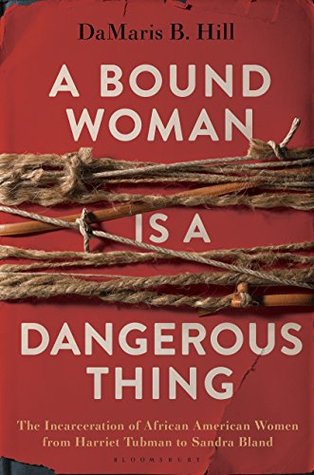
At the start of this, her second published poetry collection, Hill mentions the lessons we have learned from Audre Lord and others. I like Lord’s poetry, too, but it’s time for Lord to move over and make some space. Hill is a powerhouse. Her recent collection about imprisoned women, A Bound Woman is a Dangerous Thing, is phenomenal, and it’s won her awards and many accolades, but this new book, an ode to Black girlhood, is better still. Her perception, intimacy, vulnerability and fearlessness all come through in what is most likely the best poetry collection we’ll see in 2022. My thanks go to Net Galley and Bloomsbury for the invitation to read and review; it becomes available to the public January 25, 2022.

In the preface, Dr. Hill discusses her influences, as well as the way she has divided this collection into sections. She starts by discussing the murder of Breonna Taylor, right there in her home state of Kentucky, and she goes on to point to the increasing incidents of disciplinary measures against Black girls in school, along with a disturbing rise in their incarcerations. Society is failing Black girls, and we need to do better.

In reading this collection, I find I process the poems best if I only read one or two each night. As I go, I highlight the titles of my favorites. There’s not a bad one in the bunch, but I am most taken with the first, “Jarena Lee: A Platypus in A Petticoat;” “How the Tongue Holds,” which is completely horrifying, and and so well done; “What You Talking ‘Bout;” “Hotter Than July;” and one dedicated to a family member that served in the military, “Those Sunless Summer Mornings.” At the end is a series themed around missing Black girls, here and in Africa. Again, I am drawn to a segment dedicated “to my niece and her bullies.” And breaking up the intensity are occasional moments of surprising humor that make me laugh out loud.

The thing that comes through, strong and long, is Hill’s affinity for, and understanding of Black girls. I have written scathing reviews several times, one quite recently, when authors include children prominently in their books without having taken the time to learn the developmental stages of their characters. Here, it’s the opposite. Hill knows girls, and she knows them well and deeply. She mentions that some parts of this collection are “semi-autobiographical,” but her knowledge runs much, much deeper than one gets simply by having been a girl. And so, though this collection will be useful to those teaching or studying courses in Black Studies, Women’s Studies, and of course, poetry, the people that absolutely need to read this collection are teachers in training. This should be mandatory reading for anyone planning to go into education. For that matter, it would also be excellent material for teacher in-services.

Several of Hill’s poems are contextual, dealing with the current political climate, and it’s now, with voting rights in question, cop violence rampant, and racism becoming increasingly overt, that we need books like this to counter the reactionary elements. It’s brave and powerful writing, and if you don’t order a copy, you risk missing out. Highly recommended.

Best Poetry 2019: A Bound Woman is a Dangerous Thing, by Damaris B. Hill*****

Image

A Bound Woman Is A Dangerous Thing, by DaMaris B. Hill*****

This compact but potent collection of poetry is so good that it hurts. DeMaris B. Hill spills America’s historical shame across the printed page with the articulate rage and power of the generations she writes about. My thanks go to Bloomsbury and Net Galley for the review copy. This collection becomes available to the public January 15. 2019. 

The keys to reading Hill’s poetry are in the introduction, and in additional brief introductions at the beginning of each poem. These are broken down into five sections that depict the different ways in which women of color have been bound over the centuries, and Hill points out that Black resistance didn’t start with Black Lives Matter, and it didn’t start with Dr. King and Rosa Parks either. American Black folk have been fighting for their rights for centuries, but some periods have been better publicized and more widely recognized than others. 

The introduction is not long by most standards, but I found myself impatient to read poetry, so halfway through it I skipped to the poetry; read the collection; and then I went back to reread the introduction from the beginning. After that I went back over the poems a second time, lingering over my favorites. The review copy was a rough one, and it’s hard to read poetry if the spacing is whack. Your copy is almost guaranteed to be cleaner, but you may choose to read these more than once anyway. Strong poetry will do that to you. 

Each poem is devoted to an African-American woman that has fought in one way or another, and the conclusion is written for Hill’s son. The book is billed as a collection that takes us from Harriet Tubman to Sandra Bland, which it does, and both of these poems are resonant and in the case of Bland, achingly sorrowful. My own favorites were those written about Eartha Kitt, who was familiar to me, and Ruby McCollum, who wasn’t. The poem about Alice Clifton made me wish I could unread it, because it is harsh and horrible, but in case it wasn’t clear from the get go: Hill isn’t writing to spare our tender feelings. She’s pissed, and she’s right to be. 

These poems contain some of the finest figurative language I have read anywhere.

Highly recommended for those that seek social justice and that love excellent poetry. 

Petty, by Warren Zanes*****

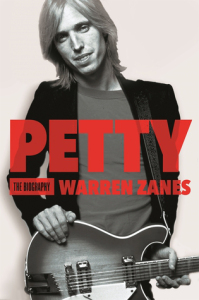
pettyI posted this review almost two years ago, and at the time most of us considered that Petty had a lot of gas left in his tank. Of all the musical memoirs and biographies I have read–and there are many–this is the one I loved best. The loss of this plucky badass rocker hit me harder than the death of any public figure since Robin Williams died, so reposting this here is my way of saying goodbye to him. Hope he’s learning to fly.

Petty, by Warren Zanes*****

1917, by Boris Dralnyuk**

1917I received my DRC for this collection courtesy of Net Galley and Pushkin Press. I thank them for the opportunity to read and review; this compilation of poetry and prose will be for sale on December 1, 2016. What a crying shame it’s so negative.

There are a few of us left out here—dinosaurs, to be sure—that regard the initial two or three years of the Russian Revolution as an inspirational time, a time when the working class and the Russian peasantry cast off their shackles, ran the brutal, entitled royal family and their minions out of power and eventually to a richly deserved death, and took control of their lives and their nation. When I saw this collection, I believed that this perspective would be represented here somewhere.

Instead, we read poetry about the Tsar’s wine. Oh, no! They destroyed all that expensive wine! Give me a break. Millions of peasants freed from bondage, and all we hear about is the wine casks, and some sorrowful reflections that lament the defeat of the Mensheviks—the party that tried to halt the progress of the revolution and create a bourgeois democratic state. All those sorrowful White Russians weeping into their vodka.

Do I have a bias? Of course I do, but unlike our editor here, I admit mine. The introduction to this thing, which is overlong and somewhat duplicitous, tells us that rather than relate the various political positions that were held during this cataclysmic time, we should instead look at feelings, at experiences. But everyone’s feelings during this tremendous upheaval, a time when the news footage at the time of the revolution shows throngs of joyful Russian workers screaming with enthusiasm, is apparently either sorrowful—aw geez, the poor royals—or conflicted. Not one person is glad it happened.

Poetry and prose are, at their root, political, and in rewriting history, Dralyuk demonstrates this. This collection is revisionist dross.

One other comment I’d make is that when editors decide to republish historic writing, they are often deluded as to how much of their own prose readers are looking for. For every piece, for every author, there is way too much introductory narrative. I really just want to read the work itself, not so much Dralyuk’s discussion of them. Had I enjoyed most of the poetry and prose, I would have upgraded this review to three stars and stated that it is hard to find the original work amidst the rambling discussion. Generally, the poem is short, the introduction is long; lather, rinse, repeat. The same is true of the prose.

So to those lonely Marxists out there hoping for literature, for poetry that’s in English and available readily in the US, I have to say, put that plastic away, because this isn’t that.

Only the Road/Solo el Camino: Eight Decades of Cuban Poetry, by Margaret Randall, editor****

Margaret Randall is an old-school feminist and socialist, and I recognized her name when this volume of Cuban poetry became available. Thank you to the author, Duke University, and Net Galley for permitting me to access the DRC, which I received free in exchange for this honest review.

onlytheroadMany people don’t know much about Cuba, the tiny island nation a mere 90 miles from the coast of Florida. The American media has distorted the Cuban Revolution for as long as I can remember. Before the revolution, which took place in 1959, Havana was like Bangkok, a place where little girls prostitute themselves so they won’t starve to death, where wealthy visitors can experience every pleasure, innocent or corrupt, known to humanity but where most citizens have little chance of even having their basic human needs met. Cuba’s alliance with the Soviet Union (USSR) helped the Cuban people defend themselves from US efforts to overthrow the revolutionary government, but the alliance also led to a period of Stalinist repression that darkened artists’ worlds for a period of time. Randall discusses all of this in her introduction. Following the period Cubans call the Rectification Period (reference mine), Stalinist practices were peeled away, and more freedom of expression created a more hospitable environment for artists, in addition to strengthening the revolution itself. In Cuba art is not privately sold as a general rule, and artists receive a salary for what they do, paid by the Cuban people.
Randall’s collection of poetry is encyclopedic, including a vast stylistic range representative of a range of generations, some little-known voices as well as a number of LGBTQ writers. Randall translates each poem and gives a comprehensive biographical note for each poet. If anything, I might have preferred a slightly more stripped down version, but what Randall has done is very scholarly she documents well.

Since this reviewer does not speak Spanish, I cannot evaluate the translations personally, but given that Randall’s background I would be astonished if it were not rock solid.

That said, I also found myself lamenting my lack of Spanish, because I know that the flow of sound is an important part of poetry, and even the best translator can’t rectify this. Those that speak Spanish will likely get more from the collection; both Spanish and English versions are included.

Those that love poetry and are interested in seeing the work of Cubans, and especially those that also speak Spanish, should get this excellent collection. It becomes available to the public October 14, 2016.

Dog Songs: Poetry, by Mary Oliver ****

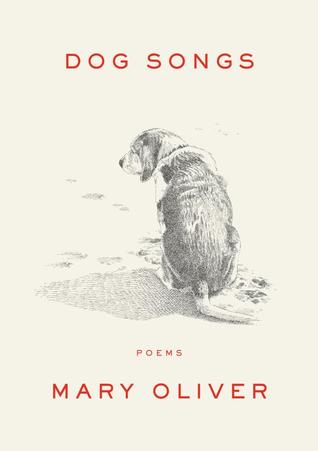
dogsongsWhat, me reading poetry? Not for a long time, actually, apart from this. Not since the 1990s. But this was a gift, and it was given to me by a family member who knows how much I love my own pooch, who has been through unimaginable drama. The pork chop theft and subsequent surgery; the car that hit him; the allergies; the arthritis.

And reader, don’t take my review too seriously, because when it comes to poets that write about nature and animals, I don’t have much discernment. I am an urban type, and my eyes glaze over when I read about the dew on the weeds, and yada yada. But the author blurb says Oliver won the Pulitzer for her poetry back in 1984. Go figure.

Had I known we would be describing dog “excrement” and comparing it to black pearls, I would not have read it with breakfast.

One poem really did speak to me though. I don’t know whether that makes it a good poem; after all, if you check to see what gets attention on YouTube, it’s all cats and dogs. The public is easily led in that direction, and I am one of them. But the poem that got to me was when Oliver described the way her little dog (and on the cover we just happen to have a beagle that looks a lot like mine, the subject of some of her writing) responded when she began planning a trip. She became so overwhelmingly convinced that the little fellow would be “sad, sad, sad” that she canceled the trip. And whereas I have never done that, I have come close any number of times. So for me, the poem was lovely because it reached a common point that I had previously thought must qualify me as ready for the rubber room. Who lets her dog dictate her travel plans?

I haven’t given you much to go on. In this particular case, the gift was spot on, but in ways that were more personal, perhaps, than had to do with the writing. The family member who gifted it to me had also been enormously helpful during our most recent dog-crisis, so it represented something that she and I had shared.

Unless you are very fond of poetry and pets, you may not want to spring full cover price for this one, but if the circumstances warrant, it’s a very nice thing to give someone who is much attached to their dog, or who is (dreadful thought, but it happens) grieving one.

I hope not to be among them for years to come!