 Take a former journalist; make him a paramedic in a high-poverty, high-danger area for a decade; then turn him loose again to write about it, and he will play his readers like violins and make us like it. A Thousand Naked Strangers is a high octane, gloriously visceral ride in an ambulance and out of one, through Southeast Atlanta, Georgia. Thank you to Net Galley and to Scribner for the DRC. Since I read multiple galleys at a time and I loved this one best, I tried to feed it to myself in small nibbles, like Mary Ingalls hoarding her Christmas candy, but it was just too riveting and I could not stay away.
At the memoir’s beginning, our guy is just looking for work. With just a few months of training, he can become an EMT. His journalistic career wasn’t working out as he had expected, and he found himself working as a paperboy instead, delivering the newspaper for which he had written. That’s about as rock bottom as it gets.
He becomes an EMT; then he sets out to discover whether he wants to commit to the extra year and a half of schooling required become a medic. Once in, he’s hooked, not so much in spite of the risk and unpredictability of the job, but because of it.
And when you think about it, what other job pays so very little, involves so much danger, and gets so little respect? Teaching comes to mind, but being a rescue worker trumps even that, particularly for the low pay and insane hours–holidays missed–to do it, a person needs to be young, and to be an adrenaline junkie. And for a decade, Hazzard fits that description.
When he starts out, he is callous, as youth often are, speculating with his partner about what constitutes the perfect call. The perfect call, to their way of thinking, has requirements that are measured in the number of dead and wounded, the amount of danger. Does the patient have to survive in order for it to be a perfect call? Nah.
Over the years he matures, and he becomes more respectful of the patients with whom he deals. He talks to addicts, hookers, and children in a way that is forthright and kind. The job takes a lot out of him, but it also gives him a lot. He grows up. He deals with the dead; the nearly dead; those that are feigning death; and those that are just looking for a free ride somewhere. He delivers babies in record numbers, and he transports a guy on a roof down to the ambulance. He sees just about everything, from suicides to homicides, from the domestically abused, to the kid with a roach in her ear. He plays the wildest imaginable pranks, and once in awhile he gets called on the carpet for it.
Some of the incidents described in this memoir are just drop-dead funny, if you’ll pardon the pun, and I laughed out loud more than once. Some are incredibly dark. Some just left me with a feeling of awe. But although the tone changes many times, the pacing is absolutely consistent. Hazzard’s journalistic background shows; every single word is there for a reason. It is tight, taut, and urgently compelling, all the way through.
So it’s entertaining, but it’s also educational. I didn’t know the distinction between an EMT and a paramedic before I read this memoir. I also didn’t know that not a holiday goes by without someone having a heart attack. I didn’t know that just about everyone, regardless of their level of intoxication, says they’ve had two drinks. And I didn’t know about the tension between paramedics and firefighters, between paramedics and cops.
There’s more, but you can’t have it all in this nifty review; I’ve given you enough to move forward. If you want your own job to look easier, get this memoir. If you’re retired and have a little more time to read now, get this memoir. If you are staying home with little kids and wonder when you should call an ambulance and when you should deal with your own mess, get this memoir. And if you are considering going into the field yourself? Get this memoir!
It’s for sale January 5, 2016, but you can order it right this minute.


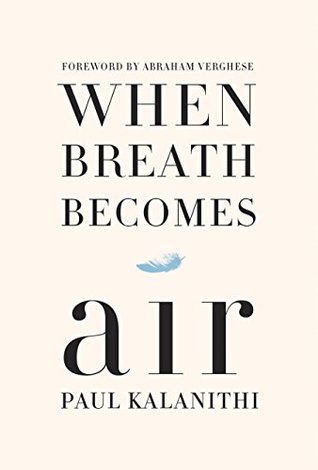 Paul Kalanithi was a promising young physician who had nearly finished completing ten years of training as a neurosurgeon when he was diagnosed with Stage IV lung cancer. His twin ambitions had been to become a neurosurgeon and to write. When he realized how little time was left of his too-brief life, he decided to spend his remaining time writing this book. Thank you, Net Galley and Random House Publishing House for the DRC. Dr. Kalanithi died in March 2015, but he left this luminous memoir behind as part of his legacy. It is available to the public January 19, 2016.
 Paul Kalanithi was a promising young physician who had nearly finished completing ten years of training as a neurosurgeon when he was diagnosed with Stage IV lung cancer. His twin ambitions had been to become a neurosurgeon and to write. When he realized how little time was left of his too-brief life, he decided to spend his remaining time writing this book. Thank you, Net Galley and Random House Publishing House for the DRC. Dr. Kalanithi died in March 2015, but he left this luminous memoir behind as part of his legacy. It is available to the public January 19, 2016.
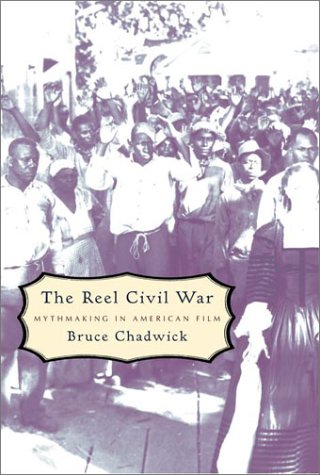 I found this gem at my favorite used bookstore in Seattle, Magus Books, which is just a block from the University of Washington. Its strength, as the title suggests, is in tracing the story of the American Civil War as told by the cinema. Those interested in the way in which movie impacts both culture and education in the USA would do well to find this book and read it.
 AM Rosenthal was a journalist, but in the 1960’s he was moved to write this relatively brief book—if fictional it would be considered a novella—about the failure of neighboring New Yorkers to come to the aid of Kitty Genovese, a woman that was murdered in 1964. I received this DRC free of charge from Net Galley and Open Road Integrated Media in exchange for an honest review.
 If you have any interest whatsoever in African-American history; American history in general; or Black Studies, this book should already be on your shelf. It is one of the most important volumes to have been written in decades, a comprehensive yet readable and enjoyable look at a migration that dwarfs the smaller California Gold Rush and Dust Bowl migrations in size and scope. Black folks started to leave the south as Jim Crow became entrenched. They did so often at their peril; Caucasians who wanted that cheap and servile day labor were so violently opposed that Blacks planned their departure, in many cases, with the utmost secrecy, buying the train ticket from their own backwater hamlet to a nearby town so no one would suspect they really meant to go to Chicago, Milwaukee, Washington DC, New York City, or any of a number of places in the north and west where there was no official Jim Crow.
 Seattle Book Mama