
“On earth, as in heaven, man must submit to an arbiter…He must not throw off his allegiance to his government or his God without just reason or cause. The South had no cause…Satan and the rebellious saints of Heaven were allowed a continuous existence in hell merely to swell their just punishment. To such as would rebel against a Government so mild and just as ours was in peace, a punishment equally would not be unjust.” –William Tecumseh Sherman (quoted on page 19)
 I received this excellent Civil War tome from one of my sons as a Christmas gift. I don’t request a lot of books anymore because it’s so easy to get others free, but I asked for this one and I am glad I have it. I’ll be reading more by this guy. Despite one fact that I dispute—for which the citation also is sketchy—and some crummy maps, there’s no way to deny five stars here. The topic is among my favorites, and of course Sherman is my all time favorite general, hailing from a time when the United States government still attracted and produced heroes.
Each time I pick up another book on Sherman’s march to the sea, I question whether there is any new information to be had. Here Trudeau deals with this neatly by referencing participants other than Sherman, most often Major Henry Hitchcock, who was Sherman’s aide-de-camp. There are lots of meaty quotes from Sherman and those alongside him, and occasionally those opposite him. There’s one royal stinker of a reference made by an Atlanta doctor, who said a couple dozen very sick and badly injured men were dumped on him by Sherman personally, who said if they survived the rebels could consider them prisoners. I call bullshit on this, not only because of the source but also because it runs contrary to everything I know about Sherman, whose troops were singularly loyal to him largely because he took great care of them and he led them to victory.
Sherman’s memoir, which I heartily recommend to you, deals with the left column with which he traveled. The right column goes largely unmentioned there, and Trudeau fills us in. This was the column that took the most punishment, and was responsible for heading off enemy cavalry most of the time.
A mark of a terrific history book is that no matter how long it is, the reader emerges wanting to read something more, either by the author or on the subject. I have a couple of gift certificates going unused, and it’s entirely possible I will spend one of them on another book by this writer. The index and other references at the back of the book are useful also.
Highly recommended to American Civil War buffs.
 I received a review copy of this book from Net Galley and Three Hills Publishing, which is affiliated with Cornell University, free of charge. This book is now for sale.
 Ed Scott Junior was one of the first Black catfish growers in the USA, a “Delta titan,” and he was the very first to own a catfish processing plant. My thanks go to Net Galley and the University of Georgia Press for the review copy. It’s inspirational, well written, and well sourced. The book will be available to the public tomorrow, July 10, 2018.
 Nelson Mandela’s hundredth birthday approaches. His grandson Ndaba, whom Mandela raised following his release from prison, talks about growing up with the titan that led the movement against Apartheid in South Africa. He reflects on Xhosa culture and the role that it played in the struggle and in his own development, and it is within this framework that he talks about his grandfather, and about the future of his people.
 Thank you to Net Galley and Sourcebooks for the review copy, which I received free of charge in exchange for this honest review. This book is for sale now.
 This one is a crushing disappointment. I seldom buy books anymore, but I was so pumped about this collection that I went all out and got a hard copy, expecting to love it enough to keep it in my home library forever. Sadly, this isn’t what I expected.
 Where were you when you heard that Robin Williams had died?
 3.5 stars rounded up. Thanks go to Net Galley and Doubleday for the DRC, which I received free and early in exchange for this honest review.
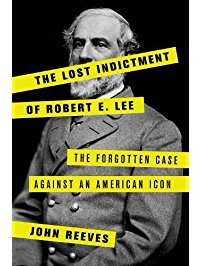 I’ve never understood why so many Americans revere the memory of Robert E. Lee, the general that turned Lincoln away at the outbreak of the American Civil War and instead commanded the treasonous Army of Northern Virginia. When I saw this title, I leapt at the chance to read and review it. Thanks go to Net Galley and Rowman and Littlefield Publishers for the DRC. The book will be available to the public June 1, 2018.
 Cooper has had enough, and who can blame her?
 Seattle Book Mama