The Forgotten Girls, by Monica Potts***

My thanks go to Net Galley and Random House for inviting me to read and review The Forgotten Girls, by Monica Potts. I generally enjoy reading books that focus on the working class, and so I thought this would be a good fit. And it might have been, had it been better written.

In broad contours, it’s a memoir that examines the lives of Potts and her best friend, Darci, both of whom grow up in a tiny, isolated town in the Ozark Mountains. The community is long on religion and red hats, and short on jobs, opportunity, ambition, and encouragement for girls to make something of themselves. Nevertheless, Monica, whose mother has raised her with the expectation that she complete her high school education, go to college, and then live somewhere else where there are more possibilities, has done all of those things, while Darci, who is every bit as talented and has just as much potential, is raised by a dithering mother that lets her do whatever she chooses because she dislikes conflict, and who has no expectation that her daughter will make a better life for herself, since she herself did not.

Okay.

Potts wonders why she made it out of there and Darci didn’t, and yet I’m not seeing the mystery, nor anything that’s all that different from what’s happening all over the country. And indeed, part of the time, Potts discusses this fact, that it is happening in many places that lack resources and that don’t prioritize education. And so, sometimes the story seems to be a sociological study that uses Monica and Darci as examples, and at other times there is so much anguished self-flagellation that I find myself wondering why she thinks the public needs to hear about her friend’s failure to thrive, and whether this isn’t mostly therapeutic writing for the author’s own benefit.

In other words, the book seems like a lengthy treatise in search of a thesis. We wander in and out of both girls’ lives, with a good deal of attention paid to the death of Potts’s sister, but there’s no real direction or clear purpose that I can find.

In the back of my mind, I can hear choruses of other readers asking whether this situation is considered special because it’s about white girls. Nobody makes a fuss when girls in rural areas that are Black or of Latinx heritage fall through the cracks; hell, it’s been happening for more than a hundred years.

Many other reviewers seem to find merit here, but I confess I don’t see much. If you choose to read this one, I suggest getting it free or cheap.

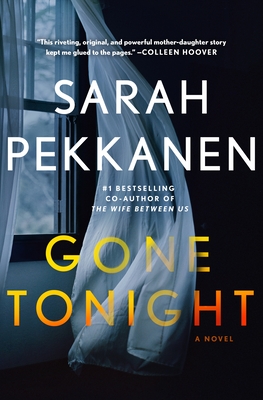
Gone Tonight, by Sarah Pekkanen*****

I’ve been reading and enjoying Sarah Pekkanen’s novels for years now, but Gone Tonight is far and away the best of the bunch. My thanks go to Net Galley, Macmillan Audio and St. Martin’s Press for the invitation to read and review. This book will be available to the public August 1, 2023. If you love psychological fiction or thrillers, you should order it now.

In her previous thrillers—the ones I’ve read, at least—there is similarity. She’s written about women ganging up on one woman, and love triangles, or what appear to be love triangles. This one is different, and it’s better. Here we have just two characters, mother Ruth and her young adult daughter Catherine. The unseen character is James, Catherine’s biological father. Throughout the story, Ruth is vigilant, always watchful. She’s afraid she’s being stalked, or investigated, or otherwise watched. Ruth isn’t merely careful; she keeps a bug-out bag ready for each of them, varies her routine to where she really doesn’t have one. She doesn’t take the same exact route to any of the places she frequents regularly. To see and hear this character, one would think that the CIA, the Mafia, and all of the cartels were out to get her and kill her.

Early in the book, Ruth provides Catherine with some hard news: she has early onset Alzheimer’s. I tell you this in particular, because when I saw it, my eyes glazed over with boredom and I thought that this thriller wasn’t going to thrill me at all. I nearly slid the book onto the bottom of my stack, and that would have been a terrible mistake, because this is *not* an Alzheimer’s story.

Catherine has never met any of her relatives; Ruth lies to keep her from investigating them. But now Catherine is an intelligent adult, and there is the internet. It’s mighty hard to keep a secret these days, and that’s rough for Ruth, because she’s got a lot of them, some bigger than others. As Catherine digs, she is surprised, and this makes her dig even harder. She keeps finding things, and Ruth keeps changing her explanations. It isn’t long before Catherine realizes she’s been lied to, and she stops telling Ruth what she discovers.

The format Pekkanen uses is an effective one, and it’s easy to follow. She changes the point of view in the standard way from one to the other and back with both sides told in the first person, but the tricky part is how to provide Ruth’s narrative. Catherine can give us her first person narrative and we think nothing of it, but Ruth talks to no one except her daughter, and even so, she lies to her daughter all the damn time, so under what circumstances will she spill her guts to us? The solution isn’t all that original, but it’s effective and reasonably believable. Ruth has a secret diary that she’s writing for Catherine to have when Ruth is gone. It requires me to overlook the unlikelihood of someone as obsessively private as Ruth sitting down and documenting the whole shooting match, including names and dates in writing, but this is such a fun book that I set my momentary disbelief aside and keep reading, because I have to know what happens next.

Once we are past the Alzheimer’s passage, my attention is rapt, but friend, the last ten percent of Gone Tonight is one for the ages! I rarely say this, but this creepy little novel would make an amazing movie or miniseries.

Actor Kate Mara reads the audio version, and she does a fine job. Highly recommended!

If It Sounds Like a Quack, by Matthew Hongoltz-Hetling*****

Pulitzer Prize finalist Matthew Hongoltz-Hetling takes on the weird world of alternative medicine and the medical freedom movement in his new book, If It Sounds Like a Quack. My thanks go to Net Galley and PublicAffairs for the review copy. This book is available to the public right now.

The fact is, I have—or I had—no particular interest in alternative medicine, but I had read Hongoltz-Hetling’s last book, A Libertarian Walks Into a Bear, which was well researched, well written, and most importantly, completely hilarious. I have reviewed over 800 books, but the number of those that I later purchased is smaller than 10; yet I bought that book to give as a Christmas gift. So when I saw that he had another book available, I didn’t hesitate. And I wasn’t disappointed.

The book describes the bizarre programs and treatments espoused by six individuals: Larry Lytle, Toby McAdam, Robert O. Young, Alicja Kolyszko, Dale and Leilani Neumann, and The Alien. The seventh player in each section is America, and that’s where we see what U.S. laws say, and what enforcement, if any, comes down on these snake oil salesmen.

The opening section, the first of four, introduces each of these players and explains what led to them going into the businesses they have chosen. Among the various One True Cures are a laser salesman, a leech peddler, faith healers, a supplement seller, and a Mormon missionary that resurrects a long-dead theory about germs. There’s also a pair that develops a health drink; one of them is human, and one is not.

The author suggests that the success of these characters—and some of them have become wealthy beyond belief—has a good deal to do with the state of standard medical care in America. Nobody trusts Big Pharma. The disparity of what treatments we can expect is so great that in one New York hospital, there’s a wait time in the ER of nearly 6 hours for most people, whereas the wealthy can get a private room with high thread count sheets and a butler. One can see why many people conclude that anything must be better than this; yet, they are mistaken.

Apart from his sterling research and documentation, and his clear, conversational tone that at times caused me to forget, momentarily, that I was reading nonfiction, the thing that sets Hongoltz-Hetling apart from others is his ability to shift seamlessly from prose that is falling-down-funny, to that which is not only serious, but tragic, without ever breaking the boundaries of good taste. Because he did it so brilliantly in his last book, I watched for it this time—and I still couldn’t catch the segue way from one to the other.

Because I had fallen behind in my nonfiction reviews, I checked out the audio version from Seattle Bibliocommons and listened to it while I watered my plants. It is very well done, and I had no problem following the thread. The only downside is that the printed version has some humorous puns by way of spelling that the listener misses.

One way or the other, get this book and read it, even if the topic isn’t inside your usual field of interest. Highly recommended to everyone.

Deliver Me from Nowhere, by Warren Zanes*****

I’m a diehard Springsteen fan and also loved Zanes’s biography of Tom Petty, and so when I saw this book, I was all in. My thanks go to Net Galley and Crown Books for the review copy; this book is for sale now.

Springsteen, yes; but why Nebraska, of all albums? Nebraska just may be the one song that leaves me cold. In the early portion of this story, I wasn’t as enthused as I expected to be, but as the narrative moved forward, I totally got it. Nebraska was written and performed during a crisis period in Bruce’s life. He had grown up in horrible, grinding poverty, and now suddenly he had all this fame and money. On the outside, his life was looking mighty good, but inside, the walls were crumbling. He was clinically depressed, sometimes suicidal, having never dealt with the traumas of his formative years. He rented himself a farmhouse and went there by himself to write songs and tape some demos. He took no friends or family, nor his band; he took one guy along to see to his creature comforts, and that guy’s second job was to be invisible. For most of the book I was convinced that the farmhouse was in Nebraska; nope. New Jersey. And it seems that my lack of enthusiasm for this music was not atypical:

“Nebraska was going to ask a lot of the listeners. If they loved Springsteen for the sliver of hope and possibility of redemption his songs offered, they were out of luck with Nebraska. If they loved the sound of the E Street Band and the way Springsteen led the group, that, too, was gone. If they loved the way he produced and arranged the songs into recordings rich in dynamics, nope, it wasn’t there in the same way…This was the sound of a man forcing out songs while held under water, a rough hand on his neck.”  

The album’s structured to tell the story of murderer Charles Starkweather and his accomplice, Caril Fulgate. He tells the story without judgment, and considers the characters to be a pivotal part of his work.

Here’s the fun part. As Springsteen wrote and recorded the songs, one after another, right there in the master bedroom of the house he was renting, he didn’t worry about any of the finer points of recording, because these were essentially supposed to be demos. For musicians that don’t read or write music in the formal manner, the demos are critical. How will you remember the song you came up with when it’s time to put the album together? You need a recording. So there was Bruce, perched on the end of the bed, with the water damaged Panasonic boom box nearby. He pops in a cassette and commences recording. He writes prolifically, practically vomiting up song, after song, after song. Sometimes you can’t feel better until you get it all out of your system, right?  

But later on, when it’s time to do the mixing and whatever technical processes usually go into a professional recording—which Zanes describes in an easy to follow manner—nothing works. After trying every imaginable method, they end up publishing the music on the cassette, exactly as he recorded it.

Those that want the full story of Springsteen’s life should read his autobiography, Born to Run, which is excellent. But there’s a lot to recommend this smaller little slice of the least known part of this rock and roll icon’s life. For those that love Springsteen’s music, and for those interested in rock music in general, or the technical side of recording, this book is highly recommended.

Bad, Bad Seymour Brown, by Susan Isaacs*****

Susan Isaacs has been writing bestsellers since the late 1970s, and she’s hilarious! I’ve been a fan since then. During that earlier time, a period of third wave feminism, her tales often featured rotten husbands and ex-husbands reaping what they’d sown. Her creativity and trademark snark have always kept me running back for more. Her new novel, Bad, Bad Seymour Brown is the second in the Corie Geller detective series, and it’s deeply satisfying. My thanks go to Net Galley and Grove Atlantic for the review copy. This book is for sale now.

Seymour Brown was an accountant for the Russian mob. “I’ve never heard of a violent accountant before,” my mom observed. “At worst, they’re a little pissy.” But by all accounts, Seymour was a rotten guy. “He made regular bad look good.” Bad to everyone, that is, except his five year old daughter April, his only child, for whom the sun rose and fell. But Seymour’s family was tucked away for the night when an unknown assailant came and burned the house to the ground with the Browns inside it. Happily, April made it out the window alive. The case was never solved.

Now April is an adult, a professor in film studies. She’s put her past behind her, and now, all of a sudden—someone is trying to kill her! She contacts the detective that was assigned to the murder investigation; he’s retired now, and he is Corie Geller’s father.

All of the things that I love about Isaacs’s work are here in abundance. The story is full of feminist moxie—Geller isn’t an assistant to her father, but rather retired from the FBI in order to raise her stepdaughter—she is his partner in this new investigation, and as it happens, in the new detective agency they’ve begun. But another thing I’ve always loved about Isaacs’s prose is her trademark snark, and I snickered and chortled all the way through this engaging novel. The pages flew by, and I found myself looking for extra reading time when I could sneak off to plunge in once more. Susan Isaacs writes the most creative figurative language I’ve seen anywhere. She’s funny as hell.

You can read this book as a stand-alone, but I’ll tell you right now, once you read the second, you’ll want to read the first one, Takes One to Know One also.

Highly recommended, particularly to feminist boomers.

Unnatural History, by Jonathan Kellerman****

Unnatural History is the 38th entry in the wildly successful Alex Delaware series. I began reading it soon after the first volume was published; When the Bough Breaks came out in 1985, so the series has been going strong for close to forty years, and very well may continue for many more. My thanks go to Net Galley and Random House Ballantine for the review copy. This book is for sale now.

For the uninitiated, Delaware is a child psychologist; Kellerman is also a child psychologist, and his earlier books incorporated his area of expertise, placing him in a subgenre all his own. I’ve wished many a time that he would write more books along these lines, but he hasn’t done a lot of it lately, and in this book,  there are only glimpses of it. Nevertheless, the story held my attention.

I’m not giving you much of the plot, because there’s a synopsis for that, but in large strokes, the story is about the murder of the son of one of the world’s wealthiest men. He’s an odd duck, not terribly bright; his mother is dead, and his father is a hands-off parent, to say the very least. Our victim has unlimited access to money, and that’s about it. He makes a splash in the art world by photographing homeless people in costumes that reflect their deepest dreams. Find a derelict street person, and find out what they always wanted to be. A pilot? A surgeon? A ballerina? Offer them the chance to be photographed as if that’s what they are now, and give them a juicy wad of cash for their trouble; then send them back to the streets where they came from.

The family structure for this strange young artist is truly bizarre; the father marries, and he fathers a child. One child, no more. Then, a couple years later, he divorces his wife and does the same thing again. The children of these unions are never introduced to one another.

Thus, Milo has plenty of meaty material to work with, and with such strange circumstances, Alex is tapped to analyze the participants.

Delaware works part time as a kiddie shrink, often consulting when there is a court case involving insurance claims or divorce. However, he still has plenty of time to work for the Los Angeles Police Department, consulting on cases where a psychologist’s input is valuable. His BFF, Milo Sturgis, is a homicide detective, spurned by others in the department because of his sexual orientation. Often as not, Delaware ends up riding along as an unofficial partner.

This aspect of the series—the almost-a-cop—is usually where things start to slip a little, when anything does. I want to buy the premise, and so I can go along with it as long as it doesn’t become too obviously unrealistic. We all want to be entertained, right? So when Alex trots out to the patrol car and slides in beside Milo, I smile and nod, and I push away the little skeptic within me that says, “But really…?”

There have been a few Delaware books that have gone sideways for me for that reason, books where Delaware puts on his Kevlar vest and packs a revolver. I am happy to say that this isn’t one of them. In fact, the manner in which these details are dealt with is one of its strengths. First of all, there are times when Milo wants Alex to go with him, but Alex is busy. He has to be in court that morning. Thank you! Then later on, toward the climax, there’s a situation that (no spoilers) shakes out in a way I find the most believable of anything Kellerman has written. It’s satisfying, without sacrificing the fun of the story.

The whodunit at the end might be the nicest touch of all.

I recommend this mystery to Kellerman’s faithful readers, and to those that love the genre.

Now Is Not the Time to Panic! by Kevin Wilson****-*****

Now is Not the Time to Panic is, according to its author, Kevin Wilson, “a book about friendship, about memory, and about what it means to hold on to the person who we were, even as we become someone else. It’s about the ways in which art is the door that lets us walk into a new life, one that never seemed possible.”

Frankie is kind of a quirky kid, friendless and grieving her parents’ divorce and her father’s abandonment of his kids. She has nothing but time this summer, and so when Zeke, an even quirkier new kid, moves into the tiny town of Coalfield, Tennessee, the two are drawn together.

My thanks go to Net Galley and Ecco Publishing for the review copy. This book is for sale now.

Frankie invites Zeke over one day; her dad has flown the coop, and her mom is at work, so in order to make it clear that she hasn’t invited him over for carnal purposes, Frankie talks to him about her love of writing. Zeke says that he likes to draw, and so together, they make a poster. The words are Frankie’s, and they are indeed well written for a kid of sixteen years: “The edge is a shantytown filled with gold seekers. We are fugitives, and the law is skinny with hunger for us.” Zeke fills in the rest of the page with his artwork, and for good measure, they prick their fingers and comingle their blood on the poster. Then they dig out an old photocopy machine in Frankie’s garage, and make copies with which to furtively festoon the whole town. (After all, Coalfield isn’t a big place.) They don’t tell anyone it’s theirs, and enjoy the reactions to their guerilla art as sly observers.

The two teens share a lot in common. Both are outsiders; both are creatives; and both are living through the implosions of their families, with fathers that cheat and then leave, and mothers that are beside themselves with anger and shame.

Once the posters become noticed around town, rumors begin, and then copycats come along and make improvements, sometimes. There’s a hysterical piece in the local paper suggesting that their work is Satanic. Frankie and Zeke don’t say one word to anyone. They watch and they listen; they talk about it only with each other.

The crafting of these two characters, and their relationship, is well done, and I ache for both of these kids. The only time I see character slip is with regard to Frankie’s attitude toward sex. Her dispassionate take on it—she isn’t sure she really wants to, but maybe she should just do it and get it over with? Is not a mindset I’ve ever seen in a teenage girl, and believe me, I’ve known plenty of quirky ones. No, that’s a male attitude, and I suspect that Wilson would do better to use male protagonists, or else run his female ones by several very honest females in his chosen field, prior to publication.

As the summer goes on, I keep expecting the two to launch another joint project, but they don’t. She does some writing, and he draws, but there is no sequel, no follow-up. The poster is the poster. Shantytown, gold seekers, fugitives, hunger. Boom. That’s it. But years into the future, Frankie is still putting these damn things up. The heck…? I believe this of her; she is one strange person. Zeke’s mental health deteriorates that summer, and where that goes is completely credible. Those that work in the field will recognize Zeke, who is by far the better drawn of the two main characters.

This fascinating novel can be enjoyed by young adult audiences, because both of the protagonists are teenagers; however, this is also fiction that can be enjoyed by anybody. If you don’t read YA—and the truth is, I don’t, not anymore—you can still appreciate this one, and I recommend it to you.

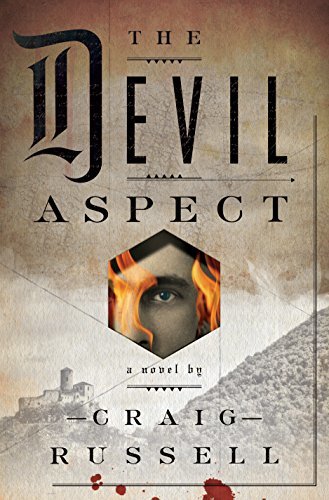
The Devil Aspect, by Craig Russell

3.5 stars, rounded upward. I read this creepy tale during the last half of October, and it is indeed a good way to get into the Halloween spirit. I am disgracefully late with my review—3.5 years late, as it happens—but I do thank Net Galley and Doubleday for the review copy. This book is, of course, for sale now.

Here is what drew me in. This is horror of the old school variety, with gothic towers and half a dozen criminally insane inmates. It’s set in Czechoslovakia, which I seldom see. The flavor, overall, is similar to the stories we told as children around campfires or late at night during slumber parties. Of course, it has a more adult approach, but even so, this is classic horror.

Our protagonists are Viktor Kusarek, a Jungian psychiatrist who comes to the asylum to conduct experiments on the patients, or inmates, in order to prove a theory, and police chief Lukas Smolak, who is pursuing a serial killer that is running amok in Prague.

This is a story that is more about the journey than the destination, though perhaps not intentionally so. Hearing about each of the six savage killers as Viktor interviews them is vastly entertaining. There’s one spot about a third of the way in, where a patient, partially sedated, is explaining that he is innocent, and also that a guest sorely provoked him. Always so critical! He was determined to impress her with his cooking, and indeed, the longer he worked at the stove, the more reasonable she became. Viktor points out that the guest had stopped complaining because he had her head in the skillet. I laughed out loud! The middle of this novel is unmissable.

There are three things I would change. First, the book is a little overlong, and could bear some tightening. Second, the whole Nazi menace has nothing to do with the problem or its resolution. It seems more like window dressing than anything else, but it doesn’t add a thing to the story. If I were the editor, I would cut that part of it out and voila, some of the tightening would be achieved. And third, the ending is so, so predictable. I stuck with the story until around the 85 percent mark, at which point I figured all hope of an ending other than what I expected was pretty much gone. At that point I skipped to the end. Yup. There it was. I would have liked a less formulaic ending.

Still and all, fans of old fashioned horror could do a lot worse. If this sounds like your kind of book after everything I have said, then go for it. I am old and cranky, and what seems obvious to me might seem new and clever to those that haven’t read many books of this ilk. And one way or the other, getting there is a lot of fun.

Elvis and Me, by Priscilla Presley****

Priscilla Presley is the ex-wife of the king of Rock and Roll. I was a teenager when he died, and neither I nor most of my peers were fans; in the event his name did come up, we’d invariably ask, “Wait. Do you mean young hot Elvis, or old pudgy Elvis?” But I do love a good memoir, and those written by or about musicians are high on my list. My thanks go to Net Galley and Macmillan Audio for the review copy. This audio version of the author’s 1985 memoir is for sale now.

The relationship between Priscilla and Elvis took place in a completely different time, with completely different sexual mores and assumptions. That said, this was still a truly messed up pairing. Today, Elvis would probably be considered a predator, but within the context of the American South in the 1950s and early 1960s, he was regarded as a romantic, and women threw themselves at his feet. A quick online peek at old film and television clippings says it all.

Priscilla grew up in a strict but loving household. Her stepfather, the only father she knew, since her own died when she was an infant, was a military man, and so the family moved often. It was while they were stationed in Germany that one of Elvis’s employees saw Priscilla and invited her to meet with Elvis, who was doing his own tour of duty.

I have to feel for the bind her parents were in. On the one hand, she was just fourteen years old, and Presley was twenty-four, a grown man. On the other hand, if they refused to let her go, she would never have forgiven them; this was an invitation that literally millions of girls yearned for. Seeking a happy medium, her stepdad set boundaries: they were to be chaperoned, never alone together, and he wanted her home at a certain time. He groused about the fact that someone other than Elvis would be transporting her, but the reason was a legitimate one: Elvis could not drive himself anywhere without the car being mobbed. It was genuinely unsafe.

Rather than being the single event that the family anticipated, Elvis made their visits regular ones; when her parents balked, Elvis spoke to them personally, turning all of his charismatic charm on them, and telling them everything they wanted to hear. Most of it was untrue, of course, but the one thing he adhered to was not having sexual intercourse. During this time period, the Madonna-Whore dichotomy was alive and well, and any girl or woman known to have sex outside of marriage was likely to be ostracized by former friends and in some cases, family. It’s hard to imagine now, but at that time, no birth control pill had been invented, and a pregnancy outside of marriage was likely to ruin a young woman’s entire life.

Priscilla reads this memoir to us herself, and that makes it much more fun to hear. As we age our faces and our bodies change a lot, but our speaking voices change very little. Remembering some of the silly moments from that time, the author lets out a brief, girlish giggle, and it’s almost impossible to believe that she is now a grandmother.

Priscilla acknowledges that this was a monstrously unequal relationship. Elvis dictated whom she could talk to, what she wore, and sometimes even what room in the house she was supposed to be in. At one point, when he is going to be touring for months on end and she will be left at home with his grandmother, she goes out and gets a job. She’s so proud of herself. He makes her quit immediately. When he phones from the road, she had by God better be there. Priscilla compares this to Pygmalion. He has all the power, and she is in his thrall before she has even had a chance to grow up.

I have read two other Elvis biographies, and as dreadful as all of this sounds, the other authors were less gentle. In fact, this is part of Priscilla’s stated reason for deciding to tell her own story.

There are advantages to reading this particular biography. The official version of events is often what is published, but Priscilla is positioned to know the real story, more often than not. For example: when Elvis is drafted, the official story is that, although stars of his caliber are often offered soft assignments that involve singing to the troops, or making inspirational training films, Elvis insisted on doing the same job as every other American man.  On the other hand, Priscilla states that this is all his manager’s doing, because it will make Elvis appear noble. Enough new songs were taped in advance for there to be regular new releases on the radio throughout his tour of duty; toward the end, Elvis feigns illness because he’d prefer to be in the hospital being swarmed by nurses than marching around and getting dirty.

Her memory of Elvis, despite everything he put her through, is mostly a tender one. The spiral that led to his death, his issues with mental health, back before much was known, coupled with the immense number of strong prescription drugs he used to wake up in the morning and go to sleep at night—or to NOT go to sleep at all, and just stay up, night after night—set him up for relationships with unscrupulous characters, and nobody could rein him in, because he was the King.

Recommended to those that like vintage rock music or well-written memoirs of famous musicians.

Liberating Lomie, by Saloma Miller Furlong*****

Saloma Miller Furlong is the author of two memoirs that focus on her decision to leave the Amish faith and community; this is her third. I received a copy for review purposes from the author; this book is for sale now.

Furlong hasn’t had the typical Amish childhood. In her earlier works, she explains that her father was unable to function normally; given to sudden, inexplicable rages, he was a frightening man when he was angry, and he was angry often. Sometimes his rages occurred at predictable times; other times, they came from nowhere. He was unable to do the necessary work to support the family, as is usual in Amish households, and Saloma’s mother, siblings, and Saloma herself had to scramble to pick up the slack. These things are described in Why I Left the Amish and Bonnet Strings. Her experience is also featured in two PBS Experience films, “The Amish,” and “The Amish Shunned.” These documentaries are available free of cost online.

None of Saloma’s books provides light reading; her experience is a brutal one, her childhood traumatic. She is assaulted numerous times, and some of these involve sexual assaults. She tells her mother, who does nothing to protect her. And so, if you are looking for a book that details the typical Amish life, its cultural and religious practices, what technology is acceptable and what is forbidden, and so forth, this is probably not the book you’re looking for, although the two documentaries mentioned above will provide a good overview. Instead, her books demonstrate what happens when an Amish household or some of its members are in crisis.

The extremity of her trauma is glaringly obvious by the fact that her first two memoirs completely overlook her mother’s own brutality towards Saloma, as well as her complicity in assaults by Saloma’s father and older brother. For more than fifty years, this author buried this part of her own trauma, the betrayal she experienced by the person most responsible for her protection as a child. Only recently has she permitted herself to acknowledge it within her own mind, let alone write about it. In the email she sent me requesting that I read and review this new memoir, she told me that she wishes there were a way to recall every single copy of that first memoir, because it omits so much. But I believe one can also read it, and for that matter, all three of these books, with the understanding that we learn as much by what is not said, as by what is.

Saloma’s decision to leave home, to abandon the culture that is all she’s ever known, is driven by two factors. The first and greatest, of course, is self-preservation, the need to find physical safety. But another strong motivator is intellectual inquiry. Amish girls do not attend school after grade 8. This isn’t a general rule; it’s an absolute one. In rare cases an exception may be made for a young man, if his course of study will ultimately benefit the community, but at the end of eighth grade, girls are done. Informal study and reading are also nearly impossible. Amish homes contain the Bible and essential Amish teachings; novels, art books, even resource materials have no place there. An Amish family member that is curled up with a book or newspaper is a slacker at best, using time that could instead be used to benefit the family. At worst, it is a sign of moral corruption, reading worldly content that is not necessary and may even be regarded as evil. No, Saloma couldn’t get away with such things; she once purchased a magazine subscription of the tamest variety, and that was allowed, though it was seen as strange.

Sometimes we know a book is good because of the thinking it inspires after we finish the final page. So it is for me here. I find myself wondering why there aren’t more Amish youngsters that are unable to turn away from the written word. Surely there are other bright, intellectually curious boys and girls that chafe at being forcibly wrenched from their education? Initially I assumed, as many non-Amish do, that most Amish youth might slip through the open door represented by Rumspringa, hit the road, and never look back, but I learned that this isn’t true. The overwhelming majority of Amish teens remain Amish all of their lives, and the majority that do leave, return home later and stay put. And so I wonder; have they simply bred for passivity? It’s a conundrum.

I am initially surprised by Furlong’s decision to use the same book cover here that she used on her first, but I believe it may have been done with an eye toward replacing the old memoir with this new one.

As for the writing quality here, I like the quality of her analysis, and so for those that enjoy a memoir with depth, I recommend this book to you.