The Locals, by Jonathan Dee*****

theLocalsDee’s new novel has created a lot of buzz. Despite impressive list of publications and accomplishments, he had slid under my radar until now; thanks to Net Galley and Random House, I read this free and early in exchange for this honest review. It is available to the public Tuesday, August 8, and those that love strong, purposeful fiction should get it and read it.

The Locals is entertaining, and it also conveys a sharply driven message, one that is timely, as we see the middle classes wasting away in Western nations that were once strong and relatively democratic, the most affluent becoming richer, and tens of thousands of homeless living in cardboard shacks and tents beneath the freeways of otherwise-successful American cities.

The story starts with 9/11. Mark Firth is in Manhattan on business and is taken advantage of by a con artist. By contrast, Howland, the small (and fictional) town where he lives and in which our story is set, seems safer, and more benign. He breathes easier when he is home.

He isn’t the only one that feels that way.

Philip Hadi decides to leave the big city, and he hires Mark to fortify his summer home into a secure summer residence. From there things unfold, and Hadi takes on increasing amounts of responsibility and power in Howland.

The story is largely character driven, and I dare you to find a novel in which a large number of townspeople are better developed than these. At the outset, I think I know which are the better citizens of Howland and which are its pond scum, but as the story progresses—told in third person omniscient, with one noteworthy exception—the most lovable characters darken, while those that seem irredeemable at the outset show some vulnerability and decency. Even without the novel’s purpose, which is brainy and clever as hell, it would be a good read. I particularly credit male authors that can develop female characters with this kind of depth. You don’t see it often.

Ultimately, however, we are forced to examine, through the eyes of the people of Howland, the role of the super-rich. How much authority are we willing to cede in exchange for easy material benefit? Teachers that have questioned the authority given philanthropists that have a lot of dollars to throw around, but no background whatsoever in education, will particularly appreciate this story. Beyond all of this, it’s absorbing, entertaining, and in places it’s funny as hell.

Highly recommended to those that love strong fiction.

The Lauras, by Sara Taylor*****

Yo, happy release day! I read this over the winter and blogged it in June; if you missed it the first time, check it out.

seattlebookmama's avatarSeattle Book Mama

TheLauras“It doesn’t do any good to just run away from something, you’ve got to be running to something.”

Alex’s mom has been hit one time too many by Alex’s dad, and she wakes Alex up and says to get a few things together and get in the car. They’re out of there. The rest of the story is an odyssey, both externally and internally, and within it, Alex comes of age. The story is beautifully crafted with gritty, nearly-tangible settings; however, it is the meticulous, absolutely believable characters that makes this story sing. It is the first outstanding work of fiction I’ve seen that features a transgender teen, and like so much great fiction, it provides an education to those of us that haven’t known anyone that claims this identity. In fact, this book may become the Rubyfruit Jungle for trans people and those that care about them. I read…

View original post 730 more words

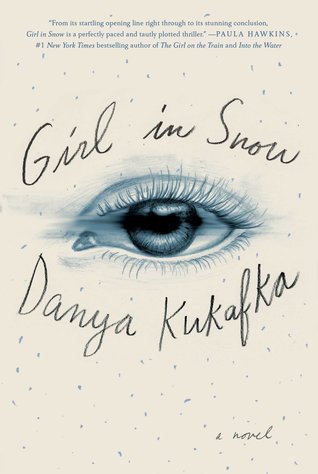
Girl in Snow, by Danya Kukafka*****

GirlinSnow

“’You can only see fifty-nine percent of the moon from the earth’s surface. No matter where you go, in the entire world, you’ll only see the same face. That fifty-nine percent.’
“‘Why are you telling me this?’
“’I’m just saying. We know this fact, but it doesn’t stop us from staring.’”

Half a century ago, a young writer named Harper Lee took the literary world by storm with To Kill a Mockingbird, a story that centered itself on justice, on a child trying to do the right thing, and on a strange, misunderstood fellow named Boo Radley.

Today the literary world meets wunderkind Danya Kukafka. Get used to the name, because I suspect you’ll be seeing a lot of it. Her story also revolves around misunderstood characters with dark pasts, and a small town’s often misdirected quest to see justice done and safety restored.

Thank you Simon and Schuster and also Net Galley for inviting me to read and review in exchange for this honest review. I’ve read and reviewed a lot of galleys this summer, but right now this is the only one I want to talk about.

So back to our story. We have three narratives, all from unhappy characters, all of them watching, watching, watching. Our protagonist is Cameron Whitley, a troubled, “Tangled” adolescent that has spent his evenings secretly following a popular, attractive classmate named Lucinda. He watches her through the windows of her house. He stares at her in her bedroom, and he does other things, too. Cameron has a troubled past, his father gone now after a storm of controversy destroyed his reputation and left his family hanging in tatters. And now that Lucinda is dead, the investigators have to look hard at Cameron. We do, too. We can see that Cameron is grieving, but of course, people often grieve the people they have killed. Grief doesn’t always denote innocence.

“Cameron stood outside Maplewood Memorial and wondered how many bodies it held that did not belong to Lucinda. How many blue, unbending thumbs. How many jellied hearts.”

As the story proceeds, we hear a third person omniscient narrative of Cameron, though it doesn’t choose to tell us everything. Not yet. We also hear two alternate narratives, those of Jade, Cameron’s classmate, and of Russ, the cop that was Cameron’s father’s partner before things unraveled.

Jade is friendless and frustrated, an overweight teen with iffy social skills, unhappy in love. Her home life is disastrous, her alcoholic mother monstrously abusive. Jade could be out of that house in a New York minute if she’d out her mother, but instead she turns her anger toward herself. After all, she provokes her mother. The bruises, the cuts, the blackened eye all signs that she has pushed her mom too far.

And so, bereft of healthier peer relationships, Jade watches Cameron watch Lucinda. She doesn’t have to leave home to do it; she has a box seat, so to speak, at her bedroom window. Standing there and looking down on a good clear night, she can see Cameron sequestered behind the bushes or trees, and she can see Lucinda, who doesn’t seem to know what curtains and window blinds are for. Ultimately Jade befriends Cameron, who is frankly afraid to trust her. And he may be right.
Russ is the third main character whose narrative we follow. As a child, he always thought it would be awesome to carry a gun and put handcuffs on bad guys:

“He memorized the Mirandas…playing with a toy cop car on the back porch…Russ had a lisp as a kid. You have the wight to wemain siwent.”

So his dream has come true; why isn’t he a happier man? Again and again we see the ugly things Russ does and the ugly reasons he does them, but just as it appears he’s going to become a stereotypic character, Kukafka adds nuance and ambiguity, and we see that underneath that swinish exterior is the heart of…no, not a lion. He’s really not that great a guy. But we see his confusion, his dilemmas, the aspects of his “bruised yellow past” that motivate him. He isn’t a hero, but he is capable of loving, and of doing good. And he doesn’t want to frame a kid for Lucinda’s murder, especially not his partner’s kid. He wants to know the truth.

Interesting side characters are Russ’s wife, Ines, and Ines’s brother Ivan, the school custodian that is caught in the crosshairs of the investigation.

Ultimately, though, the story is about Cameron, and Kukafka’s electrifying prose makes my thoughts roll back and forth like a couple dozen tennis balls left on deck when the ship hits choppy seas. Poor Cameron! He didn’t do this…and then, whoa, Cameron is seriously creepy here. Maybe he actually did it. I spend much of my time trying to decipher how deeply troubled this lad is—those of us in education and other fields that work with teenagers would undoubtedly deem him an ‘at-risk’ child—and how far he has gone.

Is Cameron the Boo Radley of 2017, misunderstood and falsely vilified; or is he a Gary Gilmore, a John Wayne Gacy?

Clearly, I’m not going to tell you. That would ruin it for you. The one thing I will say is that the ending is not left ambiguous. This isn’t the sort of book you throw across the room when you’ve read the last page.

In addition, know that there is plenty of edgy material here. Those considering offering this book to a teen as summer reading may wish to read it themselves before passing it on. I would cheerfully have handed it to my own teens, but your standards and mine may differ.

If you can read this book free or at a reduced price, lucky you. If you have to pay full freight: do it. Do it. Do it. It’s for sale today.

What I’m Reading

I’ve been experimenting with ways to share what is coming up next. Usually I put this on a different page, but then it also tends not to get seen, likely due to the absence of share buttons. Let me know what you think. Is it better to post it separately, or do you like it here?


Here are books I’ve finished reading, and as soon as a sane moment presents itself in my uncharacteristically busy domicile, you will see them reviewed here:

 This is what I am reading now; all are good, but some are outstanding. [Imaginary drum roll goes here.]

The Lauras, by Sara Taylor*****

TheLauras“It doesn’t do any good to just run away from something, you’ve got to be running to something.”


Alex’s mom has been hit one time too many by Alex’s dad, and she wakes Alex up and says to get a few things together and get in the car. They’re out of there. The rest of the story is an odyssey, both externally and internally, and within it, Alex comes of age. The story is beautifully crafted with gritty, nearly-tangible settings; however, it is the meticulous, absolutely believable characters that makes this story sing. It is the first outstanding work of fiction I’ve seen that features a transgender teen, and like so much great fiction, it provides an education to those of us that haven’t known anyone that claims this identity. In fact, this book may become the Rubyfruit Jungle for trans people and those that care about them. I read this novel free and early, thanks to Net Galley and Crown Publishing; it’s available to the public August 1, 2017.

Feminists have to cheer for Alex’s mother, who Alex calls “Ma”. Ma has a car, she has maps, she has some food, and she has Alex. When a state trooper pulls her over because both she and her car have been reported missing by Alex’s father, Ma tells him point blank that the car is in her name, and that Alex is hers, not theirs. No, she doesn’t need to come with him. No, she doesn’t have to make a phone call. It wouldn’t always play out this way for everyone, of course, but just seeing it work once, right here, is satisfying and it’s credible. In fact, there’s never a hole in the plausibility of this story, even though the events that unfold here are far from ordinary.

This trip, one that initially has a destination but turns into a wandering trek all across North America, gives Alex the first real taste of learning who Ma is. Any parent that has raised a teenager and has had a car understands the value of car talk. Both driver and passenger look straight ahead, and then sometimes things just naturally fall out of their mouths that otherwise would remain unsaid. Not having the money to keep a smart phone alive facilitates this even more; when there’s nothing else to look at, the choices are talk; silence; and sleep.

And so Alex learns that Ma was raised largely in foster care, and the road trip provides a chance to trace back the string, to see the places life bounced her in and out of through adult eyes. Essentially, they are homeless much of the time, sleeping in the car, in the occasional down-at-the-heels motel, and every now and then alighting long enough to procure an apartment, though never the sort you’d want unless you were desperate. Sometimes she works; sometimes they steal; sometimes they are given a handout; still, they survive, and the trek goes on. And we see the disastrous failure of the public school system to accommodate a kid like Alex, who is expected to check either the male box on the enrollment form, or the female box, and whose refusal to do so is treated as a behavioral issue.

There are times in my notes when I find myself referring to Alex as “she”, and it shows how ingrained our social system is, particularly for those of us that are older and have to work harder to think flexibly. At times I feel the same urge as those obnoxious school children Alex encounters in the story that want to know exactly what reproductive organ is inside Alex’s pants, because when I was growing up, that was how we identified gender. But as I watched Alex’s character take form within Taylor’s deep, intimate prose, I found that knowing Alex as Alex was enough. We never learn what’s between Alex’s legs, and by the end of the book, it no longer matters. That’s an accomplishment in and of itself.

As for Alex’s future, it’s a conundrum. What Alex wants most is for Ma to point the car toward home, toward Dad. Oh, please please please. It’s the refrain of children the world over whose parents have split, children clinging to the illusion that if they are all reunited, everything will be fine. Oh, of course it will! And we know early in the story that this will never happen, and we don’t want Ma to go back there. But Alex wants Ma, and Alex wants Dad. And this is a quandary that many readers will recognize as their own childhood longing.

One last word here is directed at teachers and parents. The literacy level here will be accessible to high school age students; however, there are sexual situations—as well as a sexual assault—and a lot of very profane language. If you wonder whether you want to put it on your shelf at school or home, get a copy and read it yourself first. I would have chosen to offer it to my own children when they were teens—they are grown now—but every family is different, and schools also have such a wide range of standards that you’re better off using your own judgment.

That said, this pivotal novel is highly recommended.

A Line Made By Walking, by Sara Baume***

I was gob-smacked by this author’s last book, Spill Simmer Falter Wither, and when I saw she had another book out—one set in Ireland, one of my favorite settings—I immediately requested a DRC. Thank you to Net Galley and Houghton Mifflin Harcourt for letting me read it free in exchange for this honest review. The book is for sale now.

ALineMadeByWalkingHad I no obligation to the publisher, I might be tempted to write a rare one-word review: bleak. Our protagonist is grieving the death of her beloved grandmother, and the dog died too. She’s stuck in a place she can’t get out of mentally, but since she is an artist, she takes her ennui and lets it guide her through art, and the narrative follows a pattern in which each grim thought leads her to a different art theme mentally. The story is told in the first person, and so we follow her miserable wandering thoughts from one grim topic to another, and then at some point each train of thought ends with “Works about [ fill in noun here: beds, rabbits…whatever].”

“The world is wrong, and I am too small to fix it, too self-absorbed.”

Yup.

I continued reading because it seemed to me that her earlier book started out depressing and it took some time to warm up, but then once it took off I was in love with it. I waited for this to happen here. And waited. At the 16% mark, she notes that getting drunk provides her with a “heightened sense of despair” the next day, and my notes my notes say “Fuck me.”

The protagonist tells us of an instance when she follows her very elderly landlady down a set of steps and pretends this is her usual pace also, and my notes say, “What the hell else you gonna do? Tell her to move her butt? Give her a shove to help her along?”

Each time I have one of these magic moments, I know it’s time to read something else for a while and come back to this story with fresh eyes. This is why it took me so long to read and review. Had I not bailed at 68% and peeked at the end for some sign of redemption, it would have gone even more slowly. Our protagonist has family members that want to help, but she is not interested. Instead, we notice dead animals; we notice garbage. We notice mold and other ugly things, but we can’t get up and deal with them because we are depressed and going to continue sitting here, lying here, not seeking change and wallowing.

In fairness, the word smithery here is strong in places, and I like the figurative language. However, for me the double-whammy of perpetually depressed prose followed, every now and then, by reflections about art and art history, a subject that makes my eyes glaze over, is a powerful repellent, and I am never able to engage; perhaps by now, you suspected as much.

So the third star is here because I know there are readers that have a great love of art, and if you are one of them, your experience with this novel may be completely different from mine. I wanted to tell the protagonist to take her meds and shut up, but there may be some truly redemptive aspect of the art discussion that makes the rest of it flow beautifully for art lovers.

For most readers, I can’t recommend this novel, and if you take it up anyway, put the sharps in another room and lock up your pills and firearms. Seriously. But for those with an affinity for art and art history, this book should be considered.

Grief Cottage, by Gail Godwin*****

Happy release day! This deeply moving story takes awhile to warm up, but once it gets moving, you’re pretty much in it for keeps. Those that love literary fiction will have to look far and wide to find better.

seattlebookmama's avatarSeattle Book Mama

griefcottage“We know so very little about the people we are closest to. We know so little about ourselves.”

Gail Godwin has been lauded and honored many times over, and has five New York Times Bestsellers to her credit. I read Grief Cottage free and early, thanks to Net Galley and Bloomsbury USA. Now I have to find her earlier work and read it, because her extraordinary prose is worth seeking out. Those that love achingly brilliant literary fiction will want to read this book, which will be available to the public June 6, 2017.

Marcus and his mother live alone and are very close; when she dies, it is as if the bottom has fallen out of his world. He is taken in by a relative he has never met; his Great-Aunt Charlotte lives on a tiny island off the coast of South Carolina. Haunted by his grief, Marcus is…

View original post 389 more words

The Half-Life of Remorse, by Grant Jarrett*****

TheHalfLifeofRemorseHere is a story for our time. It’s fresh, moving, fall-down-laughing funny in places, and has the best character development I’ve seen lately. I was growing cranky from having to pan other people’s bad books, and I requested this DRC from Net Galley and Sparkpress almost as an afterthought; then it nearly knocked me off my feet with its voice and sheer creative power. It was published last week, and you should get it, read it, and then make other people do the same thing. It’s that strong.

The format is a simple one, and because there’s not a lot of plot or setting, everything boils down to the inner monologues of the three characters here. We start and conclude with a brief narrative in the third person omniscient, and in between we have the staggered monologues of two homeless men and a professional single woman confined to a wheelchair. Sam has blocked out a traumatic past, likely suffering from PTSD and who knows what else. His monologue is a literary sounding one, and indeed, he was once an academic. Now he calls himself a wizard, and at times, we nearly believe him.

The other homeless man calls himself Chick. He is not a young man either, and is running from his own misdeeds, and Sam tells us that Chick “…is a testament to life’s unrelenting desperation to continue.” Chick is not literate, but he manages to communicate brilliantly in his own tumbledown, roughshod, clumsy manner. Every now and then he tries to use a slightly larger vocabulary than he possesses, and ends up referring to “the persecuting attorney” and not wanting to “cast inspersions” upon the characters of others. Though he is thoroughly profane and limited grammatically, in his own way Chick is as eloquent as Sam.

The third character, a less developed but still important one, is Claire. Claire lost the use of her legs when her family was invaded by criminals during her childhood. Both Sam and Chick were there, but at the time, they did not know each other.

Jarrett writes in a way that is wholly original, and the juxtaposition of Sam’s monologue with Chick’s is startling and very funny. Somehow this author manages to slam tragedy and humor right up against one another without diminishing either. Most importantly, he is able to portray both Sam and Chick as men that still have purpose and a personal code of honor despite the horrors they have experienced and the bad choices they have made. Jarrett’s prose is the sort that grabs me by the hair and doesn’t release me until the story is finished. At one point, I found myself lightheaded because I had forgotten to breathe.

This novel is highly recommended to everyone that loves strong fiction.

Grief Cottage, by Gail Godwin*****

griefcottage“We know so very little about the people we are closest to. We know so little about ourselves.”
Gail Godwin has been lauded and honored many times over, and has five New York Times Bestsellers to her credit. I read Grief Cottage free and early, thanks to Net Galley and Bloomsbury USA. Now I have to find her earlier work and read it, because her extraordinary prose is worth seeking out. Those that love achingly brilliant literary fiction will want to read this book, which will be available to the public June 6, 2017.

Marcus and his mother live alone and are very close; when she dies, it is as if the bottom has fallen out of his world. He is taken in by a relative he has never met; his Great-Aunt Charlotte lives on a tiny island off the coast of South Carolina. Haunted by his grief, Marcus is drawn to a cottage said to be haunted by a boy that died in a hurricane many years before.

The story begins with a lengthy internal monologue that made me fear I’d regret requesting the review copy. There’s a saying that only those that know the rules of written convention well are entitled to break them upon occasion, and Godwin is one that does, and she does it for a reason. I can promise the reader that if you push through the first twenty percent of the story, complete with very frequently used parenthesis, you’ll be in it for keeps.

Marcus is one of the most resonant characters I’ve read in a long time. He is orphaned, unmoored, and friendless; his one good friend insulted Marcus’s mother, and the friendship was broken. Now his great fear is that Great-Aunt Charlotte, a reclusive painter that values her privacy and has a very small home, may grow weary of the inconvenience of having him with her and send him away. The reader can clearly see this brusque but thoughtful woman grow attached to her young relative, but Marcus is too overwhelmed and depressed to catch a clue. He tries to make himself scarce to reduce his impact on her, and in doing so spends an inordinate amount of time nurturing and watching the nests of leatherback turtle eggs laid on Charlotte’s beach, and walking or biking back and forth to the far end of the island, where the legendary Grief Cottage, Charlotte’s most lucrative painting subject, sits desolate and friendless, not unlike Marcus himself.

A measure of a well written a novel is the way our affection for it lingers after we have finished reading it and look back after we’ve read other things. Because I received a very early galley for this one, I have read and reviewed 24 other books since this one, and yet when I see the cover for this title, I heave a deeply satisfied sigh. Oh yes. Grief Cottage. That one was wonderful!

Those that only enjoy action-packed thrillers will have no joy here; rather, Godwin’s prose is the sort one sinks into, like a deep feather bed or a favorite chair by the fire. For those that love strong literature, I cannot think of a better way to spend quiet spring evenings.

Highly recommended.

The Standard Grand, by Jay Baron Nicorvo*****

thestandardgrand“A loaded gun wants to go off.”

Critics have compared Nicorvo’s brilliant debut novel to the work of Heller, and indeed, it seems destined to become the go-to story of those that have served in the unwinnable morass created by the US government against the people of the Middle East: “a drawdown war forever flaring up”. It’s created a tremendous amount of buzz already. I was lucky enough to read it free and in advance for the purpose of a review, thanks to Net Galley and St. Martin’s Press, but today it’s available to the public. You should buy it and read it, maybe more than once.

The story starts with a list of the characters involved, but the way it’s presented provides a tantalizing taste of the author’s voice. The page heading tells us these are “The Concerns”, and the subheadings divide them into practical categories, such as The Smith Family, the Employees of IRJ, Inc., and The Veterans of The Standard Grande (misspelling is mentioned later in the story). Then we proceed to list The Beasts, and The Dead, and The Rest, and right then I know this is going to be good.

Antebellum Smith is our protagonist, and she’s AWOL, half out of her mind due to PTSD, anxiety, and grief. She’s sleeping in a tree in New York City’s Central Park when Wright finds her there and invites her to join his encampment at The Standard Grand. Here the walking wounded function as best they can in what was once an upscale resort. One of the most immediately noticeable aspects of the story is the way extreme luxury and miserable, wretched poverty slam up against one another. Although the veterans are grateful for The Standard Grand, the fact is that without central heat, with caved in ceilings, rot, and dangerous disrepair, the place resembles a Third World nation much more than it resembles the wealthiest nation on the planet.

On the other hand, it’s also perched, unbeknownst to most of its denizens, on top of a valuable vein of fossil fuel, and the IRJ, Incorporated is sending Evangelina Cavek, their landsman, out in a well-appointed private jet to try to close the deal with Wright. She is ordered off the property, and from there things go straight to hell.

Secondary and side characters are introduced at warp speed, and at first I highlight and number them in my reader, afraid I’ll lose track of who’s who. Although I do refer several times to that wonderful list, which is happily located right at the beginning where there’s no need for a bookmark, I am also amazed at how well each character is made known to me. Nicorvo is talented at rendering characters in tight, snapshot-like sketches that trace for us, with a few phrases and deeds, an immediate picture that is resonant and lasting. Well drawn settings and quirky characters remind me at first of author James Lee Burke; on the other hand, the frequently surreal events, sometimes fall-down-funny, sometimes dark and pulse-pounding, make me think of Michael Chabon and Kurt Vonnegut. But nothing here is derivative. The descriptions of the main setting, The Standard Grand, are meted out with discipline, and it pays off.

As for Smith, she still has nightmares, still wakes up to “the voices of all the boys and girls of the wars—Afghan, Iraqi, American—like a choir lost in a dust storm.”

There’s so much more here, and you’re going to have to go get it for yourself. It’s gritty, profane, and requires a reasonably strong vocabulary level; I’m tempted to say it isn’t for the squeamish, yet I think the squeamish may need it most.

Strongly recommended for those that love excellent fiction.