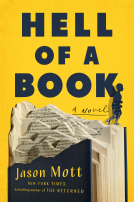
Hell of a Book, by Jason Mott*****

It really is.

This book is a standout in more ways than one. First the obvious: look at that cover! Then again, how many novels have a nameless protagonist all the way through the book? Get into it deeper, and the distinctions become more complex. The buzz around it is wholly justified. My thanks go to Net Galley and Random House for the review copy. This book is for sale now.

Our author is on an odyssey that takes the form of a book tour, and it lands him, in the end, back where he grew up. He doesn’t tour alone; apart from the various organizers he meets in various locations, he is accompanied by a small Black child he refers to as “The Kid.” Alternately, we also see the story of a young Black boy, a very Black boy, nicknamed “Soot,” who grows up in the American South.

As I read, I am always on the back foot, understanding most of what it being said, yet developing questions as I go. Our author says (often) that he has a condition, and that this is probably why he can see The Kid when others cannot. My notes ask whether his condition is dissociative, and is The Kid just part of himself? Or is The Kid Soot? Are Soot and The Kid both part of the author? Every time I come up with a plausible theory, something else happens to undercut it. Yet one other thing becomes clearer all the way through: to be born an African-American boy in the United States is to be perpetually on the back foot; perpetually having to guess how best to proceed; to perpetually guess at one’s welcome or lack of same, at the quality of one’s relationships with Caucasians, to perpetually guard one’s own safety. And to be very Black—“Nigga, I bet when you get out of the car your daddy’s oil light come on”—is to invite not only the suspicion and hostility of Caucasians, but to draw the enmity of lighter Black people, too.

The synopsis of this story that initially drew me billed it as humor, and in places, it is not only funny, but laugh-out-loud funny. But the further we get in, the darker it becomes.

There are a number of sardonic references to the publishing world; editors, agents, and other promoters have told the author that while it’s fine to write about Black characters, He must not write about being Black:

“The last thing people really want to hear about is being Black. Being Black’s a curse—no offense—and nobody wants to feel cursed when they read something they just finished paying $24.95 for…The future of this country is all about patriotic, unity-inducing language. Post-Racial. Trans-Jim Crow. Epi-Traumatic. Alt-Reparational. Omni-Restitutional. Jingoistic Body-Positive. Sociocultural-Transcendental. Indigenous-Ripostic. Treat of Fort Laramie-Perpendicular. Meta-Exculpatory. Pan-Political. Uber-Intermutual. MOK-Adjacent. Demi-Arcadian Bucolic. Write about love. Love and Disney endings…”

Later, an interviewer asks if the past doesn’t still matter, and the author says, “It does. Not just three-fifths of it, but all of it.”

So, my friend, you can see why this book should be called a love story. Race? Oh, no no no. Fear? Injustice? Police brutality? Of course not. After all, this is a hell of a book!

Highly recommended; one of the year’s finest.
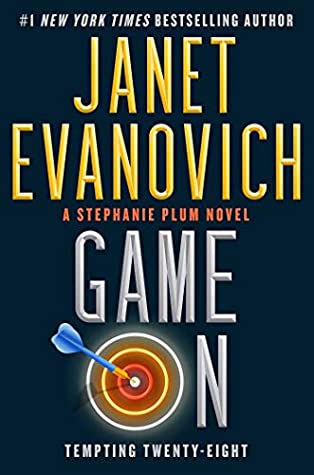
Game On! by Janet Evanovich****-*****

Stephanie Plum has been my constant companion for decades, but she never seems to get any older. We should all be so lucky!

My thanks go to Net Galley and Atria Books for the invitation to read and review. This book is for sale now.

Stephanie is a bounty hunter, working for her cousin Vinnie’s bail bond service. She tracks down no-shows, takes them to have their hearings rescheduled, and collects a commission. Her mother wishes fervently that she would get a normal job such as a bank teller, or just go ahead and marry long-time boyfriend Officer Joe Morelli, and keep house and raise kiddies. But Stephanie is long on independence, and she’s short on marketable skills, and so this is what she does. And we readers are well aware that she wouldn’t be half this hilarious as a housewife, so we cheer her on.

In an interview, author Evanovich said she had lit on the idea of a bounty hunter protagonist because the writer doesn’t need a background in legal matters the way that she would if she used a cop, detective, or lawyer. The primary skill required of a bail bonds enforcer is lying, and she felt she had a good grasp of that one.

You gotta love it.

There have been a few wobbles in the series, and a moment (long ago) when I thought perhaps it was played out. But like her intrepid protagonist, the author rallied and came back stronger than ever.

Can you read this book if you haven’t read any of the others in the series? Yes. Yes, you surely can; but you are most likely going to want to go back for the rest once you do so.

There are a few things that strike me as I read this one. I suddenly find myself wondering why Stephanie doesn’t seem to have women friends. She’s lived in Trenton—in the Burg—her entire life, so shouldn’t she have a few lifelong pals? But by the end of the story, I realized that her work buds are her go-to girls. Lula gets into a scrape and leaves what little she has to Stephanie (but of course, Lula pulls through. I don’t feel like this is a spoiler; since when would a riotously funny writer like Evanovich off a main character?) Connie is a distant relative, but she’s also a friend.

I also find myself, like other reviewers, wondering about the sanitized language and decreasing vocabulary levels. We’ve been drifting in this direction for awhile. At the start of the series, profanity was used by the people and in the situations where you’d expect to find it. The overall language level was accessible to anybody that finished eighth grade. Over the last several episodes, however, it’s been drifting downward. Now, apart from one “damn”, I found nothing, although the euphemisms are stellar (“What the fork,” “What the Hellman’s Mayonnaise,” “Son of a bagel.”)  And the overall vocabulary level is now down to about fifth grade. If it goes any lower (see the author’s other series,) I may not be interested anymore, but as it stands, it’s fast, it’s snappy, and I’m in.

The usual elements—escorting Grandma Mazur to viewings at the mortuary; exploding cars; men surprising Stephanie when they let themselves into her locked apartment; dinner with Stephanie’s parents; a geeky witness, or victim, or possibly even an offender, that Stephanie takes under her wing; and the red-hot Joe Morelli are all present and accounted for. Stephanie’s mother has been drinking heavily every time Stephanie gets into a dangerous scrape, and Evanovich has been toying with some character development in her direction. I hope she follows through.

The tension of Stephanie trying to decide between Morelli and the mysterious Ranger is over, for now, at least, and it was getting old, so I applaud this development. She knows that Ranger will never marry her, and there’s a lot he’ll never tell her. She knows Morelli. They grew up together, and they understand one another. Marriage, maybe not yet; but Joe is the one. She’s tempted by others in this installment, but for once, she behaves herself. Good.

Whereas this series isn’t the magnificent literary accomplishment attained by some mystery Grand Masters, and it doesn’t try to be, I rate it as five stars in the humor genre. It made me laugh out loud on page two, and though I read quite a lot of books each year, those that have made me howl this year can be counted on one hand. It’s a more valuable characteristic than some might guess, especially during these tense times.

Highly recommended to those that need a good laugh.

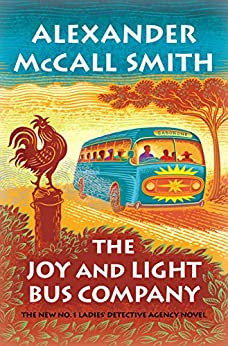
The Joy and Light Bus Company, by Alexander McCall Smith*****

“Connections with others were what made life bearable…We all need reassurance, she thought. We all need people to tell us that everything is going to be all right, even when it is not, and that we should not worry, even when we clearly need to be concerned about something. We are only human, after all, and that is why reassurance is so important to us. That is undoubtedly well known.”

I am not generally fond of cozy mysteries, yet I love this series hard. I told a friend—who works as a therapist—that the #1 Ladies Detective books are the cheapest therapy on the planet, and she agreed.

My great thanks go to Edelweiss and Penguin Random House for the review copy. This charming tale will be for sale November 16, 2021.

As is usual, we have two equally important story lines woven into a single narrative. The detective story has to do with a client—a most unpleasant fellow, but a client, nonetheless—that has come to the agency looking for help with his father’s will. His father is still alive, but not entirely himself anymore, and is planning to leave his valuable home to his nurse. Mma Ramotswe and Mma Makutsi are enlisted to dig up information about this woman, and to see if anything can be done to reverse his father’s decision. The second storyline concerns Mma Ramotswe’s husband, Mr. J.L.B. Matekoni, who has decided to invest in a dubious-sounding scheme to turn secondhand buses into a bus service. Mma Ramotswe is horrified, because in order to invest the necessary sum, it will be necessary to take out a bank loan, using the building that houses the businesses—Matekoni’s auto repair, and Ramotswe’s detective agency—as collateral. There’s also a smaller thread involving human trafficking of small children locally, and as usual, it is dealt with tidily and in a most entertaining fashion.

The book begins with Mma Ramotswe wondering what makes men happy. This is a tricky way to start a book, given the current social climate especially. Many readers, women in particular, are sensitive to having a male author write about a female character’s fervent longing to make her husband happy. The internal monologue could use some tightening up here, and that’s unusual for this writer. However, this passage is near the beginning, and once it’s done, the rest of the book more than makes up for it.

What is the alchemy that makes this series so successful? Certainly at the start, there was the novelty. It’s unusual for an English-language series to be set in Botswana, or at least, it was when this one began. But it takes a lot more than that to sustain a series over so many years.

For me, the gentle humor goes a long way. I also appreciate the depth of respect for working people that shines out of every book in this series. Mma Potokwane, who runs the orphan farm and is Mma Ramotswe’s closest friend, reflects on the squabble over the old man’s will. “Rich people are always forgetting that they are only rich because of the work of others. They do not dig their money out of the ground, you know, Mma.”

Also? There are a lot of us out here that are also “traditionally sized,” and we love seeing lovable, successful characters that look, to some extent, like ourselves.

There’s the notion that people are inherently good—try finding that in your average noir detective story—and also, the idea that ordinary people can and should intervene to the best of their ability when they see wrongdoing. “Sometimes those people simply did not see what others could see; sometimes their hands were tied; sometimes they felt threatened. And all of that meant that there were times when it was left to people like them, a private detective and the matron of an orphan farm, to do what had to be done.”

This story, however, is singular in that both Mma Ramotswe and Mma Makutsi manage their husbands through deception. Grace Makutsi reveals that she gets her husband, Phuti, to take his vitamins by stirring them into his breakfast tea without telling him. Precious Ramotswe, when unable to persuade Matekoni not to apply for the bank loan, sneaks around behind his back, looking for a way to kill the deal without his knowing it. Neither of these things leads to marital disaster, yet I find myself wondering whether these things may come back on them in a future installment.

The fact that I find myself feeling concerned about the marriages of two women that are fictional, fictional, fictional says a great deal about Smith’s capacity to develop characters with depth and breadth.

I can talk about this series, and these characters, and this book all day. I’ve already come close to it. But the best way for you to appreciate it is to get this book. It comes out in a week, so I suggest you order a copy now. Highly recommended.

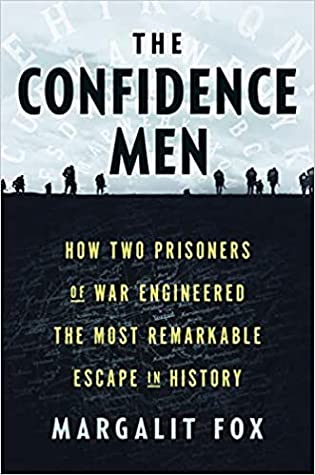
The Confidence Men, by Margalit Fox****

This stranger-than-fiction story of two World War I captives, one an English officer, the other Australian, that trick their way out of a Turkish prison camp via a long, elaborate con centered on a Ouija board is compelling and at times, funny as hell. My thanks go to Net Galley and Random House for the invitation to read and review. This book is for sale now.

The beginning is grim; grim enough that I abandon this story twice before ordering the audio version from Seattle Bibliocommons to help me get over the hump. There’s torture, deprivation, and every ugly thing that the notion of an enemy prison brings to mind. I am especially horrified because I thought this book was going to be funny! Reader, it is, but you have to get past the grim and at times, dull beginning to get to the amusing bits. Somewhere between the fifteenth and twentieth percentiles, the shift occurs, and that’s when you can expect to enjoy yourself. You may want to skim a bit through this part; I do, and it works out well.

Harry Jones was an attorney before the Great War commenced; Cedric Hill was an Aussie auto mechanic. Once captured, the two have no chance at all making a conventional escape; the camp is too isolated for either of them to get anywhere, even if they were able to leave. Instead, what they have is nothing but time, and ultimately, that and their excellent imaginations and problem-solving skills, aided by some genuinely stupid captors, is what saves them.

The most impressive aspect of their scheme is that it takes place over a very long period of time. Not many con artists would be able to keep their story straight for so long. Jones and Hill have a great deal of self-discipline and organizational skill. Also, they’re afraid, and fear can improve one’s consistency and attention to detail. Once the meat of the story begins, it is absolutely riveting!

I flipped back and forth between my digital galley and the audio version. Both are equally good, but I would give a slight edge to the audio version, assuming the reader is primarily seeking entertainment. For a researcher, the print version is better for keeping details and sources straight.

Recommended to those that enjoy history and intelligent humor.

The Guncle, by Steven Rowley*****

How do you spell instant parenthood? It’s the last thing GUP—the appellation bestowed on Gay Uncle Patrick—expected, and the transition is hilariously rocky. My thanks go to Net Galley and Putnam Penguin for the review copy; this book is for sale now.

Patrick’s whole life appears to be on hold. He was on television for a good long while, and so both fame and fortune are his. He doesn’t actually have to do anything, and since the demise of his beloved partner, he hasn’t wanted to. Then one of his closest friends, Sarah, who had been his college roommate, dies, and everything changes.

Grant and Maisie, Sarah’s children, are six and nine years old respectively. When the memorial service concludes, Patrick is blindsided by Joe, Sarah’s husband. While she was on her deathbed, she made Joe promise that when she was gone, he’d go into rehab—but of course, someone has to take the children. Joe wants that someone to be Patrick.

The humor is ribald at times, but never over-the-top. Patrick knows nothing about children. Nothing! In a daze, he returns home with his charges in tow, and he has to learn on the job. Maisie is at a somewhat bossy age and is only too happy to tell him what to do and how to do it, and oh is it fun to watch. As the fog lifts, Patrick begins making small changes to create a more child-friendly space, but mostly, he embraces his unconventional situation. There’s a Christmas celebration in the middle of summer; there’s a party. And as he steps up to his new role, he realizes that he should return to work; he has heirs now, after all.

Aunt Clara arrives, and she demands the children return with her. She knows how to do this. She frowns on nearly every aspect of Patrick’s life. But Patrick is amazed to realize he is willing to fight to hang onto them.

Some may be surprised to find a book like this earning a five star rating; it’s not serious literature. It’s fun; it’s fluffy. But this reviewer rates each book on its excellence compared to others of its genre. As a humorous novel, it shines. As a feel-good book, it’s terrific. As beach reads go, what can be better?

Perhaps it’s indicative of Rowley’s skill that I have found myself writing review notes in his voice. This doesn’t happen often. But as for you? You should get this book and read it, because all of us need a mood elevator, and in that respect, it’s a bargain. Highly recommended!

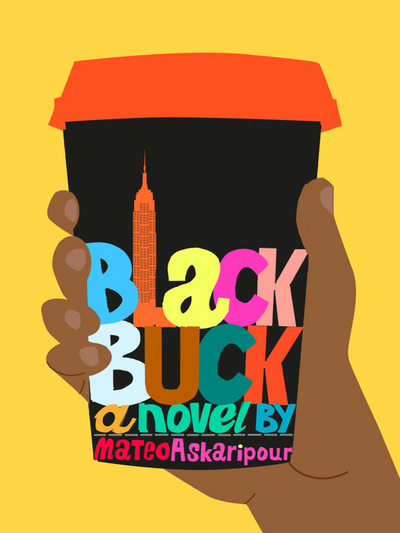
Black Buck, by Mateo Askaripour****

Darren leads a moderately successful life, in charge of a local Starbucks, and happy at home with his longtime girlfriend and his mama. But all of them know that he can do more with his talents, and so when a recruiter from Sumwun comes for Darren, it seems like the opportunity of a lifetime. But you know what they say; be careful what you wish for.

My thanks go to Net Galley and Houghton Mifflin Harcourt for the review copy. This book is for sale now.

When Darren changes jobs, he moves out of his familiar surroundings, comfortably populated with people of color, many of whom he has known all his life, to a corporation where he is the only Black man. He is demeaned and subjected to almost every possible stereotype and racist trope, but he perseveres, because this is a sales job, and the timid and weak stand no chance at all. He knows that the longer he stays there, the stronger he’ll get, and as far as that goes, it’s true. When a disaster befalls the company, it’s Darren that pulls it out of the water. And then again. And again. And yet, the crap thrown by others keeps hitting him.

The magic of good satire is the recognition it draws, the moans and the nods and the headshakes. The author tells us in his introduction that the book is written for Black people, and it doesn’t take long to see why Caucasian people may not relate as well. Even those of us living in mixed families can only glimpse the edges of what Black people put up with; even so, I do find myself groaning and chuckling as the story progresses.

This is a strong work of fiction and an impressive debut, and I recommend it to everyone that knows that Black Lives Matter, and especially to those that only suspect it’s true. I look forward to seeing what  Askaripour writes next.

Easy Crafts for the Insane, by Kelly Williams Brown*****

Kelly Williams Brown is an experienced author, but she is new to me. I ran across this odd little book at exactly the time I needed it, and maybe you do, too. My thanks go to Net Galley and Putnam Penguin for the review copy; this book will be available to the public July 6, 2021.

Brown points out that mental illness remains one of the few conditions that are cloaked in secrecy and shame. Nobody afflicted with bipolar disorder chooses it, and although it can be successfully treated, there’s no cure, either. The title of the book reflects her choice to simply own it. “This is the water I swim in…I wanted to talk about how I have come to be content in my own skin.”

In sharing her journey, she tells us how nearly impossible it is to find a psychiatrist within a reasonable commute, who takes your insurance; now try doing it while you are in a precarious state of mental illness. At one point things come to a head, and in a fugue of which she has no memory at all, she rises from bed and attempts suicide, nearly succeeding. Had her boyfriend not found her when he did, she would have died. “’Lots of people, they just take a few aspirin and say they want to die, but you meant it!‘  the very kind ER doctor says with something that sounds a tiny bit like begrudging approval.”

The crafting aspect of this book is partly a device, used to share what kind of mindset caused her to resort to it, and also which crafts are soothing at life’s most difficult times; several of the crafts she discusses are just as mysterious to me after reading her instructions as they were before. Her favorite little origami stars, which grace the book’s cover, are among these. And there are some crafts for which she tells us she has no clear instructions, and recommends YouTube tutorials, so that part’s kind of a wash. However, there are a couple of things that do sound interesting and that I might try. I initially rated this book four stars, thinking that if a person puts crafts in the title, the crafts should be clearly taught, but later I decided that this book really, truly isn’t about crafts.

Brown has money, and at times I am a little alienated by her wealth, that is obvious in her narrative. But she recognizes this, and she uses it to drive home the point:

“I had good insurance, and open schedule, and no internal conflict over therapy—and yet it was still fucking impossible. My privileged ass could barely make it happen. Think about the hurdles that Americans who don’t have these advantages face every day when they’re trying to access help!”

I have deliberately left out the humor here, the places that at times make me laugh out loud. You can find them for yourself. They are well placed, preventing the overall tone from becoming too grim.

 I found this book the day after dropping a close family member off at the psych ward of a local hospital, and it seemed almost like an omen that I should read it. If you are contemplating reading it, whether due to mental health issues of your own, or of those close to you, or simply out of curiosity, I highly recommend you do it. This little gem may become a cult favorite, and it would be a shame to be left out of the loop. And if it inspires you to be more vocal in advocating for mental health awareness and treatment, and of dragging this pervasive problem out of the attic and shining some light on it, then the world will be a better place.

The Incredible Winston Browne, by Sean Dietrich****-*****

4.5 rounded upward.

The time is the 1950s; the place is Moab, Florida, a tiny town where everyone knows everyone else. Winston Browne is the sheriff; Eleanor Hughes is a frustrated single woman that fears she is headed for spinsterhood; and a small girl, Jessie, is on the lam from a creepy cult that considers her to be “a little abomination.”

I read this book free, courtesy of Net Galley and Thomas Nelson Publishers. It’s for sale now.

The story begins with Winston in his doctor’s office. There’s bad news about his chronic cough. Tests show it’s not only malignant; it’s metastatic. In other words, Winston should put his affairs in order.

Winston is a friendly guy, but he’s also an introvert. He tells no one of his condition. He’s single, and there’s no family to warn, so he goes about his life about the same as before he learned his diagnosis.

Jessie is awakened in the middle of the night by one of the Sisters, who hustles her into a waiting vehicle. She’s being busted out of the Temple compound by softhearted women that know the girl is doomed if she remains. Jessie has an independent spirit, and so when she is dropped off at the train station with instructions of where to go and who to trust, she follows her instincts instead. Her instincts take her to Moab, Florida.

Eleanor—you can call her Ellie—is fed up with Jimmy. They’ve dated for year upon year, and she is so frustrated by his inaction that she can scarcely stand the sight of him. If he is so crazy about her, then why doesn’t he propose? She’ll never have a husband or a family, and it’s all his fault. But then Winston comes along, and the birds sing in the trees.

For the first half of this book, I thought it would be a four star read. It was a good enough tale, but I had my reservations. For starters, where are the Black people in Moab? If we’re meeting the townsfolk—and we surely are—how is it that all of them are Caucasian? A visit from Jackie Robinson is all well and good, but this is Florida, for heaven’s sake. Is Moab a sundowner town?

I run a quick search, knowing that the African-American population during this mid-1900s was much lower than it is now, and I am grudgingly convinced that there might well be a little town in the boondocks with only white residents. Back then, it could have happened, so…okay.

It is during the second half that everything falls together and I am swept away by the characters. No more consulting the Google oracle; the intimacy has become too strong for me to step back.

It’s difficult for me to find a feel-good book without schmaltz. Most books that are billed as heartwarming tend to make me roll my eyes or retch a little. Dietrich works magic, though, and although it takes a minute or two to reel me in, ultimately I am captivated. The droll, understated humor that drops in and out at just the right moments is a key element. The captions that appear regularly make me guffaw more than once; don’t skip over them! They’re terrific. The text is punctuated now and then by contributions from the Moab newsletter, whose minutiae underscores just what a dull place this town usually is.  

However, let me also say a quick word here about the audio version. I began reading this book close to the publication date, and so when I was partway into it, I checked out the audio book from Seattle Bibliocommons. By doing so, I could extend my reading sessions, switching over to the audio when I had to do something else with my eyes and hands. The author reads his own narrative, and he has a wonderful voice, warm with just the right amount of drawl. The best way to enjoy this book is to access both the print version and the audio; if you must choose one or the other, it’s a toss-up, perhaps with a slight edge toward the audio.

Some readers will be pleased to know that there is no off color language or sex involved. If a movie were made based on this book, it would most likely show a General Audiences rating.

Highly recommended to those that love a feel good story, historical fiction, or Southern fiction.

Broken, by Jenny Lawson****-*****

4.5 stars, rounded up.

Jenny Lawson, AKA The Bloggess, has a new book out, and I do believe it’s my favorite. My thanks go to Net Galley and Henry Holt for the review copy. This book is for sale now.

Lawson bucks a somewhat disquieting trend, and I am so glad. The trend is to make the first three chapters—most likely what sells the book—sterling, and then fill the rest with mediocre, highly missable prose. In contrast, the earliest part of this memoir is good, but it’s not great. She starts slow and then builds toward most of her best material, leaving me smiling as the book concludes.

But let’s go back to the material at the start, which I find to be random in a way that yearns for the hand of a high profile editor. I’m throwing my hands up, wondering just why a professional writer would blather on like this. Can she write a coherent sentence, and then end it when it’s over? Of course, I continued reading and loved the essays in the middle, and as we draw near the end, she refers to the challenges she encounters in writing, citing her inclination to overwrite, and the resultant paragraphs that contain “a run-on sentence that would make an English teacher cut herself,” and I howled, because that’s it, exactly. Almost exactly, I mean; I was moaning, but I hadn’t reached for anything sharp.

What is it about depression and humor, and the connection between them? It’s hard to tease apart all of the components that make Lawson’s writing so compelling; to a certain extent, it’s alchemy of the human spirit, I suppose, combined with skill at self-expression. But there are other components much easier to spot. One is her disarming frankness; for example, she mentions that people, remarking on her twentieth wedding anniversary, ask about her secrets for a long and happy marriage, and she tells us that actually, not all of those years have been happy. There are good periods, and there are bad periods. And then she adds, not entirely jokingly, that part of the reason she is still married is that there are things in her marriage that she doesn’t write about.

But even more compelling is her level of perception, and her ability to understand the subtext of just about everything.

I’ll mention my favorite parts, but I am not giving up any more humorous quotes, because that’s a crappy thing to do to a humor writer. There’s a funny part having to do with shoes, and the kayaking trip from hell, which she dubs “Divorce Creek.” The chapter about Transcranial Magnetic Stimulation, which is a serious bit for the purpose of informing us, is interesting and may be of help to a number of readers. (However, the searing honesty about her suicidal impulses might actually be a trigger for a profoundly depressed reader.) And the infuriating experiences she has had dealing with insurance makes me want to throw things, but it is important that she includes them here.

If you’re a fan of The Bloggess’s writing, you have to get this book. If you are new to her work, you can dive into this memoir without reading her previous ones. Highly recommended.

The Sweet Taste of Muscadines, by Pamela Terry*****

Pamela Terry’s debut novel, The Sweet Taste of Muscadines, had me at hello. My great thanks go to Net Galley and Random House Ballantine for the review copy. You can buy it now.

Lila Bruce Breedlove (I even love the characters’ names) hasn’t gone home to Georgia in a good long while, and it’s not accidental, either. Her home in Maine with her dogs and fond memories of her late husband are the furthest thing from her mama’s censorious gaze and the smallminded thinking of the people of Wesleyan, Georgia. But now Mama has been found facedown in the Muscadine arbor, and Lila knows there’s nothing else to do. She packs her bag, gets a friend to look after the dogs, and buys a ticket. Her brother Henry, who has also made a permanent home up north, does the same, but he advises his life partner, Andrew, to stay put. Their sister, Abigail, is the lone family member that didn’t flee. She and Mama were best friends, as they told everyone  constantly, including Lila and Henry. Still,  duty calls. It wouldn’t be fair to leave Abigail to do this on her own.

The whole story is told by Lila in the first person limited. I find this refreshing. The tone is intimate, confidential at times, and downright conspiratorial at others. Lila lets us know that “Growing up in the South is not for the faint of heart…When you’re the slightest bit different, you stand out like a monkey in a chorus line.”

Before they’ve even touched down, Lila and Henry have questions. For example, why was Mama in the Muscadines at all? The arbor is nowhere near the house, and she never chose to visit it when she was a younger woman. It had been Lila’s special place. Once they arrive in Georgia, they confront more questions, and though not all of them are answered, a plethora of surprises greet them, some of them hilarious, others shocking. Lila tells us that

Secrets are spilled at southern funerals. Death, particularly when its inevitability has been ignored for generations, possesses a power to snap diffidence and dignity right in two, causing those left behind to be overcome with the need to unburden their consciences before they themselves are found sleeping in a slick, shiny coffin in their best Sunday suit.

The first surprise, it turns out, is that Geneva Bruce left an advance directive specifying no funeral at all upon her demise, which she had known to be imminent. For the widow of a Southern Baptist Georgia preacher to bail from her own funeral is unheard of! However, the lack of a proper funeral does not, cannot prevent family secrets from unspooling, and some of them are bombshells, too.

Terry is a gifted wordsmith, and her figurative language is original and at times, drop dead funny. The pacing never flags, and the transitions that take us from raucous levity, to bittersweet reflection, to aching sorrow, and then back again are buttery smooth. It was like hearing from my best friend. I generally read several books at a time, but this one proved to be the one I read when I would not be interrupted, and I was sorry to see it end.

It was only at about the eighty percent mark that I realized that one of my least favorite elements was included here, that of the Bad Mama. This is a trend right now, and I’m ready to be done with it. Novelists far and wide have enjoyed crafting stories centered around unworthy mothers, and when I see one coming in advance, I consider it a deal-breaker. But almost any device, character, or plot point can be forgiven when a novel is of exceptional quality, and that is what I see here.

Highly recommended.