The House is On Fire, by Rachel Beanland***-****

Rachel Beanland wrote Florence Adler Swims Forever, an arresting debut that caught my attention along with that of a great many other readers. Her sophomore novel, The House is on Fire, is a good read, though not as compelling as her first. My thanks go to Net Galley and Simon and Schuster for the invitation to read and review. This book is for sale now.
The house in question is a theatre; the setting is Richmond, Virginia. The story is modeled after the massive fire of the Richmond Theater in December, 1811, which at the time was the greatest human calamity to have befallen the U.S. Scores of people were killed, and the disaster created headlines around the country, and even internationally. Beanland tells us in her author’s note that she chose to center the book around four real people that were affected by the fire; some she was able to learn a good deal about, whereas for others, she had to invent almost everything. The characters are Gilbert and Cecily, both of whom were slaves; Sally, a young Caucasian widow; and Jack, a Caucasian stagehand in charge of pyrotechnics during the performances, despite his being just fourteen years old.

Beanland nails the setting like a pro, recreating the technology, character, and landscape of the period, and doing so subtly, without relying on shortcuts or cheesy devices such as popular music and political figures. It’s a good thing, because setting is important to this story.

The characters are not as well developed. The one I feel I know best, by the end of the book, is Cecily, a young slave woman desperate to escape the predatory son of the man that owns her. However, Cecily’s story is the one that Beanland invented. I have mixed feelings about Cecily’s motivation. On the one hand, it’s a well-documented fact that young slave women were raped by masters and other whites as a matter of course, a horrifying fact that must never be forgotten. On the other hand, fear of a sexual predator is an easy device to employ, and I keep thinking about what actor-director Jodie Foster says about its overuse: if you don’t know what motivates a woman, writers and directors everywhere immediately reach for rape. I am thankful that Beanland doesn’t provide any prurient details or graphic descriptions. But apart from love of family and fear of sexual violence, I still know nothing of Cecily at the end of the story.

The other characters are still less defined. Gilbert’s last master permitted him to hire himself out as a blacksmith once his other chores were done, and he has been planning, once he has enough set aside, to purchase freedom for himself and his wife. We also see that he is a hero, helping to pull or catch a great many people that are stuck in the burning building. All of this is demonstrated at the outset, and not much changes for him.

Young Jack is consumed with fear and guilt due to his part in the fire. He had dreamed of becoming an actor, and now that seems unlikely. He wants to tell the truth, but others insist that he not. Again, that’s all known to us from the start, and Jack isn’t much different when it’s over.

Sally is the least defined, to the extent that I keep having to recheck to see who she is.

But then, not every book is character based. This one is more about plot and setting, and those that prefer a story with a lot of activity will likely be pleased.

Beanland is a fine writer, and I do look forward to seeing what she writes next.

Lone Women, by Victor LaValle*****

“Queer folk, the Henrys.”

Adelaide Henry is “profoundly lonely,” growing up without siblings, with older parents that spurned the world around them. They had their reasons. And yet, in the opening chapter, as I see Adelaide pour kerosene over both of their lifeless forms and burn them, along with their house, I wonder…were they bad enough to deserve this?

But nothing is as it seems, and this is part of the magical spell that Victor LaValle weaves into this kickass novel, Lone Women. By the time I understand the why and the who and the what, I feel an intimate connection to Adelaide, as if I may be the only one trusted with her secrets.

My thanks go to Net Galley and Random House for the review copy. This is one of the finest novels to be published in 2023, and you should get it and read it.

Adelaide flees the California farm where she’s lived all of her life, and buys a homestead in Montana. Almost everything about her life changes; from the warmth of California to the frigid winters of the Northern Rockies, from life with her parents to one lived alone, and from an all-Black community to one that is almost entirely Caucasian. She brings very little with her, only what she can carry, but she is curiously possessive of her extremely heavy trunk, and though I initially assume that she keeps something of great monetary value inside it, I soon realize that isn’t it. My early notes ask the same thing over and again: “What is in that trunk?”

From there, our story unfolds and I can’t stop turning the pages. I’ve never read a novel of any genre that’s like this one, and I’m guessing that you haven’t, either.

Do yourself a favor. Don’t read the synopsis. Go into it blind. It’s a lot more fun if you learn of the characters and events at the times the author intends.

There’s a powerful message in play, but the story is so adroitly delivered that it never feels like a polemic.

I won’t say more, because I don’t want to ruin it for you, but believe me, the next time LaValle publishes a novel, I will be first in line to read it. Highly recommended, especially to feminists.

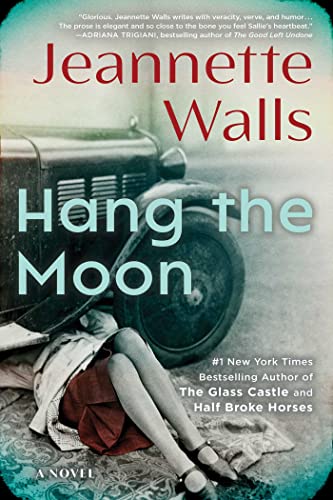
Hang the Moon, by Jeanette Walls*****

Jeanette Walls is the author of outstanding memoirs, most notably The Glass Castle. Her new novel, Hang the Moon, is brilliant, and you should read it. My thanks go to Net Galley and Scribner for the review copy. This book is for sale now.

Sallie Kinkaid is born and raised near the turn of the twentieth century in a tiny backwater in Virginia, daughter of its wealthy scion, “Duke” Kinkaid.  Her mother has died, and Duke has remarried, and now Sallie has a younger half-brother, Eddie. Sallie is a daredevil, given to occasional recklessness, whereas Eddie has a gentler, more introverted nature, with a love of learning and music. But one day, hoping to awaken some more adventurous aspect of his personality, Sallie takes Eddie out for a ride in her cart, and he is injured. Just like that, Sallie no longer lives with her father; she is cast out to live with an impoverished aunt, and there she remains for nearly a decade.

Sallie is a young woman when she returns, and now she must navigate the shoals of local politics, keeping clear of Duke’s sometimes unpredictable temper.  Duke owns nearly every property in the county, and he is deft at doling out favors and keeping the local peace, always in a way that works to his own advantage. Sallie has a hundred questions, some longstanding, and others that develop as she works for her father. However, questions are discouraged in the Kinkaid home. An aunt tells her, “Honey, there are some rocks you don’t want to look under.”

When the local economy is shaken by the unthinkable, Sallie must make some hard choices as she comes into her own. Moonshine has long been an unofficial, yet pivotal way that the local working class makes its living, and when feuds erupt and the government attempts to intervene, Sallie must choose sides. As she comes into her own, she discovers some hard truths about the family she thought she knew. Walls is at her best here, with a strong, resonant setting, a clear, credible plot, and unforgettable characters. This is the sort of book that one comes back to. Highly recommended.

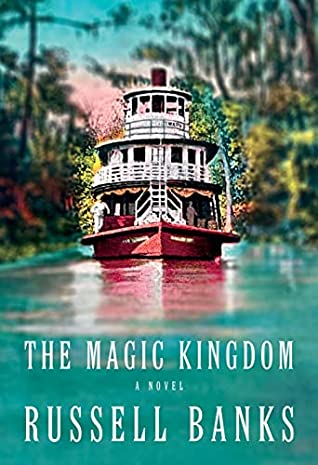
The Magic Kingdom, by Russell Banks*****

Some writers may fade as their bodies begin to fail them, publishing books that aren’t quite up to their usual standards; Russell Banks, on the other hand, seems to have saved one of his best for last. The Magic Kingdom tells the epic tale of Harley Mann, a boy that spends most of his boyhood on a Shaker plantation in Florida, and then becomes a real estate mogul later in life. My thanks go to Net Galley and Knopf Doubleday for the review copy. This book is for sale now.

Harley’s father dies when he is young, and his mother is forced to take him and his many siblings elsewhere. At first, they land in a religious cult on a plantation that works them like slaves; then Elder John, the head of a Shaker Colony in Florida, rescues them. Harley’s mother and most of his siblings become Shakers and remain with the colony until its eventual demise, but Harley has his doubts.

Nobody can craft character the way that Banks has, and he has melded a fascinating setting, one which begins over a hundred years in the past and follows Mann into his dotage in 1971, and which also incorporates a fair amount of Florida geography and history. Most of the story centers around Harley’s deep and abiding love with Sadie Pratt, a young woman being treated for tuberculosis in a nearby sanitarium. Sadie is not a Shaker, but is friend to them, and visits often when her health permits; Harley, just coming of age, falls for her hard. There’s a good deal of tension between Harley and Elder John, who despite all of his adherence to Shaker beliefs and practices on the surface, is also privately building himself a personal stake that only Harley knows about. By the time the book is over, I find myself wondering whether Harley’s character represents a real historical figure. No indeed; this is just the kind of magic that one finds in Banks’s novels, his capacity to build characters so real that they are nearly corporal.

The little shots off the bow that are fired at the Disney Corporation—by Harley, of course, and his representative after his demise, not by Banks—add a tinge of edgy amusement.

Because I had fallen a bit behind, I procured the audio version of this book from Seattle Bibliocommons, and so I can tell you that the narrator does a fine job, and it’s as easy to get lost in this story listening to it as it is reading it from the text; I did some of each.

This novel is brilliant, and all that love excellent literary fiction or historical fiction should get it and read it.

Kunstlers in Paradise*****

4.5 stars, rounded upward. My thanks go to Net Galley, Henry Holt Publishers, and Macmillan Audio for the review copies. This magnificently quirky novel is for sale now.

Julian Kunstler is kind of a mess. He’s a twenty-something New Yorker whose girlfriend has just dumped him. He has no job, and he doesn’t want one; at least, not the low-paying, entry-level variety of jobs for which he is qualified. He takes himself home to his parents who have been paying his way, confident that they will understand his plight and increase his allowance. Instead, he hits a wall. What are your plans for the future, Julian? (None.) What do you plan to do for money? (Get it from you.) Just as a dramatic situation has begun to unfold, they hear from his 93 year old grandmother, Mamie, who lives in Los Angeles. She wants him to come to stay with her awhile; she needs assistance. He’s not so sure that he wants to go, but when his parents insist, he gets on that plane. Once there, the pandemic strikes, and he is trapped in lockdown with his grandmother and her elderly companion, Agatha.

Mamie has always been fond of Julian, and although she does need a driver for doctor appointments and the like, what she wants, more than anything, is to tell her life story. Most of it, anyway. It begins in Austria, as Jewish artists like her father, a successful composer, are being pushed out of public life by the Nazis. (Here, I emit a small moan; I am heartily sick of Holocaust stories. Happily, we don’t stay there long, and this story is worth it.) She goes on to describe the shock she experiences in suddenly being transplanted into a completely different climate, language, and culture, and much of Mamie’s story is droll. And Julian, who never would have sat still for these tales had they come from his parents, listens. At first, he listens impatiently, assisted by Mamie’s generous liquor collection. As time goes on, he begins to listen with greater patience and understanding. And by the end of a year’s time, he listens with genuine interest. His own exile from New York is pale, after all, in comparison to the exile his predecessors endured.

The most dynamic character is, of course, Julian, but through Mamie’s stories, we see how life has already changed her. Agatha is enigmatic until the book is nearly over, and I love what Cline does with her, too.

If I were to change one thing, I would edit down the material about the genius composer friend that emigrates from Austria and is close to the family. This reviewer was a music major once upon a time, and if this part of the narrative is a bit much for me, then probably many others will feel the same. Of course, if the reader comes to the book with a deep interest in Schoenberg, then it may prove quite satisfying.

I am fortunate to have access to both the digital print galley and the audio version, and reader Jesse Vilinsky is hands down the funniest, most skillful voice actor I have ever had the pleasure to hear. Cline’s book is very good, but in the hands of Vilinsky, it is infinitely better. Her interpretations of Mamie and Julian are spot on, hilarious at times, moving at others. The way she voices Agatha is absolute comic genius!

For those that love quirky humor and historical fiction, this book is highly recommended.

Moonlight and the Pearler’s Daughter***-****

3.5 stars rounded upwards. My thanks go to Net Galley and Simon and Schuster for the review copy. This book is for sale now.

Eliza has always been close to her father, a man that runs a fleet of pearling vessels. Her mother is gone, so it’s only Eliza, her father, and her brother. Then one day, the fleet comes back, but her father isn’t with it. He’s gone missing! Did he fall overboard? No, not that anybody saw, but if he isn’t on the ships, it seems the logical explanation.

For a variety of reasons, Eliza doesn’t believe it. She is determined to find him herself; yet to do so, she must go places and do things that are absolutely unacceptable for a woman in Western Australia in 1886. Fortunately—and conveniently—a young German man wants to go these same places, and he accompanies her. From there, things proceed in about the way you might expect.

Other reviewers that came before me say that this story is beautifully written, but terribly sad. I steel myself, but though the story is melancholy in places, I don’t find it depressing. However, I am also less impressed than I anticipated.

The good: I love the setting, and the setting plays a large role in this tale. Australian pearl divers! I have never read anything like this before, and I learn some things. I have never thought before about how the pearls that jewelers sell are collected. Though I would imagine that the process has changed over the past 150 years, it is still interesting to me. Along the same lines, I appreciate the amount of detail in the author’s notes.

On the other hand, the character development is underwhelming. Neither Eliza nor Axel is much different at the ending of the story than at the start. Eliza is a bit wiser, and she has learned things about her father and brother that had been kept from her before, but I can’t call hers a dynamic character; Axel is even less so. The same applies to the quality of the writing. It isn’t bad, but after the buildup, I expected it to be better than this. But the worst thing is a plot twist, right within the climax, that is jaw-droppingly improbable. My mother used to warn me that if I roll my eyes up into my head, they may stay there, so I am grateful to have emerged from this novel with my vision intact. Ohhh, brother.

So for a bit I consider that this is a three star read, but the resolution involving Eliza and Axel is very nicely done, and it wins me back enough to round it up to four. I recommend this book to those interested in the setting.

Earl, Honey, by D.S. Getson*****

“Ever since Pa hit him in the head with the two-by-four, Earl had lived with blinders.”

If you can read that opening line and not be curious about what comes after it, check your pulse, because there’s a good chance you are already dead. As for me, I was drawn to it immediately, and I thank Net Galley and Matador Publishing for the review copy. This book is for sale now.

When we meet Earl, the year is 1921 (although occasionally, we skip forward to 1970.) Earl is in the courthouse watching his father’s trial:

‘I di’nt fornicate with no donkey. Es ist eine dirty lie!’ From the back of the darkly paneled room, he feels his pa’s rage like a ground tremor rippling its way through the crowd the crowd to the spot where he sits, surrounded by family. Well, except for Rose. She’s up front in a special seat…

‘And what about the other charge, Mr. Hahn? Is it true your daughter, Rose, is carrying your child?’

Boom. So right in the first chapter, you can plainly see that if you are someone that needs to know about triggers before reading a novel, this may not be your book. And that’s a shame, because the quality of the writing is phenomenal, from the riveting opening line, all the way to the last.

Earl’s pa does, in fact, go to jail; even if he wasn’t guilty as sin (and of it,) which he clearly is, everyone in town hates him with an abiding passion, most of all his wife and ten children.

“There wasn’t a man within a hundred miles of Sampson County who would stand up for Reinhardt Hahn.”

It is unusual for me to include so many quotes in a review, but as you can see, the writing is so clear, strong, and resonant that I cannot do it justice any other way.

As the title and first line suggest, the story is Earl’s, and we follow him through the remainder of his childhood and adolescence. At its end, I am thunderstruck when I read the author’s note explaining that the whole story is based on the truth. Earl was her grandmother’s brother; Reinhardt Hahn, or “Pa,” was her great-grandfather.

Friends, this is easily one of the best novels to come out of 2022, and I am convinced that the only reason it isn’t parked on the New York Times bestseller list is because it was self-published, and therefore it didn’t receive the kind of publicity that a major publisher could have provided.

I won’t say more; to do that, I’d have to fish out some more quotes, and they are even better when read in context. Highly recommended; D.S. Getson is an author to watch.

The Night Ship, by Jess Kidd****

Jess Kidd can write. I read and reviewed her debut novel, Himself, which I loved so much that I bought a copy to give as a gift; I called it “Sly as hell and fall-down-laughing funny.” I have read and reviewed her others as well:  Mr. Flood’s Last Resort (The Hoarder in Britain,) and Things in Jars. Her most recent novel, The Night Ship, is technically as good or better than any before, but I love it less, largely because of the expectations I brought to it, based on the other three before it. I’ll explain that momentarily.

My thanks go to Net Galley and Atria Books for the review copy. This book is for sale now.

The Night Ship is based on a true story, the sinking of the famous ship, the Batavia, in 1629. Our protagonist is Mayken, a child whose mother has died; she is being sent to her father in the company of her elderly nurse maid.  When the ship goes down, she is marooned on an island near Australia.

Over three hundred years later in 1989, a boy named Gil has also lost his mother, and is sent to live on the same island with his cantankerous grandfather. There isn’t much to do there, and he finds his imagination is captured by the tales of a shipwreck that occurred here hundreds of years ago.

The way that Kidd braids the stories of these two children into one well crafted novel is admirable. They are separate, and yet together, and the nearer we get to the conclusion, the more commonalities reveal themselves. Clearly, Kidd is at the height of her craft—so far, at least. Goodness knows what else she’s got up her sleeve. Her eccentricity and her appreciation of working class struggle sets her in a class beyond most authors.

And yet. When I read her debut novel, she captured my whole heart. I couldn’t stop talking about it, the way her adroit word smithery combined with a hilarious tale of sheer, spun magic. It remains a favorite of mine some five years and hundreds of novels later. And when the next, Mr. Flood, came out it wasn’t quite as magical, yet really, nothing else could be, and it was still vastly superior to what anyone else was writing, and I adored it. And the next one after it, while not as humorous, was wonderfully dark, and the ending made me smile. The author’s message was rock solid.

Every single one of her previous novels had an uplifting quality, and when I read the last page, I was smiling. And so I began to feel that I could count on Kidd to raise my spirits. In fact, I rationed this story out to myself, and when, given my penchant for reading multiple books at a time, I found myself buried in dark works—in one, I was freezing and bloody in the Ardennes Forest during World War II; in another, the devil had possessed a psychiatrist in a high security asylum; add into the mix a bio of a falsely accused prisoner in the U.S. that lost his entire youth before he was exonerated, and another young man being ‘re-educated’ in a North Korean prison camp; I figured I needed a good dose of Jess Kidd right now. Now. This instant!

And so I got her book, and then the ship went down.

So, I didn’t get what I wanted from this novel, but it had more to do with my own expectations than with any defect in the quality of her writing. Still, I cannot help feeling a trifle disappointed.

If you’re ready to go dark, this is your book. If you just love good writing, this is your book, too. But if you need a feel-good book to lighten your heart, get her debut novel.

Back to the Garden, by Laurie R. King*****

Laurie R. King is best known for her Mary Russell and Sherlock Holmes historical detective novels, but I have long preferred her contemporary mysteries. Back to the Garden is her latest of these, and it is excellent. My thanks go to Net Galley and Random House Ballantine for the review copy. This book is for sale now.

Our protagonist is Raquel Liang, a detective based in San Francisco. When a long-dead body is found in the garden of the Gardener Estate—a famous mansion and grounds that sound faintly reminiscent of Hearst Castle—Liang, who is working on a task force to find and identify victims of serial killer Michael Johnston, becomes involved in the case.

Rob Gardener is the heir to the estate, and he had clashed often and bitterly with his grandfather before his demise in the 1970s. Upon learning of his windfall, Gardener turned the manse into a commune, with murals on the walls of what were once imposing, grandiose rooms and vegetable gardens where more formal floral ones previously stood. Now the place is being restored, and as gardeners work to clear a thicket of overgrown hedge, a huge statue topples over, exposing the bones of someone long interred there.

Meanwhile, in a hospital in the big city, convicted serial murderer Michael Johnston lies dying. During the same period that the commune reigned, Johnston was spiriting girls and young women off so that he could murder them. Improved technology has provided a number of leads, but the window in which the cops can extract information from the old bastard is rapidly closing. Liang suspects that the body found on the estate, which dates back to the same time that Johnston was slaying women in the area, may be one of his, and so she makes frequent visits to learn as much about the place and its residents, past and present, as possible.

The intriguing bit about this mystery is that the members of the commune, other than Rob himself, didn’t use their birth names, and it makes them tricky to trace. With names like Meadow, Pig, and Daisy, they could be just about anybody. Is one of them the body beneath the statue?

King does a fine job of segueing from past to present and back again, and of juggling a moderately large number of characters. As I read, I never have to flip back to be reminded of who someone is. The reader should know, however, that this is not a thriller. It isn’t written in a way to grab you by the hair and make your pulse pound. The pace is a bit more laid back, but for some of us, that is a pleasure. I never lost interest, and I could read this thing while eating my lunch without gagging.

There’s a good deal of period nostalgia, and so I suspect that the greatest appeal will be to Boomers.

Highly recommended.

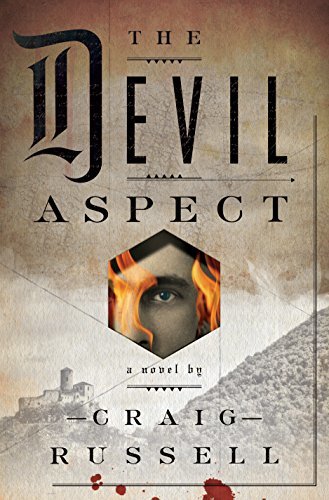
The Devil Aspect, by Craig Russell

3.5 stars, rounded upward. I read this creepy tale during the last half of October, and it is indeed a good way to get into the Halloween spirit. I am disgracefully late with my review—3.5 years late, as it happens—but I do thank Net Galley and Doubleday for the review copy. This book is, of course, for sale now.

Here is what drew me in. This is horror of the old school variety, with gothic towers and half a dozen criminally insane inmates. It’s set in Czechoslovakia, which I seldom see. The flavor, overall, is similar to the stories we told as children around campfires or late at night during slumber parties. Of course, it has a more adult approach, but even so, this is classic horror.

Our protagonists are Viktor Kusarek, a Jungian psychiatrist who comes to the asylum to conduct experiments on the patients, or inmates, in order to prove a theory, and police chief Lukas Smolak, who is pursuing a serial killer that is running amok in Prague.

This is a story that is more about the journey than the destination, though perhaps not intentionally so. Hearing about each of the six savage killers as Viktor interviews them is vastly entertaining. There’s one spot about a third of the way in, where a patient, partially sedated, is explaining that he is innocent, and also that a guest sorely provoked him. Always so critical! He was determined to impress her with his cooking, and indeed, the longer he worked at the stove, the more reasonable she became. Viktor points out that the guest had stopped complaining because he had her head in the skillet. I laughed out loud! The middle of this novel is unmissable.

There are three things I would change. First, the book is a little overlong, and could bear some tightening. Second, the whole Nazi menace has nothing to do with the problem or its resolution. It seems more like window dressing than anything else, but it doesn’t add a thing to the story. If I were the editor, I would cut that part of it out and voila, some of the tightening would be achieved. And third, the ending is so, so predictable. I stuck with the story until around the 85 percent mark, at which point I figured all hope of an ending other than what I expected was pretty much gone. At that point I skipped to the end. Yup. There it was. I would have liked a less formulaic ending.

Still and all, fans of old fashioned horror could do a lot worse. If this sounds like your kind of book after everything I have said, then go for it. I am old and cranky, and what seems obvious to me might seem new and clever to those that haven’t read many books of this ilk. And one way or the other, getting there is a lot of fun.