Over Yonder, by Sean Dietrich*****

Sean Dietrich has written another fine novel, Over Yonder, one full of quirky characters, weird yet oddly credible situations, and a whole lot of heart. My thanks go to NetGalley and Thomas Nelson Books for the review copy. This book is for sale now.

Dietrich has been writing for a long while, but this is just the third of his books that I’ve read. As I begin this one, I develop a niggling suspicion, wondering whether this author uses a formula. This would be a sad discovery, because till this point, I have greatly loved his work. And so the question I have to answer before I can do much else is whether that’s true, or whether he is writing unique stories using a signature style. Here is what I am seeing: each story focuses on a girl—teen or child—who’s down on her luck, possibly facing a crisis, with no adult that will help her or advocate for her; an older man dealing with misfortune of his own such as a fatal or serious illness, and who is otherwise isolated and in need of redemption; and a chance meeting of the two in a small town in the deep South.

I suppose, after reading this third one I am inclined—as you can see from my rating—to say this is a signature style rather than a formula. I hate to be played. If I felt this was a formula, I would feel annoyed and my review would not be generous, but that’s not what happens.

Caroline is 17 and pregnant. Her boyfriend, Tater Bunson, is at the wheel of his ’93 Honda.

“Caroline stared out the lace-like cracks of the passenger window’s single bullet hole at downtown Knoxville…her hair was the color of a carrot. She was ninety-four percent freckles. Her small, upturned nose, full cheeks, and cherub face brought to mind a character from the highly successful Cabbage Patch Kids product line…Tater spun the wheel right. The car made a sound not unlike a Folgers can of rocks falling down a public stairwell. The spiderweb crack on the passenger window came from a .22 caliber bullet that had passed through the glass during Tater’s last heated disagreement with his mom.”

Woody Barker used to be a priest. He has a houseboat and a bad heart, and not much else. He can qualify for a heart transplant, but only after he quits smoking, and it’s not going well. He’s lonely; he had hoped to pick up with his ex-wife once he got out of prison, but now that he’s out, he sees that she has a boyfriend, and it looks like he’s out of luck. Then an old girlfriend summons him to her deathbed. She wants him to meet his 17-year-old daughter. Who? What??

Dietrich’s wry humor and visceral figurative language are out in force here. Highly recommended to those that enjoy strong Southern fiction with deeply developed characters.

Clete, by James Lee Burke*****

Mortality is mortality. It comes to you when it’s ready. We don’t set the clock.

The Dave Robicheaux series by James Lee Burke is one of the finest ever written. As the faithful know, Clete Purcel is Dave’s partner in whatever he does. Once they were cops that called themselves “The Bobbsey Twins from Homicide.” (You probably need to be a boomer to get the reference.) Now they are on their own, but they are still like family to one another. This is the 24th in the series, and it’s the first to be told from Clete’s point of view. It’s a brilliant idea for two reasons: first, because Clete is a well written and wildly popular character, and also because it gives us a chance to see Dave through someone else’s eyes, someone that loves him, but isn’t him.

My thanks go to NetGalley and Grove Atlantic for the invitation to read and review, along with my profound apology for being so very late. This book is for sale now.

In this installment, a new drug ring has come to Louisiana, and it’s creating still more violence, more death, and more crime in general. Clete, who is now a private detective, is hired by a woman named Clara Bow. (If the name rings bells, it’s because the real Clara Bow was a famous movie star from the silent film era.) The Clara that hires Clete wants him to look into the activities of her skeevy ex-husband. Once he begins, we hardly have enough time to breathe. Clete hits the ground running, and there are no slow passages till the book concludes.

My favorite passages are the ones in which a woman named Chen, whom Clete rescues, then falls for, tells him how he appears to her. Here’s one: “You always gentleman, Mr. Clete. Your cats sleep on your face and you no mind. The world kill men like you because you brave and you kind.”

Later, Chen promises him that she won’t go back to taking drugs. “That because I go to a meeting every day with the Work the Steps or Die Motherfucker group. The Motherfuckers are very nice.” He advises her not to use that term in public. Don’t you love it?

Like every book in the series, this one moves seamlessly from scenes with quirky characters and dark humor, to glorious literary passages that I have to read more than once just to admire the writing, to passages that are gritty and violent and occasionally terrifying. Let me put it this way: you will never be bored.

Can you dive in mid-series? I did; then I became so enamored that I went back and read all the rest of them.

Highly recommended.

Let Us Descend, by Jesmyn Ward*****

Reading Jesmyn Ward always hurts so good. In Let Us Descend, she conveys the heartbreak and sense of betrayal a young girl, Annis, faces when she and her mother are sold separately by their owner—who is also her father–and the ways that she copes, and also the ways she is helped by the spirits of her ancestors.

My thanks go to Scribner and Net Galley for the invitation to read and review. I’m sorry to be so late here, and am grateful that the literary world has recognized this book for the masterpiece that it is.

You may have seen other reviews in which I complain and gnash my teeth over historical inaccuracies; sometimes I rant over an author’s failure to portray a child in a way that is developmentally inaccurate. There will be none of that here. Ward has taken the time and done the research, and so her well crafted characters aren’t compromised by sloppy background details. I had to take this story in small bites because it is excruciatingly sorrowful.  For part of it I listened to the audio version; this is a treat in itself, as Ward reads her own novel.

Some reviewers have taken issue with the amount of magical realism Ward employs. I disagree with them. How can any novelist portray such a story and such a character as Annis with any glimmer of hope, unless they employ these literary devices? Does anyone really want to read a book that is miserable at the outset, miserable in the middle, and miserable even at its bitter, wretched conclusion? Without hope, there’s not much incentive to keep reading, nor would it have been satisfying to write; but Ward will not and does not revise history simply to make her readers more comfortable. There was only one way to tell this story and be true to history and her characters, and Ward found it.

Yes, it’s a rough read, but it’s so well written that many readers must have smiled through their tears. Know that, of necessity, this story is absolutely loaded with triggers; assuming that you can navigate them without coming undone, I highly recommend this story to you.

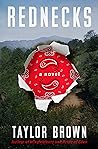
Rednecks, by Taylor Brown*****

“Law only serves them that’s in power. Ain’t no different than always…’Tis the victor who writes the history—and counts the dead.”

I’ve been an enthusiastic fan of author Taylor Brown since reading Gods of Howl Mountain, which was published in 2018. His new novel, Rednecks, is out now, and as with his earlier work, it is outstanding. My great thanks go to NetGalley and St. Martin’s Press for the invitation to read and review.

Brown tells the story of the Battle of Blair Mountain, a very real large scale battle, complete with machine guns, helicopters, tens of thousands of angry, armed miners, and the U.S. Army, an event which really did take place in the Appalachian Mountains in 1921. Over a million rounds were fired, and then the story was suppressed by the government, bosses, and big business media.

 In his author’s note, Brown tells us that the character of Dr. Muhanna, a heroic individual sympathetic to the cause of the miners, is based on his own great-grandfather. There is a meaty explanation of what parts of the story are based on the actual historical record, and what parts—small ones, to be sure—he has changed.

Apart from his skill as a writer and researcher, the thing that I have always loved best about Brown is his deep respect for the working class. It shines through every page of this novel. Mother Jones, the fiery Socialist labor organizer, is here as well, and she is possibly my favorite figure in American history. Unfortunately, she is not at her best here. Past ninety years of age and in poor health, she attempts to deceive the miners into quitting their struggle early once she learns that Washington, D.C. intends to send troops. It’s a pity that her many years of inspirational organizing and leadership are not on display here, but the facts are the facts, and this story is not, after all, chiefly about Mother, but about the miners, so I suppose that Brown has written it in the only honest way that it could be written. There are indeed passages that demonstrate her eloquence and loyalty to workers of every race and ethnicity.

As I read, I like to highlight passages to include as quotes in my review. This time, I came away with 53 quotes. Reluctantly, I am setting most of them aside; you will have to find them yourself. They’re better within the context of the story, anyway.

As a personal aside, I will mention that my own grandfather—“Papaw”—died of Black Lung disease in 1978 after having worked in a nonunion mine in South Dakota beginning in the eighth grade. He had to leave school and work fulltime, as there was not a social net back then, and he and his family would have starved if he had done otherwise. World War II brought him better fortunes, but coal dust, once lodged in the lungs, never leaves.

This is a gritty tale to be sure, one full of bloodshed and suffering, but also of immense courage and inspirational leadership. I read it in small bites lest it work its way into my dreams, until I reached the climax, at which point I had no choice in the matter, and was unable to put it down. This book is one of the year’s best. I highly recommend it to those that love labor history, historical fiction, or that just love a well-told story.

Like the Appearance of Horses, by Andrew Krivak****

I first read Andrew Krivak in 2017, when The Signal Flame was published. His glorious prose is something few authors can match. Here we have another novel involving many of the same characters and to an extent, the same setting. I am happy to get back to it.

My thanks go to NetGalley, Highbridge Audio, and Bellevue Literary Press for the review copies. This book is for sale now.

One of the things that initially drew me to Krivak’s writing is that he occupies a sparsely populated niche with his historical fiction. Who else writes about the Romani Resistance of World War II? Who writes about Romani refugees? Most authors are as susceptible as anyone else to trend following and bandwagonism. Krivak is not. He sets his own course, and he does it with spellbinding prose and sterling self-discipline.  

Here we see three generations of men that go to war, starting with World War II, then to a P.O.W. camp during the Vietnam War, and finally, to Iraq. This is a rough read, friends. There’s just about every possible trigger, so if you’re protecting the more tender parts of your mind, you may need to pass on this one. On the other hand, if you are looking for a catharsis to bring about a good ugly cry, rush out and get this book right this minute.

Krivak doesn’t write page turners; instead, he draws me in and makes me forget where I am and what I was doing a minute ago. His work is deeply absorbing and at times, moving.

Narrator Jamie Renell gives a flawless performance here. The book is tightly plotted enough, however, that the listener needs to pay careful attention. I had both the audio and ebook formats, and I still got confused once in awhile and had to backtrack.

If I could add one more thing to ice Krivak’s literary cake, it would be a well developed female character. The women that appear here seem to have been planted for the purpose of developing the male characters. That’s not necessarily a bad thing, and Krivak has crafted this story around a set of actual people and events, though he says it’s a loose representation, and so I can see why he chooses to focus on the men that go to war; yet, since he is taking a few liberties anyway, would it hurt so very much to send off a soldier girl?

This complaint is a minor one. Krivak is a badass, and I do recommend this book to you.

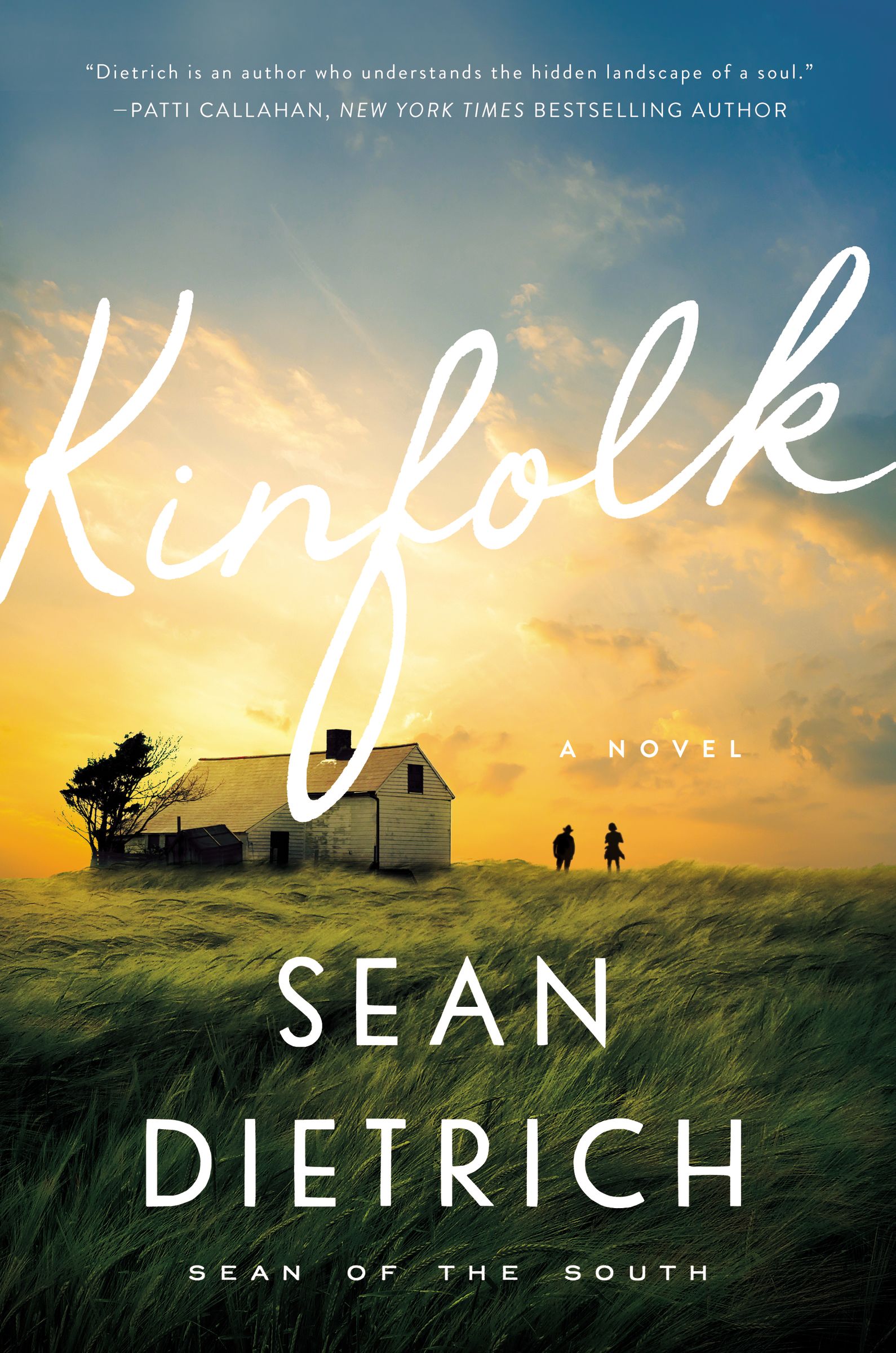
Kinfolk, by Sean Dietrich*****

“Thanksgiving is not about being happy. The holiday is not about mirth and beauty and the warmth of gaiety. Thanksgiving is about fulfilling family obligations and being miserable the way the good Lord intended.”

When we meet our protagonist, Nub Taylor, it is Thanksgiving night, and he and his cousin and best friend Benny are three sheets to the wind, idling in a rusty old truck across the street from the dignified, stately home of Nub’s daughter, Emily. Nub has been invited to dine there, but knows better than to attend. Emily is a widow; she married up, and every mover and shaker in town has shown up. No, Nub won’t be joining them. Nothing good would come of it.

My thanks go to Net Galley and Harper Muse for the review copy. This book is for sale now.

Our story is set in the 1970s in a tiny town in Alabama. Nub is long divorced from Emily’s mother, who keeps her distance these days. He takes his meals at the Waffle House, and that includes today:

“Waffle House did not close on Thanksgiving because Waffle House never closed. Waffle House was like the Vatican, only with better hash browns. Nobody on staff at the Waffle House had a key to the store, not even the manager. Because there were no keys. The doors were never locked. Waffle House just went on and on. Sort of like a disco.”

It is here that he meets Minnie. Minnie is fifteen years old and well over six feet tall. Why is this girl spending her holiday here, instead of with her kin? The answer is that she has none. Her father is in prison, and her mother has just recently killed herself.  

Of course, Nub doesn’t know these things at first, but something about her calls to him. Perhaps all children of suicide victims wear something similar in their expressions; Nub had lost a parent the very same way, and he has never gotten over it. How does anyone? He knows “the cardinal rule about suicide. You don’t talk about it.”

Now, Minnie is orphaned and she is pregnant, courtesy of a thoughtless, spoiled local boy that told her he loved her, then laughed behind her back. And so it is that Nub realizes, as he learns more about Minnie Bass, that perhaps he may have a chance to redeem himself.

This is a wonderful story, full of warmth and a lot of heart. Dietrich is a master story teller, able to create viscerally real characters that leap from the page and a narrative that billows with home truths. There is no question that Kinfolk is among the finest books to be published this year.

Highly recommended.

In the Pacific Northwest, October evenings are a great time to stay home. Of course, some people put on their hunting jackets, grab their gear, and head out into the woods; some are party animals seeking a good Halloween bash; and some are charitable souls that organize haunted houses and other seasonal attractions, with the proceeds going to good causes. But a fun fact is that a majority of us do exactly what I plan to do: curl up at home with my beagle, my book, a cup of hot apple cider and a bunch of Halloween candy that trick or treaters never show up to claim. Can’t let all that chocolate go to waste, now can we. If my plan looks good to you, check out these scary reads that I’ve collected over the years. A note of apology: ten years with Word Press isn’t enough, apparently, for me to adequately intuit all of the layout options. I have tried mightily to post each of these choices in a reasonable arrangement with links, but there are gremlins involved. Once again, then, I must ask that if you wish to read my review of one or more of these goosebump-worthy selections, please enter the title in the search bar. All of them are waiting for you!

Earl, Honey, by D.S. Getson*****

“Ever since Pa hit him in the head with the two-by-four, Earl had lived with blinders.”

If you can read that opening line and not be curious about what comes after it, check your pulse, because there’s a good chance you are already dead. As for me, I was drawn to it immediately, and I thank Net Galley and Matador Publishing for the review copy. This book is for sale now.

When we meet Earl, the year is 1921 (although occasionally, we skip forward to 1970.) Earl is in the courthouse watching his father’s trial:

‘I di’nt fornicate with no donkey. Es ist eine dirty lie!’ From the back of the darkly paneled room, he feels his pa’s rage like a ground tremor rippling its way through the crowd the crowd to the spot where he sits, surrounded by family. Well, except for Rose. She’s up front in a special seat…

‘And what about the other charge, Mr. Hahn? Is it true your daughter, Rose, is carrying your child?’

Boom. So right in the first chapter, you can plainly see that if you are someone that needs to know about triggers before reading a novel, this may not be your book. And that’s a shame, because the quality of the writing is phenomenal, from the riveting opening line, all the way to the last.

Earl’s pa does, in fact, go to jail; even if he wasn’t guilty as sin (and of it,) which he clearly is, everyone in town hates him with an abiding passion, most of all his wife and ten children.

“There wasn’t a man within a hundred miles of Sampson County who would stand up for Reinhardt Hahn.”

It is unusual for me to include so many quotes in a review, but as you can see, the writing is so clear, strong, and resonant that I cannot do it justice any other way.

As the title and first line suggest, the story is Earl’s, and we follow him through the remainder of his childhood and adolescence. At its end, I am thunderstruck when I read the author’s note explaining that the whole story is based on the truth. Earl was her grandmother’s brother; Reinhardt Hahn, or “Pa,” was her great-grandfather.

Friends, this is easily one of the best novels to come out of 2022, and I am convinced that the only reason it isn’t parked on the New York Times bestseller list is because it was self-published, and therefore it didn’t receive the kind of publicity that a major publisher could have provided.

I won’t say more; to do that, I’d have to fish out some more quotes, and they are even better when read in context. Highly recommended; D.S. Getson is an author to watch.

Black Cloud Rising, by David Wright Falade*****

Black Cloud Rising, the historical novel that’s already been excerpted in The New Yorker, is the book I’ve always wished someone would write. Author David Wright Falade tells the story of the African Brigade, a unit of former slaves tasked with rooting out pockets of Confederate guerilla fighters in the Tidewater region of Virginia and in North Carolina’s Outer Banks. This outstanding work of historical fiction is one of the year’s best surprises, and it’s for sale now.

My thanks go to Net Galley and Grove Press for the review copy.

Sergeant Richard Etheridge is our protagonist; he is the son of a slave and her master. This is the only small criticism I have here; it seems like every time I see a fictional former slave that goes on to do momentous things, he’s the master’s progeny. However, Sergeant Etheridge did exist in real life; I have been unable to discover whether this aspect of his beginnings is fact or fiction. If it’s fact, then I withdraw my objection.

One way or the other, this is nevertheless a fantastic novel. In fact, since I taught the American Civil War for many years and have never heard if this sergeant, I wonder, initially, if his story is even true. But a little research shows Etheridge to be have been real. I had known about the existence of this brigade, but the only aspect of it I’d seen was–oh how embarrassing—from the movie, Glory, in which an all-Black military unit volunteers to lead the charge on Fort Wagner. But there, the story is told not from the viewpoint of infantrymen, but from the Caucasian officer chosen to lead them. It’s not as if I failed to do research; but during my years in the classroom, I couldn’t find a single thing that reflected the memories and experiences of the former slaves that fought for the Union. And although this book comes too late to help me teach the upcoming generation, it will be greatly useful to teachers that come after me.

At the outset of our story, Richard approaches his master at dinner, a thing that is generally not done, to tell him that he is going to enlist in the Union Army. Because he is the master’s son, he is able to get away with this, and this has also allowed him to learn to read and write, which in turn makes him officer material. Richard is a well developed character; it is wrenching to see his loyalty and devotion to his father, as well as to his half-brother Patrick, who is the legitimate heir to his father’s estate. Repeatedly the narrative points out that “the son will always seek out the father,” and it makes me ache for this young man. Nevertheless, he does go to war against his father’s wishes, and he demonstrates leadership and skill under pressure.

There is one visceral scene in which the Caucasian master of a plantation who is linked to the guerilla Confederates, is dragged to his own whipping post and beaten by his former slaves. I find it deeply satisfying. In the end and after much bloodshed, the unit is successful in its mission to clear the area of the guerillas that threaten the Union effort.

In many ways this is a coming of age story, but those that will love it most are those that enjoy military history and all things related to the American Civil War, as well as those interested in the Black struggle. It’s a great selection for Black History Month, but it will make excellent reading during the other eleven months as well. Highly recommended.

The Four Winds, by Kristin Hannah****-*****

“‘My grandfather was a Texas Ranger. He used to tell me that courage was a lie. It was just fear that you ignored.’ She looked at him. ‘Well, I’m scared.’

‘We’re all scared,’ he said.”

Kristin Hannah’s electrifying new novel, The Four Winds, is set during the Great Depression in the American Dust Bowl and California. It’s a story about courage, and about the ways that love can transform us. My thanks go to Net Galley and St. Martin’s Press for the invitation to review. It’s for sale now.

Elsa is born into a wealthy family, but this doesn’t do her much good. She is tall, ungainly, and considered homely by her parents, a contrast to her two younger, more adorable sisters. She was very ill when younger, and the family liked having her tucked away in her room so much that they would like her to remain there. When company comes over, it is suggested that she go “rest.” Affection and kindness are denied her entirely.

One day, in a fit of unheard-of rebellion, she buys herself a silk dress and sneaks out to a speakeasy. There she meets Rafe, and before long she is rolling in the hay. When the morning sickness comes upon her, her furious father drives her to the Martinelli farm, (“Italians, no less!”) and she is unceremoniously dumped there. The baby is a Martinelli, he tells them, and it—and its mother—are your problem now.

Rose and Tony Martinelli are not affluent like Elsa’s parents; she learns to haul water and do farm chores, and she learns how to make delicious, cheap food the Italian way. But her father’s abandonment is a blessing in disguise, because the Martinellis are good people. She is happy there with them. She marries Rafe, and she bears two children. But the land has been over-farmed, and soon the dust storms come and destroy nearly everything they have built:

Past the outhouse, a murky, urine-yellow haze burnished the sky. Wind picked up, barreled across the farm from the south. A board flew off the chicken coop and cracked into the side of the house. Rafe and Tony came running out of the barn. The cows mooed angrily and pushed into each other, pointing their bony butts into the dust storm.

The door opened. Rose yanked her to her feet, pulled her into the rattling, howling house.

Elsa and Rose ran from window to window, securing the newspaper and rag coverings over the glass and sills. Dust rained down from the ceilings, wafted from infinitesimal cracks in the window frames and walls. The candles on the makeshift altar blew out. Centipedes crawled out from the walls, hundreds of them, slithered across the floor, looking for somewhere to hide.

A blast of wind hit the house, so hard it seemed the roof would be torn off. And the noise. It was like a locomotive bearing down on them, engines grinding. The house shuddered as if breathing too hard; a banshee wind howled, mad as hell.

Friends, this isn’t even the climax. This is sixteen percent of the way into the story. And misery and tribulation continue to rain down on this poor little family and thousands more like them. The crops die, and the livestock that doesn’t starve is killed by breathing dust. Children, including Elsa’s little boy, fall ill with dust pneumonia; no matter how hard they try to prevent it, so much dust is in the atmosphere that it makes its way into the lungs, and so the youngest and oldest are soon in trouble.

The first half of this novel is a rough read. There’s sorrow, and suffering, and loss, and grief, and I find myself eyeing the page numbers and thinking to myself that if this were written by anybody else, and if I didn’t owe a review, I probably wouldn’t finish it, because who wants an entire story of this? But at about the halfway mark, things begin to change.

By now, Rafe has hit the bricks. Never a man of character or great resolve, he sneaks off into the night, leaving the three remaining adults to care for the children and the farm. And it is now that change takes place. Without Rafe to anchor the family as is traditional during this period, Elsa is left to make the decisions about her children’s futures, and in doing so, she changes.

Hannah portrays the Depression era American West vividly and accurately, and this is when the story grows legs. The plight of agricultural workers is likewise dealt with in clear, immediate detail. My one quibble, and it is the source of the missing half star in my rating, is her inexpert portrayal of Communism, which plays more than a passing role in the last thirty percent of the story. The first time I saw farmworkers’ struggles as “shutting down the means of production,” I cleared my throat, but I told myself it was possibly a typo that might be edited out in the finished version. The next two times I saw it, I started making notes. This is not a technical error; this is a dumb-butt error (trying to elude the censors here) that should have been caught on the first pass, and because it appears when the climax ramps up, it is a distraction that interferes with the flow of the narrative.

Nevertheless, this is a well-written novel, set during an interesting time period. Particularly arresting is the development of the relationship between Elsa and her adolescent daughter, Lareda, whose point of view is shared alternately with Elsa’s.  Setting, character, and plot work together seamlessly to enforce one another and move the story forward, yet if I had to hang my hat on one laudable aspect of this book, it would be character development.

I strongly recommend this novel to you.