The Sisters of Summit Avenue, by Lynn Cullen***-****

My thanks go to Net Galley and Gallery Books for the review copy, which I received over a year ago. I began reading this story numerous times, but I didn’t find it engaging enough to continue, and so each time I began it, I would end up returning it to my queue in exchange for something I liked. However, I recently began moving through my backlog with assistance from Seattle Bibliocommons, where I was able to get audio versions of those I’d left by the wayside. Ultimately, this is how I was able to follow through, and it’s a good thing, because the last half of this book is far better than the first half.
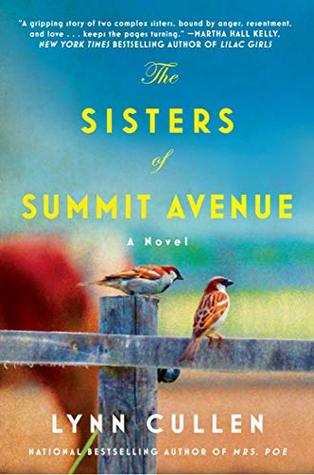
The story features three women, all of them in the American Midwest in the early 1920s. The sisters are Ruth and June, and their mother is Dorothea. June is the golden one, the prettiest and most successful. Ruth, who is younger, just resents the crap out of June. And she can tell that their mother loves June more.  June, on the other hand, is Betty Crocker; one of them, anyway. One of the few career opportunities open to women involves inventing recipes for Betty; answering Betty’s mail; and playing the part of Betty on the radio. Women visit the company expecting to meet Betty, and thy are outraged to learn that no such person actually exists.

Meanwhile, Ruth and her family remain in the family home with Dorothea, and the sisters are estranged. Their mother hates to see them this way, and she schemes to bring them together.

The narrative shifts between the three women, and from the past to the present. When we are taken back to their youths, we learn what has come between them, and what assumptions, grudges, and secrets each holds that has not been said.

The first half of this book feels like it will never end. The sloppy pop-cultural references grate on me, particularly when the shortcuts result in inaccuracy. For example, when the stock market crashes, Cullen has men jumping from skyscrapers left, right, and center, when in fact, this is mostly myth, or at best, hyperbole. At most there was a single jumper in real life. Historical fiction at its best teaches us in an enjoyable way, but when readers are presented with urban legends as reality, it is a letdown.

By the halfway point, I am only still listening to this book because I have to make dinner anyway, and having put in as much time as I have, I figure I may as well finish it up. My review is on its way to being three stars at best, and possibly two. So imagine my surprise when at the 55% mark, the whole thing wakes up! The female character that has been the least interesting up until now is Dorothea, but now we learn the meaty parts that she has kept secret, and there we find the key to everything else. I am so astonished that my jaw drops, and I stop chopping vegetables and gape at my tablet, which is streaming this story. Oh, heck! Seriously? This is why…? Oh, holy crap. Who knew?

From that point forward, it’s an entirely different ballgame. When I head for the kitchen, I’m already thinking about what I heard the day before, and looking forward to the next bit.

Those that enjoy character-based fiction could do a lot worse, as long as you take the historical parts with a grain of salt. Overall, I recommend that if you read this book, you should get it free or cheap, and prepare to be patient.

The Dirty South, by John Connolly*****

A few years ago I read and reviewed my first book in Connolly’s Charlie Parker detective series, and I became immediately addicted. Since then I’ve never missed an installment, and after the 17th in the series, A Book of Bones, I more or less stalked the internet to find out when I could find the next in the series. It doesn’t disappoint. My thanks go to Net Galley and Atria Books for this, the 18th in the series. It’s for sale now.

Here, Connolly steps away from the crossed-genre, pants-on-fire entries he’s written recently to scribe a prequel. A couple of new readers have inquired whether to read this before all of the other Charlie Parker books, or treat it as the 18th.  The fact is, you can take it in either direction. On the one hand, I have reached back and read a couple of the first in the series and whereas they are perfectly respectable detective novels, they don’t hold a candle to those he’s written more recently. Once I had read the 14th, which is where I began, I was spoiled and a wee bit disappointed by the earliest books in the series. So whereas it makes sense to start reading with this prequel, I fear some readers will notice a dip in quality if they read this masterful literary mystery Connolly has just published, and then dive into his earliest Charlie Parker books. Again, they aren’t badly written. But they aren’t brilliant, and the most recent five in the series, including this prequel, are. So take that and do as you like with it.

Parker is reeling, as the book unfolds, from the vicious murders of his wife and daughter by a killer that intended to slay him, but found them instead. He is convinced that their murderer is a serial killer, and so he has taken a leave of absence from the police force back home and is touring the country by car, chasing down every murder anywhere that bears a resemblance to theirs. He is a dangerous man, because he has no sense of self-preservation. He sees himself as a man that has lost everything, and such men will take risks that more happily situated investigators would consider unthinkable. He also has a source none of the others can access: his wife, his daughter appear to him now and then, and they tell him things that relate to the case at hand, things that nobody else knows.

Those familiar with the series know that Connolly’s most recent Parker books have veered more in the direction of horror, and they include a number of supernatural events that his earlier work does not. Here he steps away from it, and once again his only information from the great beyond is what the spirits of his loved ones share. His adversaries are purely mortal ones. And as to which is better, it’s hard for me to say. His last book prior to this one is a monster, and it includes a tremendous amount of historical research that I find appealing, along with some hugely original, sinister characters that surely must come straight from the bowels of hell. It’s amazing work.

But there’s something to be said for books like this one, too. Most of Connolly’s work is so edgy and so full of violence that I have had to take it in small bites, lest it affect my overall mood. I didn’t have to do that here. I can crawl under a quilt and read for hours without needing to come up for air. I always make sure I read something less malign for a few minutes before turning out the light, but at the same time, this is a much more comfortable read.

Which is not to say that it’s tame. It isn’t. Someone has murdered Black girls in this tiny Arkansas burg, and Parker pulls into town right on the heels of the most recent one. Right away, it becomes obvious that there’s shifty business going on. The town is miserably depressed economically, and the local robber barons, the Cade family, have a deal in the works to bring a large manufacturer to town.  The Cades stand to make a great deal of money, and the locals, poverty-stricken and jobless or badly underemployed, are convinced that better times are just around the corner.

And so it seems that nearly everyone has a stake in keeping the waters calm. The dead girls had to go and get themselves murdered, just when the deal’s about to go through? How inconsiderate. Yes, their killer should be found and brought to justice; but that can wait until the big dogs have signed on the dotted line.  Prosperity is just around the corner. A scandal might ruin everything, and Parker refuses to cooperate, insisting on justice for the murdered children. The nerve of him.

Connolly’s signature elements—the malign, solipsistic, endlessly greedy local bourgeoisie; the poignance of Parker’s grief and his communication with his dead family; and the fast paced, complex plot with a zillion characters and some snappy banter are all here in spades. As usual, his writing style is literary, and so this may not be the best choice for someone whose mother tongue is not English.

As always, highly recommended. This is indisputably one of the year’s best. As for me, I’ll be keeping an eagle eye out for the 19th Parker book, because nobody else writes like this.

Paris Never Leaves You, by Ellen Feldman**-***

2.5 stars rounded upward. I was invited to read and review this novel by Net Galley and St. Martin’s Press.

World War II fiction is a crowded place, and I have left it, for the most part, having had more than my fill. I am initially interested in this story because it takes place in 1950s New York, and that’s a setting I haven’t seen much. However, this setting alternates with the protagonist’s memories of Paris during the war, and so there I am again, back in Europe during the war.

Charlotte is a young widow, working in a bookstore to make ends meet. Her infant daughter, Vivi, is often with her. A German soldier is drawn to her, and she snubs him repeatedly, but when he brings food and milk for her starving child, she caves. When Vivi becomes sick, he smuggles in medication. Yes, this is one of those I-hate-you-but-I-love-you stories. This isn’t new; I’ve seen plenty of forbidden love stories, especially with regard to German soldiers. I’ve also seen plenty of love-hate romances.

But what strength I see in this one is in the grey areas. Is it all right to fraternize with the soldiers that are responsible for the deaths of loved ones, if those you’re befriended by can save other loved ones, particularly children? Is it all right to let someone think you’re Jewish, once the war is over, if that means they will save you? Is it acceptable to be Jewish, whether inobservant or otherwise, but pretend you are not, if it increases your odds of survival? What if that means taking other Jews prisoner, serving your enemy?

I’ve said this before in other reviews, and I’ll say it again here. It irritates the bejesus out of me, this World War II forbidden-romance storyline that is always, always, always between a Caucasian European, or Euro-American, and a German. Maybe someone has been wildly creative and included an Italian, but I haven’t seen it if they have. What do we never, never see? Ever? Never? (I could go on all night like this, and don’t provoke me or I’ll do it!) We never, ever see a WWII relationship between a Caucasian civilian from an Allied nation and a Japanese soldier. Or civilian. Or anything. It’s almost as if there’s a whispered subtext that insists, “It’s okay. After all, we’re both white, and that’s what really matters.” And authors that are far too progressive, too modern, too civilized to use any of the zillion ugly epithets that were common usage at the time by Allied service people and citizens toward Germans and Italians, nevertheless decide it’s somehow acceptably authentic to use the J word for Japanese. You know the one I mean. And Feldman is a serious offender here.

Because I was having trouble plodding through this story’s text, I visited Seattle Bibliocommons and borrowed the audio version. (Laurie Catherine Winkel does a fine job as the reader.)  I had listened to about seventy percent of this story when Charlotte has a conversation with her landlord, sponsor, etcetera about his own war experience, and boy does he pour it on. I think I must have found the J word on damn near every page, sometimes more than once. I nearly stopped reading, and I nearly gave this book a single star. I fast-forwarded a bit, and when the passage involving this veteran’s way-too-long speech ends, I don’t hear the word again, so I take a deep breath and forge onward to see how it ends.

The ending is bittersweet, and it’s not formulaic.

So there it is. This book is for sale now, but my advice is to either give it a miss, or read it for free or cheap. And if another forbidden WWII white-on-white romance turns up in my inbox, it’s going straight to my round file. Stick a fork in me, cause I am done.

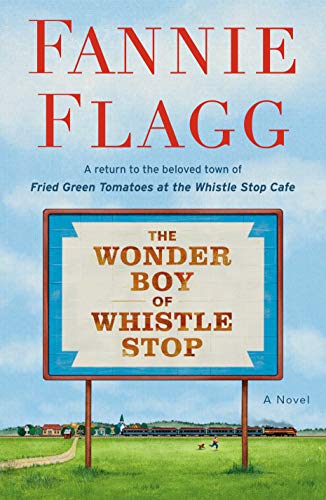
The Wonder Boy of Whistle Stop*****

They say that old writers never die, and I hope that’s true. With her last novel, The Whole Town’s Talking, Flagg announced that she was done. It was her final novel. I was sad to hear it, but grateful to have been able to read every wonderful thing she’s ever written. She has given us so much! And then, imagine my joy when I opened my email to find an invitation from Random House and Net Galley to read and review this sequel to Fried Green Tomatoes at the Whistle Stop Café, which is possibly my favorite novel of all time. Over the moon, friends. And it’s for sale now.

The tricky part of a sequel to such an iconic story is in trying to live up to what’s come before. In this case, I don’t think anyone can. That said, this is nevertheless a delightful book, and I recommend it to you, although you won’t get the full advantage from it without reading the first magnificent book first.

The format mirrors that of the first novel, (and from here forward, I will refer to it by initials: FGTWSC,) with time periods and points of view that come from a variety of settings and individuals. Whistle Stop, Alabama is no more; the freeway passed the town by, and the rest of modern transportation and technology did the same. When we return there, it’s difficult to find; boarded up buildings, tall weeds, trash, and kudzu. In fact, the start of this book is depressing as hell, and for a short, dreadful time, I wondered if the author might be slipping; but no.

The protagonist is ostensibly—from the title—Buddy Threadgoode, son of the late Ruth Jamison. Again, I find myself scratching my head, because Flagg’s protagonists are women, girls, and women. And actually, that’s true here also. Buddy is an old man, and he’s been sent to live a Briarwood, a retirement home for the elite. His daughter Ruthie married the son of the local bourgeoisie, and consequently he’s been mothballed in the nicest possible place; but he hates it, of course. He doesn’t make a scene, but who wants to be warehoused if they can help it?

However, most of the action centers on his daughter Ruthie, and then later, our old friend, Evelyn Couch. (Friends have told me I resemble this character, and I’m good with that comparison.) Evelyn gained confidence in the first novel, much of it courtesy of Ninny Threadgoode, and now she’s done nicely for herself. Husband Ed has gone to that man cave in the sky, but she has recovered from the shock and then some. And it’s roughly halfway into the story that Evelyn enters the story in a big way, and with the groundwork well established, the story takes wing.

As with the original FGTWSC, the key to keeping up with the ever-changing settings and narrators is in the chapter headings. If you skip them, you will be lost. (This fact has been established by trial and error in teaching the book to honor students in literature class.)

Flagg is a feminist, and her work reflects her subtle but unmistakable passion for social justice. Again, with the first half of this book I feared she had lost her edge; once more, I see in the second half that I am mistaken. She was just warming up. Unlike so many of the novels I’ve read recently, this story gets better and better as it progresses. At 45%, it seems like a pleasant, harmless story, and a bit of a disappointment. At 56%, I’m sitting up straighter and noticing things. At 75% I’m laughing out loud. And from there to the finish, I don’t want it to end.  

I’ve seen some lukewarm reviews for this book, and it’s understandable, in a sad way, because those reviewers are weighing this book against its predecessor. And no, this one isn’t quite as brilliant as the first, but if I deny the fifth star on that basis, then I need to go back and weed out at least 96% of the other five star reviews I have written, because FGTWSC is a matchless novel. If instead I weigh this story against those others, it stands up proudly.

When push comes to shove, I think all of us need a feel-good story like this one—which it is, despite the sorrowful beginning—all of the time, but now more than ever. Civic engagement is important, but stepping away and restoring oneself is every bit as crucial. Do yourself a favor. Switch off your news feed for a couple hours and snuggle down with this book. You’ll be more effective later for having given yourself time to recharge now.

Highly recommended.

One by One, by Ruth Ware*****

We can’t party this Halloween, but I have the perfect pandemic book for you. Ruth Ware has been called the modern Agatha Christie, and her latest mystery, One by One, is like a modern version of Dame Agatha’s And Then There Were None. There are plenty of differences, naturally, so you won’t be able to figure out the ending. Personally, I think it’s Ware’s best book to date, and when you curl up with it tomorrow, you’ll forget about your usual Halloween activities. Get your bag of treats, the beverage of your choice, and your favorite quilt, and you’re good for the evening.

 Big thanks go to Net Galley and Gallery Books for the review copy. This book is for sale now.

Erin and Danny work for a resort company, running a European ski chalet that caters to small companies and the well-to-do. A start-up company called Snoop schedules a retreat, but no sooner have the loud, entitled Snoopers disembarked and gone skiing, than an immense avalanche thunders down, leaving the vacationers stuck. Nobody can get cell service; everyone is grumpy. And one of them hasn’t come back from the slopes.

From there, things only get worse. At least there’s enough food to last awhile; but then the electricity goes off, and someone else is found dead in their room, most likely murdered! Oh, it surely isn’t pretty. Erin and Danny are scrambling, trying to improvise amid the bickering guests, whose in-groups are becoming more rigid; small hostilities increase. But it isn’t just about personalities; there’s a company buyout on the table, and a great deal of money is at stake. They have to hold everything together until the authorities can reach them.

This is a fun book, with lots of snappy dialogue and just the right number of variables. We backtrack after the murder is discovered, figuring out who was in the right place at the right time; and with the missing person still gone, it’s increasingly likely that we have two murders, not one. But as the alibis and witness statements unfold—all unofficially, since the cops can’t reach the chalet, which is still nearly buried in snow—it becomes evident that most of what’s offered is hearsay. Person A couldn’t have done this, because they were somewhere else. But…do we know for sure that’s true? They say so, but they could be lying. And as more murders and more stories unfold, we have a tasty little puzzle indeedy.

I have read and reviewed all but the first of Ware’s novels, and in each case I was drawn in, reading avidly, only to throw up my hands at the preposterous revelations and developments that I found in the last twenty percent of the book. But that doesn’t happen this time. I go all the way through it, and in the end the story stands up and I feel as if Ware has played fairly. The suspense is palpable and it builds steadily leading up to the climax. This is a good solid mystery, and I have new respect for this writer.

So there you go. Get your copy, and you can thank me later. But turn on the lights and lock the doors before you commence, cause this one is a humdinger.

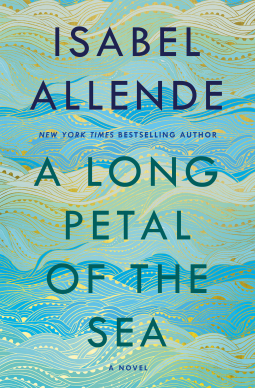
A Long Petal of the Sea, by Isabel Allende*****

Allende has long been one of the writers I admire most, one of the few novelists to gain permanent space on my bookshelves. Her stories are distinguished by her devotion to social justice issues, particularly in Latin America, and to feminism. She’s known in particular for her use of magical realism, which I confess makes me a little crazy when she imbeds it in her nonfiction titles, and also her wry, sometimes subtle humor. Much of what she writes is historical fiction, as it is here, and she is a stickler for accuracy. Her research is flawless. She has prestigious awards from all over the world. Literature teachers love her.

My thanks go to Net Galley and Random House Ballantine for the review copy. This book is for sale now.

In A Long Petal of the Sea, she takes on a particularly ambitious task, creating a fictional family and charting its course from Spain following the failure of the Spanish Revolution, to Chile, to other points in Latin America, and then back to Spain once more. There are a lot of characters to keep track of, with different threads for each that separate, then braid together again and so on. There are at least three generations here, but primarily the story is Roser’s.

It’s a well written story, though it is also the sort of literary fiction that takes a fair amount of stamina. If you’re in search of a beach read, this isn’t it. I confess I didn’t enjoy it as much as I often enjoy Allende’s work, but I also believe it’s unfair to judge an author solely by what they have already written. If this was the first book by this author that I had ever read, I would give it five stars, and so that is what I’ve done.

My one disappointment is that we don’t learn more about the Spanish Revolution and the Spanish Civil War. This is an event that’s very difficult to find in quality historical fiction and literary fiction, at least in English, and I was excited when I saw this book was based on it. Then by the 25% mark, we’re out of Spain and it leaves me sad, because I wanted to know more about that period and place.  I also missed the usual Allende humor, which she uses in other books to break up tense passages and shoot down sexist behavior in her characters; her last book, In the Midst of Winter, made me laugh out loud more than once. That humor is in short supply here. The feminist moxie, however, is in splendid form, and the class and internationalist perspectives that I treasure are alive and well.

A book should be judged on its own merits, and I’ve done that, but I want to add a shout out to an iconic writer who’s still publishing brilliant, ambitious books at the age of 78. My own goals for that age, should I be fortunate enough to see it: I’d like to be breathing; to be able to see and hear most of what’s around me; and I’d like to not be completely crazy. Publishing great literature? Perhaps not. I am delighted that Allende can do this, and I hope she has more stories in the works.

A note on the audio version: I supplemented my review copy with an audiobook I found at Seattle Bibliocommons. It’s an approachable way to get through a complex, multifaceted story, but I don’t like the way the reader voices the elderly male character. The harsh, guttural-sounding tones are too near to a stereotype. Happily, the story is mostly Roser’s, but the unfortunate noise pops in fairly regularly all the way through, and it makes for a less enjoyable listen. For those with the time and inclination for the print version, it may be your better choice.

For those that love epic historical fiction, I recommend this book to you, although if you haven’t read Allende, also consider some of her early work.

Queenie Malone’s Paradise Hotel, by Ruth Hogan****

When I requested the galley for this book, I was taking a chance. I do love good historical fiction, but I seldom enjoy a cozy mystery, and this story is but a whisker away from being one. I was afraid the story might be cutesy instead of quirky, cloying instead of life affirming. And how delightful it is to be wrong! I received my copy free and early, thanks to Net Galley and Harper Collins. It’s for sale now.

The premise is that Tilda has returned to the town where she and her mother lived after her parents separated. She was an only child, and her mother is dead, and so it falls to Tilda to tie up the loose ends of her mother’s small estate. And at this point, my snark is already peeking its beady eyes out, saying Oh geez, another story that starts with an only child cleaning up the estate. Lots of those lately! And a mean mother? That’s got to be my number one eye-roller right now!  And I tell you these things, reader, because it underscores what a job Hogan had ahead of her in order to break down my resistance; and yet, she did.

The narrative is divided into two points of view which alternate. The first is young Tilly, the little girl that doesn’t understand what is happening between her parents, and is devastated when her father moves out. The second is the adult Tilda, whose capacity for trust in other people is limited.

The first part of the book is a hard read in places, because Tilly is in so much pain, and it feels drawn out, although one could argue that time passes more slowly when we are young. Tilly’s parents are always quarreling; then her daddy moves out, and Tilly, who was a daddy’s girl, takes out all of her hurt and rage on her mother. Her mother is brittle and not very stable, and she’s at wit’s end. First they move from the house where the family had lived to the hotel in the title; then, against her wishes, Tilly is sent off to boarding school. Tilly had loved living at the hotel and didn’t understand why she was exiled.

Tilda learns what her mother was thinking when she finds and reads the journals that her mother had left for her, and again, it’s not exactly an original device on the author’s part, but it’s done so well that it doesn’t matter. Tilda also finds one of her mother’s old friends, and she learns some things that way as well.  There are some genuine surprises that are also believable and fit the characters and setting. It’s artfully done.

As to the quirky bits, they are what makes the story unique and successful. For starters, Tilly (and Tilda) see ghosts, not just now and then, but in some cases regularly. Let’s take, for example, the little dog named Eli. Not everyone can see Eli; Tilly can, and some others can as well, but most cannot. And our suspicion that Eli is not a corporeal critter is affirmed by the fact that decades later, this woman still has exactly the same dog, and he is as spry as ever.

Then—and I have saved the best for last—there’s the child’s narrative. Tilly explains things to us in the language, and with the frame of reference, of a small child of six or seven years. She is a bright girl, but she’s a child, and so her explanations for things are often a bit twisted, and her conclusions are often far-fetched ones that are based on the limited amount that the girl understands. My favorite bits are the mondegreens, and there are many. (A mondegreen is the word or phrase that results from someone that hears words that aren’t in her vocabulary, and thus replaces them with words she does know; one well known example is the American Pledge of Allegiance, starting with “I led the pigeons to the flag.”) My favorite of Tilly’s mondegreens is when she attends church and sings “The Old Rubber Cross.” And the thing I love most about Tilly’s mondegreens is that Hogan doesn’t explain them or beat them to death; she drops them in and then moves on as if nothing unusual has occurred.

I started reading this book using the review copy provided me, but because I was running behind, I checked out the audio version at Seattle Bibliocommons when I was a short way in, and I alternated versions. I especially want to give a shout out to Jane Collingwood, who reads the audio version. I can think of no more challenging narration than that of a child. Collingwood had to sound like a little girl half the time, but nobody wants to hear an actor’s version of baby talk at all, and surely not for half of a novel, so she has to walk a very fine line, not sounding like an adult, but also not sounding inane. On top of that, she must also voice the adult version, sounding like the same child, except grown up.  It’s a tricky assignment and she carries it off perfectly; I tip my hat to her.

The ending is optimistic, yet credible. Those in need of a feel-good story—and there are an awful lot of us that do, right now—could do a whole lot worse. Recommended to those that enjoy quirky novels and historical fiction.

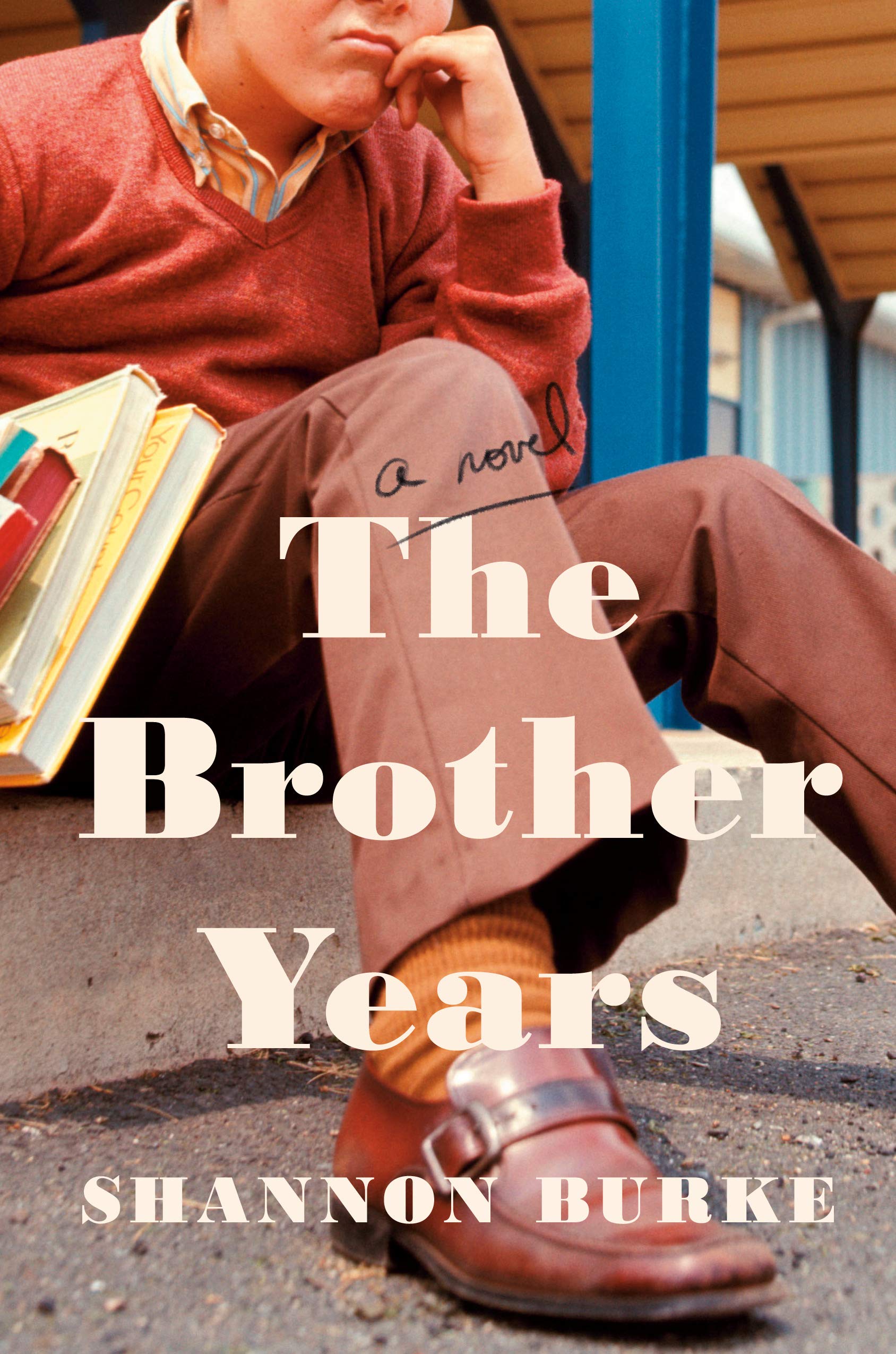
The Brother Years, by Shannon Burke*****

The Brother Years is my first book by this author, but I hope it won’t be the last. Big thanks go to Net Galley and Doubleday for the review copy. This book is for sale now, and if you treasure excellent, character-based fiction, you should get it and read it.

It’s tempting to call this a coming of age story, but the quality of the writing renders it unique and singular, defying categorization. The quiet authority and intimacy with which this story is told within the first person point of view led me to my desktop twice to make certain I was reading fiction, rather than memoir. In addition, I’m a sucker for any story that addresses social class, and class is the flesh and marrow of this tale.

Willie Brennan is the second born into a large family, and almost all of his siblings are boys. His parents are working class strivers, determined to rise, and particularly to help their children rise, through merit and hard work. In order to obtain the best possible education, they move into a substandard rental house in an otherwise upscale community. But social class shapes us, not only in terms of material trappings, but in more subtle ways having to do with culture. For example, when the boys get angry with each other, they are ordered to take it outside. The parents, who work multiple jobs in order to elevate their sons and daughter, are often not available to mediate disputes; moreover, the family is infused with a dog-eat-dog sort of Darwinism, and so sibling on sibling domestic abuse germinates and grows, along with genuine, abiding hatreds for protracted periods of time. This contrasts sharply with the more genteel, nuanced manner that more moneyed families deal with disputes and competition within their families, and between friends. And so, Willie and his older brother Coyle are set apart, not only by their house, family car, and clothing, but by the way they treat their classmates and each other. And we see much of how their classmates and neighbors regard them:

“They knew of our family. Our reputation had grown as we’d gotten older. We were Brennans. We did crazy shit.”

As the story begins, Coyle, the eldest, is the apple of his father’s eye, the achiever in every possible arena. Willie feels the terrible weight of expectation; how does one follow an act like Coyle’s? But in adolescence, Coyle rebels, and nobody knows what to do. Willie, next in line, bears the brunt of his brother’s bottomless rage.

This could be a miserable read in the hands of a less capable writer.  I have seen other writers tell stories of horrifying childhoods, both fictional and autobiographical, that simply made me want to put that book down and walk away. When pleasure reading is devoid of pleasure, what’s the percentage in forcing oneself through to the conclusion?  But Burke is too skillful to let this happen. While there are a number of truly painful passages, the distance projected by the narrator, speaking down the long tunnel between his present adult life and that tortured childhood he recalls, provides me with enough of a buffer that my sorrow for this poor child is eclipsed to a degree by my eagerness to know what will happen next.

This reviewer was also a child of working class parents, and also attended an excellent public school where most of my classmates came from families with money, in some cases a lot of it. No doubt this further fueled my interest. I am riveted when, as a revenge ploy, Willie accepts a friendship overture from Coyle’s nemesis, Robert Dainty, whose family is among the wealthiest and most

 privileged in town. Robert was “the epitome of the New Trier student: competent, self-satisfied, crafty, and entitled.” The interactions that take place within this alliance are fascinating, and I believe them entirely. In fact, I believe every character in this story, from the father, whose judgement and impulse control is dreadful; to the mother, who smolders and tries to make the best of things; to the older brother, classmates, and of course, the protagonist, Willie.

The author—and this reviewer—grew up in the mid-twentieth century, and it was during a time, post-Sputnik, post-World War II, when the United States and its people were passionate advocates of competition and domination. For this reason, I suspect that those from or close to the Boomer generation will appreciate this story most. But it’s hard to pigeonhole writing that meets such a high standard, and everyone that appreciates brilliant fiction, particularly historical fiction, will find something to love here.

Because I was running behind and could tell this galley was one that I shouldn’t let fall by the wayside, I supplemented my usual reading with the audio version I obtained from Seattle Bibliocommons. Toward the end, because it is so impressive, I listened to it and followed along in the galley. George Newbern is the reader, and he does a wonderful job. You can’t go wrong, whether with print or audio.

Highly recommended.

Falling Onto Cotton, by Matthew E. Wheeler*****

“This is the most famous thing to happen in Milwaukee since Laverne and Shirley got cancelled.”

Chance McQueen is a musician and restauranteur, an honest man doing his level best to tiptoe around the morass of organized crime that exists around him without getting his toes wet. It isn’t easy. His ancient Uncle Vinny is the local don, and he’s dying. Chance has told him many times that he would prefer to avoid this part of the family business, but he’s been dreaming. Uncle Vinny has stage four lung cancer, and he summons his nephew to share some hard truths:  “It’s simple. Either you take over the family before I’m dead, or Frank will have you killed before my body’s cold…Charles, when did you ever get what you want?”

This oddly charming debut came to me free and early, and my thanks for the review copy go to Net Galley and M.D.R. Publishing. This book is for sale now.

Wheeler’s debut reads as if scribed by a seasoned novelist, and he introduces a lively collection of memorable characters. He serves as mentor and father figure to Winnie, a dapper young man that has it bad for a sweet young thing named Alex; Geoff, his best buddy, who is Black and gay, and endlessly loyal; a homeless veteran living behind the restaurant, who is never a caricature; and Chance’s nemesis, Frank Bartallatas: “Frank Bartallatas was pure evil in a massive frame. More than one little fish had disappeared after swimming too close to Mr. Bartallatas.”

The story is set in 1990, and each of the agreeably brief chapters is headed with the title of a rock song from the 1970s and 80s, which is a portent of what the chapter brings. I like this guy’s playlist, and I stopped reading more than once to add his songs to my own collection.

Here are the things I like most, apart from the playlist: I like the strong, resonant characters, which are well enough developed that they are easy to keep straight; the setting, which hasn’t been overused by other writers, and is a credible choice; the selective use of violence, which cannot be left out of a story like this, but never feels excessive, sickening, or prurient; and the pacing, which never flags. In addition, I like the mobster aspect of this story, an angle that we aren’t seeing much in new fiction.

I have no serious complaints, but if I could change anything here, there are two things I’d tweak: First, Geoff practically can’t have a conversation with Chance without making awkward race jokes, and Caucasians that spend time with African-American people will tell you that never happens, no matter how close you are; and second, the alcoholic protagonist is becoming trite, so I’d either let Chance kick his habit without a protracted, detail-laden struggle, or I’d just let the guy drink. Chance’s dead fiancée is enough hubris all by herself. But clearly these are minor concerns, or this wouldn’t be a five star review.

This rock solid debut signifies great things to come from this author, and a little birdie tells me that there may be future novels featuring Chance McQueen. My advice to you is to get in on the ground floor of this series-to-be, because it’s going to be unmissable. Highly recommended.

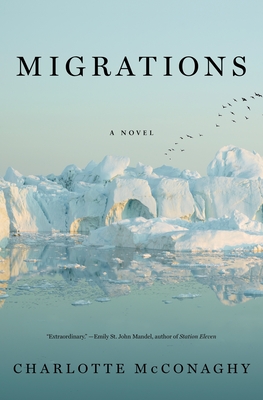
Migrations, by Charlotte McConaghy****

My thanks go to Net Galley and Flatiron Books for the review copy. I alternated my digital copy with the audio version I found at Seattle Bibliocommons; the reader does a fine job, and so if you want this book, you can’t go wrong in terms of print versus sound.

This is either exactly the right time to read this book, or exactly the wrong time.

Franny Stone has never been happy staying in one place, and now, when the walls are about to close in on her, she decides that one final voyage is in order. The Artic terns are about to make one final migration, and she means to go with them. Posing as a marine biologist, she persuades a fishing crew to take her along; she has the data to follow the terns, and the terns are following the fish. It’s in everyone’s best interest to work together here, now that so many species are extinct and the fish are so scarce. Once in motion, however, few things go according to plan.

The setting is the future, at a time when humanity has depleted most of the world’s wildlife. It is bleak, bleak, bleak.

Much of the story revolves around Franny’s character, and since we know from the get-go that she doesn’t intend to return alive once this trip is done, there are two questions that keep me turning the pages. I want to know why she wants to die, and of course, whether she does. The reason for her morbid plans is spooled out to us in small bits; whether she dies at the end is something the reader must learn for herself.

As for me, I had huge expectations by the time I began reading, because this novel shot up to bestseller level almost overnight. Perhaps that’s why I felt a trifle let down when it was done. It’s a good story, but I wouldn’t call it one of the year’s finest. Certainly, there is moral gravitas behind it, and yet those most likely to read it are not climate change deniers. For me to have loved this story, I would have needed more hope and less utter despair. When a story starts sad and ends sad, the little places in which it is slightly less sad aren’t enough to bond me to the narrative.

On the other hand, I am just one reviewer. There are a whole lot of readers out there getting all the feels and loving them. I recommend this story to anyone looking for a catalyst for a good ugly cry.