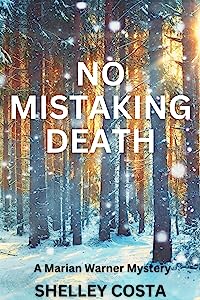
No Mistaking Death, by Shelley Costa*****

I love a wry mystery series, especially when it features a wry female sleuth. Kinsey Millhone is done and there’s nothing I can do about it, but Marian Warner is here, and this series is just getting off the ground. My thanks go to Net Galley, Level Best Books, and Shelley Costa for the review copy.  This book is for sale now.

Marian is a private eye, mostly; when there isn’t enough custom to pay the landlord, she does other things on the side. But now, her sister Joan is sending her to investigate whether a former Jesuit Mission house in Carthage, Ohio qualifies for National Landmark status. Carthage is a tiny little hamlet in the middle of nowhere, but it contains Marian’s old flame, Charlie. She goes.

The first book of a mystery series poses extra challenges to its author, who must simultaneously spin out the mystery itself while also introducing and developing its protagonist and any repeating secondary characters, all without slowing the pace. Costa does both splendidly.

By the time Marian hits town, things have grown more complicated; you see, the possibly-historical mission house now sports its own murdered corpse. From here, the story builds in a way that is undeniable, and occasionally laugh-out-loud funny. In particular, there is quirky figurative language sprinkled throughout, and it jumps at the reader unexpectedly.

By the story’s conclusion, I feel as if I’ve just stuffed myself with something delicious. Nothing here is predictable, and I can’t wait to see more of Marian Warner. Highly recommended to those that like a cozy mystery with a bit of an edge.  

Murder Off the Books, by Tamara Berry*****

“There came a time in every crime solver’s life when they wanted to stop getting stuffed in the backs of vans and facing down danger at every turn.”

My thanks go to Poisoned Pen Press and Net Galley for the review copy. This book is for sale now.

Tess Harrow lives with her daughter, Gertrude, in a tiny hamlet in Washington State. She’s taken the hardware store she inherited and had it redone, and so now it’s her bookstore. But the locals are a bit leery of Tess; everywhere she turns, somebody drops dead. To reassure them that she is normal and trustworthy, she’s throwing a gala bookstore opening; wine, cheese, books, and…a corpse.

Well, heck.

But the good news is, Tess is a pretty decent sleuth. She’d be a lot better if she knew when to shut up, though:

“His words became a snarled growl. ‘Has anyone ever told you that you talk too much?’ Everyone, all the time—and she wasn’t about to stop now.”

This book, and this series, contains exactly what I like to see in a cozy mystery: colorful characters, an easily followed plot, and a good deal of whimsy.

Because I was running late, I checked out the audio version of this story from Seattle Bibliocommons. I like the reader, and the narrative is easy to follow, even for a text-oriented reviewer like me. I highly recommend this book in whatever format is your favorite.

An Evil Heart, by Linda Castillo****

Four stars for the printed version.

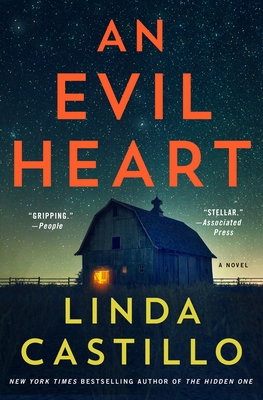
Although An Evil Heart is the fifteenth entry in the Kate Burkholder series, it is my first, and also the first time I have read a book by Linda Castillo. I came to this one on the advice of Goodreads friends, and they weren’t wrong. My thanks go to Net Galley, Macmillan Audio, and St. Martin’s Press for the review copies. This book is available to buy now.

Our story is set in the fictitious town of Painter’s Mill, Ohio, where the Amish make up about a third of the population. Kate Burkholder, the chief of police here, is preparing for her wedding when a call comes in about a bizarre murder. A young Amish man, Aden Karn, has been shot with a crossbow and left to die. This would be unusual anywhere, but for the peaceable Amish, it is a tremendous blow. Who would do such a thing? And then there’s another murder as well. Are they linked, and if so, how?

Of course, things are not what they seem. Eventually, Emily Byler, Aden’s girlfriend, comes in to the station accompanied by both of her parents. Emily has finally confessed the horrible deeds that Aden has visited upon her. As the girl, burdened by “a dark mix of horror, shame, and grief,” buries her face in her mother’s shoulder, her mother says “Let me tell you about Aden Karn. The devil whispered his name and Aden Karn took his hand and went.”

But Emily didn’t kill Aden, so the case is far from being solved; if anything, it’s become more complex. Now Kate wonders whether Aden did such things to other girls as well.

At the outset I listen to the audio version of this book, and friend, it’s dreadful. For awhile I wonder whether it’s read by an A.I., because the sound is choppy, the words cut off in a way that suggests it’s not the fault of any narrator. But as I reach the 20th percentile, I realize that actually, the reader is not doing well, either. When it comes to voicing the male characters, the narrator sounds amateurish, and I have never said this about a narrator before. I begin to dread opening this book again, and that’s when I abandon the audio entirely and settle in with the digital review copy instead. It is the right thing to do. Castillo is a good author with a poor narrator, and I hope the glitches in the sound quality have been dealt with now that it’s publication day.

The ending is somewhat predictable, but not until the last quarter or so of the book. I would cheerfully read further entries into this series, and can tell you from experience that you can jump in right now without concerning yourself over the first 14 books if you choose. I recommend the printed version of this book to all that love the genre.

Mastering the Art of French Cooking, by Colleen Cambridge****

This charming cozy mystery, set in Paris during the postwar years, had me at hello. Tabitha is an American expat, and her best friend, Julia Child, is teaching her how to cook. But one evening, during one of the Childs’s many soirees, a woman is murdered…and the knife in question came from Julia’s kitchen!  To make matters even worse, the victim was carrying a card with Tabitha’s name and address on it when she was found. For some young women, this would be a wakeup call, and the morning would see them on the next available plane to Detroit; but Tabitha is made of sterner and more curious stuff, and so she begins snooping.  

My thanks go to Net Galley and Kensington Books for the review copy; this book is for sale now.

To cope with the horror of the previous night’s events, Julia is roasting a ham.  “I just had to take my mind off everything. Can you even believe it, Tabs? Someone murdered a woman in this building—with my knife! That means they had to have been in my kitchen! This kitchen!”

Like many an amateur sleuth in other mysteries, Tabitha begins poking around. Sometimes she has smart ideas, and at other times she is breathtakingly dense, but there is never a time that I am thinking about the author rather than the protagonist, and that means that I believe the character. There are some familiar tropes and the occasional cliche: “She knew too much!” But it never becomes a problem, possibly because this is a novel that doesn’t take itself too seriously. Now and then the author breaks down the fifth wall, or nearly so. For example, Tabitha tells us that she knows what to do because she has read plenty of Nancy Drew mysteries.

The solution to this whodunit is fairly transparent, and I am able to predict the solution, along with the conclusion of the additional thread of incipient romance early in the book, but the whole thing is so adorable that I never become annoyed. “Just like an Agatha Christie novel—all the questions answered at the end, and the villain is caught, and everyone else is happy.”

Because I had fallen behind, I supplemented my review copy with the audio version, obtained from Seattle Bibliocommons, and narrator Polly Lee does a brilliant imitation of Julia Child! In fact, all of the passages involving Julia are brilliant, and that is my favorite aspect of this story.

Sometimes an author manages to step on multiple pet peeves of mine, and yet I emerge pleasantly entertained anyway, and that’s what has happened here. This is light reading, but it isn’t insipid. I look forward to reading the next in this lovely new series. Recommended to cozy readers.

Silver Alert, by Lee Smith ***-****

3.5 stars rounded upwards. My thanks go to Algonquin Books and Net Galley for the invitation to read and review. This book is for sale now.

The premise is one that a lot of readers over age 40 will be able to relate to. Herb and Susan have been very happy, but as they enter their twilight years, Susan is no longer able to care for herself or even communicate well. I don’t think we are ever told the specific cause, whether it’s a stroke that’s left her undone, or dementia, or some other thing, but the result is the same. Herb believes he is qualified to care for his wife, together with a home health assistant that he can well afford to pay, but the truth is, he is too forgetful to do the job properly. In fact, he is closer than he will admit to needing care himself.

Susan always did love a good mani-pedi, and so he hires a traveling manicurist to stop in and take care of Susan’s nails. The young woman that calls herself Renee does more than that, however; she becomes fond of Susan, and shows up with outlandish hats and art supplies and other things that make Susan smile.

But now the family is here, the responsible, busy adults that can see this situation is untenable. They want to move Herb and Susan to a care facility, but Herb is adamantly opposed. Herb isn’t going to have anything to say about it much longer, though, and he can see the handwriting on the wall.

As I read first half of this little book, I feel a certain amount of reviewer’s remorse. Why have I signed on to read this thing? It’s supposed to be funny, but it isn’t. And I took it because it has been billed as humorous; ordinarily I avoid books about aging.

About halfway into it, however, my feelings begin to change, because I realize this story isn’t about Herb and Susan. It’s about the manicurist, whose real name is Dee-Dee.  Dee-Dee comes from hardscrabble poverty, and has escaped from a trafficking situation she was thrust into just as puberty began. She took some of the traffickers’ money when she fled, and she uses the name Renee to cover her trail.

Herb’s son is leery of Dee-Dee. He believes she has questionable motives; maybe she a grifter, or a gold digger, or who knows what? When he uncovers her true identity, he is sure he is right. As preparations are made to move the old folks and sell the house, he visits her in the sad little trailer where she is staying to warn her off.

I like the interplay of these two characters of wildly disparate social classes, and the difference in their thinking. The most redemptive feature throughout this quirky little novel is the voice that comes through. The rich (asshole) son is absolutely believable, though his is a minor character; that’s okay, I don’t really want to spend more time with him. But sweet little Dee-Dee, who is desperately undereducated and has nobody to help her, nevertheless tends to give others the benefit of the doubt. She’s plucky, using advanced vocabulary words that she’s picked up, planning for her future.

It seems likely that this sweet little novel will get less credit than it should, because of the way it’s marketed. When we see a book in the humor section, we expect it to make us laugh. It has a warm and fuzzy cover, and nobody would expect the serious trigger issues contained within it. (Do NOT buy this book as summer reading for your precocious middle schooler!) Had it been presented to readers as a whimsical tale of friendship, it would have met with friendlier reviews.

Recommended for adults over 40 that are looking for a beach read.

The Elephants of Thula-Thula, by Francoise Malby-Anthony****

Francoise Malby-Anthony is an established author and the owner of a game reserve in South Africa. Although she’s written previous books about this reserve, The Elephants of Thula-Thula is the first of her books that I’ve read. My thanks go to Net Galley and Macmillan Audio for the review copy; this book is for sale now.

As I begin listening to the audiobook, I am not sure I like it much. After a brief passage about elephants, the author segues into a longer piece about rhinos and by the time she admits that the rhinos are her favorites, I mutter, “No kidding!” There are other passages in which she gushes about the refuge’s well-heeled but generous donors, and I’m beginning to feel as if this is the sort of book that people will buy because the refuge is a good cause, but nobody will actually learn anything or even enjoy it much.

About halfway in, though, I have a change of heart. The second half is much better than the first. She discusses throughout the book the challenges posed to the refuge by the pandemic, and she talks about the measures taken to remain solvent while also keeping her employees whole. There is actually more talk about elephants now. I confess I am jarred by the moment when a favorite animal dies (no spoilers) and she tells us that this is the worst grief of her entire life. She says this not too long after explaining that the reserve’s founder, her husband, has recently died, and so my head snaps up when the tells us that the loss of the animal is the worst. I am chalking it up to hyperbole, but if I were the editor, I’d suggest a rewording.

Nevertheless, there are wonderful anecdotes about the elephants, and of course the rhinos, as well as the addition of a cheetah. She discusses baboons—I’d never fully realized how scary they can be—and I enjoyed hearing about how one goes about moving a giraffe to another location. There’s a lot more about elephants in the second half, and she discusses the threat to the herd when some bureaucrats add up the acreage and decide that there are too many elephants here, and some must be either moved out or “culled” (which means, of course, killed!) The reserve is expanded, but it takes a whole lot of jockeying and maneuvering to carry it off.

Readers that have enjoyed Malby-Anthony’s earlier books, or that have a strong interest in wildlife preserves may enjoy this book greatly, and it is to them that I recommend it.

Swamp Story, by Dave Barry*****

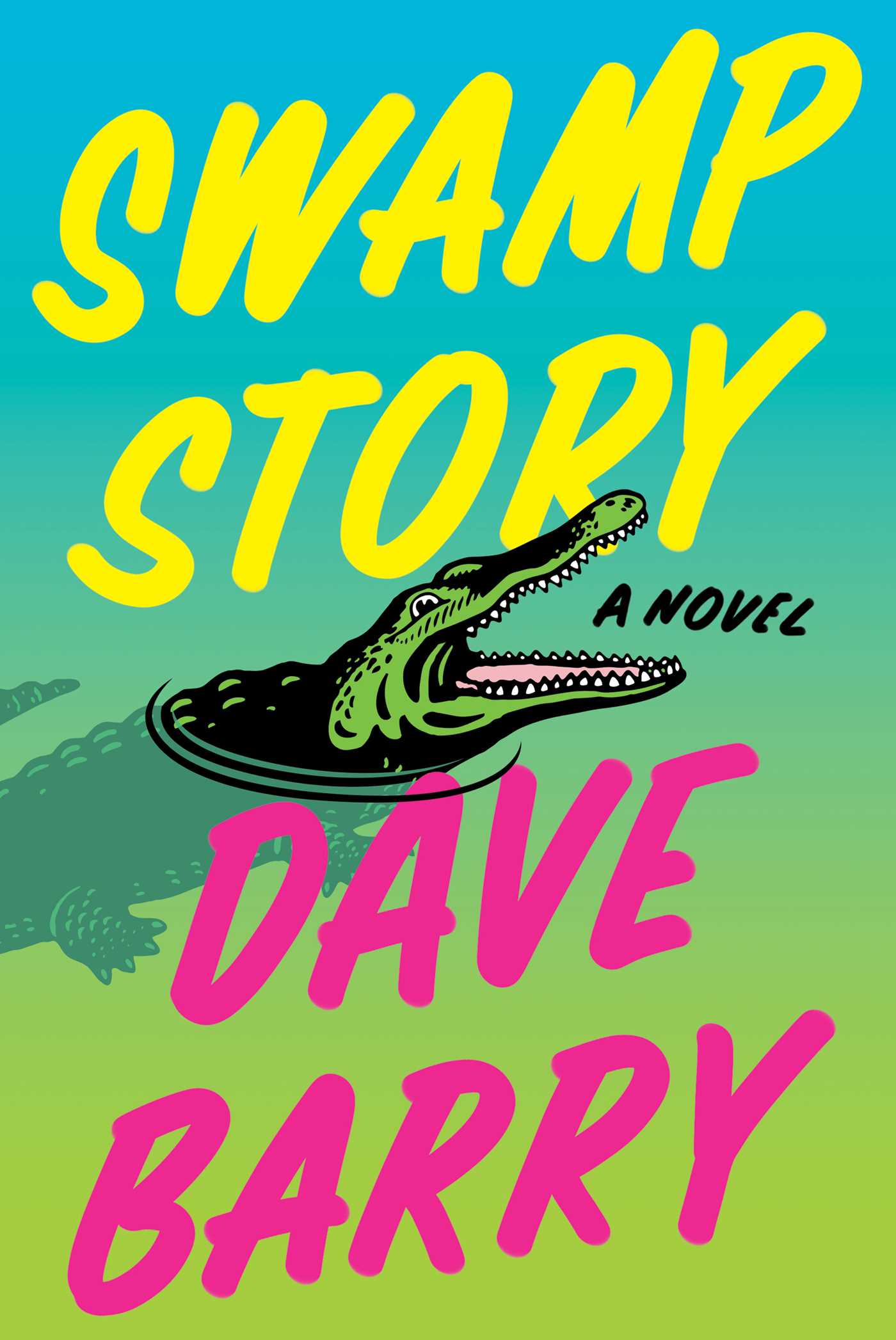
Dave Barry’s new novel, Swamp Story, should come with a warning label: Danger. Do not read in area where explosive laughter is not permitted. Fans of Barry’s will be pleased to hear that this is possibly the best thing he’s ever written. Readers new to Barry will want to read more. This book will be available to the public May 2, 2023.

My thanks go to Net Galley and Simon and Schuster for the invitation to read and review.

Our protagonist is Jesse, a lovely person that has made a huge mistake. She feel hard for Slater, a young man with a smokin’ hot body, a limited brain, and a solipsistic world view. Now she’s stuck in a cabin in the Everglades with him and his camera wielding buddy Kark, and oh yes—their baby, Willa; not to mention all of the flora and fauna that live here:

“Kark! You need to get this!”

“What?” said a voice, as hoarse as Slater’s, maybe hoarser.

“Big fucking snake,” said Slater. “I mean big.”

The snake slid forward another two feet, directly toward Jesse and Willa. Jesse saw that she now no longer had the option of even trying to run past it.

“Slater!” she said, trying to keep the panic out of her voice, not wanting Willa to pick up on it.

Slater held up his hands in a Calm down gesture.

“It’s cool,” he said. “This’ll be good. Good footage.”

“Good footage?” said Jesse. “Are you—”

“Goddammit, Kark,” yelled Slater, “get the camera out here!”

“OKOKOK,” said Kark, emerging from the cabin, holding the video camera. ” Fuck. The battery’s dead.”

Things appear to improve for Jesse when she stumbles across a cache of gold bars hidden in the glades, but this proves to be a mixed blessing, as some truly bad men learn of her good fortune and seek to take it from her, using any means necessary. However, the first such men, Billy and Duck, are not only evil, but also hilariously bumbling at times. And then, of course, there are the others.

Meanwhile, the owner of Bartle Brothers Bait and Beer decides to give his languishing business a shot in the arm by manufacturing an internet hoax. The Everglades Melon Monster is a sketchy, low budget creation whose star is an inebriated fellow wearing a Dora the Explorer head, and yet, somehow it works. Now it seems that everyone is descending on the Everglades, and almost every person that arrives is “batshit crazy.”

I’m not telling you how this thing ends; you’ll need the book for that. Don’t wait for the movie. You can thank me later!  As for me, I’m off to order a Bartle Brothers Bait and Beer tee shirt.

The Answer Is, by Alex Trebek*****

I first sought to read this book when its author was still alive. I couldn’t get the galley, and so I obtained a copy of the audiobook from Seattle Bibliocommons, by which time Trebek had left us.

It’s a curious thing, the attachment so many of his viewers, myself included, felt toward him. He was a game show host. There are other game shows that have longstanding hosts, but when they die—if they haven’t already—it will register as nothing more than a footnote, a handy answer in Trivial Pursuit. But somehow, with his polished yet soothing demeanor, Trebek found his way into our hearts. Go know.

The audio is read alternately by Trebek and by Ken Jennings, a record-breaking champion that found a measure of fame himself. It works nicely. Here are the things that surprised me. First, Alex’s family lived in a small town in Canada near Ottawa. They struggled financially, and so in order to pursue higher education, Alex had to have a scholarship. He got one, but while enrolled, he got into a power battle with a particularly hated teacher. Alex was expelled. That was a good school, though, in spite of the man Trebek so hated (and about whom he never changed his mind!) In the end, he and his father returned to the school, met with the administrator, and begged. A more sympathetic teacher/mentor agreed to be in charge of young Alex, and he was able to go back and complete his degree.

His career started in radio, working as a disc jockey. He had a love of classical music, and found his way to the Canadian Broadcast Corporation. Later, he was invited to audition for a game show in the States. So much more money! From there he hosted quite a number of game shows, finally landing his berth in Jeopardy in 1984. Later on he briefly considered trying to move into acting, but he came to know some actors that worked on the same set where Jeopardy was filmed, and he soon found out that they were making the same money as he was or less, but he only worked for a couple hours each day, home in plenty of time to eat dinner with his family and pursue hobbies and whatnot, whereas the actors were keeping grueling schedules. At that point, he decided he liked it just fine right where he was.

In parting, he reminded his listeners that everybody dies, and he is in his nineties. He’s had a good life. It’s time to go. I found this tremendously graceful, because pancreatic cancer has a reputation for being one of the most painful forms of the disease. But maybe that was Trebek’s magic:  always putting the other person at ease.

Highly recommended.

Unnatural History, by Jonathan Kellerman****

Unnatural History is the 38th entry in the wildly successful Alex Delaware series. I began reading it soon after the first volume was published; When the Bough Breaks came out in 1985, so the series has been going strong for close to forty years, and very well may continue for many more. My thanks go to Net Galley and Random House Ballantine for the review copy. This book is for sale now.

For the uninitiated, Delaware is a child psychologist; Kellerman is also a child psychologist, and his earlier books incorporated his area of expertise, placing him in a subgenre all his own. I’ve wished many a time that he would write more books along these lines, but he hasn’t done a lot of it lately, and in this book,  there are only glimpses of it. Nevertheless, the story held my attention.

I’m not giving you much of the plot, because there’s a synopsis for that, but in large strokes, the story is about the murder of the son of one of the world’s wealthiest men. He’s an odd duck, not terribly bright; his mother is dead, and his father is a hands-off parent, to say the very least. Our victim has unlimited access to money, and that’s about it. He makes a splash in the art world by photographing homeless people in costumes that reflect their deepest dreams. Find a derelict street person, and find out what they always wanted to be. A pilot? A surgeon? A ballerina? Offer them the chance to be photographed as if that’s what they are now, and give them a juicy wad of cash for their trouble; then send them back to the streets where they came from.

The family structure for this strange young artist is truly bizarre; the father marries, and he fathers a child. One child, no more. Then, a couple years later, he divorces his wife and does the same thing again. The children of these unions are never introduced to one another.

Thus, Milo has plenty of meaty material to work with, and with such strange circumstances, Alex is tapped to analyze the participants.

Delaware works part time as a kiddie shrink, often consulting when there is a court case involving insurance claims or divorce. However, he still has plenty of time to work for the Los Angeles Police Department, consulting on cases where a psychologist’s input is valuable. His BFF, Milo Sturgis, is a homicide detective, spurned by others in the department because of his sexual orientation. Often as not, Delaware ends up riding along as an unofficial partner.

This aspect of the series—the almost-a-cop—is usually where things start to slip a little, when anything does. I want to buy the premise, and so I can go along with it as long as it doesn’t become too obviously unrealistic. We all want to be entertained, right? So when Alex trots out to the patrol car and slides in beside Milo, I smile and nod, and I push away the little skeptic within me that says, “But really…?”

There have been a few Delaware books that have gone sideways for me for that reason, books where Delaware puts on his Kevlar vest and packs a revolver. I am happy to say that this isn’t one of them. In fact, the manner in which these details are dealt with is one of its strengths. First of all, there are times when Milo wants Alex to go with him, but Alex is busy. He has to be in court that morning. Thank you! Then later on, toward the climax, there’s a situation that (no spoilers) shakes out in a way I find the most believable of anything Kellerman has written. It’s satisfying, without sacrificing the fun of the story.

The whodunit at the end might be the nicest touch of all.

I recommend this mystery to Kellerman’s faithful readers, and to those that love the genre.

The Things We Do To Our Friends, by Heather Darwent**-***

2.5 stars rounded upwards.

The Things We Do To Our Friends is a debut thriller by newbie Heather Darwent. Our protagonist is Clare, a young woman who’s studying art history at a university in Edinboro. She’s new and knows no one, but is soon swept up in a small, elite group of students she meets in one of her classes. Before she knows it, they are her main curriculum, and her classes become secondary.

My thanks go to Net Galley and Random House Ballantine for the invitation to review. This book is for sale now.

At the outset it’s easy to relate to Clare, who tells us her story using the first person limited. She has never lived here before, and she doesn’t have a lot of resources. She gets a job at a nearby bar, and the everyman proprietor, Finn, punctuates the story now and then with an objective take on Clare’s life and her new friends. She is soon invited to join a clique of students that are flashier, louder, and more confident than most of her classmates, and she wants desperately to become one of them. Tabitha is the ringleader, and it is she that Clare most wants to please.

The opening chapters here make me wonder if we are about to rehash Ruth Ware’s most recent mystery, The It Girl. The elements are certainly there. But there’s an undertone that builds here, teasingly referencing Clare’s unfortunate past. We don’t know much except that she’s estranged from her parents, who don’t want to hear from her.

That can’t be good.

The clique goes to Tabitha’s family home in France over the winter break, and Clare is thrilled to be included. But while they are there, she is pressured to join with them on a moneymaking venture that isn’t entirely legal. They let her know they are aware of her past, so she’d better cooperate.

Here is where the book starts to lose me. Clare is essentially being extorted, and yet her emotional attachment to the group only intensifies. At one point, she tells us that she sometimes forgets whose skin is whose, so tightly bonded are they, and in particular, she and Tabitha. But this makes no sense. Tabitha has threatened to harm her, as have the others. Why does she love them all the more for it?

More and more tidbits from Clare’s past are revealed, and yet Clare herself isn’t developed much. Neither is anybody else. We are told a lot, but shown only a little. I love books that are about character, and if there’s not much plot, I’m fine with that, but these characters are all static. At the 50 percent mark, I become impatient and skip to 62 percent; from there, I read to 72 percent, which is where things should begin to feel urgent, but they don’t. I skip again to 90 percent and read the ending. I seldom skip anything when reading, and on the occasions when I have done so, I sometimes find things when I skim the last half that convince me to go back and read it completely. That didn’t happen here. There are loose threads dangling, and plot elements that appear to have no purpose. Worst of all—and to be fair, this is probably not the author’s doing, but it rankles, nevertheless—is that this weak tale of warped humanity is billed as a “feminist page-turner,” which is what drew my interest initially, and as a lifelong, card-carrying feminist, I can assure you that this is absolutely not that.

I cannot recommend this book to you.