Unnatural History, by Jonathan Kellerman****

Unnatural History is the 38th entry in the wildly successful Alex Delaware series. I began reading it soon after the first volume was published; When the Bough Breaks came out in 1985, so the series has been going strong for close to forty years, and very well may continue for many more. My thanks go to Net Galley and Random House Ballantine for the review copy. This book is for sale now.

For the uninitiated, Delaware is a child psychologist; Kellerman is also a child psychologist, and his earlier books incorporated his area of expertise, placing him in a subgenre all his own. I’ve wished many a time that he would write more books along these lines, but he hasn’t done a lot of it lately, and in this book,  there are only glimpses of it. Nevertheless, the story held my attention.

I’m not giving you much of the plot, because there’s a synopsis for that, but in large strokes, the story is about the murder of the son of one of the world’s wealthiest men. He’s an odd duck, not terribly bright; his mother is dead, and his father is a hands-off parent, to say the very least. Our victim has unlimited access to money, and that’s about it. He makes a splash in the art world by photographing homeless people in costumes that reflect their deepest dreams. Find a derelict street person, and find out what they always wanted to be. A pilot? A surgeon? A ballerina? Offer them the chance to be photographed as if that’s what they are now, and give them a juicy wad of cash for their trouble; then send them back to the streets where they came from.

The family structure for this strange young artist is truly bizarre; the father marries, and he fathers a child. One child, no more. Then, a couple years later, he divorces his wife and does the same thing again. The children of these unions are never introduced to one another.

Thus, Milo has plenty of meaty material to work with, and with such strange circumstances, Alex is tapped to analyze the participants.

Delaware works part time as a kiddie shrink, often consulting when there is a court case involving insurance claims or divorce. However, he still has plenty of time to work for the Los Angeles Police Department, consulting on cases where a psychologist’s input is valuable. His BFF, Milo Sturgis, is a homicide detective, spurned by others in the department because of his sexual orientation. Often as not, Delaware ends up riding along as an unofficial partner.

This aspect of the series—the almost-a-cop—is usually where things start to slip a little, when anything does. I want to buy the premise, and so I can go along with it as long as it doesn’t become too obviously unrealistic. We all want to be entertained, right? So when Alex trots out to the patrol car and slides in beside Milo, I smile and nod, and I push away the little skeptic within me that says, “But really…?”

There have been a few Delaware books that have gone sideways for me for that reason, books where Delaware puts on his Kevlar vest and packs a revolver. I am happy to say that this isn’t one of them. In fact, the manner in which these details are dealt with is one of its strengths. First of all, there are times when Milo wants Alex to go with him, but Alex is busy. He has to be in court that morning. Thank you! Then later on, toward the climax, there’s a situation that (no spoilers) shakes out in a way I find the most believable of anything Kellerman has written. It’s satisfying, without sacrificing the fun of the story.

The whodunit at the end might be the nicest touch of all.

I recommend this mystery to Kellerman’s faithful readers, and to those that love the genre.

The Things We Do To Our Friends, by Heather Darwent**-***

2.5 stars rounded upwards.

The Things We Do To Our Friends is a debut thriller by newbie Heather Darwent. Our protagonist is Clare, a young woman who’s studying art history at a university in Edinboro. She’s new and knows no one, but is soon swept up in a small, elite group of students she meets in one of her classes. Before she knows it, they are her main curriculum, and her classes become secondary.

My thanks go to Net Galley and Random House Ballantine for the invitation to review. This book is for sale now.

At the outset it’s easy to relate to Clare, who tells us her story using the first person limited. She has never lived here before, and she doesn’t have a lot of resources. She gets a job at a nearby bar, and the everyman proprietor, Finn, punctuates the story now and then with an objective take on Clare’s life and her new friends. She is soon invited to join a clique of students that are flashier, louder, and more confident than most of her classmates, and she wants desperately to become one of them. Tabitha is the ringleader, and it is she that Clare most wants to please.

The opening chapters here make me wonder if we are about to rehash Ruth Ware’s most recent mystery, The It Girl. The elements are certainly there. But there’s an undertone that builds here, teasingly referencing Clare’s unfortunate past. We don’t know much except that she’s estranged from her parents, who don’t want to hear from her.

That can’t be good.

The clique goes to Tabitha’s family home in France over the winter break, and Clare is thrilled to be included. But while they are there, she is pressured to join with them on a moneymaking venture that isn’t entirely legal. They let her know they are aware of her past, so she’d better cooperate.

Here is where the book starts to lose me. Clare is essentially being extorted, and yet her emotional attachment to the group only intensifies. At one point, she tells us that she sometimes forgets whose skin is whose, so tightly bonded are they, and in particular, she and Tabitha. But this makes no sense. Tabitha has threatened to harm her, as have the others. Why does she love them all the more for it?

More and more tidbits from Clare’s past are revealed, and yet Clare herself isn’t developed much. Neither is anybody else. We are told a lot, but shown only a little. I love books that are about character, and if there’s not much plot, I’m fine with that, but these characters are all static. At the 50 percent mark, I become impatient and skip to 62 percent; from there, I read to 72 percent, which is where things should begin to feel urgent, but they don’t. I skip again to 90 percent and read the ending. I seldom skip anything when reading, and on the occasions when I have done so, I sometimes find things when I skim the last half that convince me to go back and read it completely. That didn’t happen here. There are loose threads dangling, and plot elements that appear to have no purpose. Worst of all—and to be fair, this is probably not the author’s doing, but it rankles, nevertheless—is that this weak tale of warped humanity is billed as a “feminist page-turner,” which is what drew my interest initially, and as a lifelong, card-carrying feminist, I can assure you that this is absolutely not that.

I cannot recommend this book to you.

The Sweet Spot, by Amy Poeppel*****

“Brood parasites, like certain birds, intentionally lay their eggs in the nests of other birds.”

Amy Poeppel is fast becoming one of my favorite authors; she wrote Small Admissions, Limelight, and Musical Chairs, and I read and loved them all. Her new novel is The Sweet Spot, and it is destined to become one of the best books of 2023. My thanks go to Net Galley, Atria Books, and the author for the review copies.

One of the aspects of Poeppel’s writing that sets her apart is her ability to create female characters that are so dynamic, so well developed that I feel as if I know them. Here we have four that span a wide range of ages and income levels, yet somehow wind up forming an unlikely sorority. The first, Lauren Aston-Shaw is an artist, and she’s in the midst of moving into a brownstone in New York City’s famed Greenwich Village, along with her husband, children, and large dog, Bumper. The boxes are only partially unpacked when she receives a mostly-delightful surprise: a prominent businesswoman and influencer has decided to place a massive order of Lauren’s handmade porcelain for her boutiques. The house is already in a state of happy chaos, and it’s about to be more so.

During a conversation with Felicity—the retailer in question, who is pregnant—Lauren makes an offhand remark, which Felicity interprets as an engraved invitation to break up the decades-long marriage of the baby’s father, Russell. Miranda, the spurned wife, learns of Lauren’s role and decides, in a fit of grief and rage, to burn Lauren’s life to the ground. Miranda, then, is our second of the four women.

Olivia, our third main character is one of Felicity’s employees. She is in her twenties, low on the management chain, but she is ambitious, hardworking, and determined to climb; that is, until she becomes a casualty of Miranda’s rampage. Olivia is also the beloved daughter of Dan, who runs The Sweet Spot, a neighborhood bar located in the lower level of the brownstone currently occupied by the Shaw family. Dan is a lovable, level-headed sort, and through his eyes, we see the drama unfolding between Lauren, Miranda, and Felicity through a more objective lens.

The novel’s promotional blurb tells us that these are the women that the story is about, but I would add one more. Evelyn is Lauren’s mother; they have a complicated relationship. But under the strain of the sudden and unexpected increase in work, Lauren reaches out and begs her mother to come assist her with the children until she has things in hand. Evelyn can only stay for a weekend; she has so many social obligations back home. And yet, a weekend grows to a long weekend, and then to a week. Evelyn is far too interesting to be considered a side character; she is our fourth main character.

Despite her despair and fury, Miranda finds herself caring for Russell and Felicity’s baby; it is supposed to be for a couple of hours, but in the solipsistic way of the wealthy and entitled, both parents depart for the West Coast without making childcare arrangements, and Lauren and Olivia find themselves also assisting as hours turn to days, and then to weeks.

This story has everything I want in a novel, and when I got a go-to-bed-and-die flu virus, I curled up in bed and spent my waking time there reading it. I’ll tell you from experience that it’s good for what ails you. The plot is deftly managed, and that is no small feat given its complexity. The pacing never flags and no balls are dropped (except possibly Russell’s.) The dialogue sizzles. But the thing that turns a good novel to a great one is Poeppel’s insight into the human condition. Her level of perception is what makes the characters shine, and it’s also what makes the entire book drop-dead funny. Lastly, Amy Poeppel is one of a very few authors that can write a feel-good story that never insults the reader’s intelligence.

Admit it. You need this book! Happily, it will be available to the public January 31, 2023, and you can pre-order it now. Highly recommended.

Everyone in My Family has Killed Someone, by Benjamin Stephenson****

When life gets you down, it’s time to kick back and relax with a nice little book about multiple murders. Benjamin Stevenson’s nifty little mystery is just the ticket. This book is for sale now.

My thanks go to Net Galley and Random House for the review copy.

Once in a while, a novelist will disarm his audience by speaking to them directly; this is known as breaking the fourth wall. Stevenson doesn’t just chip a corner of plaster; he comes in with a wrecking ball, because that’s just the kind of writer he is. The product is as funny as the title. Each chapter is devoted to a family member, and some of them get more than one.

The premise is this: narrator Ernest Cunningham is invited to a family reunion at an out of the way mountain lodge, a ski resort in the dead of winter. The event is timed to coincide with Ernest’s brother, Michael’s, release from prison, where he was sent for…well. You know. And as is true with all families, there’s all kinds of baggage, both literal and figurative; there are grudges, guilt, and oh yes, secrets. So many secrets!

The first body turns up in less than twenty-four hours. Is there a mass murderer at large, perhaps the one in the news dubbed “The Black Tongue?” If so, is s/he a Cunningham?

The whole story is told in a jocular, familiar tone, explaining to the reader what the rules are when writing a murder mystery. He assures us that he is a thoroughly reliable narrator, which immediately makes us wonder, because if so, why bring it up? Most narrators are reliable. So…?

I enjoy reading this thing, and am impressed at how well the author juggles a sizeable collection of characters. It doesn’t take me long to straighten out who everyone is, and this may be because we are apprised of who is annoyed with whom over what, fairly quickly. When he brings in reasons why certain people avoid each other, it helps me recall who they are.

There are two things I would change if I could. The book would be even funnier if he cut back on the side remarks to the reader long enough to let us forget he’s doing it; then, when it surfaced again, it would get more laughs. I note that toward the end, he tells us—in another side reference—that his editor has suggested he pare back some of the chatty parts, and that he isn’t going to do it. That makes me laugh too, because I have been harboring the same notion.

The other thing that I’d change is a detail that distracts me. The author refers early on, and then another time later, to a plot hole big enough to drive a truck through, but he never tells us what it is; possibly the detail that distracts me is the thing he refers to. Early on in the story—so probably not a spoiler—Ernest is badly injured, to the point where one of his hands isn’t usable. Yet throughout the story, when he could go to a hospital, he doesn’t do so, and he doesn’t even address the possibility. People come; people go. Yet there’s Ernest, with an oven mitt stuck over one hand to protect it, and nobody suggests he hop into town and have it looked at. Toward the end of the story there’s a general reference to the Cunningham stubbornness preventing family members from leaving the reunion, but it doesn’t hold water with me.

Nevertheless, this is a fun book. While I was reading it, I was reading several others, but this one became the go-to at lunchtime and whenever I had a spare minute, and so I recommend this book to those looking for a light, amusing read.

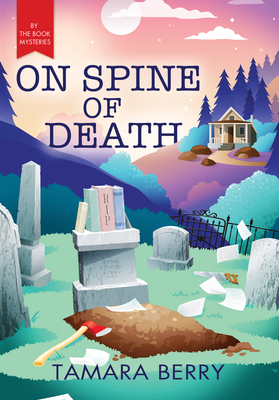
On Spine of Death, by Tamara Berry****

The By the Book mystery series began earlier this year with Buried in a Good Book, and I knew right away the series was going to be a winner Author Tamara Berry is on a roll, with On Spine of Death, the second in the series, already on the shelves. Tess Harrow is our protagonist, and her teenaged daughter, Gertrude, helps more than she hinders, while also keeping us entertained.

The premise here is that while renovating and remodeling her late grandfather’s hardware store, multiple sets of human remains are unearthed. It’s hard enough to be accepted into a small town, but now half of its denizens are convinced that her granddad was a serial killer! Now Tess is on a mission to find out whose bones those are, and how they got there.

There are tropes here that usually make me cranky. We’ve got the hot-for-sheriff trope, and the must-clear-my-name (or that of a loved one) trope, but it’s testament to Berry’s authorial chops that I don’t think about either of them much until the book is over. Her droll humor and nicely turned out characters keep the pages turning. This is a series that doesn’t take itself too seriously, and that’s just what I need sometimes.

I recommend this clever little cozy mystery to anyone needing a break from the world around us, along with a good chuckle, and I look forward to the next in the series.

The Battle Cry of the Siamese Kitten, by Philipp Schott*****

Philipp Schott is a Canadian veterinarian, and he’s very funny. This meaty compendium of essays runs the gamut, and the overall effect is a calming one, like the fish tank in your doctor’s waiting room, but more entertaining. My thanks go to Net Galley and ECW Press for the review copy. This book is for sale now.

I came to Dr. Schott’s work through the back door, so to speak. A friend on social media recommended a mystery he wrote, Fifty-Four Pigs. While I was requesting the galley for that one, I saw that this was also available, so I put in for it as well. I am glad I did, because while the mystery is pretty good, this little gem is even better.

I have never said this before without intending it as an insult, but I do so now: this book is great for insomnia. Here’s what I mean. I’m tossing and turning and after half an hour of that, studies suggest that one must give the battle up and go do something for a bit in order to reboot the brain. When we cannot sleep, it eventually upsets us, and when we are upset, it’s even harder to get to sleep.

When I am sleepless, I am too groggy to do much. I’ve had a sleeping pill, and my motor skills make me unfit to clean house or do anything else that is useful. Once my eyes are able to focus on text, reading is the obvious activity to breach the difficult night hours, but I cannot be certain I’ll remember what I’ve read the next day, and I’m not with it enough to take in complex literature or nonfiction. Thrillers are completely out; they’ll wake me up further, once I’m coherent enough to understand what I am reading.

When all is said and done, short stories or collections of essays, are the best, and Dr. Schott’s are particularly congenial. Each is engaging; a few are tear-jerkers, and while some are persuasive or informational, most are humorous. Although Dr. Schott’s practice is almost entirely there for house pets that are mammals—so, cats and dogs—he has a handful of essays describing cases where he has gone far afield. The zoo wants an ultrasound of that pregnant snow leopard? He’s on it! Beluga whales? YES!

There’s one in which he waxes eloquent about the healing bond that occurs between the very elderly, particularly those in assisted living facilities, and elderly cats and dogs, and he decries the way most such facilities exclude pets; he advocates for a large scale effort to remedy this, including volunteer corps to assist with the extra labor that including these beloved beasties creates. He makes a strong case.

Funniest of all, however, is the title piece, in which he and his wife attempt to take their own cat to the office for shots and whatnot:

I don’t think we veterinarians appreciate how difficult it is to bring some cats to the clinic. Dogs are more easily fooled, only catching on once they get to the clinic door, but it is the rare cat who cheerfully saunters into their carrier, purring in euphoric anticipation of the double joy of a car ride AND a veterinary visit…

“Lucy, look! Extra treats today! And that special catnip mouse! Don’t you want to go in?                                                                                                      Her facial expression was clear: ‘How dumb do you think I am?’                         Play our cards wrong, and she could bolt for the cat sanctuary above the basement ceiling tiles.  The cats think of it as their secret rebel base; we know where it is, but we still can’t get them out of there.

 The pandemic has inspired countless previously petless households to seek out four-pawed companionship, and so, during the period when many businesses have suffered from a lack of customers, Dr. Schott has been even busier than usual. It’s lucky for us that he’s found the time to sit down and write these agreeable essays. In addition to aiding the sleepless, it’s a fine addition to a guest room or yes, the bathroom, because each entry is fairly brief, and the reader can be assured that they’ll have time to finish what they’ve started. Regarding the book, I mean.

Highly recommended.

Elvis and Me, by Priscilla Presley****

Priscilla Presley is the ex-wife of the king of Rock and Roll. I was a teenager when he died, and neither I nor most of my peers were fans; in the event his name did come up, we’d invariably ask, “Wait. Do you mean young hot Elvis, or old pudgy Elvis?” But I do love a good memoir, and those written by or about musicians are high on my list. My thanks go to Net Galley and Macmillan Audio for the review copy. This audio version of the author’s 1985 memoir is for sale now.

The relationship between Priscilla and Elvis took place in a completely different time, with completely different sexual mores and assumptions. That said, this was still a truly messed up pairing. Today, Elvis would probably be considered a predator, but within the context of the American South in the 1950s and early 1960s, he was regarded as a romantic, and women threw themselves at his feet. A quick online peek at old film and television clippings says it all.

Priscilla grew up in a strict but loving household. Her stepfather, the only father she knew, since her own died when she was an infant, was a military man, and so the family moved often. It was while they were stationed in Germany that one of Elvis’s employees saw Priscilla and invited her to meet with Elvis, who was doing his own tour of duty.

I have to feel for the bind her parents were in. On the one hand, she was just fourteen years old, and Presley was twenty-four, a grown man. On the other hand, if they refused to let her go, she would never have forgiven them; this was an invitation that literally millions of girls yearned for. Seeking a happy medium, her stepdad set boundaries: they were to be chaperoned, never alone together, and he wanted her home at a certain time. He groused about the fact that someone other than Elvis would be transporting her, but the reason was a legitimate one: Elvis could not drive himself anywhere without the car being mobbed. It was genuinely unsafe.

Rather than being the single event that the family anticipated, Elvis made their visits regular ones; when her parents balked, Elvis spoke to them personally, turning all of his charismatic charm on them, and telling them everything they wanted to hear. Most of it was untrue, of course, but the one thing he adhered to was not having sexual intercourse. During this time period, the Madonna-Whore dichotomy was alive and well, and any girl or woman known to have sex outside of marriage was likely to be ostracized by former friends and in some cases, family. It’s hard to imagine now, but at that time, no birth control pill had been invented, and a pregnancy outside of marriage was likely to ruin a young woman’s entire life.

Priscilla reads this memoir to us herself, and that makes it much more fun to hear. As we age our faces and our bodies change a lot, but our speaking voices change very little. Remembering some of the silly moments from that time, the author lets out a brief, girlish giggle, and it’s almost impossible to believe that she is now a grandmother.

Priscilla acknowledges that this was a monstrously unequal relationship. Elvis dictated whom she could talk to, what she wore, and sometimes even what room in the house she was supposed to be in. At one point, when he is going to be touring for months on end and she will be left at home with his grandmother, she goes out and gets a job. She’s so proud of herself. He makes her quit immediately. When he phones from the road, she had by God better be there. Priscilla compares this to Pygmalion. He has all the power, and she is in his thrall before she has even had a chance to grow up.

I have read two other Elvis biographies, and as dreadful as all of this sounds, the other authors were less gentle. In fact, this is part of Priscilla’s stated reason for deciding to tell her own story.

There are advantages to reading this particular biography. The official version of events is often what is published, but Priscilla is positioned to know the real story, more often than not. For example: when Elvis is drafted, the official story is that, although stars of his caliber are often offered soft assignments that involve singing to the troops, or making inspirational training films, Elvis insisted on doing the same job as every other American man.  On the other hand, Priscilla states that this is all his manager’s doing, because it will make Elvis appear noble. Enough new songs were taped in advance for there to be regular new releases on the radio throughout his tour of duty; toward the end, Elvis feigns illness because he’d prefer to be in the hospital being swarmed by nurses than marching around and getting dirty.

Her memory of Elvis, despite everything he put her through, is mostly a tender one. The spiral that led to his death, his issues with mental health, back before much was known, coupled with the immense number of strong prescription drugs he used to wake up in the morning and go to sleep at night—or to NOT go to sleep at all, and just stay up, night after night—set him up for relationships with unscrupulous characters, and nobody could rein him in, because he was the King.

Recommended to those that like vintage rock music or well-written memoirs of famous musicians.

The Wedding Dress Sewing Circle, by Jennifer Ryan***

Jennifer Ryan has created a niche for herself as a novelist that writes stories for and about women during World War II, set in England. In this one, a group of villagers form a club for the purpose of recycling and reusing wedding gowns, which are otherwise impossible to procure due to war rationing. We have three main characters and a manageable number of side characters. My thanks go to Net Galley and Random House Ballantine for the invitation to read and review. This book is for sale now.

I experienced an odd mix of reactions to this novel, at various points. At the outset, it’s an information dump tied together by story components. That’s okay; I’ve seen it before. We get it over with so that we can go forward knowing the relevant facts.

Our main characters are Cressida Wescott, a London fashion designer driven back to the manse of her birth when both her home and business are struck by Nazi bombs; Grace Carlisle, an underconfident vicar’s daughter who’s about to enter a marriage of convenience to a much older man of the cloth; and Violet Wescott, niece of Cressida, who is desperately in search of an appropriate Royal peer to marry, because she deserves nothing less. Through circumstances, the three become close friends. Using Cressida’s professional experience and the generous donations of women in the village, and eventually beyond it, they are able to create lovely dresses for themselves and others, with the understanding that each dress must be passed on to another bride once the first user’s nuptials are over.

By the 40% mark, my notes say that although this story is becoming a bit predictable, I am so in love with these three women that I don’t mind at all. There are some bumps along the way, to be sure. For example, Violet is aghast when she is called up by the British government to serve her time doing war work. On the one hand, I had never known that (many) British women were drafted during this conflict to serve in noncombatant roles, so this is interesting; on the other hand, it takes about ten pages for Violet to transition from the world’s most obnoxious snob, to a positively egalitarian one-of-the-girls. There’s no process, no development; it’s as if Houdini has appeared suddenly, drawn his cape over her, whisked it away, and presto, she’s a different person. At this stage, however, I make a note to myself and then resolve to enjoy the rest of the story.

At the same time, I am becoming uncomfortably aware, having read three of Ryan’s four novels, that these books follow the same formula: different women are thrown together during the war in order to solve a problem of some sort; we have a character from the lower income bracket; another character is a wealthy woman; and there’s a complete brat that will nevertheless be transformed and redeemed by the story’s end. Group hug.

There’s another concern here, too; Violet is assigned to drive a brash American officer around London. Every time she does so, the guy hits on her, and not subtly, either. He stalks her, he harasses her, and so she falls for him. Better make her a dress.

Have we not progressed beyond this hazardous trope?

The story has a hurried quality to it. At first, as I note that every time someone is happy, they grin—never smiling, smirking, chuckling, guffawing, or giggling, they grin, grin, and grin some more—I chastise myself for picking at a perfectly lovely story and I move on. But it gets worse, and by the end, I run a quick search, thanks to my digital galley and my reading app’s features—and discover the word has been used 51 times.

Editor?

By the time we reach the conclusion, everything seems so obvious that I wonder if someone’s AI did most of the work here. And yes, of course that is hyperbole, but it’s also a disappointment.

Those that haven’t read anything by this author and that love historical romances may enjoy this book, but by the merciful end, I confess that I no longer did.

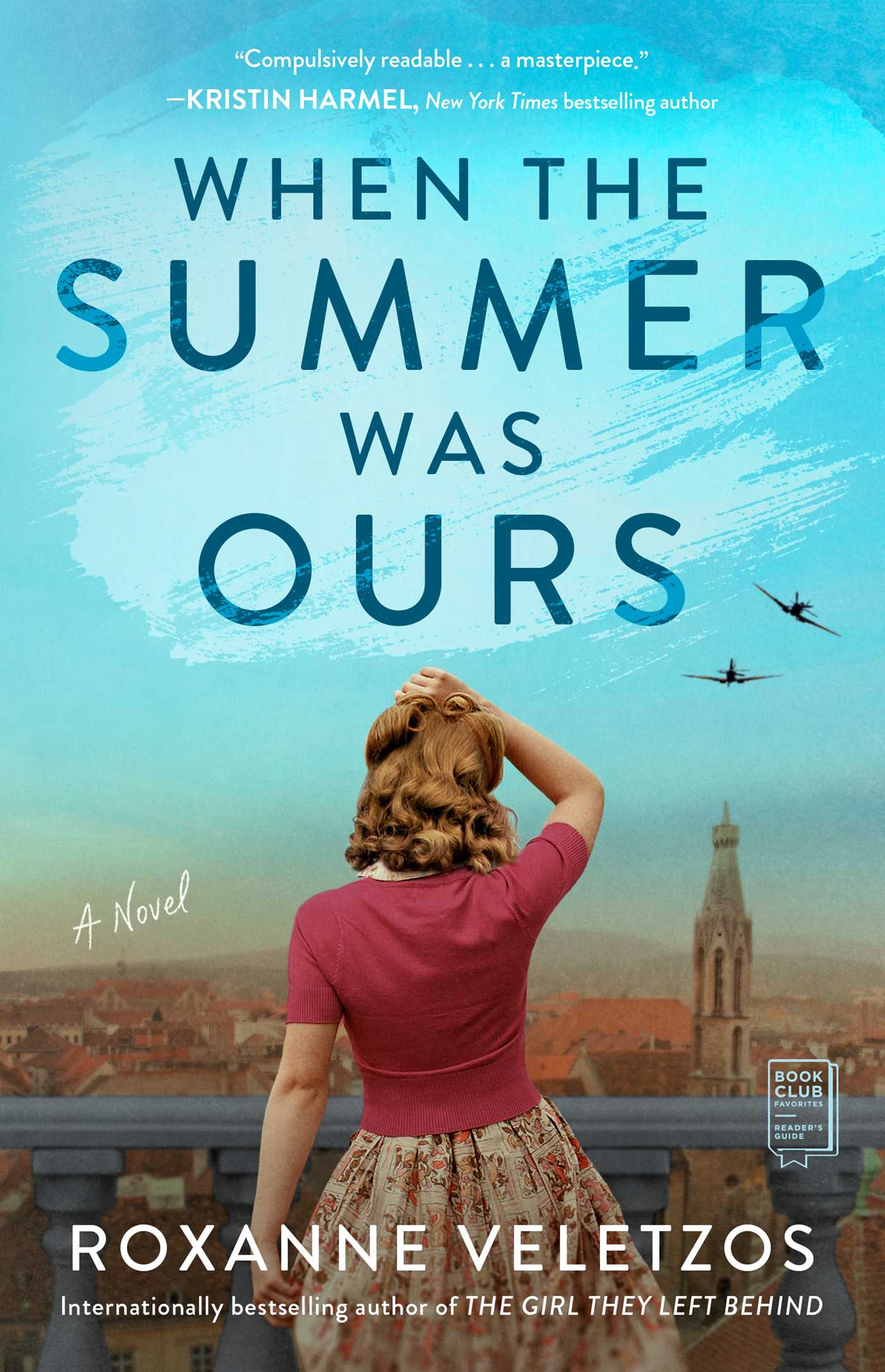
When the Summer Was Ours, by Roxanne Veletzos***-****

3.5 stars, rounded upward. I had proclaimed myself to be over and done with World War II fiction; there’s been a glut of it in the publishing world, and I have well and truly had my fill. My soft spot, however, is for any book written by an author whose work I have read and enjoyed. I reviewed Veletzos’s charming debut, The Girl They Left Behind, in 2018, and so when the opportunity came up, I agreed to read and review this one, too. It was a good decision.

My thanks go to Net Galley and Atria Books for the invitation and review copy. This book is for sale now.

Eva Cesar, daughter of the well-to-do but terribly strict local bourgeois, falls in love when Aleandro, a Romani artist stops in her tiny town in Hungary. He is a painter and a fiddler, raising his younger brothers alone following the deaths of their parents. Eva’s father knows nothing of this romance, and it’s a darned good thing. Not only is her father a Nazi sympathizer and bigot, but she is already engaged to marry Eduard, a dedicated Red Cross physician whom she also loves.

The story follows all three of them over the years, shifting points of view. All three are likable characters; Aleandro is obsessive enough that he seems a little creepy at the outset, but as the story develops, that’s no longer the case. Eduard is a stable, likable human being, but he is the one that is least developed. Eva often makes passive decisions, which I find grating, yet these are the early 1940s, and women don’t yet know they’re entitled to be decisionmakers, at least in many regards. The plot seems to go all over the place, but it comes together quite nicely at the end.

There are two related developments I would have liked to see handled differently. First—and I’m telling you this because it occurs early—Eva becomes pregnant after just one night of passion with Aleandro. Picture me sticking two fingers down my throat. Gag, spit, gag some more; what an overused trope. But then it gets worse. Eva heads to a clinic where abortions are performed quietly, since the procedure isn’t legal; the facility is filthy, and the staff are rude; we briefly meet the doctor, who virtually has horns and a spiky tail, and dines regularly on the flesh of aborted embryos and fetuses. More or less, anyway. And with women’s rights to choose our own reproductive decisions under attack, this is the very worst possible time to put such vile propaganda into a novel. She flees, of course, and has the baby, of course. In fact, as I write this, I question my choice to knock off only half a star from my rating. I’m growing madder by the minute, just writing about it.

Moving on!

The most difficult aspect of a complex story like this one is deciding how to end it. I come back around when I see how tastefully and realistically this is achieved. The ending is both credible and sweet.

There it is; you decide.  

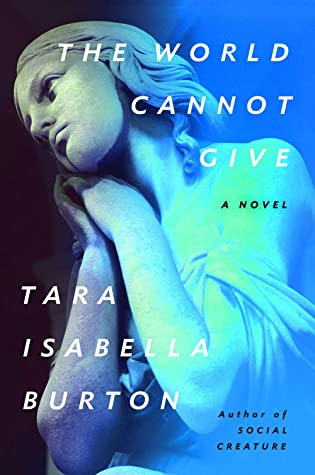
The World Cannot Give, by Tara Isabella Burton**

Four years ago, I read Tara Isabella Burton’s Social Creature, a novel that was one of my favorites that year. I said it was “full of sass and swagger…genius pacing…a novel that should take all of us by storm…the makings of a cult classic.” Did I love it? Yes I did. So imagine my excitement when I saw that she had a new one coming out. Sad to say, The World Cannot Give doesn’t reach the same level. It’s dull, and it takes itself far too seriously.

Nevertheless, my thanks go to Net Galley and Simon and Schuster for the review copy. This book is for sale now.

Laura Stearns arrives at St. Dunstan’s Academy; she is inspired by a novel written by a long-ago alum named Sebastian Webster. Laura yearns to find the “shipwreck of the soul” she finds in Webster’s book. Indeed, Webster has an enthusiastic band of followers at St. Dunstan’s, and so in a sense, Laura has come to the right place.

So we have these elements: a private boarding school—and this setting is in danger of being overused lately, but nothing that excellent writing cannot overcome, although that doesn’t happen here. We also have a slavish clique and hyper-religious students; and we have a whole lot of navel gazing. Or, as the synopsis tells us, “The World Cannot Give is a shocking meditation on the power, and danger, of wanting more from the world.”

If anything here makes your pulse quicken, by all means, go get this book. As for me, I tried. I did. When I couldn’t push myself through my digital copy after multiple tries, I checked out the audio version from the library; if anything, it was more pretentious and obnoxious than the written version. Yikes. I stuck with the audio version through the first two torturous hours, and then I threw in the towel.

This shipwreck is available to the public now.