Those We Thought We Knew, by David Joy*****

David Joy is a brilliant writer. His stories, set in the Carolina mountains that he calls home are resonant, visceral, and always about believable characters that hail from the hardscrabble working class. Those We Thought We Knew is his best. My thanks go to Net Galley and Putnam Penguin for the review copy. This book is for sale now.

Sylva, North Carolina is the sort of insular, homespun community that you don’t see much of anymore. Everybody knows everybody, not only by name but by family, religion, and a host of salient details that form their backstories. There’s not a lot of traffic in or out of Sylva, nestled as it is in a hollow of the mountains. Now, however, two newcomers have arrived, but they aren’t together. Surely not. One is a lowlife vagrant, a pencil-necked, mullet-headed, greasy drunk in an ’84 Caprice named William Dean Cawthorne. When the sheriff’s deputies roust him, one of them finds a small notebook that contains some surprising names; he also has a long, white robe in the car, and with it, a conical white head covering with eyeholes in it. Mr. Cawthorne, you see, is a recruiter for the Klan.

Toya Gardner comes to town at about the same time to visit her grandmother and work on her thesis. She’s a graduate student from Atlanta; she creates meaningful African-American sculptures and other art works. But when she finds the statue of the Confederate soldier in the town square, she is inspired to make a different artistic statement than she’d originally planned, and when she does, all hell breaks loose.

This searing story sees two terrible crimes unfold in sleepy little Sylva. The dynamics that exist between the county sheriff, the Sylva police force, and the local citizenry—particularly Toya’s family—are rich and complex, and they showcase Joy’s best character development to date. In the end, we must concede that alongside the horrors represented by overt white supremacists, the more chilling may be that which simmers below the surface of men and women that, yes, We Thought We Knew.

This is brave writing. Joy will no doubt be the subject of some unfriendly attention because of it. My hope is that it draws the accolades that it deserves from those that seek true social justice, and that it will inspire useful, critical introspection and conversation on the part of its readers.

Highly recommended.

Lone Women, by Victor LaValle*****

“Queer folk, the Henrys.”

Adelaide Henry is “profoundly lonely,” growing up without siblings, with older parents that spurned the world around them. They had their reasons. And yet, in the opening chapter, as I see Adelaide pour kerosene over both of their lifeless forms and burn them, along with their house, I wonder…were they bad enough to deserve this?

But nothing is as it seems, and this is part of the magical spell that Victor LaValle weaves into this kickass novel, Lone Women. By the time I understand the why and the who and the what, I feel an intimate connection to Adelaide, as if I may be the only one trusted with her secrets.

My thanks go to Net Galley and Random House for the review copy. This is one of the finest novels to be published in 2023, and you should get it and read it.

Adelaide flees the California farm where she’s lived all of her life, and buys a homestead in Montana. Almost everything about her life changes; from the warmth of California to the frigid winters of the Northern Rockies, from life with her parents to one lived alone, and from an all-Black community to one that is almost entirely Caucasian. She brings very little with her, only what she can carry, but she is curiously possessive of her extremely heavy trunk, and though I initially assume that she keeps something of great monetary value inside it, I soon realize that isn’t it. My early notes ask the same thing over and again: “What is in that trunk?”

From there, our story unfolds and I can’t stop turning the pages. I’ve never read a novel of any genre that’s like this one, and I’m guessing that you haven’t, either.

Do yourself a favor. Don’t read the synopsis. Go into it blind. It’s a lot more fun if you learn of the characters and events at the times the author intends.

There’s a powerful message in play, but the story is so adroitly delivered that it never feels like a polemic.

I won’t say more, because I don’t want to ruin it for you, but believe me, the next time LaValle publishes a novel, I will be first in line to read it. Highly recommended, especially to feminists.

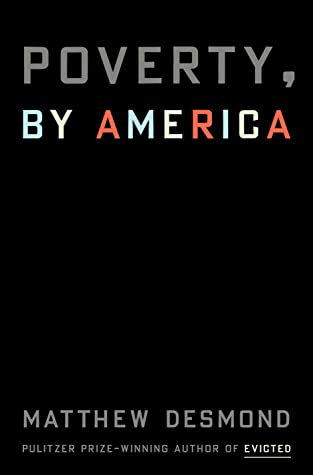
Poverty by America, by Matthew Desmond****

“Hungry people want bread. The rich convene a panel of experts. Complexity is the refuge of the powerful.”

Desmond is the author of Evicted, the Pulitzer winning examination of urban homelessness. Desmond himself grew up poor, and his family was forced out of their home when he was a child. These things give him a different and more authoritative perspective than most urban ethnographers.

 My thanks go to Net Galley and Crown Publishing for the invitation to read and review. This book will be available to the public tomorrow, March 21, 2023.

This book is written for a general readership, and it’s more readable than any other nonfiction work I’ve seen on this subject. His tone is conversational, and his research is impeccable, drawing from a wide variety of sources, well integrated and organized. He addresses the past and present roles of racism, explaining how the overtly discriminatory statutes and policies of the past have morphed into more subtly framed, yet still ubiquitous ones of today. He tells us “why there is so much poverty in America and…how to eliminate it.” He speaks to an audience of middle and upper class readers, warning that we must “…each of us, in our own way, [must become] poverty abolitionists, unwinding ourselves from our neighbors’ deprivation and refusing to live as unwitting enemies of the poor.”

In revealing the roots of American poverty, Desmond is thorough. He discusses the role played by medical costs, and the many workers that still cannot afford health care; the withering of unions, and the way that gig workers and independent contractors have replaced permanent employees; incarceration, and the debilitating effects it has, not only on the person sent away, but on their families for generations to come; the way that government assistance programs have been legally diverted to programs having nothing to do with the poor; the way that poor people are forced to pay more for the same goods and services that the better off pay. He discusses the ways that those living in poverty are cut off from political and economic opportunities. He does these things better than anyone else is doing them right now, and it makes me mad as hell, seeing millions of ruined lives all laid out so starkly.

It is when he approaches solutions that things become a little muddy. There are a few of his suggestions that I genuinely disagree with, but most of them are sound; the problem is that, despite his assurance that all of these changes can be made without much incursion into the lives of the wealthy and powerful, the chances of these people agreeing to implement such changes are somewhere between slim and none. He assures us that he is no Marxist (and that’s the truth, alas,) and that the rich can still have plenty; yet in reality, it’s clear to this reviewer that the kinds of changes that are needed are ones that working people will have to force from the tightly closed fists of the rich. This is where the fifth star falls off of my rating.

Nonetheless, Poverty by America is well worth your time and money, and I recommend it to you.

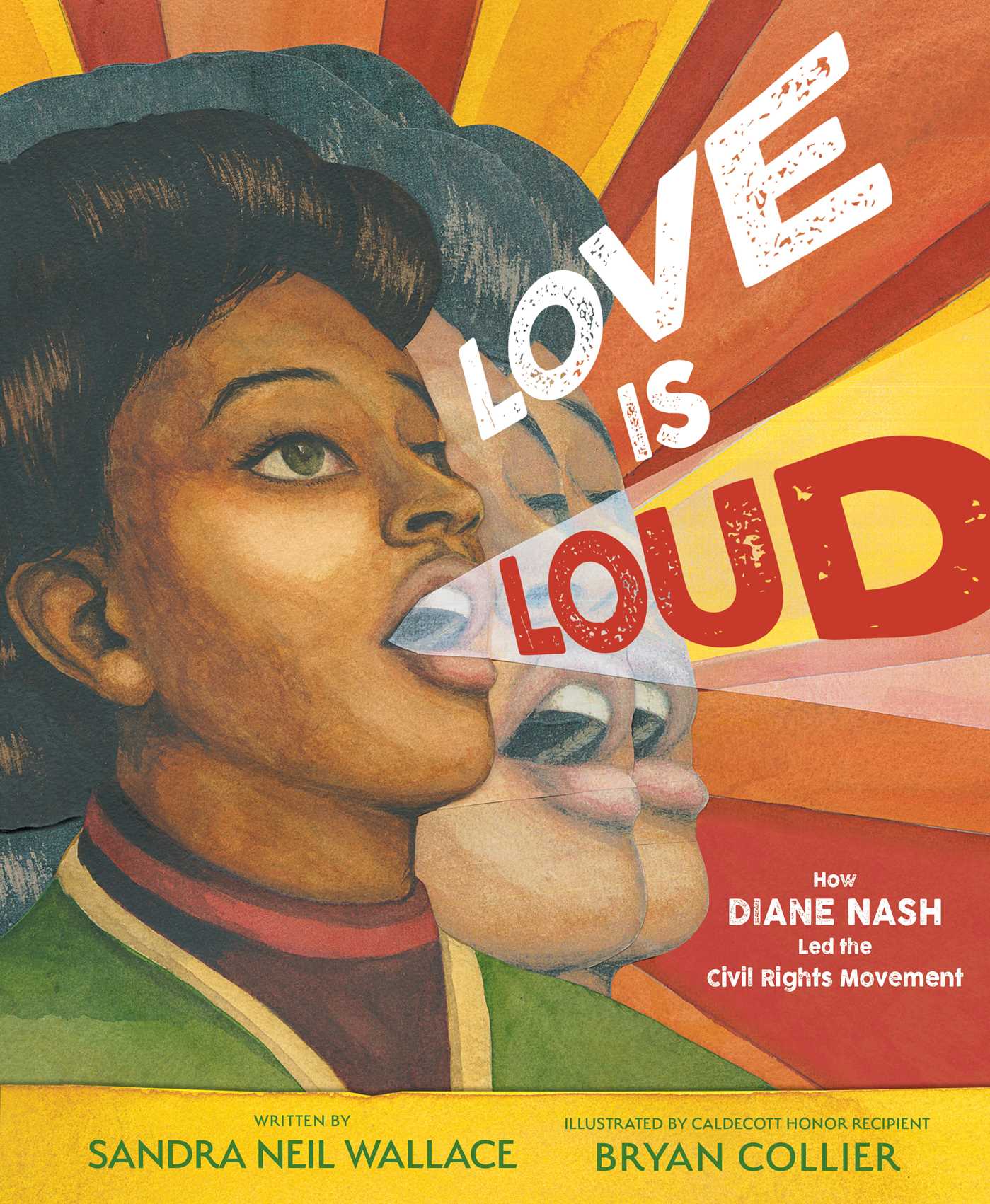
Love Is Loud: How Diane Nash Led the Civil Rights Movement****

Just in time for Dr. King’s birthday! This lovely biography by Sandra Neil Wallace introduces a little-known leader of the Civil Rights Movement, Diane Nash. Nash fought for equal rights for people of color, and had a significant part in the changes that were won.

My thanks go to Simon and Schuster for the copy I received for review purposes. This book is for sale right now.

Most of us have never heard of Nash, who was active during a time when Black people and women were sometimes overlooked, and at other times, excluded in historical narratives. She grew up in the South side of Chicago, where there were many skin colors and cultures, but not many Caucasian people. It was when she went to college in Nashville that she gained firsthand experience of Jim Crow laws, which required separate (and generally inferior) facilities for African-Americans. And Diane was having none of it.

This sumptuously illustrated picture book details the key stages of her development and achievements. My one concern is with the references to “love” in the title and text which are never explained. Is the love in reference to her religion, a philosophy, or something else? The word is thrown in there several times with no context at all. If her mission was to bring change about using nonviolent methods, as Dr. King chose to do and encouraged others to do as well, it is not mentioned. Did she see Gandhi as a role model? We aren’t told. Instead, it appears that the word is injected to sanitize, to offset the word “fight,” perhaps because this story is written for young people. But children aren’t stupid, and without any cohesive portrayal of Nash’s character and underlying motivation, I fear they may forget her. Literature has power, and so although I am glad to see Nash introduced to young people, the effect is diluted when proper character development—which is necessary, even in a children’s picture book—is not provided.

That said, the literacy level is perfect for upper elementary students, and would also make a fine read-aloud for a teacher to frame a single lesson around. It would also be first rate for a sub plan, and teachers know that’s something we always need on hand.

Bryan Collier is the illustrator, and his artwork fills every inch of every page, with the text superimposed on top of it. This is lush, gorgeous work that elevates the story with its presence.

Recommended for classrooms, libraries, and to parents and other guardians of children in grades 4, 5, and 6.

The Black Cabinet, by Jill Watts***-****

3.5 stars, rounded upward.

The premise sounds exciting: a cabinet consisting of African-American luminaries that advised Franklin D. Roosevelt, widely regarded as the best president the U.S. has ever had; well, as far as white folks went, anyway. Wouldn’t it be cool if he had Black advisors, even if it was kept away from the public eye?

It would have been cool, except mostly, he didn’t. Not really.

My thanks go to Net Galley and Grove Atlantic for the review copy. This book is for sale now; in fact, it’s been for sale for a long time. I’m very late with this review, because I was very late finishing the book, because it depressed me so deeply that I couldn’t face it.

Watts is a fine writer and has done the research. The issue for me is that this cabinet, which consisted of outstanding academics and other highly respected Black professionals, had incredibly little clout. They were kept secret. They were unofficial. And it sounds as though FDR tolerated them more than he appreciated them. Despite all of their labor and their eloquence, the New Deal left people of color standing in the rain without an umbrella.

The 1930s were a dreadful time for African-Americans, to be sure. The Jim Crow stranglehold on the South, along with less formal, mostly uncodified discrimination in the North, made it more or less impossible for most bright young Black men to make any headway in their chosen professions, apart from within the Black community (and for Black women? Fuhgeddaboudit.) So, it made my heart sing to learn that there was this exceptional group that advised FDR; but actually, they got crumbs off the president’s table. It makes me a little bit ill to see that this huge study turned up so very little.

For those still interested: there it is.

Mecca, by Susan Straight*****

Susan Straight is a force to be reckoned with. I knew this after I finished reading I Been in Sorrow’s Kitchen and Licked Out All the Pots after it came out in 1992, and after I sought out, bought, and read everything else she’d written that was available. When I discovered that her new novel, Mecca, was available on Net Galley, I leapt on it. My thanks go to Net Galley and to Farrar, Strauss, and Giroux for the review copy. This book is for sale now.

Mecca, an ironic title if ever there was one, is a story of race, class, and gender, and the way that they play into the “Justice” system in California. Add a generous seasoning of climate change and its horrific effects in dry, dry Southern California, and a fistful of opioid addiction, and you have a heady mix indeed. But these are all well worn ground at this point, and this book is exceptional, not because it examines complex current events, but because of Straight’s facility in building visceral characters we care about, and launching them into this maelstrom in a way that makes it impossible to forget.

We begin with Johnny Frias, an American citizen of Latino heritage. As a rookie and while off duty, he kills a man that is raping and about to murder a woman named Bunny. He panics and gets rid of the body without reporting what’s happened. Frias is on the highway patrol, and he takes all sorts of racist crap all day every day. But his family relies on him, and when push comes to shove, he loves his home and takes pride in keeping it safe.

Ximena works as a maid at a hotel for women that have had plastic surgery. One day she is cleaning a room and finds a baby! What to do? She can’t call the authorities; she’d be blamed, jailed, deported, or who knows what. She does the best thing she can think of, and of course, there’s blowback anyway.

And when a young Black man, a good student with loads of promise that has never been in any trouble at school, or with the law, is killed because the cops see his phone fall out of the car and decide it’s a gun…?

I find this story interesting from the beginning, but it really kicks into gear in a big way at roughly the forty percent mark. From that point forward, it owns me.

As should be evident from what I’ve said so far, this story is loaded with triggers. You know what you can read, and what you can’t. For those of us that can: Straight’s gift is in her ability to tell these stories naturally, and to develop these characters so completely that they almost feel like family. It is through caring about her characters that we are drawn into the events that take place around them, and the things that happen to them.

This is a complex novel with many moving parts and connections. I read part of this using the audio version, which I checked out from Seattle Bibliocommons. But whereas the narrators do a fine job, I find it easier to keep track of the characters and threads when I can see it in print. If you are someone that can’t understand a story well until you’ve heard it, go for the audio, or best of all, get both.

Highly recommended.

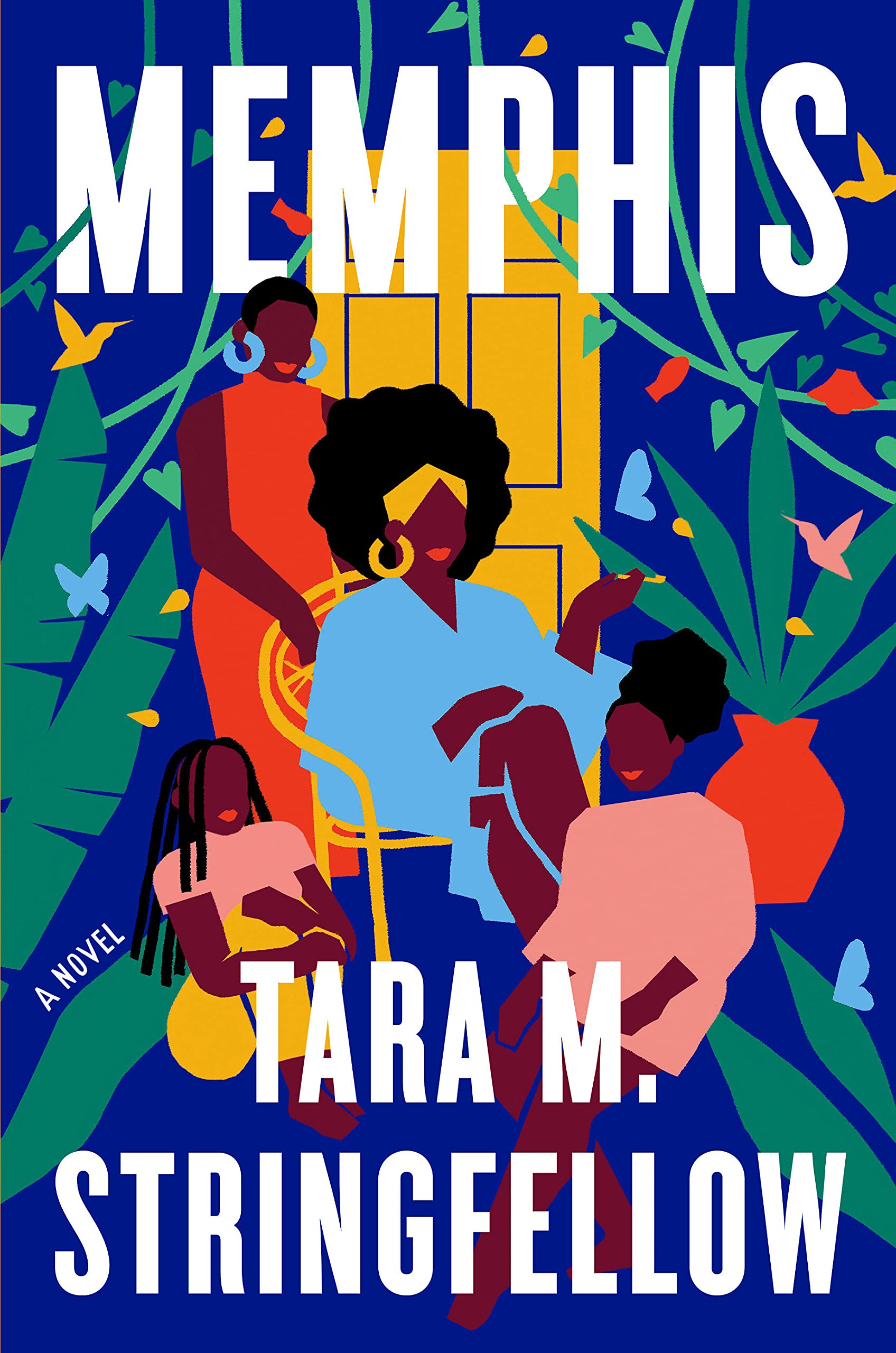
Memphis, by Tara M. Stringfellow****

Stringfellow’s debut novel, Memphis, has drawn accolades far and near. This is a family saga that features three generations of women, a story told with warmth and subtlety. My thanks go to Net Galley and Random House for the review copy. This book is for sale now.

The story commences with Miriam planning to leave her abusive husband. She gets a few things and herds her daughters, Joan and Mya, out of the house. They’re headed to live with Miriam’s sister, August, in Memphis.

The family’s story follows them across time and points of view, but always from the point of view of one of the women. About a third of the way through we find an additional point of view from a character we haven’t met yet, and since we’ve heard from Miriam and August as well as Miriam’s girls, I’m expecting Hazel to be the daughter of either Joan or Mya, granddaughter to Miriam, but that’s not the case. Hazel is Miriam and August’s mother, and the time is the 1930s, a dark time indeed for African-Americans. I like this little surprise. I also love that the narrative embraces only women, across three generations.

As with all good historical fiction, there’s a hidden history lesson here as we follow the Norths across time. On the one hand, I didn’t learn anything new, but I am a history teacher. What I appreciate is the lack of reliance on cheap pop cultural references, and also the lack of revisionism. Stringfellow writes about the past as it was, rather than as she wishes it was. The characters are resonant and believable; my favorite is August. I love the ending.

The story arc is a mighty shallow one, and I’d be hard-pressed to identify the climax. This is my only real criticism.

Because I was a bit behind, I checked out the audio version from Seattle Bibliocommons, and the narrators, Karen Murray and Adenrele Ojo, do a superb job.

Recommended to those that love historical fiction—especially surrounding Civil Rights—and to those that enjoy stories about multiple generations of families.

Chevy in the Hole, by Kelsey Ronan***-****

3.5 stars, rounded up. Chevy in the Hole is Kelsey Ronan’s debut novel. I love strong working class fiction, and the title and book cover spoke to me. But while it shows a good deal of promise, it’s also a cautionary example of how, in trying to do too much, one can do too little. My thanks go to Net Galley and Henry Holt for the review copies. This book is for sale today.

The protagonists are Gus Molloy, who is Caucasian, and Monae Livingston, who is Black. The book opens as Gus is being revived with Narcan on the floor of a dirty restroom in Detroit. We follow him as he meets Monae, a student working at a farm outside of Flint. Their stories are told alternately with bits and pieces of the lives of their predecessors.  

The story is promoted as a love letter to Flint, and a tribute to the resilience of its people; it’s a story of “love and betrayal, race and family.” And we do surely see all of those things, but as soon as one aspect or another is touched on, I wink and poof, it’s gone. Gus and Monae are both sympathetic characters, and I can’t help pulling for them, but I suspect the author could have developed them more fully had we not spent so much time and detail on fragments of their parents, grandparents and so on.

If the author’s purpose is to use these characters from the past to showcase the various struggles through which Flint has gone—sit-down strikes, Civil Rights marches, and now, this horrifying industrial sludge that has polluted the town’s drinking water—it could have been done in a paragraph or two, or through some other device than shifting the point of view. The frequent changes of character and time period make it confusing as heck, particularly while listening to the audio version; that’s a shame, because Janina Edwards is a warm, convincing reader.

But we frequently shift from one protagonist to the other, even after they are married, and all of these people from the past have to be sorted by both time period, and by which protagonist they are related to.  A story like this should flow. As it is, it’s work listening to it, and had I not been granted a digital review copy as well to refer to, I might have given up.

My other frustration is that both the labor history and the Civil Rights issues—with Black people shut out of company housing in the past, and the issues with cop violence as well as the pollution that is visited most within the Black community—are huge. The pollution problem is immense, and ties back into both of the other issues. This book could be a powerhouse, a call for change to reward to the plucky souls that have stuck with this place through hell and high, toxic water. Instead they present almost like postcards; oh, look at this! Now look at that! Okay, never mind, let’s go on back to the present.

That being said, the author’s mission is an ambitious one, and her word smithery is of high caliber. I look forward to seeing what else she publishes.

If you choose to read this book, I recommend using the printed word, whether digitally or as a physical copy.

Black Cloud Rising, by David Wright Falade*****

Black Cloud Rising, the historical novel that’s already been excerpted in The New Yorker, is the book I’ve always wished someone would write. Author David Wright Falade tells the story of the African Brigade, a unit of former slaves tasked with rooting out pockets of Confederate guerilla fighters in the Tidewater region of Virginia and in North Carolina’s Outer Banks. This outstanding work of historical fiction is one of the year’s best surprises, and it’s for sale now.

My thanks go to Net Galley and Grove Press for the review copy.

Sergeant Richard Etheridge is our protagonist; he is the son of a slave and her master. This is the only small criticism I have here; it seems like every time I see a fictional former slave that goes on to do momentous things, he’s the master’s progeny. However, Sergeant Etheridge did exist in real life; I have been unable to discover whether this aspect of his beginnings is fact or fiction. If it’s fact, then I withdraw my objection.

One way or the other, this is nevertheless a fantastic novel. In fact, since I taught the American Civil War for many years and have never heard if this sergeant, I wonder, initially, if his story is even true. But a little research shows Etheridge to be have been real. I had known about the existence of this brigade, but the only aspect of it I’d seen was–oh how embarrassing—from the movie, Glory, in which an all-Black military unit volunteers to lead the charge on Fort Wagner. But there, the story is told not from the viewpoint of infantrymen, but from the Caucasian officer chosen to lead them. It’s not as if I failed to do research; but during my years in the classroom, I couldn’t find a single thing that reflected the memories and experiences of the former slaves that fought for the Union. And although this book comes too late to help me teach the upcoming generation, it will be greatly useful to teachers that come after me.

At the outset of our story, Richard approaches his master at dinner, a thing that is generally not done, to tell him that he is going to enlist in the Union Army. Because he is the master’s son, he is able to get away with this, and this has also allowed him to learn to read and write, which in turn makes him officer material. Richard is a well developed character; it is wrenching to see his loyalty and devotion to his father, as well as to his half-brother Patrick, who is the legitimate heir to his father’s estate. Repeatedly the narrative points out that “the son will always seek out the father,” and it makes me ache for this young man. Nevertheless, he does go to war against his father’s wishes, and he demonstrates leadership and skill under pressure.

There is one visceral scene in which the Caucasian master of a plantation who is linked to the guerilla Confederates, is dragged to his own whipping post and beaten by his former slaves. I find it deeply satisfying. In the end and after much bloodshed, the unit is successful in its mission to clear the area of the guerillas that threaten the Union effort.

In many ways this is a coming of age story, but those that will love it most are those that enjoy military history and all things related to the American Civil War, as well as those interested in the Black struggle. It’s a great selection for Black History Month, but it will make excellent reading during the other eleven months as well. Highly recommended.

Happy Release Day!

I reviewed this outstanding collection earlier, but today it is available to the public. Hill won awards for the first collection, and this is, if anything, even better.

https://wordpress.com/view/seattlebookmamablog.org