
“We know so very little about the people we are closest to. We know so little about ourselves.”
Gail Godwin has been lauded and honored many times over, and has five New York Times Bestsellers to her credit. I read Grief Cottage free and early, thanks to Net Galley and Bloomsbury USA. Now I have to find her earlier work and read it, because her extraordinary prose is worth seeking out. Those that love achingly brilliant literary fiction will want to read this book, which will be available to the public June 6, 2017.
Marcus and his mother live alone and are very close; when she dies, it is as if the bottom has fallen out of his world. He is taken in by a relative he has never met; his Great-Aunt Charlotte lives on a tiny island off the coast of South Carolina. Haunted by his grief, Marcus is drawn to a cottage said to be haunted by a boy that died in a hurricane many years before.
The story begins with a lengthy internal monologue that made me fear I’d regret requesting the review copy. There’s a saying that only those that know the rules of written convention well are entitled to break them upon occasion, and Godwin is one that does, and she does it for a reason. I can promise the reader that if you push through the first twenty percent of the story, complete with very frequently used parenthesis, you’ll be in it for keeps.
Marcus is one of the most resonant characters I’ve read in a long time. He is orphaned, unmoored, and friendless; his one good friend insulted Marcus’s mother, and the friendship was broken. Now his great fear is that Great-Aunt Charlotte, a reclusive painter that values her privacy and has a very small home, may grow weary of the inconvenience of having him with her and send him away. The reader can clearly see this brusque but thoughtful woman grow attached to her young relative, but Marcus is too overwhelmed and depressed to catch a clue. He tries to make himself scarce to reduce his impact on her, and in doing so spends an inordinate amount of time nurturing and watching the nests of leatherback turtle eggs laid on Charlotte’s beach, and walking or biking back and forth to the far end of the island, where the legendary Grief Cottage, Charlotte’s most lucrative painting subject, sits desolate and friendless, not unlike Marcus himself.
A measure of a well written a novel is the way our affection for it lingers after we have finished reading it and look back after we’ve read other things. Because I received a very early galley for this one, I have read and reviewed 24 other books since this one, and yet when I see the cover for this title, I heave a deeply satisfied sigh. Oh yes. Grief Cottage. That one was wonderful!
Those that only enjoy action-packed thrillers will have no joy here; rather, Godwin’s prose is the sort one sinks into, like a deep feather bed or a favorite chair by the fire. For those that love strong literature, I cannot think of a better way to spend quiet spring evenings.
Highly recommended.
 I confess I was miffed when I wasn’t granted a DRC for this title, and after reading a couple of reviews, I decided I could live without it. I began to wonder about my choice when I saw it hover on the best seller lists where it remains as of this writing nearly a year after its publication, But the clincher came when my younger daughter came to me and said that she had read it digitally and believed I would enjoy it. She said it had to do with the culture of mining families, and that the dedication was to the writer’s “Mamaw and Papaw”.
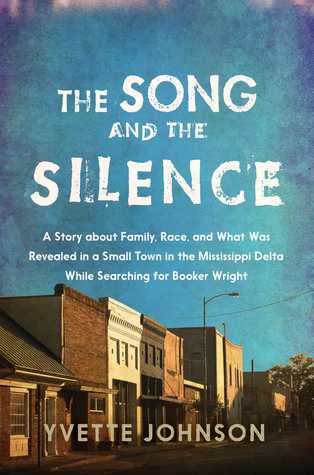 I was browsing the pages of Net Galley and ran across this gem of a memoir. Often when someone that isn’t famous gets an autobiography published by a major publisher, it’s a hint to the reader that the story will be riveting. Such is the case here; my many thanks go to Net Galley and Atria for the DRC, which I read free in exchange for this honest review. You can order it now’ it comes out Tuesday, May 9.
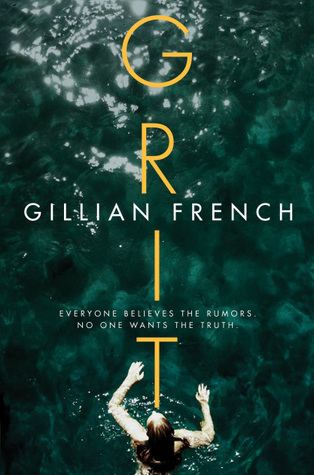 Sometimes there is so much in a novelist’s heart that their debut novel tries to do too much. Perhaps that is what happened here. I expected to enjoy Grit, and I tried to engage with the story, but every time I thought we were on our way, it turned out we were going somewhere else. Regardless, my thanks go to Edelweiss, Above the Treeline, and Harper Teen for the DRC, which I received free in exchange for this honest review. It is scheduled for release May 16, 2017.
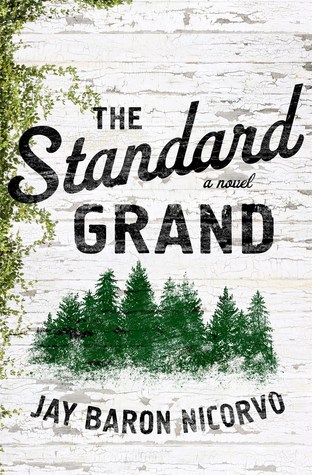 “A loaded gun wants to go off.”
 “You can fuck any girl you like here tonight; they’re all hockey-whores when we win.”
 To date, this is the single best volume that’s been written about Collins, and it’s a meal. I purchased this title on an annual pilgrimage to Powell’s City of Books in Portland, Oregon when I was there to visit family a few years ago. Although the length of the book is listed as 480 pages in paperback, the reader needs to come prepared. The type is tiny and dense, and it took me a long time to wade through it. If it were formatted using more standard guidelines, it would be a great deal longer.
 “Nothing’s ever over till the fat lady sings.”
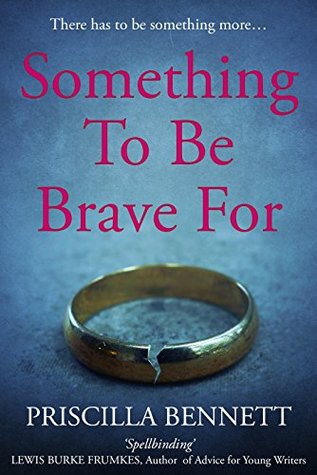 Katie Giraud is the daughter of a successful surgeon. Her father is disappointed when she chooses not to go into medicine, but he is overjoyed when she falls in love with his protégé, Claude Giraud. Claude is the son he never had. Katie is an art lover, and now she can enjoy her passion while being well provided for. Her husband is a handsome, charming Frenchman who woos her with roses and jewelry. It’s like something out of a fairy tale.
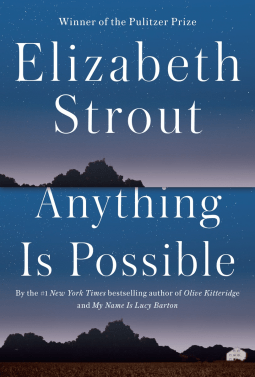 Strout is a writer of enormous talent and the owner of a Pulitzer. Here she builds on the characters she introduced in 2016 with My Name is Lucy Barton. Lucy is back, along with various relations and everyday people. I read this book free and early, thanks to Net Galley and Random House, for the purpose of generating an honest review. This title will be sold April 25, 2017, and those that love strong literary fiction won’t want to miss it.

