

 Derek Black was the heir apparent to the White Supremacist throne, godson of David Duke, and the son of the founder of the largest hate site in the U.S. This gripping biography tells the story of his transformation, from racist wunderkind to social justice proponent. Thanks go to Net Galley and Doubleday for the review copy. This book is for sale now.
As a young person bent on following his family’s toxic legacy, Black felt that part of the secret to gaining support was in softening the language that went with it. Rather than spewing angry racist jargon around, he argued, Caucasians should instead point to their own pride in ancestry. Everybody gets to be proud of who they are and where they came from, right? So his people just happened to be proud of being from Northern Europe. And then it follows that of course they would prefer to be surrounded by others like themselves. Thus, the call for a Euro-American homeland was, he argued, a reasonable demand.
Later he would hear some of his own catch-phrases used by members of the Trump cabinet.
Derek had never known anyone that wasn’t white; his parents had seen to that. When he went to the New College of Florida, he escaped the terrarium in which he’d been home-schooled, and he came to know a more diverse set of people. This story tells us not only of his own inner struggle and evolution, but also of the painstaking manner in which his new friends cultivated him and became an undeniable part of his life. They invited him to Shabbat meals regularly, gradually breaking down his resistance. In time he came to see the contradictions between the ideology in which he had been raised, and the reality of the real human beings that were now part of his life.
I am amazed at the patience and perseverance of the young people that changed his thinking. I myself would have beat feet far away from a character like this guy, particularly given the enormous stake he had in remaining exactly who he’d been raised to be. Befriend this person? Why would anyone? But they did it, and they met with success.
Black was inclined to withdraw from public life, to fade into the general population as quickly as possible, but his girlfriend persuaded him that since he had made a difference in the wrong way, he owed it to the world to counter that with a more public repudiation.
Saslow is a Pulitzer winner, and his writing is tight and urgent. I didn’t put this story down often once I had begun it. At the same time, Black’s story is told so intimately that it feels a little strange to suddenly realize that Saslow is in it, and we don’t get much information as to how he got there. I would have liked to see a more natural segue from his development, to his conversations with his biographer. It felt a bit abrupt to me.
This, however, is a small concern. The book is fascinating, and you should get it and read it.
 If there is a prize for courageous literature, Picoult deserves to win it. I have grown frustrated over the years as I have watched countless novelists dodge and weave to avoid the mere mention of abortion as a means to deal with an unplanned, unwanted pregnancy, and I wanted to do cartwheels when I read the teaser for this book. I thank Net Galley and Random House Ballantine for the review copy, and the author and publisher for having the integrity to go there. This book is for sale now.
 “One night…what’s the worst that can happen?”
 I was rooting around on Net Galley looking for some good nonfiction when I ran across this title. Many thanks to Net Galley and Doubleday for the DRC, which I read free in exchange for this honest review. This book is now available to the public.
 I was ready for something that was a little different, and then an online friend recommended this historical fiction for review. Thanks go to Net Galley and Atria Books for the DRC. It’s for sale today.
 This collection is guaranteed to be good, and I was thrilled when I received a review copy, thanks to Net Galley and Doubleday. Those that enjoy strong fiction should buy it and read it, even if you have to pay full jacket price. This year’s edition holds 20 prize winning stories along with a bit of judging commentary at the end. This book is now for sale.
 I received a review copy free and early, thanks to Net Galley and Simon and Schuster/Touchtone. This book is for sale now.
 Kate Morton is queen of the British historical mystery, and so I leapt at the chance to read and review The Clockmaker’s Daughter. My thanks go to Net Galley and Atria Books. This book will be available October 9, 2018.
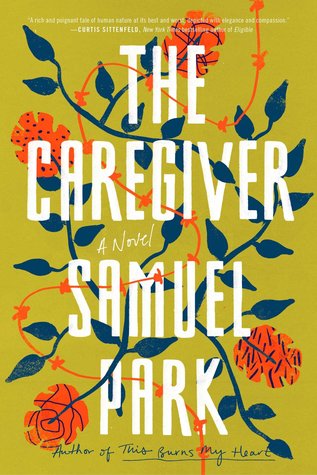 The Caregiver is one of the year’s best surprises. I read this book free and early, thanks to Net Galley and Simon and Schuster. Our protagonist is Mara Alencar, and our setting is split between present day Los Angeles, and Rio de Janeiro, Brazil in the 1980s. I am drawn to the story initially because of the setting, which I don’t see often; but it is Mara that keeps me turning the pages. Those that treasure excellent, character-based literary fiction should get this book and read it.
 Moretti’s mysteries are addictive, and when I found this galley in my email, I jumped it to the front of the queue. Big thanks go to Net Galley and Atria for letting me read it free and early. You can buy it now.
