My Name is Emilia del Valle, by Isabel Allende****

“Aren’t you afraid, Angelita?’ I asked her. ‘All the time, but I don’t think about it. I want to die with my boots on my feet,’ she answered…

“I did not know who I truly was until circumstances put me to the test.”

My Name is Emilia del Valle is the newest novel published by feminist icon and author Isabel Allende. The story is a fictionalized account of a journalist that travels from California to Chile, where war has broken out. Because she is a woman, her editor resists sending her, and then, under pressure, agrees that she may go, but only to cover human interest stories in the city. Those that have read any book ever by Allende will know instantly that this is not what our journalist does.

My thanks go to NetGalley and Random House Ballantine for the invitation to read and review. This book is available for sale now.

Like all of Allende’s protagonists, Emilia is a woman that refuses to be constrained by the expectations of the time regarding gender. She is possessed of feverish curiosity, and once she finds herself in the thick of the conflict, she has no interest whatsoever in finding and maintaining a safe, distant place from which to report. She assists the “canteen girls,” who provide water to fallen soldiers, along with minor first aid. Emilia learns first hand about the horrors of war, and she is forever changed by it.

This conflict is one that isn’t widely reported, and Allende writes about it so that it may not be forgotten. Ten thousand died here, mostly men from poor families, killed for no good reason. Emilia’s experiences highlight the disparity in treatment according to social class and wealth, as well as gender.

The writing is first rate as always. However, in most of her earlier novels, the author found a way to intersperse shocking or horrific passages with some that were uplifting, and often very funny. I would bark with sudden laughter at some witticism that I had not seen coming. I wish she had done that here. When there’s too much horror and bloodshed, it is tempting, natural even, for readers to tune out, let the words wash over us. And while there is romance here that provides some relief, I would have liked more.

Nevertheless, those that love historical fiction, social justice, feminism, and especially those that love Allende’s writing will want to read this book.
The Women, by Kristin Hannah****

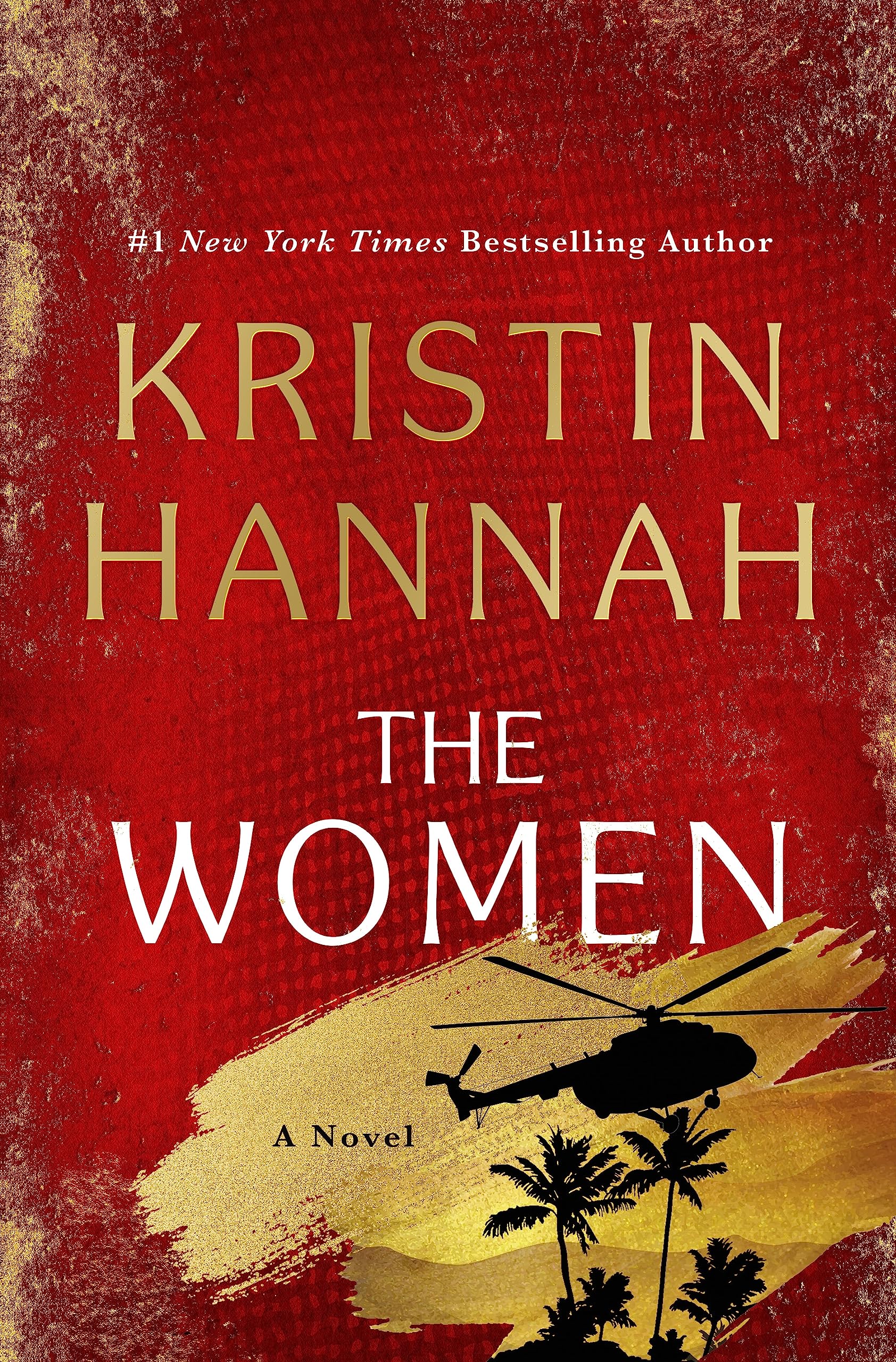
Kristin Hannah can draw character like nobody else. Her latest novel, The Women, tells the story of Frances “Frankie” McGrath, a young woman from an upper middle class family that follows her brother to Vietnam, serving as an army nurse. Frankie is a character that will stay with me long after I read dozens of other novels, and this experience is made even more memorable by the talented Julia Whelan, the voice actor that narrates the audio version. My thanks go to NetGalley, St. Martin’s Press, and Macmillan Audio for the review copies. It will be available to the public February 6, 2024.

Frankie is twenty years old when we meet her, and her family is throwing a party for her big brother and best friend, Finley, who is leaving to serve in the U.S. Navy. Kennedy is in the White House, and most Americans still bear an implicit trust in their government. But Frankie is worried about Fin, and doesn’t like that he is about to put himself in harm’s way. He reassures her, “It isn’t dangerous, Frankie. Trust me. I’m a Naval Academy graduate, an officer with a cushy assignment on a ship. I’ll be back in no time. You’ll hardly have time to miss me.”

Frankie completes her nurse’s training, then signs on to join her brother, but before she is even packed, the telegram arrives. Finley is dead; killed in action.

The plot itself is unremarkable. Yes, war is hell; yes, friends die. And yes, a married man that sees an attractive, vulnerable American woman in a place where they are scarce, will lie like a rug in order to get close to her. But in Hannah’s hands, every joy and every sorrow are real and visceral, because we believe.

Frankie serves as a combat nurse at the front, and works in every possible hard situation. Sometimes the lights go out during surgery because a bomb has fallen; at one point her sleeping quarters is bombed and has to be rebuilt. She works for days on end without sleep when it’s necessary. And the trauma follows her home.

My only quibble with this otherwise outstanding story is the emphasis Hannah places on the abuse of returning troops by the public. She brings in the old saw about them being spat upon and called baby killers, even though an easy search confirms what I remember: this is mostly myth. Just as women weren’t really burning bras, most troops were not greeted with abuse. It’s true that the wildly patriotic parades that greeted the troops that returned from World War Two are not there for these men and women, but then, the Korean War vets didn’t see them, either. Historical fiction should honor history, not rewrite it.

With this caveat, I recommend this book to you. Do read it; it’s a damn fine novel. But do so critically, because you can’t always believe everything you read.

Happy Release Day!

I reviewed this outstanding collection earlier, but today it is available to the public. Hill won awards for the first collection, and this is, if anything, even better.

https://wordpress.com/view/seattlebookmamablog.org

The Soul of a Woman, by Isabel Allende*****

Isabel Allende has long been a guiding light for women, immigrants, and social justice activists. She is an old woman now, and her wisdom and word smithery have only grown deeper and wider. Thanks go to Net Galley and Random House Ballantine for the review copy. This book is for sale now.

There are four sections to this compact memoir, and overall, it is a memoir of Allende’s feminist philosophy and experiences. She also describes the trajectory of the feminist movement and the gains that have been made.  One of Allende’s most agreeable attributes is her candor, and she discusses her relationships with the men she has married with disarming frankness and humor. Her voice is like nobody else’s.

Generally speaking, I find it annoying when an author uses space in the book they’ve sold us to advertise a product or beg for funds, nonprofit or not; however, this time I wanted to stand up and cheer! Allende’s foundation exists to support women’s reproductive choices, and that includes abortion. Out of all the years I’ve blogged, over one thousand reviews I’ve scribed, and I have never seen abortion rights advocated so forcefully. I bow in admiration.

If I could have something more from this iconic writer, it would be an overall autobiography. She has written numerous memoirs, but all of them focus fairly narrowly on one particular aspect or time period. I would love to have her whole story in her own words.

Highly recommended.

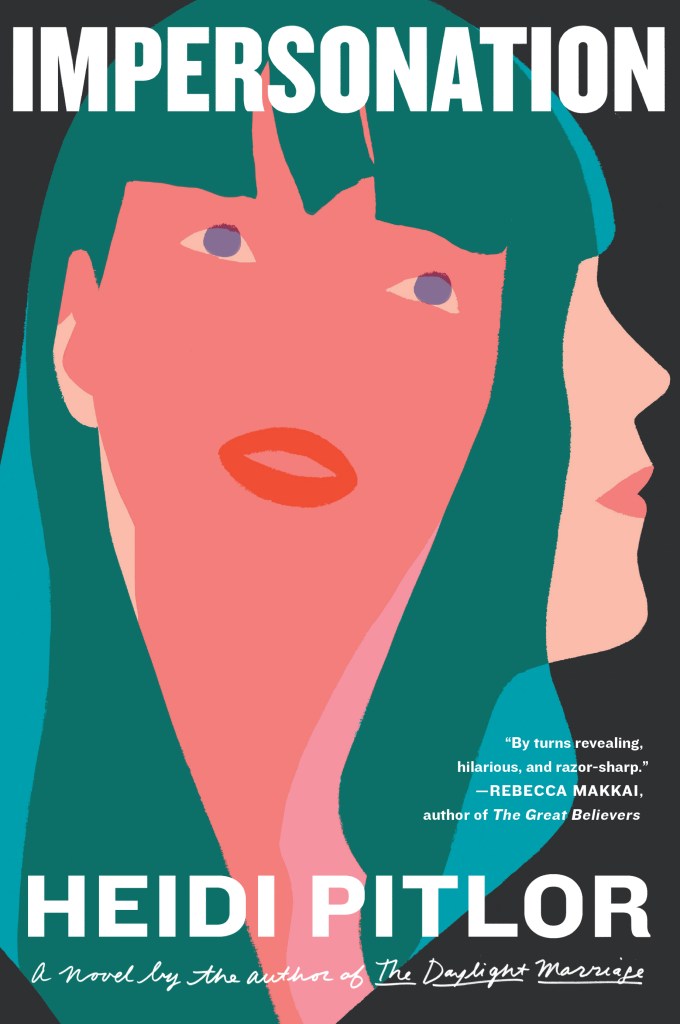
Impersonation, by Heidi Pitlor***

My thanks go to Algonquin Books for the review copy. This book is for sale now.

Allie is a single mother and a professional ghost writer. Because her income is sporadic, she picks up money between publishers’ paychecks substitute teaching and landscaping. She’s always broke, always paying the most pressing bill at the expense of others. Then her big break comes, and she’s over the moon. She’s going to write a memoir for a famous feminist, someone she has idolized for many years. The pay is more money than she’s ever earned before, and as a bonus, she will get to spend time with an icon.

Except she won’t.

Her icon is a busy woman, and she isn’t forthcoming with any personal information. Nothing. With deadlines looming, then passing, Allie desperately invents anecdotes drawn from her own experiences, hoping that if they don’t satisfy, her subject may part with some true stories of her own; but ultimately, she is the one that gets tossed under the bus.

The story begins well, witty and absorbing. If I were to review the first few chapters, this would be a four or five star review. However, in the middle of the book the plot bogs down and the pacing grinds to a crawl. I had hoped for a climax and finish that would make it worthwhile, but instead, the story becomes a pedantic manifesto. The feminist issues that are near and dear to Allie’s heart, and one may assume, Pitlor’s as well, are also mine. If anyone in this world should love this story, it should be me. And oh, how I wish it was. But because the protagonist has become such a nonentity, there is no inspirational melding of character and social issues that might have made it possible.

There’s a terrible irony here, or at least there may be. Perhaps Pitlor deliberately ceased developing Allie because Allie is a ghost writer, and her entire career is predicated on her ability to lie low. Perhaps we are meant to see her disappear, and perhaps that’s intended to be part of the message. But if so, it doesn’t work for me. I need more internal development, or more of something else.

Conceptually the story is strong; but the execution leaves something to be desired.

Fight of the Century, by Michael Chabon et al*****

In celebration of the 100th anniversary of the American Civil Liberties Union, a large cross section of the finest writers alive have written essays, each about one landmark case. Chabon and his co-editor, Ayelet Waldman, contributed their advance to the organization, and all of the contributing authors did so free of charge. As for this reviewer, I’d have been interested in an ACLU publication, even if I hadn’t heard of the writers involved; and I’d have been interested in anything written by Chabon, even if the story or topic wasn’t in my lane. As it is, I count myself beyond lucky to have scored a review copy courtesy of Net Galley and Simon and Schuster. It’s for sale now.

This is the sort of book that invites skipping around, either according to subject, or according to the authors you love best. Because of this, I recommend buying it in paper rather than digitally, because flipping around out of order in digital format is a pain in the butt. Also, this is the sort of classical reference material that you’d want on your shelf. In fact, I want a physical copy for myself.

I haven’t read all of the entries, but I’ve read enough of them to recommend it to you. The cases discussed are meaty and interesting, and they aren’t the standard fodder that shows up in every undergraduate course on Constitutional law. Each entry is succinct, and the writers refrain from self-promotion. The entries I appreciate most so far are by Jesmyn Ward, who discusses the use of anti-loitering laws to transform free Black boys and men into slave laborers; Timothy Egan, who details a 1962 decision regarding the right to receive Communist literature in the U.S. mail; and Louse Erdrich, who discusses digital snooping and surveillance used against the Dakota Pipeline protesters in 2016. I know there are many more I want to read, but I am posting this now so that you can get a copy while it’s in the stores.

Here’s your chance. You can get an outstanding addition to your home library while contributing to a worthwhile organization whose work is more crucial now than ever. Highly recommended.

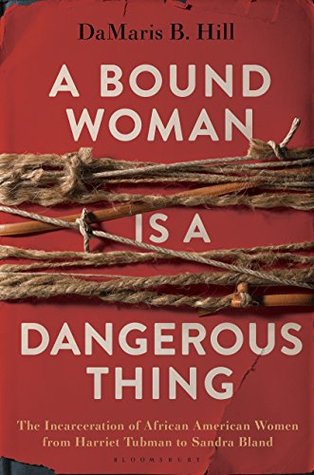
Best Poetry 2019: A Bound Woman is a Dangerous Thing, by Damaris B. Hill*****

Image

Conversations with RBG, by Jeffrey Rosen*****

This is the RBG book I’ve been waiting for. My huge thanks go to Net Galley and Henry Holt Publishers for the review copy. This book will be publicly available November 5, 2019.

Justice Ginsburg wants us to know that the sky is not falling. Though progressive thinkers see great cause for concern, primarily within the executive branch of the federal government, the U.S. Constitution hasn’t changed, and the Supreme Court, she insists, is made up entirely of strong legal minds that revere it. Precedents are still the basis of future rulings; the overturn of precedent is rare and unusual. But for activists—and she loves us—she also points out that public opinion is what alters the course of the law. Congress makes laws based on what their constituency desires. So she isn’t suggesting we put away our pussy hats and our picket signs; she just wants us to know that our advocacy works, and she appreciates everything we do to further women’s rights, civil rights, and gay rights.

Twice previously I read other books about RBG; one is a popular biography that I enjoyed, but that didn’t go deeply enough into Ginsburg’s legal ideas, and the second is just dross, minutiae gathered from her high school year book and whatnot. Whereas part of me just wants her to write an autobiography, I have to recognize that she is very elderly, has faced health challenges lately, and to stand a chance of writing any sort of memoir, she’d probably have to resign from the Court. And goodness knows, I want her to stay there, ideally forever. Instead, Rosen’s series of interviews with this feminist icon serves nicely.

Rosen has been friends with Justice Ginsberg for many years; they were drawn together initially through elevator discussions of opera. His chapters are brief but meaty, organized around key rulings and topical interviews. Rosen explains succinctly at the outset how this friendship formed and grew, but he doesn’t get windy or use the opportunity to aggrandize himself. He keeps the focus strictly on his subject. The interviews flow in an agreeable manner that is literate without being verbose or Byzantine.

We live in politically polarized times, and so even when I am reading about a political figure that I admire, I generally expect my blood pressure to rise a little, perhaps in passionate agreement. But if anyone in this nation has the long view of history and the key domestic issues that have unfolded, particularly with regard to the rights of women, it is RBG. And although I am not as senior a citizen as Justice Ginsburg, many of the changes she mentions that have occurred over the decades are ones that I can also attest to, though I hadn’t thought of them in years. For example, when I came of age in the 1970s, it was still not unusual to try to enter a bar or club only to be barred at the doorway because women weren’t allowed inside. (“Gentlemen only, Ma’am. Sorry.”) I had forgotten about these things; as her recollections unspool I see that she is right. Change happens, but lasting change happens slowly. We are getting there, at least with regard to women’s rights and gay rights. Issues of race and class are something else entirely, and she points up specific instances where justice has not progressed and change is imperative. I could say more, but none of it would be as wise or as articulate as when Ginsburg says it. If you’ve read this far in my review, you should go ahead and order this excellent book now. I highly recommend it to all that are interested in social justice, both formal and informal.