 Thank you to Net Galley and Sourcebooks for the review copy, which I received free of charge in exchange for this honest review. This book is for sale now.
Kress provides a great deal of salient information in this pet store expose; she’s done her research, and explains the ways in which laws fail to protect pets sold for profit, and she has some strong proposals of her own.
I expected to appreciate this book more than I did. I am a volunteer for Seattle Beagle Rescue; I write this review with Beagle Bailey, the fourteen-year-old rescue dog I am caring for in his golden years, flopped on my foot. I am also a fool that once, many years ago, purchased a cocker spaniel from a pet store. (As far as I know, nobody in Washington State actually puts puppies in a display window anymore, but sometimes they broker a purebred adoption.) That dog was gorgeous, but she was a mean little shit, and we had to adopt her out to an older couple that didn’t have children. At the time I figured it was a matter of bad breeding practices, but after reading Kress’s book, I have to wonder what was done to that pup when she was tiny.
The information here is solid, but the writing style didn’t work for me. You can only read so much wall-to-wall horror without wanting to put the book down; I get it already, don’t beat me! In addition, there’s a personal thread about the struggle she and her spouse went through trying for a (human) baby, and while I suppose that might have worked, somehow it didn’t. Instead of feeling confidential, it felt both disjointed and like an overshare.
Once I had begun reading, I realized that although I didn’t know all the low down, dirty details, I have known for decades that nobody should buy a dog from a puppy mill or a pet store, which is more or less the same thing, and it’s widely known. For many readers, this isn’t new information. Most people that go that route do it not because it’s a smart or ethical thing to do, but because it’s easy. When I made that error back in the ‘90s when I bought the cocker, it was known to most people, and to me, that this is an unwise way to get a dog, but I was already badly overbooked time-wise. A solid breeder is often hours away, and sometimes not even in the same state you reside in. And although there’s a lot of bandwagon talk about the benefit of adopting shelter animals, I had failed at this not once, not twice, but five times.
In four cases I had brought animals home that had contracted fatal diseases prior to their shelter vaccinations; the illnesses were dormant, and the shelters weren’t to blame, but when you hold a dying kitty in the veterinarian’s office that many times, you rethink shelter adoptions. And then there was the wild card puppy that turned out to be a German Shepherd and Coon Hound mix. She was one of cutest puppies you’ll ever see, and very healthy, but I can’t deal with a large dog; couldn’t control her, and she kept accidentally hurting the babies. Again, I had to search for a more appropriate home and was lucky to find a great family for her, but it was wrenching. My husband sat down and cried when that family drove away with our dog.
So I am leery of the promise of shelter adoptions; purebred rescues are great, but to get the very best dog for your needs, a solid, reputable breeder is the way to go. None of these variables appears here that I saw; I did abandon the book halfway through, so it’s possible it came up, but this didn’t appear to be the trajectory.
Those that want to know all the details, whether for personal knowledge or as animal rights activists, may want this book, but if you are looking for a sometimes sad but enjoyable read, something that balances out the joys of responsible dog ownership with the cautionary information about disreputable sources, this isn’t it.

 I received a review copy of this book from Net Galley and Three Hills Publishing, which is affiliated with Cornell University, free of charge. This book is now for sale.
 “Even as a federal agent, I have been on surveillance or supporting an operation and have had an officer approach me and say that the neighbors called about a “suspicious” vehicle, which meant it was a black guy driving a car. I’ve been the man in that suspicious vehicle.”
 This one is a crushing disappointment. I seldom buy books anymore, but I was so pumped about this collection that I went all out and got a hard copy, expecting to love it enough to keep it in my home library forever. Sadly, this isn’t what I expected.
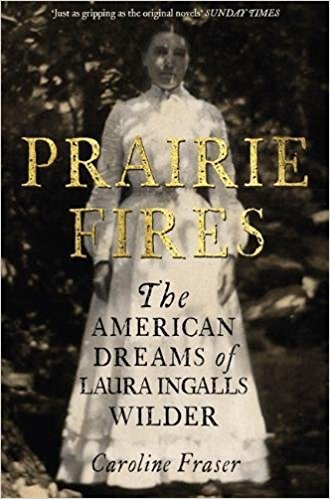 Are the classic “Little House” books memoir or historical fiction, and were they written by Laura or by her daughter? If you’re confused, you’re not alone. In this epic, absorbing biography of her great-grandmother, Fraser tells us. Between her congenial narrative and careful, detailed documentation, this author has created a masterpiece. Lucky me, I read it free and early thanks to Net Galley and Henry Holt Publishers. This book is now for sale.


 To date, this is the single best volume that’s been written about Collins, and it’s a meal. I purchased this title on an annual pilgrimage to Powell’s City of Books in Portland, Oregon when I was there to visit family a few years ago. Although the length of the book is listed as 480 pages in paperback, the reader needs to come prepared. The type is tiny and dense, and it took me a long time to wade through it. If it were formatted using more standard guidelines, it would be a great deal longer.
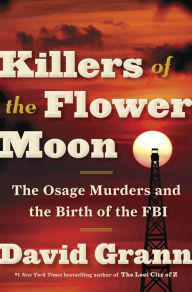 I received this book free from Net Galley, courtesy of Doubleday, in exchange for an honest review. It looked like a fascinating read, but I am disturbed by the sources chosen, which sent up all sorts of red flags right from the get-go and before I had even focused on the references themselves, a due diligence that has to be done before any nonfiction work can be recommended. Once I examined the references, I concluded that so many of them are so questionable that nobody, including the writer, can demonstrate anything beyond the premise of the book itself to be true. The killings happened; that’s about it.
 Seattle Book Mama