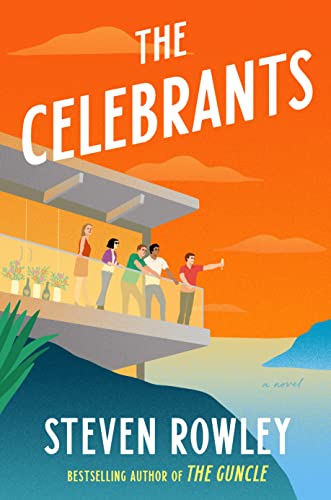
The Celebrants, by Stephen Rowley***

I enjoyed Rowley’s novel, The Guncle, which came out in 2019. When I was invited to read and review The Celebrants, I jumped at the chance. Unfortunately, it didn’t do a thing for me. Nonetheless, my thanks go to Net Galley and Putnam Books for the review copy. This book is for sale now.
As a child, we once had a bird bludgeon itself to death on our sliding glass door, unable to accept that the invisible barrier was really there. Reading this book made me feel just a bit like that bird. I’d liked Rowley’s last book. Other Rowley fans liked this book. So why…(BAM!)…why…(BAM!)…why could I not get into it?

I think it all boils down to privilege.

Had I read the premise more carefully, I might have avoided this trap. A group of seven college friends, grief-stricken after losing the eighth friend, agree to meet every few years and give each other mock funerals to celebrate the lives that still exist among them.

What rarefied conditions must exist to make such a thing possible? Imagine having the resources to be able to drop everything and fly off to wherever the meeting is held. Air fare. Childcare. Housing. But as I read the abundant dialogue in this thing, such trivialities are seldom mentioned. These are people that for the most part came from money, and they have money now, and they assume they will have as much, if not more, in the future.

Of course, the story is not about money and privilege. It’s about taking stock of their current lives and comparing them to their youthful expectations. There are secrets. There is baggage. And now, in their middle aged years, they are older, wiser, and in many ways, sadder.

Oh honey. They think they’re old now? My ass!  My children are middle aged. Get a fucking grip.

So okay, I am probably not the ideal audience; and yet, I will remind you that I didn’t volunteer for this. I was selected. Someone clearly believed that I am within the target audience.

I initially felt some of this when I began reading The Guncle. The protagonist there was a successful actor with a pile of money; and yet, the challenges he faced, first with the death of his partner, and then with the homophobic relative that tried to keep him from taking the children that had been entrusted to him, won out. The presence of well-written children helped a good deal, and the humor was completely on point. I cannot fail to appreciate an author that can make me laugh out loud.

I didn’t laugh out loud this time.  It’s grim, but it’s wealthy-people grim, not working class grim. If you don’t know the difference, then we all know which one you are.  I rolled my eyes a great deal, but it’s even harder to read when you do that, so I borrowed the audio from Seattle Bibliocommons. It didn’t help a bit, apart from making it possible to take in the book and roll my eyes at the same time.

I see that this title has been nominated for the Goodreads Choice awards, so clearly, a lot of people have loved this book. But I am not one of them.

Recommended to rich people that believe their lives to be harder than they actually are.
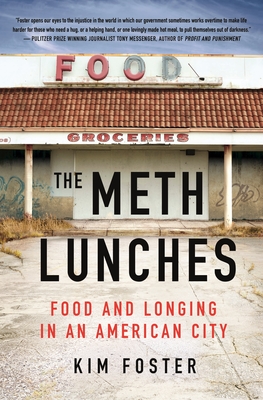
The Meth Lunches, by Kim Foster****

Kim Foster and her husband, David, create a food pantry in front of their house—and later, inside it—during the pandemic. It begins with the employment of one hungry handyman who’s also an addict, and from there, it mushrooms. This is her memoir of that time, and also a philosophical treatise on poverty and hunger in the United States.

My thanks go to Net Galley, RB Media, and St. Martin’s Press for the review copies. This book is for sale now.

When Foster’s family moves from New York to Las Vegas, one of the first thing she notices is the meth. It’s everywhere. Perhaps it is the milder weather; addicts in New York have to find a spot out of the weather during much of the year, but Vegas is in the desert, mild enough for the unhoused to sleep just about anywhere, warm enough that addicts don’t have to hide themselves away to get high.

The pandemic hits Vegas hard. So many people make their living from some aspect of the entertainment business, and for a while, it is a dead industry. And so, after hiring a man with an obvious dependency to do work on their property—work that he never completes—and hearing his story, the Fosters decide to convert the little free library in front of their home to a little free pantry. And from there, it mushrooms.

The pantry begins small, but Foster is a chef, and she can’t stand the notion of just putting out pre-packaged crap when she can cook food with fresh ingredients that will make others feel better. And as the book takes off, I momentarily regret taking this galley, because I generally hate stories that drop recipes into the middle of the plot. If I want cooking information, I’d rather go to a cookbook, or to a recipe website. And it was right there in the title, after all: The Meth Lunches. It’s pretty obvious from the get go that lunch is going to be juxtaposed with social issues.

But as the story continues, I don’t hate it after all. For one thing, this whole book is nonfiction. There’s no plot that is sidelined by a recipe. The whole point is that that Foster considers food, and the act of feeding others, to be a sort of therapy. She makes the point well.

Eventually, the scale of the operation becomes mind boggling. Multiple freezers to hold meat; trucks that deliver food. The pantry begins as an out-of-pocket gift from the Fosters to the down and out of Las Vegas, occasionally supplemented via Venmo from friends, when they are able to help. Inevitably, the pantry finds its way into the local media, and networks form with other food banks and nonprofits.

In between all of this, Foster develops relationships with some of the people that come by. She and her husband are foster parents—ironic, given their name, right? And we hear not only about what the children they house and love have experienced, but also about the children’s biological families. Because although it’s officially discouraged, Kim strongly feels that the children heal best if their biological parents are in their lives in whatever limited way is possible. So before we know it, she is deeply involved with some horribly dysfunctional adults as well. And it is the stories she tells about interacting with them and the children, two of whom she and David eventually adopt, that make this story so riveting.

At the outset, she intends for the pantry to be a resource for local families that have homes and kitchens, but whose finances have taken a huge hit due to the pandemic. The very poor already have resources, she reasons. But of course, the homeless find her, and she doesn’t turn them away.

And here is the rub, the only aspect of this book that I dislike. She tells us that one unhoused person in four is mentally ill, and she believes that this official figure is low, at least in Las Vegas. And then she talks about those with addiction issues.

But what she never gets around to discussing at all—unless she does it so briefly that I miss it—is the unhoused people that are not chemically dependent on anything, whose mental health is stable, but who don’t have a permanent residence because they straight-up ran out of money. To hear her tell it, you’d think they don’t exist, and you know that’s not so. So many American families live from paycheck to paycheck, even when the economy is said to be booming. And I feel that she has left these people without faces or voices. And that, in turn, perpetuates a stereotype, the one that suggests that everyone that is homeless is there because they’re either crazy or junkies or both. I use the offensive terms intentionally, because that’s how the stereotype works. 

And the stereotype in turn begets a lie, the insinuation that nobody has to be unhoused. Don’t use drugs. Get mental health care. Get over yourself. And whereas I can see that Foster doesn’t intend to promote such thinking, and in fact takes a hard line over poverty existing at all in such a wealthy nation, when she doesn’t give space to the many, many individuals and families that are out there because the wage earner was laid off, or because they were just squeaking by but then the rent increased, it does distort her overall picture. I don’t come away from this book thinking that most of the homeless are not using meth or any other dangerous, life-altering street drugs, even though it’s true.

Nevertheless, this is a poignant, stirring tale that won’t be told by anyone else, because it can’t be, and bearing in mind the caveats above, I recommend it to you, both as audio and print.

The Mystery Guest, by Nita Prose****-*****

“The maid is always to blame.”

4.5 stars, rounded upward.

Author Nita Prose introduced Molly the Maid to us in 2022. Now Molly is back. She’s the head maid now, and considerably more confident than when we first met her. Her boyfriend Juan Manuel has moved in with her, but he is conveniently out of town for most of this novel, and it’s just as well, because there’s another murder about to occur at The Regency Grand Hotel, and once more, Molly will be instrumental in identifying the killer.

My thanks go to Net Galley and Random House Ballantine for the review copy. This book will be available to the public November 28, 2023, so you can plan your gift lists accordingly.

The hotel is in high gear, planning for the big gathering that will introduce the large, new, lovely tearoom. Business has been down at TRG since the murder last year, and this special occasion should bring new life into the hotel. In fact, Molly has given up her vacation with Juan so that she can see to the set-up; everything must be cleaned, shined, and buffed to perfection. You see, famous author J.D. Grimthorpe has an important announcement to make, and he’s chosen the tearoom as the venue from which to do so.

The stage is set, and the fans arrive. Molly’s protégé, Lily, has arranged the tea cart perfectly. Grimthorpe takes the podium, and is presented with his tea. After doctoring it to his own tastes, he takes a sip and ascends the stage once more, but before he can get to the surprise announcement, he keels over dead, right on top of Lily!

Lily is terrified. She’s always been a quiet one, but now she is virtually mute. When the police come in to question her, Lily is nearly undone.

“Molly, I’m afraid.” Her eyes are round pools of trepidation.

“I know,” I say. “But why?”

“Because a famous man is dead. Because they always blame the maid. You of all people should know that.”

“You’re not in any trouble, Lily.”

“Bit soon to tell,” the detective replies.

With that, we’re off and running. The book is one hell of a page turner, and it’s over before I know it. There’s lots of spunky dialog that jumps off the page. I seldom regret putting away my book because I spend so much time reading each day, but for this one, I stayed up late.

My only quibble—a small one—is that a key part of the solution is a bit of a reach. But this is a fun story, and so I make a quick note and move on.

For those that enjoy a sparkling mystery interspersed with wry humor, this book is for you. The profound respect for the working class is icing on the teacake.

Highly recommended.

Happiness Falls, by Angie Kim*****

Angie Kim’s barnstorming best seller in 2019, Miracle Falls, showed us that she is a force to be reckoned with. Now she’s written something even better. My thanks to go Net Galley and Random House for the review copy. This book is for sale now.

I admired Kim’s debut novel, but because of its complex nature, it was a fair amount of work to read. Happiness Falls is every bit as brainy, but it’s streamlined, with just five important characters and a handful of secondary ones, so the reader can spend more time enjoying it and trying to puzzle out the solution, and less time trying to keep up with the plot and recall the intermittently appearing characters as it progresses.

As with her debut, this story features a main character with special needs. Eugene Parson has Angelman syndrome, a rare disorder that has rendered him incapable of speaking. This is a problem, because one day, Dad and Eugene go to the park for their daily walk, but Eugene comes home alone, bloody, disheveled, and tremendously upset. What happened? The family’s concern intensifies when Dad’s backpack is found floating downstream, but Eugene cannot speak. And so, the mystery that is interwoven into this family drama is established.

The story is told in the first person by Mia, Eugene’s older sister. Mia’s twin, John, rounds out the siblings, and their mother is the fifth family member. It’s set in Virginia during the pandemic; however, plot and character are much more important here than setting.

The mystery—what has happened to Dad—is wholly original because of the critical role played by Eugene’s communication challenges. Originality becomes more important to me every time I pick up a mystery; once you’ve read several hundred of these things, sameness can produce tedium. But this novel has much more going for it than that. The characters are absolutely believable. The teenagers are all convincing; they are age appropriate, bright but occasionally impulsive. Best of all is that there is no abuse story tucked in here. Their dad is or was a loving one, and the same is true of their mother. The parents have navigated bumps in their marriage, but by the time we hear of them, they’re fine. There’s no horrific baggage waiting to ambush us. These are nice people whose lives are complicated solely by the need to assist Eugene, whom everyone also loves. I make a point of telling you this, because I am sick to death of stories about terrible mothers. I’ve had enough of them, and am delighted Kim doesn’t go there.

Our narrator, Mia, is cleverly drawn; she is the family cynic, and she’s the family motormouth, and so if we occasionally wonder why Mia is telling us everything in such detail, it’s because Mia is a talker.

There are twists and turns all over the place. Just when I begin to think I might have a handle on this mystery, Kim throws in something else that leaves me gaping like a guppy. What? Huh? Oh. Well, there goes my theory. What now?

Because I came to this post-publication, I checked out the audio version at Seattle Bibliocommons to help me catch up. The audio is very well done. Initially I didn’t find Mia’s narrative voice appropriate because she seemed mighty chirpy for a girl that may have just lost her father; however, once Mia’s character is further developed, which doesn’t take long, I realize that the chirpiness is part of Mia’s denial. She’s very close to her dad, and she can’t bear to think that he is in danger, or worse.

I have rarely felt any interest toward any profound learning disability, but Kim made me care about Eugene and Angelman’s.

This novel is brilliant, a standout for 2023. I highly recommend it to all that love a good mystery or family story.

Scattershot, by Bernie Taupin*****

I was a teenager when Elton John’s music exploded onto the radio, and to this day, there are certain songs that I play in celebration, or when I need my mood lifted. For decades it lay in the back of my mind, wondering what was behind these lyrics or those. Never one to delve into the lives of celebrities all that often—a few shallow attempts convinced me that usually the most interesting thing about them is their work, which I’ve seen or heard already—I nevertheless filed it away, to find out about those lyrics one day.

Retirement came, and so with extra time to spare, I finally learned that Elton didn’t write those words. None of them! It was his writing partner, Bernie Taupin. I found this out only after reading an Elton John bio. I searched for one of Bernie’s and found empty air instead. When I saw this galley, I had to read it, and I am so glad that I did. Big thanks go to Net Galley and Hachette Books for the review copy; this book is for sale now.

Sometimes a public figure will publish a memoir, but either openly or secretly, they require a ghost writer, and in the cases of some others, we may wish that they had. Taupin, however, is a writer, and boy does it show! His eloquence is undeniable, hilarious in some places, moving in others. His judgment is unerring, knowing when to be brief and when to use detail, and his candor is refreshing as well. The result, for me, is that when I’ve finished reading, instead of the usual five or six quotes that I’ve highlighted so that I can select one or two to use later, I instead find that I’ve highlighted eighty-eight, and some of these are multiple pages in length! I’ve spent an hour trying to choose which one to share, and it’s hard because they’re all brilliant. Since choosing just one is impossible, let’s just go with the first, which is near the beginning of the book, the beginning of the Bernie and Reg (Elton, later) show. The chapter begins:

“Sheila hated my coat. I can’t say I blame her. It hung on a hook on the back of our bedroom door like a Neanderthal artifact from the Natural History Museum…when it rained, which was often, it smelled like an uncured yak hide. Afghan coats were in style, as were kaftan jackets, three button tees, and velvet pants. I’m positive we didn’t succumb to the latter, but as for everything else, my new best friend and I did our very utmost to look the part…Sheila was Reg’s mother.”

Born in a tiny, isolated hamlet into the very bottommost scrapings of the working class, Bernie knew from an early age that he wanted out. He loved his family, and later, when money came his way, he took good care of his parents, but he never wanted to live in that place again, and became Californian down to the marrow of his bones the instant he landed in Los Angeles.

Taupin doesn’t hold much back, that’s for sure. The most essential ingredients of a top notch autobiography are that the person has lived an interesting life; knows how to write about it; and is willing to talk about just about every aspect of it. Taupin gets top marks in all three areas. Early on, I became concerned about his attitude toward women, given that the first we learn of his having married is when he makes a side reference to his first marriage dissolving, and I thought, Seriously? You tell us all of the everything, but don’t even mention your marriage? Small wonder it didn’t take. I maintain that concern through two more marriages that get little ink; but then we reach his current, and most likely permanent union, and everything changes and I feel much better.

Taupin has stories about just about every celebrity on the planet, and he does talk about the inspirations for his lyrics. I would have finished this book much sooner, but the greatest joy of reading a rock and roll musician’s memoir is reaching back to listen to the songs whose lyrics he scribed, as well as the many musical influences that shaped him. (Country western, I kid you not!) This book became such a prominent part of my day that my family was leery of turning up during the lunch hour, because I had passages to read aloud. And yet they had to admit that many of them were pretty damn good.

This book is highly recommended to all that love rock music, Elton John, and also to those that just love a resonant, well written memoir.

The Golden Gate, by Amy Chua****-*****

“If I told a jury that Japs killed Santa Claus, I could prove it beyond a reasonable doubt. Everything changes, Sullivan, once you’ve got a different color defendant in the box. There isn’t a jury in this state that wouldn’t send a Jap to the gas chamber if they had a chance.”

4.5 stars, rounded upward.

‘The Golden Gate marks the authorial debut for Amy Chua, a badass author whose stories will be read for a long, long time. My thanks go to Net Galley, Macmillan Audio, and St. Martin’s Press for the review copies. This book is for sale now.

Our story is set during two time periods, 1930 and 1944, in Berkeley, California. Detective Al Sullivan is investigating a murder whose roots are inextricably tangled with those of another, in 1930. Our point of view shifts often, both in time period and narrator. Most of it is told in the first person, either by Sullivan or by the elderly Genevieve Bainbridge, grandmother of the victim in the 1930 murder, now ready, in full Mama Bear protective mode, to do whatever she must to protect what family she has left.

The narrative has a strong noir flavor, and I halfway expect to find Humphrey Bogart around the corner, smoking and looking pensive. However, there is something Chua brings to the story that Bogart never did: a frank look at the injustices of the period, from the immense disparity of wealth among the denizens of Northern California, to the shameless victimization of people of color, who were much fewer in number in this part of the world then, than now.

I put this information up front, because in the early portion of the novel it isn’t obvious that the racism isn’t being highlighted, rather than propagated. I nearly discontinued reading this book because the “J” word is a hot button for me, and I initially believed that it was being used as a lazy way to depict the culture of Anglo Caucasians during this time period. I’ve seen it done many times, the use of the racial slur against Japanese because the author believed it increased the story’s authenticity. In Chua’s case, it’s the opposite.

The solution provided at the end relies overmuch on the journal of Mrs. Bainbridge, and in places, the details of the murder, and the motivation for same, are a stretch. For that reason, I initially rated this fine novel four stars. In the end, though, I realized that the social justice component more than makes up for it.

I was fortunate enough to have both the audio and digital galleys. Although the readers do a creditable job, the complexity of the story, including frequent changes of place, time period, and point of view, make for a confusing listening experience. For that reason I recommend the print version over the audio, unless both are available together.

Highly recommended.

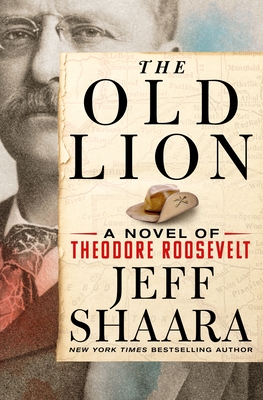
The Old Lion, by Jeff Shaara****

There are a good many books that have been written about President Theodore Roosevelt, and no two are exactly alike. That said, the two I’ve read—this one, and a biography by Clay Risen—could not be more different. In fact, you would never know they were writing about the same man.

My thanks go to Net Galley and St. Martin’s Press for the invitation to read and review. This book was published in May, but it took me some time to push my way through it.  I started out not knowing what tack Shaara would take here, and it is this introductory note that caused me to sit back a bit:

“Few, very few, would disagree that Theodore Roosevelt ranks high among the most revered, most respected, and most admired presidents in history.”

I guess it’s time for me to change my name to Few.

Because I had signed on for it—on the strength of my admiration for its author, whose books I always read without regard to topic—I hunted down the audio version at Seattle Bibliocommons. The voice actor that reads it is second to none, and does a remarkable TR impression. But I also have to say that the various thoughts and conversations which the historical fiction genre permits its author to create seem a bit on the rosy side. Where is the TR that not only organized volunteers, himself included, to fight in Cuba, but used vast amounts of his family’s connections and wealth to advocate for it? Where is the braggard that crowed to his friends about how much he enjoyed shooting an enemy soldier from just a few feet away “like a jackrabbit,” and called his 45 days of combat the ultimate hunting trip?

This is one more reminder that all history is political. Nobody will, or should, write a book about a public figure that uses every single fact available, but it is when the author chooses what to include, and what to leave out, that bias shows. There’s no way around it, even for the most objective of writers.

I cannot deny that there were positive aspects of TR’s tenure in the White House (which he named,) the birth of the nation’s park system, beginning with Yellowstone; he also gets points for having seen, ultimately, that these are not meant to be preserved as hunters’ playgrounds, but rather to preserve the natural life, including animals, that are native to the park. His attitude toward women and Black peoples’ suffrage is laudatory, compared with other politicians of his time, but Shaara doesn’t comment on the ugly racist attitude Roosevelt displayed toward other races and ethnicities, most notably those from Central and South America.

This is a four star read because no matter what he chooses to write about, Shaara spins a tremendously entertaining tale. If you choose to read this one, I recommend you obtain the audio version, and take the dialogue and in particular, Roosevelt’s innermost thoughts with a larger than usual grain of salt, and also read a second, nonfiction work for balance.

The Golem of Brooklyn, by Adam Mansbach*****

Len Bronstein is an art teacher. He has a whole lot of clay he’s filched from his employer’s supply closet, and now he’s stoned. He should make something. He should make a Golem. And friend, that’s just what he does.

Traditionally, The Golem is made by a rabbi to help the Jewish people during difficult times. Len isn’t a rabbi, and he doesn’t expect much from his creation:

Five minutes passed, and nothing happened. Len reminded himself that he didn’t actually expect anything to…he didn’t believe in any of this shit. He stood, dusted himself off, and went inside to grab a beer…Len deposited his beer in the sink just as The Golem ripped his back door off the hinges and flung it aside.

My thanks go to Net Galley and Random House Ballantine for the invitation to read and review. This book is for sale now.

Now that The Golem has awakened, he needs to know what his target is. His answer comes to him as he views the news on Len’s television. White Supremacists are railing about a Jewish conspiracy; the Holocaust, they say, was a hoax. The Golem was asleep during the Holocaust, but once it’s explained to him, he’s ready to get busy. But first, he must talk to the rabbi.

Our second main character is a woman named Miriam, Miri to you and me. She works at the bodega down the street, and Len recruits her to be a translator; The Golem, you see, only speaks Yiddish, and Len doesn’t. Miri has been drummed out of the temple because she is a lesbian, but The Golem likes her just fine. Before you know it, Len, Miriam and The Golem are on a road trip beyond all others, first to find a way in to see the Sassov Grand Rebbe, a wealthy and powerful man with a great many gatekeepers, and then to a scheduled White Pride rally down south.

This is, as may be obvious by now, very edgy humor. There’s a great deal of profanity, and whereas most of it is hilarious, at the beginning, the author could have varied his choices more. There are lots of cuss words out there, and not all of them begin with F. But this is a small matter. This novel’s action is interspersed with brief passages of Jewish history that I find very interesting, and they are so brief, and so skillfully woven into the narrative, that you may not notice that you’re learning some things.

My favorite passages involve a bombastic politician, and multiple encounters with cops. (The Golem doesn’t care for them.) As for me, I have read several very funny novels this year, but none made me laugh out loud as often as this one. And in the end–well, you don’t expect me to tell you how this ends, now do you?

Highly recommended to readers that lean left and can tolerate profanity.

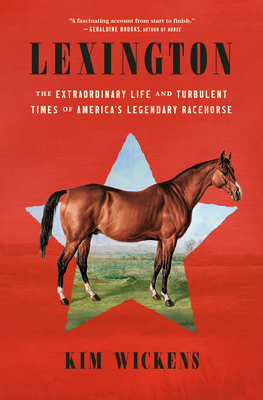
Lexington, by Kim Wickens****

Kim Wickens’s book Lexington tells the story, not only of one immensely famous, popular race horse, but of horse racing in general during a bygone era in the U.S. My thanks go to Net Galley and Random House Ballantine for the review copy. This book is for sale now.

From 1780 to 1860, horse racing was the most popular spectator sport in the United States, and almost a religion in the South. Great fortunes rose and fell with the purchase, training, performing, and procreating of prize horses, and Lexington was the greatest of them all. Kim Wickens has done an astounding amount of research. This is probably the best documented work on equestrian history on the market today. If you love horses, and especially if you love horse racing, then this book is for you.

This reviewer knows little about either subject; I read it because it was different from most history books I’ve seen. My particular interest is the American Civil War; the synopsis mentioned General Grant and Abraham Lincoln, and I was all in. One of Lexington’s progenies was gifted to Grant by a supporter during the war, and he prized it greatly. The horse, Cincinnati, carried its new owner into at least three major battles. Grant allowed no one else to ride it, except, on a single occasion, President Abraham Lincoln.

Sadly for me, that’s about all we see of Lincoln, Grant, or the Union Army. It’s done in about four pages, which left me with 412 other pages. There are additional aspects here that are of interest to me, in particular the role of Lexington and his descendants in the crime spree by a bushwhacker named Sue Mundy, a name the man took on in order to throw lawmen off his trail. In fact, I found the second half of this meaty story to be much more interesting than the first half. Of course, although I like horses well enough from a distance, I have never been a rider or had any active interest in them. I am a city dweller, urban to my bones. For horse lovers, perhaps the first half will be as interesting or even more so.

One thing that I must mention has to do with the difficult material. This is nonfiction, and sometimes Lexington and other horses were mistreated by those responsible for their care. Whereas some race horse owners genuinely loved their steeds, ultimately they were investments. What to do with a horse, whether to race it or rest it, keep it or sell it, was governed mostly by the bottom line. Doubtless they would be appalled, were they alive today, to see the vast amount of coddling and spoiling we in the twenty-first century devote to our various fur babies. If you were to make a Venn diagram between us, about the only item that would occupy the shared bubble in the middle would be that we all own animals. That’s it. Whereas there is never any gratuitous description of the violence and other cruelties visited on the horses Wickens discusses, it’s in there, and if you can’t stand it, don’t read it.

I have rated Lexington four stars for a general readership, but for those with a strong, particular interest in horses, racing, and the history of both, this is most likely a five star read. Wickens is off and running!

Bright Lights, Big Christmas, by Mary Kay Andrews****

I tend to avoid heartwarming holiday stories and romances because so many of them are infused with saccharine and require the reader to put their I.Q. in a box until the book is over. But two years ago, I was happily impressed with Mary Kay Andrews’ The Santa Suit, and so when I was invited to read and review Bright Lights, Big Christmas, I happily agreed. My thanks go to Net Galley, St. Martin’s Press, and Macmillan Audio for the review copies. This book is for sale now.

The Tolliver Christmas tree farm is an institution, not only at home in North Carolina but as far north as New York City. As a child, Kerry sometimes accompanied her family to New York to set up a tree stand and sell the trees, but as an adult, she’s had other priorities. This year, though, she finds herself unexpectedly jobless, while at the same time, her father’s health prevents him from executing the task. Kerry must take his place, traveling to the Big Apple with her brother, Murphy. They set up the stand, and they sleep in the ancient pink trailer nicknamed “Spammy” because of its resemblance to a canned ham. Adventure awaits.

Kerry’s love interest pops up before we’re even ten percent into the story, but it appears that the author planned for us to know that, and it doesn’t hurt anything. Over the weeks they are in New York, various small (and large) crises present themselves and are worked out with team work, ingenuity, and the occasional well-placed bribe. They have Murphy’s dog Queenie with them, but she is primarily left in the background where she belongs.

What I appreciate most about this novel is how well grounded the plot is, and the author’s restraint in not permitting any elements to go over the top. There are a host of stereotypes possible, but every time I see one coming, Andrews chooses a different path, and it keeps the story fresh and original. Small details that might be overlooked by someone less detail oriented are seen to, and it keeps the narrative credible. Examples are the need for a shower or bath, given the length of their stay in a trailer without working plumbing; the cost of living in New York; the hazards of theft and vandalism, especially active at Christmas. None of these sidetracks the plot or slows the pace, but the questions a reader might have are tidied away, and this makes for greater enjoyment.

One small criticism involves a situation where theft and vandalism occur at a time when Murphy has to be away, and immediately, other men folk clamor over the need to have someone—someone with a Y chromosome, folks—to do lookout duty, protecting the fair damsel, her trees, and so on.

Apart from that, this is a delightful story. However, for awhile I wasn’t sure I liked it, because I was listening to the audio version, which is poorly done. The male characters are voiced in a way that is choppy, wooden, and unconvincing; but worse is Kerry’s voice, which is performed in a high-pitched, girly-girl voice so off-putting that it took me awhile to realize that the problem wasn’t the author’s, but rather the voice actor’s. The children’s voices are much better, and I actually howled with laughter when the baby in a stroller wailed!

As the story reaches its climax, Kerry has to make some serious choices, and I admire the way this part is resolved. The side character Heinz, an elderly man that lives in the neighborhood and often stops by the tree stand, is terrific.

When all is said and done, I rate the printed version of this novel 4+ stars, and the audio version 3+ stars, with an overall score of 4. I recommend the print version of this book, but not the audio.