
Shaara is one of my favorite authors, and so I was delighted when I received an invitation to read and review. My thanks go to Net Galley and Random House Ballantine; this book is for sale now.

Like everyone else, I bring my own experiences and biases to this novel, and this one is a potential hot potato. I am married to a Japanese citizen, and my in-laws still reside in Japan. The implicit, and at times overt racism that many authors bring to this topic—the Pacific theater of World War II, between the U.S. and Japan—ruins my mood for days, and consequently, I won’t even go near most nonfiction or historical fiction that focuses on this aspect of American history. When Shaara published To Wake the Giant, I signed on to read and review with great trepidation; I was afraid that I would not only hate the book, but emerge from it unhappy enough to abandon the author entirely. Imagine my delight when I found the opposite was true.
Shaara’s signature format is to portray the events that unfold through the eyes of key participants, delivering staggered narratives that include admirals and pilots on both sides as well as a code breaker on the American side. Shaara sticks to the truth, and by now I know this, so I’m not distracted by the need to fact check information that is new to me. His research and attention to detail is matchless, and his capacity to develop characters on the page makes me feel I would know these men if I ran into them on the street. My review copy, sadly, did not have the maps added, merely noting on what pages they would later be added; however, I once more defer to this author’s track record. I would bet my last dollar that the maps are also excellent.
One aspect that is usually a deal breaker for me is the frequent use of the period’s predominant racist slur, when Americans mention the Japanese. There are three syllables in this word, and they should be used. For those that plead that the one syllable word is authentic to the time and place, I would invite them to imagine a similar tale featuring a hypothetical African enemy during the same time period. What would be the expected, authentic term by which Caucasian Americans would refer to such enemy combatants, and to the government from which they hail? For the obtuse, I’ll tell you, it would be the N word. So would you just go ahead and drop it in there for the sake of accuracy, or would you use greater sensitivity and explain the alteration in an author’s note? You’d do the latter. Of course you would. In fact, likely it would be the only way your novel would see the light of day, and rightly so.
But here as well, Shaara gets a pass from this reviewer despite his use of the term I abhor, and the reason is his candor, addressing the racism of the time period right up front. Though you might think it obvious, I have never seen a successful author of World War II historical fiction do this, and he is absolutely clear about it. In fact, I began highlighting the introduction—don’t skip it! And when it was done, I found I had highlighted nearly all of it.
Whether you are drawn to this book from a love of history and the desire to learn a few things painlessly, or for the escapist entertainment that great novels provide, you can’t go wrong here. This is a damn fine book. I highly recommend it to everyone.



 I received this excellent Civil War tome from one of my sons as a Christmas gift. I don’t request a lot of books anymore because it’s so easy to get others free, but I asked for this one and I am glad I have it. I’ll be reading more by this guy. Despite one fact that I dispute—for which the citation also is sketchy—and some crummy maps, there’s no way to deny five stars here. The topic is among my favorites, and of course Sherman is my all time favorite general, hailing from a time when the United States government still attracted and produced heroes.
 I’ve never understood why so many Americans revere the memory of Robert E. Lee, the general that turned Lincoln away at the outbreak of the American Civil War and instead commanded the treasonous Army of Northern Virginia. When I saw this title, I leapt at the chance to read and review it. Thanks go to Net Galley and Rowman and Littlefield Publishers for the DRC. The book will be available to the public June 1, 2018.
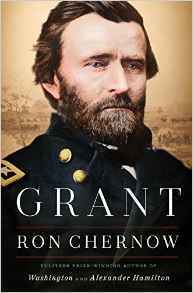 I’m tempted to add this title to my Southern fiction shelf. For a Pulitzer winner to be so careless with his facts is egregious. I got 200 pages or so in, and I found a glaring error. To be honest, I thought maybe it was me. I haven’t taught the American Civil War in 8 years now; am I slipping? Because I could swear that the famous tidbit about a single battle killing more soldiers than the American Revolution, War of 1812, and war with Mexico all added together was about the battle of Antietam, yet here is Chernow, saying it’s Shiloh.
 Seattle Book Mama