
 “You ever hear of the Bobbsey Twins from homicide?”
Dave Robicheaux and Clete Purcel are back. For those that have never read the work of James Lee Burke, it’s time; for those that have missed his two best-loved characters, this new release will be as welcome, as cool and refreshing as a Dr. Pepper with cherries and ice. Lucky me, I read it free thanks to Net Galley and Simon and Schuster in exchange for this honest review.
Robicheaux is a Cajun cop from New Iberia, a small town an hour from New Orleans. Southern Louisiana, he tells us in his confidential narrative, has become “the Walmart of the drug culture.” He is under tremendous pressure; grieving the loss of his wife, Molly in an auto accident, he blacks out one drunken night, the same night that a murder occurs. Dave was in the area, and he cannot say he didn’t commit the murder, because he can’t recall anything. That’s why they call it a black out. His daughter Alafair returns from the Pacific Northwest to help her father pull himself together; she tells him he didn’t do it because murder is not in him. Clete says the same thing. But Dave is a haunted man, and he wonders what he is capable of.
To cap it all off, Dave has been assigned to investigate the rape of Lowena Broussard. The story doesn’t gel, and he wonders if it actually happened.
All of the fictional ingredients that make up Burke’s fictional gumbo are here: slick politicians, mobsters, thugs, and sociopaths. We also have people from Hollywood, whose casually entitled behavior and attitudes are anathema to Robicheaux and probably also to Burke. Alafair has been hired to write a screen play, and lascivious comments directed her way from those in charge of the film make Dave see red.
Clete figures prominently here; as longtime readers already know, Clete “would not only lay down his life for a friend, he would paint the walls with his friend’s enemies.” At one point a couple of thugs follow him into the men’s room at a local bar, and we fear they will kill him. Instead, “Maximo and Juju went to the hospital, and Clete went to the can.”
Burke has long been admired for the way he renders setting. A creative writing teacher could assign this book, because examples of how to render a place in a way that is original and immediate can be found by flipping to almost any page. But there’s more than that here. The dialogue crackles. The narrative is luminous at times, philosophical at others (are the Confederates the new Nazis?) and hilarious here and there as well. It’s enough to make ordinary writers sigh; I may write, and you may write, but neither of us will ever write like this.
There’s also plenty of fascinating Cajun culture here, and it’s so vastly different from anything I have known in my long life, most of it spent in the Pacific Northwest, that I find myself rereading passages. There’s a travelogue feel to parts of it that is unmatched anywhere else.
Lastly, I have to tell you that this story holds an extra element of suspense for me. These characters were originally crafted in the 1960s, and our author is growing old. I wonder as I read whether he intends to kill his heroes, one or both, in order to prevent future pretenders from usurping them. Every time I find Clete in danger, my heart nearly stops. I know that Dave has to make it all or most of the way through this book because it’s written in the first person, but Clete can go any damn minute.
Will Burke pull the plug?
Obviously I am not going to tell you anything more; the quotes you see above all occur early. But for those that can read work that is gritty and at times violent—I had to take little breaks now and then—there is no better fiction anywhere.
 Anna Quinn is a brave writer. This wrenching debut novel occupies a place in literature that has lain dormant for decades; kudos to Quinn for bringing dark business out into the light of day for a good airing. I received my review copy free and early thanks to Net Galley and Blackstone Publishers. It will be available to the public January 30, 2018.
 Oh hey now…do you hear bells?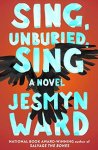
 The Story of Arthur Truluv is a gently philosophical story centered on an elderly widower. Arthur visits the cemetery every day and has lunch at his late wife’s grave so that he can talk to her. Those interred there make pieces of their stories known to him at times; it’s a bit like crossing Fannie Flagg’s The Whole Town’s Talking with the work of Fredrik Backman. I read it free and early thanks to Random House and Net Galley in exchange for this honest review. I rate this book as 3.5 stars and round upward.
 Unless you’ve been hiding under a rock somewhere, you already know that Allende is a luminary that owns the literary lane of magical realism, and is renowned for her fictional immigration stories. But it’s her accessibility, the way she spins her tale as though speaking to a good friend, along with her sparkling great humor and feminist spirit that keep me coming back for more. My bookshelves may be crowded, but when I have to clear old books away to make room for new, my Allende shelf is never up for grabs. These are books I will read again, and that’s a thing I don’t do much. In the Midst of Winter is one I read digitally and free, thanks to Net Galley and Atria Books in exchange for this honest review, but sooner or later I will have to find a hard copy to complete my shelf. You will want to read it too.
 I had never read Ward’s work before, and now that I have I will follow her anywhere. Sing Unburied, Sing is a literary masterpiece, and one that fits the time in which we live. It opens up all sorts of thorny questions for examination, but like most thorns, it stings. I received my copy free and early courtesy of Scribner and Net Galley. This title is available to the public now.
 The place is Amicus, Kansas; the Campbell family has come together to celebrate the birthday of their frail, ancient patriarch, Abel. Ultimately, though, their attention is drawn, unavoidably, to the youngest among them. Billy is a walking pharmacy, but he won’t be walking anywhere for much longer if something isn’t done.
 I had never read Ward’s work before, and now that I have I will follow her anywhere. Sing Unburied, Sing is a literary masterpiece, and one that fits the time in which we live. It opens up all sorts of thorny questions for examination, but like most thorns, it stings. I received my copy free and early courtesy of Scribner and Net Galley. This title is available to the public now.
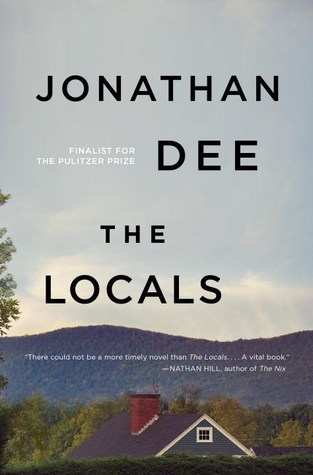 Dee’s new novel has created a lot of buzz. Despite impressive list of publications and accomplishments, he had slid under my radar until now; thanks to Net Galley and Random House, I read this free and early in exchange for this honest review. It is available to the public Tuesday, August 8, and those that love strong, purposeful fiction should get it and read it.
 Seattle Book Mama