Murder in an English Garden, by Carlene O’Connor***-****

Murder in an Irish Garden is the eleventh in the Irish Village mystery series by Carlene O’Connor, but I haven’t read any of the earlier books. My thanks go to Kensington Books, RB Media, and NetGalley for the review copies; this book is for sale now.

I was drawn to this book because it features three of my interests: mysteries, Ireland, and gardening. On the downside, it’s definitely a cozy mystery, and I am generally not a fan of cozies, except for the ones that have a bit of an edge, the sort that make true cozy readers complain. I mention the latter because for me, this felt too sedate; on the other hand, true cozy fans may find it is just about right for them.

The premise is that the annual gardening contest, which features a significant cash prize and a great deal of prestige, is about to take place. The village’s most serious gardeners have spent considerable time, effort, and money preparing their gardens for the event, but then one of the displays turns out to have a corpse inside it; the body is that of an entrant who isn’t from the village, an outsider who’s using the competition as a stepping stone to get her admitted to another contest that has a massive cash prize. Cassidy Ryan, the outsider, has been murdered. Village cops Siobhan and Macdara, who are a married couple, are tasked with solving the crime.

As the story opens, we find the two cops—called garda—in a marital dispute, and our protagonist, Siobhan, has an internal monologue that switches back and forth between murder and her pique at Macdara. I felt the latter was overdone, but I also wonder if I had read some of the earlier books, whether I would be more invested in their romance. Of course, they eventually resolve their dispute, and they crack the case.

I was lucky enough to have access to both the digital and audio versions. This proved to be even more helpful than usual, as I was able to hear the story through the delightful Irish brogue of reader Caroline Lennon, and at the same time, I learned the pronunciation of a few common Irish names that I’d only seen in print until now. Between these things and the fact that the narrative is linear and lends itself to the audio format so beautifully, I recommend that interested readers select either the audio alone, or a combination of both. I read multiple books at a time, and because it is easily followed, it’s the story I have chosen to hear while driving.

The characters felt poorly developed to me, with external qualities—this gardener loves goats, that gardener is formal and rather picky—serving as the only development that I found. I would have liked to see some dynamics, and some agreeable qualities for the deceased included. There was almost nothing about gardening, which would have been fine, had there been character development, but alas.  For this reason, I rate the digital version 3 stars, but for the reasons mentioned earlier, the audio version is elevated to 4 stars.

Hang on St. Christopher, by Adrian McKinty*****

Fans of Adrian McKinty’s Sean Duffy mystery series, celebrate! The eighth installment, Hang on St. Christopher, is out, and it’s well worth the wait. My endless thanks go to NetGalley and Blackstone Publishing for the review copy. This book will be available to the American public tomorrow, March 4, 2025.

When we rejoin Duffy, he’s a part-timer with the Royal Ulster Constabulary, driving a desk:

Until a year ago, doing boring paperwork had only been my cover, because I’d really been a case officer in charge of handling an IRA double agent in the police, who we’d turned into a triple agent working for us: feeding the IRA false intelligence and trying to pick up tips. But the stress of playing for us and them had finally taken its toll on Assistant Chief Constable John Strong, who had a coronary event in his back garden, where he’d been pruning his pear tree with a chainsaw. The chainsaw had avoided killing him, but it had laid waste to several of his prized garden gnomes before the cutoff switch kicked in. It had taken him an hour to die out there, gasping for breath in the summer heat among the severed heads of his gnome army, and those of us who knew about his crimes and betrayals had considered that justice.

For the uninitiated, this is typical of McKinty’s writing style, providing essential information in a tightly worded space, but also including, now and then, some unexpectedly hilarious tidbits. It prevents his prose from becoming too dark to be a fun read.

And dark it does become. You see, Detective Sergeant Lawson, who was once Duffy’s underling and whom Duffy still outranks, is on vacation—sorry, holiday—on the Continent, and wouldn’t you know that a particularly interesting and urgent sort of murder takes place while he’s gone? Duffy is on his way out the door, ready to retire to his suburban home in Scotland where his girlfriend and daughter await, when he’s tapped to go to the scene. Of course, he can turn the whole thing over to Lawson once he’s home; it’s only for a couple of days.

As if.

There are two things that as a reader, I rarely do anymore, and one of them is to stay up late to finish a book. Why should I? I’m retired. I can finish it in the morning if I choose, when I’m rested. The other is to feel sorrow when a good book has ended. I always have dozens sitting in my queue, so even a good book that’s finished is a title I can check off my list, right? But just like Duffy’s tranquil—okay, boring—suburban idyll, all that goes out the window for this one. I stayed up long after my light is usually extinguished, and I mourned when I realized there was no more of it to read.

Once the adrenaline had faded, I wondered where my usual cynicism had gone. I’m a tough customer when it comes to mysteries, and in this one, Duffy does about a million things that cops never do in real life, taking all sorts of crazy risks, doing things at his own expense and on his own time. Why do I believe this story? Because I do. I believe every stinking word of it. And then I realize that it’s the character. McKinty has developed Sean Duffy so well that I know that while cops in general don’t do these things, Duffy absolutely does. Part of it is his thirst for justice; part of it is his inner darkness, a slight, or not so slight, death wish.

If I could change one thing, it would be to have the 9th Sean Duffy mystery available now. Right this minute. I have some excellent books in my queue, but there’s not a single one that I wouldn’t drop like a hot coal if I were given another Duffy book.

Can you read it as a stand-alone? You can, but it would be silly, because when you finish, you’ll be online searching for ways to get the first seven in the series. Do what you gotta do, but read this book.

The Hunter, by Tana French*****

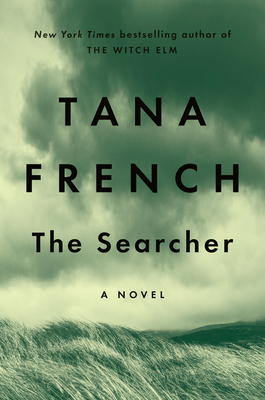
In 2020, Tana French gave us The Searcher, the first in the Cal Hooper detective series. By that time I was already an established fan, but I loved that book particularly well, for reasons I’ll revisit in a moment. Now we have the second in the series, The Hunter, and if anything can reduce this crusty old English teacher to a blushing fan girl, this is it. Two books in, this is already on my short list of favorite series. My thanks go to NetGalley and the Penguin Group for the review copy. This book will be available to the public Tuesday, March 5, 2024.

The series debut introduced the characters, with the protagonist being a retired Chicago cop that found this tiny Irish village on vacation and, needing a new home far from his ex-wife, yet affordable, discovered a bargain fixer of a home and decided to stay. The story’s main problem revolved around a nearly feral tween that kept popping up at Cal’s place. The scrappy little stinker that was relieving Cal of food, occasionally, and doing other unsettling things turned out to be a girl; her name is Teresa, but she’s known as Trey. Her family was in dire straights following the departure of Trey’s father; her brother had left, intending to return, but never had. The mystery was where Trey’s brother had gone, what had become of him, and why. In the interim, she became greatly attached to Cal, who enjoyed her company and taught her some woodworking skills, but also kept a careful distance, lest rumors start and grow.

Now Trey is a bit older, and she is more civilized. She is close to both Cal and Lena, the local woman that Cal has been seeing. But as life settles into a civilized hum, one that would be comfortable had climate change not created a drought that has local farmers at the near end of their wits and their bank accounts, the unexpected happens once again: Johnny Reddy, Trey’s no-account father, has returned. Cal is prepared to step back, if need be, in case Trey wishes to bond with her actual dad rather than himself. Meanwhile, Johnny vows to visit Cal with some local moonshine, and “make a night of it.”

“Trey says nothing. If he does that, she’ll get Cal’s rifle and blow his fucking foot off, and see can he make his way down the mountain to Cal’s after that.”

Johnny never succeeds in bonding with Cal, who doesn’t like the look of him. “Johnny gives him the urge to pat him down and ask him where he’s headed. There are guys like that, who flunk the sniff test just going to the store; it’s a good cop’s job to work out whether they’re actually doing something hinky, or whether it’s just that they will be sooner or later, probably sooner.”

The village is a tiny one, and outsiders are few. Everyone in the vicinity knows that Johnny’s back; everyone wonders what he’s up to. They haven’t long to wait; he’s brought a man with him, one whose family once lived here, or so he says; and the man is interested in seeing if there’s gold on some of the local properties. “He has a rich man’s smile, easy and understated, the smile of a man who isn’t required to put in effort.”  Now the question is whether this “plastic Paddy” is a shyster trying to rip off the locals, or if he is someone that Johnny is seeking to fleece. Meanwhile, Trey has a different agenda, a private one.

The thing that makes this story so much better than your standard mystery is the characterization. If you are in search of a thriller that is all page-turning action, this isn’t your book. However, if you love a layered story with complex, convincing characters, this is for you. I said in my previous review of the first in the series that Trey is what makes an otherwise solid story a golden one, and that’s even truer here. One could even argue that it’s really her series, with Cal existing as scaffolding. Time will tell.

In particular, though, anyone that works with, or has worked with at risk youth cannot, must not miss this story. French has taken hold of my heartstrings hard, and I don’t want her to let go. Highly recommended.

Did Ye Hear Mammy Died, by Seamas O’Reilly*****

Seamas O’Reilly is an Irish journalist; as far as I can tell, this is his first book. He was just five years old, one of the youngest of eleven children, when cancer claimed his mother, leaving his father—an extraordinary man, if even half of Seamas tells us is accurate—to raise them all. This is their story. My thanks go to Net Galley; Little, Brown and Company; and Fleet Audio for the review copies. This memoir is for sale now.

Of all the ways in which one can write about the death of a parent, this is one that I never considered. O’Reilly describes his family, his mother’s demise and the impact it has on his family and the community; and the subsequent years of his own and his family members’ lives, and he is hysterically funny. How he manages to achieve this without breaching the boundaries of good taste and respect is nothing short of pure alchemy. Somehow he finds just the right combination of irreverent humor, poignant remembrance, and affection, and it’s pitch perfect.

His finest bits are assigned to his father. I’m giving you just one example, because I want you to experience everything else in context. This isn’t his most amusing anecdote, but it’s a worthy sample of his voice. After heaping praise on him for other things, he tells us:

“He is alarmingly cocky when it comes to his skill at killing mice, a species he hates with a malevolent, blackhearted glee. It’s an odd facet of his character; a man regarded by his friends as one of the kindest, gentlest humans on earth, and by mice as Josef Stalin. He takes particular joy in improvising weapons for the purpose, and has killed rodents with a shoe, a book, and at least one bottle of holy water shaped like the Virgin Mary. He famously dispatched one with a single throw of a portable phone, without even getting out of bed. I know this because he woke us so we could inspect the furry smudge on his bedroom wall…”

I have both the audiobook and the DRC, and rather than alternate between the two, or listening to the audio and then skimming the DRC for quotations and to answer any of my own questions, which is my usual method, I chose to read them both separately, because this story is good enough to read twice, a thing I seldom do these days. Whereas I usually think that having the author read his own audio is ideal, since the author himself knows exactly where to place emphasis and deliver the piece the way it is intended, this time I am ambivalent. O’Reilly speaks faster than any audio reader I’ve yet heard, and he doesn’t vary his pitch much, and as a result, there are some funny bits that I miss the first time through; I am doubly glad to have it in print also. As the audio version progresses, I grow more accustomed to his speaking style, and I miss less than I did at the outset. Nevertheless, if the reader has a choice and doesn’t greatly prefer audiobooks, I recommend print over audio. Ideally, I suggest doing as I did and acquiring both versions.

There’s no doubt in my mind that this will be among the most memorable and enjoyable books published in 2022. Highly recommended.

The Searcher, by Tana French*****

I was bewildered at first why my fellow reviewers are so stingy with their ratings for this novel, which I fucking LOVE, but then I realized, it’s because of expectations. Those that are looking for a seat-of-your-pants thriller or heavy, heart-thudding suspense won’t find a lot of it here. However, if you love strong contemporary fiction and/or literary fiction, here it is.

I was turned down for the galley, and so I checked out the audio version from Seattle Bibliocommons as soon as it became available. (Serious wait list; no surprise there.) I finished it this evening, and although I have other books on board, this is the one I keep thinking about. I’m particularly taken with the character named Trey, who is at least as important here as the protagonist.

That said, once again, this is not from the Dublin Street series, which I also love; it’s a stand alone novel, and an excellent one at that. I don’t want to give spoilers, but I will say this: thank you, Ms. French, for not hurting the beagles.

The narrator does a splendid job.

Highly recommended.

The Secret Guests, by Benjamin Black****

It’s World War II, and the Blitz has begun. The Royals are torn, wanting to remain with their subjects and share their misery, but not wanting the risk the well beings of their daughters. It’s decided that the girls must be moved, but with the shipping lanes and skies fraught with peril, where can they go and be safe? Ah, a fine idea: they’ll send them to a cousin in Ireland.

My thanks go to Net Galley and Henry Holt for the review copy. This book is for sale now.

As historical fiction goes, this is lightweight material, based on almost no historical event other than the war itself. However, as general fiction goes it’s terrific, immensely entertaining and droll as heck. I figure it’s 3.5 stars for historical fiction, 4.5 stars as general fiction; thus my 4 star rating.

Our protagonist is Garda Strafford-With-An-R, a marginally competent Irish detective who resembles Stan Laurel, tasked with the security the estate where the girls will be housed. Secondary characters are Celia Nashe, a British cop equivalent to a Secret Service agent, who is assigned to serve as personal security for the princesses; an arrogant, sleazy ambassador named Laschelles; and Strafford’s boss Hegarty, who resembles Oliver Hardy. We also have clueless but entitled Sir William, the girls’ host; two bored princesses that get up to things when nobody’s looking; some household servants that know more than they are supposed to; and a few local people that also know too much.

The fact is that I’m entirely burned out on World War II fiction, and that fact nearly prevents me from requesting this galley. But the spin—Ireland, which remained neutral and flirted with taking the side of Germany, what with its enmity toward the British—proves irresistible. The greatest surprise is how much wit is employed and how fast the story moves. I have never read Black’s work before, and this guy is hilarious. He shifts the point of view often, always from the third person omniscient but varying several times within a single chapter, so we get snippets of the person that’s bored, the person that’s nosy, the person that’s confused and so forth. The word smithery is so original and clever that I cannot put my highlighter down. Highlighting is pointless when I highlight close to half of the text, but I can’t help myself. And best of all, the cliched ending that I think I can see a mile away isn’t happening.

Those of us in the States have a three day weekend right around the corner, and the weather will be too miserable to want to go anywhere. This novel might be just the ticket. If you’re lucky enough to be planning a vacation soon, this would also be a fine beach read. But the humor will be a terrific pick-me-up for those stranded indoors with a case of the grumps. I recommend this book to you, and I would read this author’s work again in a heartbeat.

A Keeper, by Graham Nash*****

Graham Norton is best known for his work on television, but I knew nothing about him until 2016, when I read his first novel, Holding, which pulled me in through its originality, warmth, and humor. When I learned that he had another book to be released this summer, I didn’t have to think twice. Thank you, Net Galley and Atria for the review copy. A Keeper will be available to the public August 13, 2019.  

Elizabeth is her mother’s only child, so like it or not, she must return to Ireland to deal with her estate.  Her childhood wasn’t a happy one; her mother was never a warm fuzzy sort. But as she sifts through the many piles of crud left behind, she finds a pile of letters. Perhaps she can finally learn something about the father her mom would never discuss!  But soon she learns that she is also heir to a second home near the sea. Since she never knew her father and her mother was hardly in a position to purchase a vacation home, Elizabeth is mystified.  

Told alternately with Elizabeth’s story is that of her mother, Patricia, forty years earlier. Lonely and dateless, she lets the singles advertisements in the local paper decide her destiny, although nothing goes the way she anticipates.  Some of us are swept away by love; others by something else entirely.

The level of suspense Norton creates is undeniable. I ignore errands and invitations while I am reading it, carrying out household tasks in an absentminded way that nearly finds me dropping dog food into the washing machine. It’s a quick read, and perfect for a long vacation weekend or just curled up in front of the fan with a cold drink. In fact…you definitely want to read this while the weather is warm.  Trust me.

Highly recommended.

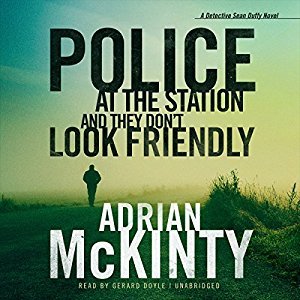
Police at the Station and They Don’t Look Friendly, by Adrian McKinty*****

I listened to the audio version of this quirky, darkly funny mystery, set in Belfast. I only use audio books while I use my exercise bike. I hate exercise like grim death, and so my audio book is my incentive. My rule for myself is that it’s okay to stop cycling early, but if I do, I have to stop the book also. I never quit early while I was listening to this book.

The reader has a lovely Irish accent, and while I don’t know accents well enough to know whether it’s a Belfast accent, it certainly worked for me.

McKinty develops Sean Duffy in a way that is believable and sympathetic, and there are a couple of surprise twists that made me laugh out loud. I wonder whether McKinty made himself laugh while he was writing. It must have been immensely satisfying.

My thanks go to the Goodreads friends that persuaded me to try this book. I seldom dive into an unknown series this far in, but I had no trouble keeping up with it, and will certainly watch for future installments. I read enough mysteries that most of them have a sameness to them. This one doesn’t.

Highly recommended.

Say Nothing, by Patrick Radden Keefe*****

The Irish have fought against oppressive British rule for centuries, but for many the most interesting—and for some of us, emotionally charged—period is that known as The Troubles, which unfolded in 1969 as Irish youth, inspired by the Cuban Revolution and the Civil Rights movement in the United States, sought to carve out some rights for working people living in the North of Ireland and concluded in 1997 following the ceasefire agreement struck between Sinn Fein, which was then the political arm of the revolutionary Irish Republican Army, and the British government. Keefe’s intense, compelling narrative is the most readable that I’ve seen, and the revelations it holds affected me more deeply than any literature I’ve read since I began reviewing books five years ago. Thanks go to Net Galley and Doubleday for the review copy, which I read free and early. You can buy it tomorrow, February 26, 2019. 

The history unfolds in three sections and is bookended by the quest of Jean McConville’s family to find her body and if possible, to learn who killed her and why. It’s an interesting choice given the number of dead the conflict produced, many of whom have never been found and identified, but the mystery and the ambiguity of her activities—was she merely a mother of ten as her children say, or working quietly for the IRA, or a double agent working for the British—is emblematic of the tension and secrecy maintained on both sides. We begin with Jean’s abduction in the first section, titled “The Clear, Clean, Sheer Thing,” move on to the meatiest and most tragic part of the struggle, “Human Sacrifice,” in which young hunger strikers and many others die, and conclude with “A Reckoning,” in which the ceasefire is signed and many Irish people that were involved in the guerrilla war are held accountable—and as usual, the British are not. The entire thing is carefully documented. 

Keefe notes that during the 1980s there was a good deal of “ambient” support for the IRA in the US, and this I know to be true. I participated in fund raisers for humanitarian aid to the six counties during that time, and I attended a presentation by Bernadette Devlin, an iconic leader of the struggle who for some reason barely bears mention in this work. It’s my only complaint about the book. 

The middle section left me shaking an in tears. I had not read Brendan Hughes’s claim about the deaths of the hunger strikers and the role almost certainly played by Gerry Adams, and it was a week before I could pick the book up again. I am still raw from it. I can recall seeing headlines in 1981 when Bobby Sands died, and at the time I was a practicing Catholic. When I saw the news, I picked up the phone and requested a special mass be held for him at my parish in the Midwestern city where I lived then. The parish priest thought it was a lovely idea but he needed the approval of the bishop. The bishop squashed it like it was a bug. There’s a metaphor in there somewhere. 

The final section discusses The Belfast Project, a series of interviews done under the promise that they would not see the light of day until the subjects were dead and buried. The names of the interviewees were coded as a further layer of protection, and the whole thing was stored in the vaults of the Burns Library at Boston College, where it was believed that the British government would never lay hands on it. Never say never. 

This book is a masterpiece. The writer is a journalist on the staff of The New Yorker, and this project took four years of steady effort by the author and his assistants, and a good deal of travel as well. The documentation is meticulous. Nevertheless, there are a number of details that are impossible to nail down, and the book’s title gives the reason for this. The only way to be sure a secret remains a secret is to keep your mouth shut, and that’s precisely what most of those involved in the struggle have done. A great many details that could doubtless condemn large numbers of working class Irish to lengthy prison sentences are buried with the bones of those that could have told. And although the author doesn’t explicitly say so, it’s obvious from the fate of the interview tapes that there is never any other guarantee of confidentiality; the code of silence still held to by the survivors of The Troubles has been all the protection that Irish participants have ever had. The vow to keep information private was decimated time and time again by the horrifying physical and psychological torture on the innocent and culpable alike by British jailers, none of whom will ever be brought to justice. 

Those that didn’t follow this fight in real time will likely not be as shattered by the things this book holds as I was. The author paints a vivid scenario—imagine coming home and noting that there’s a British soldier in uniform, gun drawn, in the rhododendrons in the front yard, for example—and peppers the account with well-chosen quotes. The slow deaths of Irish youth held in virtual dungeons are hard to read about, but then, war stories usually are. It’s fascinating stuff, though but necessarily material for bedtime, depending on your level of sensitivity. 

Highly recommended. 

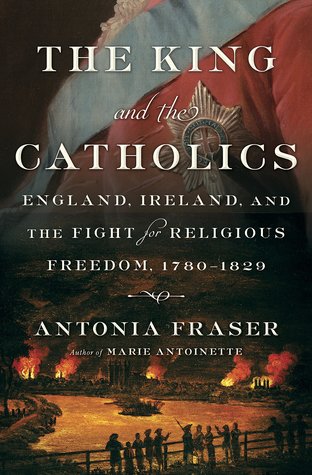
The King and the Catholics, by Antonia Fraser****

TheKingandtheCI was rooting around on Net Galley looking for some good nonfiction when I ran across this title. Many thanks to Net Galley and Doubleday for the DRC, which I read free in exchange for this honest review. This book is now available to the public.

Fraser examines the fight for Catholic Emancipation in Britain, from the anti-Catholic Gordon Riots of the late 1700s until roughly fifty years later. It is appalling that so much time, effort and money was needed for so small a thing as religious freedom, but there it is.

My own interest is more in the direction of Catholic history, with Irish history as a major part of that, and so portions of this well written, painstakingly researched and documented tome drew me more than others. I don’t care a whit what the king or any other members of the royal family say, want, or do, so for those with a closer interest than mine, this might well be a five star read. Parts of it are a trifle dry, but then Fraser livens it up with brief, lively sketches of the historical figures involved.

A major player in the struggle was the Liberator, Daniel O’Connell, and I read all of the passages in which this eloquent barrister is featured with tremendous interest. I also enjoyed seeing ways in which events in the larger world influenced events in the UK, from the French Revolution to the Boer Wars in South Africa.

An excellent addition to the library of any that are interested in the topic.