To Have And To Hoax, by Martha Waters**-***

Oh well.

Martha Waters spans three genres here: historical romance, rom-com, and satire. I like satire, and the other two, not so much. I am rounding my rating up to three stars, because I stepped out of my comfort zone with this novel, hoping for light entertainment; those that enjoy rom-com books may be more enthusiastic than I. My thanks go to Net Galley and Simon and Schuster for the review copy. This book is for sale now.

Lady Violet and Lord James found instant chemistry at a grand ball. Almost as instantly, they were married; then they quarreled and have been estranged ever since. Yet even the stupidest and most imperceptive reader will see that they are still crazy for one another. If one is in doubt, turn the page so the author can hit you over the head with it again. Again. And again.

I enjoy smart satire that leaves something to the imagination. This book tries too hard to be funny. I tried reading the DRC, and when I couldn’t get through it, I checked out the audio version from Seattle Bibliocommons. This made it, if possible, even worse. Overdone prose is made worse by an over-the-top voice actor.

I had been reading too much that was dark and serious, and then the pandemic broke out and I went looking for relief. I found it, but I didn’t find it here.

But again, I have never liked rom-com. If that’s your wheelhouse, you may appreciate this thing more than I do. I pushed through to the forty percent mark; my usual due diligence requires me, if skipping, to then proceed to the eighty percent mark and see if there are joyful surprises that might change my mind. But no.

Fans of the genre may feel differently, but I have to call them as I see them. Not recommended.

The Bright Side Sanctuary for Animals, by Becky Mandelbaum*****

Becky Mandelbaum is the real deal. In 2016 she published a short story collection, Bad Kansas, which I read and loved. ( You can find my review of it here: https://seattlebookmamablog.org/2017/09/15/bad-kansas-by-becky-mandelbaum/) And so when I found this debut novel on Net Galley, I leapt at the chance to read and review it. Big thanks to Net Galley, and to Simon and Schuster. This book will be available to the public August 4, 2020.

Ariel and her mother, Mona have been estranged for six years. But when she finds a news item about her mother’s sanctuary having been torched, Ariel knows it’s time to go home, to see what has been lost and what can be saved.

The story is told from the third person omniscient, and we hear from three characters mostly. We start with Mona, whose stress levels have become nearly unbearable. She’s getting too old to do so much work, and she never has enough money. She has just one employee, working on site primarily for room and board. Perhaps this is part of what possesses her when she leaps in her truck in the dead of night to steal the neighbor’s Make America Great Again sign. She wrestles the great big thing into the bed of her pickup, and by now we can see that she is a tightly wound person whose impulse control is just a tiny fraction of what it should be.

Meanwhile, Ariel is concerned, not only about the fire, the sanctuary, and her mother, but also about her relationship. Her boyfriend, Dex—the third of the characters we hear from most– proposes just as she has begun to fantasize about ending the relationship. As the story progresses, we can see that Ariel is the sort of person that runs from her problems, sometimes literally. She accepts the ring and then says she has to go home for the weekend, and no, he shouldn’t come with her. After all, she’ll be right back. Probably.

Mandelbaum does a brilliant job of building believable, nuanced characters and complicated relationships. Five percent of the way into my galley, my notes say, “This one is going to be a thinker.” And it is, in the best sense of the word. It isn’t a pretentious piece of writing by a long shot, and it isn’t full of florid descriptions or challenging vocabulary. Instead, we have characters that are dealing with thorny personal issues that have no obvious solutions. And my favorite aspect of it is the way the mother-daughter relationship, which is the heart of the novel, is framed. Mona has made a lot of mistakes in parenting Ariel, but she loves her daughter and is a good person. Ariel is still learning how to solve problems herself. There’s a trend in fiction writing right now to draw villainous mothers as the sources of protagonists’ problems. It’s close to becoming a cliché. Mandelbaum has steered clear of this canard and created something much deeper and more interesting. In fact, there are at least half a dozen stereotypes that she has dodged expertly. The fact that she has done this in her debut novel suggests that a great career is ahead of her.

I love the way she ends this story.

Don’t deprive yourself of this glorious novel. Highly recommended.

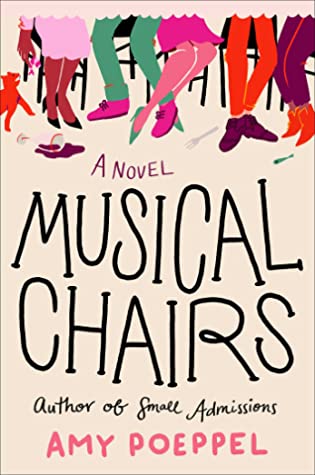
Musical Chairs, by Amy Poeppel*****

We need more writers like Amy Poeppel. Her previous novels, Admissions and Limelight, are whip-smart and hilarious; both involve well-developed characters stuck in odd but credible situations. Her new novel, Musical Chairs, shares these attributes, but it’s even funnier, and even more insightful. Lucky me, I read it free and early thanks to Atria Books and Net Galley. It’s available to the public August 1, 2020.

Our protagonists are Bridget and Will; they are family to one another in the modern sense, the sense that sometimes we adopt our most important friends and declare them to be kin. They’ve been together as performers in the Forsyth Trio since college. Bridget has never married; Will is divorced. They have seen one another through thick and thin, and well meaning outsiders think they must surely harbor romantic feelings for one another. Will has no children, but has served as a father figure to Bridget’s twins, both grown.

Summer is here, and Bridget is preparing to spend it in her summer house in Connecticut. Her boyfriend, Sterling, will be joining her; she thinks that he may be the one. But you know what they say about the best laid plans. Sterling dumps her on her ass without a moment’s hesitation, and both of her children descend on her unannounced. Her octogenarian father lands in the hospital. Nothing that happens is the way she had planned it.

At the same time, Will has been looking forward to some time on his own in the city, but Bridget is in distress and so he drops his other plans for her. Not one thing goes as planned.

I don’t usually enjoy books about rich people, and Bridget’s family is wealthy indeed. This one works for me because the disparity in wealth between Bridget and Will, who is an ordinary starving artist, is addressed in a natural, organic way throughout the narrative; but beyond that, I feel I know Bridget, and so she is not the rich woman, not the heiress, but instead she is Bridget, and she feels like a friend. We always forgive our dearest friends for things that are generally deal breakers with others. Finally, Poeppel has no tolerance for pretension, and more than anything, her honesty turns a good story into a terrific one.

The pacing here never slackens; one crisis is nearing resolution when another one pops loose. At one point I am convinced that Poeppel is driving home a message about the destructive nature of secrecy, but by the ending I can see she’s done no such thing. Sometimes secrets are great. Sometimes they work out well. And sometimes they are only secrets for a while as their owner waits for an appropriate time to reveal them.

The side characters here are brilliant as their perspective contrasts with that of the protagonists. The internal monologue involving Bridget and Will is personal, even intimate, and so we see everything as they do; but then Jackie, the ambitious young assistant that Edward has hired for the summer, looks these folks over and weighs in, and her observations make me laugh out loud. In fact, this book marks the first time since the pandemic began (at the beginning of March, here in Seattle) that anything I’ve read has made me laugh. It felt great! Then later, another side character’s pet parrot Ronaldo pipes up and it happens again. (My laughter woke my husband, and I was a little bit sorry, but also not.)

The dialogue between Edward and Will near the end makes me shake my head in awe.

At the outset, I am puzzling over the title. Musical Chairs turns out to be a website for job-searching musicians, but later I see a broader reason that this title was chosen. Throughout the chaos that unfolds for Bridget and Will this summer, the characters are constantly changing places, rotating, and assuming new positions, and it’s fine, because—and here’s our real message—change is not failure.

The references to the musical “My Fair Lady” are icing on the cake.

Highly recommended, and likely to be one of this year’s best books.  

The Talented Mr. Varg, by Alexander McCall Smith*****

There are hundreds, perhaps thousands of mystery writers whose work falls within the cozy subgenre, but none of them hits exactly the right note the way Alexander McCall Smith does. His feel-good vibe is engaging, but it’s never smarmy or cloying; the reader feels respected. Add to that a spot here and there that is straight-up hilarious; I can think of no better time to read his work. This is the second in the Detective Ulf Varg series, and it is every bit as delightful as the first. Can you read this book alone even if you missed the first? Yes and yes.

My thanks go to Edelweiss and Pantheon Books for the review copy. This book is for sale now.

Detective Ulf Varg leads a quiet sort of life; after all, he’s a cop, and this is Malmo, Sweden, hardly a hotbed of crime. He is the lead detective for a special bureau, one that was introduced to us in the first in the series, The Department of Sensitive Crimes. Often the matters under investigation involve misunderstandings, deceptions carried out to avoid embarrassment, and cultural miscues. Ulf spends his down time teaching his deaf dog, Martin, to read lips and taking him to therapy for his depression.

There’s a lot of that in Sweden, you know. Northern latitudes.

And so, it is from his dog’s psychiatrist that Ulf receives a tip of a possible counterfeit dog breeder. Someone out there is breeding husky/wolf mixed dogs, which are then sold to handlers that furnish trained wolves to appear in movies and television shows. Fraud! This could be Varg’s biggest case yet. But then, that wouldn’t be saying much.

Meanwhile, Varg longs for intimacy with his partner, Anna, but he mustn’t act on his feelings. There are departmental policies to be observed, and she is married. Oh, how he pines for her, quietly and in private. He dreams of a woman that will hold his hand as he falls asleep at night, a woman that will touch her toes to his under the covers and wiggle them. There are other women of course, but none like Anna. So when Anna needs a matter of her own investigated on the down-low, Ulf is ready and willing.

The most amusing thread here, as far as I’m concerned, involves Varg’s struggle with bureaucracy. You’ll have to find out the particulars for yourself.

Smith’s novels are my favorite bedtime material, subtle humor that unknots my twisted muscles and helps me gain perspective on whatever worries of the day have climbed in with me. I daresay he could do the same for you, too.

Highly recommended.

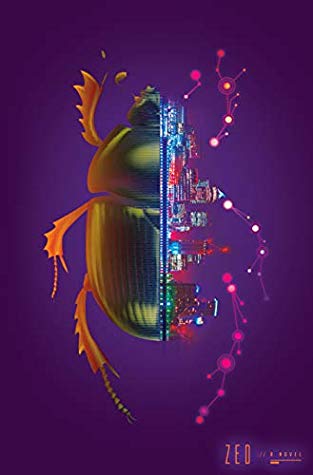
Zed, by Joanna Kavenna***

Kavenna is an established writer, but she is new to me. I saw the description and—okay, yes, the cover—and I knew I had to read this book. Thanks go to Doubleday and Net Galley for the review copy. This book is for sale now.

At the outset this story is electrifying. It’s set in future Earth in what was once London. Beetle is an all-powerful company that governs both business and government; it resembles Future Amazon more than a little. Its employees have Real Life selves, and they have virtual selves that make it possible for them to attend meetings without physically being there. They have BeetleBands that measure their respiration, pulse, perspiration and other physical functions, and those bands are supposed to stay on:

The Custodians Program tracked people from the moment they woke (having registered the quality of their sleep, the duration), through their breakfast (registering what they ate, the quality of their food), through the moment they dressed, and if they showered and cleaned their teeth properly, if they took their DNA toothbrush test, what time they left the house, whether they were cordial to their door, whether they told it to fucking open up and stop talking to them, whether they arrived at work on time, how many cups of coffee they drank during the course of an average day, how many times they became agitated, how many times they did their breathing relaxation exercises, if they went to the pub after work and what they hell they did if they didn’t go to the pub, how late they went home, if they became agitated, angry, ill, drunk, idle at any point during any day, ever.

Of course, it is possible to avoid the entire Beetle system, but there’s almost nothing that someone that is off the grid can do for a living; these people scuttle about in abandoned buildings, living miserably impoverished, private lives.

Those in high positions of responsibility have Veeps, which are virtual assistants that run on artificial intelligence. There are few human cops out there because those jobs are done by ANTS—Anti-Terrorism Droids—and these in turn follow the protocol, which says they should shoot at their own discretion. And all of these things lead up to the murder of Lionel Bigman, who bears an unfortunate resemblance in both body and name to George Mann, who has just cut the throats of everyone in his family. The ANTS find Bigman and kill him.

The aftermath features the sort of government whitewash and cover-up that every reader must recognize. The error was caused, say the higher-ups, by two factors: one was Mary Bigman, wife of Lionel, the uncooperative widow of Lionel who demands answers and is therefore conveniently scapegoated; and Zed, the term for chaos and error within the system. And Zed, unfortunately, is growing and creating more errors which must also be swept under the virtual carpet.

Those dealing with this situation are Guy Matthias, the big boss at Beetle; Eloise Jayne, the security chief who’s being investigated for saving the life of a future criminal that the ANTS had been preparing to shoot; Douglas Varley, a Beetle board member; and David Strachey, a journalist torn between his paramount duty to inform the public, and his self-interest that suggests he shouldn’t rock the boat.

Once the parameters of this book are defined, I am excited. The book could be the bastard antecedent of some combination of Huxley, Rand, Vonnegut and Orwell. The possibilities! But alas, though the premise is outstanding, the execution is lacking. I have gone over it multiple times trying to figure out what went wrong and what could fix it, and I am baffled. All I can say is that by the thirty percent mark, though a major character is running for her very life, the inner monologue drones until I am ready to hurl myself into the path of the ANTS just to end it. All of the fun stuff has been offered up already, leaving us to slog our way out of it. How could a story so darkly hilarious and so well-conceived turn so abstruse and deadly dull?

Nevertheless, I would read Kavenna again in a heartbeat. Someone this smart will surely write more books that work better than this one. But as for you, read this one free or cheap if you read it at all.

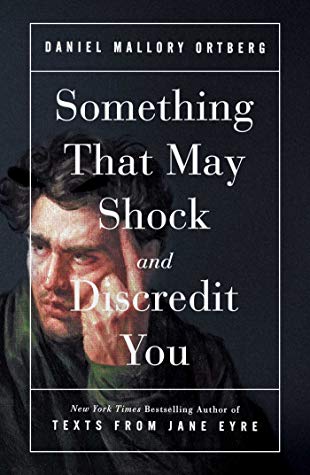
Something That May Shock and Discredit You, by Daniel Mallory Ortberg***

Ortberg wrote The Merry Spinster, a work of dark humor that convinced me that he is a genius. This book is a lot different, although at times the same voice peeks through. My thanks go to Atria Books and Net Galley for the review copy. This book is for sale now.

Many of the essays in this book are recycled from Ortberg’s blog, but since I never saw the blog, all of it is new to me. The essays describe his experience as a trans man, and though it is funny in places, most of the pieces ooze pain and bitterness. And to be fair, a trans man brought up female in an evangelical Christian home, taught to consider the Rapture in every choice made, every road followed, is bound to have these things in spades. However, there is a good deal of redundancy here. After awhile I found my attention wandering, and by thirty percent of the way in, I was watching the page numbers crawl by. How much longer…?

Some of the chapter titles are full of promise, but then the chapter itself disappoints. What, this again? I did enjoy the passage on parallel parking, and the chapter on Columbo (the only man Ortberg has ever loved) cracked me up.

I have rated this title three stars for general audiences, but I suspect that for those transitioning to manhood, or for those close to someone doing so, the rating will be higher.

Recommended to those transitioning, considering transitioning, and their loved ones.

Things in Jars, by Jess Kidd*****

Nobody writes better than Jess Kidd.

Bridget Devine—you may call her Bridie—is an investigator for hire. She’s small of stature, with green eyes and a mane of auburn hair. She smokes a pipe, keeps a dagger strapped to her ankle and poison darts in her boot heels, and wears “the ugliest bonnet in Christendom.” The year is 1863; the place is Britain. Bridie has been hired to find a kidnapped child. A dead pugilist named Ruby has volunteered his assistance; he had a soft spot for her while he lived, and now that he’s deceased, his affection for her lives on.

My thanks go to Net Galley and Atria Books for the review copy. This book is for sale now.

The subject of her inquiries is an extraordinary girl named Christabel. Christabel has unusual qualities; it is said that she is a merrow, a mermaid-like being that loves snails and salamanders can tell what others are thinking, has teeth like a pike that she uses freely against those that displease her, and can drown humans on dry land. Bridie is having none of it. “Christabel is a child. She is not a merrow because they are legendary beasts that do not exist in real life, only in fables.” So what if hundreds of snails appear everywhere the child has turned up?

The search for Christabel takes Bridie and her assistants all over Victorian London. Kidd is a champ with regard to time and place, taking us deep into the past. In particular, we visit the charlatans that collect and sometimes experiment with people born with disabilities or distinctions, as a form of sordid entertainment for those with prurient interests. There are some passages here that won’t work well for the squeamish.

The side characters are magnificent. We have Cora Butters, the housemaid that accompanies Bridie. Cora is seven feet tall and has muttonchop whiskers. Her huge hands make her a formidable defender when the going gets rough. There are others, but some of the most entertaining are the critters: a sarcastic parrot and a sage python are among them.

Those that have read Kidd’s first novel, Himself and her second, Mr. Flood’s Last Resort (in UK it was titled The Hoarder) will be delighted once again to find Kidd’s distinctive voice and brilliant word smithery in full flower once more. There are differences as well; there’s more of a story arc, and along with that we see the best figurative language and the wickedest humor after about the sixty percent mark. At the heart of it all is the same disdain for pretense, and the same deep respect for the working class.

My records show that I’ve reviewed over 1,300 titles over the past few years, and of the review copies I’ve received, I’ve chosen to read fewer than 10 of them a second time. This book will be one of them.

Aren’t we done here? Get a copy of this book and read it soon so that you can buy another copy to wrap up for Valentine’s Day. Because Jess Kidd’s books are peerless, and you should only give the very best.

The Spies of Shilling Lane, by Jennifer Ryan****

Sometimes what I really need is a feel-good story. Had I ascertained that this was that sort of book, I would have had it read by the publication date. I read the beginning twice, decided it was going to fall into the grim duty category since I had accepted a review copy, and I set it aside. My apologies go to Net Galley, Crown Books, and the author for my lateness; my heartfelt thanks go to Jayne Entwistle, the reader for the audio version of this lovely tale, for rekindling my interest. I procured the audio version from Seattle Bibliocommons and listened to it while I rode my stationary bike and prepared dinner in the evenings. I began listening to it because I owed a review, but soon I found that I preferred this novel to the other good book I had been listening to just for pleasure.

Our story begins with Mrs. Braithwaite feeling injured and put upon. Her husband is divorcing her, and the women in the local charity club have banded together and ousted her from her treasured position of leadership. She is miserable. Betty, her only child, has run off to London, intent upon aiding her country now that the second World War is upon them, and she isn’t answering her calls. Mrs. Braithwaite decides to visit her, but upon arrival, she discovers that Betty is missing. The story flows from her effort to find her daughter and also herself.

Those seeking an espionage thriller won’t find it here; the story is character based, and in this Ryan succeeds richly. Mrs. Braithwaite enlists the reluctant assistance of Mr. Norris, Betty’s milquetoast landlord, and it is these two characters that are wonderfully developed. None of this would have been achieved without the spot-on cultural insights regarding the World War II generation. The shallower pop-cultural references to music are well and good, but Ryan goes deeper. The fact that the character is known only by her formal title, with the salutary “Mrs.” in place of a first name, speaks not only to the protagonist’s dignified, somewhat cold façade, but also to the practices of the time. Use of first names was considered an intimacy among the elders of this time period; women addressed their peers by it unless they were close friends or family members. Even the way that the plot develops is reminiscent of the fiction and movies of that generation. As in most good historical fiction, the setting mingles with the characters to move the plot forward.

I am not much of a cozy mystery fan, but I think this story would please cozy readers. At the same time, I appreciate the careful balance the author uses; the touching moments are deftly handled, never becoming cloying or maudlin. At other times there’s a playful, spoofing quality to it, as Mrs. Braithwaite and Betty search for each other, each fearing the other is in danger and thus placing herself in it.

I recommend this book to cozy readers, fans of historical fiction, and anyone in need of a boost in morale. It’s for sale now.

The Man That Got Away, by Lynne Truss*****

This is the second entry in the Constable Twitten series, and my fourth book by this writer. Truss is a reliably funny author, but this is her best yet. My thanks go to Bloomsbury and Net Galley for the review copy. You can buy this comic masterpiece now, but first you should read A Shot in the Dark if you can, because the background information you will find there will make this book even funnier.

Constable Twitten is the only capable, driven cop in Brighton, a small seaside tourist town in England. Steine, his boss, is unwilling to recognize that crime exists here at all; he is possibly the most gullible character to appear in fiction. For example, he believed an April Fool’s Day newscast about the spaghetti weevil, said to be ruining the spaghetti harvest. The other officer is slightly better, but when his dream of going undercover finally comes true, he becomes so immersed in his new role that he forgets he is supposed to be fighting crime. He is posing as a musician and spends all his time at the club performing or practicing; he doesn’t even bother to check in at the station. Twitten is left virtually alone to deal with Brighton’s crime wave.

Here is a pattern I’ve seen with Truss’s novels. The beginning is usually lame. The first time I read her work, I saw so many not-funny lines in the first ten percent that had I not owed a review, I might have been tempted to abandon it. However, even though I had decided that this was probably a pretty stupid book, I noticed a change as it went on, and by the last thirty percent or so, I was laughing out loud. Consequently, I was expecting a progression in this novel, from not-funny to slightly-funny to actually-pretty-funny to gut-splittingly-funny. I reminded myself that patience would pay off here, and I opened the book…and laughed on the first page. This book starts out at ten and it stays there all the way through.

There are several threads that are good here; we have the blind wax sculptor that makes dreadful likenesses for the wax museum, and there’s Inspector Steine being duped into believing a con woman is his long lost niece. But the most memorable, achingly funny bits are centered around Mrs. Groynes, the police station’s secretary who is also the janitor, and also the brains of an organized crime ring. Twitten knows this, and Groynes knows that he knows, but he cannot persuade another living soul that it’s true, and so there she remains, unhindered, using her job to obtain intelligence that in turn helps her underworld minions avoid detection.

 It isn’t difficult.

Those that love excellent satire need look no further. I highly recommend this hilarious book to everyone.

The Secret Guests, by Benjamin Black****

It’s World War II, and the Blitz has begun. The Royals are torn, wanting to remain with their subjects and share their misery, but not wanting the risk the well beings of their daughters. It’s decided that the girls must be moved, but with the shipping lanes and skies fraught with peril, where can they go and be safe? Ah, a fine idea: they’ll send them to a cousin in Ireland.

My thanks go to Net Galley and Henry Holt for the review copy. This book is for sale now.

As historical fiction goes, this is lightweight material, based on almost no historical event other than the war itself. However, as general fiction goes it’s terrific, immensely entertaining and droll as heck. I figure it’s 3.5 stars for historical fiction, 4.5 stars as general fiction; thus my 4 star rating.

Our protagonist is Garda Strafford-With-An-R, a marginally competent Irish detective who resembles Stan Laurel, tasked with the security the estate where the girls will be housed. Secondary characters are Celia Nashe, a British cop equivalent to a Secret Service agent, who is assigned to serve as personal security for the princesses; an arrogant, sleazy ambassador named Laschelles; and Strafford’s boss Hegarty, who resembles Oliver Hardy. We also have clueless but entitled Sir William, the girls’ host; two bored princesses that get up to things when nobody’s looking; some household servants that know more than they are supposed to; and a few local people that also know too much.

The fact is that I’m entirely burned out on World War II fiction, and that fact nearly prevents me from requesting this galley. But the spin—Ireland, which remained neutral and flirted with taking the side of Germany, what with its enmity toward the British—proves irresistible. The greatest surprise is how much wit is employed and how fast the story moves. I have never read Black’s work before, and this guy is hilarious. He shifts the point of view often, always from the third person omniscient but varying several times within a single chapter, so we get snippets of the person that’s bored, the person that’s nosy, the person that’s confused and so forth. The word smithery is so original and clever that I cannot put my highlighter down. Highlighting is pointless when I highlight close to half of the text, but I can’t help myself. And best of all, the cliched ending that I think I can see a mile away isn’t happening.

Those of us in the States have a three day weekend right around the corner, and the weather will be too miserable to want to go anywhere. This novel might be just the ticket. If you’re lucky enough to be planning a vacation soon, this would also be a fine beach read. But the humor will be a terrific pick-me-up for those stranded indoors with a case of the grumps. I recommend this book to you, and I would read this author’s work again in a heartbeat.