The Waiter, by Matias Faldbakken**

Translated by Alice Menzies

Thanks go to Net Galley and Doubleday for the review copy. I am sorry to be so late here; the truth is that I kept setting it aside because I didn’t like it, and then returning to it, thinking that I was missing something. I’ve given up on finding the magic, though there are some nice moments here; I also have a strong hunch that there may be a cultural barrier in play. Those that spend time in Europe, possibly with some Scandinavian background, may enjoy this in a way that I didn’t. 

The setting is a fine restaurant in Norway, and the protagonist is of course the waiter. The author pokes fun at the pretensions of everyone present. I like satire and dislike pretension, and so I expected to like this book. There are some clever character sketches, and that’s where I am able to engage, but a character sketch is by definition a brief thing, and so I am quickly disengaged again. I feel like the same joke is being made a different way a great many times, and the “neurotic waiter whose wit is sharp as a filleting knife” (to quote the teaser, more or less) seems not just sharp or witty, but downright vicious. And here it isn’t just a lack of connection that gets in my way; I recoil at some of the passages. 

The book is supposed to appeal to everyone that likes food and wine, spends time in restaurants, or has European sensibilities. Food and restaurants are a match; but I don’t keep wine in the house and have no European sensibilities at all, apart from a few Irish habits passed down over generations. So maybe foodies that spend time in Europe will respond better than I have. In order to see print in other languages than the original, the novel must have met with acclaim locally, and this is why it confuses me that my own response is so negative. But a reviewer can only write her own viewpoint, and mine is that this book isn’t funny, and I don’t recommend it.

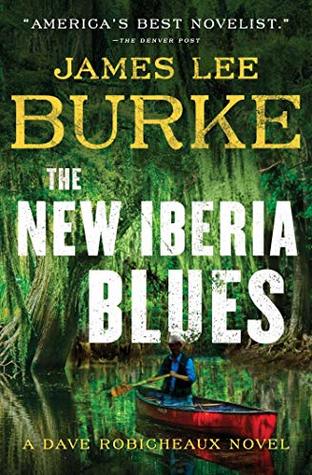
New Iberia Blues, by James Lee Burke*****

New Iberia Blues is the twenty-second addition to the Dave Robicheaux series, which I will love till the day I die. The Denver Post has called Burke “America’s best novelist,” and the Mystery Writers of America made him a Grand Master. Big thanks go to Net Galley and Simon and Schuster for the review copy. This book will be for sale January 8, 2019. 

The qualities that have made Burke’s writing famous include his lyrical prose, particularly with regard to setting, and a host of memorable characters, often with quirky names. His bad guys are wealthy and often come from Hollywood to the Gulf Coast of Louisiana, where the series is set, but he often also features a character or two that works for the wrong side, but is complicated and has redeeming qualities. All of these things hold true for this novel, which is one of Burke’s best. 

Dave Robicheaux is a cop in New Iberia, Louisiana, a senior citizen, thrice widowed and lonesome when our novel begins. Then an old acquaintance comes home after making it big:

Desmond Courmier’s success story was an improbable one, even among the many self-congratulatory rags-to-riches tales we tell ourselves in the ongoing saga of our green republic, one that is forever changing yet forever the same, a saga that also includes the grades of Shiloh and cinders from aboriginal villages. That is not meant to be a cynical statement. Desmond’s story was a piece of Americana, assuring us that wealth and a magical kingdom are available to the least of us, provided we do not awaken our own penchant for breaking our heroes on a medieval wheel and revising them later, safely downwind from history.
Desmond was not only born to privation, in the sleeper of a semi in which his mother tied off the umbilical cord and said goodbye forever; he was nurtured by his impoverished grandparents on the Chitimacha Indian Reservation in the back room of a general store that was hardly more than an airless shack. It stood on a dirt road amid treeless farmland where shade and a cold soda pop on the store gallery were considered luxuries, before the casino operators from Jersey arrived and, with the help of the state of Louisiana, convinced large numbers of people that vice is a virtue.

Desmond returns to the bayou in glory after hitting it big in the motion picture industry; he brings with him an unsavory character named Antoine Butterworth. While Dave is welcoming Desmond home, a terrible surprise looms into view: a boat on which a dead woman hangs on a wooden cross. It is plainly visible from Courmier’s deck, and yet he and Butterworth both deny seeing it. And with that, the story commences. 

A complicating factor is that screenwriter Alafair, Dave’s daughter, has begun dating Lou Wexler, a man involved in the film Desmond is making. She is an adult woman, and her father has absolutely no authority in any of her affairs, and yet he feels as if he should. He doesn’t like Wexler, and this creates friction between himself and his daughter.

But at the same time, Dave has plenty of issues of his own. The bottle still calls to him, and sometimes he experiences a ‘dry drunk,’ in which he consumes no alcohol but exhibits many of the same poor impulses as if he had done so. Alafair tells him in exasperation, “Dave, you use a nail gun on the people who love you most.”

One aspect of this book bothers me, and I briefly considered removing a star from the rating but I couldn’t bring myself to do it. Nevertheless, the female characters in this novel, and in this entire series, need to be discussed. The very moment a young, nubile newcomer joins the force and is made Dave’s cop partner, I made a note. “Oh Christ, here we go. There’s no way she can exist and not be a romantic partner. Will she walk on the tops of his feet like his first three wives did? [yes.] Will his ears pop when they have sex? [yes.] And will he marry her and make her wife #4?” (Not telling.)

Burke has difficulty creating a female character who is not Dave’s relative and whose sexuality is not prominent or at least discussed. (His boss, Helen, is allowed to be an exception, but in every book we are told that she is a lesbian, as if business couldn’t proceed without this news.) Can we have an important female character whose sex life isn’t an issue, and can we see her developed in other respects? Of course, Burke is hardly alone in this regard, but the rest of what he writes is so outstanding that this one obvious flaw stands out like a ketchup stain on the Mona Lisa. 

Having said that, I can get back to the novel’s more congenial aspects, one of which is Dave’s closest friend, Clete Purcel. Clete can’t be a cop anymore because he doesn’t honor boundaries; however, this quality, combined with his loyalty to Dave, is what makes him so engaging and entertaining. Moreover, it is he who is most effective at pulling Dave away from the bars and the bottle. I cannot think of any literary sidekick that has been better developed across any series ever than Clete. I have a mental movie that runs when I read this series, and in my mind, Dave looks like a younger version of the author, and Clete—I only just realized the other day—shows up in my head as a sunburned Rodney Dangerfield. 

One other regard in which Burke consistently shines is his ability to create tragicomic side characters, and Smiley Wimple is unforgettable. Smiley is not all there, until he is. In fact, he may surface from beneath your bed. Smiley works as an assassin, but he also has standards. He needs to believe he is taking out a bad guy, or he won’t take the job. Smiley is fond of children, and he likes ice cream. Who knows? He might want to be your friend. And while I am on the subject—there’s some graphic material here, as is true for all of the books in this series; don’t count on this as meal time or bedtime reading. In fact, you may want a few extra lights turned on when you pick this one up. 

Lastly, this book can be read as a stand-alone. I entered the series halfway in when I was given a free paperback copy of The Tin Roof Blowdown; you can enter the series anywhere you prefer. However, if you love a complex, literary mystery and can tolerate a fair amount of violence, you will probably like it well enough to go find the rest and read them too. 

Masterfully written, and highly recommended. 

The Nightingale, by Kristin Hannah*****

You could say I am late to the party, and you would be right. I had a chance to read a galley, but I read the synopsis and then scrolled past it. More World War II fiction? Ho hum. But the most well-worn subject matter can be made brand new in the most capable hands, and Hannah has done that. I thank the Goodreads friends that insisted I should read this book, and Seattle Bibliocommons for providing me with a copy. 

Our two protagonists are French sisters whose mother has died. Vianne, the elder sister, marries and leaves; Isabelle is sent to one boarding school after another by her grieving papa, who has nothing to give his daughters emotionally. The Nazi threat is far away and of little concern to the people of Paris—until they come closer, and then they’re here.

The Nazis sweep through Papa’s bookstore. They trash the shelves and confiscate all of his Marx, all of his Trotsky. They say these are terrorist materials. And then—they put him on their payroll.

Isabelle leaves yet another boarding school and goes home to her Papa, determined to remain at home. She receives a cold and unwelcoming return; then the Germans pierce the Maginot Line, once believed to be impenetrable, and Paris is no longer safe. Papa sends a bitter Isabelle to live with her sister, but she is traveling in the car of neighbors, and they are forced to abandon their vehicle. Isabelle is on her own.

Vianne, meanwhile, is tending to hearth and home. For years she miscarried one baby after another, late miscarriages at that, and the love her sister might have expected has instead turned to grief for the tiny people buried in a family plot in Vianne’s yard. Her husband has been conscripted, and she is alone with the one child she was able to bear. Vianne is not a risk taker, because she has too much to lose. Everything she does is in the interest of her daughter, Sophie, and her husband. Isabelle arrives and almost immediately begins making waves, behaving provocatively toward the occupying German forces, and Vianne is horrified. Isabelle has to go.

Over the course of the story both sisters are developed in a way that is so natural, so believable that I can sometimes predict what they will do, not because the writing is formulaic—it isn’t—but because I feel I know them so well now. I want to speak to the characters directly, so visceral is my reaction to them. Isabelle, who at the outset is reactive and reckless, joins the Resistance and becomes a disciplined patriot, code-named “The Nightingale”. She is still courageous, but she learns to weigh her actions against the benefits and risks to her cause. Vianne, who at the outset is conservative, becomes more willing to take risks on behalf of the Jewish children in her small community, children that are likely to either starve or be killed if they are not smuggled into safe homes.  All along, I am murmuring advice to them: “Do it! Do it!” and “Don’t you dare.”

A particularly interesting and unexpected development is the change in Papa; the drunken, abusive, uncaring lout has a side that nobody suspects, and he becomes a flawed yet heroic side character.

Once I realized that Hannah is a force in today’s literary world, I read the galley of her next novel, The Great Alone (reviewed by me also.) It was good, but nothing close to what this story is, and so I am glad I read them in this order, saving the better story as a tasty dessert.  If you haven’t read this book yet, do it now. Trust me.

Best Novels of 2018

If I had prize money to bestow, I would divide it between the authors of these two matchless works of fiction, which in my eyes are the best of 2018. Interestingly, both feature strong women as main characters, and both are Southern fiction. If you haven’t read them yet, do it now.


Best General Fiction of 2018

Image

TheCaregiver

Best Literary Fiction of 2018

We’re continuing the countdown! This is a competitive category this year, and the award goes to a debut author as well:

Ohio

Best Fiction by a Pacific Northwest Author 2018

Seattle Book Mama counts it down. For the genres already named, see the separate link at the top of this page.

Findyouinthedark

Night Moves, by Jonathan Kellerman****

Night MovesI always enjoy the Alex Delaware series. It takes a fun read to make me look forward to my stationary bike–which is generally not my favorite thing–and this did that. My rule for myself is that I am allowed to stop pedaling early, but if I do, the audio book gets turned off, and sure enough, I have been riding it full tilt to sneak in a few more pages.

The best parts are the dialogue, and of course, the adolescent characters that only Kellerman can craft so effectively. That said, I cringe when Milo tells Alex to wear a Kevlar vest when they go in to make the bust; I have bought the premise of the psychiatrist riding around as if he were Milo’s partner, since it makes for a good story and is so well written, but when the bulletproof vests come out, my eyes roll. Noooo, don’t be silly.

John Rubenstein does a fantastic job of reading, and his voices for the many characters are bang on.

Goodbye, Paris by Anstey Harris*****

GoodbyeParisThis novel took me by surprise. The first time I saw it, I passed it by, because the cover suggested a light romance, and that’s not a genre that appeals to me.  It’s been compared to Jojo Moyes and Eleanor Oliphant; I read neither. Later I saw an online recommendation for this book and changed my mind, and I am so glad I did. Big thanks go to Net Galley and Touchstone for the review copy. This book is for sale now.

You see, when we begin we recognize that Grace is deluded about David. Oh, how many of us have either been that woman or had her as a friend? Grace and David have been together for eight years, except when he needs to be present at home, for the sake of his children. Grace tells us that David is a devoted father, a dedicated dad who’s promised that he will do a finer job than his own father did, and so even though there’s nothing left between him and his wife, he cannot divorce her until the kids are grown. No, really. And then of course there’s some concern about her mental stability. What if he files, and then she does something awful?

So Grace totally understands why she must be alone every Christmas:  David is with his kids. Grace spends all the most important occasions of the year by herself, making stringed instruments in her workshop; and David is with his family in Paris. He wouldn’t say it if it weren’t true, and she doesn’t ask too many questions, because he is terribly sensitive.

It’s all about trust.

She assists in staying out of the public eye, and she is ever so discreet, but then a random event puts David’s face in the news, a hero that pulls a woman off the Metro tracks just before the train comes. Who is this mysterious man, they ask. And then it all hits the fan. And as we knew—we tried to tell Grace, but she wouldn’t listen—David isn’t a stand up guy. He isn’t even that good as a parent. David is just a philanderer, and Grace has spent eight years of her life planning a future with this asshole, not because she is stupid, but because she is a decent person that expects others to be as upright as she is.

I have never assaulted another human being in my life. I am getting old. But let me tell you, if David had been flesh and had been standing before me, who’s to say he wouldn’t be the exception? I fumed as I prepared dinner, did the dishes, let the dog out.  That rotten scoundrel, treating poor sweet Grace this way. Oh, how crushing for her. It isn’t fair; it really isn’t.

Every reader sees it coming, but what surprises me is that David is outed so early in the book. And here’s the glorious thing: this story appears to be a romance, but it isn’t. It isn’t about Grace and David, and no new knight arrives toward the climax to sweep her away. No, the story is about Grace, and it’s about the ways that friends—true friends—help us pull ourselves together when everything seems to be coming apart. And the metaphors are resonant ones:


“I have to take into account that this violin didn’t really work very well, didn’t have much of a voice. If I take these ribs off completely and remake a whole new set, it will give the instrument a better chance to sing.”


Grace rebuilds her career as she rebuilds herself, scaffolded by the warmth and emotional nourishment of the friends that love her, and one of them tells her, “You have to grasp life by the balls, Grace…and don’t bloody let go until you have to.”

Ultimately, this is a charming story you won’t want to miss. Highly recommended.

Seances Are For Suckers, by Tamara Berry****-*****

SeancesareforTamara Berry is the queen of snarky humor, and now that I have read the first installment of the Eleanor Wilde series, I am primed and ready for those that follow it. Big thanks go to Net Galley and Kensington Books for the review copy; this book is for sale now.

Ellie narrates her own story in the first person. She explains that she makes her living through fraud, scamming those that want to talk to their dead relatives and solve their Earthly problems via séances. A referral brings her a wealthy Brit that wants a fake medium to vanquish the ghost his mother believes is haunting their mansion. Expenses paid, she flies out to join him and is delighted to find that he lives in an actual castle. His mother, however, hates houseguests and discourages them with miserably small, terrible meals and bad accommodations. As preparations are made for the séance, guests exchange furtively obtained and hoarded snacks in order to avoid starvation.

Nicholas is a hunk; he and Ellie are both drawn toward each other and repelled in classic fashion, and there’s a lot of crackling banter that keeps me snickering. Other well drawn characters include Nicholas’s mother, his sister and her teenage daughter, and a couple of other men, one of whom works for the family. When she comments to the reader, “Bless the sturdy and simple folk of this world,” I nearly fall off my chair. The narrative and dialogue are wonderfully paced and hugely amusing. The solution to the mystery is both partially obvious and wildly contrived, but since this is satire, that makes it even better. In fact, there’s more than one tired old saw that works its way into this story, but it’s with a side-eye wink every time, and I love it.

As the narrative unspools, a corpse is found and then lost, threats and warnings heighten the suspense, and we wonder along with Ellie which of these guests and family members are truly as they seem, and which might be a killer.

The scene leading into the séance is so hilarious that I nearly wake the mister with my cackling.

The only aspect I find unappealing here is the somewhat saccharine story having to do with Ellie’s dying sister. Ellie’s dishonest vocation is, she tells us, necessary so that she can pay for her catatonic sister’s nursing care, and while squeamish cozy readers may find it comforting, I am more than ready to dispatch sis to the great beyond and just let Ellie be Ellie anyway. Happily, this doesn’t hold the story back, particularly since most of the sister’s part of this tale is told at the start and is out of the way by the time we are rolling.

I can’t wait to see where life—and the wakeful dead—will take Ellie next. Highly recommended for mystery lovers ready to be entertained.