The Autumn Springs Retirement Home Massacre, by Philip Fracassi*****

It’s not just every day that I run across a five-star slasher novel, but author Philip Fracassi hasn’t written just any slasher novel, either. The Autumn Springs Retirement Home Massacre is one of this autumn’s most agreeable surprises. My thanks go to NetGalley, Macmillan Audio, and Tor for the review copies; this book will be available to the public September 30, 2025.

When a friend recommended it, she said it was funny and also different from her expectations. I agree on both counts. I was anticipating a book with plenty of old-folks barbs, sort of like the satirical carol, “Grandma Got Run Over by a Reindeer.” I considered whether I was up for it, given that I am a grandma myself, and decided my sense of humor hadn’t aged out. Sure, let’s give it a go.

Instead, though the book is indeed darkly funny in places, it also has aspects I didn’t anticipate. How many humorous slasher stories have character development, for instance? How many have genuinely poignant moments? And finally, on a more traditional yardstick, I find myself completely surprised by the solution.

Our protagonist is Rose Dubois, a 70-year-old retired school teacher. She buys a unit in the retirement community, not because she’s too decrepit to remember her medications or because she needs constant monitoring, but because she is ready to live in a smaller home near other people her own age. Her daughter has been urging her to come live with her instead, but Rose has friends here. She likes her little place, and she values her independence. She doesn’t want to go anywhere else.

Then her pals begin dying. The first is her bestie, and it stings, but also raises questions. The death—without giving anything away—seems out of character. But surprises happen, and they’re not all nice ones, so she and Angela’s other friends grumble, but move on.

But as the title suggests, there’s another. And another. Where will it stop? Rose and her remaining friends vow to stop it themselves, since the local cops and the home’s administrators don’t seem terribly concerned.

The story also raises the issue, a very real one, of the public’s lack of concern for the elderly. Hey, old people die. That’s what we do! And moreover, before we go, older folks become nearly invisible. The author’s moving note in the afterword explains why he took the approach he did.

Not long after I began reading, I was given access to the audio version, narrated by one of my favorites, January LaVoy. Although the print version is delightful, I give a slight edge to the audio because its format, which is mostly linear, lends itself well to this medium, and also because LaVoy always brings something extra to her narration.

Highly recommended to all that enjoy mysteries and a little gallows humor.

Maggie, or a Man and a Woman Walk into a Bar, by Katie Yee****

Author Katie Yee makes her novelistic debut with Maggie, or a Man and a Woman Walk into a Bar. A mother of two young children is blindsided when her husband reveals that he is having an affair with a woman named Maggie; almost simultaneously, she learns she has breast cancer, and so she decides to name her cancer Maggie, too. Now she and her soon-to-be-ex each have a Maggie.  This novel is a vivid, authentic, utterly believable narrative that hijacked my attention from the other books I was reading. My thanks go to NetGalley and Simon and Schuster for the review copy. This book will be available to the public on July 22, 2025.

“They talk about women’s intuition…I never suspected a thing.”

The way that she contends with the news is completely different from how I would respond, and yet I believe her entirely. There’s no drama, no crying; at least, not when anyone is there to see her. Instead, she eats a lot and tries to maintain some dignity for herself. The scales are so badly skewed against her; Sam comes from heart stopping wealth, the sort of family that has multiple houses peppered around the U.S., and a couple of favorite places they like to stay in Europe. Our protagonist, whose name I am fairly sure is never provided, hails from the hardscrabble working class. And in leaving, her husband tells her that she can have the house as well as a generous chunk of alimony. If it were me and I were inclined to be nasty about it, all that money might stop me dead in my tracks, since clearly, the guy could get away with giving her far less if she really wanted to push him. 

So instead, she sets some hard new boundaries. She won’t tell Sam about the cancer, at least not yet. She doesn’t want the awkwardness, the one where she witnesses him struggling with what is the right thing to do, versus what he’d rather do. No, she decides, it’s not his business anymore. And then she names the cancer after his girlfriend.

Maybe she’s a little passive aggressive, but who can blame her? It’s all she has left.

This novel has some power behind it, and if this is Yee’s debut, I can hardly wait to see what she writes when she has more experience. I recommend this book to any woman that enjoys contemporary fiction, especially those that have been jilted, and to progressive-minded men as well.

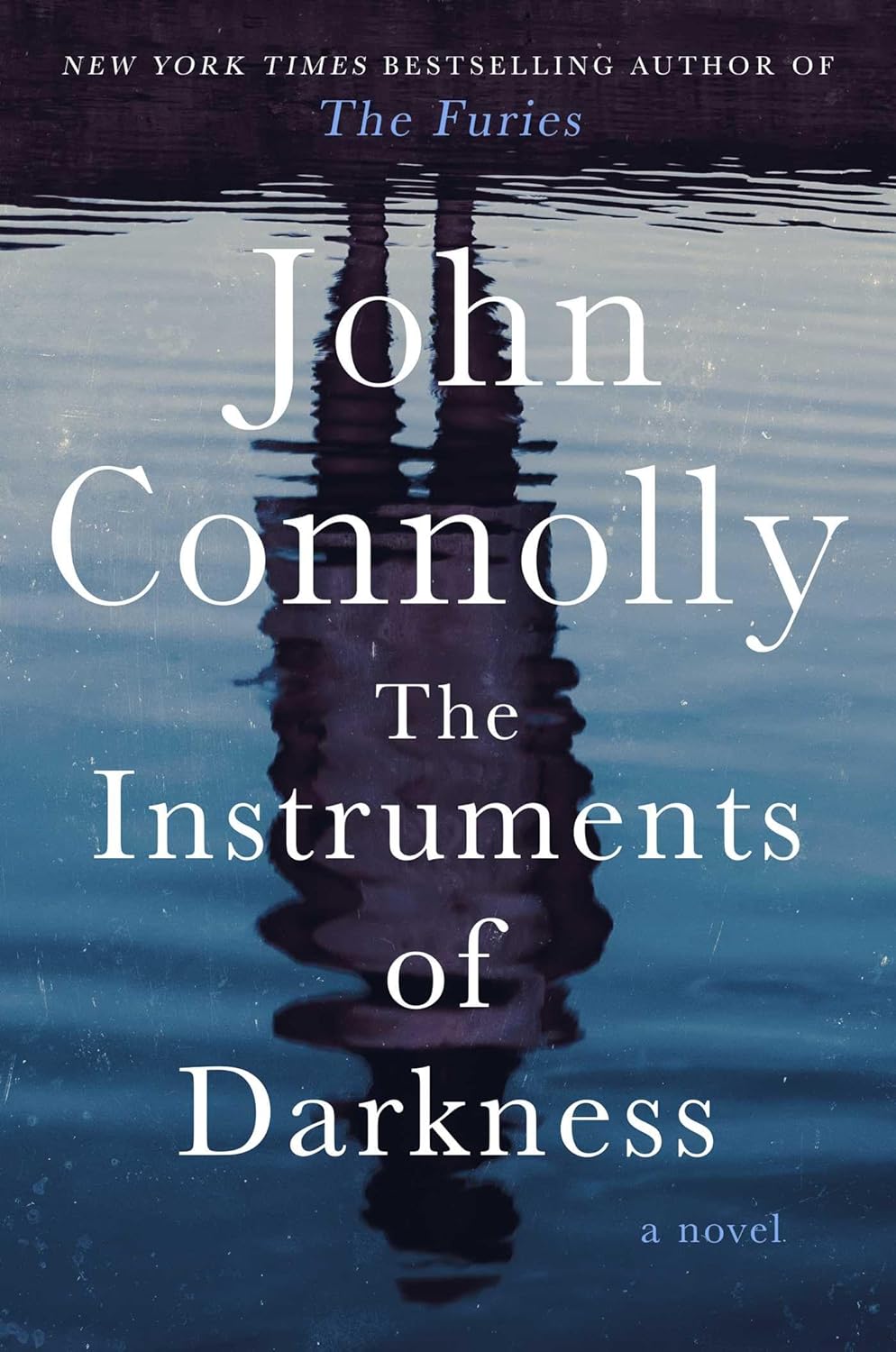
Instrument of Darkness, by Charlie Parker*****

It’s a funny thing about long running series, how some of them become stale after a time while others just keep building. The Charlie Parker series by John Connolly is one of the latter, and with every addition to it I am more riveted, more amused, and more engaged than I was before. The Instruments of Darkness is the 21st in the series. My thanks go to NetGalley and Atria/Emily Bestler for the review copy; that said, this is one of the rare times that I would have laid out full jacket price if that was the only way I could obtain a copy.

This book is for sale now.

Charlie Parker is a former cop turned private detective with a terrible past. He stepped out to buy a newspaper one morning and returned to find his wife and small daughter savagely butchered; the guilt at not being home to defend them was overwhelming, if irrational. He dedicated himself to finding the person that had done it, and making certain they never did it again. Since then, he’s served as a professional snoop on behalf of other wronged persons. Because he often upsets people with money, power, and twisted morals, he often brings along his own muscle when he works, or in some cases, contracts with them to bodyguard his clients during the process. So it is this time.

The job has to do with a young mother whose baby has been kidnapped from its crib during the night. Colleen woke from the first sound sleep she’d had in forever only to find the nursery window open, and Henry gone from his bed. Later her husband Stephen finds a blanket in the trunk of her car, soaked in blood, which, when analyzed by law enforcement, turns out to be the boy’s blood. Stephen tells the police that he is sure she must have done it, and he leaves her.

But she didn’t. Of course not.

In his last few Charlie Parker novels, Connolly has added touches of horror and magical realism, and it’s only made his stories better. In particular, he is adept at sentient houses or other buildings. Sometimes it really is the structure; at other times there’s some sort of being that lives there, unseen. In this case it’s an old house built from a Sears Roebuck kit over a century ago, and so he names it “Kit No. 174,” and after it appears a time or two in the story, generally as the opening of a new chapter, I get the shivers just seeing the name. The narration tells us, “No one had ever spent long in it—or no one had ever lived in it for long, which is not the same thing. No, not the same thing at all.” There are some minor references to other houses that have appeared in the series, and these will delight the faithful readers that remember them; it did me. However, newbies that are just starting this series will be fine.

The recurring characters shine brightly here. The attorney that often hires Parker, Moxie Castin, opens the book, and we get a resonant character sketch:

“Moxie Castin was easy to underestimate, but only on first impression. He was overweight by the equivalent of a small child, didn’t use one word in public when five others were loitering nearby with nothing better to do, and had a taste for ties reminiscent of the markings of poisonous insects or the nightmares of LSD survivors…He lost cases, but not many, and his friends far outnumbered his enemies.”

Other recurring characters are the Fulci brothers, and when I see their names, I smile. They’re described as “two wrecking balls in human form.” Another is Sabine, a shy, tortured psychic that just wants the dead to go away and leave her alone, and best of all, Angel and Louis, a lawless couple of friends—the word “couple” applies in two different ways here—that Parker hires when things get spicy. If I smile when we are joined by the Fulcis, I beam when I see Angel and Louis. And in a nod to series regulars, there’s a point when Parker simply tells someone, “They’re coming,” and he doesn’t say who, but of course, we know exactly who. (Later he explains them for the uninitiated.) There’s a favorite passage of mine in which Parker is concluding an interview, done in a restaurant, and when he and the other person emerge, she sees them and asks,

“Are they with you?’

“They’re my associates.’

“They don’t look like private detectives. Don’t take this the wrong way, but they look like criminals. If they came into the store, I’d lie down on the floor with my hands behind my head.’

“Sometimes that’s precisely the effect we seek.’”

Oh, there’s so much more, but you need to find these things for yourself. The story is on the gritty side, but not nearly as much so as some of the others in the series. In fact, I generally have a policy of not reading this series at bedtime, lest it enter my dreams. I violated that policy once, and I did indeed have a dreadful night afterward. And so I behaved myself until I hit the last twenty percent, and at that point, I knew I would read it until it was done, regardless of the time or proximity to lights out, because I had to see the resolution. I had guessed, long before, whodunit, but that felt beside the point. So I stayed up and saw it through…and I’m not a bit sorry.

Highly recommended to those that love the genre, and especially to Charlie Parker buffs.

The Land of Lost Things, by John Connolly*****

“We must be careful of our fancies and wary of our dreams, lest the worst of them should be heard or witnessed, and something should choose to act upon them.”

Are you up for a partly sweet, partly sinister bedtime story? If so, John Connolly is your man, and this is your book. My thanks go to Net Galley and Atria Books for the review copy. This book was published in September, 2023, and I am disgracefully late, but this is largely due to my realization that I could not read the second in a two book set and review it effectively without first ferreting out the first book, The Book of Lost Things. Now that I’ve read them both, I can recommend both to you unreservedly. At the same time, I will caution you that—what with the titles of this and its predecessor—this is emphatically not a children’s book! When I saw the title, I wondered if, like so many authors of late, Connolly had decided he should write a book for tiny tots. This is not that! Don’t hand this book to your child, or anyone else’s, unless they are already both old and mature enough to enjoy the works of Stephen King—or for that matter, other books by Mr. Connolly.

In the first book, a boy named David, who is mourning the death of his beloved mother and increasingly alienated from his father, stepmother, and tiny baby (half) brother, begins to notice strange things about the books in his bedroom, which came with the house. Events lead him to a place near his house, where he is sucked into an alternate world in an alternate wood, and it is there that nearly all of the narrative takes place.

Now, in this story, we have one of David’s descendants, a young mother named Ceres, whose little daughter, Phoebe, lies comatose in a hospital. Because of the place’s location, she decides to stay in a family home that is not being used currently, what with being rundown, but which is convenient to the place where Phoebe is. And yes of course, it’s that house, and those woods are still there.

Nearly twenty years separate the publication of the first book and the second, and I can see the difference immediately. Whereas The Book of Lost Things is well written and quite memorable, The Land of Lost Things is even better. The pages turn themselves, and the words pop off the pages. The fairy tales that Connolly implants into the first half of the book are cleverly altered, and I laugh out loud more than once as I read them. And then, as things darken and become tenser, the dangers more palpable, it’s hard for me to look away. I learned years ago not to read Connolly’s work too close to bedtime, and that habit stands me in good stead here.

Part of the charm inherent in everything Connolly writes is his impatience with pretentious attitudes and behaviors, and his deep respect for women. Add to this his tight, resonant dialogue and his dark, crackling wit, and the result is a large, loyal fan base, of which I am obviously one.

For those that love satire and are drawn to things that go bump in the dark, this magical book—and its predecessor—are highly recommended.

Liberation Day, by George Saunders*****

Liberation Day is a collection of the best short stories you will ever encounter. I had never read George Saunders before, but when I received an invitation from Random House and Net Galley to read and review this book, I remembered him by reputation and jumped at the chance. This book is for sale now.

Sometimes I feel conflicted when I see words like “Booker prize winner” and “exquisite” I feel torn. The book may be brilliant, but it also may be a whole lot of work to read. I am happy to report that is not the case here. Every one of these nine stories could serve as the cornerstone of a collection; the title selection is first, but I suspect that is more about length than anything, as it approaches novella length. It’s science fiction but also vaguely political; a group of people have had their brains scrubbed to near emptiness, and they are mounted on a “speaking wall.” Their sole purpose is to provide entertainment as a sort of scripted Greek chorus. They may only speak upon command; they assume this is a good arrangement, because they have no memories of their prior lives. But then the home (and Speaking Wall) owners are visited by their adult son, who concocts a scheme to liberate the speakers.

Many of these stories have stylized prose and invented words that might be difficult for a reader whose first language isn’t English.  “Mother’s Day,” which is one of my favorites, begins:

“This distinguished-looking gentleman would appear at your door somewhat sloshed and ask, Were your trees slaggard? Were they gublagging behind the other trees? Did they need to be prodderated? And hold up the little device. In this way they had nearly lost the house.”

Happily, for underconfident readers, there is an audio version available. I used it part of the time because I was running behind. There’s a different narrator for each story; actor Tina Fey does one of them! My notes are full of praise for these performers, who make a brilliant book even more so.

I especially enjoyed “The Mom of Bold Action,” which features the ultimate unreliable narrator, and my absolute favorite, “Ghoul”. Imagine, if you will, landing in Hell, or its amusement park equivalent, but there are still rules of etiquette to be observed; in particular, you are expected to be positive, and constantly encourage the other ghouls as they commit the ultimate misdeeds assigned to them. I laughed so hard at this one that it made my family a little cranky, and I had to go off by myself to hear the rest. Worth it.

The stories are a mixed bag in terms of genre, and all are outstanding.

Highly recommended in whatever format makes your heart happy.

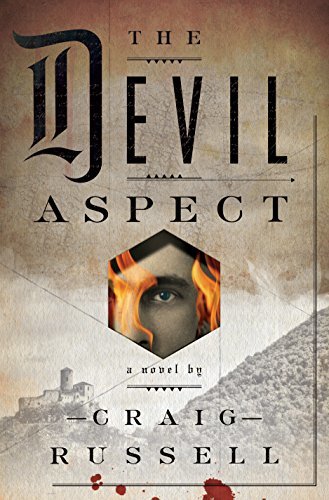
The Devil Aspect, by Craig Russell

3.5 stars, rounded upward. I read this creepy tale during the last half of October, and it is indeed a good way to get into the Halloween spirit. I am disgracefully late with my review—3.5 years late, as it happens—but I do thank Net Galley and Doubleday for the review copy. This book is, of course, for sale now.

Here is what drew me in. This is horror of the old school variety, with gothic towers and half a dozen criminally insane inmates. It’s set in Czechoslovakia, which I seldom see. The flavor, overall, is similar to the stories we told as children around campfires or late at night during slumber parties. Of course, it has a more adult approach, but even so, this is classic horror.

Our protagonists are Viktor Kusarek, a Jungian psychiatrist who comes to the asylum to conduct experiments on the patients, or inmates, in order to prove a theory, and police chief Lukas Smolak, who is pursuing a serial killer that is running amok in Prague.

This is a story that is more about the journey than the destination, though perhaps not intentionally so. Hearing about each of the six savage killers as Viktor interviews them is vastly entertaining. There’s one spot about a third of the way in, where a patient, partially sedated, is explaining that he is innocent, and also that a guest sorely provoked him. Always so critical! He was determined to impress her with his cooking, and indeed, the longer he worked at the stove, the more reasonable she became. Viktor points out that the guest had stopped complaining because he had her head in the skillet. I laughed out loud! The middle of this novel is unmissable.

There are three things I would change. First, the book is a little overlong, and could bear some tightening. Second, the whole Nazi menace has nothing to do with the problem or its resolution. It seems more like window dressing than anything else, but it doesn’t add a thing to the story. If I were the editor, I would cut that part of it out and voila, some of the tightening would be achieved. And third, the ending is so, so predictable. I stuck with the story until around the 85 percent mark, at which point I figured all hope of an ending other than what I expected was pretty much gone. At that point I skipped to the end. Yup. There it was. I would have liked a less formulaic ending.

Still and all, fans of old fashioned horror could do a lot worse. If this sounds like your kind of book after everything I have said, then go for it. I am old and cranky, and what seems obvious to me might seem new and clever to those that haven’t read many books of this ilk. And one way or the other, getting there is a lot of fun.

Patricia Wants to Cuddle****-*****

“You have to watch out for the quiet ones.”

I had an ugly upper respiratory flu, and this excellent novel was exactly what the doctor ordered. My thanks go to Net Galley and Zando Publishing for the review copy. Patricia Wants to Cuddle will be available to the public Tuesday, June 28.

As the story begins, we are midway through filming “The Catch,” which is a reality television show similar to “The Bachelor.” Our cast includes the four lucky women to have made it this far; producer Casey; a handful of crew members; and oh dear, Jeremy, a scuzz bucket if ever there was one. Jeremy is this season’s catch. We also have a handful of locals, since we are filming on location; included is a bashful cryptid in the woods, a lonely creature that reacts very badly to stressful situations. As you may guess, Patricia is that cryptid.

These people are on Otter Island, a fictional addition to the San Juan Islands off the coast of Washington State. Think deep woods, rain, and glamping. And…what the hell was that, just now? Too big to be a bear. And why are the sheep so agitated?

Baaaaa.

The contestants are mostly not interested in love; they are interested in publicity, for various reasons of their own. The shooting schedule leaves them sleep deprived on an almost permanent basis, and so given the premise of the show—competition, not cooperation—it doesn’t take long for the women to turn on one another.

Samantha Allen is new to me, but she’s on my radar now. This story is snicker-worthy at the outset, and by the time we reach the climax, I am howling with laughter. Part of the joy comes from the plot and pacing, but the biggest laughs for me are those that combine these outrageous events with some of the funniest figurative language I have ever read. In fact, were I to rate this story solely on its humor, without rating the more traditional elements such as character development, this would be a five star read.

This book will appeal most to those that lean to the left.

Recommended to those that love darkly hilarious fiction.

A Libertarian Walks Into a Bear, by Matthew Hongoltz-Hetling*****

How much would you pay right now to laugh out loud, and laugh hard, about something that has nothing whatsoever to do with current events? Exactly. My thanks go to Net Galley and Perseus Books for the review copy. This book is for sale now.

The author is a journalist who caught wind of a tiny hamlet in New Hampshire that was taken over by libertarians:

“The four libertarians who came to New Hampshire had thinner wallets than…other would-be utopians, but they had a new angle they believed would help them move the Free Town Project out of the realm of marijuana-hazed reveries and into reality. Instead of building from scratch, they would harness the power and infrastructure of an existing town—just as a rabies parasite can co-opt the brain of a much larger organism and force it work against its own interests, the libertarians planned to apply just a bit of pressure in such a way that an entire town could be steered toward liberty.” 

By the time the long-term denizens of Grafton realized the extent of the mayhem that these people intended, they discovered that “the libertarians were operating under vampire rules—the invitation to enter, once offered, could not be rescinded…At the same time the Free Towners set themselves to shaping the community to their liking, the town’s bears were working to create their own utopia.”

The newcomers’ idea of liberty meant no enforcement of any law, and no taxes, even for basic infrastructure and services. And when the local bear population blossomed, it was every Free Towner for herself.

Hongoltz-Hetling provides a succinct history of the town, then introduces a handful of the key players. There’s a man that buys and lives in a church in order to avoid paying taxes; an Earth Mother type that decides the bears are hungry and should receive free donuts, seeds, and grains daily in her own backyard; several tent dwellers that eschew basic hygiene and food safety; and oh, so many, many bears. Some of the townspeople are identified by name, but those that prefer anonymity are identified by colorful nicknames.

At the outset we see jaw-dropping levels of eccentricity coupled with hilarious anecdotes, and true to his journalistic calling, the author spends a good deal of time in this tiny, lawless burg, and so he reports events not second hand, but from his own experience. My favorite part is the showdown between Hurricane the Guard Llama and an ursine interloper looking for mutton on the hoof. Another is the conflict between “Beretta,” the resident next door to “Doughnut Lady,” who hates all bears primarily because they are fat.

Eventually things take a darker, more tragic turn for some; the most impressive aspect of this story is the seamless manner in which the author segues from the hilarious to the heartbreaking, and then brings us back up for air.

Ultimately, the bears are emblematic of the need human beings have for cooperation and organization.

Though the material used for this story is rich and original, it takes a gifted wordsmith like Hongoltz-Hetling to craft it into a darkly amusing tale of this caliber. If I were to change one thing, I would lose the digression near the middle of the book with regard to typhus, Tunisia, and diseases shared by bears. It slows the pace and could easily be whittled down to a single paragraph. But the rest of this book is so engaging that I cannot reduce my rating by even half a star. My advice is to skim that passage, which eats up about five percent of an otherwise perfectly executed narrative, unless of course you like that aspect of it.

In six years of reviewing, and out of the 666 reviews I have provided to Net Galley—and yes, that’s the actual number, until I turn this review in—I have purchased fewer than one percent of the books I’ve read, either to give as gifts, or to keep. That said, this book is going under my Christmas tree this December. If you read it, you’re bound to agree: the story of Grafton is the best surprise of 2020.

Do it.

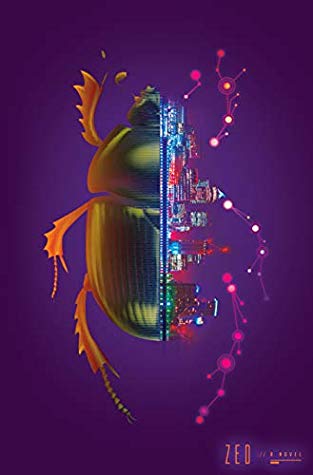
Zed, by Joanna Kavenna***

Kavenna is an established writer, but she is new to me. I saw the description and—okay, yes, the cover—and I knew I had to read this book. Thanks go to Doubleday and Net Galley for the review copy. This book is for sale now.

At the outset this story is electrifying. It’s set in future Earth in what was once London. Beetle is an all-powerful company that governs both business and government; it resembles Future Amazon more than a little. Its employees have Real Life selves, and they have virtual selves that make it possible for them to attend meetings without physically being there. They have BeetleBands that measure their respiration, pulse, perspiration and other physical functions, and those bands are supposed to stay on:

The Custodians Program tracked people from the moment they woke (having registered the quality of their sleep, the duration), through their breakfast (registering what they ate, the quality of their food), through the moment they dressed, and if they showered and cleaned their teeth properly, if they took their DNA toothbrush test, what time they left the house, whether they were cordial to their door, whether they told it to fucking open up and stop talking to them, whether they arrived at work on time, how many cups of coffee they drank during the course of an average day, how many times they became agitated, how many times they did their breathing relaxation exercises, if they went to the pub after work and what they hell they did if they didn’t go to the pub, how late they went home, if they became agitated, angry, ill, drunk, idle at any point during any day, ever.

Of course, it is possible to avoid the entire Beetle system, but there’s almost nothing that someone that is off the grid can do for a living; these people scuttle about in abandoned buildings, living miserably impoverished, private lives.

Those in high positions of responsibility have Veeps, which are virtual assistants that run on artificial intelligence. There are few human cops out there because those jobs are done by ANTS—Anti-Terrorism Droids—and these in turn follow the protocol, which says they should shoot at their own discretion. And all of these things lead up to the murder of Lionel Bigman, who bears an unfortunate resemblance in both body and name to George Mann, who has just cut the throats of everyone in his family. The ANTS find Bigman and kill him.

The aftermath features the sort of government whitewash and cover-up that every reader must recognize. The error was caused, say the higher-ups, by two factors: one was Mary Bigman, wife of Lionel, the uncooperative widow of Lionel who demands answers and is therefore conveniently scapegoated; and Zed, the term for chaos and error within the system. And Zed, unfortunately, is growing and creating more errors which must also be swept under the virtual carpet.

Those dealing with this situation are Guy Matthias, the big boss at Beetle; Eloise Jayne, the security chief who’s being investigated for saving the life of a future criminal that the ANTS had been preparing to shoot; Douglas Varley, a Beetle board member; and David Strachey, a journalist torn between his paramount duty to inform the public, and his self-interest that suggests he shouldn’t rock the boat.

Once the parameters of this book are defined, I am excited. The book could be the bastard antecedent of some combination of Huxley, Rand, Vonnegut and Orwell. The possibilities! But alas, though the premise is outstanding, the execution is lacking. I have gone over it multiple times trying to figure out what went wrong and what could fix it, and I am baffled. All I can say is that by the thirty percent mark, though a major character is running for her very life, the inner monologue drones until I am ready to hurl myself into the path of the ANTS just to end it. All of the fun stuff has been offered up already, leaving us to slog our way out of it. How could a story so darkly hilarious and so well-conceived turn so abstruse and deadly dull?

Nevertheless, I would read Kavenna again in a heartbeat. Someone this smart will surely write more books that work better than this one. But as for you, read this one free or cheap if you read it at all.

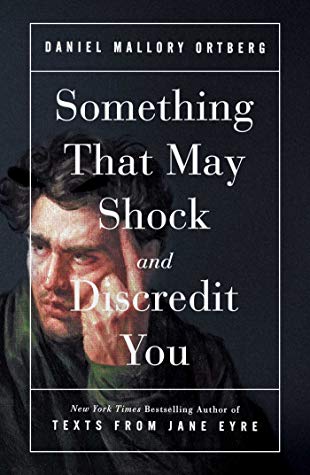
Something That May Shock and Discredit You, by Daniel Mallory Ortberg***

Ortberg wrote The Merry Spinster, a work of dark humor that convinced me that he is a genius. This book is a lot different, although at times the same voice peeks through. My thanks go to Atria Books and Net Galley for the review copy. This book is for sale now.

Many of the essays in this book are recycled from Ortberg’s blog, but since I never saw the blog, all of it is new to me. The essays describe his experience as a trans man, and though it is funny in places, most of the pieces ooze pain and bitterness. And to be fair, a trans man brought up female in an evangelical Christian home, taught to consider the Rapture in every choice made, every road followed, is bound to have these things in spades. However, there is a good deal of redundancy here. After awhile I found my attention wandering, and by thirty percent of the way in, I was watching the page numbers crawl by. How much longer…?

Some of the chapter titles are full of promise, but then the chapter itself disappoints. What, this again? I did enjoy the passage on parallel parking, and the chapter on Columbo (the only man Ortberg has ever loved) cracked me up.

I have rated this title three stars for general audiences, but I suspect that for those transitioning to manhood, or for those close to someone doing so, the rating will be higher.

Recommended to those transitioning, considering transitioning, and their loved ones.