
Robicheaux, by James Lee Burke*****

Robicheaux“You ever hear of the Bobbsey Twins from homicide?”

Dave Robicheaux and Clete Purcel are back. For those that have never read the work of James Lee Burke, it’s time; for those that have missed his two best-loved characters, this new release will be as welcome, as cool and refreshing as a Dr. Pepper with cherries and ice. Lucky me, I read it free thanks to Net Galley and Simon and Schuster in exchange for this honest review.

Robicheaux is a Cajun cop from New Iberia, a small town an hour from New Orleans. Southern Louisiana, he tells us in his confidential narrative, has become “the Walmart of the drug culture.” He is under tremendous pressure; grieving the loss of his wife, Molly in an auto accident, he blacks out one drunken night, the same night that a murder occurs. Dave was in the area, and he cannot say he didn’t commit the murder, because he can’t recall anything. That’s why they call it a black out. His daughter Alafair returns from the Pacific Northwest to help her father pull himself together; she tells him he didn’t do it because murder is not in him. Clete says the same thing. But Dave is a haunted man, and he wonders what he is capable of.

To cap it all off, Dave has been assigned to investigate the rape of Lowena Broussard. The story doesn’t gel, and he wonders if it actually happened.

All of the fictional ingredients that make up Burke’s fictional gumbo are here: slick politicians, mobsters, thugs, and sociopaths. We also have people from Hollywood, whose casually entitled behavior and attitudes are anathema to Robicheaux and probably also to Burke. Alafair has been hired to write a screen play, and lascivious comments directed her way from those in charge of the film make Dave see red.

Clete figures prominently here; as longtime readers already know, Clete “would not only lay down his life for a friend, he would paint the walls with his friend’s enemies.” At one point a couple of thugs follow him into the men’s room at a local bar, and we fear they will kill him. Instead, “Maximo and Juju went to the hospital, and Clete went to the can.”

Burke has long been admired for the way he renders setting. A creative writing teacher could assign this book, because examples of how to render a place in a way that is original and immediate can be found by flipping to almost any page. But there’s more than that here. The dialogue crackles. The narrative is luminous at times, philosophical at others (are the Confederates the new Nazis?) and hilarious here and there as well. It’s enough to make ordinary writers sigh; I may write, and you may write, but neither of us will ever write like this.

There’s also plenty of fascinating Cajun culture here, and it’s so vastly different from anything I have known in my long life, most of it spent in the Pacific Northwest, that I find myself rereading passages. There’s a travelogue feel to parts of it that is unmatched anywhere else.

Lastly, I have to tell you that this story holds an extra element of suspense for me. These characters were originally crafted in the 1960s, and our author is growing old. I wonder as I read whether he intends to kill his heroes, one or both, in order to prevent future pretenders from usurping them. Every time I find Clete in danger, my heart nearly stops. I know that Dave has to make it all or most of the way through this book because it’s written in the first person, but Clete can go any damn minute.

Will Burke pull the plug?

Obviously I am not going to tell you anything more; the quotes you see above all occur early. But for those that can read work that is gritty and at times violent—I had to take little breaks now and then—there is no better fiction anywhere.
Note to the reader: there are some of Burke’s older books on YouTube in the form of audio books. Authorized? Unauthorized? Who knows, but for now at least, there they are.

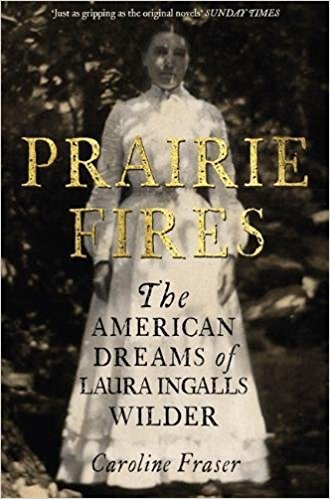
Prairie Fires, by Caroline Fraser

prairiethe_Are the classic “Little House” books memoir or historical fiction, and were they written by Laura or by her daughter? If you’re confused, you’re not alone. In this epic, absorbing biography of her great-grandmother, Fraser tells us. Between her congenial narrative and careful, detailed documentation, this author has created a masterpiece. Lucky me, I read it free and early thanks to Net Galley and Henry Holt Publishers. This book is now for sale.
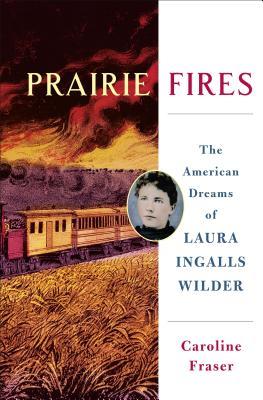
Laura’s early life was considerably harder than the sepia-toned, heartwarming stories with which she recounts it. Little children could not stand to hear the grueling poverty and crushing losses her family sustained.


“Her autobiographical novels were not only fictionalized but brilliantly edited, in a profound act of American myth-making and self-transformation. As unpublished manuscripts, letters, and documents have come to light, we have begun to apprehend the scope of her life, a story that needs to be told, in its historical context, as she lived it. That tale is different from the one she wrote. It is an adult story of poverty, struggle, and reinvention—a great American drama in three acts…Showing American children how to be poor without shame, she herself grew rich.”

Wilder was a legend unto herself, a fierce, strong woman that could survive anything, anything, and everything. Her story recounts not only personal hardships, but the wide sweeping history that she lived through, from the Westward movement and Manifest Destiny to the suffrage movement, the Dust Bowl, and the Great Depression, as well as the elephant in the room: Indian removal and genocide.

The book, some 600-plus pages, recounts not only Wilder’s story, but that of her daughter, Rose Ingalls Wilder, who was, frankly, a real piece of work. Their lives were so intensely intertwined that to do this any other way would render Wilder’s story incomplete.  And I appreciate the scholarly objectivity with which Fraser treats her subject; it’s not without warmth, but she is clearly not manipulating facts, as some authors do when writing about famous relatives. PrairieFires

And although I previously named a different title as the go-to biography of 2017, I have to recognize that Fraser’s book is a contender.  Highly recommended.

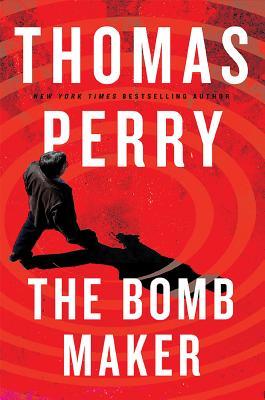
The Bomb Maker, by Thomas Perry****

TheBombMakerThomas Perry writes some of the most terrifyingly suspenseful novels of any writer alive, and he never has a dud. In this story, a retired bomb squad cop is asked to come back to work when half the current squad has been wiped out by someone that wants to kill bomb specialists. I was able to read it free and early thanks to Edelweiss and Mysterious Press. It will be available to the public January 2, 2018, just in time to start the new year with a bang.

Dick Stahl has just returned from carrying out a tricky job in Mexico. Retired from the bomb squad and police work, he owns a consulting firm and is ready for a rest. But someone out there—most likely not a terrorist, since nobody claims credit for the carnage—has taken out half of the bomb squad, and clearly the technicians themselves were targeted.  More attempts are made; there are numerous explosive devices planted in a given location. The guy that plants these things wants them to be found, and so there’s an obvious, textbook-type incendiary left in plain view. The bomber’s intention is for the technicians to relax, believing they have destroyed the threat, and it is then that the real bomb—or chain of bombs—is triggered in order to take out as many bomb techs in one blow as is possible. Stahl has his work cut out for him when he is called back to duty to foil this killer and aid his capture.

In addition to Stahl, we see the bomb maker’s thinking and what he is planning. Perry’s villain is a cold, calculating schemer, and there’s a chilling sense of remove in this part of the narrative. The pacing is tight, with minimal word-smithery to get in the way. Perry doesn’t paint anything; he just tells us what’s about to happen…maybe.

Side character Diane Hines, a member of the squad that becomes romantically involved with Stahl, is an interesting addition, a smart, savvy professional. Whereas I am sorry to see the only important female character used primarily as a sexual entanglement that complicates Stahl’s career, I give Perry retrospective credit for his Jane Whitefield series, which is legendary and features a strong female lead.

That said, the journey here is a lot more interesting than the destination. On the one hand, Perry doesn’t cheat the reader by throwing something out to left field and making the conclusion impossible to predict. Perry’s treatment here is respectful of his readership. On the other hand, I am sorry to have such a fascinating story unspool to such an anticlimactic ending.

It’s worth noting that although this writer has produced a lot of books, he never uses any obvious formula. No matter how many I read, I don’t walk away feeling as if I have read the same book packaged differently.

Recommended for Perry’s fans, but get it cheap or free unless your pockets are deep ones.


The Night Child, by Anna Quinn****

TheNightChildAnna Quinn is a brave writer. This wrenching debut novel occupies a place in literature that has lain dormant for decades; kudos to Quinn for bringing dark business out into the light of day for a good airing. I received my review copy free and early thanks to Net Galley and Blackstone Publishers. It will be available to the public January 30, 2018.

Nora is a high school teacher and the mother of a small child; her marriage is coming undone. Her mental health is a little on the shaky side, and she’s seeing a therapist to help her understand a terrifying vision that came to her in her classroom. A “wild numinous” face, the disembodied face of a child, floats over her students’ desks one day after school, and Nora panics. This face represents the core of Nora’s story, and once the layers of her outer self are peeled away, it makes for a deeply absorbing read.

Quinn takes some time to lay her groundwork. The first part of the story is unremarkable, and I briefly considered abandoning it. Character development seems limited to marital issues and time spent in therapy, and Nora lacks depth and originality until about the thirty percent mark. I tell you this lest you abandon the story yourself. It’s worth the wait, because once the story takes wing, it is hypnotic.

It’s tempting to say this novel is the twenty-first century’s answer to Sybil, but that doesn’t do it justice. Nora’s struggle to find the self that is held beneath layers and layers of emotional scar tissue, to heal herself so that she can be a good mother to Fiona, is one that we carry with us long after the book is over. Those that face serious mental health issues themselves will see vindication. Those that have family members or other loved ones working to unify a personality fragmented by trauma may see themselves as Paul, who’s juggling his own needs, those of his daughter, his love for Nora, and the crushing burnout that comes of living with a partner facing all-absorbing mental illness over a lengthy period of time.

Recommended to those interested in reading about mental health issues through the approachable medium of literary fiction.

The Girl in the Tower, by Katherine Arden*****

TheGirlintheTowerOh hey now…do you hear bells?

There are plenty of reasons to read this luminous, intimate, magical novel, the second in the Winternight Trilogy. You can read it for its badass female warrior, an anomaly in ancient Russia; you can read it for its impressive use of figurative language and unmatchable word-smithery; or you can read it because you love excellent fiction. The main thing is that you have to read it. I was overjoyed to be invited to read it in advance by Atria Books in exchange for this honest review; thanks also go to Net Galley for the digital copy. The book is available to the public tomorrow, December 5, 2017.

Vasya is no ordinary young woman. She sees and hears things few others do. Take, for example, the domovoi that guard the home; the priests discourage belief in such creatures, but they’re right there. She can see them. Then there’s the matter of her extraordinary horse, Solovey, who is nobody’s property and nobody’s pet, but who makes a magnificent friend and ally. And then of course there is the Frost Demon, a mentor and intimate acquaintance with whom she has a complicated relationship. But these are only parts of her story. The whole of it is pure spun magic that no review can adequately describe.

In ancient Russia, there are three kinds of women: some are wives; some are nuns; and some are dead. Vasya is determined to be none of these. Everyone that cares about her tries to explain how the world works so that she can make her peace with it. Her father is dead now, and so her brother, who is a priest, and her elder sister Olga both implore her to be reasonable. And even the Frost Demon wants her to face the facts. He tells her:

“Having the world as you wish—that is not for the young,” he added. “They want too much.”

Nevertheless, Vasya sets out into the winter woodlands with Solovey; she’s dressed as a man for the sake of safety. She learns that bandits have kidnapped the girls of a village that lies in her path, and everywhere she sees the depredations, the burned homes and ruined fortresses that have been laid waste by the Mongol invaders that have preceded her. She vows to rescue the girls and to seek vengeance, and as one might expect, she brings down a world of ruin and pain upon herself in the process.

A character like Vasya comes along perhaps once in a generation. Together with the first story in this trilogy, The Bear and the Nightingale, it has the makings of a classic. My one small wish is not to see it become a romance rather than what it is now—brilliant historical fiction and deeply moving fantasy. At the same time, wherever Arden takes the third volume of her trilogy, I know she can be counted on to do it better than anyone else.

Can this book stand on its own if the first title isn’t available? Arden ensures that the reader has the basic information necessary to jump into the story, and yet I urge readers to get both books if at all possible. To disregard the first in the series is to cheat oneself.

This reviewer seldom keeps review copies on the shelves here at home. There are too many books and never enough space. This title (and the one before it) is an exception to this rule; I will love this series until I die.

You have to read this book.

The Spy Who Never Was, by Tom Savage*****

TheSpyWhoNeverI love Savage’s work, and this title is his best to date. I got my copy free and early thanks to Net Galley and Random House Alibi. You can get it January 9, 2018.
Nora Barton is our protagonist, and she is recruited by Edgar Cole as an unofficial CIA agent—she has been helpful to the Agency before—because of her physical resemblance to someone being targeted by the enemy, an enemy known as TSB.

“Edgar Cole was using her as bait: here, kitty, kitty. Now Nora was in Paris with TSB, and the two of them were playing an elaborate game of I-know-you-know-and-you-know-I-know, and Nora wondered what would happen next in their little charade.”

Nora isn’t allowed to tell her husband, who is an intelligence agent himself, but she tells him some of it anyway. I smile, knowing I would do the same. He tells her not to accept this assignment—absolutely not—but Nora doesn’t take orders from him, and she makes the decision to go.

Savage writes true thrillers. Like his other novels, this one grabs you by the hair on the first page and doesn’t let go. I am accustomed to the traditional story arc, rising toward a climax, but that’s not what we get here; instead, there’s a huge surprise around every corner. My pulse raced while I read this thing, and my blood pressure rose. There are several places in my notes throughout the book that say “Holy crap!” or, “My heart!”

Once in Paris, people start getting dead. That agent that was attacked because he was guarding her—wait a minute, was he guarding her? Nora isn’t sure who she can trust, but happily, she has a personal friend, an elderly fellow now retired from intelligence that lives in Paris. Her friend’s message to her is sobering indeed: “Go home, Mademoiselle.”

Every now and then Savage breaks up the tension for a split second with humor, and I love this. Her mentor in Paris prides himself on his English use, and he misuses idioms in ways that are charming and sometimes very funny, and this is done in a way that doesn’t mock the French or anyone else. Savage is a pro, handling this delicate characteristic deftly. The mentor tells Nora that a spy known as “Le Faulcon” is here to kill her; he is a “Russian hitting man”.

Whoa now. Frankly, I would be on the plane back to the States in a jiffy; but then, I would not have gone at all. Nora, on the other hand, is a badass.

This leads me to my very favorite aspect of Savage’s work, which is becoming a literary signature: women generally don’t get saved by men here. Women either save themselves, or they save others. But in this regard, Savage is the ultimate anti-noir author. There are no helpless women. Three cheers for Savage’s powerful feminist fiction.

Last, let’s look at the side characters. There are a host of them, and a number of them are known by multiple names, so this is not a beach read. I quickly learned not to read this story after I took my sleeping pill, because if I did, I would just have to read it again the next day. In addition to our colorful older French mentor, Savage introduces a new character named Fanny that I would love to see again.

Get it digitally or get it on paper, but if you love a well-crafted psychological thriller, you have to read this book.

Best of the Year: 2017

Gallery

This gallery contains 3 photos.

2017 has been a stellar year for literature, and when I sat down to rate my top ten, I found myself stymied. Working up to it by offering the best of each genre seems more approachable, although still daunting. Most … Continue reading

The Story of Arthur Truluv, by Elizabeth Berg****

TheStoryofArthurThe Story of Arthur Truluv is a gently philosophical story centered on an elderly widower. Arthur visits the cemetery every day and has lunch at his late wife’s grave so that he can talk to her. Those interred there make pieces of their stories known to him at times; it’s a bit like crossing Fannie Flagg’s The Whole Town’s Talking with the work of Fredrik Backman. I read it free and early thanks to Random House and Net Galley in exchange for this honest review. I rate this book as 3.5 stars and round upward.

Arthur, an octogenarian, and Maddy, who is 17, meet at the graveyard. Maddy is in a spot herself; her home life is not good; she’s been dumped by a much older boyfriend; she’s a pariah at school; and on top of all these things, she is pregnant. She and Arthur form a tentative friendship, though she is wary of trusting him at first. A bond is formed, and Arthur becomes a mentor to Maddy.

Added into the mix is Arthur’s lonely next door neighbor, an older woman named Lucille, who has never married or had children. These three characters make up the vast majority of the story, but it’s not a story with three protagonists; as the title suggests, the story is Arthur’s, and Maddy and Lucille are here primarily to develop him.

The story is a sweet one and has some nice moments, particularly where gentle good humor is employed; yet at the same time, I felt a little let down. Perhaps it was the hype; there’s been so much buzz about this book. But although I liked most of it, I found it somewhat derivative. I had 90 percent of the ending figured out a third of the way into the story. The character of Lucille felt wooden to me, and a lot of Berg’s sentimentality and allegory could use a lighter hand.

This one is a good choice for those needing a little light, feel-good fiction, but I wouldn’t pay full jacket price for it. This story is available to the public tomorrow, November 21, 2017.


Gods in Alabama, by Joshilyn Jackson*****

godsinalabamaThis book was just what the doctor ordered. Whenever I find myself steeped in too much important-yet-grim literature, I have a handful of go-to authors that are guaranteed to leave me feeling better about the world. Jackson is one of them. I bought my copy of this book used via Powell’s City of Books, online using the gift certificate they bestow on reviewers from time to time. I recently won another one and have ordered some more books by this writer to brighten the winter to come.
Arlene had vowed never to return to her family in Alabama. Dark things have been done there, and she did some of them herself. Let’s examine, for instance, the murder of Jim Beverly. Arlene promised God that if he let her get out of the state after it occurred, she would never return, and despite her family’s hurt inquiries, she never has. Now things are different, though. A visitor from her hometown has come to her apartment asking about Jim. In addition, Arlene’s boyfriend Burr, who is African-American, has told her that if she won’t introduce him to her people, regardless of what they are like or how they will treat him, he will leave her. And so Arlene is forced to break her vow with the Almighty and head south.

Arlene’s family is unforgettable; Aunt Flo, who raised Arlene after her mother’s breakdown, is one of the finest strong female characters of all time. I have read several books since I read this one, and yet Arlene and Flo are still riding around in my head. That’s what excellent literature does.

As to Jim Beverly and Arlene’s vow, there’s more to all of it than meets the eye, and the ending is so surprising yet so completely believable that I can only roll my eyes in admiration. Highly recommended to those that love excellent fiction.

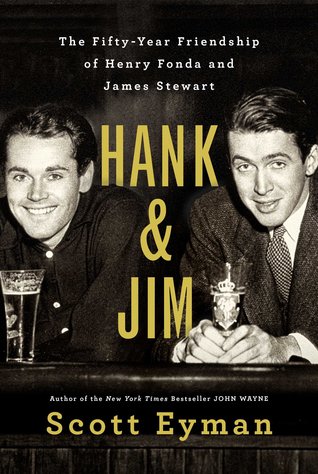
Hank & Jim, by Scott Eyman****

HankandJimFans of Henry Fonda and Jimmy Stewart will want to read this biography, written by the author that recently wrote a biography of John Wayne. I was invited to read and review by Net Galley and Simon and Schuster, and so I read it free in exchange for this honest review. It’s for sale now.

The book is well crafted, and multiple aspects contribute to its success. The first is the unglamorous but essential research. Eyman used extensive interviews with both actors’ families as well as directors and other actors that had worked with them. The second is the thoughtful analysis. Eyman’s insights are intelligent and fairly measured, never becoming prurient, gossipy, or mawkish. The third is his friendly, congenial narrative, peppered with telling anecdotes that keep the pages turning.  It’s well organized and doesn’t rely on photographs to tell the story.

These actors belonged to my parents’ generation, and so for a long time I was not much interested in them. More recently, though, I’ve found it’s interesting to see their craft, their lives, and their work  as creatures of the time in which their careers blossomed, and as part of American entertainment history.

The truth is that I never cared much for Henry Fonda. The only one of his movies I saw in the theater was On Golden Pond, and the harsh way he spoke to his daughter on the screen—who was also his daughter in real life, Jane—was so brutal that I never wanted to see anything more that he’d done, apart from the occasional old movie I ran across on television.  Learning later that he was more or less the same father to her in real life didn’t help much. Eyman is unsparing as he describes this aspect of the Fonda family, but he also points to the mellower man he became later in life, and to the tremendous loyalty he showed his friends, Stewart foremost among them.

I was more interested in Jimmy Stewart, who left a more timeless body of work. Harvey is a film I loved enough to search out and watch in turn with each of my children.  Of course, at Christmas time I am inclined to pull out It’s a Wonderful Life, although none of my kids would watch it with me more than once. There was such heart in his roles.

Because I like Stewart’s work, I had already read one biography fairly recently. Robert Matzen’s Mission: Jimmy Stewart and the Fight for Europe dealt well with his war years as well as the early years of his life, and so I didn’t enjoy the first half of Eyman’s book—which covered the same ground again—as I did the second half, which I found both comforting in places as well as mesmerizing.  The second part also has more quotes by his children, who weren’t around for much of the stars’ earlier lives. And I came away with renewed respect for Jane Fonda, who had a harder road than I had previously understood.

Now I have half a dozen movie titles I want to watch, or watch again; that’s a sure sign of a strong biography. And it makes me think warmly of my own longstanding friends, some of whom I’ve known and loved almost as long as the 50 years that Hank and Jim were friends.

Recommended to fans of Fonda and Stewart, and to those that love good biographies; this would also make a nice Christmas gift for older relatives.