
At the Edge of the Haight tells the story of a homeless youth, Maddy Donaldo, who lives with her dog, Root, in San Francisco’s Golden Gate Park. But one day she runs across a young man lying dead, and the man that is almost certainly his killer locks eyes with her. He tells her, “Keep a handle on the fucking dog…I know where to find your ass.”

I was invited to read and review this award-winning novel by Algonquin Books. My thanks go to them and Net Galley for the review copies. It’s for sale now.
At first, I am not sure I’ll like this book. It seems a bit self-conscious, a bit like a public service announcement or an infomercial. I wonder what I have gotten myself into. But about a quarter of the way in, it wakes up and begins to flow. It becomes my dedicated bathroom book, since I’ve been given a physical review copy, and I find myself brightening when I enter the loo. There are any number of places when the author has the opportunity to use an obvious plot device, but she chooses something better. By the end of the story I believe Maddy as a character, and I appreciate the way it ends.
My home town, Seattle, has an enormous problem with homelessness, estimated in the tens of thousands, and most of them are native Seattle-ites that have been priced out of the housing market. I know one of the people out there; others have squatted in my yard until my dog made them feel unwelcome. Not one part of this city is entirely free of tents, cardboard shacks, and other makeshift shelters. So this subject is never far from my thoughts.
The fact is that there aren’t nearly enough shelter beds, whether in open rooms with mats on the floor, hotels with doors that close and provide privacy, or other options, but in reading this book, it is also clear that there are times when it’s better to walk away from free shelter. Take our friend Maddy. The shelter she sometimes frequents is one where the probable killer has seen her. She can’t go there safely. There are shelters where she can’t take her dog. There are others that sound pretty good, but a night filled with the screams of a neighbor experiencing a mental health crisis make the private niche way deep in the park more appealing. The cops range from businesslike 3 AM bush beaters (“You can’t camp here!”) to the overtly cruel, and most of the homeless know better than to try to confide in them. And so it goes.
The main part of this story involves a couple—Dave and Marva—that are the parents of Shane, the murder victim. They live on the other side of the country, and they never understood why Shane wouldn’t come home. No one besides Maddy recalls having seen Shane, and so although she has only seen him once—dead—they latch onto her, vowing to help her since they couldn’t help him. Between their grief and ignorance, however, they bumble around and breach boundaries in ways that are outrageously presumptuous, and when they drag her to their home for Thanksgiving, they introduce her as someone that “knew Shane,” which of course she didn’t. Maddy feels bad for these folks, but she doesn’t want to be their project. It’s a bizarre situation for her to be in.
Though it is marketed as commercial fiction, I think a lot of teens would embrace this story. I suggest that Language Arts teachers in middle and high schools add it to their shelves, as should librarians. The vocabulary is accessible, and despite the quote I lead with, there’s very little profanity.
Recommended especially for teenage readers.


 I always enjoy the Alex Delaware series. It takes a fun read to make me look forward to my stationary bike–which is generally not my favorite thing–and this did that. My rule for myself is that I am allowed to stop pedaling early, but if I do, the audio book gets turned off, and sure enough, I have been riding it full tilt to sneak in a few more pages.
 John Orr was a fire fighter that wanted to become a cop. The psychological test weeded him out; his personality wasn’t stable enough for a guy that carries a gun for a living, and they turned him down. Over the years, however, he became not only a fire chief, but a highly respected arson investigator, and took tremendous pride in the fact that he was part of the law enforcement community. However, occasional snubs from that group made him livid, and he dealt with his rage in the most horrific manner imaginable: he became the most prolific arsonist in California history. Joseph Wambaugh captures this true crime story in electrifying detail. I received my copy from Open Road Media and Net Galley in exchange for an honest review, but you can get your copy Tuesday, October 18, 2016 when it is digitally released.
 The Birthday Boys is a fictionalized account of the Scott expedition’s travel to Antarctica in 1910. It’s told sequentially through the perspectives of five men that participate, each picking up where the last has left off and of course, also including some personal reflections and memories to make them more real to us. I was invited to read and review this novel based on my enjoyment of the book Ice Brothers, which was also a maritime tale (and is reviewed here:
 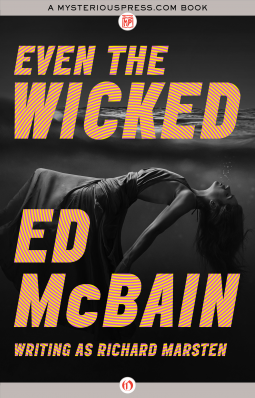 Best known by the pseudonym Ed McBain, Richard Marsten, the name under which this book was originally scribed in 1958, was born as Salvatore Lombino. I was a huge fan of McBain’s, and every time I see some small thing he wrote that I haven’t had a chance to read yet, I snap it up. And so it was with this DRC, which I received compliments of Net Galley and Open Road Media. But once I reached the halfway mark, I felt sort of queasy and couldn’t continue. I suspect that much of what he wrote as Marsten might as well be left in whatever obscure attic corner it’s perched in, because society has moved forward since the 1950s, and this book is still there.
 EL Doctorow died last year, and the literary world—well, at least the English-speaking part of it—mourned. I know I did. He was one of the finest writers ever to grace the planet, and so when I spotted this collection of stories, even though I understood that I had probably read most or all of them already I snapped it up. Thanks go to Net Galley and Random House for the DRC, which I received free in exchange for this honest review. The collection will be available to the public November 1.
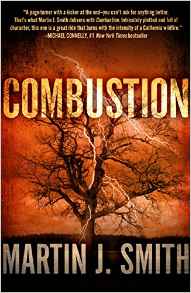 Paul Dwyer is dead, a floater that has only been found because his construction business diverted the water from the place where his body is dumped, and it dries up in the Southwestern desert heat, leaving his body exposed to the world. I was lucky to be able to read this book early, thanks to an invitation from Net Galley and Diversion Publishing, in exchange for this honest review. I am overjoyed to rate it five stars. I knew nothing at all about either Smith or Diversion, but it turned out to be a risk that worked out in my favor and the author’s.
