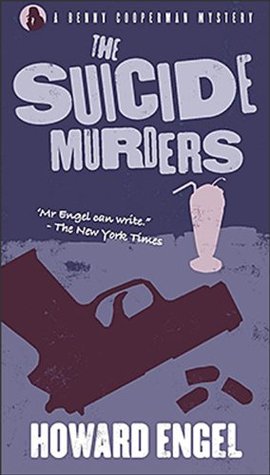
The Suicide Murders, by Howard Engel****

thesuicidemurdersThe cops said Chester killed himself. The gun was there, and he had powder burns on his head, powder on his hand. Everything tested out right. But he’d ordered himself a brand new bicycle just two hours earlier. Does a suicide do that? And then there was the very lovely wife that had been to see Cooperman, our detective protagonist, just before the unfortunate event, concerned that her man had perhaps been unfaithful. She’s caught him lying to her, and that makes a lady suspicious.

These things leave a guy like Cooperman with questions. True, he’s not a cop: “Me? I’m just a peeper. Divorce is my meat and potatoes.” But when something stinks, it’s in Cooperman’s nature to go find the source of the smell and air it out. And when others die after Chester, it makes Cooperman, who’s nobody’s fool, ask even more questions.

I received the DRC for this vintage novel, now available digitally, from Net Galley and Open Road Integrated Media. It became available for sale August 24, so you can get it now.

Engel is an experienced writer, and as he plays the thread out, with murder upon murder integrated deftly into the everyday life of Benny Cooperman, he strikes an excellent balance, building suspense and driving the plot forward with the occasional humorous reflection to keep things from becoming too ugly to be fun for the reader. And his character descriptions are particularly memorable, as with this local politician:

“He was a big man by anybody’s scale. His face looked like a roast beef dinner with all the trimmings, with a huge portion of nose in the middle. “

There were a couple of moments when the predictable occurred, but it wasn’t so dead obvious—excuse the pun—as to be an eye-roller. Rather, I experienced the satisfaction of having seen it coming and been right. And to me, as long as there isn’t too much of it, and there wasn’t, that is a sign that the writer has been fair to his audience. There are no sudden introductions of new characters during the last ten percent of the novel that change the solution in a way impossible to predict, and a lot of us like working the puzzle as we read. There are a couple of sexist references—“the kind of girl”, “bimbo”—that were commonly used in 1980 when this was first published that I didn’t care for, but they were infrequent enough that I was able to make a note to myself, and then continue to read and enjoy the story. In the end, the wry humor and up-tempo plot line makes this one a winner.

Although there are vague sexual references and infidelity is part of the plot, there is no graphic sex that should prevent a parent of a precocious adolescent mystery maven from handing the book down once they have finished it themselves. It’s hard to call any story that contains multiple murders a cozy mystery, but this one is in or near that ballpark.

Altogether a satisfying read.

My Life on the Road, by Gloria Steinem*****


mylifeontheroadI’ve been thinking a lot about Steinem since the recent unfortunate episode on a TV talk show. I was heartsick. What woman gets past 80 without a single regrettable senior moment? But most of us will be fortunate enough to have a spouse, partner, adult child, or other companion who will take us aside and suggest we rethink what we’re doing or saying. “Mom, I’m getting a little worried. Can we check your meds? What do you think?”
But Steinem doesn’t have that sort of support system. The women that were closest to her for a long, long time are already dead.

So I republish this blog post asking you to think, not about the single magic moment, for which she later apologized, but instead, for all the amazing accomplishments and selfless deeds she has done on behalf of women, and for her willingness in a time when most of white America kept to itself, to learn at the feet of women of color.

Because this is her legacy; her real one.

Feminist heroes are everywhere, but if I had to name half a dozen women that were at the core of the feminist movement that followed closely on the heels of the Civil Rights movement and the movement to end the US war in Vietnam, Steinem’s name would be among them. In fact, hers might be the first name out of my mouth. It was she who coined the salutation “Ms”, and who founded Ms. Magazine. When I saw she had written a memoir, I knew I had to have it, and when Net Galley and Random House gave me the DRC, I was delighted. But this is one of the few books that if I’d had to, I’d have been willing to pay full jacket price in order to read. Heroes are thin on the ground these days, and we treasure those that still walk among us.

My reading records reflect over 300 biographies, autobiographies, and memoirs I’ve read, and I didn’t even start listing them until about 3 years ago, so who knows how many? The one thing I know to expect, when someone really famous sits down to tell us about her life, is that the ego will be there. It might be veiled, especially if the person is famous for writing as opposed to something else, or it might be big and bold. Once in awhile it’s been so bald-faced that I came away wishing I hadn’t read the book so I could go on liking the author. So for one of the most famous of living feminists, I was braced and ready.

And this icon’s ego isn’t there. I don’t mean she hides it well; I just don’t find it. And it appears as if large amounts of time spent among Native sisters in struggle—Wilma Mankiller foremost among them—taught her so much about focusing on the circle, rather than a table that has someone at its head, a big-boss type, that she let go of whatever ego she might have been thinking about building. For example, when she works as an organizer, she dreads public speaking, but looks forward to the place at which one part of the auditorium begins to answer the questions from another part, and she knows a circle has formed, one in which she becomes just another person present. I was blown away!

Steinem began her career in journalism, and she is one of the finest writers whose work I have read. For a brief time in years gone by, I dismissed her because of her sometimes-attachment to Democratic party candidates, but the sum of her contributions has been so much more that I missed the forest for the trees during that time of my life. Now I want to read everything she ever wrote.

Travel is a great metaphor, but it’s also a material fact for Steinem. She grew up with a father who was a traveling salesman, and unlike most such men, he took his family with him. For most of her childhood, there was no home, merely a series of stop-overs. This rootless existence would leave some children traumatized. Kids thrive on routine, and not all would be able to translate constant travel into a sense of the usual. But Steinem mostly remembers it as a positive attribute, and credits her parents for their capacity to question social norms during a time most Americans were madly conforming. The fact that she continued to live out of a suitcase once she was grown and on her own is the greatest testament of all to her upbringing, and to her response to it.

There are oh, so many stories, some of which made me laugh out loud, and others that made me think. You can go winnow those out for yourself. And of course, my favorites may not be yours.

But the one thing I can promise you is a really great read, one with depth, yet not difficult to access. It’s friendly and feels as if we are having coffee with an old, dear friend, right at the table with one another. A circular table.

You have to read this book. It will be for sale October 27.

Storme Front: A Wyatt Storme Thriller, by WL Ripley*****

storme frontStorme Front, the second mystery in the series featuring former NFL player Wyatt Storme and his buddy, Chick Easton, is smart and sassy. Ripley proves that an action-packed thriller with a he-man protagonist is stronger, not weaker when it treats women respectfully, as equals to men. Thank you twice, first to Net Galley, and second to Brash Books. I received this DRC from them in exchange for an honest review. This title was released August 4, so you can get it right away.

When someone offers one a thousand dollars to make a single, simple delivery, it’s natural to be suspicious. But when it appears to also involve pulling a good friend’s cojones out of the fire, an experienced badass will sometimes agree, however cautiously, to tag along. So it is here. Drugs, guns, and bodies pile up, and all through it runs some kick-ass banter that made me laugh out loud a number of times. The exchanges are typically between Wyatt and Chick, but there’s some pretty strong humor, at times, in the interactions between Wyatt and his fiancée, Sandra Collingsworth, as well. As well as respect. I like the respect even better.

“No one likes smart, self-assured women, you know.”
“Except you,” she said. “And I’m glad.”

Complicating the picture without making it into a soap opera is the involvement, however peripherally, of an old flame of Wyatt’s. They split up a long time ago, and she married the man whose afore-mentioned cojones Wyatt is trying to salvage.

“His wife?” said Billy, smiling. “Ain’t she a sweet piece of—“
“Her name’s Kelly,” I said, interrupting. “But you can call her Mrs. Jenkins.”

The action is linear in format, so the fairly sizeable number of characters doesn’t create confusion. Then too, Ripley’s memorable character sketches certainly help:

“Snakeskins came around the truck. He had a big face, crooked nose. About thirty. A little overweight. Too many Coors in cowboy bars. Blond mustache, untrimmed, and a diamond stud in one ear. His hands were immense.”

Oh, there are so many more memorable passages, and I highlighted 78 of them, just for giggles. But the fact is, I would just hate to ruin it all for you. All told, the flavor is a bit like Sue Grafton’s, but with male protagonists in Colorado.

The examples I’ve provided show up early on, but the pace never slows till the last page is turned. In the end, I just wanted to read the next book in the series. And so will you.

Highly recommended for mystery and thriller lovers, or for anyone that needs a snappy, amusing beach read.

Everybody Rise: a Novel, by Stephanie Clifford****

Savagely funny, and newly released.

seattlebookmama's avatarSeattle Book Mama

everybodyriseAll Evelyn has ever wanted is to please her mother; all Barbara, Evelyn’s mother, has ever wanted is for Evelyn to be accepted into elite Eastern society. Barbara doesn’t care whether Evelyn is well read, but she had sure as hell better know which spoon to use, and what to wear to every occasion…and most of all, she had better know “everybody who’s anybody”. In other words, Clifford’s skewer of high society hits the mark in ways both wry and hilarious. This terribly amusing little tale goes on sale August 18—oh wait, was my rhyme a trifle tacky? Anyway, you can buy it soon, or you can order it in advance, but I was lucky and got a copy free from Net Galley and St. Martin’s Press for this humble review. Thank you to both of them.

Evelyn’s parents want different things, and it’s just her luck—she is their only…

View original post 337 more words

I Am Crying All Inside and Other Stories: The Complete Short Fiction of Clifford D. Simak*****

iamcryingallinsideClifford D. Simak is a science fiction legend. Before his 55-year career was done, he earned 3 Hugo Awards, the Nebula Award, and was named Grand Master by the Science Fiction and Fantasy Writers of America. I scored big when Open Road Media and Net Galley invited me to read and review this wonderful collection. It is available for purchase digitally now, and will be released October 20.
The fact is, I miss old-school science fiction writing, the fun stuff that is the product of a fertile imagination but requires no knowledge of programming code or other technological wizardry. What’s more, the quality offered in this collection is not only excellent, but evenly so. Common themes tend toward robots with complex feelings, sentient plants, and time travel, but there is no sense of sameness otherwise. Sometimes we are on a far-flung planet; sometimes we are back on planet Earth after it’s been wrecked to where anyone with any gumption has up and left, with only sorry-ass losers remaining. The common factor among all of these stories, in fact, is Simak’s ability to engage the reader.
Given the strangeness of the worlds science fiction and fantasy writers create, one would expect to feel intellectually curious about what the writer has cooked up, but what astonishes me every time I read really strong science fiction is the way the writer manages to work our emotions, causing a lump to form in one’s throat over something that could not possibly happen. By creating an alien setting in which a human, or human-like thought and emotion is present, a sneaking affection is created, and before you know it, there you are practically weeping over the poignant scenario that’s before you. The hook isn’t sentimental or maudlin, and that is why it is so successful. The subtlety is powerful, and we are connected to characters that not only don’t exist, but could never exist in the way the author has laid it out. And so, if Stephen King is drawn to things that go bump in the dark and binds our emotions to oddities in that genre, so has Simak laid our feelings bare using distant, fictional moons in solar systems that don’t exist. It’s a hell of a gift.
Every time I read a short story and decided that I had a new favorite, I looked back over the earlier ones—they were all so strong!—and then read on, and found myself uncharacteristically unable to choose one over the others. There isn’t a weak one in the batch; all are outstanding.
At one point I was ready to knock half a star off over the one-time use of the “N” word in one short story written in the first half of the twentieth century, but then there were all sorts of references to racial purity within the context of the story (alien races) that convinced me that he had an agenda when he did so, and not necessarily a bad one. If it were up to me, I’d leave the word out, but given its purpose here, one could argue for its inclusion.
But it’s worth being warned that it’s there. Nobody likes that kind of surprise.
The only other bad news here is that Simak is dead.
The good news is that over his prodigious career, he wrote enough material to fill 13 more collections beside this one, and if permitted, I will read and review every single one of them.
Highly recommended to anyone that loves old school sci fi.

The American Civil War: A Military History, by John Keegan ***

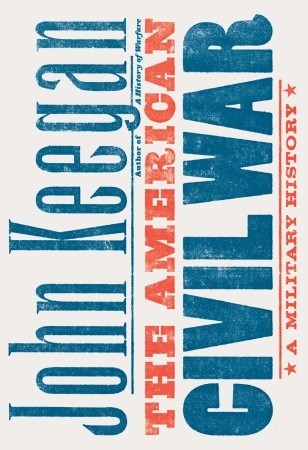
theamericancivilwaramilitaryhstThis was a disappointment. Keegan’s history of World War I was outstanding, and likewise he did a brilliant job with World War II. In contrast, his treatment of the American Civil War is nothing special. His sources are secondary; he hasn’t spent countless hours sitting in local and regional libraries reading collections of letters or rare documents. The man lives in England, and as far as I can see, he may have written this book from there. His maps are insufficient, and the ones he does use are the ones you’d see in anyone else’s American Civil War literature. Likewise, his photographs are ones I already saw somewhere else.

All of that could still make a four star work if he put a fresh perspective into play. I recently read and reviewed the outstanding Our Man in Charleston, by Christopher Dickey. That book offered the British perspective on the conflict, and it was very different from that of either the Union or the Confederacy. I had hoped that Keegan would likewise offer a new perspective and a lively discussion.

The book is instead, dull, dull, and dull. I did not see one piece of information I didn’t already know…and he called John Brown a “wild man”, perpetuating the textbook stereotype that tends to be used by those that don’t care to dig too deeply.

In his end notes he thanks James McPherson, and really if you read McPherson’s Battle Cry of Freedom along with the memoirs written by generals Grant and Sherman, you’ll learn far more and with much fresher, more interesting prose. It is these to which he refers most liberally.

On the plus side, I got my copy used. On the sorry side, it was still eight bucks I could have spent on something I want.

I advise you to read something else. If you want to read Keegan, read about one of the world wars. If you want one basic yet thorough treatment of the American Civil War, read Battle Cry of Freedom. But not this book.

Blanche Passes Go: A Blanche White Mystery, by Barbara Neely*****

blanchepassesgo“Blanche’s mind rang with remembered slights and taunts, and echoes of that awful, heartbreaking instant of fear that was a part of every trip into the white world—a fear of being refused or given poor service because she was black, stopped by a cop because she was black.”

I finished reading Blanche Passes Go on the second anniversary of the death of Michael Brown, who was shot dead by a cop for jaywalking. Bernie Sanders, the candidate who fancies himself the liberal savior for all progressive-minded Americans, spoke here in Seattle that day. The purpose of his talk, apart from campaigning and fundraising, was to celebrate the birthday of Social Security. The speech was disrupted by a pair of African-American women who took exception to his myopia.

So I guess you could say that everyone, even those that don’t generally enjoy mysteries, ought to be reading this book right about now. In particular, if the reader is still trying to figure out why so many people, particularly people of color, get upset with the clueless slogan “All lives matter”, this book is here, just for you. Neely approaches issues of race, class, and gender in a way that is clear but not unkind. It’s her best work to date, and could not have been published by Brash Books at a more appropriate time. My great thanks go to them and the people at Net Galley for providing me with a DRC, and to Neely for laying it all out so that anybody who has a willing heart can get the picture.

In this fourth Blanche White mystery, Blanche has gone home to Farleigh, North Carolina for a vacation, and to try partnering a catering business with her best friend, Ardell. But Farleigh is a small place, and she can’t avoid running up against David Palmer, a Caucasian man that raped her. She never reported it, of course; were they really going to haul the well-heeled, powerful white man for a sperm sample, given the long history of Caucasian men raping Black women with impunity? Not likely! So when her long-simmering rage is ignited by the sight of him, she vows to not only get mad, but to get even as well.

Blanche White novels always have multiple threads that weave in and out of the plot line, but this is the most complex and impressive yet. Not only does Blanche have to grapple with Farleigh and Palmer, she is back in her home town, and her mama is still here. Like many women, Blanche has hit middle age and menopause with a renewed, powerful yearning to know more about her mama, who never stops talking but never gives away the personal information Blanche is almost begging for, and about her father, about whom virtually nothing has been told her. Blanche decides that once a person has children, their privacy is no longer as sacred as it was before, and a lot of personal information becomes family property. I loved that.

Well into the book, Ardell accuses Blanche of sounding exactly like her mother, and Blanche is dumbfounded to realize it’s true. I threw back my head and laughed out loud. It’s the rare woman that doesn’t hear her own mother coming out of her mouth sooner or later, and the moment was built so deftly and executed so well that it landed hard on my funny-bone.

Other Blanche novels have accentuated the protagonist’s tightly held independence. Here, she meets a fine man named Thelvin on the Amtrak coming into Farleigh, and at some point, she has to decide just how flexible (or inflexible) she is going to be.

Another component is Mumsfield, an acquaintance that has Down’s Syndrome and is about to be married to someone who may be after his money. This aspect of the story, like the others, is skillfully crafted. Mumsfield is not completely helpless, and the fact that he has Down’s does not make him Blanche’s friend, as he claims to be. There is still that division of white privilege. It’s not that Blanche could not have a white friend, but it would have to be someone with ownership of what that means.

Because all of these components are told in the third person omniscient, and because the writer is a complete badass, we are privy to all the intricacies involved here. Add a problem with domestic abuse next door to the Miz Alice where Blanche is staying, and you have an interesting stew indeedy.

Highly recommended.

Live From Death Row, by Mumia Abu-Jamal*****

livefromdeathrowMumia is a former Black Panther. The facts support his having been framed in the murder of the cop, a crime for which he was nearly executed.

Live from Death Row, written before his sentence was commuted, is not, however, a vehicle he uses to advocate for himself or plead his own case to the public. He has written other books I haven’t read, and I don’t know if he did that there.

Instead, here he uses his own situation to discuss the racism inherent both in the U.S. court system; he also talks about racism on death row.

The mandatory fresh-air time, prized and treasured by men who rarely see the clear blue sky, is an Apartheid one, at least in Supermax, RHU,SMU, and SHU (ultimate maximum security prisons, which he says have swelled since jailhouse overcrowding has made prisons tenser places and more people are tossed into “the hole”). The vast majority of prisoners are Black, though they are a minority of the population at large, and in the Pennsylvania prison he describes, 80% of those maximum security cases, those who wear Black skin, are crowded into a courtyard. They can’t see green grass or the outdoors, only four brick walls and way up there, blue sky. Why? And where are the other prisoners going?

The other prisoners (who are also maximum security) who are not Black have a SEPARATE courtyard, which is surrounded by chain=link fencing with razor-wire, but has the view. The 20% have the perk of a much less crowded space and the capacity to see Mother Earth during their treasured time outside prison walls.

As to the racist system that places Blacks on death row at such a startlingly high rate, he offers the following statistics and footnotes all of them like the scholar he was before being incarcerated, and continues to be behind prison walls. He uses a Georgia case because it is one which caused the Supreme Court to recognize the following facts:

*defendants charged w killing Caucasian victims are 4.3 times as likely to be sent to death row as those charged w/killing Blacks;

*the race of the victim determines whether or not a death penalty is returned;

*nearly 6 of 11 defendants who received the death penalty for killing Caucasians would not have received the death penalty if their victims had been Black;

*20 of every 34 defendants sentenced to death would not have been given the death sentence if their victims had not been Caucasian.

He continues to pound one damning fact upon another, and cites court cases to back them up; those above come from McClesky vs. Kemp (1987). If the case sounds old, I would argue that precedents are set by very old cases indeed, and of course, this book was published early into the 2000 decade. I doubt a more recent gathering of data would return more favorable information; in the case of jail overcrowding, I suspect the recession has made it worse.

A person would have to be hiding under a rock or in a coma not to be aware of the level of violence visited upon African-Americans by cops and vigilantes within the past year.

I applaud Mumia for using his well-known case to set the facts before us, rather than trying to build momentum to save himself. There was a considerable amount of public pressure NOT to execute him, and I do think that had to do with his sentence being commuted; as it was, my kids’ urban U.S. high school was “barely holding together”, according to a counselor I knew there, the day that Mumia’s case was turned away by the U.S. Supreme Court.

If you are interested in reading about social justice issues, this relatively slender volume holds an astounding amount of really critical information. I appreciate Mumia’s relentless effort to make the public, both in the US and internationally, aware of the atrocities that continue to visit Black prisoners in the USA, and it’s more relevant now than ever!

Gold Coast Blues: A Jules Landau Mystery, by Marc Krulewitch****

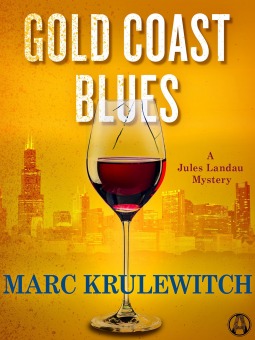
goldcoastblues“Tanya Maggio’s a missing person, and I got a feeling she’s missing on purpose.” This third entry of the Jules Landau series finds Landau searching for Eddie’s missing girlfriend. There’s a faded noir feeling in its pages as Landau bounces between Chicago and New Jersey trying to trace back the thread. Though confusing at times, a trifle overburdened by excess characters, it’s a fun, original story. Thank you once and thank you twice to Net Galley and Random House Alibi for the DRC. This title is available for purchase September 22.

The search for Tanya leads Landau to the mean streets of Irvington, New Jersey, where a crooked cop named Cooper explains that in their town, they don’t try stamp out crime…they manage it. So anyone that is hooked up to the criminal world is fair game; the idea, at least ostensibly, is that bystanders should not be caught in the crossfire.

Right.

Turns out the New Jersey people are running a scam. Those among the one percent that have more time and money than good sense invest in fine wine, wine that is worth hundreds of thousands of dollars for a case of a dozen bottles. Hey, its value appreciates, and some liken it to gold or silver. If a bottle gets busted, then that’s what insurance is for.

With a bizarre scenario such as this one, it’s only to be expected that someone would come up with the idea of counterfeiting labels and brewing up some fake stuff. After all, no one is going to drink it anyway, right? Who’s to know?

The plot twists, and it turns sometimes enough to confuse me. Hold up…are we in Illinois, or are we still in Jersey? But when push comes to shove, this romp is too enjoyable to walk away from. “That little shit Spike”, an heir to the Irvington mob, is one character that shines bright enough to keep those pages turning. Another, of course, is Landau’s ridiculous cat Punim, for whom he sits down to compose a legal trust fund when he is depressed and in danger. His own life may be on the line, but by god someone has to be paid to feed Punim his chicken hearts every day. And then there is Amy. Is she an enemy? A spy? She sure as hell isn’t really a psychic, but she knows enough that she has to be something. Maybe she has Tanya tied up in her closet. You never can tell.

The originality of the plot is assisted by Krulewitch’s affinity for figurative language. I loved his description of the “horror hotel” and the “stunningly verdant” house located on…wait for it…Bunnybrush Lane.

September is a good time to curl up under the quilts with a good book, or for those in warmer climes, it’s not too late to stretch out on the beach with one. Either way, if you need an escapist beach read, or a good noir mystery, this might be the book for you.

Soldier Girls: the Battles of Three Women at Home and at War, by Helen Thorpe*****

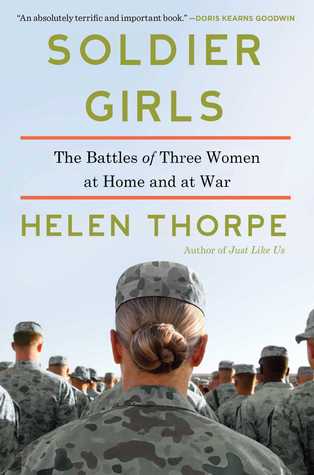
soldiergirlsNow that this title has created some buzz, I thought I’d reblog this!

seattlebookmama's avatarSeattle Book Mama

I was able to read this before its publication date, courtesy of NetGalley.com. Thanks, guys!

I am usually good for half a dozen books at a time, but I have to admit that this one story has dominated my reading hours for the past week or so. I had so many preconceptions (and yes, stereotypes) that I didn’t even realize I’d developed until I read about these brave souls who have gone to Afghanistan and in some cases, Iraq.

What kind of woman leaves the home she knows and signs up for the National Guard? Sometimes (often!) it is someone who needs money quick. Sometimes it’s a woman who is desperate to get out of her current living situation. And once in awhile, it is something done, at first, when one is dead drunk and out of control; the Guard will fix that quickly!

I’ve been a Marxist my whole…

View original post 115 more words