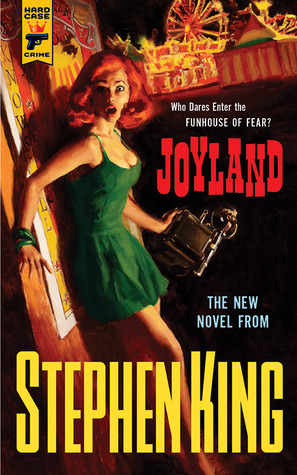
Joyland, by Stephen King *****

joylandHow many Stephen King stories have I read over the decades he’s been writing them? More than ten. A dozen books, maybe, or perhaps more; if we start counting single stories, then certainly more than twenty. And since he has become more sentimental as a writer as he’s grown older, I thought I knew what to expect from this one.
Mind you, I still wanted to read it; even had I guessed its contours, King tells a story with the humanity and every-day realness, despite his chosen genre, unlike anybody else, and so I would not want to miss it.

We have a young man who’s taking a summer job at an amusement park in North Carolina. And we have a past murder on one of its rides, its only “dark” ride. A young woman whose throat was sliced during a brief unlit interlude; she was cast over the side like someone’s leftover lunch sack, and found later.

I was pretty sure at some point all of the rides would come to life and do terrible things.

I was pretty sure the climax would occur on the dark ride, or the place where it was housed.

I was wrong on both counts.

Joyland was a quick read, and a deeply satisfying one. The teaser he wrote to sell his book promised I would consider mortality and be deeply moved, and I can’t say that occurred, but it surely left me thoughtful, as well as grateful that the master of the horror genre is still writing after all these years.

I was able to get a library copy, but would have purchased it if I had to; King is so reliably enjoyable.

If you love stories with supernatural elements and things that go bump in the dark, get this book and read it.

Don’t Sleep, There are Snakes: Life and Language in the Amazonian Jungle, by Daniel L. Everett *****

dontsleeptherearesnakesI read this shortly after it came out, and I’ve been going nuts trying to remember the title. Thank goodness for Google’s search engine! Don’t Sleep, There are Snakes is an amazing memoir that challenges assumptions under which most first-worlders have lived for a very long time.

Everett went to Brazil with his wife;they were Protestant missionaries, sent by their church to convert the Pirahas, an indigenous people who live deep inside the Amazon jungle, to Christ. They took a few tools and trinkets with them, which have been useful to missionaries–think of them as spiritual bribes–for generations. They traveled under tremendous physical hardship, experiencing terrible illness and threatened by deadly snakes and other jungle life, risking their necks for their cause.

Furthermore, they were tasked with deciphering the Piraha language so that the New Testament could be translated for the salvation of these Christless savages.

Instead, the opposite occurred.

First of all, the Pirahas didn’t want their stinking trinkets. Even items that Westerners regard as essential, such as knives and cooking pots, were only of temporary interest. When presented with these goodies, they would enjoy them, then abandon them. Because stuff doesn’t matter to the Pirahas, and when you’re a nomadic people, you need to travel light.

At first, Everett patiently tried to teach them to hang onto things so they’d have them when they needed them. He watched them go to a tremendous amount of effort to replicate a process that the knife, the cook pot could have shortened by hours, not to mention a reduced physical effort. But over the course of time, they let him know that it wasn’t that they didn’t understand him; they just didn’t agree.

And the greatest barrier to the conversion of the Pirahas to Christianity is this: they were already happy.

Eventually, Everett found himself questioning his own prayers. Why was he asking the Almighty to help him change these people, to obliterate their successful lifestyle–at least by the basic standard of personal fulfillment, as opposed to who has the greater technology–in order to become grasping materialists trying to keep up with the Joneses?

Ultimately, he came to a startling conclusion: the Pirahas were absolutely correct. His God was a myth. All the Pirahas needed was what they already had, and to be left alone, along with the environment in which they flourished. And this conclusion ultimately cost him his marriage, but he could not, would not retreat into the opiate of Christianity. Once he had a clue, he couldn’t lose it.

It’s a fascinating read.

Everett also develops a new understanding of how language is learned. My daughter, who is a passionate linguist herself, tells me that his discovery is flawed and has been discredited. I would not know. It sure sounded interesting to me.

The one thing I can guarantee is that if you have no religious drum to pound yourself, you’ll find the transformation that occurs here compelling.

Not recommended reading for serious Christians.

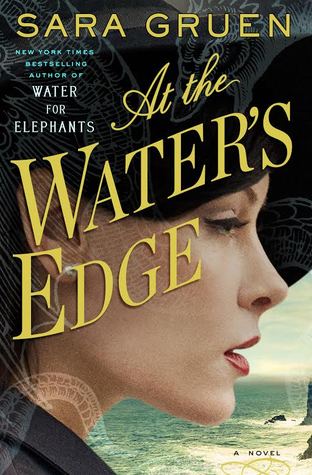
At the Water’s Edge, by Sara Gruen *****

bythewatersedgeBy the author of Water for Elephants comes a gripping tale of cowardice,deception, love, and heroism. My great thanks go to Net Galley and Random House for the DRC. It was a quick read and a great deal of fun.

The setting: World War II, primarily on a remote Scottish island. The story: three spoiled, wealthy, entitled brats misbehave publicly and are sent away by their chagrined parents. Since their allowance has been cut and they have to get gone anyway, they decide it might be just the thing to track down the Loch Ness Monster; not only will it be heaps of fun, but Father will be so pleased. He always wanted proof it existed! And what war? When one is wealthy enough, one cannot possibly be in danger! Just haul out the cash and start bribing others. Nothing to it, really!

Now we’re cooking. We’re on a remote Scottish island after endless seasickness aboard a ship that is constantly fired upon by u-boats. We have a crumbling castle; a Scottish warrior; a fainting damsel; a fiendish conspiracy; several working class heroes of both genders; a love story; and of course, there’s the loch! Get your gum boots ready; it’s soggy out there. Toss in a dash of magical realism, and we’re all set.

Gruen does a wonderful job developing Maddie Hyde, our protagonist, who receives more than one wake-up call whilst she is marooned on this island in the middle of a war that is now real and present. The treatment of husband Ellis and pal Hank is perfect; the writer is subtle, but not so subtle that we miss what’s happening. Angus is such a magnificent character that I found myself wondering what actor ought to play him when the movie comes out.

So I absolutely forbid you to regard this book as Water for Sea Monsters! No, no, no.

Gruen’s wonderful nugget will be released at the end of March 2015, just in time for spring break. If you’re going to be somewhere warm, it’s the perfect beach read. If you’ll be at home or in a cozy cabin watching the rain pound down, it’s the perfect curl-up-by-the-fire book.

Your reviewer isn’t usually fond of love stories, but for Sara Gruen, an exception will always be made. A must-read!

Wayfaring Stranger: A Novel, by James Lee Burke *****

wayfaringstrangerThis reviewer has long been in awe of James Lee Burke’s poetic lyricism and his ability to weave together complex story elements so that they segue together at the novel’s end in a miraculous yet entirely credible manner. At times the author hints at magical realism, but the buck always ends right on solid ground. I wouldn’t care to see it any other way.

This is his most recent release, but I didn’t receive an ARC for this; I got it for Christmas. It was perched at the top of my wish list, and rightly so. Take Burke’s capacity to spin great fiction—here it is a blend of historical and detective fiction—and add to it his absolute disillusionment with American capitalism, in particular with regard to oil companies, and with the cops who favor the elite and shaft the poor, and he’s talking my kind of talk.

The cherry on the sundae? This man is old enough to be your grandfather, most likely, yet he has labeled this book Weldon Holland #1. That’s right, it’s the beginning of a new series.

I love it.

Our story commences in the dust bowl, in the midst of a worldwide depression. Two badass youngsters named Bonnie and Clyde have shot up the South. Burke sends them across the Holland family property at the outset, but they disappear and the story continues. I was momentarily confused, because I had heard that this novel was about Bonnie and Clyde. Now that I’ve read it I can tell you honestly that it isn’t, but it is.

Weldon Holland grows up and fights during World War II; he rescues a starving woman from the rubble of a concentration camp, and he falls in love with her. They are married, and when he comes home, he brings her with him. It is a miracle that he makes it back alive, given the incompetent leadership of his platoon. And yet, that same arrogant, self-absorbed son of a bitch that nearly got him killed ends up funding the pipeline that Weldon and his war buddy and business partner, Hershel start up. Sometimes life bites you in the ass and comes back for seconds, and this is one such instance.

“When you live in a democracy, there are certain things you believe will never happen to you. Then a day comes when the blindfold is removed and you discover the harsh nature of life at the bottom of the food chain.”

Time and again, those with wealth and power find ways to insult and ignore people in whose footprints they are not fit to walk. When they do things that are morally wrong, they become inaccessible rather than own up to their misdeeds. When they absolutely must discuss these things, they take the passive voice. It’s the same one mass killers use to address their victims’ families in a court of law after their lawyer tells them that an apology may make a difference in their sentencing. They never say they did things; things happened.

And Bonnie and Clyde? What of those two angry young people that the sheriff never intended to even try to arrest rather than kill? How do they fit into this more contemporary tale?

I think the answer is that they become a metaphor of sorts; it’s entirely possible that their foolishness was just their way of “getting even for the rest of us.”

When I write reviews, I generally do so quickly and easily. It’s not usually a hard thing to do. Yet in this case, I’ve stewed about this book for three days since I finished reading it, and I am still not satisfied that I have done it justice.

I guess that’s the thing about magically realistic literature; it has to be read to be understood.

You just have to read it. Pay for the book. Pay for it in hard cover. You won’t be sorry.

Dog Songs: Poetry, by Mary Oliver ****

dogsongsWhat, me reading poetry? Not for a long time, actually, apart from this. Not since the 1990s. But this was a gift, and it was given to me by a family member who knows how much I love my own pooch, who has been through unimaginable drama. The pork chop theft and subsequent surgery; the car that hit him; the allergies; the arthritis.

And reader, don’t take my review too seriously, because when it comes to poets that write about nature and animals, I don’t have much discernment. I am an urban type, and my eyes glaze over when I read about the dew on the weeds, and yada yada. But the author blurb says Oliver won the Pulitzer for her poetry back in 1984. Go figure.

Had I known we would be describing dog “excrement” and comparing it to black pearls, I would not have read it with breakfast.

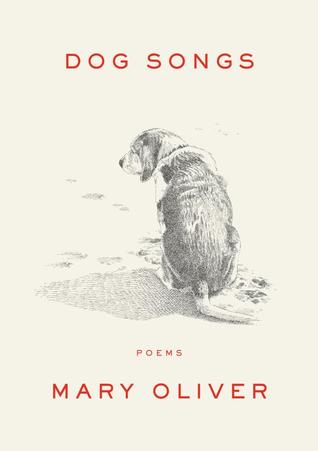
One poem really did speak to me though. I don’t know whether that makes it a good poem; after all, if you check to see what gets attention on YouTube, it’s all cats and dogs. The public is easily led in that direction, and I am one of them. But the poem that got to me was when Oliver described the way her little dog (and on the cover we just happen to have a beagle that looks a lot like mine, the subject of some of her writing) responded when she began planning a trip. She became so overwhelmingly convinced that the little fellow would be “sad, sad, sad” that she canceled the trip. And whereas I have never done that, I have come close any number of times. So for me, the poem was lovely because it reached a common point that I had previously thought must qualify me as ready for the rubber room. Who lets her dog dictate her travel plans?

I haven’t given you much to go on. In this particular case, the gift was spot on, but in ways that were more personal, perhaps, than had to do with the writing. The family member who gifted it to me had also been enormously helpful during our most recent dog-crisis, so it represented something that she and I had shared.

Unless you are very fond of poetry and pets, you may not want to spring full cover price for this one, but if the circumstances warrant, it’s a very nice thing to give someone who is much attached to their dog, or who is (dreadful thought, but it happens) grieving one.

I hope not to be among them for years to come!

Rhode Island Red, by Charlotte Carter *****

rhodeislandredNanette Hayes is a musician working the streets of New York. She doesn’t intend to become a sleuth, but when a Caucasian cop follows you home and is murdered in your front hallway, it’s hard not to get involved. And that’s only for starters! This savvy, sassy detective novel, the first in the series, will be released January 27, and you won’t want to miss it! My great thanks go to Net Galley and Open Road Media for the DRC.

I was initially drawn to this series by the cover, which is unusual in that it actually appears the artist knows what is in the book. I was looking for urban and gritty, and at first was taken aback when I got urbane and French instead. I have never been to France and don’t like jazz music, so most of the cultural references weren’t useful to my understanding of the character or her story.

But a good writer can pull in anybody from anywhere, just about, and that’s what happened here. Somewhere between the 20 and 30 percent mark, I felt the pace of the story quicken and deepen, and I was hooked. By the story’s last half, I was making notations so that I would not forget particular bits of linguistic and story-arc genius that showed as Carter’s tale unfolded.

Hayes is artistic, “self-involved, mercurial, emotionally unstable”, and she’s a chronic liar to boot, especially when speaking to her mother. But the tough stuff only runs so deep: her conscience, that smaller inner voice that she has named “Ernestine”, tells her to do the right thing, even when the reader is mentally screaming for her to go with naked self interest. Doing what seems to be right doesn’t always pay off, though, and before she knows it, everything has gone to the dogs.

As the bodies pile up, Carter uses a subtle, muted kind of House-That-Jack-Built method to build tension and focus the reader, repeating questions and issues and sometimes adding one more to what was there before. I have never seen it done quite this way, and it is fiendishly effective. Her use of figurative language is among the strongest in the genre, and all of this caused me to wonder why she was passed over for an Edgar the first time this was released. It must have been poor marketing, because the writing is certainly worthy.

This is about to be re-released January 27. If you enjoy a good mystery story, do yourself a favor and order a copy. Even if it costs you a good night’s sleep, you’ll be glad you did.

Pretty Ugly, by Kirkus Butler ****

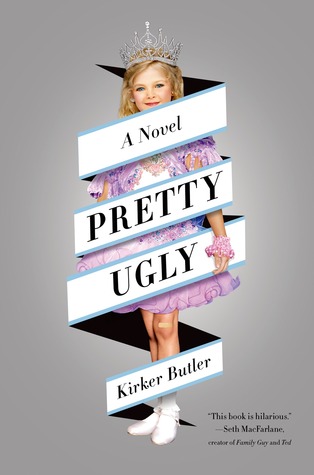
prettyuglyIt’s vulgar, utterly tasteless, and very, very funny. Pretty Ugly, by Kirker Butler, a man who is no stranger to edgy comedy, skewers a whole herd of sacred cows within the confines of its humble two covers. Just be ready!

Thank you and thank you again to St. Martins Press and Net Galley for the DRC.

The Millers are a good Christian family. Naturally, they would never send their children to public schools; instead, they are home-schooled by grandma Joan, who receives personal messages from Jesus, with whom she has a personal relationship. Papa Ray is never home; he works as a nurse, popping whatever narcotics and other prescription meds happen to be lying around, treating them as his own personal escapist lottery.

Miranda, now a mother, was once a beauty queen herself, and she’s made daughter Bailey into the family’s own teensy beauty queen industry. Hey, who doesn’t love a good kiddie pageant?

“Fifty scantily clad prepubescent girls scampered about like the main attraction in a Bangkok coffee shop: sexy children marketed as wholesome family entertainment. The room reeked of anxiety, tanner, and schadenfreude.”

Ray has found every conceivable way to avoid going home. He’s taken a second job as a hospice nurse, working five nights weekly, imbibing his patients’ pain medications and waiting for them to die so he can put another notch on his belt.

And now there’s Courtney.

This won’t be a novel to everyone’s taste, but if you lean slightly to the left and like your humor dark, Butler’s soon-to-be-released gem may be right up your alley!  Watch for it in bookstores at the end of March 2015.

Long Way Down, by Michael Sears ***-****

longwaydownMichael Sears’ Wall Street spy thriller is an interesting and enjoyable read; 3.5 stars. Thank you to Putnam Adult Books, Above the Treeline, and Edelweiss books for the ARC. This book will become available in early February.

Jason has gone to prison for insider trading, and now he’s out. In reading this first person narrative, I learned a few basics about the capitalist market system, including the definition of an insider trade. In years gone by, I always told my students that there was never going to be a time when they felt they had accidentally gained too many (legal) skills or learned too much, and so I took that advice, Marxist though I am, and looked on with interest.

That said, the protagonist was only mildly sympathetic to me. The development of the character via his child, a first grader with autism (specifically Asperger’s Syndrome) made him more real and more likable. The writer injected just enough of this aspect of his character’s life to help shape his character, without permitting it to become a diversion. I was also very grateful that he didn’t take the cheap-way-out many mystery and thriller writers take, in having a bad guy kidnap, scare, or hurt the child. When the time came that it could be a threat, our affluent business consultant took his son and the nanny and flew them to the tropics, out of harm’s way.

And yet this is where an obstacle presented itself. Because he went to jail with a tidy sum salted away in an off-shore bank, our protagonist has far more money than many of us will ever see, even over the course of our lifespans. I was distracted by the number of coats he destroyed and then threw away, gave away, or just left lying somewhere. Cars, wardrobes…one can understand how anyone would do such a thing if his life was on the line; there’s surely no coat I’d die for. But it came to a head for me when the narration whined about the flight to Washington D.C. being too long, even for those in first class. I weep for you, I wanted to respond. Try flying from the West Coast to DC on the red-eye flight. Fly coach. Stand in the sun for six hours waiting for your part of the human chain to start marching and chanting; then repeat the red-eye flight home, and then go to work. Don’t snivvle over the hardship faced by first class passengers. And for heaven’s sake, don’t tell me about how the first class passengers look down their noses at business class.

It was telling that on his many airline flights, our fancy man never even mentioned flying coach as an option.

The story line follows our protagonist as he seeks to defend the man he’s working for when the latter is suspected of murder. All sorts of chase scenes, internet hacking, ducking into doorways, hiding, chasing, and fighting abound. And I have to say it kept my attention. The writer’s environmental concern is well integrated into the character’s narrative most of the time, but there is a scene at the end where it feels as if a public service announcement has been interjected. You’ll know it when you hit it.

Would I read more of Sears’s work? I most likely would, if I could find it at the library or used bookstore. I think he falls into the category of second-tier writers on my wish list: I would prefer to read his work to that of an unknown writer’s, but I also wouldn’t pay full jacket price for his work, or put it on my Mother’s Day wish list.

For those who enjoy a fictional romp among those with money and privilege, though, this will be a surefire hit.

Alexander’s Bridge, by Willa Cather ****

alexandersbridgeYour reviewer is presently finishing up a couple of ARC’s; meanwhile, let’s look at a classic that has kept its appeal over the years. There’s nobody who writes like Willa Cather.

Alexander is an architect who designs bridges. Right now he has two problem bridges. One is in Canada. Stunning, innovative, and unusual, it draws a great deal of publicity. The problem is that it’s flawed. In fact, as he comes to realize with horror, it isn’t actually safe.

The other problem is his relationship bridge; he has two women, one of whom he is married to in the USA, the other in London. That great big pond isn’t quite large enough to keep the two sides of his life from banging into one another. He loves both and doesn’t want to lose either of them, but he is essentially a monogamous person, and he doesn’t feel so good. He’s cheating on his wife and she doesn’t know about it; he keeps meaning to end it with Hilda, but when he sees her, he can’t.

The whole thing is resolved in a manner both brilliant and unanticipated until it is upon us. A novella rather than a novel, but quite well done. I do love Cather’s work!

Lucy Stone: An Unapologetic Life, by Sally McMillen ****

lucystonealifeThis well-documented, balanced yet sympathetic biography serves to advocate for the inclusion of Lucy Stone among the statues of great Americans at the Capitol rotunda in Washington DC. Currently there is a suffragist statue that includes Stanton, Cady, and Mott. McMillen makes a strong case that Stone should be there as well.

Thank you to Oxford and Net Galley for the ARC. The book will be available at the end of January.

The history of the American feminist movement is a cause near and dear to this reviewer’s heart. I have studied it, taught it, and lived it. I have marched on that Capitol numerous times in defense of the right of women’s reproductive freedom, despite the fact that most of my life has been on the West Coast of the USA, and that is one long ride. And so, having recently veered out of my historical comfort zone, here I found myself right back in it. And most of the information in this book, while useful, is not new to me.

The reader should know that although there is extraneous material that ought to be edited out, it is all at the beginning of the book. If you are interested in the history of the suffrage movement and/or American feminist history in general, get a copy of this book, and don’t be discouraged by the initial ten percent. It does get better. It probably won’t change the statues in DC., but regardless, what McMillen imparts here is (for the last 90%)thorough, well documented, scholarly, and unflinching when less attractive issues arrive (such as the race-baiting, anti-immigrant speech-making, and the squabbling after the split in the organization occurred).

Stone was a remarkable woman, strong, charismatic, and imbued with many ideas that were well ahead of her time. Unlike most of the women who participated in and lead the women’s movement of the nineteenth century, her own origins were not petit bourgeois, or middle class. She was born into a farm family that struggled financially, and still she attended Oberlin College, the first in the nation to accept women and permit them to attend college with men. Her education was not a gift doled out from parental largesse; she taught school in order to pay her way. (Her father relented when she was a senior and paid for the last year).There were a number of restrictions on women there that seem ridiculous now and that Stone fought against and sometimes won. Her steely determination, keen intelligence, and personal magnetism led her to be the first woman to enter the then-popular public speaking circuit.

In these days before the American Civil War and after the Industrial Revolution, there was of course no media beyond the printed word. Many people were hungry for new information and ideas, but books were very expensive and newspapers, though plentiful, were often incorrect and for many, insufficient. (This paragraph is not in the book; this is me speaking.) So it isn’t really surprising that those who had the time and the means would turn up to hear speakers on important issues of the day.

Many were shocked, McMillen tells us, to hear that a woman, a single, unescorted woman, had taken this path. Stone was considered a radical, but her musical, sweet-sounding voice and her petite countenance, which she deliberately dressed in black silk and lace to take off the edge, took many off guard, and newspaper reviews were often quite favorable. Over the course of time she became famous. She proposed things suggested by no one else, such as the advantage of a woman’s remaining single so that she could keep her own money and property rather than to turn it all over to her husband, as the law required should she wed. Further, she suggested, the law ought to be changed so that such a choice need not be necessary.

Later she met Susan B Anthony, and the two were, for a time, close friends, addressing one another by their first names at a time when only the most intimate of acquaintances did so. And just as their political agreement formed the basis for what appeared to be an unshakeable friendship, so it would later cause a rift, not only personally, but in the movement itself.

For those interested in women’s history, American history, contemporary history, or Stone herself, consider this a must-read. Skim through the extraneous bits at the beginning and once the narrative truly takes wing, it will keep your attention.