Lou Gehrig: Pride of the Yankees, by Paul Gallico****

lougehrigThis baseball bio was written a long time ago and is now available digitally. Thank you to Net Galley and Open Road Integrated Media for allowing me an advance glimpse in exchange for my review.

Lou Gehrig, Iron Man”, the first baseman who served alongside Babe Ruth on the Yankees’ Murderers Row in the 1920’s, was the kind of athlete you don’t read about much these days. He was born so poor that he went through New York City winters without a coat to wear to school. His parents were German immigrants who had never heard of baseball; he himself was a hard working, clean living young man who dropped out of Columbia University to play ball because his father was sick and his parents needed the money. He kept a clean mouth, was faithful to his wife, and didn’t abuse the press or his fellow athletes. The terrible disease that would be named after him killed him before he hit forty.

The biography is unusually short, just 77 pages long. Ordinarily I don’t prefer to read anything that brief, but I’ve mowed through some baseball biographies in the past year already, and I decided 77 pages was as much as I was good for on this subject. However, this was well done enough that I would have been willing to keep reading had it gone longer.

Gallico, Gehrig’s biographer, is eloquent, using what would now be considered a prosy, old-fashioned style, sentimental, and deeply affectionate. He was a legendary sportswriter himself back in the day, but quit in order to write fiction; he is also the author of The Poseidon Adventure.

Recommended to those that love baseball, or just a good biography.

Black-Eyed Susans, by Julia Heaberlin ****

BlackEyedSusansTessa is the sole survivor of a group of young women who were left for dead in a mass grave, which was then planted with flowers. The Black-Eyed Susans became a metaphor for the trauma she experienced. This thriller, Heaberlin’s first following a highly respected career in journalism, is a great read with a few problems, most of which have to do with trying to cram too many details into a single novel. It was looking like 3.5 stars to me until it passed the halfway mark; then it hit its stride. Ultimately, the eloquent manner in which issues surrounding the death penalty were braided into the narrative won the final .5 star from this reviewer. And at this point, I have an obligation to tell you I read the book free, and to say thank you to Net Galley and Random House Ballantine for the DRC. The book will be available to the public August 11.

Tessa is an adult, a single parent, and it’s been twenty years since her abduction and attempted murder. There are memories she tries to bury, and there are other niggling details that she can’t make sense of. In a writing style somewhat reminiscent of Jodi Picoult, Heaberlin flashes us back and forth from Tessa’s adolescent memories to the present, a life in which her sole objective at first is to protect her own teenage daughter, Charlie, whom she is afraid may pay the ultimate price. Because Tessa’s stalker has been planting Black-Eyed Susans in her yard and various other places, and she is scared half to death.
Strange, threatening packages appear in the mail. And her best friend Lydia disappeared mysteriously not long after the trial. There are so many shadows, so many possible threats out there that her inclination is to retreat into her artist’s studio, and into her home. Don’t rock the boat.

The problem is that an innocent man is about to become one more victim of Texas’s capital punishment. Her supposed attacker, the supposed killer of the other Susans, waits on death row…and the clock is ticking. She knows he didn’t do it, and she’s been holding out. Once she decides to testify to his innocence, will she be believed? Can she get there in time?

A tremendous amount of research went into teenage trauma and its possible affects, and the capital punishment process (and the process of its defense) in Texas. Heaberlin has done her homework; if anything, she may have done a little too much, or tried to incorporate too much of her work into one novel. Somewhere around the 37 percent mark, I found myself not mystified, but confused. What were all these references to the OJ Simpson trial doing here? Who the hell is Jo? Is Lydia dead, moved away, or what? The suspense fell away while I stopped reading in irritation to go back over the book and try to discern what I had missed or forgotten.

However, just before the halfway mark, the author found her stride and everything came together. From that point till ninety percent, I was riveted. Portions of the text approached the level of literary fiction. I found myself questioning my earlier complaints, and went back and reread the passages I had marked earlier to see whether I had just been distracted, or in a snarky frame of mind. But no, the inconsistency is really there.

The supernatural bits about the other Susans being in her head, talking beyond the grave, may have turned up in the author’s research as a possible outcome of trauma, but they felt extraneous to me, as if they had been shoe-horned into the text. If I had been her editor, I would have cut them.

I was not entirely happy with the ending, which felt a bit contrived, but I was so deeply satisfied by what I had read up to that point that I didn’t feel let down.

My advice to the reader is this: if you are opposed to the death penalty and love a good thriller, get a copy of this novel. I think you’ll find it as satisfying as I did. You may want to flag pages where you have questions with sticky notes, or mark it digitally if you read it that way; later on it will all make sense.

And whatever you do, remember: there are no millionaires on death row. Not in Texas, and not in any other state that has capital punishment in the USA.

God Help the Child, by Toni Morrison *****

godhelpthechildI’d been looking forward to reading this book, and I’d been dreading it. The fact that Morrison is such an outstanding writer makes the pain in her prose more tangible than most. One doesn’t feel the pain of a character; one feels the pain of a friend. And so even though I have three of her books I haven’t read yet sitting on my to-read stack, challenging me as if to ask why I had skipped them so many times when it was their turn, I still asked for this hot-off-the-presses title for Mother’s Day. When I opened it, my son (the eldest, the one who worries about me now and then) said gently, “So Mom…you know…have you read Toni Morrison? Because…” And I told him I had, and I knew, and that I would also read something light or funny during the time I read this one, to break up the horror.

Going into it with that level of caution, not unlike going out to pick flowers when I was seven, wanting the heavenly fragrance of the posies that grew in our California yard but not wanting to encounter the rattlesnakes that sometimes lay coiled in their vines, I was actually pleasantly surprised. Because although there is certainly plenty of pain to go around, our protagonist advocates for herself; she takes charge. I came away feeling as if there was more that was good in the world, and in people, than bad.

And when we go to the contest for best first lines, hers should be a contender, particularly when one considers context: “It‘s not my fault.” Lula Ann’s mother was horrified at the very sight of her newborn: “Midnight black, Sudanese black.” She and her husband were both light-skinned people, “What we call high yellow”.

“You should have seen my grandmother; she passed for white and never said another word to any of her children.”

It’s all there on that first page: betrayal, betrayal, betrayal, and in the case of Lula Ann’s parentage, betrayal suspected (by her father) and denied (by her mother) and a marriage undone.

I think of my own family; when I was born, everyone in my family, and all of the photographs carefully lined up of those that had gone before, were of the super-pale variety found on the British Isles and in Northern Europe. Turn us loose in the sun for twenty minutes without sunscreen and we look like a family of lobsters.

And yet, over the generations, we have chosen to marry and procreate with people of color. Then, since there were already Black and Asian children in the family, the family members that could not have children adopted two children, the first one white, the second Black. At family parties, the Black relatives all congregate for part of the festivities, then move out to rejoin the rest of us.

And I know it’s not at all the same as for Morrison’s fictional family, because Lula Ann’s parents didn’t have the choice to be all white, or to bring people of color into the family. My generation and the Caucasian members of subsequent generations have had the power to choose who would be in their immediate family; of course, our Black and Asian relatives also had a choice of who to marry, but they also had less power socially and economically, so again: not the same thing. They have none of the history, none of the rage that is inherent of being a son or daughter of a grandson or granddaughter of slaves.

Lula Ann is instructed to call her mother “Sweetness”. There’s deniability there. Her mother doesn’t want people to think…to think something is wrong.

She grows up, ironically, to become a model who is prized for her dark skin. She turns it into a brand, with help from a friend, and wears only white, using the name “Bride”. White clothing day in, day out, to emphasize her darkness. She owns a cosmetic brand but wears no cosmetics. She needs to appear pure in order to carry it off.

She has a man, until he finds out the secret that is buried in her past. Actually, he doesn’t know the whole thing, and that’s where the trouble begins.

Literary fiction often carries power and authority that nonfiction can’t convey, and so it is with God Help the Child. I suspect professors that teach African-American Studies are putting it on their required reading list, and that’s a great thing, because there is so much to think about packed into this slender volume.

If you don’t have this book, get it and read it. If you don’t have the money, go to your local library and put yourself on the waiting list. And if it is assigned to you to read for a class, please, please, don’t buy a paper to get out of reading it (and don’t copy this blog post and turn it in as if it were your own). Don’t read the Cliff Notes. Read the book. It is both accessible and potent. It may be the most important book you read all year, and you won’t forget it.

The Sunken Cathedral, by Kate Walbert ***

thesunkencathedralMy three stars here are a compromise. Try as I did, I could not enjoy this novel, but it is marketed more toward New Yorkers than others, and although I like a good urban setting and have enjoyed New York, have friends and family from there, I don’t live there and never have. Also, the plot is oriented toward the art world—Marie and Simone are senior citizens studying art, and there are a lot of references to art that went right past me. So if you are a New Yorker interested in both the history of Manhattan and art history, then this might be your book. And thank you once more to Net Galley and Scribner for permitting me to access a galley in advance for the purposes of review.

Some writers have a taut, urgent writing style that leaves their readers perched, sometimes literally, on the edges of their seats. Some have a sumptuous, painterly style that takes its time, and one should sink back into a soft place by the fire or in summer, perhaps on the beach, and prepare to drink it all in. Walbert uses the latter style, and I wanted to sink back, wanted to drink it all in, but for me, the description was the whole thing. I found myself bogged down with description that did not appear to serve much plot, and it never felt as if it was moving forward. There was a lot of inner dialogue, remembrance, but so very little actually seemed to happen. I have never found myself dissatisfied for this particular reason, and so I thought surely it must be me. I went back and started it over three times, and in the end, I came away frustrated. The over-long footnotes (in fiction?) were a distraction, and the style, in the end, felt pretentious.

But then again, remember that I know almost nothing about art. I know of a couple dozen famous paintings, and I thought I would like this story because I loved The Goldfinch, whose most critical scene is set in an art museum. And maybe that was my own problem as well: trying to follow a Pulitzer winner like The Goldfinch is indeed a heavy burden. I came away from reading that book and Toni Morrison, so perhaps my expectations were a trifle high. But I can’t honestly say I liked this book.

If you are a New Yorker, especially an older one, and if you lean toward the art world, you may enjoy this novel, by an award-winning writer. It has just been released, so if you would like to order it, you can do that now.

World War Moo, by Michael Logan****

“Where there’s war, there’s udder destruction.” Michael Logan’s new release, World War Moo, is the sequel to Apocalypse Cow. Mix the zombie apocalypse with mad cow disease, toss in some technology, then ask the spirits of Terry Pratchett and Monty Python to hop into the cauldron. What follows is a deeply mooooving story that is bound to amuse. Many thanks go to Net Galley and St. Martin’s Press for allowing me a glimpse in advance.

worldwarmooHow does one contain the deadly infection that has taken over the British Isles, and why are some people inexplicably immune to it? The world appears to have gone stark raving mad, or at least, part of it has. Trade among nations has been obliterated, and famine is rampant. Inflation is out of control, and when you find yourself spending a thousand pounds for a rat kebab, it’s pretty clear that simply surviving ought to be the order of the day.

Not so for young Geldof. His Grandfather Carstairs, the evil genius who twiddles his moustache to prove his inner nature, has appeared and told him that his mother is alive and in danger. Fanny must be rescued from Britain before the bombs fall; there’s even talk of dropping neutron bombs. Grandfather Carstairs has come to help Geldof, not because of any depth of affection, but because he needs an heir to take over his evil empire. He has to find out whether Geldof is “man enough” to do the job.

In addition to being entertained, I greatly appreciated Logan’s metaphorical explanation of the difference between male and female brains. In fact, much of the book is composed of hilarious metaphors and similes. English teachers’ paradise meets the zombie cow apocalypse: the stuff of which dreams are made.

This absurd story, second in its series, was released yesterday. Better get going before they’re all gone!

Monica’s Sister, by Earl Emerson *****

monicassisterAh, it’s good to be reading a Thomas Black story again. Black is back with his lovely wife, Kathy, a good-hearted woman who makes some interesting friends. One of them is Angela Bassman, a woman who shows up all the time like a bad penny, making ridiculous charges against anyone and everyone, and bragging about having so many friends in high places, having done such fantastic things, that one is left rolling one’s eyes. And so when Thomas hears Angela’s voice approaching his office, he does what any thinking human being would do: he leaps into the closet and shuts the door. Anything to avoid that woman!

The wheels of the story start moving, and things get more complicated. Angela, whose famous sister is the actress, Monica Pennington, hires Black to help her with what is supposed to be a simple task, but isn’t. He would like to back out, but he smells a rat. Despite the crazy nature of Angela’s claims, she is obviously being followed by someone. Strange things happen, and too many coincidences occur. Whether Angela is crazy or whether she isn’t, his detective’s intuition starts to quiver, and he becomes more entangled in her affairs than he had anticipated, especially when she falls to her death, and he sees it happen. Later, Pennington hires Black to find out why Angela killed herself. Because of course, that’s what happened…isn’t it?

Emerson, a Shamus winning author who sets his stories here in the misty Pacific Northwest, usually right here in Seattle, is one fine writer. Hundreds of interesting, free galleys come my way in a given year, but I wanted to read his story badly enough to put it on my wish list, and luckily, my spouse snapped it up and gave it to me for Mother’s Day. What a fantastic gift!

The overall tenor of the story begins as gut-bustingly funny, and then gradually darkens and becomes more suspenseful. By the story’s end, I was literally (yes, I do mean literally) sitting on the edge of my seat, putting off the family members that wanted my attention with a robotic “…just a sec. Just a sec. Yeah I know. Give me just a minute.”

Emerson also uses the occasion to talk a little bit about bipolar disorder, and the ways it can turn a person’s life upside down, but he does it in a way that prevents the book’s pace from hitching. It’s masterfully done!

If you like strong detective fiction, or fiction set in the Pacific Northwest, or both, you just can’t do any better than this book. Seriously recommended for just about everyone.

Among the Ten Thousand Things, by Julia Pierpont *****

amongthetenthousandJack is an artist living in New York City. Sometimes he sleeps in the apartment where he lives with his family. Sometimes he sleeps in his studio, when his work is really going strong. Just as sometimes he sleeps with his wife, whereas sometimes, he sleeps with whoever. This story is about the fallout that occurs when one of the random women he has taken up with, then discarded comes back with a vengeance, and though she intends to punish Jack through his wife, instead she ends up punishing him and his wife through their children, who are the unhappy recipients of the series of randy e-mails the woman he’s just jettisoned prints up and delivers to his building. My god, my god. And before I go farther, let me say thank you to Net Galley and Random House for allowing me a sneak peek. This book will be published next month.

Jack and his latest-fling have been prolific writers, it seems. It takes a large, somewhat weighty box to hold all the hideous missives that have passed between the two of them. And though it’s a rotten thing he’s done to his wife Deb, it slips out early on that she has married him only after dating him while he was married to someone else. Hey, what goes around, comes around.

Unfortunately, Jack is sufficiently garrulous enough with his recent conquest that he shares his children’s names with her, and when eleven year old Kay accepts the box to take upstairs, she is thinking that it is nearly her birthday, and perhaps what is inside is a gift that she can’t wait two weeks to know about. And then one of the papers on top of the pile has her name on it. It isn’t underlined, nor in bold or colored ink, but one’s name tends to jump out at one. And so the steamy sex talk she is way too young to see in any context whatsoever is accompanied by the sentence, “I know about Kay.”

It’s almost enough to permanently traumatize a kid. Well, maybe we can forget that “almost”.

The events are so horrible that any sensible reader would turn away rather than face what comes next, but Pierpont has a fresh, immediate writing style that pulls one in, almost to the extent that we care about those kids as if they were our own. We keep reading because we have to know what happens to them.

Several times I grew angry enough with Jack that I found myself senselessly typing angry retorts into my kindle comments. Nobody sees that stuff but me, but typing seemed better than waking my spouse to inveigh against this self-absorbed asshole, this swine who has the nerve at first to blame Kay for reading mail not meant for her eyes. Oh please!

And when Deb equivocates, I want to smack her, too. Sure, I know I said that what goes around comes around, but once you have children, the whole equation is altered, and you have to act immediately on their behalf. She feels a little sorry for Jack at first, at the alienation his children display toward him, and I just want to shake her. Don’t feel bad for him, the pig! Feel bad for your kids! Hello?

The kids are really what the book is all about, what makes it worth reading. They aren’t little big-eyed Holly Hobbie dolls, but both innocent and insolent, naughty and adorable, disturbed, devastated, and resilient as well. They flounder; they struggle. And when the story ends, the spell isn’t really broken until one accepts that they are fictional, because believe me, the whole thing feels so very real.

Pierpont is a damn good writer. She will be a force to be reckoned with in the literary world, a writer to watch. I can’t wait to read whatever is next!
As for you, you should get this novel when it comes out July 7. Maybe you should even reserve yourself a copy. What a fascinating book, by a strong new author.

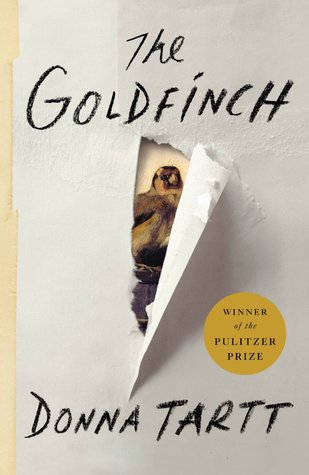
The Goldfinch, by Donna Tartt *****

thegoldfinchI didn’t want to read this book. I resisted it until it had the Pulitzer; then I caved. And once begun, Tartt’s spellbinding tale owned me until I had turned the final page.

The story begins in an art gallery, which explodes in a manner reminiscent of 9/11. It kills many people, including Theodore Decker’s mother.

I don’t like art galleries. I don’t blow them up; of course not. But they bore me unbearably. I avoid them, and I avoid books that are set there.

Theo hasn’t seen his father in nearly a year; for a long time, it had pretty much been his mother and him against Dad, who came and went at irregular times, drank way too much, and was bad tempered. When he left, they were relieved. He never paid a dime of child support, didn’t even leave a forwarding address. Theo’s short, bad memory of Dad’s parents tells us they would make even worse guardians, and his mother’s folks are dead. With whom, then, will he live?

The teacher in me engaged fully when the process of dealing with Theo’s loss and custody issues commenced. Every counselor, teacher, and government bureaucrat wants him to confide in them about his feelings, his grief. Talking about it is supposed to make him feel better. But it’s a hot-stove topic for Theo, and they go about it all wrong, face to face, brightly lit rooms with fluorescent lights, and in one horrific case, an entire panel of earnest professionals at a big board-meeting table waiting to grill this one, introverted, shy child.

His one hope at first is that the Barbour family will take him in. He’s been skipped a grade in school, and Andy Barbour is his one friend. Together they braved the hazing by resentful older students. The Barbours live quite well, in opulent yet tasteful surroundings. Theo walks on eggshells, avoiding becoming an imposition. It’s awkward; when he needs lunch money or a bandaid, he feels funny asking. But gradually, a consensus seems to emerge; he is good for Andy, and Andy is his mother’s favorite. And just as they are ready to set the lawyers and bureaucratic adoption wheels in motion…Theo’s rotten, irresponsible father turns up to claim him. And there is nothing that Theo or the Barbours can do about it.

By the way, I also don’t read books about affluent people. I like regular folks, people who work hard for shelter, food, and other essentials, and a few simple pleasures. And so this book reminded me that for every rule, there is an exception. I don’t read about art galleries or art, and I don’t read about the rich, but I would be much poorer had I not read this book.

Now, back to Theodore Decker.

Theo has never been out of New York City for more than 8 days, but now he is going to Vegas. He watches horrified as his apartment home, once so secure and comforting, is taken apart, thrown into boxes…and his father takes his girlfriend into his mother’s bedroom, where he hears them rustling through her clothes, the girlfriend giggling over his late mother’s effects. The horror!

Ultimately, Theo’s greatest source of consolation, apart from the Barbours, is a furniture restorer. One of the victims of the bombing asked him to take something there with his last dying breath. And in learning to restore furniture, Theo learns to restore himself. There is a fair amount of philosophical musing toward the end of the book, but by then we care so deeply about Theo that we listen carefully. And whereas some of the somewhat nihilistic ponderings went against my grain, I read every word, because I wanted to know what Theo thought.

My favorite character in this massive, painterly tome is Boris. Boris becomes Theo’s friend in Vegas, where both of them live the lives of feral children, sometimes having to steal food, and taking terrifying risks of all sorts. Boris is fearless, and 99 percent of the time he is loyal. They are nearly killed together multiple times, but Boris pops up again, time time time and again, to stand by his comrade once more.

Those that don’t care for literary fiction won’t like this story. The descriptions were so well done that I sometimes found myself forgetting to breathe. It doesn’t happen a lot, and I read a great deal, but it happened constantly as I read this book. If instead you prefer action, action, action—a book that thinks it’s a video game, perhaps?—then leave The Goldfinch on the shelf for someone else.

I got my copy at the library, but I may buy a nice hardcover copy for my daughter at Christmas. It should be in every library, at least among those that love literature.

To sum up: simply brilliant.

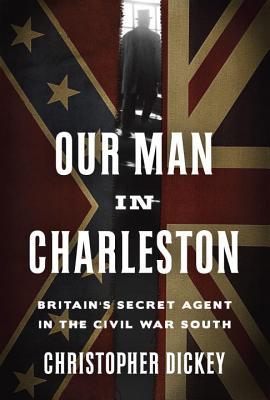
Our Man in Charleston, by Christopher Dickey *****

OurmanincharlestonThis is the most fascinating book I’ve read in a long time! Equal parts biography and American Civil War nonfiction, it details the experiences of Britain’s foremost spy, Robert Bunch, who was living in Charleston, South Carolina when the Civil War began and for its duration. I am truly grateful to Crown Publishers and Net Galley for permitting me to read the DRC in advance. And perhaps it is just as well, in a way, that my kindle fell in the potty when I was done and with it went hundreds (genuinely) of notations that I made as I wended my way through it; I had procrastinated writing this review because there was so much I wanted to say. Too much, in fact! Sometimes I have to remind myself I am writing a review for would-be readers who might want to discover a few things on their own. Part of my writing mind is still wired in the direction of academic analysis, which is too ponderous for most readers to slog through, and not really necessary for our purposes.

I was riveted almost from the get-go. At first I had the bizarre notion that a British view of the Southern Rebellion would be objective. If I’d thought harder, I would have realized that isn’t true; Britain had a tremendous amount of interest in the outcome of this fight. But its interest was completely different from either the Union’s or that of the Confederacy. There were a couple of horrifying instances in which it might have chosen to recognize the Confederacy, but those moments quickly passed.

Even before war broke out, tension had been quietly mounting over the treatment of British seamen that landed in Charleston. On one occasion a single Black sailor had instigated a relatively small uprising on a plantation, and this act—the most fearful nightmare of the Southern ruling class, self-styled aristocrats who lived as a tiny minority among an enormous number of Black laborers who had every reason to hate them—gave birth to the Negro Seaman Act. The law stipulated that any Black sailors from another country that worked on board a ship that docked in Charleston, must be kept in jail until it was time to leave again. This was the stuff of which international incidents were born. Britain would attempt to solve the problem through Washington, D.C., only to find that Charleston had already begun to flout Federal law and that the nation’s promises were not kept. Eventually, a quiet negotiation began with Charleston authorities. When they continued to behave badly, Britain had little recourse, since it did not want it known in Washington that they had been dealing with the government of South Carolina as if it were sovereign. This probably also fed the delusions of Southern grandeur and may have encouraged them to believe they did not need the national government at all.

Robert Bunch was originally stationed in the north, but found himself in Charleston more and more often. His habit, as Britain’s agent, had been to head north during the unbearably humid, tropical summers of the deep South, but as events polarized the nation and northerners were no longer welcome, his own position became more and more tenuous. His job was to send reports to Britain, but whenever he went in public, as he had to do a great deal in order to pick up information, he was questioned increasingly closely about Britain’s view of the Confederacy. Which side would Britain take? Was he a spy? (Gracious, no!) Maybe, were he on the side of the Union, he should be locked up! (Please, please no!) He would have preferred, at one point, to go north and stay there, but his orders were to stay put, so that’s what he did.

In order to maintain his role and save his own neck, his behavior became increasingly misleading. The dispatches he sent to England were so adamantly opposed to recognition of the Confederacy that he was reproached a time or two for trying to make policy when his job was simply to provide information. However, when he was asked by local folk whether surely, Britain would soon recognize the Confederacy, and wouldn’t he encourage this, he gave misleading smiles, made ambiguous remarks, and agreed that of course he would be happy to slip the British nanny’s letter home in his diplomatic pouch so that it could reach the U.S. mail from which they were otherwise cut off.

He became so convincing in his subterfuge that at one point, he was nearly brought up on charges of treason against Britain. U.S. Secretary of State Seward, a difficult, punctilious man, had a number of bones to pick with Britain, and at one point tried to foment war with them, convinced that if it broke out, the South would drop their ridiculous posturing and rush to defend the red, white and blue. Lincoln felt differently, however, and made it clear to Seward and to Britain that he was only interested in fighting one war at a time. To save face, Seward latched onto Bunch’s dismissal as the single demand he would press. Surely, in order to avoid international tension, Britain wouldn’t mind hanging one of their lowly agents out to dry? Send the boy home and there’s an end to it. Get him gone.

Lord Palmerston, a man with power disproportionate to most in his position, had eclectic tendencies, and was having no part of firing Bunch. He liked the guy, and wasn’t really interested in being shoved around by the former colonies of Britain. If the US of A had to have its capitol torched a second time to get the point as to whose navy was better? Fine. Hopefully not, but Bunch was staying. And that is how it was.

There are two things that popped out at me in reading this compelling work. My vantage point, for those who haven’t read my reviews before, is that of a former history teacher. It was my job to teach teenagers about the American Civil War, or as much as teens can learn in ten weeks at one hour a go. It was by far my favorite quarter of the school year, but I was so overwhelmed with work and meetings that I didn’t have a lot of time to read in my field. I could use my six weeks off in the summer to read whatever I chose, if I wanted to, and that was about it. So although I could have used this information back then, it is nevertheless satisfying to have one nagging question answered, however belatedly.

My question, and my students’ question sometimes, was if Europe was able to rid itself of slavery by the government’s buying slaves from slave owners, why didn’t that work in the USA? And the only response I had—one provided by reading James McPherson and a Marxist historian named George Novack—was that they refused. They just wouldn’t do it.

But why? Surely it was obvious they were living in a feudal economy that the rest of the industrializing nations had abandoned. Surely they had to know they could not freeze history. Why cling to it beyond all reason?

Questions related to war are always rooted in economics, and so to simply say they were irrational, which is more or less my answer apart from I-don’t-know, felt incomplete. A number of other historians gave that reason, but it felt like a puzzle piece forced into the wrong hole. And Dickey provided me with the missing piece. Although I had read vague things about speculation in slaves and that uniquely American, horrific practice, slave breeding, which brought us international shame before all was said and done, I didn’t recognize the link between speculation and the tiny handful of wealthy plantation owners that made the choice to go to war rather than let it go.

Those that have followed the financial news in the USA and many other nations over the past decade are aware that a lot of home owners are losing their houses when they can’t pay mortgages, especially balloon mortgages, and more dreadful still is the fact that they are “under water”, meaning that after the bank takes the house back, or it is sold, they will still owe payments on it. They’ve borrowed more against it than it is worth, and only bankruptcy will solve their problem. When they lose that house, they lose everything.

And so it was with a large number of plantation owners. They had borrowed against their slaves. That was where their equity was: in human capital. If they allowed the government to buy their slaves at their current market value, they would become bankrupt, and having gained their social standing on nothing more than wealth and pale pigmentation, they would be ruined socially and financially. As long as there was any other choice, they would take it. They would send their own sons to die for it, though generally they chose to pay someone else to go in their own places.

They were underwater.

Britain’s perspective at the outset was that if one side had slaves and the other did not, then of course they would not recognize the upstart nation. When the border states were permitted to keep their slaves, it was still considered wiser to back the winning horse in any race, and so unless it appeared the Confederacy was about to win the war and gain international status as an independent nation anyway, there was nothing to be gained by antagonizing Lincoln’s administration.

I had wondered, in past years, whether Britain might not have yearned for the South to become independent. If one looks at a map of the USA as it was then, and the size of British possession of Canada, if it also dominated the Southern USA economically, and if it had a navy in the Atlantic that could pound the coastline, could it not overturn the American revolution? That slice of the Union is small compared to Canada, when the Confederate states are added in like the bottom bun of a hamburger. How delicious!

Not so, says Dickey. Britain had other fish to fry. It had been absorbed in fighting the Crimean War, and at the time, events in Europe were considered vastly more important than our own emerging outpost. It might be nice to have, but they didn’t need it badly enough to weigh in with the slaveocracy. The South had been so smugly sure that Britain needed their cotton for its mills, but in fact, they had planned well against such an eventuality, and had over a year’s worth of cotton socked away in storage. To the impertinent Southern men and women that sashayed up to their representatives to announce that Britain would simply have to recognize them, the response was generally somewhat courteous, muted, non-committal. If pressed, they suggested that cotton could indeed be grown in India. No worries.

And here I am three pages later according to Microsoft, and I have really only skimmed the surface. Think if I’d had my notes available! Believe me when I say I have just scratched the surface. I had so many delicious quotes, and now you’ll have to go ferret them out for yourself!

This magnificent book comes out July 21, 2015. For once I can tell you that whether or not you are conversant with the finer details of the American Civil War, you will be able to read this with no trouble. A knowledge of the broad contours of the war will make it more satisfying, but not strictly necessary. Those who enjoy history in general, or biographies in general, will likewise find it a must-read.

You have to get this book!

Rock of Ages, by Howard Owen ****

rockofagesRock of Ages, an intriguing novel by Howard Owen originally published in 2007, isn’t merely a mystery, but engaging fiction. I enjoyed everything except one small but noticeable problem near the end. Giant thanks to Net Galley and Open Road Integrated Media for allowing me a glimpse of the digital version in advance. It becomes available for purchase June 9.

Georgia is a respected professor for whom menopause and mounting personal losses—the death of her husband comes at almost the same time her aunt dies, and her parents are both gone—become so distracting that she abruptly takes a leave of absence. She has seen her father’s ghost sitting in the back of her classroom.

She takes time off and heads for the small town in North Carolina where her aunt had lived. When she arrives, her son Justin is there with his girlfriend, Leeza, who is pregnant.

The first half of the book is where the writer is at his best. The villain, “Pooh” Blackwell, is artfully portrayed. Georgia’s former teacher, Forsythia Crumpler, was also really well spun. I found myself talking to Georgia, making notes in my kindle asking her just what the heck she is doing, talking to her son and his honey that way. Does she want to be forever estranged?

Georgia’s misbehaviors are subtle enough at first that the reader is left wondering whether this is the author’s idea of appropriate parental behavior, or whether he is deliberately drawing a difficult protagonist. Turns out it’s the latter, and the way he develops her as the story progresses is terrific, at least until near the story’s conclusion.

So now let’s talk about the rape. What on earth makes the writer think that a woman of 52 years who has been through a good deal of trauma in her life, will think rape is not a very big deal? When she was “younger, a little more precious and fragile”, it would have been much worse.

Say what?

If the protagonist’s mental narrative had only said she was glad to be alive, I could roll with that, but he adds just enough other considerations to make me want to throw the book across the room. I speak as a woman that has never been sexually assaulted, but like most people, I know women that have. And research actually indicates that the more trauma one has been through after age 30, the harder one grieves, because all of the other losses are relived along with the new, fresh loss. Until this point, I had bonded to Georgia’s character, and she was practically tangible to me. When she began reflecting about the rape, the spell was broken and it was just the product of some clueless male’s bizarre imagination. It’s probably a bad idea for anyone to try to quantify a rape or decide where it falls on the progression of a character’s negative experiences, and all the moreso for a man to decide about a female character. One star fell off and this tirade jumped into my review. So there you have it.

The ending is otherwise not terribly imaginative, but also veers away from the trite, pat ending I thought I saw coming. Sadly, by that point I was too irritated to enjoy it.

The novel is billed as a mystery, and it surely includes two of them. We wonder about the ghost; it has made another appearance at the Rock of Ages, which is locally known to be haunted. We also wonder whether Pooh Blackwell killed Aunt Jenny for the deed to her house, or whether she drowned accidentally. But really, the main story here is Georgia’s inner struggle. The mystery takes a back seat, and it works well that way, apart from my earlier qualification.

The prequel to this story won acclaim, and I would love to read it if I can find a copy.

The series will be one to watch. Perhaps Owen will write Justin in as his next protagonist, and if so, I would love to read it.

Interesting work from an award-winning writer.