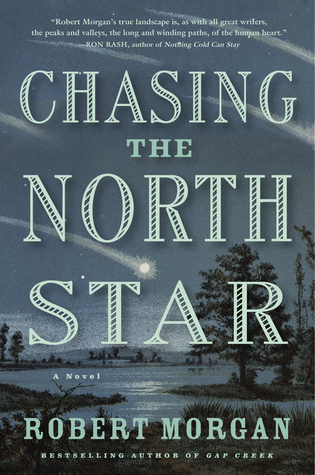
Chasing the North Star, by Robert Morgan****

chasingthenorthstarChasing the North Star is a compelling narrative of two teenagers escaped from slavery on their flight toward the North. Thank you to Net Galley and Algonquin Books for the DRC, which I received in exchange for an honest review. This book becomes available to the public April 5, 2016.

Morgan begins with the story of Jonah, a man who leaves the horrific plantation on which he has been kept. His story is told in the third person omniscient, and so there is virtually no dialogue for a long time. I waited to see how well it would hold up; it isn’t easy to keep a reader’s attention for long passages in which everything is told within a narrative, and even more so when it is told in the third person, as opposed to first person, where the character himself tells us the story. And because the narrative combined strong character development, near-tangible setting, and a series of brilliant moves to elude pursuers, I found that my attention was held quite well.

The book is in fact both accessible and a surprisingly quick read.

Part of the way into the story, Angel, our second protagonist, joins Jonah, and she tells us her own story through the first person. I found this device—of switching from third person for Jonah’s story to first person when telling Angel’s—both unusual and congenial. We watch him and cheer for him, but then she talks to us and just lays it all out. And Angel is nobody’s helpless damsel. She tells us up front that it’s a good thing for Jonah that she loves him, because he is going to need her to save his butt, and she does so more than once.

The sparseness of the dialogue makes sense when one thinks about it. Two escaped slaves that do nothing but talk, talk, talk all the way north are going to be caught in a hot minute. The writer takes an intelligent risk in using so much narrative and so little dialogue, and it pays off.

Stories involving slavery are often really painful for African-American readers to mow through, because they recall a time that was so demeaning, not only a physical horror but one that assaulted their dignity. The “N” word appears here, but is used sparingly considering the time in which it is set, and the topic. I appreciated the autonomy with which Jonah and Angel operate. Too many stories of freedom from bondage feature white saviors more prominently than are appropriate.

In fact, my sole criticism of this story is that it does not portray the extent to which the Underground Railroad was run by free Black men and women in the north; but then, this isn’t a story of organized escape, but an independent one, and it is possible that the region in which our characters travel was different in that respect.

Those that love good historical fiction should read this book. Morgan has done a fine job with a difficult topic, and the story is one of triumph and glory.

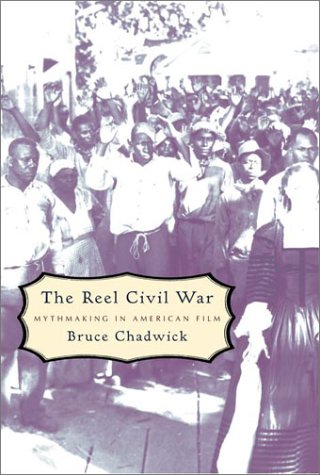
The Reel Civil War: Mythmaking in American Film, by Bruce Chadwick****

thereelcivilwarI found this gem at my favorite used bookstore in Seattle, Magus Books, which is just a block from the University of Washington. Its strength, as the title suggests, is in tracing the story of the American Civil War as told by the cinema. Those interested in the way in which movie impacts both culture and education in the USA would do well to find this book and read it.

Chadwick spends a considerable amount of time and space carefully documenting the myth produced by Gone with the Wind, a completely unrealistic, idealized portrait of the ruling planter class of the deep South. Many of us would, in years gone by, have been inclined to dismiss this concern by saying that after all, the book and movie were primarily intended as a love story, but Chadwick demonstrates that this is not so. He ferrets out actual interviews with Margaret Mitchell herself in which she insists that this is exactly the way it was. Her sources? Former plantation owners, of course.

To this day, if an avid reader goes to Goodreads.com and under the caption “explore”, goes to “listopia” and from there selects a list of readers’ favorite Civil War titles, GWTW will place within the top ten, and sometimes be the foremost title, selected over nonfiction as well as more accurate fiction. I find this horrifying.

The research regarding the Civil War itself is nothing I haven’t seen before, but Chadwick makes excellent use of strong secondary sources to document the fact that Black folks in the pre-war South were neither happy nor well treated. He takes apart the myth Mitchell constructed in a meticulous manner, one damn brick at a time. Hell yes. About ten percent of the way into the book, Chadwick’s removed, scholarly tone changes to one of articulate outrage, and I found this tremendously satisfying.

Chadwick follows Civil War films forward, after first also examining Birth of a Nation, a painfully racist film which was famous at the time because of its length; its original claim to fame was not content, but technology. For those that have not seen the film, this will be interesting reading also, and those that have seen it may pick up some new information as well.

A couple of generations later, the more realistic and highly acclaimed Roots television miniseries told the story of Black America in a way that hadn’t been represented on film before. Chadwick is again careful in his documentation and clear in his explanation.

The book’s final film treatment is of the most positive and accurate film depiction of African-Americans is the film Glory. This reviewer used this film in the classroom. It depicts the Black Massachusetts infantry that tried to take Fort Wagner and in doing so, inspired President Lincoln to order more Black troops to be armed and trained for combat in the American Civil War.

For those interested in the connection between film and American history, and of the American Civil War in particular, this book is recommended.

The Invention of Wings, by Sue Monk Kidd*****

theinventionofwingsTwo of today’s hottest political topics have to do with equality. As we follow and sometimes participate in the Black Lives Matter movement, along with the fight to keep Planned Parenthood funded and maintain a woman’s right to own her body and say what happens to it, this elegantly crafted work of historical fiction could not, strangely enough, be more timely. The Invention of Wings is a fictional biography of Sarah and Angelina Grimke, abolitionists and feminists, the first to make screaming headlines by speaking out publicly decades before women would see the right to vote, and decades before the first shots of the American Civil War were fired. As is essential in dealing with the rights of then-enslaved African-Americans in the south, Kidd adds an additional character, a slave named Hetty, written alternately with the Sarah’s story. I say it is essential to do so; this is because it is wrong to write about the marginalization and subjugation of an entire people, and then not include a representative of that group into the plot. As usual, Kidd doesn’t disappoint.

Much as I love historical fiction, one thing that makes me a little crazy is wondering where the research ends and fiction commences. In her afterword, the author lets us know specifically what is true and what isn’t. She even gives us a brief bibliography to pursue if we feel moved to do so; the only other historical fiction writer I know of that does this is Laurence Yep, my hands-down favorite YA author. Thus, Kidd places herself in outstanding company.

The Grimke sisters were born into the elite planter class, a tiny minority among Caucasians in the South, and in the very belly of the beast: Charleston, South Carolina. Partially because of the tremendous brutality meted out to the plantation’s slaves right before her tiny eyes there at home, Sarah Grimke grew up opposed to slavery. As a much older sister, she had a formative role helping her mother raise Angelina, who also became a fierce, uncompromising abolitionist.

It is one thing to take up a cause that is small but in which one has a support base. For the Grimkes, there was nothing. Eventually both had to move north for their own safety. And although, as a history major and a feminist of the 1970’s I had read about the Grimke sisters many times, it is within the well-crafted, deeply thoughtful, well researched pages of this novel that they first came to life for me.

Hetty, the slave depicted within these pages, actually existed, but the story Kidd writes for her is entirely fictional. The real Hetty died before Sarah was grown. Still, her character felt as real to me, and was easily as well developed as either of the Grimke sisters. Hetty is not passive, not waiting to be “set” free. She understands that the only freedom she is likely to receive will be what she can do for herself. A nice touch Kidd adds is in making Hetty one of the children of Denmark Vesey, the free African-American that attempted to organize and lead a slave revolt.

Everything here is carefully constructed and absorbing. Kidd has long demonstrated formidable talent in constructing well developed characters and vivid settings; the difference here (as opposed to The Secret Life of Bees and The Mermaid’s Chair, the two others of hers I have read) is the research involved. As with everything else, she blends fact and detail into a well spun tale.

I should add here that the literacy level required to deal with this text is higher than most. Don’t toss it out there for your average middle schooler to read, because it will prove too difficult. Because of the way she builds her story, brick by brick, the pace doesn’t really pick up until about halfway into the book. This isn’t a rip-roaring page turner; it’s a series of quiet nights by the fire, or curled up on your favorite window seat, or by the side of your bed. Give it the time it deserves.
Though I got my copy from the Seattle Public Library, I consider this title worth the cover price. Highly recommended.

U.S. Grant and the American Military Tradition, by Bruce Catton****

usgrantandtheamericanmilThis brass-tacks biography of US Grant, who served as America’s finest Civil War general and also two terms as US president, was originally written for young adults. Now it is something of an anomaly, and yet not a bad read for the right audience. Thank you, thank you to Open Road Integrated Media and to Net Galley for providing me with the DRC. This book will be for sale in digital format November 3.

Reading this nifty little book reminded me—not entirely happily—of how much sturdier literacy in the United States stood during the 1950’s, when this biography was originally written, compared to now. True, it was a less egalitarian, less inclusive school house that could throw this level of reading at its teenagers, and that is a different debate for a different day. Right now, I just have to tell you that Catton’s boiled-down biography is going to be over the heads of most high school students. In addition, there are a couple of slang terms no longer in use that may confuse the reader. I understood one of them—and I was born in the late ‘50’s—but another phrase left me scratching my head. My two fields, when teaching, were literature and US history, primarily the American Civil War and government, so if I don’t get it, then high school kids will miss some of it also. The book could be used for honors students, most likely, but is no longer ideally suited to high school students.

However, I can see its use today for community college students, and also for adults who are not doing research and don’t care to see Mr. Catton’s sources or argue his perspective. He takes a few enormously controversial aspects of Grant’s life and makes his own pronouncements, some bold, some bland, with absolutely not one shred of evidence to back them up, apart from his own excellent reputation, and so scholars in the field are more likely to find his Civil War trilogies more satisfying than this little nugget. But for the history buff who just wants a thumbnail sketch, one book and we’re finished thanks, this could be it. It is certainly less of a meal than Grant’s own memoir; also, unlike Grant’s inarguably excellent memoir, Catton addresses the rumors about Grant and liquor that Grant himself refused to even discuss.

Catton focuses primarily on the Civil War years, which I believe is the right way to remember the man, but he also talks about the setting into which Grant was born, and in a relatively short amount of text provides us with the lifestyle and expectation of the average American farmer, which is what the vast majority of Americans were at that time. He carries us through Grant’s time at West Point, then through the wars with Mexico.

He takes apart and casts aside, brick by brick, the nasty allegations that Grant’s detractors made then and in contemporary times, and shines an authoritative light on them. What about Grant and the booze? Was Grant really a bad businessman who lost his own money and that of other people? Was he really Grant-the-butcher, as a brief but ugly period in revisionism charged, willing to plow willy-nilly into any and every battle regardless of the number of soldiers’ lives lost? What about his presidency, and the scandal that clouded it?

Grant is one of my heroes, and I appreciate the way Catton defends him here. I particularly was interested in his very convincing defense of Grant as businessman. I found Catton slightly abrasive in his tone toward Grant’s defense of the rights of African-Americans during Reconstruction; it was clearly this, rather than anything else, that caused the glow of his wartime glory to dim, because the Klan and Southern white reactionaries were absolutely hell-bent on creating a stratified society in which the Black man did not have equal rights to those of Caucasians, and one determined U.S. president was not able to stem that tide. That’s really what Grant was up against, and what tarnished his reputation. Catton feels he should have been more, um, “flexible”. I personally am pleased that he was willing to ride his principles to hell and back if need be…and that was about what happened.

I find it so sad, so ironic that the vast overload of expensive cigars sent to General Grant by patriotic admirers are what most likely lead to his death; throat cancer checked him out of this world only 48 hours after his memoir was completed.

Although there are no citations for the facts provided in the text, there is a nice little index that will prove useful to students.

Recommended for adults at the community college level, and to history buffs who just want to read one relatively simple biography of Grant.

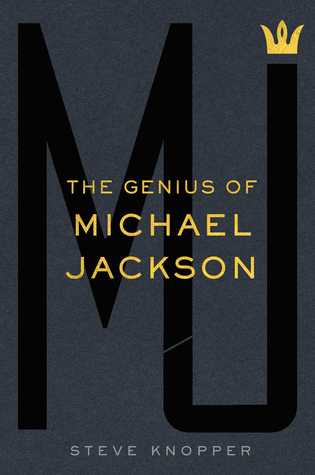
MJ: The Genius of Michael Jackson, by Steve Knopper****

MJthegeniusofmichaeljacksonJackson was a musical prodigy whose talent was almost limitless. His brilliant career was derailed by scandal, and his final 50 city tour was aborted by his death the night before it was to commence. Knopper does the best job of objectively recounting Jackson’s life and death that I have seen so far. His portrait is intimate without being prurient. Thanks go to Net Galley and Scribner for the DRC, which I received in exchange for this honest review.

Jackson was born in the 1950’s, a time when the race barrier kept Black performers from being seen by a general audience, with only the rarest exceptions. Black folks could play music for Black folks, and nobody else. The family was terribly poor, with eight or nine people crowded into a house better suited to three or four. They lived in Gary, a steel town in which Black poverty was more the rule than the exception. His father was a struggling musician until it became obvious that his sons had inherited his talent plus some. By the time Michael was five years old, he was the charismatic center of the Jackson Five, who soon were contracted to Motown, the center of African-American music in the USA.

Knopper explains how the family’s progression from a Motown act, where they were not allowed to actually play their own instruments on stage and could not use music they wrote themselves; to an independent family act, apart from one son who chose to remain with Motown; to the final day when Michael got himself an agent and a lawyer and set out on his own, divorcing his family so that he could have full control over a solo act. Until he was independent, iconic creations such as Thriller and Smooth Criminal would most likely never have been launched. And he recounts the family drama that ensued, with bodyguards pulling guns to discourage Michael’s angry brothers when they tried to force their way past the gates of his estate, shouting that he owed them money.

As a fan of excellent music and performance, I was sucked into the maelstrom produced by the press both during his life and afterward. It’s embarrassing to admit how completely I was played. For years I would not permit Jackson’s music to be played in my home because I thought he was a sick creep who used his fame to gain private, inappropriate contact with smooth-faced young boys. Somehow it escaped me that he had never been proved guilty in a court of law; on the one hand, it made sense to pay one family off in order to take the heat off his career, and Knopper documents the advice experienced, famous musicians gave Jackson to do whatever he had to do to shut that shit down so he could go back to focusing on music. But the press was merciless, and the payoff, which came too late to do damage control effectively, was portrayed as a tacit admission of guilt. And I bought it.

A few months after Jackson’s death, I was in a hotel room on vacation with my family, and my youngest son, who is Black, turned on the television, and there was the second round that Knopper documents, the round of memorial tributes that brought a lump to one’s throat as we saw Jackson’s miraculous career unspooled. He pioneered music videos in so many ways I had failed to appreciate, and he employed so many Black musicians that might never have had a steady job, while at the same time reaching out to Caucasian performers as well, creating a bridge between Black music and Caucasian sounds, transitioning from disco-like R and B to the “King of Pop”. I was horrified at the way I had misjudged him.

About a year ago, I read Michael Jackson’s memoir, Moonwalk, and while I took parts of it with a grain of salt, I also came to believe that the guy just didn’t know what was socially appropriate at times because he had never had a normal childhood. I was sold. Poor Michael.

Knopper has a more realistic take on all this. He certainly should; he used over 450 sources, and he wasn’t anybody’s mouthpiece. And so the truth turns out to be more complicated.

What left me somewhat stunned, in the end, was not the sex scandal, and it wasn’t the postmortem resurrection of Jackson as some sort of musical saint. Instead, I was absolutely floored at the number of people that worked for the guy, some of them for a lot of years, who he left without paychecks for weeks, then months on end. Jackson had a tremendous load of debt, was on the verge of bankruptcy and was saved only by his investment in song publishing, a piece of advice given him by friend Paul McCartney that he had followed through on. Yet he continued to buy one extreme luxury estate after another, holding residences he would likely never use again, shopping extravagantly (the example of taking a new friend shopping and telling him to do it “like this”, as he swept entire shelves of merchandise into his cart, astounded me) while leaving his employees, regular working folk with bills to pay for the most part, with no paychecks. There was money for shopping, but not for them, and some of them took him to court for it. It made me a bit sick. This man knew what it was like to be poor, and he knew what hunger was like, but as long as he didn’t have to see the people that he had betrayed, he could continue to play out the Peter Pan thread, irresponsibly trashing the lives of those he had told they could count on him, then leaving them with empty wallets and eviction notices.

Maybe you think I have over-shared. I have news; this is only the tip of the iceberg. If you have followed this review all the way to its conclusion, you will like this book. It is available for purchase October 20.

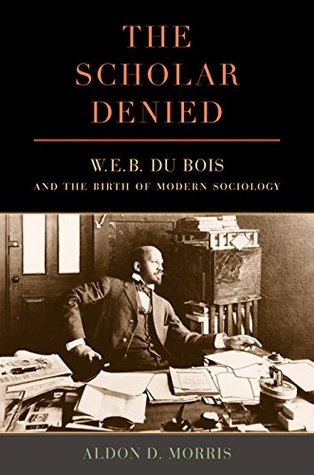
The Scholar Denied: W. E. B. Du Bois and the Birth of Modern Sociology, by Aldon Morris*****

thescholardeniedMorris considers DuBois the father of American sociology, and Morris is right. This is, of course, not the first time a Black man was robbed of credit for an accomplishment that was instead credited to a Caucasian American. It happens all the time. But until I ran across this scholarly study, I hadn’t thought about DuBois and sociology because I had never studied the latter. As an admirer of DuBois’ historical and political role, I was drawn to this book when I found it on Net Galley. Thank you to that excellent site as well as University of California Press for the DRC, which I was given in exchange for an honest review.
It is available for purchase now.

DuBois was a venerable intellectual, an academic light years ahead of most Americans of any racial or ethnic background. He was the first Black man to graduate from Harvard University, and in addition to his graduate work there, he also studied in Berlin under such luminaries as Max Weber and others. In Europe, he was treated as an equal by those he studied with, and I found myself wondering a trifle sadly—for him, not for us in the USA—why he chose to return here. And the answer is so poignant, so sweetly naïve, that I wanted to sit down and cry when I found it. Because once he had the empirical facts with which to debunk the whole US-Negro-inferiority mis-school of mis-thought, he genuinely believed he would be able to elevate African-Americans to a state of equality in the USA by laying out the facts. The racists that created Jim Crow laws in the south and an unofficial state of cold racism that let Black folk in the Northern states know where they were welcome and where they were not, would surely roll away, he thought, if he could reasonably haul out his charts, his graphs, his statistics, and demonstrate flawlessly, once and for all, that discrimination against Black people was based on incorrect information.

See what I mean? I could just cry for him.

So although DuBois was the first American to go to Europe, study sociology, and return with more and better credentials than any American academic, he could not persuade anyone with authority to bring about change, was not even allowed to present his findings to anybody except Black people in traditional Black colleges, because another school of sociologists, the Chicago school, were busy promoting armchair theories based on little data, or bogus data, all showing that Black people simply were not smart enough to become professionals or take on anything above and beyond manual labor, and of course, he was Black, so he must not be that smart, right?

Pause to allow your primal scream. It’s galling stuff.

Caucasian professors in Chicago had done a bit of reading, and with regard to Black people, decided that their craniums were too small to hold enough brain-iums. And just as there is one reactionary in every crowd that the newspapers will flock to in order to show that there is across-the-board agreement, so did Booker T Washington stand before any crowd that would listen to him (and the white academics just loved him), in order to say that it was the truth, that it was going to be a long time before the Negro was “ready” to do the difficult tasks involving critical thinking that had been so long denied him. Tiny steps; patience; tiny steps. Meanwhile, he extolled his fellow Black Americans to enroll their sons and daughters in programs teaching “industrial education”, so that they would be ready to do manual labor and put food on their families’ tables.

All of the studies that backed this line of thinking were deductive, starting with the answer (inferior beings, manual labor) and then finding the questions to fit that answer. DuBois had done inductive research because he was searching for information rather than looking for a rational-sounding way to keep a group of people entrenched in an economic underclass.

DuBois made the connection between the socialist theory he had studied and the material evidence before him: there were people getting rich off the backs of dark-skinned people, and they had a vested interest in maintaining Black folk as an underclass. Ultimately, he turned to political struggle, and that is how I knew about him, not as a sociologist, but as a Marxist. He also became the father of the interdisciplinary field of African-American studies. He helped found the NAACP.

This scholarly work, like just about anything produced by a university press, is not light reading. Rather, the author presents his thesis and synopsis, and then carefully, brick by brick, starts back at the beginning to build his case. His documentation is flawless, and his sources are diverse and strong. There is some repetition in the text, but that is appropriate in this type of writing. He is not there to entertain the reader, but to provide an authentic piece of research that will stand the test of time, so there is a little bit of a house-that-jack-built quality to the prose.

For serious admirers of DuBois’s work, this will be an excellent addition to your library. For those interested in sociology as a field, this is for you, too. And to those with a literacy level that permits you to access college-level material and who have a strong interest in African-American history and/or civil rights, this is a must-read.

For these readers, I recommend, in addition, The Souls of Black Folk, which I had not regarded as sociology-based material until now, though I have read it twice; and a collection of speeches by DuBois, which I have been intending to review for some time, and which will soon grace this page of my blog.

Morris has done outstanding work, and I like to think that if DuBois were here, he would be proud to see it.

Live From Death Row, by Mumia Abu-Jamal*****

livefromdeathrowMumia is a former Black Panther. The facts support his having been framed in the murder of the cop, a crime for which he was nearly executed.

Live from Death Row, written before his sentence was commuted, is not, however, a vehicle he uses to advocate for himself or plead his own case to the public. He has written other books I haven’t read, and I don’t know if he did that there.

Instead, here he uses his own situation to discuss the racism inherent both in the U.S. court system; he also talks about racism on death row.

The mandatory fresh-air time, prized and treasured by men who rarely see the clear blue sky, is an Apartheid one, at least in Supermax, RHU,SMU, and SHU (ultimate maximum security prisons, which he says have swelled since jailhouse overcrowding has made prisons tenser places and more people are tossed into “the hole”). The vast majority of prisoners are Black, though they are a minority of the population at large, and in the Pennsylvania prison he describes, 80% of those maximum security cases, those who wear Black skin, are crowded into a courtyard. They can’t see green grass or the outdoors, only four brick walls and way up there, blue sky. Why? And where are the other prisoners going?

The other prisoners (who are also maximum security) who are not Black have a SEPARATE courtyard, which is surrounded by chain=link fencing with razor-wire, but has the view. The 20% have the perk of a much less crowded space and the capacity to see Mother Earth during their treasured time outside prison walls.

As to the racist system that places Blacks on death row at such a startlingly high rate, he offers the following statistics and footnotes all of them like the scholar he was before being incarcerated, and continues to be behind prison walls. He uses a Georgia case because it is one which caused the Supreme Court to recognize the following facts:

*defendants charged w killing Caucasian victims are 4.3 times as likely to be sent to death row as those charged w/killing Blacks;

*the race of the victim determines whether or not a death penalty is returned;

*nearly 6 of 11 defendants who received the death penalty for killing Caucasians would not have received the death penalty if their victims had been Black;

*20 of every 34 defendants sentenced to death would not have been given the death sentence if their victims had not been Caucasian.

He continues to pound one damning fact upon another, and cites court cases to back them up; those above come from McClesky vs. Kemp (1987). If the case sounds old, I would argue that precedents are set by very old cases indeed, and of course, this book was published early into the 2000 decade. I doubt a more recent gathering of data would return more favorable information; in the case of jail overcrowding, I suspect the recession has made it worse.

A person would have to be hiding under a rock or in a coma not to be aware of the level of violence visited upon African-Americans by cops and vigilantes within the past year.

I applaud Mumia for using his well-known case to set the facts before us, rather than trying to build momentum to save himself. There was a considerable amount of public pressure NOT to execute him, and I do think that had to do with his sentence being commuted; as it was, my kids’ urban U.S. high school was “barely holding together”, according to a counselor I knew there, the day that Mumia’s case was turned away by the U.S. Supreme Court.

If you are interested in reading about social justice issues, this relatively slender volume holds an astounding amount of really critical information. I appreciate Mumia’s relentless effort to make the public, both in the US and internationally, aware of the atrocities that continue to visit Black prisoners in the USA, and it’s more relevant now than ever!

Lost in the City, by Edward P. Jones *****

lostinthecityEdward P. Jones needs my review like Shakespeare needs my review. He is one of those literary luminaries whose work is timeless. Nobody can teach anyone to write like this. Either you have it, or you don’t. We are fortunate that he does.

This wasn’t a digital galley; it was a Christmas gift. That’s how much I like his writing. So I guess my purpose in reviewing someone this renowned is perhaps to draw attention to him for those that haven’t read his work yet.

I read this over the course of almost a month, short as it is, and I did it that way because it’s so painful. In this respect he is similar to Russell Banks: peerless, brilliant work that is also so sad that you just about have to sit down and cry when you finish. And because of this, I was glad to have a short story collection, because I could read a whole short story, put in the bookmark, then pick something else up for a little while to cheer myself up. Then when I was over it, I could pick it up and read another one a different day.

All the stories are set in Washington, DC, and all have to do with alienation and a sense of loss. I think the story I admire most is “His Mother’s House”, but all of them are strong.

The first book I read by this author was The Known World, which won the Pulitzer. Now I need to get a copy of All Aunt Hager’s Children.

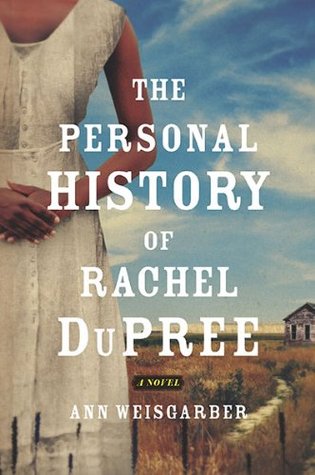
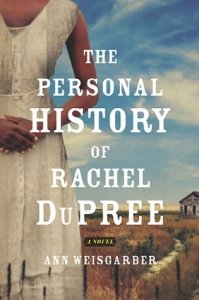
The Personal History of Rachel Dupree, by Ann Weisberger *****

thepersonalhistoryofracheldupreeRachel has married up. She used to be a hired girl working in the kitchen at Mrs. Dupree’s boarding house. Mrs. Dupree was forced into taking in boarders when  she was widowed, but she has done quite nicely for herself. She is among the cream of Chicago’s Negro community, and the women she entertains are light-skinned and at least four generations removed from slavery. Imagine her tremendous dismay when her only son, Isaac, comes home from fighting the Indian wars and announces that he is moving out to the Western territories to stake a claim and become a common farmer. “Rancher,” he reminds her. And if he marries a single woman who has also staked a claim, he will have twice as much land once they marry.

And so he stakes a claim on Rachel’s behalf, and she gets her heart’s desire: she gets to marry that handsome young officer. She becomes Rachel Dupree.

Roll the film forward about 14 years. Rachel is pregnant with her eighth child. The Badlands, “a country so backward and harsh that even Indians didn’t want it”, has had no rain for a long, long time. To get a little water, they have to tie one of their children to a plank and lower her on a rope to the bottom of the well. Liz doesn’t want to do it anymore. She has nightmares. There’s a snake down there, she says.

But their tongues are thick from lack of water. There is grit between their teeth. And they will lose the horses and their only milk cow if they don’t water them.

So at bedtime, Rachel tells her five surviving children to take just one sip of the water Liz brings up.

Are you spellbound, or are you horrified? I confess I was both. I live in the land of water. In Seattle there is moss growing on everyone’s front steps or porch, and if we aren’t careful, it will grow on our fences and our homes! Most of us don’t bother with umbrellas. We’re used to the fine mist that generally falls during the day. Most of the good hard rain falls at night, and it lulls us to sleep better than a lullaby. And yet, we send the kids to school carrying a water bottle anyway, because hydration is so important.

“Only a sip.”

I’m not the only one that doesn’t care for that. Rachel has about had enough of it, too. For one thing, there are no Negro families anywhere nearby. Isaac had told her that plenty of the men with whom he’d been enlisted had filed for homestead claims, but any that may have been nearby have gone on home. They can’t take it here. And actually? The white folk can’t stand it either. Every time someone goes home, Isaac buys their land. Every time there is a spare dollar, it does not go for a coat for the child who’s outgrowing hers; not even for fabric for Rachel to sew some new clothes. Rachel herself has a patched dress and a pair of work boots. What a contrast she makes from the finery she wore on her wedding day! And she is worried about their eldest daughter, Mary, who will be the right age to start dating soon.

The final straw is broken when Isaac buys out yet another departing neighbor–Rachel’s closest friend, too, as luck would have it–and there is no money at all. There is no money for winter provisions, even, and the kitchen garden died when the rain didn’t come. There is nothing, nothing, nothing. And his game plan is to work the gold mine in Lead, South Dakota, which is far enough away that he will be gone all winter, and she and the children will be left with a brand new baby and thousands of miles to ranch unassisted. And no food.

But hey, he believes in her. He’ll go hunting, maybe bag a bear together with his son, and between that and Rachel’s amazing know-how and steely determination, everything will turn out fine!

Not so much.

A strong subplot involves the local American Indian population. Homesteaders who are hungry, thirsty, and have almost nothing but the land on which they live and try to ranch are sometimes resentful of the “reservation Indians”, who have been stripped of their dignity and culture in exchange for free food, rent, and clothing (“free” being a relative term, of course). Isaac was one of the soldiers that subjugated those same Indians; when Rachel is alone on the ranch for days on end and Mrs. Fills the Pipe and her children pass by, Rachel craves company so desperately that she invites them to rest on her porch. She makes the very dead last of her chokeberry tea and serves it to Mrs. Fills the Pipe and her daughter.

“Our water?” said Liz. “You’re giving them our water?”

Liz had a point there; she was the one went down the well to get it. And yet, the good turn, though it upsets Isaac when he hears of it later, is not misplaced, and does not go unrewarded. And eventually Rachel thinks back to the things her hero, Ida B. Wells-Barnett, said in the Negro press (I use the term as the writer does, for historical purposes), she does not regret the gesture, except for the fact that she served them on the front porch when she should have invited them into her precious parlor.

I didn’t read this book as a galley, I got it at the local library. A galley led me to Weisberger, though. I read The Promise a year or two ago and decided that this writer was going on my to-read list. This makes two winners out of the two I have read. And on top of it all, Weisberger is a Caucasian writer (or appears to be; at any rate, she isn’t Black.) This is only the second writer I have encountered that could write a first-person fictional narrative in which she provides the voice of a Black woman, and does it creditably and with great dignity. I bow in awe.

And although I was already sold on the book and its author, the mention of Lead, South Dakota, nearly made me jump out of my skin. That is the tiny town where my late father was born, and its mine (gold but also iron ore) is where my late grandfather contracted the black lung disease that would eventually kill him. For those interested, it is pronounced “leed”. Maybe it’s too embarrassing to admit your home town is named after the mineral it produces, or maybe it’s a positive connotation, like leadership. My only visit there took place when I was a pre-schooler, and I have very few memories of it, all of them related to family rather than place.

Forgive the digression. All told, this is really strong historical fiction. If you want to read something a little different from most of the stuff that’s for sale; if you like stories of the homesteading movement; or if you want a story that features African-Americans in a positive light, this is your book. If you just want a great book to curl up with at night while the spring rains pass, this is your book too.

In short, highly recommended.

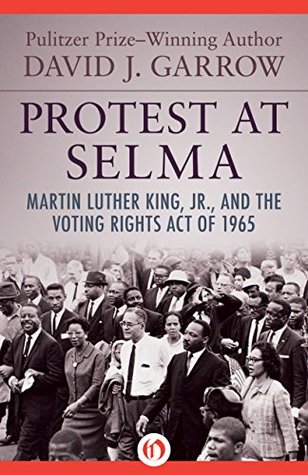
Protest at Selma: Martin Luther King, Jr. and the Voting Rights Act of 1965, by David J. Garrow *****

protestatselmaThis newly released digital version of Garrow’s outstanding, comprehensive recounting and analysis of the famous Selma demonstrations carried out by Martin Luther King Junior, other civil rights leaders, along with masses of African-American civil rights activists could not be more timely. In 2013, the Voting Rights Act passed in 1965 after a lot of effort and sacrifice was gutted. The US criminal “justice” system has drawn the eyes of the world, and they aren’t friendly eyes. Thank you, and thank you once more to Net Galley and Open Road Media for making the DRC available for me to read, and for publishing this excellent book digitally for you to access also.
Please be aware that this is not a popular biography of the struggle, but a scholarly one, and will be most appreciated by those who, like your reviewer, have a strong interest in the topic, or who are doing research. In that spirit, I encourage those who also read it to access the endnotes. Garrow has some really interesting remarks, and his references and cross-references will make any researcher bow in awe.
Many people don’t know that Dr. King entered the struggle as a civil rights novice, newly out of graduate school and just 26 years old. (Open Road has also just released the digital version of Garrow’s Pulitzer-winning biography, which I have also reviewed.) Initially his hope was to shame segregationists into integrating schools and providing equal services to Black Southerners. The failure of the movement to make any in-roads in Albany, Georgia convinced King and other leaders that this method would not work. Instead, the eyes of the nation must be made to witness the injustices being meted out in Dixie. For the media, both print and television, a relatively recent mass media source, to pick up events there, they needed to demonstrate in a nonviolent fashion, not back down, and do so in a place where a nasty, violent response on the part of Caucasian cops could be counted upon. In other words, no change could take place without confronting Black America’s worst nightmares head on and intentionally.
Birmingham was the first place this was attempted. Bull Connor was known for gratuitous violence, and the footage of some really ugly aggression, especially the widely-circulated photo of the cop holding an unarmed demonstrator in place while siccing a huge German Shepherd on him, prodded the consciences of Caucasian viewers in the North. (Many Northerners of color were already funding the movement; musician Harry Mancini was one important fundraiser.)
But the attempt of Birmingham demonstrators to effect change was limited. Although it drew international attention, the Kennedy administration seemed more intent on finding ways to shut King and the Southern Christian Leadership Conference down than they were on creating adherence to Federal laws that gave Black folks equality.
Garrow reminds us (or informs us, depending on the reader’s age) that in the late 1960’s, one in three white Americans polled said they would not want to sit next to a Black person on a train or bus, and similar figures also showed that they didn’t want African-Americans living near them, at their kids’ schools, or even trying on the same outfits in department stores that they themselves might later try on.
Young people that are tired of hearing the Dream speech and watching Eyes on the Prize footage (for which Garrow also receives a portion of the credit) don’t seem to understand exactly how brave these people were. My own father told me, when I asked about the footage on television, that the policemen on the evening news were just doing their jobs. He shook with rage as he pointed at the screen and told me, “These people are breaking the law!” I was six years old at the time.
So some people up North needed to either change their minds, or be so repelled by the violence being done to innocent people who obviously wanted something reasonable that they would insist that the right thing be done. And although the movement never did change my father, it changed the thinking of a lot of people.
Birmingham failed to do the job for two reasons, says Garrow . First, they were not able to maintain a completely nonviolent atmosphere on the part of the Black participants. While demonstrators were nonviolent, thousands of African-Americans, some of whom dared not demonstrate actively lest they lose their jobs, became enraged at the maltreatment of the demonstrators; some threw pieces of bricks, concrete, and bottles at the cops from the sidelines.
When I think about this, it doesn’t seem like an even contest to me. Swarms of cops in riot gear; huge attack dogs; fire hoses; lethal weaponry of just about everything except tanks and missiles were accessed by the cops. And a few locals pitched a few bottles. Big damn deal.
But media loves to try to portray both sides of an issue, however uneven they may be. My own years spent participating in, organizing, and sometimes leading demonstrations taught me that if one demonstrator or supposed supporter shows aggression and can gain the media’s attention, the demonstration will magically turn into a “riot” on the news the next day. Or a “conflict”. We can find synonyms all day long, but you get the picture. When there are ten thousand peaceful demonstrators and ten people that break windows, the evening news will give as much time, or more, to the window breakers as the ten thousand. If a member of the lunatic fringe shows up with a forty-foot bloody cross, they’ll goddamn interview the nut and the demonstration’s goals may not get any time at all.
But the people that trained me in struggle were largely educated by their own participation in the Civil Rights movement. The methods of the Civil Rights movement would become valuable lessons for those that led the movement against the Vietnam War. The SCLC, SNCC, CORE, and other organizations that led this movement had to invent most of it, or at least Americanize it; many of the basic tenets were borrowed from Gandhi when he led the movement to kick Britain out of India.
So, there were a few folks that were not strictly nonviolent in Birmingham; the other problem, says Garrow, is that there was no one, clear goal in Birmingham. So much was so wrong that they went in with a laundry list. When it got into the news, it seemed muddy. Those who loved justice could see what was wrong; but every struggle needs a single, clear demand in order to start those waters of justice rolling. In Birmingham, it wasn’t plain what they were there to do.
Selma was the tipping point. All those lessons came into play. The single goal, one that the Democratic administration had pledged (privately of course) to support, was for Black folks to be able to walk into the courthouse and register to vote. No literacy tests; no poll fees; no goddamn alley entrance for people of color. Just walk through the front door; register; and vote.
This time discipline was perfect; the marchers were absolutely, completely nonviolent. Sheriff Clark, the mad dog that the movement sought to bring out of his ugly hole snarling and swinging, did not disappoint. People were sent to the hospital, and a Caucasian clergyman who answered Dr. King’s call to come support the Civil Rights of Southern Blacks was killed by the cops. This time it was clear what the goal was, clear who was wrong and who was right. And the telegrams (an ancient technology since replaced by e-mail) rolled into the Capitol.
Black intelligentsia and working class, I; crazy Southern Bubbas, 0.
President Lyndon Johnson was a crafty old bastard, a politician who knew what side his bread was buttered on. At first he too sought to shut the whole thing down, get people out of the streets and home to their own hearths. But when events unfolded and it became clear that a sea change was occurring, he got on television and gave the best damn speech possibly since the days of Lincoln. Garrow reprints the entire masterpiece. It was viewed by seventy million Americans.
If you are still with me—and my five star reviews are almost never brief—then you may also have sufficient interest to read Garrow’s history of the movement and particularly of Selma, Alabama and the crossing of the Edmund Pettus Bridge. His research is impeccable, his organization easy to follow (or to access a portion of, for those doing research of their own), and his narrative is really compelling.
Once you are done, I hope you will give some time and attention to the new Civil Rights Movement unfolding before us right now. It’s everyone’s job to be sure everyone can vote. And until African-American men and teenagers can drive, walk, and work without harassment or violence from cops and vigilantes, #ICAN’TBREATHE.