The Winners, by Fredrik Backman*****

“Do you want to understand people? Really understand them? Then you need to know all the best that we are capable of.”

The Winners is the third book in the Beartown trilogy by the iconic philosopher-novelist, Fredrik Backman. In the afterward, he tells us, “To you who have read this whole of the saga, I’d just like to say that I hope it gave you something, because I gave it absolutely everything I had.” I am one of them, and I believe him, and yes, it did. My thanks go to Net Galley and Atria Books for the invitation to read and review. It’s been an honor.

I began reading with a certain amount of trepidation, because everything I’d heard and read, some of it by the author himself, suggested that this wasn’t going to be gentle reading. Here’s how he opens it:

“August ends with sultry, ominous heat before autumn kicks the door in at the end of the month and the temperature tumbles in free fall. The natural world around us becomes erratic and aggressive, the dogs and hunters feel it first, but soon everyone else does too. We notice the warnings, yet still the storm arrives with such force that it knocks the breath out of us. It devastates the forest and blocks out the sky, it attacks our homes and our towns like a grown man beating a child.”

Woof.

The characters we’ve met in the first two books, Beartown and Us Against You, are all present and accounted for, and now that his faithful readers already know most of the central characters, Backman gives us a few more. The new hockey coach is Elizabeth Zackell, a quirky individual if ever there was one, and smart as hell. We are introduced to a family from Hed, the nearby town whose club is Beartown’s archrival; we become attached to these people, too. But ultimately, we see the way that great love and passionate loyalty can go hand in glove with violence and even evil.

It’s a story that can take your breath away.

I won’t try to address the whole story or individual characters; that’s Backman’s job, and he does it quite nicely. I had a quibble with the way the first book ended; I said in my review that it was over-the-top, bordering on glib. I see now that this was deliberate, and he wants us to see that not every family responds to a crisis as well as the Andersons have, and not every victim of a violent crime is able to see justice done; not everyone has the heroic instincts of Amet, the player that runs toward the fire rather than away from it.

The hallmarks that make Backman’s work so special are all here. I can count on one hand the number of male authors that genuinely respect women and are willing to go to the mat for women’s rights, and he is one of them. He is a vocal champion of the rights of gays and lesbians, and his prose shows keen understanding of the struggle they face, even now that their legal rights are protected in much of the world. His capacity to juggle a large cast of dynamic characters, developing nearly every one of them in a way that is consistent, along with their relationships with each other, makes me feel as if I could recognize them on the street; I don’t mean one character, or two. I mean at least a dozen of them. There are a number of characters that do bad things or make bad choices, but only a couple are genuinely bad people, and though we see little of them, they cast long shadows on these two communities.

He got the ending exactly right.

Can you read this book without reading the other two first? Don’t be a dick. Of course not. Without familiarizing yourself with the characters in the first book before the second, and the second before the third, you won’t be able to keep everyone straight; also, this third volume is about the same length as the first and second combined. Start with the first one.

Highly recommended.

Fox Creek, by William Kent Krueger*****

I’d been in a reading slump, with most of my reading carrying an element of obligation; I love reviewing except when I don’t. Something had poked a hole in my reservoir of joyful discovery, and all the juice was leaking out. William Kent Krueger’s new entry in the Cork O’Connor series, Fox Creek, put a stop to all that. I found myself looking for extra openings in my day, craving the chance to bury myself in this absorbing mystery. I haven’t felt this great about a galley since last winter.

My thanks go to Net Galley and Atria Books for the invitation to read and review.

The story is set way up north in Minnesota, near the Canadian border, in the tiny community of Aurora. Cork, our protagonist, has left law enforcement and instead runs a diner, hiring himself out as a private investigator when the opportunity arises, which doesn’t happen often. When a man comes to the diner and asks Cork to help find his wife, Cork says he’ll think about it. Meanwhile, Dolores, the wife in question, is engaging in a sweat ritual out in the woods where the ancient and very wise Ojibwe healer Henry Meloux lives. It turns out that Cork’s would-be client is not her husband, and she doesn’t know him at all. He’s got a hidden agenda, alrighty, and he’s brought some rented thugs along to make his chore easier. Now there are two tasks: the first is to hide Dolores, and the second is to find out who these guys are and why they want her so much. Meanwhile, Cork’s wife, Rainy, guides Dolores deep into the woods near the Boundary Waters; Henry joins them. What follows is one of the most suspenseful stories I’ve read recently. I have a hunch that Cork will be okay, since killing him would also kill the series, but the others—Henry, Rainy, and Dolores—might make it out, or they might not.

I was about to say that this is character-based fiction, so well rounded are the main characters, but the setting is resonant and important to the characters and the plot. All told, this is the way a novel is supposed to work, with strong characters and settings that make the plot believable and urgent. And as always happens when I read Krueger, I also learn some things about the setting, and about Ojibwe culture and history. (His depiction of the art of disappearing and eluding pursuers reminds me a little bit of Thomas Perry’s Jane Whitefield series, but that’s all the two series have in common, apart from genre.)

This is the 18th book in the series. Can you dive in, right here right now?  Emphatically, yes! I began with the prequel to the series, which came out last year, and I loved it so much that I went to the library to check out the first book in the series—and then, I found it disappointing, because over the course of this long series, Krueger’s skill has increased, so the first book, Iron Lake, is decent, but nowhere near as brilliant as his more recent work. Now I look forward to more of this series, but always going forward, never back.

This riveting novel will be available to the public on August 23, 2022. If you love this genre, you should get this book and read it—or better still, preorder it right now. You won’t be sorry.

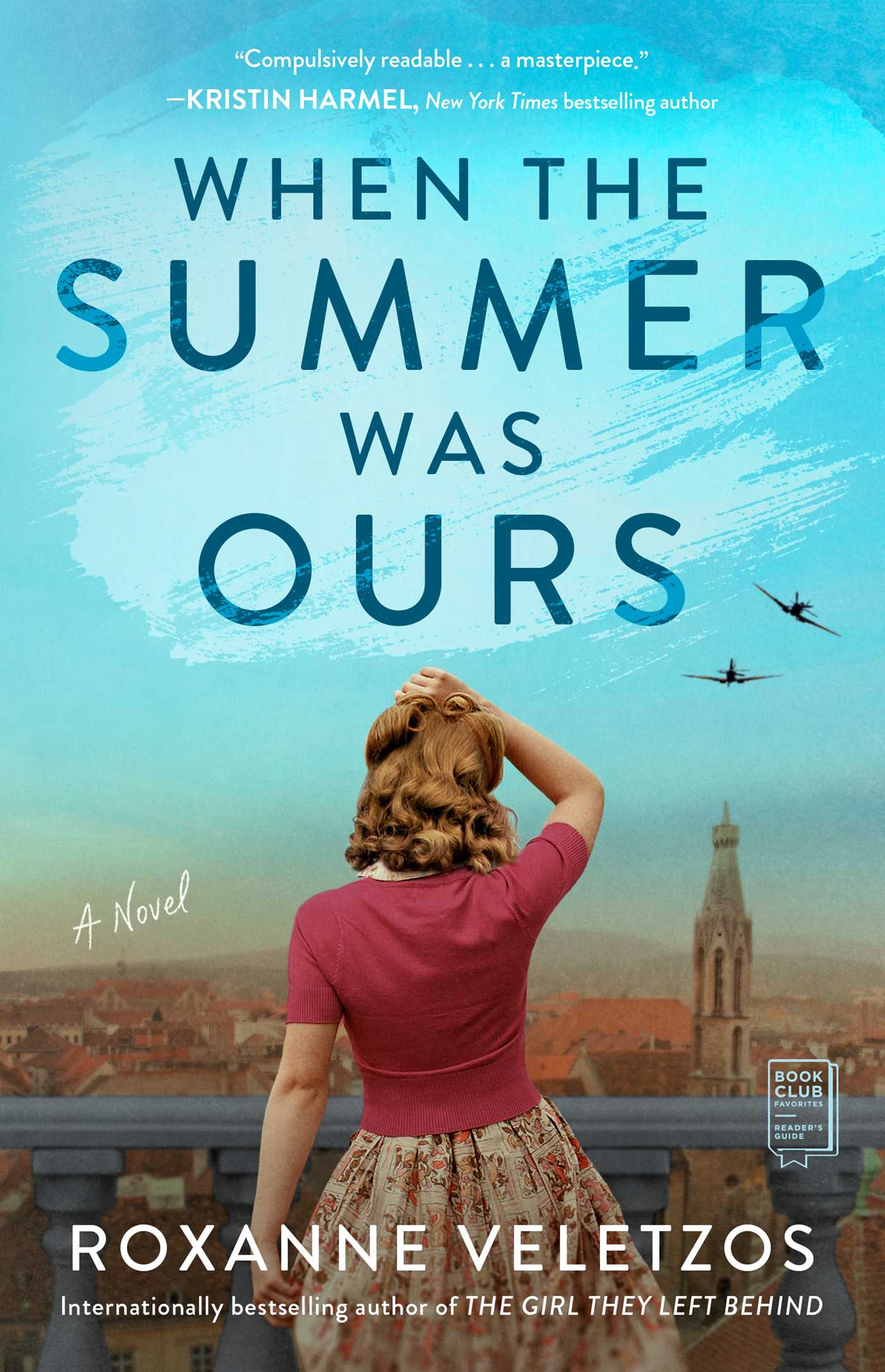
When the Summer Was Ours, by Roxanne Veletzos***-****

3.5 stars, rounded upward. I had proclaimed myself to be over and done with World War II fiction; there’s been a glut of it in the publishing world, and I have well and truly had my fill. My soft spot, however, is for any book written by an author whose work I have read and enjoyed. I reviewed Veletzos’s charming debut, The Girl They Left Behind, in 2018, and so when the opportunity came up, I agreed to read and review this one, too. It was a good decision.

My thanks go to Net Galley and Atria Books for the invitation and review copy. This book is for sale now.

Eva Cesar, daughter of the well-to-do but terribly strict local bourgeois, falls in love when Aleandro, a Romani artist stops in her tiny town in Hungary. He is a painter and a fiddler, raising his younger brothers alone following the deaths of their parents. Eva’s father knows nothing of this romance, and it’s a darned good thing. Not only is her father a Nazi sympathizer and bigot, but she is already engaged to marry Eduard, a dedicated Red Cross physician whom she also loves.

The story follows all three of them over the years, shifting points of view. All three are likable characters; Aleandro is obsessive enough that he seems a little creepy at the outset, but as the story develops, that’s no longer the case. Eduard is a stable, likable human being, but he is the one that is least developed. Eva often makes passive decisions, which I find grating, yet these are the early 1940s, and women don’t yet know they’re entitled to be decisionmakers, at least in many regards. The plot seems to go all over the place, but it comes together quite nicely at the end.

There are two related developments I would have liked to see handled differently. First—and I’m telling you this because it occurs early—Eva becomes pregnant after just one night of passion with Aleandro. Picture me sticking two fingers down my throat. Gag, spit, gag some more; what an overused trope. But then it gets worse. Eva heads to a clinic where abortions are performed quietly, since the procedure isn’t legal; the facility is filthy, and the staff are rude; we briefly meet the doctor, who virtually has horns and a spiky tail, and dines regularly on the flesh of aborted embryos and fetuses. More or less, anyway. And with women’s rights to choose our own reproductive decisions under attack, this is the very worst possible time to put such vile propaganda into a novel. She flees, of course, and has the baby, of course. In fact, as I write this, I question my choice to knock off only half a star from my rating. I’m growing madder by the minute, just writing about it.

Moving on!

The most difficult aspect of a complex story like this one is deciding how to end it. I come back around when I see how tastefully and realistically this is achieved. The ending is both credible and sweet.

There it is; you decide.  

The Patron Saint of Second Chances, by Christine Simon****

“The Lord works in mysterious ways.”

Signor Speranza is in a jam. The entire system of pipes that the village of Palmetto depends upon for its water must be replaced, and it’s going to cost a small fortune. Speranza is the self-appointed major, so it’s up to him to solve this problem; but no one has any money, least of all himself, a struggling vacuum cleaner repairman. He cooks up a wild pretext to draw attention and money: a big motion picture will be filmed here, and Dante Rinaldi, the red hot movie star of young women’s dreams, will be in it.

My thanks go to Net Galley and Atria Books for the invitation to read and review, and to Seattle Bibliocommons for the audio version that I relied upon to catch me up once I fell behind. This wonderful feel-good novel is for sale now.

At the outset, there is a certain amount of cringe humor involved, and that’s never been my favorite. I wait to see which way the wind will blow, and soon I am cracking up, snickering as I transplant my tomato plants and listen to the audio. Later, when I catch up with the digital review copy, it’s obvious that cringe humor isn’t the main tool in play here.

Over and over again, Speranza and his little town face certain doom; without money for the plumbing, they must all move somewhere else. He’s caught in a lie; then, just as he escapes that trap, another presents itself. He’s not much of a problem solver, and so he turns to every obscure patron saint you can imagine to get him out of this mess. He lights a candle here or there, and before you know it, some random seeming bit of luck comes out of nowhere. But then some other misfortune occurs, and he’s forced to scramble some more. Add into this disorder a young granddaughter, a thuggish butcher with fifteen intimidating sons, and a puppy that’s not yet housebroken, and the chaos is complete.

Ultimately, this is a lovely tale of loyalty and imagination prevailing against terrible odds and an uncaring bureaucracy. This is Christine Simon’s debut novel, and if this is just the beginning, I can’t wait to see what she writes next.  I also want to give a special shout out to Tim Francis, who voices the narrative in the audio version. He is the first reader I’ve heard that can speak English with an Italian accent without sounding like Count Dracula. I greatly enjoyed his interpretation of this splendid little book.

Recommended to anyone that needs a wider smile and a spring in their step.

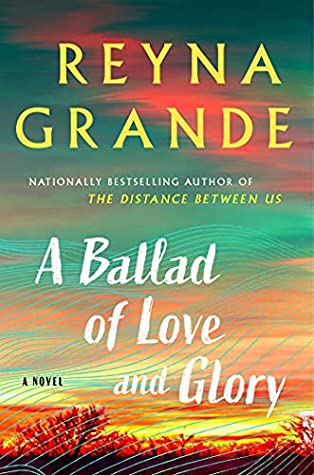
A Ballad of Love and Glory, by Reyna Grande****

“We Irish know what ’tis like to be oppressed by an aggressive neighbor.”

Reyna Grande can really write. This is the first of her novels I have read, but it surely won’t be the last. My thanks go to Net Galley and Atria Books for the review copy; this book is for sale now.

A Ballad of Love and Glory encompasses two genres, romance and historical fiction. It’s the story of John Riley, an Irish immigrant to the USA in the mid-nineteenth century, who is met at the dock by military recruiters that want him and his compatriots to serve in the US army, fighting the war against Mexico. Riley arrives half-starved and worried sick about the fate of his family that he left behind. The promise of soldier’s wages is enough to persuade him, and he enlists.

It’s also the story of Ximena, a Mexican naturopath whose husband is killed by Texas Rangers. She follows the army to help care for the wounded; she and Riley are drawn together.

As for me, I am drawn to this tale by my love of military history, whether nonfiction or fiction, and by the unconventional point of view regarding the U.S. land grab. At the time of the annexation of Texas, followed by the war against Mexico, most Americans accepted the official explanation and believed that the war was initiated by Mexican aggression toward U.S. citizens across the border. Some, including an up-and-coming politician named Abraham Lincoln, saw threw the ruse and understood that the whole thing was a pretext on the part of the US designed to capture Texas, California, and points in between. This is the background information that I bring with me as I begin reading this novel.

The title and book cover both focus on romance, and if a friend hadn’t mentioned this story, I would have passed it by; most romance is too sappy for my tastes. But an entire brigade of Irish immigrants that jump sides in the midst of the conflict and fight, instead, for Mexico? I have to read this!

Grande honors historical truth in her storytelling, and as such, this is one sad read. The Irish soldiers are treated more savagely by the American-born officers than I had known, and Grande gives us plenty of detail. And although I know, when I begin reading, exactly who wins this war, it’s hard to face the inevitable once I am bonded to these characters.

That said, I do think Grande does a better job with the military end of this thing, and of developing John Riley in other regards, than romance. There’s this tension between Riley and Ximena, because he is a married man with a child back home—and I can guess immediately how this conflict will be resolved. Until that resolution, the tension, part of the “honor” mentioned in the title, is drawn to nearly ridiculous proportions; at one point, as the two are straining passionately toward one another, they both stop simultaneously, whip out their rosaries, and start saying Hail Mary’s together. I threw back my head and laughed!

Nevertheless, this is a wonderful novel. If you enjoy historical fiction; unconventional points of view; working class fiction; or tales of forbidden love, this book is for you. If you are in need of a good ugly cry, this book is your catalyst.

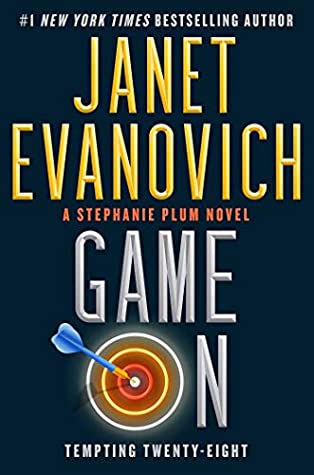
Game On! by Janet Evanovich****-*****

Stephanie Plum has been my constant companion for decades, but she never seems to get any older. We should all be so lucky!

My thanks go to Net Galley and Atria Books for the invitation to read and review. This book is for sale now.

Stephanie is a bounty hunter, working for her cousin Vinnie’s bail bond service. She tracks down no-shows, takes them to have their hearings rescheduled, and collects a commission. Her mother wishes fervently that she would get a normal job such as a bank teller, or just go ahead and marry long-time boyfriend Officer Joe Morelli, and keep house and raise kiddies. But Stephanie is long on independence, and she’s short on marketable skills, and so this is what she does. And we readers are well aware that she wouldn’t be half this hilarious as a housewife, so we cheer her on.

In an interview, author Evanovich said she had lit on the idea of a bounty hunter protagonist because the writer doesn’t need a background in legal matters the way that she would if she used a cop, detective, or lawyer. The primary skill required of a bail bonds enforcer is lying, and she felt she had a good grasp of that one.

You gotta love it.

There have been a few wobbles in the series, and a moment (long ago) when I thought perhaps it was played out. But like her intrepid protagonist, the author rallied and came back stronger than ever.

Can you read this book if you haven’t read any of the others in the series? Yes. Yes, you surely can; but you are most likely going to want to go back for the rest once you do so.

There are a few things that strike me as I read this one. I suddenly find myself wondering why Stephanie doesn’t seem to have women friends. She’s lived in Trenton—in the Burg—her entire life, so shouldn’t she have a few lifelong pals? But by the end of the story, I realized that her work buds are her go-to girls. Lula gets into a scrape and leaves what little she has to Stephanie (but of course, Lula pulls through. I don’t feel like this is a spoiler; since when would a riotously funny writer like Evanovich off a main character?) Connie is a distant relative, but she’s also a friend.

I also find myself, like other reviewers, wondering about the sanitized language and decreasing vocabulary levels. We’ve been drifting in this direction for awhile. At the start of the series, profanity was used by the people and in the situations where you’d expect to find it. The overall language level was accessible to anybody that finished eighth grade. Over the last several episodes, however, it’s been drifting downward. Now, apart from one “damn”, I found nothing, although the euphemisms are stellar (“What the fork,” “What the Hellman’s Mayonnaise,” “Son of a bagel.”)  And the overall vocabulary level is now down to about fifth grade. If it goes any lower (see the author’s other series,) I may not be interested anymore, but as it stands, it’s fast, it’s snappy, and I’m in.

The usual elements—escorting Grandma Mazur to viewings at the mortuary; exploding cars; men surprising Stephanie when they let themselves into her locked apartment; dinner with Stephanie’s parents; a geeky witness, or victim, or possibly even an offender, that Stephanie takes under her wing; and the red-hot Joe Morelli are all present and accounted for. Stephanie’s mother has been drinking heavily every time Stephanie gets into a dangerous scrape, and Evanovich has been toying with some character development in her direction. I hope she follows through.

The tension of Stephanie trying to decide between Morelli and the mysterious Ranger is over, for now, at least, and it was getting old, so I applaud this development. She knows that Ranger will never marry her, and there’s a lot he’ll never tell her. She knows Morelli. They grew up together, and they understand one another. Marriage, maybe not yet; but Joe is the one. She’s tempted by others in this installment, but for once, she behaves herself. Good.

Whereas this series isn’t the magnificent literary accomplishment attained by some mystery Grand Masters, and it doesn’t try to be, I rate it as five stars in the humor genre. It made me laugh out loud on page two, and though I read quite a lot of books each year, those that have made me howl this year can be counted on one hand. It’s a more valuable characteristic than some might guess, especially during these tense times.

Highly recommended to those that need a good laugh.

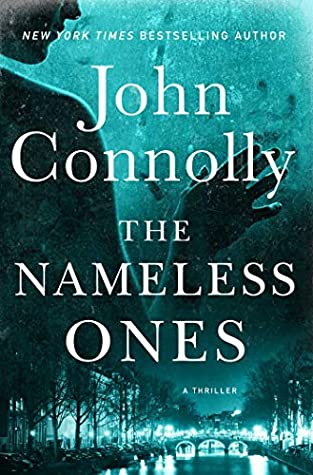
The Nameless Ones, by John Connolly*****

Connolly has written the creepiest, spookiest, best written novel you will see this October. The Nameless Ones is #19 in the Charlie Parker series; my thanks go to Atria Books and Net Galley for the review copy. This book goes up for sale October 26, 2021.

The series continues a conflict that began earlier in the series; that said, you can jump in here anyway. However, once you read this one, you’ll want to go back and pick up the others, or at least, say, the last five or six leading up to it. That’s all to the good, since Connolly can’t write as fast as you can read. Perhaps if you collect them you will be entertained until his next one comes out.

Unlike any of his other Charlie Parker stories, Parker plays a relatively peripheral role, with his two massively popular assistants, Angel and Louis, up front, with Louis having the lion’s share of the action. These two, who have served as Parker’s investigators and at times, as his body guards, are interesting characters. They do not love the law, but they do love each other. Angel is recovering from cancer treatment and Louis is in search of vengeance. Someone they had hired as a liaison in Serbia has been murdered, and the man’s last act, when he saw the walls closing in, was to wire a substantial sum into Louis’s account. Louis, in turn, intends to use that money to terminate the men that terminated his colleague. Stranger still, he is supported—in a massively unofficial manner—by the FBI. He doesn’t like it much, but there they are.

There’s a new character named Zorya, who is dead, but hasn’t crossed over. “She was a creature of the cold and dark. Zorya had winter blood.” She is physically small, and in a hoodie she is generally accepted by bystanders as an adolescent. She has attached herself to one of the men Louis is hunting, and has clairvoyant gifts. But what’s particularly interesting is her relationship to Jennifer Parker, the murdered seven-year-old daughter of Charlie. Jennifer has appeared to her father on a number of occasions, sometimes providing him with critical information. Now Connolly has decided to develop Jennifer, who has obtained a fair amount of power and authority on the other side of the veil. When Zorya targets Charlie, Jennifer targets Zorya. This is one of the coolest gambits I have seen in years, and I can’t wait to see what happens in the next book. But let’s get back to this one, since that’s what I’m supposed to be doing here.

New readers should prepare for a good deal of violence, and the most graphic and horrific shows up right at the beginning, so if you read it and aren’t sure you can stay the course through the end of the book, take heart. Lots more people are going to drop dead, but the most nightmarish details are up front. Nevertheless, it’s not something I read directly before sleeping.

The intensity and horror are nicely broken up with humor; the dialogue featuring Louis, Angel, or both positively crackles. I laughed out loud more than once. A pair of secondary bodyguards, the Fulci Brothers, whom Angel and Louis have deputized to watch out for Charlie at one point, are also welcome additions, and in no way resemble the pair that hired them. Sure enough, they save Parker’s butt. When the police arrive and Parker tells them only the bare minimum, the detective in charge reminds him that his would-be assassins may try again. “The Fulcis won’t always be ready to come to the rescue with a tire iron and a bear head.” (!!!)

As always, Connolly deftly employs a huge number of characters, and yet I am able to keep all of them straight. He keeps the time sequence linear, and this helps the story flow and keeps the players and events from becoming entangled.

If you’ve followed this review to this point, you have all the stamina you need to enjoy this exceptional novel. True, the book is longer than my review, but Connolly writes a lot better, too.

Highly recommended!

Lightning Strike, by William Kent Krueger*****

Lightning Strike is the prequel to William Kent Krueger’s successful, long-running mystery series based on a Minnesota sheriff, Cork O’Connor. This is my introduction to the series; my introduction to this author came in 2019, when I read and reviewed This Tender Land.  I read this free and early, thanks to Net Galley and Atria Books. It will be available to the public Tuesday, August 24, 2021.

In the prequel, Cork is twelve, and he’s on a camping expedition with his friend Jorge when they come across a body hanging off the maple tree at Lightning Strike. What’s worse, it’s someone they know; the corpse is that of Big John Manydeeds, the uncle of a close friend. Cork’s father, Liam, is the sheriff, and although he’s been told to let the adults investigate this horrific event, Cork keeps coming up with useful bits of information.

Seems he has a knack.

One of the most admirable aspects of Krueger’s writing is the way he folds his setting, characters, and plot seamlessly to create an atmospheric stew that’s impossible to look away from. The story takes place in the far northern reaches of Minnesota in (fictitious) Tamarack County, near Iron Lake and the iron range, as well as the Ojibwe (Chippewa) Indian Reservation, and the tension and conflict between tribal members, which include Cork’s mother and grandmother, toward Caucasians, which include Liam, are a central feature of this mystery. Tribal members insist that Big John would never have taken his own life, and even had he done so, he would never done it at this sacred location. At first they aren’t taken seriously, but as events unfold, it becomes increasingly clear that they are right. This was no suicide.

The key suspect in Big John’s murder proves to be the town’s wealthiest citizen, a tightfisted, overtly racist, elderly Scotsman that owns practically everything. He’s a suspect too soon to be the actual killer, I figure, and I think I can see where the story is headed, but without giving anything away, I have to tell you, Krueger introduces all sorts of twists and turns I don’t see coming, and they aren’t far-fetched ones, either.

There is dark foreshadowing all over the place, and the tension and outrage that exists between the tribe and law enforcement—well, the sheriff, really—grow to ominous proportions. Liam insists on examining facts and hard evidence; the Ojibwe are eager to include portents and messages from the great beyond. They want that nasty rich guy arrested now, if not sooner, and when Liam tells them that it doesn’t work that way because circumstantial evidence isn’t enough, that hearsay can’t win a conviction, they scoff and point out that when the suspect is Ojibwe, those things are always more than adequate. And again, they have a point. A local business owner who is Ojibwe tells him, “Sheriff, you better believe every Shinnob on the rez is watching you right now. Every step you take.”

While Liam is busy with his work, nobody is paying much attention to the boys; Cork, Jorge, and their friend Billy Downwind, who is related to Big John, poke around some more, and what they unearth is both shocking and dangerous.

Lightning Strike owned me until it was done, and though I rarely do this, I’m headed to the Seattle Bibliocommons to find the next book, which is technically the first in the series, because for this series and this writer, once cannot possibly be enough. Highly recommended!

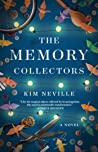
The Memory Collectors, by Kim Neville***

2.5 stars, rounded upward.

I was truly excited to read this book; perhaps too much so. It’s not a bad novel, but not the crowning wonder that I was expecting. My thanks go to Atria Books and Net Galley for the invitation to read and review.

Ev lives in poverty, sorting through trash in hope of finding treasures that she can improve upon and sell. As the story unfolds, we are momentarily off-balance, learning about Ev and the setting primarily through context. We learn early on that Ev has a traumatic past—with the particulars doled out in dribs and drabs to create suspense—and that she has an unusual gift, that of feeling the powerful emotions experienced by the item’s former owner. She wears gloves to prevent herself from becoming overwhelmed, particularly by the negative feelings some objects project.

Harriet is an elderly woman with similar gifts, and she’s in search of an heir. When she and Ev collide over contested objects, she wants to hire Ev. Ev resists at first, but is eventually drawn in after carefully negotiating her terms. An important side character is Ev’s long-lost sister, Noemi, who pops back into Ev’s life unexpectedly. Noemi’s role here is to reveal the past events that have scarred her elder sister, as well as to motivate Ev to be successful and build a better life.

At the outset, I am impressed by the writing, and it looks like the hype is deserved, because I am immediately engaged. But as the story moves forward, it becomes slower, then slooower, then slooooower…and I realize that this is one more fantasy novel in which the one original aspect, the “stains” that reveal the character of an object to people like Ev and Harriet, is just about all the author is going to give us. Everything else, from the revelations about the past, to the relationship between the sisters, to the dynamics between the elder and younger sensitive women, to the problem posed by another gifted but malign person, to uh, everything, is sort of lackluster and tedious. The character development is shallow and barely there. I never become comfortably acquainted with the world in which these women exist. It’s as if the author has trotted out this one device—I’m trying hard not to call it a gimmick—and then figures her job is done.  There isn’t much else that I haven’t seen done much better by other writers. In the end, I tossed it on the DNF pile.

I read this story digitally, but I alternated it with the audio version, and am inclined to recommend the audio version slightly more to those that plan to read it. Initially I don’t like the way that the reader, Emily Woo Zeller, voices Noemi, using a chirpy, almost shrill voice, but after I have listened for a bit over an hour, I become accustomed to it and grow to regard the character with a fondness I don’t find for the other characters. Instead of perceiving her as shrill, I begin to think, “Oh, it’s okay; that’s just the way Noemi is.” Since I don’t fully believe any of the other characters, I have to give Zeller props for her performance.

This book is for sale now; get it free or cheap if you’re interested, but don’t shell out the full jacket price unless your pockets are deep ones.

Sin Eater, by Megan Campisi**-***

Sin Eater is a one-of-a-kind work of historical fiction, and I was invited to read and review it by Atria Books and Net Galley. Though other reviewers seem to appreciate it, I have a difficult time bonding with any part of it, and so eventually abandon it. I check out a copy of the audio version from Seattle Bibliocommons, but sadly, I find I don’t want to listen to it, either.

When I read historical fiction, I expect to learn something. The best of the genre are those that convey an event that actually occurred, and that are presented as fiction so that the author can add dialogue and an inner narrative. Historical fiction that is a bit looser, perhaps telling a story of an actual place, person, and time but adding elements that are fictional, perhaps because of gaps in what is documented, or even because the author just plain feels like it, are sometimes excellent if the characters are compelling and immediate, and the writing particularly strong.

When I accept the review copy of this novel, I do so partly because of this cover (though others have also been used,) but mostly because I am intrigued by the notion of a sin eater, and I want to learn more. However, the author’s notes tell me that there’s no information available about it, save for the phrase that popped up somewhere; what a disappointment.

Then there’s the plot, one that starts grim, then becomes grimmer, followed by a brief (very brief) flicker of hope, followed by persecution, death, and misery, misery, misery.

Campisi is a competent wordsmith, but the characters never gel for me, and maybe that’s just as well, since they are doomed. I am a passionate feminist, and the promise of that element is an additional lure, but in the end, I see no message that hasn’t been done elsewhere better.

If you consider yourself to be the sort of reader that might like this story, based on the promotional description, you may be right; but as a reviewer, all I can offer is my own take on it, and I cannot tell anyone that I am impressed, because I am not.