I was invited to read and review this title by Net Galley and Crown Publishing. Thanks go to them for the DRC, and my apologies for being late, late, late. The title was published last month and is available now.
The strongest part of Hoock’s history, which seeks to set the record straight on the American Revolutionary War, is his research. He is an historian of some renown, and his entire life has been dedicated to studying and teaching about Britain. His sources are, as one might expect, thorough and impeccable. His thesis is that there was a great deal more violence over the course of this revolution than is commonly remembered, and
“By ‘violence’, I mean the use of physical force with intention to kill, or cause damage or harm to people or property. I also mean psychological violence: the use of threats, bullying tactics, and brutality to instill fear in people and influence their conduct and decisions…”
This is indeed a broad brush. In most courts of law today, a property crime is not considered a crime of violence, nor should it be. Better someone run away with your television set than shoot you, or knock you over the head, or hurt your family. And…bullying? Certainly such behavior gets more attention today, both legally and socially, particularly where young people are concerned; yet we are talking about a revolution here. A revolution! And this is part of what prevents me from engaging fully with the text. In the thick of a battle that will determine the futures of everyone concerned, a war to wrest control of its destiny from the mightiest naval power on Earth, it seems a bit of a stretch to expect that American Patriots and Loyalists would treat one another with perfect courtesy.
This brings me to the other part of this history that makes this reviewer cranky. The teaser suggests that this will be a balanced account, demonstrating that far more violence occurred on both sides than is widely taught in American schools, and it just isn’t so. In point of fact, although both Americans and Brits are discussed and shown to be more violent than most of us know, most of this book is dedicated to discussing the unprincipled, the unkind, the indecent ways British troops and loyal colonists were mishandled by brutal American Patriots. I went through my DRC with a highlighter, and far more space is given to bullying, demeaning, and other anti-British behaviors.
“Less careful individuals risked being investigated if they were overheard criticizing their local committee, if they drank a royal toast or sang “God Save the King” in the wrong company.”
My violin please.
There’s a lot of strong material here, and some of the tales of physical violence are graphic. In fact, the level of gory detail may be the summer reading dream of a nerdy teen with a strong reading level. And there is a lot of information that is new to me. Hoock depicts Lord North and King George III very differently from any other historian I have read; it would be easier for me to believe that Hoock’s viewpoint is the accurate one, had he admitted up front that he was writing from a largely Anglo-centric perspective.
The maps bear mention here. Rather than produce new maps that are legible on a DRC, Hoocks has chosen to use actual maps from the time period. This choice is hard to argue with; they’re primary documents, and although a second map that is more readable might be desired, I can’t argue that these maps should not be used. In fact, it’s interesting to see a map that includes what is now the Eastern USA and Eastern Canada with no line of demarcation, because nobody at the time regarded the US and Canada as separate entities. But I would say that those that want to read this book and that want the maps—which are important—should consider buying this title on paper rather than digitally, unless you intend to read it on large computer monitor.
Although the text isn’t as evenly balanced as the introduction implies, this is still a strong addition to the study of the American Revolution. It’s not an overview of the Revolution and does not pretend to be, so those looking to read just one book on the American Revolution should get something else. But for historians that want to deepen and enrich their understanding of this struggle and that think critically and independently, this book—in paper—is recommended.
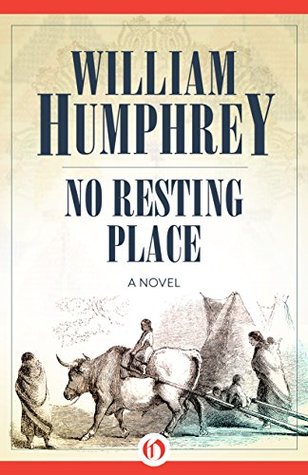 I was drawn to this story because I had read William Humphrey’s Home from the Hill, brilliant Southern fiction that was a contender for the National Book Award, and I couldn’t imagine letting anything written by this author pass me by. Thanks go to Net Galley and Open Road Media for the DRC, which I received free in exchange for this honest review. The book will be re-released digitally February 17, 2017.
 The American Civil War is part of the curriculum I used to teach, and in retirement I still enjoy reading about it. When I saw that Open Road Media had listed this title on Net Galley to be republished digitally this summer, I swooped in and grabbed a copy for myself. I was so eager to read it that I bumped it ahead of some other DRCs I already had, and I really wanted to like it. Unfortunately, this is a shallow effort and it shows. Don’t buy it for yourself, and for heaven’s sake don’t advise your students to read it.
 John Dean was counsel to the president during the Nixon administration, and was the first to testify against all of the Watergate conspirators, including Nixon and including himself, a bold but necessary decision that led to Nixon’s resignation—done to avoid imminent impeachment—and Dean’s imprisonment. Dean’s story is a real page turner, and Nixon-Watergate buffs as well as those that are curious about this time period should read this book. I read the hard copy version, for which I paid full jacket price, shortly after its release, and when I saw that my friends at Open Road Media and Net Galley were re-releasing it digitally, I climbed on board right away. This title is available for sale today, December 20, 2016.
 What, another one? Yes friends, every time I find a noteworthy biography of Grant, it leads me to another. This is not a recent release; I found it on an annual pilgrimage to Powell’s City of Books in my old hometown, Portland, Oregon. I always swing through the American Civil War shelves of their history section, and I make a pass through the military history area as well. I found this treasure, originally published in 2001 when I was too busy to read much of anything. It was a finalist for the Pulitzer; A New York Times and American Library Association Notable Book; and Publishers Weekly Book of the Year. But in choosing a thick, meaty biography such as this one—it weighs in at 781 pages, of which 628 are text, and the rest end-notes and index—I always skip to the back of the book and skim the sources. If a writer quotes other secondary texts at length, I know I can skip the book in my hand and search instead for those the writer has quoted. But Smith quotes primary documents, dusty letters, memos, and military records for which I would have to load my wide self into the car and drive around the country to various libraries in out of the way places. Source material like Smith’s is promising, so I bought a gently used copy for my own collection and brought it on home. And unlike the DRC’s I so frequently read at a feverish pace in order to review them by a particular date, I took my time with this one, knowing that if I only read a few pages each day and then reflected on them before moving on, I would retain more.