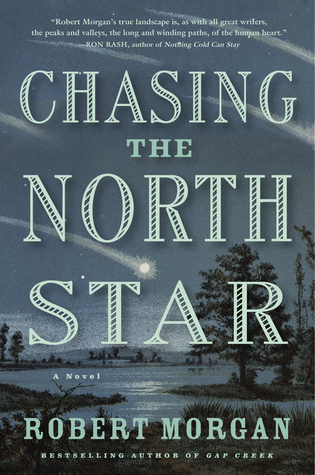
Chasing the North Star, by Robert Morgan****

chasingthenorthstarChasing the North Star is a compelling narrative of two teenagers escaped from slavery on their flight toward the North. Thank you to Net Galley and Algonquin Books for the DRC, which I received in exchange for an honest review. This book becomes available to the public April 5, 2016.

Morgan begins with the story of Jonah, a man who leaves the horrific plantation on which he has been kept. His story is told in the third person omniscient, and so there is virtually no dialogue for a long time. I waited to see how well it would hold up; it isn’t easy to keep a reader’s attention for long passages in which everything is told within a narrative, and even more so when it is told in the third person, as opposed to first person, where the character himself tells us the story. And because the narrative combined strong character development, near-tangible setting, and a series of brilliant moves to elude pursuers, I found that my attention was held quite well.

The book is in fact both accessible and a surprisingly quick read.

Part of the way into the story, Angel, our second protagonist, joins Jonah, and she tells us her own story through the first person. I found this device—of switching from third person for Jonah’s story to first person when telling Angel’s—both unusual and congenial. We watch him and cheer for him, but then she talks to us and just lays it all out. And Angel is nobody’s helpless damsel. She tells us up front that it’s a good thing for Jonah that she loves him, because he is going to need her to save his butt, and she does so more than once.

The sparseness of the dialogue makes sense when one thinks about it. Two escaped slaves that do nothing but talk, talk, talk all the way north are going to be caught in a hot minute. The writer takes an intelligent risk in using so much narrative and so little dialogue, and it pays off.

Stories involving slavery are often really painful for African-American readers to mow through, because they recall a time that was so demeaning, not only a physical horror but one that assaulted their dignity. The “N” word appears here, but is used sparingly considering the time in which it is set, and the topic. I appreciated the autonomy with which Jonah and Angel operate. Too many stories of freedom from bondage feature white saviors more prominently than are appropriate.

In fact, my sole criticism of this story is that it does not portray the extent to which the Underground Railroad was run by free Black men and women in the north; but then, this isn’t a story of organized escape, but an independent one, and it is possible that the region in which our characters travel was different in that respect.

Those that love good historical fiction should read this book. Morgan has done a fine job with a difficult topic, and the story is one of triumph and glory.

The Invention of Wings, by Sue Monk Kidd*****

theinventionofwingsTwo of today’s hottest political topics have to do with equality. As we follow and sometimes participate in the Black Lives Matter movement, along with the fight to keep Planned Parenthood funded and maintain a woman’s right to own her body and say what happens to it, this elegantly crafted work of historical fiction could not, strangely enough, be more timely. The Invention of Wings is a fictional biography of Sarah and Angelina Grimke, abolitionists and feminists, the first to make screaming headlines by speaking out publicly decades before women would see the right to vote, and decades before the first shots of the American Civil War were fired. As is essential in dealing with the rights of then-enslaved African-Americans in the south, Kidd adds an additional character, a slave named Hetty, written alternately with the Sarah’s story. I say it is essential to do so; this is because it is wrong to write about the marginalization and subjugation of an entire people, and then not include a representative of that group into the plot. As usual, Kidd doesn’t disappoint.

Much as I love historical fiction, one thing that makes me a little crazy is wondering where the research ends and fiction commences. In her afterword, the author lets us know specifically what is true and what isn’t. She even gives us a brief bibliography to pursue if we feel moved to do so; the only other historical fiction writer I know of that does this is Laurence Yep, my hands-down favorite YA author. Thus, Kidd places herself in outstanding company.

The Grimke sisters were born into the elite planter class, a tiny minority among Caucasians in the South, and in the very belly of the beast: Charleston, South Carolina. Partially because of the tremendous brutality meted out to the plantation’s slaves right before her tiny eyes there at home, Sarah Grimke grew up opposed to slavery. As a much older sister, she had a formative role helping her mother raise Angelina, who also became a fierce, uncompromising abolitionist.

It is one thing to take up a cause that is small but in which one has a support base. For the Grimkes, there was nothing. Eventually both had to move north for their own safety. And although, as a history major and a feminist of the 1970’s I had read about the Grimke sisters many times, it is within the well-crafted, deeply thoughtful, well researched pages of this novel that they first came to life for me.

Hetty, the slave depicted within these pages, actually existed, but the story Kidd writes for her is entirely fictional. The real Hetty died before Sarah was grown. Still, her character felt as real to me, and was easily as well developed as either of the Grimke sisters. Hetty is not passive, not waiting to be “set” free. She understands that the only freedom she is likely to receive will be what she can do for herself. A nice touch Kidd adds is in making Hetty one of the children of Denmark Vesey, the free African-American that attempted to organize and lead a slave revolt.

Everything here is carefully constructed and absorbing. Kidd has long demonstrated formidable talent in constructing well developed characters and vivid settings; the difference here (as opposed to The Secret Life of Bees and The Mermaid’s Chair, the two others of hers I have read) is the research involved. As with everything else, she blends fact and detail into a well spun tale.

I should add here that the literacy level required to deal with this text is higher than most. Don’t toss it out there for your average middle schooler to read, because it will prove too difficult. Because of the way she builds her story, brick by brick, the pace doesn’t really pick up until about halfway into the book. This isn’t a rip-roaring page turner; it’s a series of quiet nights by the fire, or curled up on your favorite window seat, or by the side of your bed. Give it the time it deserves.
Though I got my copy from the Seattle Public Library, I consider this title worth the cover price. Highly recommended.

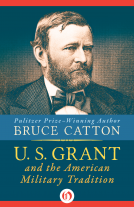
U.S. Grant and the American Military Tradition, by Bruce Catton****

usgrantandtheamericanmilThis brass-tacks biography of US Grant, who served as America’s finest Civil War general and also two terms as US president, was originally written for young adults. Now it is something of an anomaly, and yet not a bad read for the right audience. Thank you, thank you to Open Road Integrated Media and to Net Galley for providing me with the DRC. This book will be for sale in digital format November 3.

Reading this nifty little book reminded me—not entirely happily—of how much sturdier literacy in the United States stood during the 1950’s, when this biography was originally written, compared to now. True, it was a less egalitarian, less inclusive school house that could throw this level of reading at its teenagers, and that is a different debate for a different day. Right now, I just have to tell you that Catton’s boiled-down biography is going to be over the heads of most high school students. In addition, there are a couple of slang terms no longer in use that may confuse the reader. I understood one of them—and I was born in the late ‘50’s—but another phrase left me scratching my head. My two fields, when teaching, were literature and US history, primarily the American Civil War and government, so if I don’t get it, then high school kids will miss some of it also. The book could be used for honors students, most likely, but is no longer ideally suited to high school students.

However, I can see its use today for community college students, and also for adults who are not doing research and don’t care to see Mr. Catton’s sources or argue his perspective. He takes a few enormously controversial aspects of Grant’s life and makes his own pronouncements, some bold, some bland, with absolutely not one shred of evidence to back them up, apart from his own excellent reputation, and so scholars in the field are more likely to find his Civil War trilogies more satisfying than this little nugget. But for the history buff who just wants a thumbnail sketch, one book and we’re finished thanks, this could be it. It is certainly less of a meal than Grant’s own memoir; also, unlike Grant’s inarguably excellent memoir, Catton addresses the rumors about Grant and liquor that Grant himself refused to even discuss.

Catton focuses primarily on the Civil War years, which I believe is the right way to remember the man, but he also talks about the setting into which Grant was born, and in a relatively short amount of text provides us with the lifestyle and expectation of the average American farmer, which is what the vast majority of Americans were at that time. He carries us through Grant’s time at West Point, then through the wars with Mexico.

He takes apart and casts aside, brick by brick, the nasty allegations that Grant’s detractors made then and in contemporary times, and shines an authoritative light on them. What about Grant and the booze? Was Grant really a bad businessman who lost his own money and that of other people? Was he really Grant-the-butcher, as a brief but ugly period in revisionism charged, willing to plow willy-nilly into any and every battle regardless of the number of soldiers’ lives lost? What about his presidency, and the scandal that clouded it?

Grant is one of my heroes, and I appreciate the way Catton defends him here. I particularly was interested in his very convincing defense of Grant as businessman. I found Catton slightly abrasive in his tone toward Grant’s defense of the rights of African-Americans during Reconstruction; it was clearly this, rather than anything else, that caused the glow of his wartime glory to dim, because the Klan and Southern white reactionaries were absolutely hell-bent on creating a stratified society in which the Black man did not have equal rights to those of Caucasians, and one determined U.S. president was not able to stem that tide. That’s really what Grant was up against, and what tarnished his reputation. Catton feels he should have been more, um, “flexible”. I personally am pleased that he was willing to ride his principles to hell and back if need be…and that was about what happened.

I find it so sad, so ironic that the vast overload of expensive cigars sent to General Grant by patriotic admirers are what most likely lead to his death; throat cancer checked him out of this world only 48 hours after his memoir was completed.

Although there are no citations for the facts provided in the text, there is a nice little index that will prove useful to students.

Recommended for adults at the community college level, and to history buffs who just want to read one relatively simple biography of Grant.

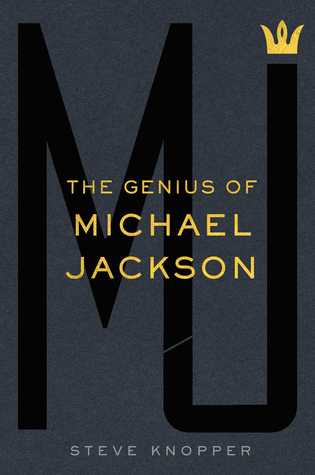
MJ: The Genius of Michael Jackson, by Steve Knopper****

MJthegeniusofmichaeljacksonJackson was a musical prodigy whose talent was almost limitless. His brilliant career was derailed by scandal, and his final 50 city tour was aborted by his death the night before it was to commence. Knopper does the best job of objectively recounting Jackson’s life and death that I have seen so far. His portrait is intimate without being prurient. Thanks go to Net Galley and Scribner for the DRC, which I received in exchange for this honest review.

Jackson was born in the 1950’s, a time when the race barrier kept Black performers from being seen by a general audience, with only the rarest exceptions. Black folks could play music for Black folks, and nobody else. The family was terribly poor, with eight or nine people crowded into a house better suited to three or four. They lived in Gary, a steel town in which Black poverty was more the rule than the exception. His father was a struggling musician until it became obvious that his sons had inherited his talent plus some. By the time Michael was five years old, he was the charismatic center of the Jackson Five, who soon were contracted to Motown, the center of African-American music in the USA.

Knopper explains how the family’s progression from a Motown act, where they were not allowed to actually play their own instruments on stage and could not use music they wrote themselves; to an independent family act, apart from one son who chose to remain with Motown; to the final day when Michael got himself an agent and a lawyer and set out on his own, divorcing his family so that he could have full control over a solo act. Until he was independent, iconic creations such as Thriller and Smooth Criminal would most likely never have been launched. And he recounts the family drama that ensued, with bodyguards pulling guns to discourage Michael’s angry brothers when they tried to force their way past the gates of his estate, shouting that he owed them money.

As a fan of excellent music and performance, I was sucked into the maelstrom produced by the press both during his life and afterward. It’s embarrassing to admit how completely I was played. For years I would not permit Jackson’s music to be played in my home because I thought he was a sick creep who used his fame to gain private, inappropriate contact with smooth-faced young boys. Somehow it escaped me that he had never been proved guilty in a court of law; on the one hand, it made sense to pay one family off in order to take the heat off his career, and Knopper documents the advice experienced, famous musicians gave Jackson to do whatever he had to do to shut that shit down so he could go back to focusing on music. But the press was merciless, and the payoff, which came too late to do damage control effectively, was portrayed as a tacit admission of guilt. And I bought it.

A few months after Jackson’s death, I was in a hotel room on vacation with my family, and my youngest son, who is Black, turned on the television, and there was the second round that Knopper documents, the round of memorial tributes that brought a lump to one’s throat as we saw Jackson’s miraculous career unspooled. He pioneered music videos in so many ways I had failed to appreciate, and he employed so many Black musicians that might never have had a steady job, while at the same time reaching out to Caucasian performers as well, creating a bridge between Black music and Caucasian sounds, transitioning from disco-like R and B to the “King of Pop”. I was horrified at the way I had misjudged him.

About a year ago, I read Michael Jackson’s memoir, Moonwalk, and while I took parts of it with a grain of salt, I also came to believe that the guy just didn’t know what was socially appropriate at times because he had never had a normal childhood. I was sold. Poor Michael.

Knopper has a more realistic take on all this. He certainly should; he used over 450 sources, and he wasn’t anybody’s mouthpiece. And so the truth turns out to be more complicated.

What left me somewhat stunned, in the end, was not the sex scandal, and it wasn’t the postmortem resurrection of Jackson as some sort of musical saint. Instead, I was absolutely floored at the number of people that worked for the guy, some of them for a lot of years, who he left without paychecks for weeks, then months on end. Jackson had a tremendous load of debt, was on the verge of bankruptcy and was saved only by his investment in song publishing, a piece of advice given him by friend Paul McCartney that he had followed through on. Yet he continued to buy one extreme luxury estate after another, holding residences he would likely never use again, shopping extravagantly (the example of taking a new friend shopping and telling him to do it “like this”, as he swept entire shelves of merchandise into his cart, astounded me) while leaving his employees, regular working folk with bills to pay for the most part, with no paychecks. There was money for shopping, but not for them, and some of them took him to court for it. It made me a bit sick. This man knew what it was like to be poor, and he knew what hunger was like, but as long as he didn’t have to see the people that he had betrayed, he could continue to play out the Peter Pan thread, irresponsibly trashing the lives of those he had told they could count on him, then leaving them with empty wallets and eviction notices.

Maybe you think I have over-shared. I have news; this is only the tip of the iceberg. If you have followed this review all the way to its conclusion, you will like this book. It is available for purchase October 20.

Glory Road, by Bruce Catton*****

gloryroadBruce Catton was known as a popular historian when he first published books about the American Civil War, because of his narrative nonfiction format. All of the books being released digitally now are ones previously published in a non-digital age. This reviewer hunted down Catton’s three volume Centennial History of the Civil War at a used bookstore some time back, and although they were among the best I have ever read by anyone on this topic, I was convinced that anything he had published earlier on the subject was probably repackaged in this trilogy, and so I stopped reading Catton, thinking I was done. Thank goodness Net Galley and Open Road Integrated Media posted the galley for this second volume of Catton’s Army of the Potomac trilogy. Now that I am disabused, I will have to find the first and third volumes also, because Catton is so eloquent that he can spin ordinarily dry-sounding military history into as good a read as the most compelling fiction.

Although his Civil War books are not written in academic format, there is no denying Catton’s research or his credentials. He was one of the founders of American Heritage Magazine, and served as its senior editor until his death. During World War II, he was the US government’s Director of Information for the War Production Board, then later worked in a similar capacity for the Department of the Interior and Department of Commerce.

Frankly, in order to spin the story of the three battles that comprise most of this volume out in such a conversational manner, dropping anecdotes in at just the right moments and then carrying on so as to make us feel as if he is a journalist traveling with the Union forces and we are concealed cleverly in his knapsack, bespeaks a remarkable amount of research. Only after reading the whole thing, spellbound, did it occur to me that for every vignette he included to make the telling more personal and more interesting, he must have edited out ten or twenty. The result is a masterpiece.

I came to this work as a former instructor in the field, and wished I had read his work in time to make use of it in the classroom. At the same time, it is sufficiently accessible that someone with no prior knowledge of the Civil War should be able to keep up just fine as long as they are able to read at the level of a high school senior or community college student. There is a definite bias toward the Union, which frankly is a requisite to my enjoyment of Civil War history. (Those that feel otherwise can go find Shelby Foote’s work.)

I never in a thousand years thought I would even consider rereading some of this war’s most painful battles—the battle of Fredericksburg being perhaps the most prominent in this regard—but Catton has some little-told things to say about these battles, and in particular about Burnside and that Tammany Hall political general, Sickles, that I hadn’t seen before. I had viewed Burnside as a failure from start to finish, but he makes a case that a lot of the mishandling of this situation was due to an ungainly Federal bureaucracy that wasn’t good at receiving information and passing it along in a prompt, useful manner. It gave me pause, and reminded me that we should never assume we know enough about something to call ourselves experts.

The Battle of Chancellorsville is likewise told in a manner fresh and readable, but the bulk of the text deals with that decisive, costly three day fight at Gettysburg. He gives an even-handed assessment of both Hooker and Meade, and again I learned some things I didn’t know before.

Catton’s writing is so engaging that it is destined to live for a long, long time after he is gone, educating subsequent generations. I found myself resolved, at the end of this volume, to look for other galleys of his work to read and review, and when there are no more left, to track down those still missing on my next pilgrimage to Powell’s City of Books.

For you, however, it is fortunate that Open Road is releasing this work digitally, so you won’t have to turn out the shelves of every used bookstore in the US in order to locate it. It will be available for purchase November 3, 2015 for your phone, computer, or e-reader, and is highly recommended to anyone with even a passing interest in the American Civil War.

Simply brilliant.

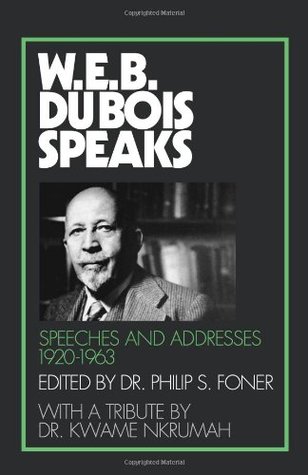
W.E.B. DuBois Speaks: Speeches and Addresses, by WEB DuBois*****

WEB DuBois SpeaksI read this book about 2 years ago, and then found I was intimidated by the 60 multicolored sticky notes that I had used to flag all the brilliant passages, and so I told myself I would review it…later. I didn’t have a DRC this time; I bought that book fair and square at full jacket price from Pathfinder Press many years ago, and then my life was too hectic for me to find time for it. And make no mistake, this is not a collection you want to take on while multitasking. This is deep, serious, articulate writing from one of the most brilliant civil rights leaders the world has yet known. And so although he has been dead for a long time, like Dr. Martin Luther King, his words have made him immortal. I recently read and reviewed another title about this luminary scholar and class fighter, and that reminded me that I had some unfinished reviewing to do for him…or maybe for me. Here we go.

It was DuBois that wrote The Souls of Black Folk, a wrenching reminder that even those Caucasian folks up north that think they have no racial biases, often have some issues they haven’t yet faced. It was true when he wrote it, and I’m sorry to say it is largely true today as well. In the letters and speeches, he takes the pain laid bare in that famous book and explains what the source of racism is, and what we can do about it.

Dr. King wrote the intro to this series of speeches and letters, and I actually liked that introduction better than I like the Dream speech. It has more substance. When you get this book, for heaven’s sake, don’t skip the introduction. In fact, the book is worth having just for the introduction.

Because it is a collection rather than a memoir, it isn’t linear. The opening text is a short overview of his own life, and so when we come to the second piece in the book, the reader steps backwards in time. Although it’s harsh and hard to read in some places because of the writer’s capacity to convey the pain that he and other Black folk have endured so that everyone can at least taste it for a moment, there is more to it than that. This volume is singularly useful, because in addition to laying America’s problem out bare and plain, DuBois has concrete recommendations for change. They are radical, but then we’ve seen what band-aid measures and the electoral process has done for Black folk, and anyone that regards the matter with any degree of seriousness has to recognize that what’s happened so far is a train wreck, primarily for African-Americans and other people of color, but also for all Americans, because those of us that have lived here for our entire lives have been denied the capacity to find out what it’s like to live without racism.

Is that asking too much?

DuBois became a deeply political individual, a Marxist that founded the NAACP, and eventually left that same organization because of political disagreement. He provides a thorough explanation of his experiences and reasoning. When he presents the problem as an economic one, it provides a path forward, and although he is gone now, it isn’t too late for the rest of us to climb on board, if we care deeply enough to do so.

DuBois’s speeches and letters reflect the progress of his thinking, and so some of what he says toward the end is very different from the ideas set forth earlier. It’s a good idea to read it in order, even though it’s a collection, because then the reader can see his personal and political evolution. I don’t think there has ever been anyone more articulate, more brilliant as a writer and speaker, than DuBois.

If you agree that the USA needs big change in order to end the institutions and practices that have created second-class citizenship for African-Americans, and if you want to see justice done for the families of all the men, women, and children that have lost their lives at the hands of racist cops and vigilantes even during the tenure of America’s first Black president, then you ought to get this book. It’s radical, but maybe it’s time to consider radical measures. Because the government and the elected officials that run it won’t correct this problem for us. We can’t leave it in the hands of others; we have to do this ourselves.

And DuBois explains it better than anyone else.

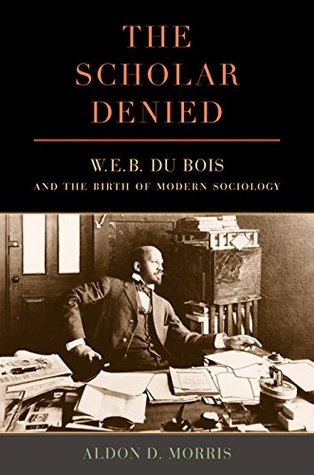
The Scholar Denied: W. E. B. Du Bois and the Birth of Modern Sociology, by Aldon Morris*****

thescholardeniedMorris considers DuBois the father of American sociology, and Morris is right. This is, of course, not the first time a Black man was robbed of credit for an accomplishment that was instead credited to a Caucasian American. It happens all the time. But until I ran across this scholarly study, I hadn’t thought about DuBois and sociology because I had never studied the latter. As an admirer of DuBois’ historical and political role, I was drawn to this book when I found it on Net Galley. Thank you to that excellent site as well as University of California Press for the DRC, which I was given in exchange for an honest review.
It is available for purchase now.

DuBois was a venerable intellectual, an academic light years ahead of most Americans of any racial or ethnic background. He was the first Black man to graduate from Harvard University, and in addition to his graduate work there, he also studied in Berlin under such luminaries as Max Weber and others. In Europe, he was treated as an equal by those he studied with, and I found myself wondering a trifle sadly—for him, not for us in the USA—why he chose to return here. And the answer is so poignant, so sweetly naïve, that I wanted to sit down and cry when I found it. Because once he had the empirical facts with which to debunk the whole US-Negro-inferiority mis-school of mis-thought, he genuinely believed he would be able to elevate African-Americans to a state of equality in the USA by laying out the facts. The racists that created Jim Crow laws in the south and an unofficial state of cold racism that let Black folk in the Northern states know where they were welcome and where they were not, would surely roll away, he thought, if he could reasonably haul out his charts, his graphs, his statistics, and demonstrate flawlessly, once and for all, that discrimination against Black people was based on incorrect information.

See what I mean? I could just cry for him.

So although DuBois was the first American to go to Europe, study sociology, and return with more and better credentials than any American academic, he could not persuade anyone with authority to bring about change, was not even allowed to present his findings to anybody except Black people in traditional Black colleges, because another school of sociologists, the Chicago school, were busy promoting armchair theories based on little data, or bogus data, all showing that Black people simply were not smart enough to become professionals or take on anything above and beyond manual labor, and of course, he was Black, so he must not be that smart, right?

Pause to allow your primal scream. It’s galling stuff.

Caucasian professors in Chicago had done a bit of reading, and with regard to Black people, decided that their craniums were too small to hold enough brain-iums. And just as there is one reactionary in every crowd that the newspapers will flock to in order to show that there is across-the-board agreement, so did Booker T Washington stand before any crowd that would listen to him (and the white academics just loved him), in order to say that it was the truth, that it was going to be a long time before the Negro was “ready” to do the difficult tasks involving critical thinking that had been so long denied him. Tiny steps; patience; tiny steps. Meanwhile, he extolled his fellow Black Americans to enroll their sons and daughters in programs teaching “industrial education”, so that they would be ready to do manual labor and put food on their families’ tables.

All of the studies that backed this line of thinking were deductive, starting with the answer (inferior beings, manual labor) and then finding the questions to fit that answer. DuBois had done inductive research because he was searching for information rather than looking for a rational-sounding way to keep a group of people entrenched in an economic underclass.

DuBois made the connection between the socialist theory he had studied and the material evidence before him: there were people getting rich off the backs of dark-skinned people, and they had a vested interest in maintaining Black folk as an underclass. Ultimately, he turned to political struggle, and that is how I knew about him, not as a sociologist, but as a Marxist. He also became the father of the interdisciplinary field of African-American studies. He helped found the NAACP.

This scholarly work, like just about anything produced by a university press, is not light reading. Rather, the author presents his thesis and synopsis, and then carefully, brick by brick, starts back at the beginning to build his case. His documentation is flawless, and his sources are diverse and strong. There is some repetition in the text, but that is appropriate in this type of writing. He is not there to entertain the reader, but to provide an authentic piece of research that will stand the test of time, so there is a little bit of a house-that-jack-built quality to the prose.

For serious admirers of DuBois’s work, this will be an excellent addition to your library. For those interested in sociology as a field, this is for you, too. And to those with a literacy level that permits you to access college-level material and who have a strong interest in African-American history and/or civil rights, this is a must-read.

For these readers, I recommend, in addition, The Souls of Black Folk, which I had not regarded as sociology-based material until now, though I have read it twice; and a collection of speeches by DuBois, which I have been intending to review for some time, and which will soon grace this page of my blog.

Morris has done outstanding work, and I like to think that if DuBois were here, he would be proud to see it.

A People’s History of the Civil War, by David Williams***

With an introduction scribed by the late great Howard Zinn (and the book edited by same), I figured I just had to add this book to my collection. It bills itself as a history of the marginalized groups of this era, those seldom represented in traditional history. I found it at my favorite local used bookstore, Magus Books, which is near University of Washington, and I scooped it immediately.

The tome sat in the upstairs powder room for months, but we didn’t look at it all that often. I had trouble climbing on board. Eventually I realized there were two things bothering me here. One is that it treats both Union and Confederate governments, along with the powerful moneyed interests backing the two sides of the conflict, as equally wrong and equally culpable. With this I sharply disagree. Whereas no doubt plenty of war profiteers made a great deal of money, and no doubt working people on both sides deserved better pay and greater prosperity, this was not an equally-wrong war. In fact, the first Marxist to live in the USA came here from Europe to fight for the Union, because that was the way to move history forward. So in a sense I disagreed with the premise of the whole book.

That much done, I noted that the overall tone was more cynical than I consider warranted. For me, the American Civil War was the last truly heroic conflict in which US forces fought. It also distinguished itself by producing an unusually high number of casualties where high ranking officers were concerned. You didn’t see American generals get dead in these proportions in either of the world wars, nor Korea, Vietnam, or any of the conflicts in the Middle East. So the snarky manner in which Williams refers to the disparity between Union brass and foot soldiers is not well placed. I found it abrasive.

In addition, if we’re talking about marginalized peoples, excuse me Mr. Williams, but where are the Black folk? The author seems to have mislaid some four million former slaves. I kept flipping through this volume trying to find some, but they are underrepresented quite badly; one might even say the author has marginalized them.

The one worthwhile thing here, the thing that kept that third star in its place, is the extensive attention paid to Native peoples during this time. I was aware of the role of the Cherokees and that was the sole extent of my knowledge of which way American Indians chose to side, when they chose a side at all. I got something for my money other than frustration and regret; I really had to look hard to find it, though.

Consequently, those doing specific research having to do with the role of Native Americans during the American Civil War should get this book. I recommend it for that niche audience only.

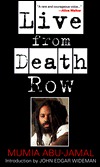
Live From Death Row, by Mumia Abu-Jamal*****

livefromdeathrowMumia is a former Black Panther. The facts support his having been framed in the murder of the cop, a crime for which he was nearly executed.

Live from Death Row, written before his sentence was commuted, is not, however, a vehicle he uses to advocate for himself or plead his own case to the public. He has written other books I haven’t read, and I don’t know if he did that there.

Instead, here he uses his own situation to discuss the racism inherent both in the U.S. court system; he also talks about racism on death row.

The mandatory fresh-air time, prized and treasured by men who rarely see the clear blue sky, is an Apartheid one, at least in Supermax, RHU,SMU, and SHU (ultimate maximum security prisons, which he says have swelled since jailhouse overcrowding has made prisons tenser places and more people are tossed into “the hole”). The vast majority of prisoners are Black, though they are a minority of the population at large, and in the Pennsylvania prison he describes, 80% of those maximum security cases, those who wear Black skin, are crowded into a courtyard. They can’t see green grass or the outdoors, only four brick walls and way up there, blue sky. Why? And where are the other prisoners going?

The other prisoners (who are also maximum security) who are not Black have a SEPARATE courtyard, which is surrounded by chain=link fencing with razor-wire, but has the view. The 20% have the perk of a much less crowded space and the capacity to see Mother Earth during their treasured time outside prison walls.

As to the racist system that places Blacks on death row at such a startlingly high rate, he offers the following statistics and footnotes all of them like the scholar he was before being incarcerated, and continues to be behind prison walls. He uses a Georgia case because it is one which caused the Supreme Court to recognize the following facts:

*defendants charged w killing Caucasian victims are 4.3 times as likely to be sent to death row as those charged w/killing Blacks;

*the race of the victim determines whether or not a death penalty is returned;

*nearly 6 of 11 defendants who received the death penalty for killing Caucasians would not have received the death penalty if their victims had been Black;

*20 of every 34 defendants sentenced to death would not have been given the death sentence if their victims had not been Caucasian.

He continues to pound one damning fact upon another, and cites court cases to back them up; those above come from McClesky vs. Kemp (1987). If the case sounds old, I would argue that precedents are set by very old cases indeed, and of course, this book was published early into the 2000 decade. I doubt a more recent gathering of data would return more favorable information; in the case of jail overcrowding, I suspect the recession has made it worse.

A person would have to be hiding under a rock or in a coma not to be aware of the level of violence visited upon African-Americans by cops and vigilantes within the past year.

I applaud Mumia for using his well-known case to set the facts before us, rather than trying to build momentum to save himself. There was a considerable amount of public pressure NOT to execute him, and I do think that had to do with his sentence being commuted; as it was, my kids’ urban U.S. high school was “barely holding together”, according to a counselor I knew there, the day that Mumia’s case was turned away by the U.S. Supreme Court.

If you are interested in reading about social justice issues, this relatively slender volume holds an astounding amount of really critical information. I appreciate Mumia’s relentless effort to make the public, both in the US and internationally, aware of the atrocities that continue to visit Black prisoners in the USA, and it’s more relevant now than ever!

The President and the Apprentice: Eisenhower and Nixon, 1952-1961, by Irwin F. Gellman***

thepresidentandtheapprenticeGellman’s biography covers Nixon’s tenure as Vice President of the USA under President Dwight Eisenhower; he covers the election campaign beforehand as well as the famous “Checkers Speech”. Thank you to Net Galley and Yale University Press for the DRC, which I took in exchange for an honest review.

It is a little bit hard to be sure about this work, because the galley I got was so rough that it was difficult to judge its fluency. I settled on 3 stars rather than 4 stars because I saw some issues with organization, small tidbits that only marginally bore mentioning showed up in multiple chapters.

That said, it’s a good resource for anyone looking to study the Eisenhower administration or Nixon’s early years in government. I learned some things I didn’t know, and I have read my share (and maybe your share too!) of Nixon-related literature. Gellman has done a great job with research, and even offers pictures of primary documents, such as Ike’s notes during Nixon’s famous speech, at the end of the book.

I learned that the USA of that time period was a much more innocent one than that which we live in now. The Checkers Speech is one good example: now it is regarding laughingly as a mawkish bit of theater, but what is not widely publicized anymore is that the American public was asked to respond as to whether he should stay on the ticket, and they flooded the Republican headquarters and media centers with letters that supported him 350 to 1.

Now that it is known that he used public dollars for personal gain as president, I had rather assumed he had done the same during the funding crisis in question, but actually, back then he was guilty of nothing. The donations that were made were a travel fund, because the Nixons didn’t have the money to travel around the country campaigning. Donors pitched in for their air fare, cab fare, and hotels. There was no law regarding campaign spending limits back then; no law was violated.

As vice president, Nixon had more responsibilities, and occupied a position of greater trust, than most who occupied the same position. He was sent overseas, not only as a good will ambassador or ribbon cutter, but to do unpleasant, tricky things, like talking down the heads of state in South Korea and Taiwan. In addition, Ike never cared to do his own dirty work domestically, and so if someone needed to be officially taken apart, there was a good chance Nixon would be tapped for the job. He had an unstoppable work ethic and was unflinchingly loyal.

If Nixon’s vice presidency is of interest to you, get a copy of Gellman’s book. It goes up for sale in late November, so you can also consider it as a holiday gift if someone you know would appreciate it.