Immunity: How Elie Metchnikoff Changed the Course of Modern Medicine, by Luba Vikhanski***-*****

immunityElie Metchnikoff is credited with several medical discoveries, some of which were found before Mother Russia was entirely ready to receive them. This interesting though technically challenging text is the story of his life, and especially of his scientific career and achievements. Thank you Net Galley and Chicago Review Press for the DRC, which I received in exchange for an honest review. This title will be available to the public April 1, 2016.

In the latter half of the nineteenth century, Russia still had a tsar—a royal ruler with power similar to that of an emperor—and it still had serfs, who legally could not leave the plots of land assigned to them to farm for the benefit of royal landowners. It was not an ideal climate for science or any other aspect of enlightened thinking, but Metchnikoff was not only gifted, he was immeasurably stubborn, and by such methods as posing as a college student in order to sneak into lectures, he achieved an excellent education and began to pave new inroads toward discovering how the human immune system works.

His theory that cells in the human body swarm around and dispose of microbes that enter the body in order to kill germs was true, but proving it to those with authority in Russia was not an easy thing to do. Only recently had germs been discovered to cause disease; not so long before, it was assumed that God smote certain people or their loved ones in retribution for their bad behavior or thoughts. Being a scientist in such a place was challenging, and eventually, after being snubbed repeatedly by the German academics he sought to win over, Metchnikoff found his way to Paris, and the Pasteur Institute, where he would spend the bulk of his career.

His refusal to participate in elitist cliques that feasted on 8 course gourmet meals while half of London starved warmed my heart, as did his refusal to be roped into other social pretensions. Really, in another time and place, this would be my kind of guy.

Here I must disclose the fact that the sciences are not my forte. Only since retirement from teaching in the humanities have I found the time and confidence to explore memoirs of famous scientists. Last autumn I read and reviewed the biography of Dr. Bennet Omalu, the man that discovered a brain disease that was the result of repeated blows to the head consistent with American football. Cheered by my success in understanding and reviewing that fascinating story, I decided to tackle this one…with less satisfactory results.

I have never been good at understanding science. It’s that simple.

So if science and in particular the history of immunology or disease is your wheelhouse, this may be a four or five star read for you. But although I am not scientifically minded, I do have a sturdier education than the average American, and so I think I’m being fair in saying that the average reader-on-the-street that picks this up due to general interest rather than exceptional training may find it to be a great deal of work.

I did check the endnotes; I always do. So unless the author has simply invented a lot of sources in other languages than English—which seems very unlikely indeed—then I can safely say that this author has relied primarily on sources that the average English-speaking reader will not be able to tap into. Strong documentation from a wide variety of sources.

Recommended to those with a higher than average facility for matters of science, and for those interested enough to wrestle with challenging material.

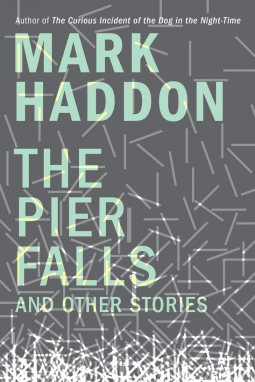
The Pier Falls: and Other Stories, by Mark Haddon*****

thepierfalls.pngMark Haddon has already left his mark on the world with his well known novel and play, The Curious Incident of the Dog in the Night-Time. I haven’t read that book but I will now, because this new collection is impressive. Thanks go to Net Galley and Doubleday for the DRC, which I received in exchange for a fair and honest review.  At times like this, when I get to review stellar writing, it’s a great pleasure to do so.

Note the title first, because it serves to set the tone for all of the stories here. It’s dark out there. On the one hand, a collection filled with cataclysmic tragedies and crimes can make our own troubles look small; yet the reader that tends toward serious clinical depression might be better served to read something lighter. I could imagine how immersing oneself in these stories, which seem quite immediate because they’re so well done, might make a depressive start dwelling on other things, like whether to reach for the rat poison or the razor blades. So if that’s you, get a different book, seriously.

For the rest of us, this is amazing fiction. The title story is the best:

The noise, when it comes, is like the noise of a redwood being felled, wood and metal bending and splitting under pressure. Everyone looks at their feet, feeling the hum and judder of the struts. The noise stops and there is a moment of silence, as if the sea itself were holding its breath. Then with a peal of biblical thunder…a woman and three children standing at the rail drop instantly. Six more people are poured, scrabbling, down the half-crater of shattered wood into the sea.

The story is written so intentionally that not a word is wasted. The result is a tale that is like having a pile of snapshots fall out of your wallet. There it all is in one cruel moment after another, laid bare for all to see. And you have to see it, because once you start, you cannot possibly look away.

Haddon’s capacity to develop a character within a short space is part of his magic, as is his brilliance with setting. The Gun has won an award already, and reminds me somewhat of Peter Straub’s spellbinding facility in combining children with horrible circumstances; the distinction between the protagonist and the new friend that his mother has warned is a bad influence point to class difference and the sometimes-terrible pragmatism that poverty creates. And in two other stories, Bunny  and Breathe, we see a crackling combination of genuine good intentions in a protagonist grappling with great pressure and suppressed rage.

None of it is pretty, but it’s too good not to read!

Another personal favorite is The Woodpecker and the Wolf, which veers into science fiction, starting off gently with the notion of space travel that involves sitting on a sofa, playing Scrabble a lot, and not doing much but observe, but then there are other developments and once again, things grow darker.

There have been times when I have had to speculate about whether it would be worth the purchase price of a book to read one really good short story that’s in the collection, or two really good stories. That’s not an issue here. While I confess that I didn’t finish The Island because it was so horribly dark—and one could perhaps argue that Haddon just did his job a little too well for me there—everything else here is simply admirable.

This outstanding collection is available to the public May 10, 2016, and it’s highly recommended.

Tears in the Grass, by Lynda Archer***

tearsinthegrassTears in the Grass marks the debut of novelist Lynda Archer. It tells the story of three generations of Cree women, and in doing so also provides the reader with that tribe’s rich history and culture. Thank you to Net Galley and Dundurn for the DRC, which I received in exchange for an honest review. This book is available for purchase now.

Elinor is old. She is old enough to have been through the shameful period in North America in which Native children were forcibly wrenched from the arms of their parents and forced to attend boarding schools in order to become assimilated and indoctrinated into the dominant culture. Her traumatic memories are harsh reading, but it’s the only way that story can be shared with any degree of honesty. And there’s something she has held back from her daughter Louise and her granddaughter Alice: she has another daughter out there somewhere. She was raped by a Caucasian man, carried the baby to term, and then it was stolen from her. She knows that baby, now a woman, is out there somewhere, and she wants to meet her before she dies. She turns to Alice to get the job done:


“’Are you listening? I want you to find that child.’

‘ I don’t know what you’re talking about.’

‘Your mother’s sister. Your aunt. My daughter. I was raped in that damned school.’”


The point of view shifts throughout the narrative, with the dominant one being that of Elinor, but also including those of Louise, Alice, and a bison. It doesn’t always flow in a way that makes sense; sometimes we are rolling right along through one of the women’s narrative and suddenly the thoughts being voiced are clearly those of an animal, with no transition to mark the change. The first time, it is that of a taxidermied bison in a museum, and the effect strikes me as somewhat cartoonish rather than reverent. At other times, there is no possible way that the animal in question could be a bison, unless we allow for some magical realism.  Remember, however, that I read a DRC, and sometimes details that are going to be present in the finished work, such as lines that mark a change of setting or point of view, are missing.  Your copy may make these changes clearer.

A lot of social justice issues are worked into the flow of these three generational narratives. Louise recalls the Vietnam War, which makes her a senior citizen also. She remembers the slaying of Dr. King, and if these details are to be utilized to establish setting and develop the character, they might be more effective if included earlier in Louise’s narrative.

Alice seems the easiest for the reader to relate to, even though my own age is closer to that of Louise. Her contemporary spin and flexible thinking are more in line with what most young people of any age are likely to resemble. Her affection for her grandmother comes through the page, and although all three women are effectively developed, she seems the most tangible. Alice is lesbian, and so there is also this aspect of social justice as a subscript, though it stays primarily in the background.

But let’s go back to the grandmother for a moment. Along with the need to meet her stolen daughter, Elinor has one more key task on her bucket list: she wants to know what the secret is that Louise has been hiding from her all these years. And Louise doesn’t want to tell her or even think about it. It’s an interesting twist, and adds to the characters of both Elinor and Louise.

Though shaky in places, Tears in the Grass is a worthy debut, and the subscript, the history of the Cree people at the hands of European settlers, is a tough read but an essential one, a story often left out of the core curriculums currently taught. Kudos to Archer, who will be a writer to watch in the future.

The Black Glove, by Geoffrey Miller*****

The Black GloveThe place is Hollywood, California; the time is 1980. Terry Traven is a private detective specializing in finding the runaway children of the wealthy. He is offered a job that appears to be more of the same; a local mogul’s son has disappeared, and Dad wants him found. But then the disappearance turns out to be a kidnapping, and the kidnapping turns out to be a murder, at which point all hell breaks loose. This story is fast-paced and though it’s set a generation or two ago, the issues with police brutality—otherwise known as “the black glove”—make it more socially relevant than your average piece of crime fiction. There are other components that will sit well with those with an eye for social justice, too. Thank you Brash Books Priority Reviewer’s Circle for the DRC, which I received in exchange for a fair and honest review. This book is available for sale right now.

The beginning of the book doesn’t appear to be auspicious. A guy walks into Traven’s office and presents him with a dossier that tells him all about himself, at least in the words of intelligence sources. The dossier is too lengthy–we see every word, pages and pages of italicized material– and is clearly a fast, easy way for the author to introduce us to the character. I was prepared to be let down.

Once we get past that sloppy introduction, however, the story is complex and fast paced enough to remind me of James Lee Burke’s detective series. Toss in some quirky names, like Senator Suspenders and a punk rock band called The Dead Cherries, and add a whole lot of action. And yet somehow we find ourselves discussing issues of race, gender, and gay rights without slowing the pace at all. I almost always take off at least a star for the use of the “n” word, but the way it is used here isn’t just some cheap stunt to show us that a bad guy is really rotten or ignorant; instead, the characters manage to embark on an abbreviated discussion of race and white privilege without ever becoming preachy or distracting from the main thread.  Some of it is very indirect, and it took me awhile to get a handle on it. In other places, it’s crystal clear, as when the visiting room at the jail is “gas chamber green…a cruelly subtle reminder to the inmate of his loss of freedom.”

The story’s subscript demonstrates how women and people of color are sometimes so overwhelmed by the racism and sexism that is inherent in US culture—and even more so when this novel was written than now—that we find ourselves internalizing that hatred. Likewise gay men, lesbians, and bisexuals; those from the Boomer generation will recall just how difficult this time period was for anyone that wasn’t straight.  And given that Miller wrote this during that time, I consider this story to be courageously written, a gutsy story by a writer unafraid to take a hard look at a controversial topic.

In fact, Brash Books hasn’t introduced a detective this brainy and complex, yet entertaining since they brought out Barbara Neely’s Blanche White series. What a tremendous find! I wish there was a whole series with this detective.

Meanwhile chances are excellent that you haven’t read this book yet, and if you lean left and enjoy a good detective novel, this is one you should scoop up right away.  It’s strong fiction with a progressive thread running through it. Don’t miss out.

The Autobiography of Mark Twain, Volume 3, by Mark Twain****

autobiomarktwainv3Huge thanks go to Net Galley and University of California Press, who provided me with a DRC in exchange for an honest review. It has taken me some time to read and rate it because once I had the DRC for Volume 3, I decided I should hunt down volumes 1 and 2 and read those first. Now I am finally finished, and it was well worth the effort.

First let’s talk about the obvious thing: how dare I rate Twain four stars rather than five?  I considered the matter and reflected that if Twain himself were to rate it, he might say the same. The reason is that, as he plainly states more than once in his narrative, he is writing not for posterity, but for bulk. An unfair copyright law that was present at the time he began his autobiography permitted a copyright to stand for only 42 years, after which the work entered the public domain. Twain hired a lobbyist to attempt to gain an amendment offering the author the option to renew the copyright, and ultimately he won. But when he started the autobiography, his plan was to write 500,000 words and then republish each of his books with a portion of the autobiography attached so that it could be called a new work and thereby merit a brand new copyright. Twain’s wealth had been considerably depleted by dishonest people in his employ, not once but three times. He had made a fortune, but much of it was gone, partially due to an unscrupulous publishing agent and then later to two household employees he regarded as close to him as family. The double blow of losing so much money and learning of the duplicity of people he had loved and thought loved him was a bitter pill indeed.

So the book contains filler, and this he unabashedly admits. And at times I had found myself wondering why he included all of the letters he had received from cute children he had met onboard a ship, but until I found the bald statement that he needed 500,000 words, I had attributed it to his eccentricity. No, not so much. There is gold in this memoir, and if you like Twain, or history, or both, you should buy it and read it. He says things nobody else has said, and so even once you realize you have entered into a portion of the memoir that is just plain filler and you skim till that section ends, the next things you read will be worth your time and money.

I promise.

Twain stipulated that the autobiography in its entirety must not be published until he had been dead 100 years. He did this because if he wanted to say someone was a rotten scoundrel and then give details that might well draw a lawsuit, he could go ahead and say it; he also said he didn’t want to hurt the feelings of said people’s children or grandchildren. I’d say he succeeded. Some of those he consigns to the flames are individuals contemporary readers won’t recognize. However, he hated President Theodore Roosevelt with a fiery passion, and he doesn’t mince words where he is concerned.

Most of the memoir is not angry in tone, however; there are places where I laughed out loud. The way he talks about Carnegie, who mentally catalogued every compliment ever paid him and then went through the entire litany when one visited, adding new ones but never removing or abbreviating the old ones, just cracked me up.

Most of all, I loved his explanation of the privileges conferred upon us by old age, one of which was the right to pitch a fit if one felt like it:

“But indeed the older you grow, the less secure becomes the furniture. When I throw chairs through the window I have a sufficient reason to back it. But you–you are but a creature of passion.”

Toward the end  I wanted to sit down and cry with him. He lived a long life, but the outcome was that he outlived three of his four children—a little boy that died shortly after birth, as well as two of his three daughters—and also his lovely wife, whom he adored, and his best friends. The autobiography was to provide support for the two daughters that he feared would not see a nickel from his earlier works because of the copyright laws.

Then two things happened almost simultaneously: the law was changed, with the amendment he had fought for added so that his copyrights could be extended; and the daughter that still needed his financial support, a woman that had spent much of her life in an institution because of epilepsy but now had medication that made it possible for her to be at home with a private nurse, died in the night.

It was right before Christmas, and she had been planning a surprise for her father, a Christmas tree decorated in an unusual, very artistic and tasteful manner, as he discovered when he entered her private sanctuary after her death. There were over fifty Christmas gifts there in various stages of wrap, many of them for people Twain says he would not have even thought of shopping for, and so he just sits in that room with his memoir, and he sobs. His other daughter, Clara, has married an affluent man and is very happily married; she won’t need his money. And now Jean is gone. Twain records the fact that the purpose the autobiography was to serve no longer exists…and he stops writing.

It’s enough to break your heart.

And so it ends, but it is an epic work.

For those planning to get this memoir, I give two crucial bits of advice: first, look at the title of the book carefully. Make sure it is this exact title. If it’s turned around—if for example the title becomes “Mark Twain’s Autobiography”—that’s not the one you want; it’s a knock-off and it’s not really even readable. It’s cheaper, but it is a false economy. The Twain Project took painstaking care in sorting and assembling what amounted to two whole file drawers full (or ten feet of files) of Twain material, some of it duplicated, some of it in his own handwriting, and some of it dictated, then typed by someone else. It was a huge job, and UC did it right.

The second bit of advice is not to worry too much about reading volume 2, or if you do, purchase the book that includes volumes 1 and 2 together. For some reason, even after all the effort that was expended into the organization of this hefty memoir, there is some duplication that renders most of volume 2 the same as portions of volume 1. Maybe it was Twain’s intention to duplicate it and so the Twain Project did so to honor his wishes; I can’t say. But everything you need in order to read this memoir in its entirety can be found in volumes 1 and 3.

Even with the filler, it is amazing work, and I highly recommend it to those that love Twain; those that love history; and those that love great memoirs.

Lincoln Reconsidered: Essays on the Civil War Era, by David Herbert Donald**

lincolnreconsideredI received this DRC free in exchange for an honest review. Thanks go to Net Galley and Open Road Integrated Media for letting me read it; Donald won the Pulitzer for his Lincoln biography, and I was sure this series of essays written for the purpose of dismantling myths surrounding the most revered president ever to occupy the White House would be hidden treasure rediscovered. What a crushing disappointment.

In the introduction, Herbert mentions that his section on abolitionists has drawn a great deal of criticism. Unfortunately, he appears not to have used such criticism as an opportunity to reevaluate the framework that limits his thinking in that section. More on that later;  I realized that since this is a collection of essays on various aspects of Lincoln, primarily as president, I needed to set aside the sharp distaste that overwhelmed me initially in reading this selection and see what I thought of the other entries.

I found Donald’s essay regarding Mary Todd Lincoln interesting. Another, which addressed the folklore surrounding Lincoln, part of which involved every possible religious denomination attempting to claim him as one of their own when in reality, he just wasn’t all that religious, was interesting; I could have done without the Rastus-style written dialect provided to the African-American source he quoted.

In fact, it is Donald’s writing—and lack of it—regarding African-Americans that put my hackles up. I realized part way into it that this problem is going to be a common one for any Caucasian American scholar whose main body of work around the Civil War was written before the Civil Rights movement. For a long time, the American intelligentsia was tremendously segregated, and those at almost entirely white institutions of learning would never have deigned to call upon professors at traditionally Black universities or utilize the publications of Black historians. (It’s also before the first wave of feminism of the 60’s and 70’s, and so no woman is considered a credible resource; but that is a secondary consideration to the grave matter of Donald’s easy dismissal of Black historians, due to the topic at hand.)

Anyone that has delved deeply into the study of abolition and the Underground Railroad has to know that the majority of abolitionists in the North were free Black people. They didn’t turn up in Caucasian newspapers, but they were certainly quoted in the Black press. In most cases they did not attend meetings hosted by Caucasians unless specifically invited, as happened sometimes in Quaker-sponsored gatherings. But if WEB DuBois could find this information, then David Pulitzer Donald could have found it, too. His supercilious, offhand treatment of Black people when they are mentioned at all tells us why he chose not to go there.

Had Donald done all the work, rather than choosing those that suited his personal biases, he would have known how extensive the line of support was for John Brown. But he would have had to access publications that featured the writing of Black journalists, because according to DuBois and other sources, Brown did not discuss his plan with any other Caucasian abolitionists except his sons. In short, African-Americans and the information they left behind could have better informed Donald’s essays, but in dismissing them, he came up with incorrect conclusions.

Any essay that touched on what should happen to Black slaves in the south, or that could have included what was being said and done by Black citizens in the north, shared this deficit of information and necessarily misinformed Donald’s conclusions.

The final essay, “A. Lincoln, Politician”, gave me an accurate and interesting tidbit: Lincoln had an understanding with Stanton, one that made its way into private correspondence and was thus documented, that when he came up with an idea that for reasons beyond his own knowledge was absolutely impossible to implement, Stanton was to denounce it, and then Lincoln would passively accept that his cranky Secretary of War had made the call. This makes a great deal of sense; in a way, Stanton was Lincoln’s version of Spiro Agnew—but without the corruption and financial scandal. Every president needs someone close by in their administration to play the role of bad cop in smothering popular but ill-advised initiatives, and for Lincoln, Stanton was that man.

Before reading this collection of essays, I was so impressed with Donald’s achievements that I had gone to my wish list and added his biography of Lincoln in the hope I might receive a copy—even a used one—for Mother’s Day. As soon as I reached the essays dealing with race in this collection, I went back to that list and removed the biography.

I’ve read enough by this guy.

Depraved Heart, by Patricia Cornwell*****

depravedheartI’ve been reading Cornwell for over a decade. Her Scarpetta series is curiously addictive, a bit like curling up in my favorite chair with a furtive pint of gelato and maybe a ridiculous TV show or YouTube clip. But in thinking that way, I sell Cornwell short. She started out strong; floundered just for a short time; and now she is better than ever. And perhaps you are waiting for a disclaimer saying that I read it free, but in fact I did not. I’ve yet to see Cornwell’s work on Net Galley. The kindle version popped up as the deal-of-the-day for four bucks, and I grabbed it while I could.

It was worth it.

We open with Kay Scarpetta’s head in a really bad place. Those that follow her series will recall that the previous novel ended with her being shot in the leg with a harpoon by a villain we had believed to be dead. Scarpetta is fragile now, both physically—that leg will never be the same—and mentally. She jumps at shadows now. Unfortunately, not everything is in her head; as the story opens, Scarpetta’s niece, Lucy, is having her home ransacked by the FBI. At the same time, Scarpetta’s phone has been hacked—certainly a fear to which all of us can relate—and a creepy video clip of Lucy from long ago, including Lucy doing things that are illegal—is shown on Kay’s phone, beyond her control and without Lucy’s knowledge, while Scarpetta is working a crime scene. Once the clip is over it vanishes, leaving no record or proof that it occurred. Soon thereafter, a huge black helicopter follows Scarpetta and cop Pete Marino, a series regular, to the estate Lucy shares with her partner Janet and a small child in Janet’s custody.

Every mystery writer that is successful enough to have a long-running series is faced with credibility issues eventually. One character, whether gumshoe, cop, forensic pathologist, butcher, baker, or candlestick maker can only encounter a certain number of traumas in his or her lifespan before even the most enthusiastic readers will say, “Okay. Wait a minute. Are we getting captured and tossed into the trunk of a car again? Seriously?”

The best series writers are able to forestall this in two ways that I have seen. The first and most critical is that more of the story is about character development—the protagonist’s, and sometimes those close to the protagonist, and so we are invested in the outcome of the problem because we care so much about our hero. And if a writer is really strong, as Cornwell is, she can make us care about the lives and problems of regular side characters also.

The second way longstanding series writers get away from repeating the classic or even trite gumshoe stand by scenarios, such as I’m-being-framed-and-must-prove-my-innocence, or The-bad-guys-have-threatened-to-harm-someone-in-my-family-if-I-don’t-follow-their-demands-so-I’m-going-to-catch-them, is by being totally bad ass writers. By this I mean that either they go ahead and use the stupid devices I just mentioned but they do it so well we don’t care, maybe don’t even realize they’ve done it till the story is over; or they find another way to ramp up the tension without employing those tired devices. Cornwell scores big in this department with Depraved Heart.

Rather than wondering about the threat of evil, possibly death, that may come from outside her nearest and dearest family—including people like Marino who she considers family—part of the threat appears to be coming from within it. So we have this stark psychological thriller; for example, given that Scarpetta’s husband Benton works for the FBI, isn’t it odd that he didn’t say anything about the bust on Lucy’s place? Isn’t it strange that he won’t answer her texts?  But then given how jumpy and shaky Kay Scarpetta is, and the fact that she is defying doctor’s orders in order to do the things she is doing, we also wonder…hey Kay, are you all right?

Maybe what she actually needs is a pile of meds and a good long nap.

So we have the suspense of fearing external threats; fearing treachery from somewhere within the family; and added fear that Kay has finally just straight-up lost it. And then there’s the fear that Kay is right to feel threatened, but that others will disbelieve her, and we see their skepticism.

I have to tell you, this is a fast read, partly because of the amount of dialogue but also because the pacing is electric!

By now, you probably already know whether you are a Scarpetta fan or not. If you are on the fence, this should pull you over onto the side of avid readers. If you have never read a book in the Scarpetta series, don’t start with this one. Get a copy of the first in the series, or as close to the first as you can get, and work your way forward, because a lot of the reader’s sense of urgency is spun from the bond we have already formed with the protagonist and those close to her in previous installments. It’s not a good series to enter from the middle.

But for Scarpetta fans, this is a must-read!

My Life on the Road, by Gloria Steinem*****

I’ve been thinking a lot about Steinem since the recent unfortunate episode on a TV talk show. I was heartsick. What woman gets past 80 without a single regrettable senior moment? But most of us will be fortunate enough to have a spouse, partner, adult child, or other companion who will take us aside and suggest we rethink what we’re doing or saying. “Mom, I’m getting a little worried. Can we check your meds? What do you think?”

But Steinem doesn’t have that sort of support system. The women that were closest to her for a long, long time are already dead.

So I republish this blog post asking you to think, not about the single magic moment, for which she later apologized, but instead, for all the amazing accomplishments and selfless deeds she has done on behalf of women, and for her willingness in a time when most of white America kept to itself, to learn at the feet of women of color.

Because this is her legacy; her real one.

seattlebookmama's avatarSeattle Book Mama

mylifeontheroadFeminist heroes are everywhere, but if I had to name half a dozen women that were at the core of the feminist movement that followed closely on the heels of the Civil Rights movement and the movement to end the US war in Vietnam, Steinem’s name would be among them. In fact, hers might be the first name out of my mouth. It was she who coined the salutation “Ms”, and who founded Ms. Magazine. When I saw she had written a memoir, I knew I had to have it, and when Net Galley and Random House gave me the DRC, I was delighted. But this is one of the few books that if I’d had to, I’d have been willing to pay full jacket price in order to read. Heroes are thin on the ground these days, and we treasure those that still walk among us.

My reading records…

View original post 548 more words

Grotto of the Dancing Deer, by Clifford D. Simak*****

grottoofthedancing This is the second time I’ve been fortunate enough to get a DRC of Clifford D Simak’s short stories, courtesy of Net Galley and Open Road Integrated Media. (The last collection was titled We Install and Other Stories; I have reviewed it also.) Simak’s short stories are my kind of science fiction, the old school variety where there are no clever double entendres intended for–oh, for example–programmers that write obscure, difficult types of code. No, this is the stuff that is born of a fertile imagination and an excellent facility with words, and I enjoyed it start to finish, skimming nothing. And it’s for sale now, so you can get your own copy.

There’s an introduction by David W. Wixon that is probably intended to bring readers of the present up to date in understanding Simak, who wrote from 1930 until around 1980. I have to admit I don’t care for the tone of the introduction, although I have no doubt that Wixon is fond of Simak’s work. The irritation I experience in reading it is that it seems he is apologizing for Simak–this bit of dialogue is bad, for example, because Simak was so new at it–and I don’t think anyone needs to apologize for this writer, a hugely creative, intelligent man whose prose can stand up for itself. Get onto another page and check the list of awards Simak garnered over his lengthy career; it isn’t my imagination. He’s a terrific writer, and I cringe that anyone would be so supercilious as to apologize for his old friend as if Simak weren’t quite on his game.

But enough of that.

Time travel is always great fare for a short sci fi tale, and it’s used abundantly here. I think deep in his heart Simak must have also wanted to write some historical fiction, because time travel isn’t usually between the present time, even allowing for the fact that his present time when he was writing was quite some time before the present present time. He takes people from the future back to covered wagons, or to changed planets that have the habits of early American pioneers, particularly those of the wild west. And his characters are so tangible and so believable that they make the science fiction aspect of the story approachable to the reader whose science knowledge is limited. This inclination makes humanities-grounded individuals like myself so stinking happy, I can’t begin to tell you how much it pleases me. I never like to have some aspect of literature cut off from me because I am not sharp enough to handle it, but when sci fi becomes hugely technical, there’s nothing to do but to close the book and (if it isn’t a DRC) pass it on to someone more scientifically proficient than I am.

But Simak is accessible, all the time. His work isn’t dumbed down, but it is friendly and approachable. Anyone that has the ability to read at the level of a high school senior should be able to read this riveting collection without more than perhaps one or two Google searches, and those will likely be historical questions rather than technical ones.

I really enjoyed the title story, but my personal favorite of the lot is Crying Jag. In this tale, a local man has taken to drowning his sorrows in hooch, and then when he is sloppy drunk, he sits down and cries. Aliens land and are able to take the tears and the sorrow on tap, but with similar results; they get drunk from the sad stories and the tears. I laughed out loud through this one and frankly wondered what kind of creativity it would take to dream up something like this. I just loved it.

Such whimsy!

A more philosophical tale involves reaching an alien society that has labored for a long time to be able to bridge interplanetary culture and understanding; they have the perfect library for the use of the entire galaxy, absolutely free. Earth men that land here immediately begin scheming of ways to turn the “free” library into a private library for profit; hey, who’s to be the wiser? And in the end, I was bemused to see how it worked out.

I am always a little surprised that not more people read short stories. Time for most people is limited. When you finish a short story, you can give yourself permission to turn out the light and go to sleep. And Simak’s are of top caliber; the only writer whose short science fiction I enjoyed more might be Stephen Donaldson, and his vocabulary and prose is far less accessible.

High school teachers looking for good short science fiction for the classroom should look no further. The stories are varied in length and I would say they would be rated PG 13 if they were a movie instead of text; in other words, just fine for teenagers in the classroom, with a wealth of potential for discussion.

Highly recommended to all that enjoy old school science fiction.

Far From True, by Linwood Barclay****

This one is available for purchase now, so I am running my review one more time.

seattlebookmama's avatarSeattle Book Mama

farfromtrueBarclay is an established writer, with a number of best sellers to his credit, but he was new to me. My thanks go to Net Galley and Berkley Publishing Group for providing me with a DRC in exchange for an honest review.

And indeed, it does take a pro to weave such an intricate plot so adroitly. But let’s take it from the top and go from there.

The story is set in Promise Falls, an ironically named town that contains more trouble than you can imagine. The initial crisis takes place at the drive-in movie theater, the last showing before the place closes up and the property is sold. But then the unthinkable happens.

Like most disasters, this one triggers a flurry of other emergencies erupt related to the victims of the theater tragedy. There are greedy relatives, heartsick loved ones, and other events and individuals that are just…

View original post 457 more words