Long Walk to Freedom, by Nelson Mandela*****

longwalktofreedomI read this memoir, one of the most important of our era, before I was writing reviews. I bought it in the hard cover edition, because I knew I would want it to last a long time and be available to my children and their children. It was worth every nickel. It’s lengthy and requires strong literacy skills and stamina, but if you care about social justice and are going to pull out all the stops for just one hefty volume in your lifetime, make it this one.

The first two or three chapters flow like molasses on a hot day. Mandela is laying his ground work, but it’s tedious at the start. Fight your way through it, because the story to follow–and we’re talking about the huge majority of the book here–is absolutely riveting, and in many ways is a tremendous lesson in struggle as well.

Mandela is gone, but he is still a luminary figure in world history. In writing his memoir, some of which he did in prison, he was not following any publishing house’s advice about grabbing the reader right at the get-go. He didn’t need to toss in the usual teasers or follow a blueprint, because he was Mandela. An immensely articulate individual, an attorney before he devoted his life purely to the downfall of Apartheid South Africa, he was capable of telling his story brilliantly in many languages, and he did it.

This autobiography chronicles Mandela’s life, first as the son of a tribal chief, then as an educated Black man under apartheid (a dangerous thing to be), then the journey, both outward and inward, from attorney to the leader of a revolution. You will read about his time on Riecher’s Island, the notorious prison, and the various experiences he had in the courtroom and in captivity. He tells of the cunning ways those who were jailed for political reasons created to communicate and to an extent, continue to lead from inside prison. And he breaks up the horror with an occasional vignette of a surprisingly kindly jailor or other authority figure who does small, decent things when no one is looking.

If you are interested in the history of South Africa and the defeat of Apartheid, this is a must-read. If you ever, as I did, had a “Free Nelson Mandela” poster in your living room…read this, and celebrate.

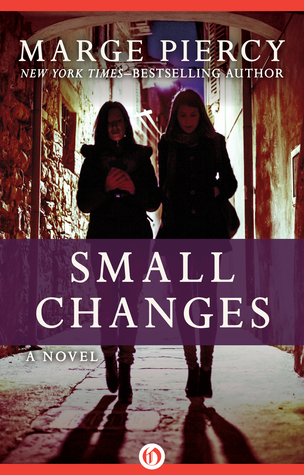
Small Changes, by Marge Piercy*****

SmallChangesPiercyThis title was originally published in 1973 during the second wave of feminism that followed the US Civil Rights movement, and then the anti-war movement against the US invasion of Vietnam. Marge Piercy is a prominent veteran writer who spoke to women’s issues during that time and in years to follow. She doesn’t need my review, and neither does Open Road Integrated Media, I suspect, but my thanks go to them and Net Galley for letting me reread this wonderful novel digitally. I received this copy free in exchange for an honest review, but the reader should also know that I came to this galley with a strong, strong affinity for Piercy’s work already, and my bookshelves are lined with paperbacks and hard cover copies of her books. But they are thick and sometimes heavy to the arthritic hand, and it’s a joy to be able to read them on a slender electronic reader. It was released digitally April 12, 2016 and is available for purchase now.

In 1973, many young adults had cast off the fetters of the impossibly repressive social relations of the 1950’s and early 1960’s. Their parents, on the other hand, were frequently entrenched in the mores that had been with them all of their lives, and felt threatened by the new ideas—some of which were actually pretty stupid—that many Boomer era teens and twenty-somethings embraced. Some notions that were new then are ones most of us now take for granted. Most of western civilization is no longer troubled, for example, by the idea that a woman may want to have a career, and that some women don’t want to have children. Most parents no longer speak of marrying a daughter as a way to transfer the expense of feeding and sustaining her from themselves to a man.

But in 1973, these social mores were still really prevalent. So to readers younger than fifty, or perhaps younger than forty, some of Piercy’s text is going to appear to be over-the-top, a vast exaggeration. It isn’t. And I have to thank Piercy for the gift of her insights, which came to me while I was a young woman still determining what was and was not acceptable in my own relationships.

The sly way Piercy makes her most prominent point is in following the lives of women, two in particular: Beth, who at the story’s outset, is indeed being “married off”, and Miriam, the least-favored child of the family who goes away to school and moves into a series of unconventional relationships. There’s a lot of the cultural flavor of the late 1960’s and early 1970’s here, and Piercy uses her narrative to describe ways in which even the most enlightened women, those seeking to build bonds with other women and support them as they set out to fulfill their dreams, nevertheless find themselves mired in unequal, sometimes physically and emotionally abusive relationships. Women that believe they have liberated themselves by refusing to marry, or by joining a commune and not being monogamous, nevertheless find themselves trapped in destructive situations. Piercy shows us how every woman in her story can see that a good friend is in a bad place; each woman doubts herself first when she starts to reconsider her own entanglements.

It is interesting in hindsight that communal and non-monogamous relationships could be discussed freely, but lesbianism was still so far out on the periphery that not even the most trusted of straight friends were necessarily going to be in on the nature of the coupling. And this is dead accurate given the time period; I was there. And gay sex among men was a mental cobweb to be brushed away. Tran sexuality was still considered a sign of mental illness by nearly everyone, and it isn’t in this book.

Because it deals with relationships and the internal narratives primarily of women, with occasional side-trips into the heads of the men both women encounter, and also of other women Beth and Miriam are close to, this novel is likely to be labeled “Chick Lit”, a genre title I have become increasingly reluctant to use. Think of it this way: how many women have read novels that are entirely about men or one man, and considered what they just read to be relevant and at times, superior literature? And now I have to wonder why, when a book is almost entirely about women or a woman, told from a feminine perspective, it is assumed by so many people that men should not be interested in that literature also?

Note that this tome exceeds 500 pages. The text itself should be accessible to anyone with a high school diploma or equivalency, but not everyone has sufficient stamina to make it through a book of this length. However, if one is on the borderline, and especially if one is a woman interested in evaluating the nature of our most important relationships, this would be a fine place to begin reading longer books.

For those that enjoy reading about this time period, and for those interested in modern feminism as well as the history of American feminist thought, Piercy’s body of work, including this title, should be unmissable.  Her towering feminist presence was a beacon to so many of us, and many of the issues that were so urgent then are still urgent now.

Tail Gunner, by RC Rivas****

tailgunnerTail Gunner is the memoir of a member of the Royal Air Force during World War II. I was fortunate to receive a copy free in advance from Net Galley and Endeavor Press in exchange for an honest review. It’s both compelling and informative.

Those accustomed to modern air travel may find it hard to imagine flight during this time period. There was no source of heat, and of course it’s far colder in the sky than on the ground.  Our author was a turret gunner, and it turns out that the turret and the nose are the two coldest parts of the plane. He stoically assures us there is no reason to be too cold up there if one dresses properly, and then lays out the multitudinous layers that must have made flyers look like old-fashioned versions of the Michelin man, but with head gear and a parachute. He describes the layers of ice that formed on the metal inside the turret, and how his oxygen mask freezes while it is on his face.

None of this is all that important once one is shot down, however.

My interest in military history is recent; I studied and taught history for a long time, but for most of those years, I preferred to study the causes of war, and so my primary interest was more political and theory-based. Maybe this is why it never occurred to me that the pilot is always the boss inside a military plane regardless of the ranks of various officers. Rivas points out that there really can’t be a discussion when the pilot says to jump; the point is well taken!

This novella-length memoir is recommended to those with an interest in World War II, particularly its aeronautic aspects, and also to academics and researchers, given that this is a primary document.  It was released to the public April 8, so you can buy a copy for yourself.

The Fat Artist and Other Stories, by Benjamin Hale*****

thefatartistI like short stories. My Goodreads library tells me I have munched my way through 89 collections and anthologies; yet I can tell you that there is nothing even remotely similar to what Hale offers here. Thanks go to Simon and Schuster and Net Galley for permitting me to view the DRC for the purpose of an honest review. You should get a copy May 17, 2016 when it is released, so that when it is immediately banned by various school boards you will know what they’re screaming about.

The ribbon that binds these brilliant, bizarre tales is that each of them features a social outlier as a protagonist. We start with the airline flight from hell in “Don’t Worry Baby”; you have doubtless flown at least once on a flight with a small child whose mother you long to smack upside the head for her dreadful parenting skills, but this one wins the prize. The second story that deals with Judgment Day didn’t work for me; first there were some hyperliterate science references that zinged right over my head, and then the sick factor got the better of me, and so I skipped that one and moved on to the title story. Having read the rest, I am inclined to chalk that second one up to my own quirks rather than Hale’s skill set.

When I came to “The Fat Artist”, I could only bow in awe. I was overcome with frustration because no one else in my household enjoys literary fiction, and so I couldn’t share. In a nutshell, the protagonist, a performance artist, seeks to eat himself to death while setting a worldwide fatness record. I actually gasped several times while reading this one.

Although the writing within this collection provides outstanding examples of every imaginable literary device, those that teach high school literature would be wise not to place it on classroom shelves unless you work at an alternative school. A very alternative school. A very, very, very…well, hopefully my meaning is clear. There is so much edgy material, from language, to explicit sexual description, to sexual roles and gender ambiguity, that I can see the villagers coming with their torches, their hot tar, their feather pillows. Teachers, don’t do this to yourselves. Get a personal copy; take it home and enjoy it; then pass it on to someone that can be trusted to appreciate it. Seriously.

Four more stories follow, and they’re all strong. “Leftovers” deals with a middle aged man in the midst of an extramarital affair when his problem child unexpectedly appears, ready to ransack the family vacation home for valuables to sell in order to feed his addiction. The way this tale unfolds gives me goose bumps.

The next two tales deal with sexual roles and ambiguity. I came away from “Beautiful Boy”, which made me realize, whether by the author’s intention or not, that men that choose to cross dress only as a diversion are looking at the best of both worlds, never having to confront the glass ceiling because they’ll be at that office meeting clad in their conservative suit and tie like always; it reminds me of white actors that wore black face.

The final story of a troubled brother that lands in the basement of his brother, the MIT researcher, and is provided with a job driving squid from the docks to the laboratory, is as brilliant as all the others, and equally esoteric.

Hale is wholly original, but if I were to compare his writing to any other author, it would be to that of Michael Chabon.

Bring your literary skills to the feast that Hale has laid for you; you will need them.  It’s one hell of a banquet.

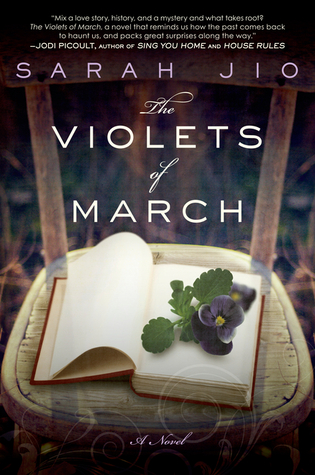
The Violets of March, by Sarah Jio

thevioletsofmarchThe Violets of March is a crossover title, part cozy mystery, and partly—maybe mostly—romance.  I purchased it for myself years ago, back when I was teaching, not advance-reading, and buying all my own reading material. It’s not a bad book, but given that I had paid full jacket price for the trade paperback version after reading some rave reviews, I felt let down. It’s a pleasant read, but it didn’t live up to its hype.

Nevertheless, once I had it in my collection, I was glad of it, because at the time, the other books I was reading were the sort that grab the reader by the hair and won’t let go till they’re done. I needed a calmer, more sedately paced novel to read at bedtime, and this was it. It held my attention, but it didn’t keep me awake when it was time to turn out the light.

Our protagonist is Emily Wilson, whose life, up till now, has been lovely. She is a successful author and married to a gorgeous man; what more can she want from life? But then one day he announces he is leaving her for someone else. Boom. Gone. She retreats to the home of her beloved aunt on Bainbridge Island, which is off the coast of Washington State, to lick her wounds. While there she finds herself ferreting out mysteries buried long ago. The plot becomes a story inside a story, and three different narratives are counter posed, two from the past, one from the present.

At the same time, Emily commences dating again. Here I am comfortable, because this isn’t erotica, it is an old fashioned love story, with the protagonist trying to choose between two men, one an old flame from high school, the other a local man she hasn’t known before.

The character development is not what I might hope for, but then this is a debut novel. It’s shallow, but it’s also soothing. It held my attention until I got a little bit sleepy, and then it didn’t anymore, which was exactly what I needed.

In addition, it is the sort of novel one could hand to a bookworm daughter of a fairly young age, if her reading level and interest were there, without worrying about content. Likewise it could grace the shelves of a middle school or high school classroom without a concern that parents would storm the school (as once occurred when I put The Color Purple on my honors shelf).

That said, I won’t pony up full cover price for this author again. But then, I rarely do that anymore anyway.

Those seeking a light romance with some cozy historical mystery elements to read at bedtime or on the beach could do a lot worse for themselves. It’s a matter of taste and priority.

Lilac Girls, by Martha Hall Kelly***-****

lilacgirlsLilac Girls is the story of three women during World War II. I received a DRC for this book courtesy of Net Galley and Random House Ballantine in exchange for an honest review. I rate this novel 3.5 stars.

The story centers around Caroline Ferriday, an actress and New York socialite that volunteers at the Consulate organizing clothing and other essential items for French orphans; Kasia, a Polish teenager that is active in the resistance movement; and Herta Oberheuser, a doctor given one opportunity to practice medicine under the Nazi regime…at Ravensbruck. All of these are based on people that existed, though the story is a fictionalized account.

Kelly’s debut novel is strong in historical detail and setting. Here she describes Kasia’s home town in Poland:


Lublin rose beyond them in the distance, like a fairy-tale city, scattered with old

red-roofed pastel buildings as if a giant had shaken them in a cup and tossed

them on the rolling hills.


Whether it’s at Ravensbruck, which was a Nazi concentration camp, at an orphanage in France, or in a glittering nightclub, Kelly nails setting. I would like to see her rely less on crutches such as famous people of that time period that pop into the scene—this device signals a lack of confidence to me, and Kelly can get by without these props.

I also would have liked to see less brand name identification, which looks a lot like product placement. The whole advertising jingle for a particular brand of cookies, and a particular New York department store whose name may actually have appeared some thirty or forty times hindered the novel more than it helped; Kelly will do well to leave her advertising career behind when she sits down to write fiction. But this is her first  novel, and given what I see here, I think we can expect great things from her in the future; she is just getting warmed up.

In addition to crafting resonant settings, Kelly does the world a favor in telling about the experiments done on members of the Polish resistance, known as “the rabbits” because of the way they hop around rather than walking after their legs have been experimented on surgically, often done to them in ways that further medical knowledge in no way at all. Though it is critical to remember that what Hitler and the Nazi regime did to the Jews was real—and it’s more important than ever now that most World War II veterans have died and revisionists would like to rearrange the historical record and count the camps as an exaggeration of the facts—few know of the extent to which other groups were also sent away, often to die before the end of the war. The author makes an important contribution to historical literature by doing this.

That said, I have to confess that I am a little bit disappointed because I have wanted to read more about the resistance movement itself, and when I read the teaser for this story, I thought that one character’s life within the story would center on this aspect of the war. Instead, Kasia is arrested almost immediately, and once inside the camp, her story is in many ways like other Holocaust stories.  It’s horrific, and if you have not read any other stories set during the Holocaust, then you will certainly want to read it. I have read enough Holocaust stories, and this character never stops being fictional for me.  And the same is true for Caroline, who seems shallow and superficial despite her sacrifices and tireless effort.

The character that makes me sit up and take notice is Herta. I can’t recall having read a Holocaust story in which a Nazi speaks to us in the first person, and the gutsy depiction of this opportunistic woman mesmerizes me. The offhand remarks that Herta makes to rationalize her choices as she slides down that slippery slope ethically, letting her standards be eroded in order to further her career and increase her own standard of living, are chilling and immediate. I believe in this character. Kelly is deft in the way she depicts this ambitious but morally pliable, solipsistic individual. There are a hundred chances to make her into a caricature, but Kelly’s subtle finesse steps back every time this might occur, and the result will leave you breathless with horror.

Whether to invest the full jacket price of this novel depends on how deep your pockets are and whether you have read a lot of Holocaust literature. If you haven’t, you’ll want to add this title to your collection. And come what may, Kelly will be a writer to watch in the future.


Miller’s Valley, by Anna Quindlen*****

Happy release day! This title shines among the 2016 releases I have read so far, and it’s been a great year for fiction. If you haven’t ordered a copy, I urge you to do so.

seattlebookmama's avatarSeattle Book Mama

MillersValeyMiller’s Valley is an intimate, poignant story so personal that it is hard to remember that it’s fiction rather than a memoir. Thanks to Net Galley and Random House for the DRC. Though I usually read several DRC’s at a time, this was the one I saved for the end of the day, for that time when the phone stops ringing, the dogs quit barking, the family doesn’t need my attention, and there’s nobody at the front door. During those deep, silent hours I immersed myself into the life of Mimi Miller, hypnotized as if my best friend were perched on the bed spilling out her secrets.

If you love good literary fiction, you have to read this book!

The Millers are a family of working farmers. Day by day, inch by inch, water is claiming their land. Shifty business is going on between a developer, who wants to build…

View original post 462 more words

The Girls, by Emma Cline*****

thegirlsThe Girls is a fictionalized account of the Manson Murders, a terrible killing spree that stunned the USA in the 1960s before any mass shootings had occurred, when Americans were still reeling from the assassinations of President Kennedy, his brother, Senator Robert Kennedy, and Dr. Martin Luther King. Manson, a career criminal with a penchant for violence yet possessed of a strange sort of charisma, attracted a number of young women and girls into a cult of his own founding. Later they would commit a series of grisly murders in the hills outside Berkeley, and it is this cult and these crimes on which Cline’s story is based. Great thanks to Net Galley and Random House for the DRC. This book will be published June 14, 2016.

Evie is an only child of the middle class; she is well provided for, but her parents have split up and her presence is getting in the way of her mother’s love life. Evie needs her mother’s attention now that she has entered her teens and so she pushes the limits in small ways, then in larger ones. When it becomes clear that her mother just doesn’t want her around, Evie looks elsewhere and finds herself drawn to a feral-looking young woman named Suzanne, who has unsuccessfully tried to shoplift something from a nearby store. Before long, Evie is sleeping on a mattress at the rural commune where Suzanne lives, eating from the communal kitchen and being used sexually by the group’s charismatic leader, and then by a man in the music industry that Russell, the founder, wants to please in the hope of having his music published.  Russell dispenses hallucinogenic drugs freely to make the girls more compliant.

We know immediately that this place, the commune, is not a good place. When we find that the babies  born to young women that live there—in this era before Roe versus Wade gave women the right to choose—are segregated from their young mothers and the pitiful way they regress and attempt to attach themselves to various females in search of a mother or mother figure, that’s a huge tell. But when Evie arrives she doesn’t want to know these things, at least not yet. All Evie wants is to be with Suzanne.

The story’s success isn’t anchored so much in the story line, a story that’s been tapped by previous writers, but in the dead-accuracy of setting, both the details of the time and in every other respect as well, from home furnishings, to slang, to clothing, to the way women were regarded by men. The women’s movement hadn’t taken root yet. This reviewer grew up during this time, and every now and then some small period bit of minutiae sparks a memory. In fact, the whole story seems almost as if a shoebox of snapshots from pre-digital days had been spilled onto the floor, then arranged in order.

The other key aspect that makes this story strong is the character development. Evie doesn’t have to live in poverty among bad people, but she feels both angry at her mother and hemmed in by the conventional expectations of her family and friends. Her boundary-testing costs her the loyalty of her best friend, really her only friend, and so she casts about for a new set of peers. Her mother prefers the fiction that she is still visiting Connie, the friend that has disowned her, and this lie provides Evie with a lot of wiggle room on evenings when her mother is with her boyfriend and finds it convenient for Evie not to be home.

As for Evie, what has started out to be an adventure, a bold experiment in branching out from the middle class suburban life she’s always known, gradually begins to darken. But the worse things get, the more important it is to her to prove her fealty to Suzanne, to not be rejected a second time as she was with Connie. Hints are dropped that probably she ought to just go back where she came from before it’s too late, but she is determined not to hear them.  I want to grab her by the sleeve and get her out of there; Evie won’t budge. Once she is in trouble at home for the things she had done on behalf of the group, her desire to avoid her home and stay with Suzanne grows even stronger, which leads her into more trouble yet. Clues are dropped that something big is going to happen, something that our protagonist maybe should avoid, but she plunges forward anyway with the bullheaded determination peculiar to adolescence.

All told, Evie’s future doesn’t look good.

Readers among the Boomer generation will love this book for its striking accuracy; those that are younger will feel as if they have traveled to a time and place they have never seen before. One way or another, Cline’s masterful storytelling weaves a powerful spell that doesn’t let go until the last page is turned. Riveting, and highly recommended.

Dodgers, by Bill Beverly*****

DodgersDodgers is a harrowing tale of African-American teenagers sent away from their home in Los Angeles, an area depressed and tense but familiar, across the Rocky Mountains, the land of white folks, and into the pale rural American heartland, where they have been sent by a father figure to commit a capital crime. I could not wrench myself away from this story for love nor money once I’d begun it. Kudos to Bill Beverly, and thank you to Net Galley and Crown Publishing for the DRC, which I received in exchange for an honest review. This book is available to pre-order right now and becomes available Tuesday, April 5.

Our protagonist is East, and a key secondary character every bit as intriguing is his younger brother Ty. We are told at the outset that East has never had a childhood, and that goes double for Ty, who moved out of the house at age nine, their addicted, addled mother making no effort to nurture or stop them. In fact, a social worker would say that the boys are parenting the mother, if anything. Fin, who serves as the only father figure East has, tells him that he is the man of the house. Most days he works a twelve hour shift standing yard, to the casual eye just loitering or hanging around, but in reality watching for anything unusual that might indicate the presence of cops or another hostile outsider, and it’s his job to make sure that if something happens, it gets stopped before it breeches “The Boxes”, the cluster of squatter’s houses in which drug transactions take place. He’s learned to be observant and a fast problem solver, supervising others that are also standing yard in different locations.

When he is taken to meet with Fin, he is hustled into a car in a way reminiscent of mafia tales, told not to look at the street signs and not to attempt to keep track of the route they are traveling. Fin solemnly tells him that he and three others are being sent to whack an African-American judge in Wisconsin, a man that can rule against Fin in a federal court; the man is “a legal Negro”, and has to be taken out. East has never shot a gun before and isn’t eager to begin, but he can’t say that.


Guns, after all. The noise. The mess. He’d held a gun before but never felt safer for it.

                  All the same, he was no fool. He knew guns made his world go round.


One of the four young people heading out on this terrible mission is a young man from the middle class named Michael. Michael is a UCLA student, but has taken on the chore of helping Fin establish a drug market at the university. This is the only potentially weak part of the story. Why would a young man with a future do something like this? On the one hand, I can see why we want him in the story; we are trying to break apart the stereotype that every Black kid lives in the projects and is on welfare. Most African-American teens aren’t living there, and in making “The Boxes” in LA seem like the whole world to East, the author risks perpetuating that myth. But apart from the author’s need to recognize that a Black middle class exists, why would Michael be part of this? He has so much to lose and not much to gain other than maybe an adrenaline rush. Michael is the least developed of the four teens, but we do see that his judgment is questionable, and so maybe that could account for it.

As they cross the Rockies, East can’t stop looking out the windows. He has never seen the mountains before, even though they are within a day’s drive of LA, and this is poignant. And as they cross the USA on their terrible mission, we see countless acts of racist misbehavior toward them that provide us with an important subtext: no matter who is in the White House now, racism in the USA is still alive. It isn’t just cops, not just a few crackers waving their Confederate flags. They’re all over the place.

While we’re talking about text and subtext, let me address the use of the “n” word. It’s used liberally here. In schools where I taught, and among my youngest son’s friends (my youngest son and most of his friends are African-American), the acceptable word for Black people to use among themselves ends with the letter “a”, not “er”. Maybe this is a regionalism. At any rate, it is used a lot in this book with the “er” ending, often by the teenagers in dialogue, and also used by racists against them. At one point East points out that Fin doesn’t want them using that word, an instruction that is casually dismissed.  And this quieted my concern somewhat, because while it gets used, it also gets talked about.

And in general, our four characters are not caricatures, but are portrayed with dignity and a point of view that seems authentic to me. I confess I would like to see some African-American periodicals’ take on this book, and given time, maybe I will see some. Right now there are dozens of reviews out, but all of the reviewers whose photos show are white folks, except for a single Asian reviewer. This isn’t the writer’s fault, but it makes me uncomfortable, a crowd of us out here in cyberspace, Caucasian bookworms, offering approval of a Caucasian writer’s version of Black teens from the ‘hood.

But back to our story. Those that think inner city LA is a scary place to go might do well to see the rest of the country from East’s point of view. Out among the cornfields, nobody knows what the rules are anymore. A white guy sitting in the middle of nowhere in a kiosk behind bullet-proof glass is supposed to sell them guns, but things have changed and he isn’t going to do it. The white guy in a hoody that covers most of his face disquiets them all. “Grim-reaper-looking motherfucker”, says Walter from behind the wheel.

All sorts of bizarre cultural cues jump out at them. It’s Christmas, and at odd times, LED lights festoon the fronts of houses: “a Baby Jesus was standing yard.”

Little brother Ty is brilliant but cold; in a different circumstance, he would be parked in gifted ed classes all day long, but here, he is the one that makes hard choices that make sense from the street point of view, and he is utterly remorseless.

I won’t give anything more away, but I have to tell you that when all is said and done, the untold reason for their cross-country mission is the most staggering of all.

You have to read this book.



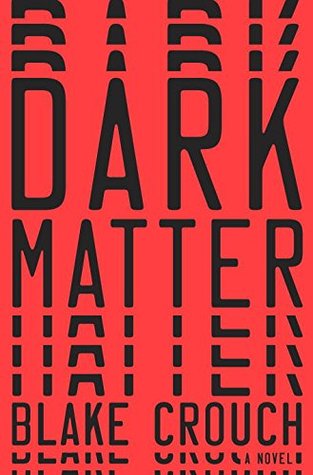
Dark Matter, by Blake Crouch*****

darkmatterNote: my records showed this would be published today, but they are in error. This title actually comes out in August and I have run my review earlier than I should have. You’ll see this again at a date closer to publication.

Blake Crouch is a seasoned writer, but I had never read his work before; only recently have I ventured back into science fiction, a genre I abandoned when some writers began incorporating tech jokes and algorithms into their work. Humanities oriented and gun shy, I veered back to my other favorite genres. Crouch makes it a joy to be back reading sci fi. I received this DRC free, courtesy of Net Galley and Crown Publishing Group in exchange for an honest review. It’s for sale August 2, and it will be in theaters soon too. Don’t get left out, because this one is huge.

Jason Dessen is a teacher, having abandoned a burgeoning career in research in order to become a family man. The story is infused with the question almost every adult has, the question of the road not taken. By the time we’re in our thirties or even our mid-twenties, we have made hard choices that leave us musing occasionally about what might have happened if we had pursued a different course, if the destiny we either chose or were thrust into had played out differently. It is this question that Crouch taps into.

On an ordinary evening, Jason’s old friend calls him and asks him to come to a nearby bar and celebrate a momentous event. Jason is a father and happily married, so he doesn’t spend a lot of time hanging out in bars with the guys, and tonight is family night, so it’s especially important to be at home. But this celebration is particularly important to his friend, and so he steps out for one fast beer for the sake of the friendship, with the promise to bring home ice cream on his way home.

That’s not what happens.

On his way home, he is followed by someone, a guy who jumps him not for his wallet, but for his life. He’s knocked out and awakens thus:


   Where the hell am I? A hanger?

I catch a glint of memory—a needle puncturing my neck. I was injected with something. This is some crazy hallucination.

A radio squawks. “Extraction team, report. Over.”

The woman says with excitement bleeding through her voice, “We have Dessen. We’re out of the box and en route. Over.”


Until Jason’s research funding dried up, he had been working on a cube that could penetrate the “multiverse”, and take matter from the world in which we live to a parallel reality. In another life, Jason has not only done this, but done it on a spectacular level. Here we get into string theory and other aspects of science that are over my head, and this is the type of thing that prevents me from reading more technically demanding sci fi.  Happily, the author only stays there long enough to provide the foundation for the science fiction aspect of his story:


Most astrophysicists believe that the force holding stars and galaxies together—the thing that makes our whole universe work—comes from a theoretical substance we can’t measure or observe directly. Something they call dark matter. And this dark matter makes up most of the known universe…Some string theorists think it might be a clue to the existence of the multiverse.


The idea is that every time someone hits a benchmark in his life when he must make a choice—college versus work, career versus marriage, to have a child or not, to move away or stay here—there is some parallel version of himself that does the other thing in another universe.

Once I got to the part where string theory is mentioned, I recoiled in horror—was the whole book going to be like this now? How could I even review it?—and I went to read my other books for awhile. But when I picked it up again, we quickly blew through the technical part, which for all I know may be bad science for the sake of a great story anyway, and we were back in poor Jason’s bewildering life. From that moment forward, roughly the twelve percent mark, the story grabbed me by the hair and didn’t let go till I was done.

This story packs a walloping punch, and I have at least one friend who would have made it just fine through the science blurb but then would have been unable to tolerate the emotional torrent that follows. Some people don’t want a story that will make their heart beat faster, and if that’s you, this is not your book.

But for those that enjoy a genuine thriller, this book is for you.  In fact, it’s impossible to draw a line as to whether this story is more a thriller or science fiction. It has all the qualities of a strong thriller, but the story can’t be told without the sci fi foundation. For those that are leery of reading science fiction due to a lack of proficiency in astrophysics or other aspects of science, however, you’ll be fine here. Crouch touches on science long enough to get establish the basis of his story and hook the reader, and then it’s back to Jason and his many dilemmas.

Highly recommended to anyone with a literacy level of a high school senior or beyond. Get it now!