Best of 2016: YA

Young adult novels are no longer my life’s work, and I was looking forward to putting the genre behind me entirely. However, once in a rare while a YA title will generate such buzz that I reach for it anyway. My rule for myself with YA books is that for me to feature it, it has to be strong enough to stand on its own with adults as well.  This year’s best YA novel is a slam-dunk:

theeducationofdixiedu

Best of 2016: Memoirs

IT’S THAT TIME OF YEAR, AND THIS YEAR SEATTLE BOOK MAMA WILL OFFER UP THE YEAR’S BEST, ONE GENRE PER DAY, CONCLUDING WITH THE OVERALL BEST OF THE YEAR. TODAY WE’RE LOOKING AT BEST MEMOIRS. THE YEAR’S BEST:

Best Memoir of 2016

Sometimes ordinary people write the most extraordinary memoirs; Hazzard’s is a case in point. If you haven’t read it, you’re missing a great read, and at times, very funny as well.

A Thousand Naked Strangers: A Paramedic’s Wild Ride to the Edge and Back by Kevin Hazzard *****

Honorable Mention:

Those that enjoy watching Carol Burnett will love this memoir, and those that don’t know who she is need to climb on YouTube and find out. Or click the video included in this review:

suchgoodcompany

In Such Good Company: Eleven Years of Laughter, Mayhem, and Fun in the Sandbox, by Carol Burnett****

Small Admissions, by Amy Poeppel*****

smalladmissionsI received an advance reader’s copy of this darkly amusing novel from Net Galley and Atria Books. It’s funny as hell, and even more amusing to teachers, school counselors, and others that have dealt with high maintenance parents and the aura of entitlement they carry with them. I rate this title 4.5 stars and round upward.  It comes out December 27, 2016, just in time to chase away your post-holiday depression.

I sat on this book for more than three months, which is a rare thing for me.  I kept starting it, not liking it, and deciding to set it aside and look again with fresh eyes later. Finally November came, and I realized the book was not going to change; I’d given my word to the publisher I’d review it; it was time to suck it up and get the job done. And this is a little ironic all by itself, since that’s the position in which our protagonist found herself, but more on that in a minute.

The issue with the first part of the book is that it reads like a very lengthy introduction, steeped in character introduction and overlong inner narrative. After I had read—and loved—the rest of the book, I went back and reread that 15%. Was it just me? What was wrong with it? And once I had read the book and become familiar with all of the characters, it seemed perfectly fine. In fact, it seemed a lot like the voice-over at the beginning of a movie. Then I read the author’s biography, and discovered that this novel was first written as a play.

Suddenly, it all made sense.

Our protagonist is Kate, and she’s come undone. Her French boyfriend has dumped her:

“When he’d encouraged Kate to follow her heart, he hadn’t meant she should follow it to Paris.”

Meanwhile, upon departure she’s left her position at NYU.  She was studying anthropology, and now she isn’t, and her family doesn’t know what to do about it. Enter Angela, her sister, who moves heaven and Earth in order to get Kate’s life going again; once Kate’s out of the woods, Angela can’t stop maneuvering and controlling. She’s good at being a white knight, and she can’t give it up. We have Vicki and Chloe, her friends from college, and the old boyfriend from France lurking offstage.

The fun commences when Kate gets a job in the admissions department of a small, private secondary school. She’s misrepresented her skill set to get it, but she’s determined to give it a try:

“Kate viewed Hudson Day as an unknown culture that required her exploration.”

It’s time to start interviewing and selecting students, managing interviews with demanding, sometimes aggressive parents. I’ve taught honors students in a public secondary school, and I thought my experience took fortitude; Kate’s experience was similar to my own, but on steroids.

There are hilariously dysfunctional parents, kids whose folks don’t have a clue what they can do and what they can’t, and in the midst of it all, relationships among Kate’s nearest and dearest become unstuck and reconfigured in ways that mirror those Kate works with, and even Kate herself. I can’t tell you anymore, because it would ruin it for you, but this snarky romp is not to be missed. It’s cunning, wickedly bold humor at its finest.

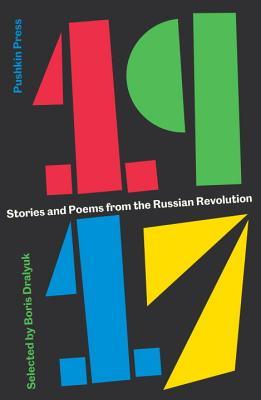
1917, by Boris Dralnyuk**

1917I received my DRC for this collection courtesy of Net Galley and Pushkin Press. I thank them for the opportunity to read and review; this compilation of poetry and prose will be for sale on December 1, 2016. What a crying shame it’s so negative.

There are a few of us left out here—dinosaurs, to be sure—that regard the initial two or three years of the Russian Revolution as an inspirational time, a time when the working class and the Russian peasantry cast off their shackles, ran the brutal, entitled royal family and their minions out of power and eventually to a richly deserved death, and took control of their lives and their nation. When I saw this collection, I believed that this perspective would be represented here somewhere.

Instead, we read poetry about the Tsar’s wine. Oh, no! They destroyed all that expensive wine! Give me a break. Millions of peasants freed from bondage, and all we hear about is the wine casks, and some sorrowful reflections that lament the defeat of the Mensheviks—the party that tried to halt the progress of the revolution and create a bourgeois democratic state. All those sorrowful White Russians weeping into their vodka.

Do I have a bias? Of course I do, but unlike our editor here, I admit mine. The introduction to this thing, which is overlong and somewhat duplicitous, tells us that rather than relate the various political positions that were held during this cataclysmic time, we should instead look at feelings, at experiences. But everyone’s feelings during this tremendous upheaval, a time when the news footage at the time of the revolution shows throngs of joyful Russian workers screaming with enthusiasm, is apparently either sorrowful—aw geez, the poor royals—or conflicted. Not one person is glad it happened.

Poetry and prose are, at their root, political, and in rewriting history, Dralyuk demonstrates this. This collection is revisionist dross.

One other comment I’d make is that when editors decide to republish historic writing, they are often deluded as to how much of their own prose readers are looking for. For every piece, for every author, there is way too much introductory narrative. I really just want to read the work itself, not so much Dralyuk’s discussion of them. Had I enjoyed most of the poetry and prose, I would have upgraded this review to three stars and stated that it is hard to find the original work amidst the rambling discussion. Generally, the poem is short, the introduction is long; lather, rinse, repeat. The same is true of the prose.

So to those lonely Marxists out there hoping for literature, for poetry that’s in English and available readily in the US, I have to say, put that plastic away, because this isn’t that.

The Whole Town’s Talking, by Fannie Flagg*****

Happy release day to Fannie Flagg! This one is a treasure. If you’re buying Christmas or Hanukkah gifts, consider this book, which is bound to make your loved one smile…especially for those over 40.

seattlebookmama's avatarSeattle Book Mama

 “Up on the hill, Lucille Beemer said, ‘Good morning, everybody.’

“Two hundred and three people just waking up answered, ‘Morning’.”

thewholetownstalking Fannie Flagg is legendary, and rightly so. In fact, at one point in my reading of this DRC, I reflected that someone with her power to move people has power indeed; how fortunate that she uses her gift to benefit the rest of us. I don’t know about you, but I am ready to read something that provides a level of reassurance that all has not gone sour in this world, and that everything passes, sooner or later.  I was  fortunate to read this free and in advance thanks to Random House and Net Galley, but it’s one of the very few books for which I’d have paid full freight if it came down to it. It hits the shelves November 29 and is available for pre-order right now.

Our…

View original post 813 more words

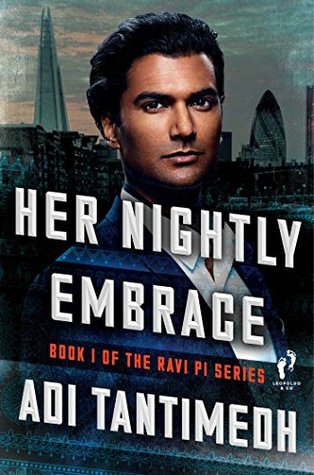
Her Nightly Embrace, by Adi Tantimedh*

hernightlyembraceI was invited to read and review this title by Net Galley and Atria Books. I thank them for the opportunity.  The first two chapters showed signs of promise, but in the end, this book is poorly written and for most, it will also be offensive. I can’t recommend this title. That said, it’s about to become a television program, so perhaps you will enjoy it more than I do. But I have to call them as I see them, and if they give this writer a host of awards, I will still say this book is worth one star and nothing else.

Ravi Singh is our protagonist. He has dropped out of a program of religious studies, to his father’s profound disappointment, and become a detective. He had something of a breakdown, and under stress he sees Hindu Gods that no one else can see. An added pressure is financial; he has bills to pay, and his mother has racked up some gambling debts for which she may be harmed if not paid soon. I warmed to the unlikely loan shark, and I thought this was going to be a fun read. And if it had been well written, it would have been.

In other reviews, I have occasionally noted the way in which a tired, overused plot device may become brand new and almost magical in the hands of a capable writer. This one works the other way around. It’s a unique, if somewhat gimmicky idea, but the author will have to develop a vocabulary before I can enjoy his work.

Profanity has never been a hot button for me. I’ve been known to toss the “f” word into my own reviews when feeling particularly warmly. Unfortunately, Tantimedh uses the word the way I’ve heard teenagers do it; when someone is too lazy to consider what word might be interesting and hasn’t been overused yet, the “f” word can become noun, verb, adjective, and interjection. Everything, everything, everything in this book is said, by either narrator or in dialogue, to be “fucked up”.  By the 40% mark I was so distracted, and it was so obvious that I wasn’t going to engage with the text as I had hoped, that I started keeping track to see whether my perception was accurate. Was I being snarky, or was that word—and a few other similar ones, especially the mother-f word—all over the place? And as I started highlighting, I was amazed to find it on almost every page. Some pages were miraculously free of it, but then there’d be another page where I found it twice, or thrice. At this point I gave myself permission to skip to 80% and see whether something wonderful would happen at the end to redeem this thing. It’s been known to happen; just not here.

I’ve only panned a title I was invited to review once before, and that was because of ugly racist references throughout the text. I’m generally a generous reviewer. But suddenly I felt as if I were before a class of eighth graders once more, explaining that not only will profanity offend some readers, but when it’s overused, it’s often because the writer doesn’t want to do the work to find a more specific or eloquent term.

Whether the issue is due to a translation issue—I didn’t check to see if this was published in something other than English originally—or laziness, or a lack of facility as a writer is moot. The end result is the same.  This is bilge. Save your money.

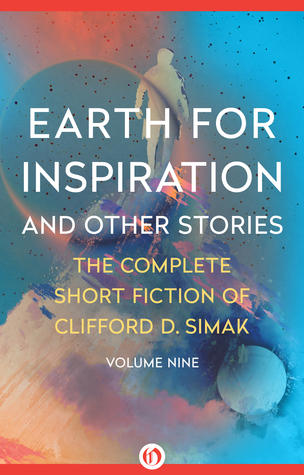
Earth for Inspiration and Other Stories, by Clifford D. Simak*****

earthforinspirationClifford D. Simak wrote for decades during the mid-twentieth century.  His close friend, David W. Wixon, has undertaken, with Simak’s approval in his declining years, to collect all of the stories that were published in various magazines and anthologies beginning in the 1930’s and ending before the digital age was off the ground. This one is volume 9, and it’s an interesting hodgepodge of the very best—which is most of it—and the very worst, which is just two stories. Needless to say, I thought a lot about how I should rate such a collection.

Finally, I decided that price would be the deciding factor. If it was going to set you back twenty or thirty bucks, then I’d have to cut it down the middle and call it three stars, which would be sad but fair. However, I logged onto the big A and found it’s sold digitally for six bucks. At this price, you’re paying a buck each for six absolutely stellar short stories; there are three more good ones thrown in; and you can afford to skip the two stinkers. Given that factor, I’m rating this 4.5 stars, with just half a star gone for the two missable stories, which I’ll talk about in a moment.

Thank you Net Galley and Open Road Media for the DRC, the fifth Simak collection I have received from them. I sat on this one for a long time because I’d been reading a lot of his work, and was beginning to get grumpy at the similarities among some of them. Just how many different characters can a writer name “Doc” and remain credible? But then I realized that when Simak submitted his stories to various periodicals, names were about the least important aspect of his work, because he wrote them never dreaming that his writing would be important enough to appear in an entire series, back to back. Who knew he would become so successful?

During the 1940s and 1950s, as Wixon points out, science fiction was barely off the ground—pun intended—and Westerns were massively in style. I guess you could say they were the zombie apocalypse of their time; if a writer wanted to pay his rent without having to work a day job, he had to write some westerns. And since Wixon is publishing all of Simak’s stories rather than the best-of, he has to insert the few losers somewhere also.

So let’s just get the bad stuff over with so I can tell you what’s great here. The bad ones are sandwiched midway through the collection and appropriately flanked by good writing before and after. “Hellhound of the Cosmos” is bad enough that Wixon’s preface—a brief paragraph appearing before each story—says he “…will not try to excuse this story’s failings” by pointing out that Simak wrote it in 1931, at the very get-go of his career. Fine; don’t. But it’s a really dumb story, and I’d hate to see you use it as a yardstick by which to measure this man, who would become a Grand Master of sci fi. Read it or skip it, but this is not the story I recommend.

Further along we have “Good Nesters Are Dead Nesters”. This one is actively offensive, and if it were written today, I might well shoot down the entire collection because of it. But I know from the things I heard during my childhood that the language used here, while truly offensive, was also commonplace back then. The US was a lot whiter; the interstate was a new thing; satellite communication wasn’t yet dreamed of. People lived in isolated areas and got stupid ideas about what other people were like, largely due to stereotypes promoted in the news, on radio, and on black and white television.

So although I—married to an Asian immigrant—am as pissed as anyone about the singsong caricature of the Chinese cook, I also know this was a widely accepted way to regard people from China and Japan. As if that’s not terrible enough, a disabled person is referred to as a helpless, “twisted cripple”. Ohhh, no thank you. As you can imagine, I quickly gave myself permission to make a note and then skim till I reached the next story.

However, the stories that flank the collection, starting with the title story and ending with “Full Cycle”, are outstanding.  The latter is written in the 1950s, and reflects both the reality of a pair of Atomic bombs having been dropped in Japan eleven years before it was written, as well as the anti-communist hysteria so prevalent in the news. The idea is that all cities are decentralized, because a bomb might be dropped on a large urban center, but the USA is a very big place, and so small, mobile communities, all of them having traded their houses for trailers, is now the way Americans live. It’s very cleverly put together conceptually, and Amby, the protagonist, is so well drawn that at times, I wanted to weep for him.

“Honorable Opponent” has to do with a US planetary colony that has just been defeated by another planet’s military. The result took me entirely by surprise, and I think I’ll remember this story after I’ve read other science fiction by other authors. The same is true of “Carbon Copy”, a fine tale combining  science fiction, ruthless capitalism, and brilliant imagination. “Desertion” is another stellar story. If you want to read science fiction that makes your dreams sweet, read this one at bedtime. “Golden Bugs” is equally clever.

So for the price you pay, there is too much good writing here to turn your back on. My records tell me that over time I have read over 100 short story collections, which is about 90 more than I ever expected to read, and yet this one is outstanding among them. For those that love old school science fiction, this one, with the caveats mentioned, is highly recommended, and it’s available now.

The Big Book of Christmas Mysteries, edited by Otto Penzler*****

TheBigBookofXmasNote to the reader: I originally posted this when my blog was just a few months old, and I was still struggling with basic issues, such as how to insert the book cover into the text. Now the holiday season is here again, and I am running my review–with some basic technical adjustments–one more time, because in the past two years, I haven’t found a Christmas book I like better than this one. It’s the only book I’ve found since I’ve been writing reviews that I found worth actually buying not just one but two copies at full price to give as gifts. For those that love Christmas stories and mysteries, this one’s for you!

I received this wonderful collection last year as an ARC from the “first read” program via the Goodreads.com giveaways. At the time, I didn’t have a blog; I reviewed it on Goodreads and because I liked it so well, I also reviewed it on Amazon. Then, while I was on the site, I bought two copies to give as gifts. I have never done that with an ARC before or since (so far), but it is so wonderful that I wanted others to have it, and I wasn’t willing to share mine.

Now the season is upon us. This blog will be punctuated by worthwhile Christmas books of a secular variety. I guess it is a typical retired-teacher behavior to decorate my home with brightly jacketed Christmas books when others are getting out their craft supplies and hot glue guns. At any rate, if you buy just one Christmas book for yourself or someone else, and if the reader enjoys mysteries, this is the best you will find.

The stories are organized according to category in a format and layout that is congenial all by itself. There are ten sections, starting with “A Traditional Christmas”, with the first entry being one by Agatha Christie; it is a story that has aged well, and I don’t remember having read it even though I thought I’d read everything by that writer. There are a few more, and range from just a few pages, double columns on each page, to 25 or 30 pp. Then we move on to “A Funny Little Christmas”. The first there is a story by the late great Donald Westlake, and I gobbled it up and then felt bad that I hadn’t saved that story for last, because I adore his work and he’s gone and can’t write anything more. But I perked up when I noted that yet another section, “A Modern Little Christmas”, has an unread (by me) story by Ed McBain. There are many others. The final section, “A Classic Little Christmas”, bookends the anthology neatly by finishing with Dame Agatha. All told there must be about sixty stories, maybe more.

The anthology, edited by the brilliant and acclaimed Otto Penzler, is billed as having a number of rare or never-published short stories, and I think it’s a true claim. There are many mystery writers I’ve read and enjoyed here, and others I had never even heard of, but found immensely entertaining. I haven’t skipped any yet, but even if I find something I don’t care to read, the book is worth owning. I know that already. It is also billed as an anthology to warm the heart of any grinch, and indeed, there has been at least one story with a satisfyingly creepy ending.

One of the charming things about anthologies is that one can read a single story in a sitting and not feel too bad when it’s time to put the bookmark in and go get something done. Then it waits there to greet us as we return from executing less pleasurable tasks, a reward that invites us to sit down, curl up with good cup of coffee or the dog or both and have a cozy read. It also makes the book a lovely thing to keep where guests can access it, because they can enjoy it even if they haven’t time to read more than a story or two in between other activities.

…but I’m keeping you. You could be reaching for your car keys, your bus pass, or even better, going to another window to find this book online and order it. Once you see it, you will most likely feel as I do…unwilling to part with your own copy, yet yearning to get at least one more for somebody else! Get the plastic out and do it right away.

Al Capone: His Life, Legacy, and Legend, by Dierdre Bair***

caponeWhat is it about mobsters that draws our attention?  National Book Award winner Deirdre Bair takes on America’s most famous mobster, Al Capone, and examines the myths and legends that have sprung up in the time since his death. I thank Net Galley and Doubleday for permitting me the use of a DRC, which I received free in exchange for this honest review. The book is available to purchase now.

Alphonse Capone was the first child in his large family to be born on American soil. His family was terribly poor. To steer him toward employment after he had left school, his father purchased a shoeshine kit for him so that he could begin his pursuit of the American dream; Al had other ideas, and his first racket was begun at age 16, shaking down other shoeshine boys as part of his very own protection racket. He was mentored by a man named Torrio, a mobster of the old school. Later Torrio would move his business to Chicago, and once New York became uncongenial, Al’s family sent him out there to join him.

The biography is intended to examine Capone’s life primarily from the vantage point of those near and dear to him; some of his grandchildren are still alive, and I gained the impression that the book was initiated by them. It is obvious from the start that the brutal killings—at the apex, Chicago saw a murder every day—and other vicious acts of retribution over what were sometimes small or even imaginary slights, are soft pedaled and his family life is emphasized.

I guess it’s all a matter of what you’re looking for.

Capone had an organizational genius, and since his entire empire was an unofficial one, he became the embodiment of capitalism unfettered. Bair tells us that the Harvard School of Business uses his business plan, or aspects of it, as part of the curriculum. And had the US Supreme Court not ruled in 1927 that income derived from illegal sources is still taxable income, chances are outstanding that Capone would never have gone to prison. He surely would not have found himself on Alcatraz Island without access to quality medical care; one wonders, however, whether having him live longer would truly have been desirable.

In fact, relatively speaking, I almost feel moved to thank the Bloods and the Crips for their restraint. Well, almost.

Capone was once called “The most shot at man in America,” and Bair examines the stories that are told or that have been written about him. For the diehard aficionado of all things Capone, hers is a must-read. For those with a more general interest looking to read just one book about him, I suspect that one of the many other biographers Bair quotes may be a better bet; it’s hard to say, though, because as Bair points out, after Capone’s death from pneumonia related to syphilis, his wife Mae burned all of his letters and other papers left behind, knowing that private business can quickly become public when one is sufficiently famous. And though Capone loved the limelight and even courted it, wearing flashy clothing and ostentatiously bestowing large gifts on total strangers at times, Mae was a private person. So there aren’t many primary sources to tap, when it comes down to it.

Nevertheless, I found myself highlighting in blue (which is the color I use when I see problems with a galley) the many times I saw the literary version of a flow chart drag down the pace:  “…according to rumors”, “…what may have happened”, and similar catch phrases, along with the menu of choices of what may have happened here, there, everywhere. I think that as a reader just looking for one definitive biography, I would have been happier to see the actual facts that are known. Many of them are riveting! For example, when it became clear that rivals sought to kill him, Capone had his home remodeled to accommodate a machine gun turret. His dining chair had a bullet proof back, as did the windows of his car. There are a lot of fascinating little details that are unquestioned in their veracity, and these are the places where my interest is piqued.

Second to Capone, by far the most interesting character is his wife Mae. Mae was lace curtain Irish, and intermarriage between the two still very distinct cultures was unusual. As I read of the things she has done to keep her family together and herself sane, particularly during Frank’s decline after his final illness began to affect his thinking and motor skills, I am truly impressed. The fact that ultimately it is she, and not a male family member or associate to whom Capone’s men come for business decisions once Frank can’t do it speaks volumes about her intelligence and talent.  I might like to read more about Mae Capone.

For those with an interest similar to mine, my recommendation would be to read this book if you can get it at your library or access it inexpensively, but barring deep pockets or strong interest, I wouldn’t pay full jacket price.

Good Behavior, by Blake Crouch****

goodbehaviorcrouchLast spring I advance- read and reviewed the riveting sci fi thriller Dark Matter, which was my introduction to author Blake Crouch, who has already met with success as a screenwriter. When I saw that something else he had written was up for grabs at Net Galley, I landed on it eagerly. Thanks go to them as well as Thomas and Mercer at Amazon for the DRC, which I received in exchange for this honest review.

Good Behavior consists of a trilogy of Letty Dobesh stories, along with a brief narrative that follows each one explaining how it was tweaked (pardon the pun) as it was adapted to television. Our protagonist herself is, in fact, a recovering meth addict, and there is only one activity that comes close to the rush she experiences when she uses it, and that’s crime. Not just the seamy survival type of theft; not just cleaning valuables out hotel rooms while the guests are off in tourist-land. A big theft with huge risk and a potentially tremendous payday provides the adrenaline rush Letty needs to stay clean, not forever, but for one more day.

Letty is a kick-ass character, a woman who’s been knocked down a million times and gotten back up a million and one. I love the way Crouch works her motivation. Actor-director Jodie Foster once commented that when men in the film industry want to reach the core of a character’s motivation, they reach every damn time for rape, and I’ve noticed that male authors do this with female protagonists a lot also. It’s a fascination they can’t seem to let go of. I am cheered to see that Crouch does something much different, with Letty’s main motivation being the need either to stay clean, or on bad days, the need to score. Behind the need to stay clean is the possibility of seeing her six year old son, Jacob, again. He is living in Oregon with his paternal grandparents; he’s in a stable, loving environment, and though Letty yearns to see him, she won’t let herself go there until she is convinced she can stay clean. But there are triggers out there in the everyday world that some of us could never have imagined:

“She could almost taste the smoke. Gasoline and plastic and household cleaners and Sharpies and sometimes apples. Oh yes, and nail polish.”

Around every corner, temptation calls to her. She can’t even get a pedicure without the fumes invoking a primal craving.

My hunch is that Letty will be with us a long time, and I am curious to see whether this child will remain six years old forever; grow up, but more slowly than real-time chronology; or be aged as if in real time. I can think of some hit mystery series that have been frozen in time to good effect. Crouch could keep Jacob small throughout the life of the series, and this might make more sense than having him grow up and be independent; on the other hand, this series is so full of surprises already that there’s no telling what will happen.

To see the first television episode, in which the protagonist’s name is different from the book:

https://www.goodbehavior.tntdrama.com/?sr=good%20behavior%20video

The first story involves a murder for hire. The second is a complicated rip-off of a billionaire who’s about to go to prison. The last and by far the best is a scheme to knock over a casino. The casino plot is proof positive that a relatively old concept (theft of a casino’s funds) can be made brand new in the right hands.

I believed Letty nearly all of the time; the only weak spot I see is when she considers dialing 911, a thing that former prisoners just never, ever do. No matter how big and ugly a situation gets, for someone who’s been in jail, and especially for those that have gone to a penitentiary, calling cops will only make it worse. Even if the caller is Caucasian, and even if she believes she can do so anonymously, cops are never desirable. They’re just not on the menu of choices anymore.

This is a super fast read, one that might make for a fantastic holiday weekend. There’s lots of dialogue, crisp and snappy. Best of all, it has just been released, and so you can get a copy now. If the turkey is dry and the marshmallows on your yams catch fire, Letty Dobesh can knock everything back into perspective for you.

Recommended to those that love dark humor and big surprises.